• Skip to primary navigation
  • Skip to main content
  • Skip to primary sidebar

Carnegie Museum of Natural History

One of the Four Carnegie Museums of Pittsburgh

  • Visit
    • Buy Tickets
    • Visitor Information
    • Exhibitions
    • Events
    • Dining at the Museum
    • Celebrate at the Museum
    • Powdermill Nature Reserve
    • Event Venue Rental
  • Learn
    • Field Trips
    • Educator Information
    • Programs at the Museum
    • Bring the Museum to You
    • Guided Programs FAQ
    • Programs Online
    • Climate and Rural Systems Partnership
  • Research
    • Scientific Sections
    • Science Stories
    • Science Videos
    • Senior Science & Research Staff
    • Museum Library
    • Science Seminars
    • Scientific Publications
    • Specimen and Artifact Identification
  • About
    • Mission & Commitments
    • Directors Team
    • Museum History
  • Tickets
  • Give
  • Shop

autumn

October 15, 2019 by wpengine

Glowing Mushrooms and Pokémon

Nature’s Nightlights

Have you ever walked through the woods at night and noticed a small glowing object near the base of the trees? That’s bioluminescence happening in mushrooms – the creation and emission of light by organisms. Glow-in-the-dark fungi aren’t just something you’ll see in the woods. If you’ve seen the new Detective Pikachu movie, you may have encountered another species of glowing mushrooms!
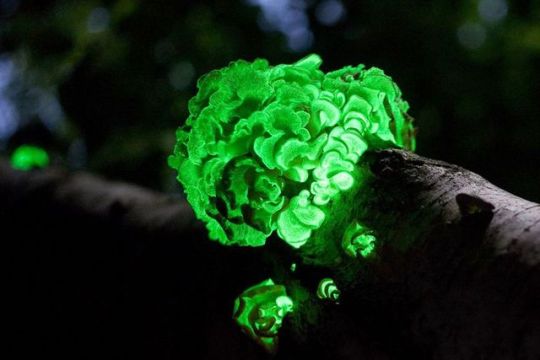
The radiant glow of bitter oyster mushrooms were used to mark trails prior to electricity!

What We Know About The Glow

By now, you’ve probably got some questions, like how does the glowing occur? And why? Well, the greenish light emitted from the mushrooms is the result of a release of energy from a chemical reaction. Research has shown that when the oxyluciferin in the mushroom releases its oxygen molecule, then it’s time to get lit. Only about 80 species of fungi are known to glow. Perhaps these funny fungi are drawing the attention of insects or animals that feed on the mushroom to disperse its spores, like the way a sweet-smelling flower attracts insects for the same reason.
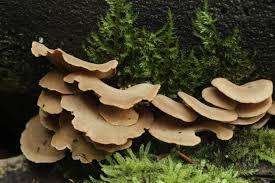
These mushrooms are as plain as Clark Kent until they give off a super glow at night.

Glowing Mushrooms From Different Worlds

If you’re having trouble finding glowing mushrooms in the woods, have no fear, Detective Pikachu is here! The new movie shows off different types of Pokémon, including the Morelull. The Morelull is a Pokémon that resembles a mushroom with its stem-like body and three sprouting mushroom caps on its head. At night, the Morelull can make its spores glow with glittering sparks just like glowing mushrooms around you.
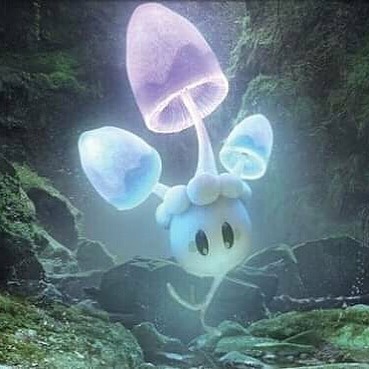
glowing mushroom-like Pokemon
A Morelull resembling a glowing mushroom appears in the wild during the Detective Pikachu movie trailer.

Fun Fact – Hypnotizing Spores

You can find Morelull in the Detective Pikachu trailer! When the trainers come across a herd of Bulbasaur, look for a few Morelull fluttering around them.
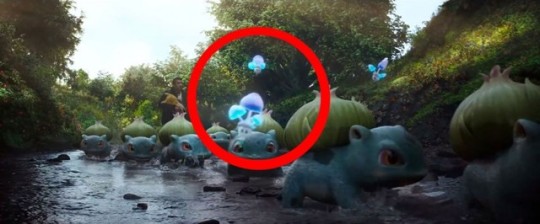
Detective Pikachu screenshot of Morelull

It’s Time For An Adventure!

Now it’s time for you to find glowing mushrooms near you. If you’re stumped on where to find nature’s nightlights, well, look for a stump! They are known to surround the bases of dead trees or wrap themselves around dead branches.

Popular glowing mushrooms:

-Luminescent Panellus

-Honey Mushroom

-Bleeding Fairy Helmet

-Jack-o-Lantern

Western Pennsylvania is home to several varieties. They can be found in backyards, along trails and in our parks such as:

-Powdermill Nature Preserve

-Beechwood Nature Reserve

-Frick Park

-Hartwood Acres

-Salamander Park

While you’re out looking for mushrooms, keep your eyes open for fireflies! Fireflies use luciferins, light emitting compounds, like mushrooms to glow.
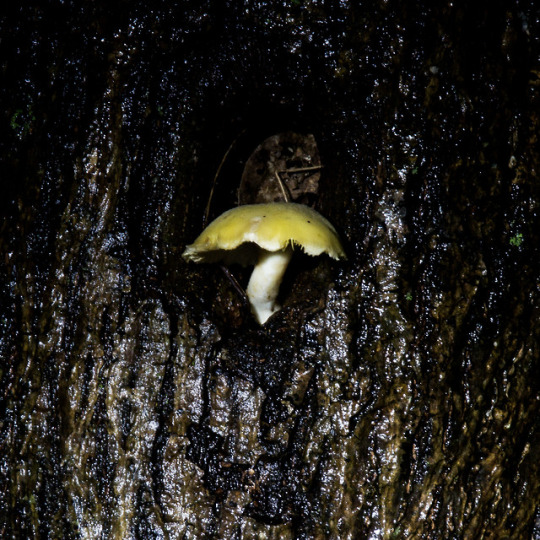
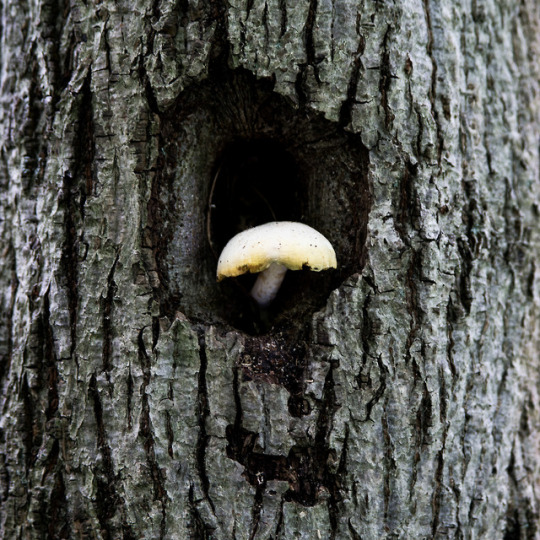
glowing mushroom
A Jack-o’-Lantern Mushroom glows under the moonlight at Beechwood Nature Reserve.


The same Jack-o’-Lantern Mushroom in the daylight.


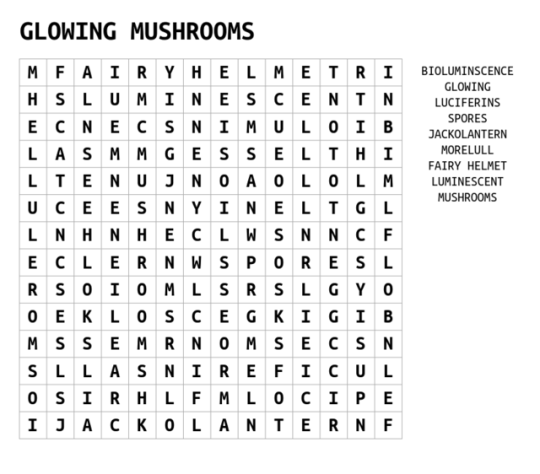
Can You Find The Words Relating to Mushrooms?
Learn more in Nature Lab!
Filed Under: Blog Tagged With: Anthropocene, autumn, Botany, Nature 360, Nature Lab, Pokemon

October 18, 2018 by wpengine

Why Do Leaves Change Color in the Fall?

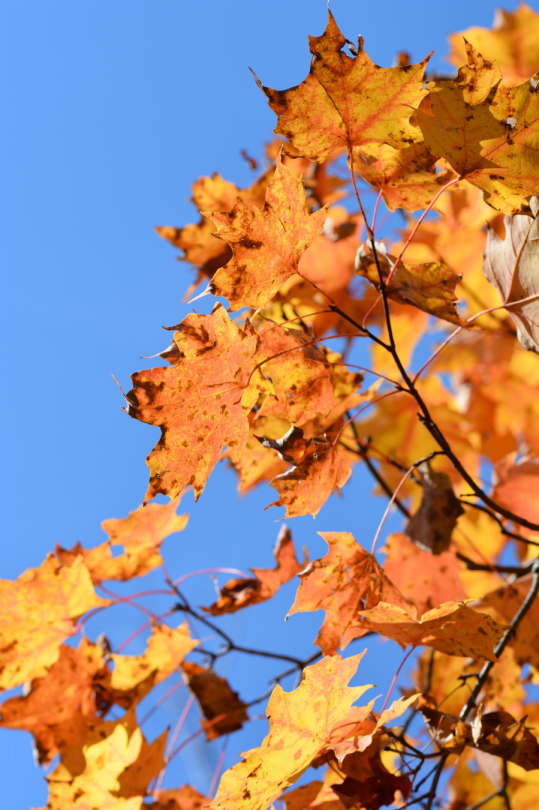
detail of fall leaves on a tree

One of the most anticipated events of fall is the changing colors of tree leaves. As the evenings get cooler, the trees display spectacular warm red, orange and yellow hues. The East Coast’s fall colors are SO spectacular, in fact, that many people take special trips here just to see them. But what is it about fall that makes the leaves change, and why do their colors become warmer as the days grow cold?

Are these colors really just a fall thing?

You might think that the orange and yellow colors, or pigments, are only present in leaves in fall but they’re actually there all year long–we just can’t see them because they are covered up by the strong green pigment that is also in the leaves. This green pigment comes from chlorophyll, a substance that makes energy for trees using sunlight, carbon dioxide, and water. When the amount of sunlight starts to decrease in fall, trees respond by making less chlorophyll. When this happens the green starts to disappear and the yellow and orange pigment, called carotenoid, shows through.

Red is a seasonal special

While yellow and orange are present in leaves all year round, there is another pigment that is only produced in the fall. Anthocyanin is a pigment responsible for giving leaves dark red and purple colors. This pigment is created during times in the fall when the days are warm or cool, but don’t dip below freezing. Because fall temperatures can vary from year to year, some years will have more deep red leaves than others.

Did you know?

Evergreen trees like pines, spruces, and firs stay green year-round because they have needles instead of leaves. These needles have a waxy coating that protects them from losing moisture and don’t require as much sunlight to produce the chlorophyll.

Get Outside and Find Fall Color!

Peak color for fall foliage hits Southwestern Pennsylvania in mid-October.  Track historic trends of color change to plan your outdoor excursion!

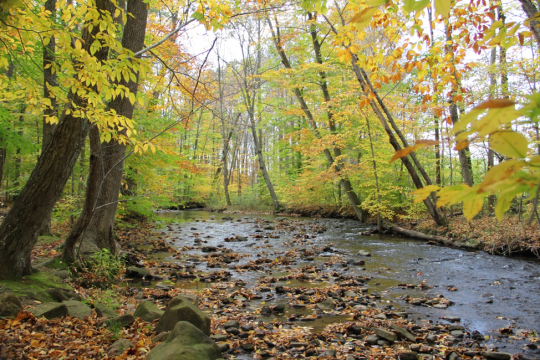
stream and trees at powdermill nature reserve

Powdermill Nature Reserve is a great place to look for fall color!


Explore nature together.  Visit Nature 360 for more activities and information.

Filed Under: Blog Tagged With: Anthropocene, autumn, Nature 360

October 1, 2018 by Kathleen

Science and Nature Program and Nature Explorers

Fantastic Fall Flowers
Are the gentle scent of flowers on the breeze, bright colors dotting field and forest, buzzing insects drinking nectar making you think it must be spring? Not necessarily! Many amazing plants wait until fall to bloom. Come learn about this unusual strategy and some of the Powdermill Nature Reserve native plants that use it. Then we’ll head outside to look for fantastic fall flowers!

Leaves and Seeds
What’s more fun than planting flower seeds? Throwing them, of course! Come learn about some of the local wildflowers and their importance. Then get your hands dirty as you make your very own seed bombs to take home and use to blast your garden!

Tagged With: autumn, leaves, Powdermill

October 1, 2018 by Kathleen

Storytime and More

Why Do Leaves Change Color?
As the weather begins to cool, the trees put on a dazzling show! “Let’s-Read-and-Find-Out” what is going on with this behind the leaves sneak peek! Afterwards, we’ll go outside to collect beautiful fall leaves to press.

Tagged With: autumn, leaves, Powdermill

sidebar

About

  • Mission & Commitments
  • Directors Team
  • Museum History

Get Involved

  • Volunteer
  • Membership
  • Carnegie Discoverers
  • Donate
  • Employment
  • Events

Bring a Group

  • Groups of 10 or More
  • Birthday Parties at the Museum
  • Field Trips

Powdermill

  • Powdermill Nature Reserve
  • Powdermill Field Trips
  • Powdermill Staff
  • Research at Powdermill

More Information

  • Image Permission Requests
  • Science Stories
  • Accessibility
  • Shopping Cart
  • Contact
  • Visitor Policies
One of the Four Carnegie Museums | © Carnegie Institute | Privacy Policy | Terms of Use | Accessibility
Rad works here logo