• Skip to primary navigation
  • Skip to main content
  • Skip to primary sidebar

Carnegie Museum of Natural History

One of the Four Carnegie Museums of Pittsburgh

  • Visit
    • Buy Tickets
    • Visitor Information
    • Exhibitions
    • Events
    • Dining at the Museum
    • Celebrate at the Museum
    • Powdermill Nature Reserve
    • Event Venue Rental
  • Learn
    • Field Trips
    • Educator Information
    • Programs at the Museum
    • Bring the Museum to You
    • Guided Programs FAQ
    • Programs Online
    • Climate and Rural Systems Partnership
  • Research
    • Scientific Sections
    • Science Stories
    • Science Videos
    • Senior Science & Research Staff
    • Museum Library
    • Science Seminars
    • Scientific Publications
    • Specimen and Artifact Identification
  • About
    • Mission & Commitments
    • Directors Team
    • Museum History
  • Tickets
  • Give
  • Shop

Bonnie Isaac

July 3, 2018 by Kathleen

Grant Supports Digitization of Specimens in Carnegie Museum of Natural History’s Herbarium

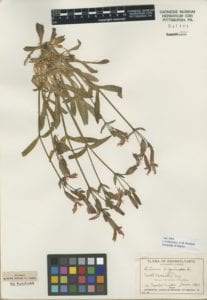
Oldest Allegheny County specimen collected in 1869Caltha palustris collected in 1874

 Carnegie Museum Herbarium specimens: (left) the oldest Allegheny County specimen collected in 1869 (right) Caltha palustris collected in 1874
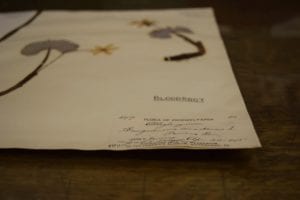
Sanguinaria canadensis specimen

Sanguinaria canadensis specimen collected in 1905

Botanists from Carnegie Museum of Natural History (Pittsburgh, PA) received funding from the US National Science Foundation (NSF) totaling $173,614 to partner with the ongoing Mid-Atlantic Megalopolis (MAM) Project. Along with students and volunteers, Mason Heberling, Postdoctoral Research Fellow, and Bonnie Isaac, Collection Manager, of the Botany Department will be working with the team to digitize nearly 190,000 plant specimens in the museum’s collection to better understand plant life in urban environments. This three-year project begins August 1, 2018.

Carnegie Museum’s Herbarium (CM) is the major botanical facility in the Upper Ohio Valley region and ranks among the top 25 herbaria in North America. In addition to large holdings from the region dating back to the 1800s, the more than 540,000 vascular plant specimens include worldwide geographic and taxonomic representation.

The Mid-Atlantic Megalopolis (MAM) Project includes specimens from 13 institutions in Pennsylvania, New York, New Jersey, Delaware, Maryland, and District of Columbia. According to the MAM Project website, “The data mobilized in this effort will help us achieve a better scientific understanding of living urban systems, a critical need for urban planners, restoration ecologists, environmental engineers, (landscape) architects, and conservationists engaged in creating more sustainable and better designed cities, including the constructed and restored natural environments of our urban areas.”

The initial MAM Project’s focus was on the densely-populated urban corridor from Washington, D.C. to New York City. This funding to the Carnegie Museum of Natural history substantially expands the project’s scope by adding the unique industrial and environmental history of the Greater Pittsburgh Region. The addition of the Carnegie Museum Herbarium will increase the number of digitized specimens in the MAM Project by more than 25% (nearly 190,000 plant specimens).

A digital herbarium will be publicly available online, making plant specimens in the Carnegie Museum of Natural History, and the information within, accessible to researchers worldwide. Along with high-resolution images for nearly 190,000 plant specimens at the Carnegie Museum of Natural History, the project will mobilize additional data, including who collected the specimen, where it was collected it (including GPS coordinates), when it was collected, and more.

The project also funds activities that enhance the ongoing Anthropocene initiatives at the Carnegie Museum of Natural History, including programs in invasive species management, education of nature in the city, and museum exhibition. Taken together, this project will improve scientific and public understanding of urban environments, highlighting sustainability and the future of this increasingly common biome in the current era of environmental change.
Filed Under: Press Release, Scientific Sections Tagged With: Bonnie Isaac, Botany, Mason Heberling

December 14, 2017 by wpengine

Giant Pumpkin Seed Harvest

By Bonnie Isaac

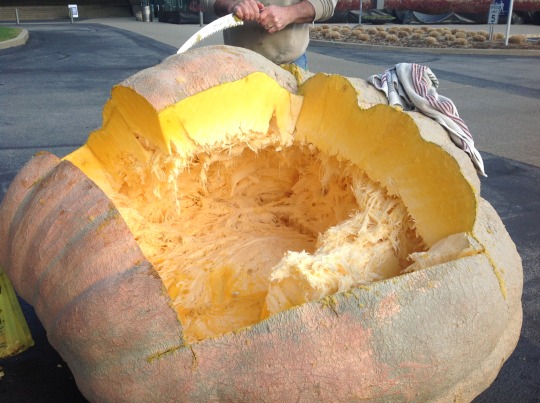
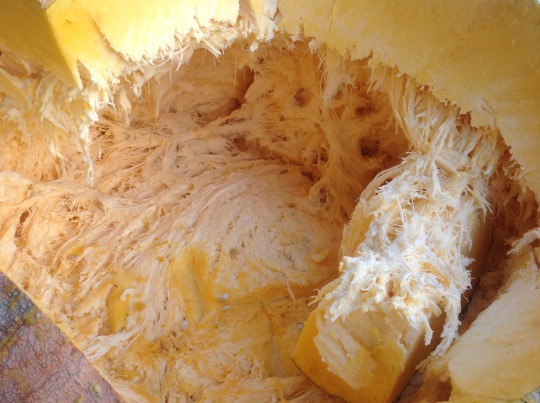
insides of a giant pumpkin

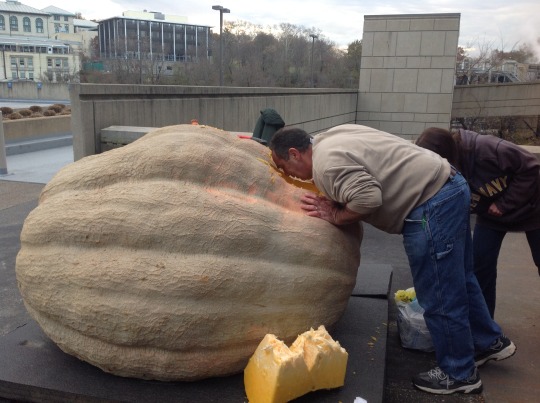
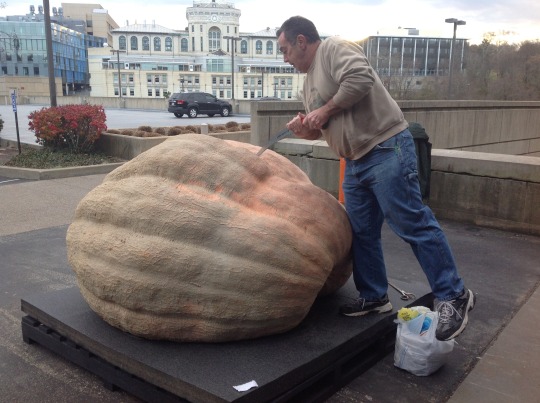
There was a giant pumpkin on display in the courtyard at the museum as part of We Are Nature: Living in the Anthropocene.

man cutting through a giant pumpkin with a hand saw

The farmer who grew the 2,090.5 pound pumpkin (above) recently came to the
museum on November 25th to harvest the seeds from the pumpkin.

man looking into a hole cut in the top of a giant pumpkin

He will use the seeds from this pumpkin to try to grow an
even bigger pumpkin next year.

dismantled giant pumpkin after having the seeds removed

That was one big pumpkin!

Bonnie Isaac is the collection manager in the Section of Botany at Carnegie Museum of Natural History. Museum employees are encouraged to blog about their unique experiences and knowledge gained from working at the museum.

Filed Under: Blog Tagged With: Bonnie Isaac, Botany

December 9, 2017 by wpengine

Indiana, Pennsylvania: Christmas Tree Capital of the World

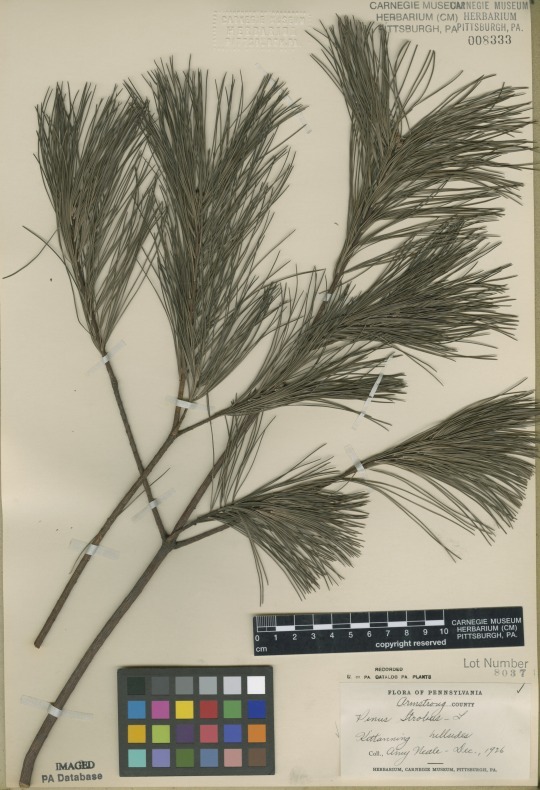
White Pine (Pinus strobus) herbarium specimen
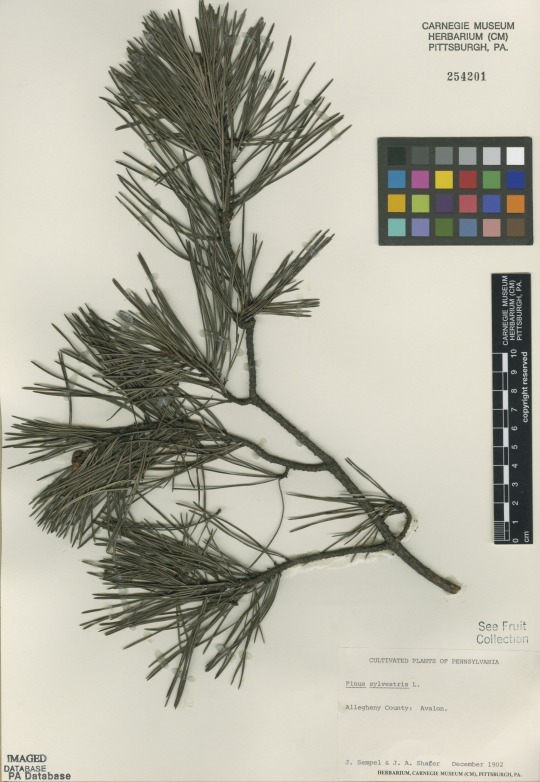
Scots Pine (Pinus sylvestris) herbarium specimen

Did you know that Pennsylvania is one of the top states for Christmas tree farms?  In fact, southwestern Pennsylvania’s very own Indiana County is known as the “Christmas Tree Capital of the World.”  According to the Indiana County Christmas Tree Growers’ Association, the title arose in 1956, when an estimated 700,000 trees were cut that year in the county.

Believe it or not, there are no Carnegie Museum specimens from Indiana County collected in the month of December.  This is not all that surprising, as most specimens aren’t collected in the winter.

These Pennsylvania specimens shown above were collected sometime in December (exact day unknown):  White Pine (Pinus strobus) in Kittanning in 1926 and Scots Pine (or “Scotch Pine”; Pinus sylvestris) from cultivation in
Avalon in 1902.  Both species are cultivated and used as decorative trees for the holidays, but less commonly than in the past. Many different evergreen conifer species are cultivated in the United States for decorative use during
the holidays. Needle length, softness, retention, color, and even scent vary by species or variety. Similarly, branching characteristics and branch strength differs by species. Plus, some species grow faster and easier than
others, which means some species are cheaper.

Before farms began cultivating trees for that purpose in the early 20th century, people just went to the woods to cut down their tree for the holidays. Some of the first Christmas tree farms in the United States started in Indiana County as early as 1918.  Many farms in the region turned their fields into Christmas tree farms as it became profitable. By 1960, more than 1 million trees were harvested per year in Indiana County alone.  The harvest in Pennsylvania has declined for several reasons, including increased popularity of artificial trees and consumer interest in Frasier fir trees (Abies fraseri; which are native to the southern Appalachians and grows slower in Pennsylvania than farms in North Carolina).  However, Pennsylvania is still among the top five states in terms of both number of working Christmas tree farms and trees harvested. According to the National Christmas Tree Association, 31,577 acres in Pennsylvania are used as Christmas tree plantations. Many of the Christmas tree lots in southwestern Pennsylvania get their trees from farms in Indiana County.


Botanists at Carnegie Museum of Natural History share pieces of the herbarium’s historical hidden collection on the dates they were discovered or collected. Check back for more!

Filed Under: Blog Tagged With: Bonnie Isaac, Botany, herbarium

December 8, 2017 by wpengine

Collected on this Day in 1928

herbarium specimen of holly

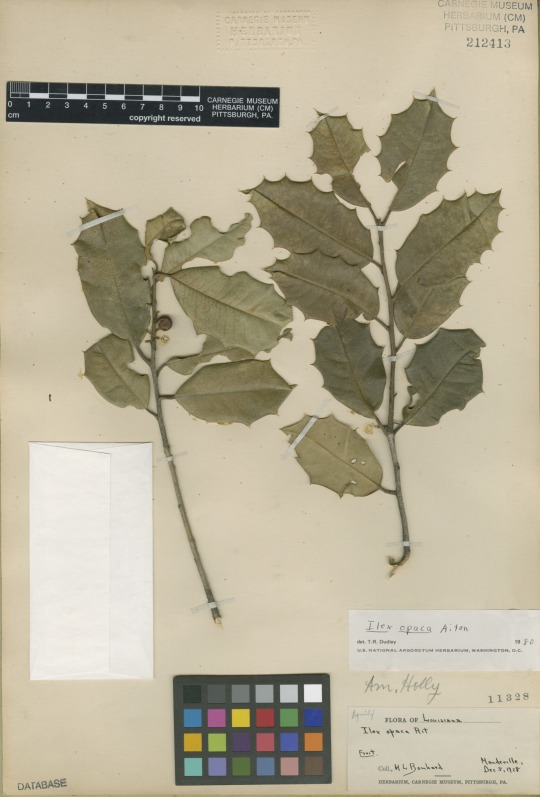
Are you decking your halls with boughs of holly?  This specimen of American holly (Ilex opaca) was collected by M.L. Bomhard in Mandeville, Louisiana on December 8, 1928. The holly revered for its holiday cheer usually refers to a related European species, Ilex aquifolium, but there are native holly species in North America that are equally, if not more, cheerful.

Like most other hollies, American holly is dioecious, meaning it has male and female flowers on separate plants. Only the female plants have the characteristic bright red berries we all know and love.  American holly stands out as one of the few broadleaved evergreen trees native to the Eastern US (i.e., has green leaves during winter that are not needles). This species is near the northern edge of its range in Pennsylvania and is more common in southern states. It is listed in Pennsylvania as a species of “special concern” due to its relative rarity.

Botanists at Carnegie Museum of Natural History share pieces of the herbarium’s historical hidden collection on the dates they were discovered or collected. Check back for more!

Filed Under: Blog Tagged With: Bonnie Isaac, Botany, herbarium, Mason Heberling

September 25, 2017 by wpengine

Collected on this Day in 1946

Canada goldenrod (Solidago canadensis) in bloom

Canada goldenrod (Solidago canadensis) sheet 2

It is that time of year when old fields across western Pennsylvania are painted yellow.

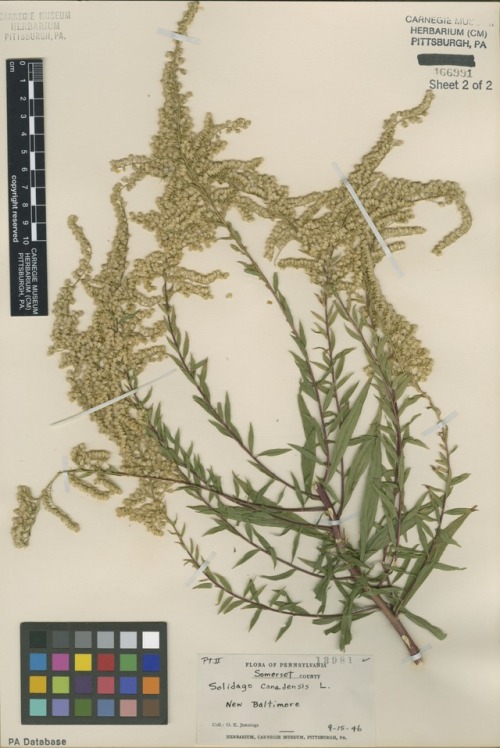
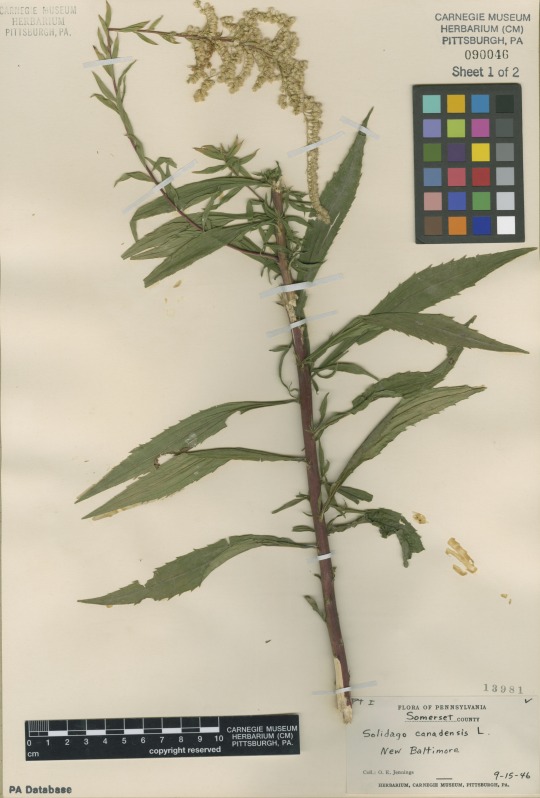
Collected on September 15, 1946, this specimen was found in New Baltimore, Somerset County by an influential curator of botany at the museum, Otto Jennings. There are many species of goldenrod (in the genus Solidago) in our region. They are often associated with runny noses and sneezing from fall allergies (hay fever), but don’t blame the goldenrods!

Their relatively heavy pollen rarely becomes air-borne, but rather these plants are insect-pollinated. Wind-pollinated species, like ragweed, are more likely your culprit. This specimen pictured here (split between two herbarium sheets) is Canada goldenrod (Solidago canadensis).

Canada goldenrod is a fall-blooming, native species common throughout western Pennsylvania. However, it was introduced to Europe and Asia for use in floral arrangements and gardens and has since become an invasive weed in other parts of the world.


Botanists at Carnegie Museum of Natural History share pieces of the herbarium’s historical hidden
collection on the dates they were discovered or collected. Check back for more!

Filed Under: Blog Tagged With: Bonnie Isaac, Botany, Mason Heberling

June 27, 2017 by wpengine

Scientists Live: Botanist Bonnie Isaac

Carnegie Museum of Natural History botanist Bonnie Isaac showed off pieces of the museum’s hidden collection and answered questions on Facebook Live on February 15.

Watch the video above, and follow the museum on Facebook for more information on the next live scientist video!

Filed Under: Blog Tagged With: Bonnie Isaac, Botany, Scientists Live

  • « Go to Previous Page
  • Page 1
  • Page 2
  • Page 3
  • Page 4
  • Page 5
  • Go to Next Page »

sidebar

About

  • Mission & Commitments
  • Directors Team
  • Museum History

Get Involved

  • Volunteer
  • Membership
  • Carnegie Discoverers
  • Donate
  • Employment
  • Events

Bring a Group

  • Groups of 10 or More
  • Birthday Parties at the Museum
  • Field Trips

Powdermill

  • Powdermill Nature Reserve
  • Powdermill Field Trips
  • Powdermill Staff
  • Research at Powdermill

More Information

  • Image Permission Requests
  • Science Stories
  • Accessibility
  • Shopping Cart
  • Contact
  • Visitor Policies
One of the Four Carnegie Museums | © Carnegie Institute | Privacy Policy | Terms of Use | Accessibility
Rad works here logo