by Abbey Hines
When I first stumbled into writing this blog post, I had no idea what direction I wanted to take with this topic of eggs, but then I went to Carol’s house and heard her stories. It got me thinking of one of my least favorite topics as someone who studies zoology—humans. People have this unusual habit of talking. Language (particularly syntax) is one of the few characteristics that set humans apart from the rest of the animal kingdom. So please take a uniquely human journey with me as I tell you the story of Carol Megill’s eggs.
Carol and I are Gallery Experience Presenters here at the Natural History Museum; however, she’s been doing it a lot longer than I have—like 25 years longer. Before this job, Carol was a school teacher for mainly elementary grades. (She taught college for a while, too, but that’s not important to the story.) In the 1960s, a few years after she started teaching, Carol was tasked to teach a second-grade boy to read. He’d fallen behind and needed extra help that Carol was happy to give. She tutored him the whole school year and around Easter he was up to a proper reading level. As a thank you, the boy’s grandmother gifted her a blown decorated egg with a duckling inside. This was her first blown and decorated egg that would be the beginning of a collection and hobby that would change her life.
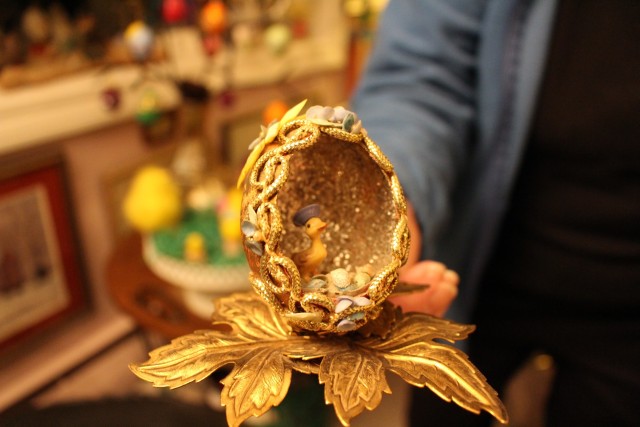
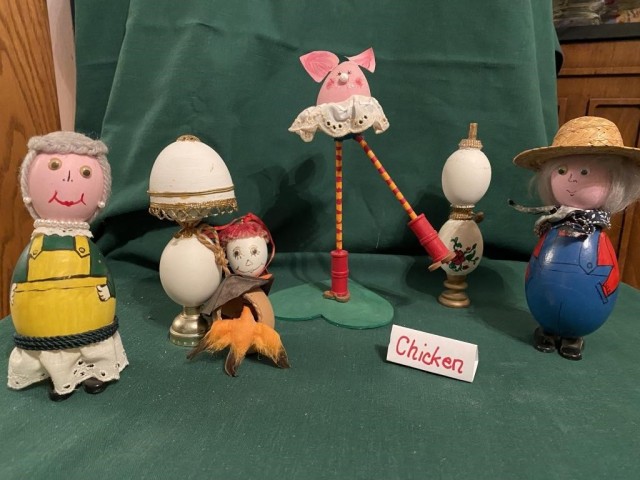
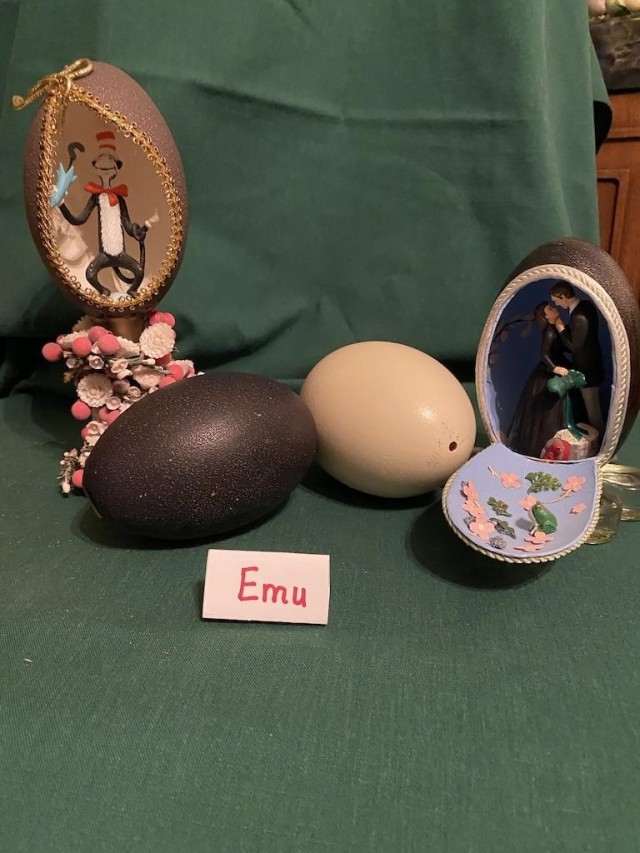
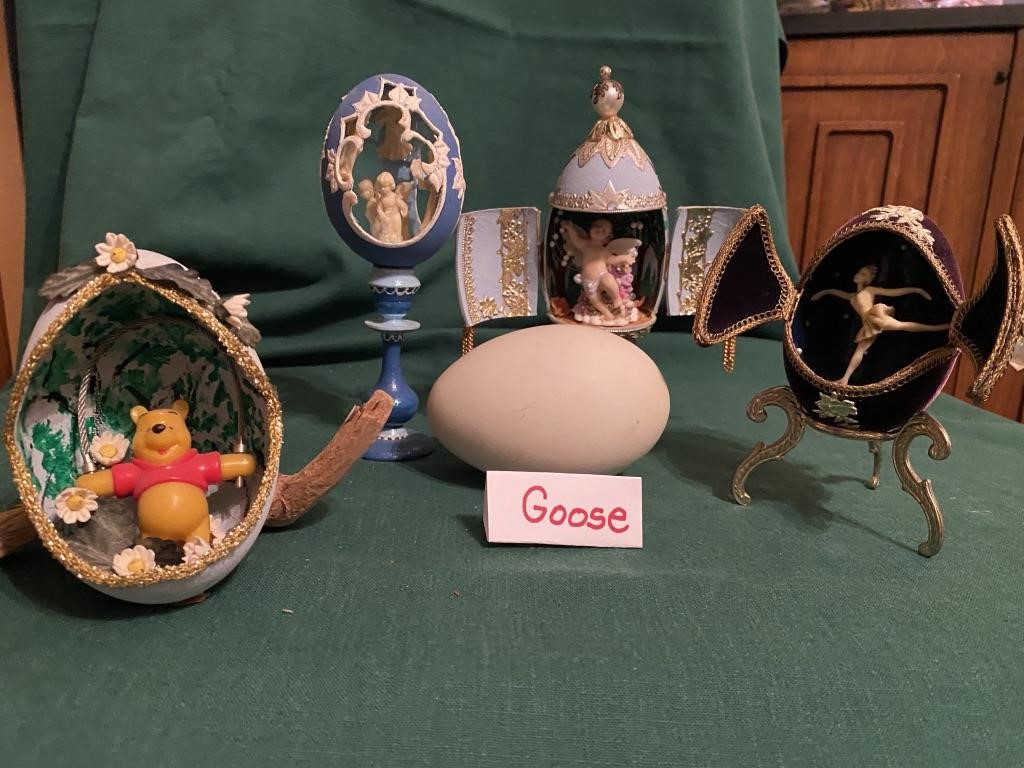
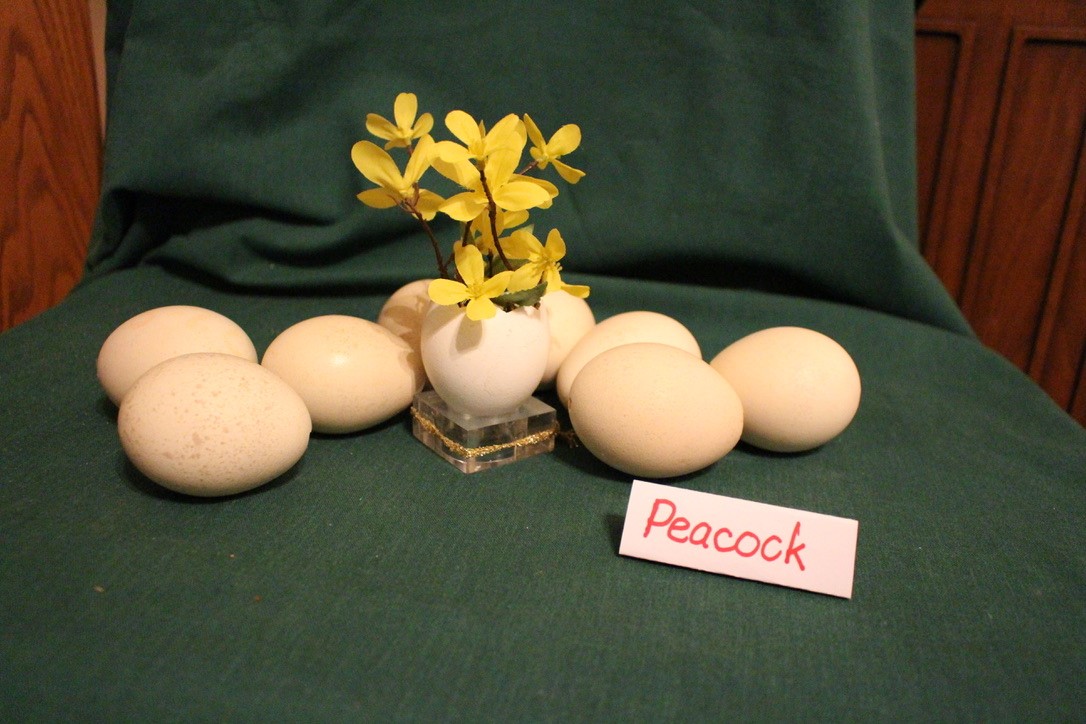
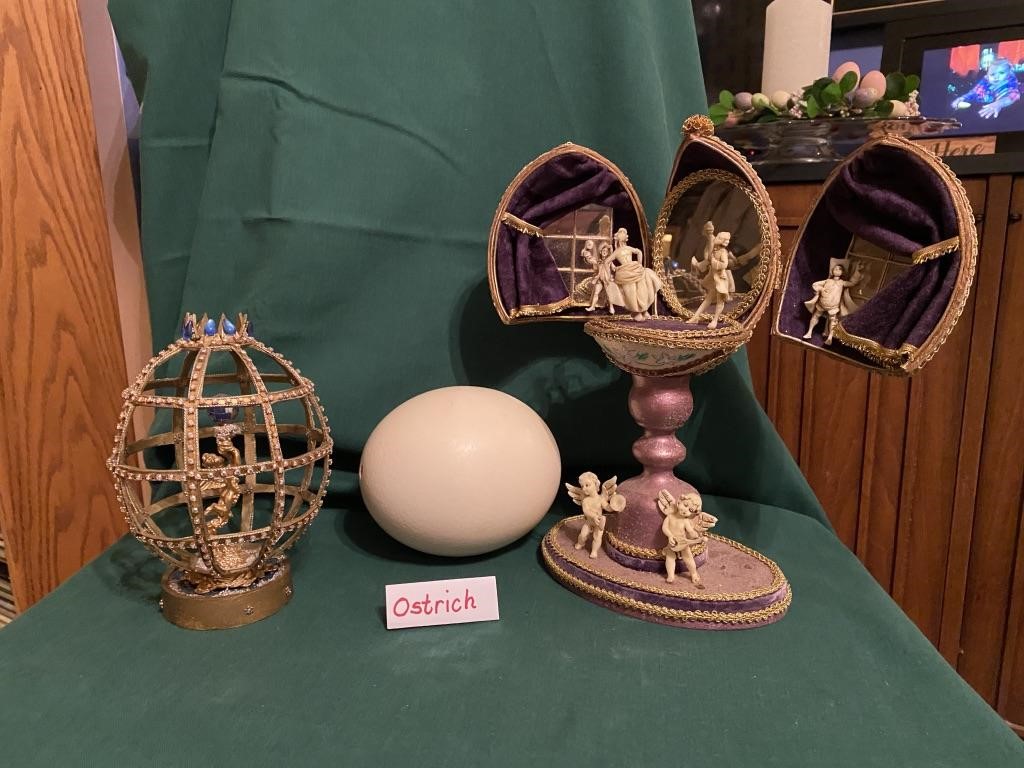
I’ve been trying to find an accurate definition of what Carol creates, but none seem fitting, so I will tell you how she makes them. She can only use certain regulation eggs due to the many proactive bird laws. Her eggs include a mix of chicken, goose, ostrich, rhea, emu, and peacock. First, she ‘blows out’ the egg by making a small hole in one end and blowing air into the cavity to empty out the albumen (whites) and the yolk. After it’s clean she can carefully cut into the shell without cracking it with a small Dremel drill. From there, it’s up to her imagination and artistic ability. They can take many forms, sometimes a scene erupts from within the eggs, a creature is formed from the egg, or it simply takes the shape of an amazing object to behold and interact with. She paints them with gold dust and glitter, adds hinges to make doors, and adds stands and scenery to transmute the egg into a stage for a story.
And the stories they tell! Each egg has its own history and Carol holds them carefully and is eager to share. Some are part of a set and belong with others, some she made to commemorate events or people, others she was trying a new technique that turned out amazing. Each is different and has a special place in the story of Carol’s eggs.
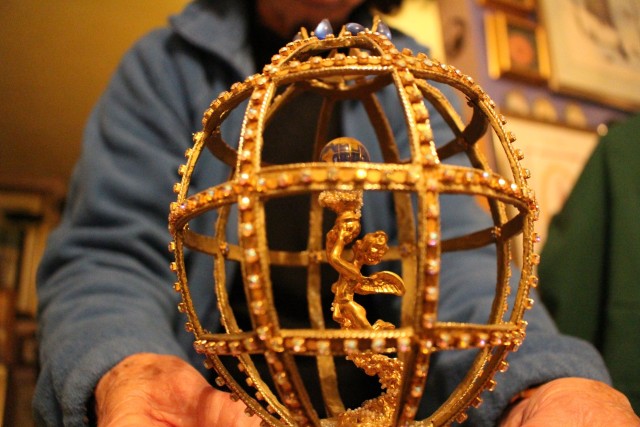
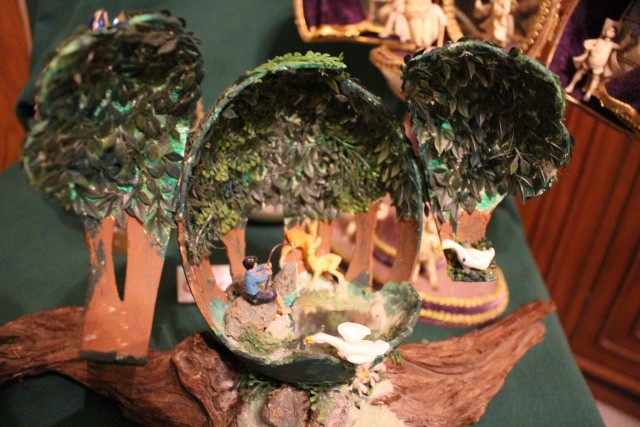
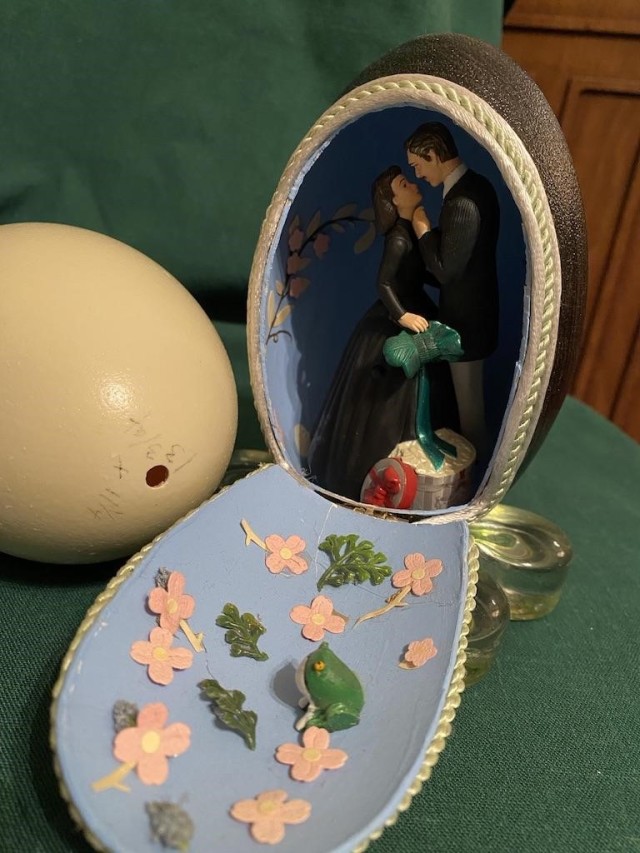
Carol told me she used to travel with her eggs to display and sell them. Then her husband, who was nothing but supportive, asked her to stop selling her art so she did, keeping her creations in their large numbers to decorate her house.
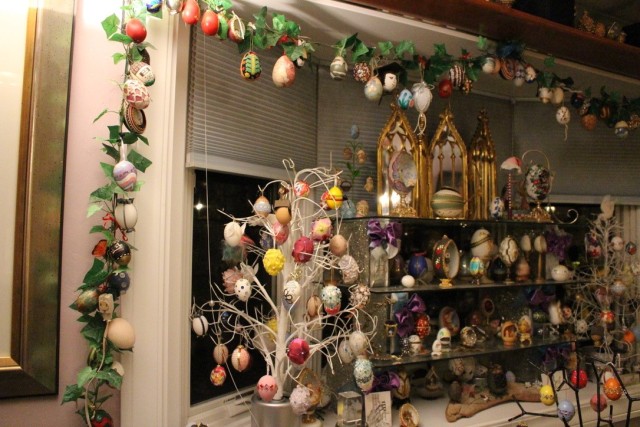
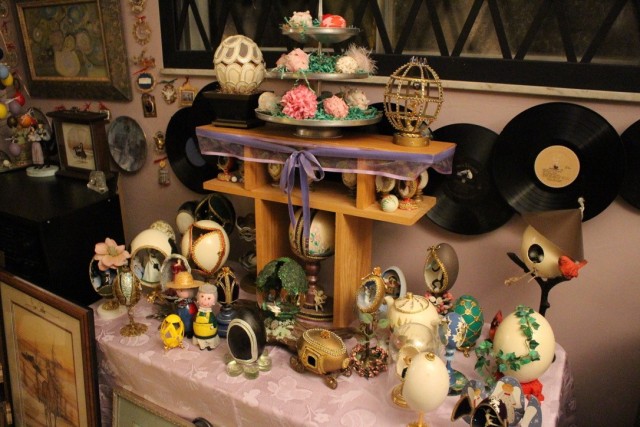
Carol says she doesn’t know how many eggs she has made over the years, but without a doubt, they are part of her amazing story as an educator, tennis player, mother and grandmother, Christian, art collector, and lovely woman.
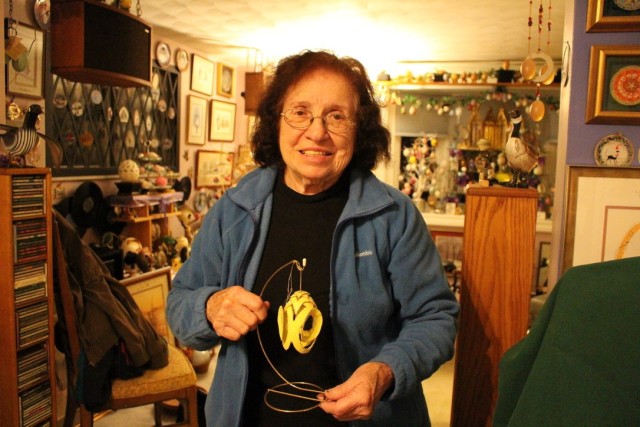
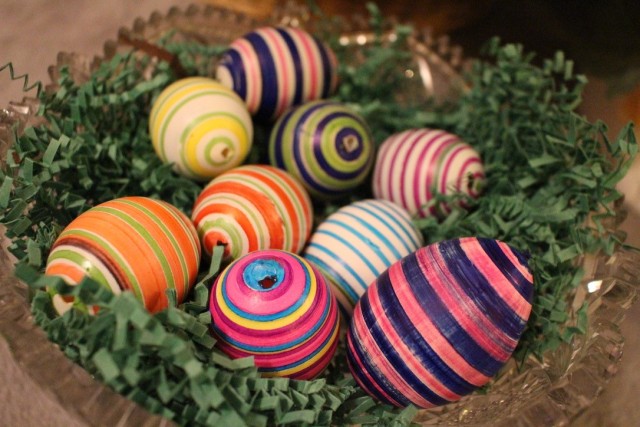
Abbey Hines and Carol Megill are Gallery Experience Presenters in CMNH’s Life Long Learning Department. Museum staff, volunteers, and interns are encouraged to blog about their unique experiences and knowledge gained from working at the museum.
Related Content
Super Science Activity: Paper Flowers
The Hunt is On! Eggs-traordinary Animals That Hide Their Eggs
Egg-cellent Egg Hunt Coloring Pages
Carnegie Museum of Natural History Blog Citation Information
Blog author: Hines, AbbeyPublication date: April 1, 2021
