• Skip to primary navigation
  • Skip to main content
  • Skip to primary sidebar

Carnegie Museum of Natural History

One of the Four Carnegie Museums of Pittsburgh

  • Visit
    • Buy Tickets
    • Visitor Information
    • Exhibitions
    • Events
    • Dining at the Museum
    • Celebrate at the Museum
    • Powdermill Nature Reserve
    • Event Venue Rental
  • Learn
    • Field Trips
    • Educator Information
    • Programs at the Museum
    • Bring the Museum to You
    • Guided Programs FAQ
    • Programs Online
    • Climate and Rural Systems Partnership
  • Research
    • Scientific Sections
    • Science Stories
    • Science Videos
    • Senior Science & Research Staff
    • Museum Library
    • Science Seminars
    • Scientific Publications
    • Specimen and Artifact Identification
  • About
    • Mission & Commitments
    • Directors Team
    • Museum History
  • Tickets
  • Give
  • Shop

climate change

October 22, 2018 by wpengine

This is not about the Anthropocene, or is it?

by Gil Oliveira

“How many times do you need to see the evidence? How many times must the point be made? We’re causing our own extinction. Too many red lines have been crossed. […] We’re going to have to adjust to new threats we can’t even imagine. We’ve entered a new era.”

This is not about climate change, mass extinction, or ocean acidification. Rather, this quote comes from the closing scene of the recent movie Jurassic World: Fallen Kingdom. It’s about the beginning of a new fictional Jurassic-Age, where humans and dinosaurs must learn to coexist.
sunset

The final scene is visually spectacular. But what really caught my attention was the idea connecting dinosaurs and a new era. Similarly, the Anthropocene is a newly proposed time period when geological and human timescales are colliding. It entails Earth’s distant past, and also invites us to consider our actions and decisions in light of their effects long into the future. In order to link past, present and future, and make sense of it, humans construct narratives.

In a time of uncertainty, when we are indeed crossing red lines at the planetary scale in real life, one can’t help but wonder what will the future look like? What narratives do we need to live better in this new world? At their most fundamental level, narratives speak about the human condition (and its limits), so how can we better understand the role of humans as actors capable of affecting the entire Earth System?

Yuval Noah Harari, the author of Sapiens. A Brief History of Humankind, posits that humans rule the world because they are the only animal that can cooperate flexibly in large numbers (see Harari’s website). But, he asks, what is the mysterious glue that enables millions of us to cooperate seemingly more effectively than other animal societies. The glue, he argues, is the stories we tell ourselves. It is our ability to create and believe in fiction. As Jonathan Gottschall puts it: sapiens are “the great ape with the storytelling mind.”

Humans use stories to understand the world. You and I think in them. Today, dominant cultural narratives gravitate around unlimited technology, endless progress and growth, and ferocious competition. Museums have not been spared. They too have been telling stories, focused on the law of the jungle and the survival of the fittest, on nature as a realm distinct from human life, on the progress of evolution and humans as its most highly evolved product. These imaginaries have contributed to shape our representations of the world. They shape our attitudes, our beliefs, our behaviors.

Coming back to Jurassic World: Fallen Kingdom, the last scene shows a scientist appearing before a congressional committee and declaring that “Humans and Dinosaurs are now going to be forced to co-exist. These creatures were here before us and if we’re not careful they’re going to be here after.” This new pretend era seems to be characterized by a dependence between dinosaurs and humans, and humility regarding the human place in the world.

This moral may have relevance to the Anthropocene. The stories we tell and consume shape us profoundly. Stories can help us connect with the non-human world. Like science fiction, museums too are powerful spaces for storytelling. They hold great potential for generating new stories and sensibilities that may help adapt our understanding and connection to nature to better serve us in confronting the challenges of the Anthropocene.

Gil Oliveira is a postgraduate student working as an intern in the section of the Anthropocene at the Carnegie Museum of Natural History. Museum employees are encouraged to blog about their unique experiences working at the museum.
Filed Under: Blog Tagged With: Anthropocene, climate change, dinosaurs, extinction

October 1, 2018 by wpengine

A Day at the Beach: The Anthropocene on Vacation

by Bob Jones

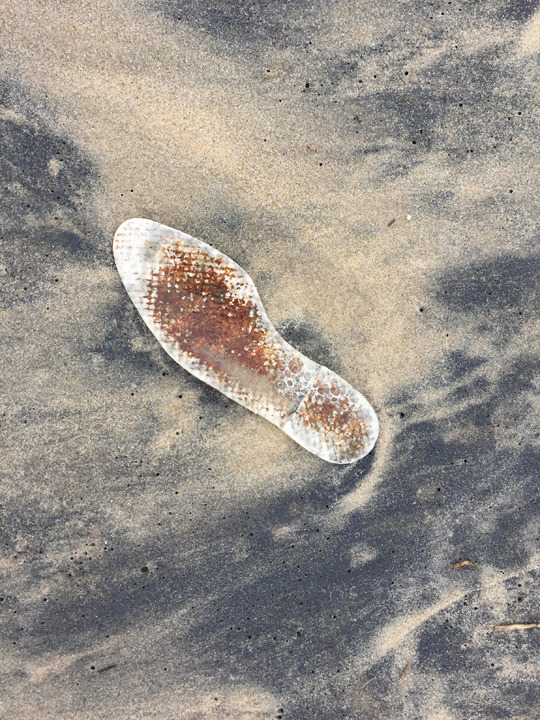
shoe insole on the beach

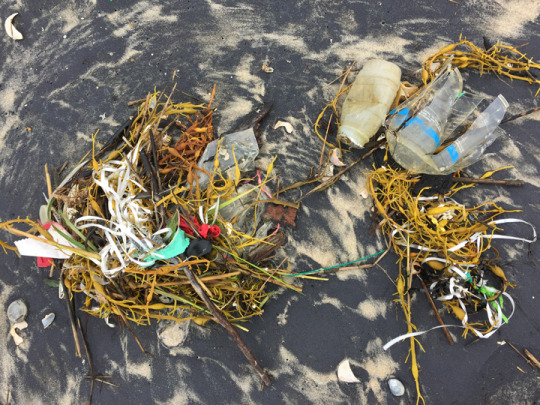
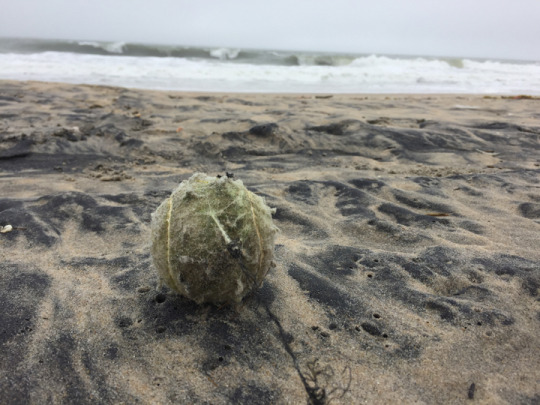
While on vacation, my wife and I took a morning walk on the beach to enjoy the sights and sounds of the surf while getting some exercise. The beach was mostly empty this morning and the sky was grey with the storm warnings of Hurricane Florence approaching to the south of our location in Delaware. It didn’t take long to notice a disturbing sight as we made our way on the sand. Plastic trash and lots of it. Bottles, bottle caps, beach toys, cups, straws, food containers, shoes, insoles, cigar tips and lots more. From a distance things look fine. Some clumps of seaweed on the sand. Just another day at the beach. Upon closer inspection, there are a wide variety of multi-colored bits of debris mixed throughout the tangles.

litter and seaweed on the beach

Since participating in the recent exhibition We Are Nature: Living in the Anthropocene at the Carnegie Museum of Natural History my awareness of our impact on the world that we inhabit has been raised to a new level. Of course, I’ve noticed trash on the beach in years past but the gradual increase over time is insidious in its’ nature. It creeps up on you slowly, so you hardly notice. It’s a bit like the metaphor of boiling a frog. The premise is that if a frog is put suddenly into boiling water, it will jump out, but if the frog is put in tepid water which is then brought to a boil slowly, it will not perceive the danger and will be cooked to death. I used to be more aware of avoiding stepping on jagged seashells, but now I find myself avoiding treading on the trash left on and washed up on the beach.

Don’t get me wrong, it’s not yet at an epidemic proportion at this location, but why wait until it reaches that point to act? To be honest, I couldn’t tell you if it was this bad last year or if I’m more conscious of it now. Either way, I want to share my experience and hopefully encourage others to make improvements wherever we can. After taking pictures to document the situation I felt the need to grab a trash bag and start collecting the debris for disposal. I realize that this is a big problem and it is easy to become overwhelmed. My first response is disgust and anger at the lack of care and respect that people give to the environment. My next response is, “What’s the use? Even If I bag this up it’s just sending the problem to another location.” My best response is to act with a purpose. I know that I’m just one person, but if one person can influence one other, ten others, a hundred others, to make a positive change then we have the potential to create a movement. With enough momentum, we can hold back the tide of trash and plastic that is choking our oceans and rivers.

tennis ball on the beach

I am old enough to remember when the air in Pittsburgh was so bad that it was impossible to see 100 feet ahead in the morning because of all the pollution released from the mills during the night. As a boy, I used to think that the buildings in downtown and Oakland were constructed with black stone because of the amount of soot built up on their surface. I was amazed when they were sandblasted in the 1980s and 90’s to reveal the brightness of the granite that lay beneath the layer of grime. The Monongahela River was thick with sludge and garbage being dumped into the water rendering it unsafe to swim in. My brother and I used to fish from the shore in the SouthSide snagging way more old tires and junk than fish. The only fish in the rivers were carp and catfish. Today, they hold tournaments to catch bass in the three rivers. That is a phenomenal improvement. In the last forty years, we have made tremendous improvements by addressing what the problem is and taking corrective action.

It is up to each one of us to not only recognize the problems that we face, but to seek and apply solutions to put things right. I was taught that when spending any time in nature I should leave things in better condition than I found them. The simple act of picking up trash and erasing any signs that I had been there is a step in the right direction. The importance of leaving the environment in good shape so the next person can enjoy the wonders of nature, as it is intended. Working together we can make a difference.

Bob Jones is the Print Shop Manager at the Carnegie Museum of Natural History. Museum employees are encouraged to blog about their unique experiences and knowledge gained from working at the museum.

Filed Under: Blog Tagged With: Anthropocene, Bob Jones, climate change, pollution

September 17, 2018 by wpengine

Combating Climate Change with Plants

by Steve Tonsor

aster

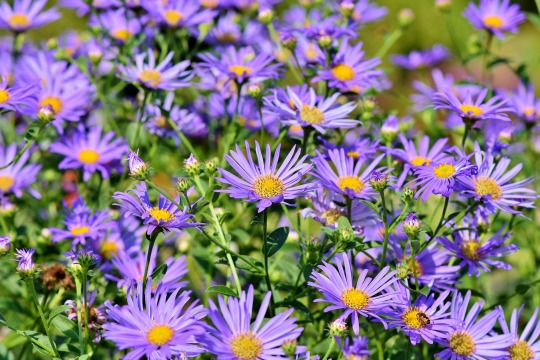
It is easy for everyone to overlook plants as being at the heart of Earth’s carbon and oxygen cycles; they are simply background and decoration as the default for many.  Yet they make the planet livable by producing atmospheric Oxygen and the ozone layer that reduces ultraviolet light to livable levels.  They scrub carbon dioxide and use the carbon to store the sun’s energy in molecules that are the basis of food, fuel, and fiber, nearly everything we use in one way or another.  They are also the most cost-effective way of sequestering carbon and reducing global change.

To understand the issue we are having with greenhouse gasses is to understand the carbon cycle. To understand the carbon cycle is to understand what plants do.

Growing more plants, by tending them ourselves and supporting organizations that do, is a low-cost way to make a positive contribution to the carbon cycle. It’s a method of combating climate change implementable on any scale you choose from backyard to continental.

Learn more about why low-cost, easy to implement ways to reduce climate change are critical in “A low-tech method for comabting climate change” from The Washington Post.

Steve Tonsor is Director of Science and Research at the Carnegie Museum of Natural History. Museum employees are encouraged to blog about their unique experiences and knowledge gained from working at the museum.

Filed Under: Blog Tagged With: climate change, plants

September 13, 2018 by wpengine

Wet Weekend!

by Joylette Portlock

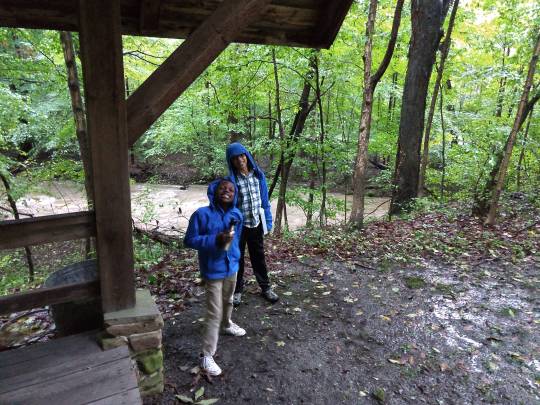
I had the chance to visit Powdermill Nature Reserve over the weekend. Yes, this past weekend, the one where it rained for three days almost continuously across a multi-state area. I took my kids with me, and we had a blast; after all, “rain is a grown-up problem.”* I have to say, the woods always feel so alive to me during/right after a hard rain. The world feels full of promise and power. As we watched Powdermill Run, swollen and wild, churning, cutting a new path through the woods after floods this summer, I thought of the power of water, to nourish, to sweep clean, and to cause damage.

kids in the rain

And, because being a grownup requires other grownup thoughts, I thought of the water in my basement, and considered, again, the costly prospect of installing a French drain around the house.

If you’re feeling like there seems to be more water than ever before, you’re not wrong. Climate change, one of the most significant challenges of the Anthropocene, is shifting the way water moves around the planet. It is resulting in more precipitation in places and at times where we don’t need it; a global phenomenon that is felt locally.

KDKA reported that this past Sunday in Pittsburgh was the second wettest day ever recorded in the area and we’ve already passed the yearly average rainfall. In other words, every drop from this point out in 2018 puts us closer to an annual “wettest ever” status, too.

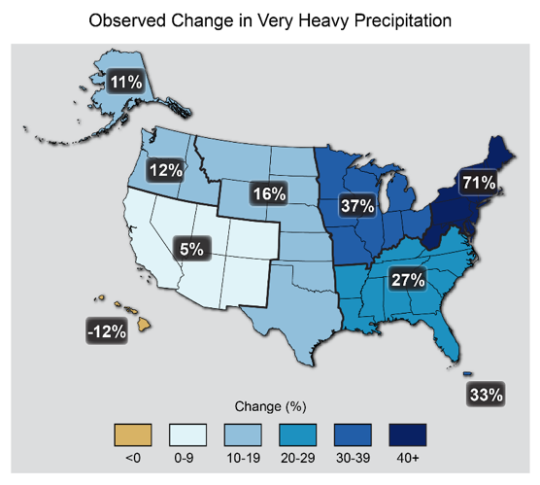
Our downpour this weekend is part of a trend. Since the 1950s, the amount of water falling during heavy downpours in this part of the U.S. has increased by 71%, per the 2014 National Climate Assessment, and that’s an increase that is definitely more than the natural variation:

The map shows percent increases in the amount of precipitation falling in very heavy events (defined as the heaviest 1% of all daily events) from 1958 to 2012 for each region of the continental United States; Adapted from: Global Climate Change Impacts in the United States.

This may come as a surprise – we usually talk about global warming in terms of heat waves and hurricanes – but climate scientists have known about these precipitation effects, which have a big impact even in non-coastal areas, for some time. It’s a big deal for flooding risk (and in areas like Pittsburgh, with a combined sewer-stormwater system, for water quality).

wow gif with LeVar Burton

In other words, it’s not just my basement at risk.

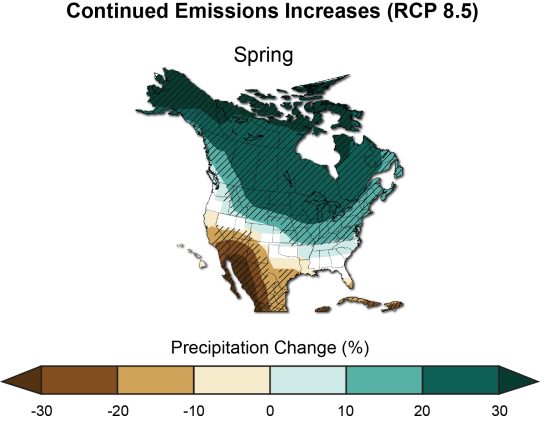
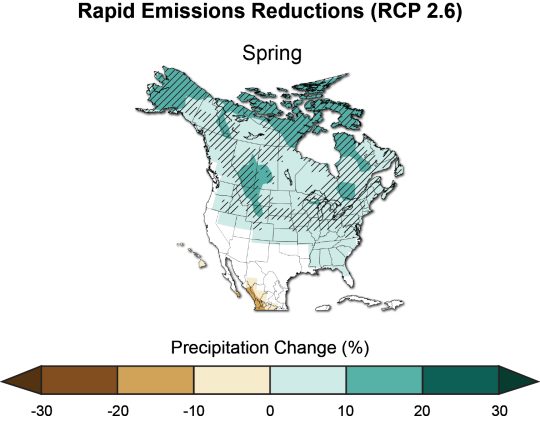
However, the forecast doesn’t have to be gloomy. Also from the National Climate Assessment: our actions right now make a difference, globally and locally. These maps show the projected difference in annual springtime precipitation, by 2090, if we take steps to dramatically reduce our impact on our climate now vs. if we don’t:

Springtime in 2090, Business as usual
Kenneth E. Kunkel, Cooperative Institute for Climate and Satellites – NC


Springtime in 2090, with changes
Kenneth E. Kunkel, Cooperative Institute for Climate and Satellites – NC

Grown-up problems, indeed. Playing in the rain can be very fun. And the world is full of promise and power. But perhaps Powdermill Run isn’t the only thing that requires a new path forward.

*Said to me by a summer camp counselor at the Pittsburgh Zoo and Aquarium in 2017 when I dropped my son off for camp on a rainy day.

Joylette Portlock, Ph.D., is associate director of science and research at Carnegie Museum of Natural History. She is also executive director of Communitopia, a nonprofit focused on climate change communication, and holds many other roles in the community. Museum employees are encouraged to blog about their unique experiences and knowledge gained from working at the museum.

From the National Climate Assessment website:

The National Climate Assessment summarizes the impacts of climate change on the United States, now and in the future.

A team of more than 300 experts guided by a 60-member Federal Advisory Committee produced the report, which was extensively reviewed by the public and experts, including federal agencies and a panel of the National Academy of Sciences.

Filed Under: Blog Tagged With: Anthropocene, climate change, Powdermill, Powdermill Nature Reserve, water

July 30, 2018 by wpengine

None Like It Hot

By Joylette Portlock

July. Long known across the U.S. for fireworks, barbecues, and a desire to stay cool any way we can. Whether it’s air conditioning, swimming pools, beaches or popsicles, the dog days of summer are often reminders that as humans, our comfort depends on an experienced ambient temperature roughly somewhere between 59 and 77 degrees (Fahrenheit).

But what if, instead of 77, it’s a full 40 degrees more: 117 degrees, like it was in California on July 6? Or 105, like it was in Japan last week? Then, it’s more than an issue of comfort; our lives depend on finding a way to stay cool, and in fact more than a hundred people have perished in heat-related deaths globally already this year.

Life in this new age, the Anthropocene, is marked by many things, including a human-caused increase in global heat, commonly referred to as global warming, or climate change. Risk from heat (or wildfires, or floods) is no longer something we have to rely on the overwhelmingly strong scientific consensus about global warming to tell us; every year, climate change impacts are becoming more and more obvious to everyone, whether you have a degree in climate science or not.

Weather and climate are different. Weather is what happens on a day-to-day basis. Climate is the range of weather that we expect and consider normal (i.e., summer is hot) – but normal is changing.

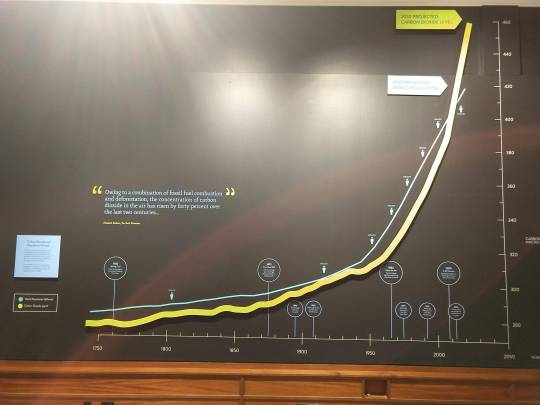
Graph showing the amount of CO2 in the atmosphere and human population
Photo: Graph showing the amount of CO2 in the atmosphere and human population from We Are Nature, on display until September 2018.

We’re now up to over 400 consecutive warmer-than-average months and counting. Carnegie Museum of Natural History’s collections, which span more than 140 years, can help show these shifts in many ways. One of the most important things we can do is to make connections and show the relevance between the basic scientific principles underlying natural phenomena and the evidence all around us; between what’s happening globally and what’s happening locally.

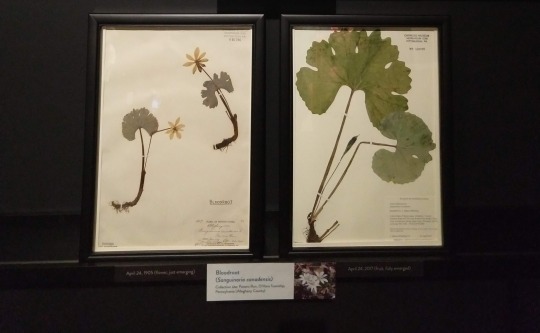
side by side comparison of plant specimens collected 100 years apart
Photo: The growth of plants collected today versus 100 years ago in the same locations, shown in We Are Nature, corroborates the observation of increasingly earlier springtime by documenting earlier maturation of these species.

The globe’s increasing heat is a result of fossil fuel use, food production, and our land use practices. We need energy and food, of course; but it’s critical that we recognize that the systems we impact also impact us. It’s not just our actions, but our interactions with the world around us that are the story. To understand what’s happening and improve our interactions with nature, we have to look at the big picture, and work to meet our needs in ways that minimize disruption to the overall system.

As summer heat waves get longer, more numerous, and more intense (and it seems the whole world is on fire, with deadly fires everywhere from California to Greece to inside the Arctic Circle) one connection is obvious: our need to be cool.

Joylette Portlock, Ph.D., is associate director of science and research at Carnegie Museum of Natural History. She is also executive director of Communitopia, a nonprofit focused on climate change communication, and holds many other roles in the community.

Filed Under: Blog Tagged With: Anthropocene, climate change, global warming, We Are Nature, We Are Nature: Living in the Anthropocene

July 26, 2018 by wpengine

New Member of the Section of Herpetology

By Jennifer Sheridan

The Section of Herpetology has welcomed a new curator—me! I’m happy to be writing this blog post as a way of introducing myself and to be joining the Carnegie Museums family.

I moved here from Singapore, where I was Assistant Professor of Environmental Studies for the past four years at Yale-NUS College, a small liberal-arts college entering its sixth year of operation. It was fantastic, but I’m very much looking forward to my new role as curator. People often ask me what exactly a curator does, and in my case, it won’t be too different from my job as a professor: my time will be divided between research & curation, outreach & education, and service to the museum (providing input for exhibits, for example). At Yale-NUS, about two-thirds of my time was teaching (education) and service, and about one-third was research, so I’m looking forward to being able to devote a larger portion of my time (closer to 50%) to research now that I’m here.

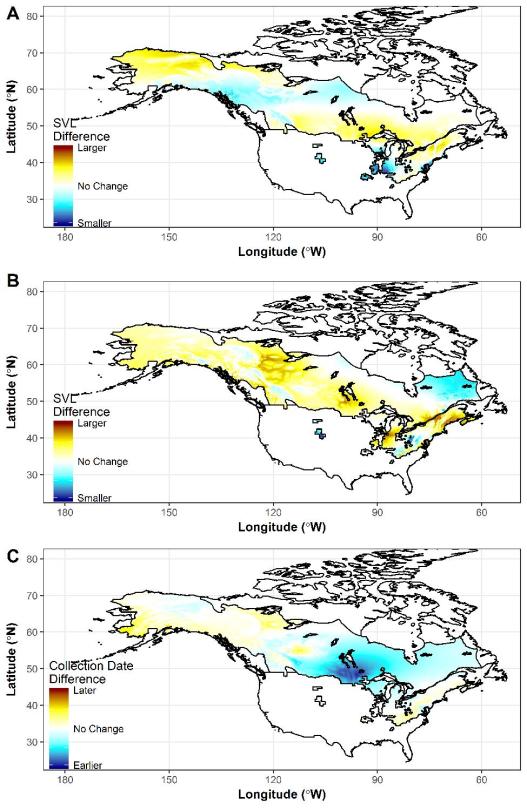
Additionally, it’s exciting to have such a great collection on hand with which to answer questions about ecological responses to climate change, one of the main foci of my research. In fact, a recent paper of mine relied heavily on specimens from the Carnegie Museum of Natural History. My co-authors and I used more than 350 specimens from this museum, plus more than 900 specimens from 15 other museums, collected between 1901–2000, to examine how wood frog body size and breeding have shifted in response to climate change.

maps showing body size changes
Image credit: Nick Caruso

We found that breeding and size shifted as predicted at broad spatial scales, but when we examined the data at finer spatial scales, local changes in climate did not accurately predict local body size changes. This suggests that climate itself is not the driving factor of observed body size changes, but rather that there is another mechanism driving such changes, that also correlates with climate. Moving forward, I’ll be combining examinations of the collections with field work to uncover other ways that amphibians have responded to climate change, whether through shifts in body size, breeding date, or geographic range, and what impacts that might have on ecosystem function. I’m excited to be here with such great resources for answering these interesting questions!

Jennifer Sheridan is the Assistant Curator in the Section of Herpetology at the Carnegie Museum of Natural History. Museum employees are encouraged to blog about their unique experiences and knowledge gained from working at the museum.

Filed Under: Blog Tagged With: amphibians, Anthropocene, climate change, herpetology, Jennifer Sheridan, reptiles

  • « Go to Previous Page
  • Page 1
  • Page 2
  • Page 3
  • Page 4
  • Page 5
  • Go to Next Page »

sidebar

About

  • Mission & Commitments
  • Directors Team
  • Museum History

Get Involved

  • Volunteer
  • Membership
  • Carnegie Discoverers
  • Donate
  • Employment
  • Events

Bring a Group

  • Groups of 10 or More
  • Birthday Parties at the Museum
  • Field Trips

Powdermill

  • Powdermill Nature Reserve
  • Powdermill Field Trips
  • Powdermill Staff
  • Research at Powdermill

More Information

  • Image Permission Requests
  • Science Stories
  • Accessibility
  • Shopping Cart
  • Contact
  • Visitor Policies
One of the Four Carnegie Museums | © Carnegie Institute | Privacy Policy | Terms of Use | Accessibility
Rad works here logo