• Skip to primary navigation
  • Skip to main content
  • Skip to primary sidebar

Carnegie Museum of Natural History

One of the Four Carnegie Museums of Pittsburgh

  • Visit
    • Buy Tickets
    • Visitor Information
    • Exhibitions
    • Events
    • Dining at the Museum
    • Celebrate at the Museum
    • Powdermill Nature Reserve
    • Event Venue Rental
  • Learn
    • Field Trips
    • Educator Information
    • Programs at the Museum
    • Bring the Museum to You
    • Guided Programs FAQ
    • Programs Online
    • Climate and Rural Systems Partnership
  • Research
    • Scientific Sections
    • Science Stories
    • Science Videos
    • Senior Science & Research Staff
    • Museum Library
    • Science Seminars
    • Scientific Publications
    • Specimen and Artifact Identification
  • About
    • Mission & Commitments
    • Directors Team
    • Museum History
  • Tickets
  • Give
  • Shop

climate change

July 13, 2018 by wpengine

Migrate or Die

By Dr. Nicole Heller

Becoming Migrant was this year’s theme for the Carnegie Nexus. The series explored the science and art of passage through creative programming. Migration is a very important issue for wildlife conservation in the Anthropocene. Roads and building developments heavily fragment landscapes, leading more animals to be hit by cars or run into trouble with people. Movement is especially hard for animals that don’t fly and need large home ranges to gather sufficient food, such as American Black Bears and bobcats, two large mammal species that live here in Allegheny County.
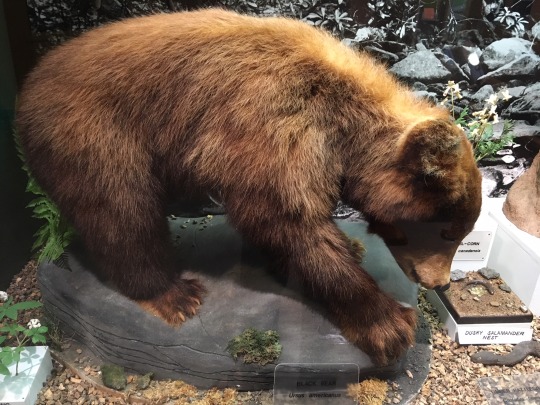
baby black bear taxidermy
Baby black bear, Ursus americanus, on display at Powdermill Nature Reserve.

Conservation has long recognized the need to create connectivity between protected areas to support the movement of large mammals in the landscape, but with climate change, connectivity has become paramount to the long-term success of protected areas and species in general.  As the climate changes, plants and animals must migrate to track suitable climate conditions.  This means that more species are becoming migrant, and their long-term survival depends on it.

Prioritizing connectivity planning and making sure we do it in ways that are climate-smart is a leading edge of conservation science.  There are many different types of corridor projects, from building crossings over particularly dangerous roads, such as the Liberty Canyon Wildlife Crossing in Los Angeles, CA. Or large-landscape connectivity projects to create continental migration pathways such as Y2Y project.

I first wrote about climate adaptation 10 years ago. In this research, I identified that the most impactful thing we could do to help species survive climate change is to create habitat connectivity in the landscape. Recently, I published two scientific articles, with a group of colleagues, further exploring the issue of climate change and connectivity. In one paper, published in Environmental Research Letters, we explore the best models and methods for incorporating climate change into connectivity conservation planning. And in the other paper, published in Conservation Biology, we consider best practices to take corridors from idea to implementation on the ground.

We hope this information will be helpful to conservation groups around the world who are working to make sure the landscape supports wildlife today and into the future.

Dr. Nicole Heller is Curator of the Anthropocene for Carnegie Museum of Natural History. Museum employees are encouraged to blog about their unique experiences working at the museum.
Filed Under: Blog Tagged With: Anthropocene, climate change, Nicole Heller, We Are Nature, We Are Nature: Living in the Anthropocene

January 19, 2018 by wpengine

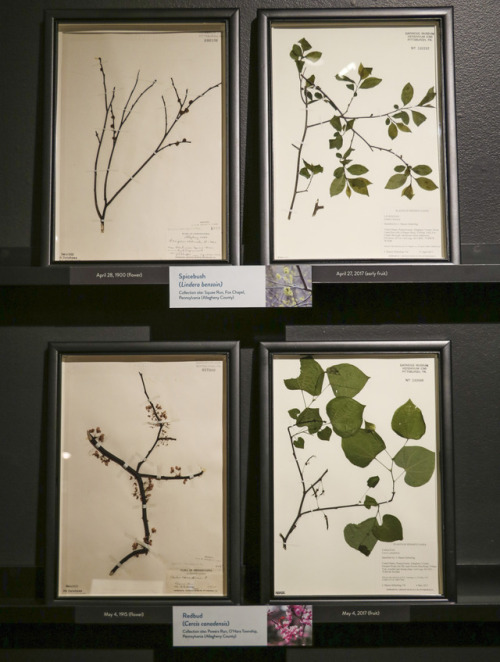
Notice any differences?

four herbarium specimens displayed in We Are Nature

Notice any differences between these two sets of botany sheets?

These specimens of spicebush and redbud from the museum’s herbarium were collected on the same day, exactly 100 years apart.

Changing seasonal patterns, thought to be caused by climate change, are causing plants to bloom and flower increasingly earlier in the year. Historical museum collections are helping researchers who are documenting environmental changes caused by humans in the Anthropocene.


The Anthropocene is the current geological era in which humans are making a profound impact on the geological strata. While the term itself is still being debated by geologists, the museum is embracing it as a social and cultural tool for exploring the broad sum effect humans are having on the planet in the exhibition We Are Nature: Living in the Anthropocene—open now through summer 2018.

Filed Under: Blog Tagged With: climate change, We Are Nature, We Are Nature: Living in the Anthropocene

January 1, 2018 by wpengine

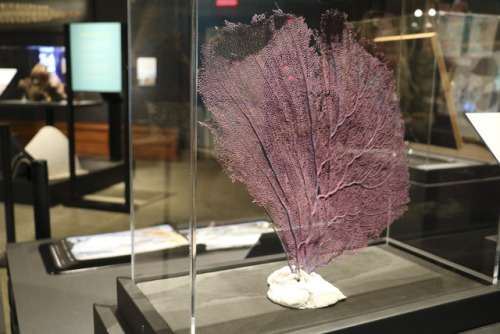
Did you know that coral is expected to be the first casualty?

purple specimen of coral

Did you know that coral is expected to be the first casualty of the age of humanity (also known as the Anthropocene)?

In the last 30 years alone, half of the world’s coral has died.

When ocean water warms due to higher CO2 levels, the algae that live in the coral branches can’t survive, leaving the coral without a food source. The Great Barrier Reef experiences more and more coral bleaching daily, as can be seen on this specimen in the new exhibition We Are Nature: Living in the Anthropocene at Carnegie Museum of Natural History.


The Anthropocene is the current geological era in which humans are making a profound impact on the geological strata. While the term itself is still being debated by geologists, the museum is embracing it as a social and cultural tool for exploring the broad sum effect humans are having on the planet in the exhibition We Are Nature: Living in the Anthropocene—open now through summer 2018.

Filed Under: Blog Tagged With: climate change, global warming, We Are Nature, We Are Nature: Living in the Anthropocene

December 5, 2017 by wpengine

Did you know?

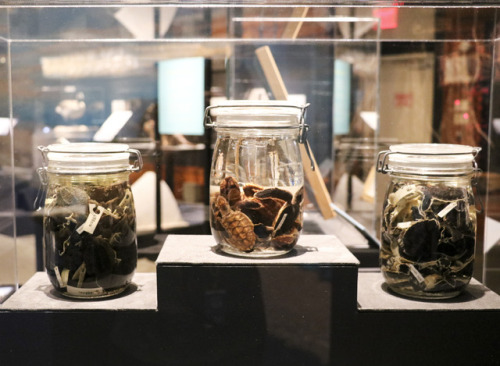
baby sea turtle specimens in jars

Did you know that water temperature determines the sex of a sea turtle?

Warmer waters produce female sea turtles while cooler waters produce males, meaning that rising water temperatures are producing too few males for the females to mate with. All seven species of sea turtle are being affected by warmer waters along breeding grounds. Learn more in We Are Nature: Living in the Anthropocene, open now at Carnegie Museum of Natural History.


The Anthropocene is the current geological era in which humans are making a profound impact on the geological strata. While the term itself is still being debated by geologists, the museum is embracing it as a social and cultural tool for exploring the broad sum effect humans are having on the planet in the exhibition We Are Nature: Living in the Anthropocene—open now through summer 2018.

Filed Under: Blog Tagged With: climate change, We Are Nature, We Are Nature: Living in the Anthropocene

December 4, 2017 by wpengine

The Economics of Climate Change

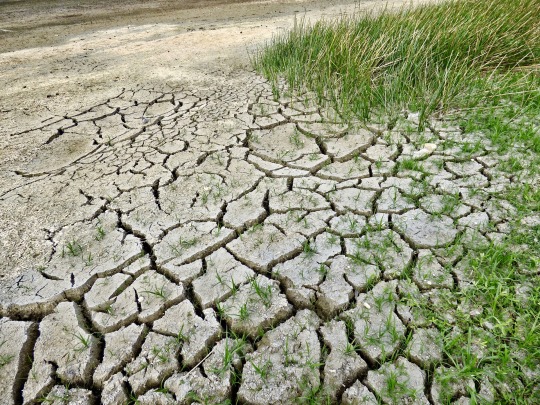
cracked dry ground with grass growing out of one side

by Barbara Klein

Scientists agree that the list of species in danger of extinction due to climate change is long. Very long.

But according to a group of economists and scholars collectively known as the Climate Impact Lab, that list must also include our nation’s poor.

In their new study published in Science magazine, professors Solomon Hsiang of the University of California, Berkeley and Robert Kopp of Rutgers University crunched the numbers and found that if climate change continues unabated, the country’s most-in-need populations will experience the most devastation.

Focusing on the 3,140-plus counties in the United States, the research measured 29,000 potential outcomes based on different temperature and economic variables.

As reported in the Washington Post, here is what they concluded. “The poorest third of counties—many of them in the South and lower Midwest—could sustain economic losses by the last decades of this century that would be comparable to those suffered during the Great Recession.

“The Gulf Coast would face major risks from hurricanes and encroaching seas,” the article continued. “Higher temperatures in the South would drive up air-conditioning costs and hamper productivity. Agriculture in the Midwest could see losses on par with the Dust Bowl of the 1930s.”

But the big difference, Hsiang pointed out, is that “these changes are here to stay.”

In terms of the bottom line, The Atlantic summed it up this way: “Overall, the paper finds that climate change will cost the United States 1.2 percent of its GDP for every additional degree Celsius of warming.”

More specifically, the stats suggest that our nation’s poorest 100 counties will experience an average loss of 11 percent of their GDP due to climate change while the richest 100 counties will lose just 1 percent.

Although the study dealt primarily with the United States, its global predictions were equally ominous. It seems there is no place on Earth where climate change won’t disproportionately impact the poorest people in the poorest nations.


The Anthropocene is the current geological era in which humans are making a profound impact on the geological strata. While the term itself is still being debated by geologists, the museum is embracing it as a social and cultural tool for exploring the broad sum effect humans are having on the planet in the exhibition We Are Nature: Living in the Anthropocene—open now through summer 2018.

Filed Under: Blog Tagged With: climate change, We Are Nature, We Are Nature: Living in the Anthropocene

November 28, 2016 by wpengine

Songbirds and Climate Change

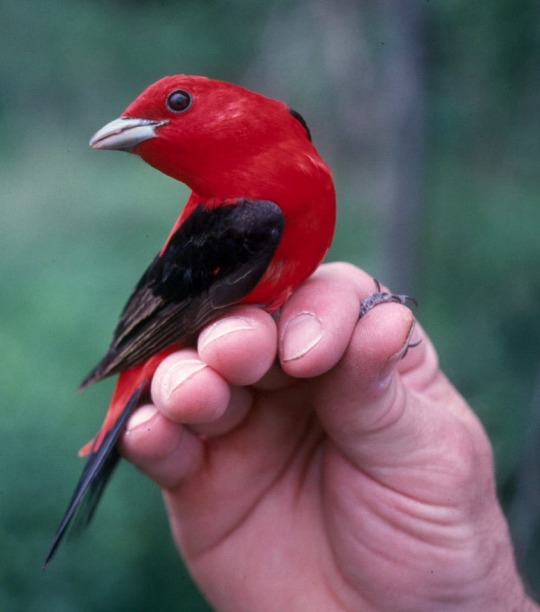
song bird being held by a researcher
How are songbirds in western Pennsylvania adapting to climate change?

Fairly well according to Carnegie Museum of Natural History researchers Molly McDermott and Luke DeGroote, who observed adaptations in a recent paper titled “Global Change Biology.” Their work was covered in Anthropocene Magazine and referenced on NPR’s Science Friday this month.

Using 53 years’ worth of data collected at Powdermill Nature Reserve, Carnegie Museum of Natural History’s environmental research center in Rector Pa., DeGroote and McDermott observed that several species of songbirds have adapted their breeding cycles to warmer weather and earlier springs.

“I think of it as a very hopeful note. We can think of it as mother nature’s resilience, giving us a chance to be doing everything else we could be doing to help birds,” freelance writer Brandon Keim said on Science Friday about his Anthropocene Magazine article on McDermott and DeGroote’s paper.

However, DeGroote says that despite the note of optimism, there’s also an underlying word of caution.

“Because there is a disconnect between plant phenology and migratory timing, there may come a time when birds are no longer able to continue to ‘catch up’ after arrival by breeding earlier,” DeGroote said.

You can read the Anthropocene article or listen to Science Friday, where the segment featuring the research is about three minutes into the full episode at (89:21 to -86:53).

Filed Under: Blog Tagged With: adaptation, Birds, climate change, global warming

  • « Go to Previous Page
  • Page 1
  • Page 2
  • Page 3
  • Page 4
  • Page 5
  • Go to Next Page »

sidebar

About

  • Mission & Commitments
  • Directors Team
  • Museum History

Get Involved

  • Volunteer
  • Membership
  • Carnegie Discoverers
  • Donate
  • Employment
  • Events

Bring a Group

  • Groups of 10 or More
  • Birthday Parties at the Museum
  • Field Trips

Powdermill

  • Powdermill Nature Reserve
  • Powdermill Field Trips
  • Powdermill Staff
  • Research at Powdermill

More Information

  • Image Permission Requests
  • Science Stories
  • Accessibility
  • Shopping Cart
  • Contact
  • Visitor Policies
One of the Four Carnegie Museums | © Carnegie Institute | Privacy Policy | Terms of Use | Accessibility
Rad works here logo