• Skip to primary navigation
  • Skip to main content
  • Skip to primary sidebar

Carnegie Museum of Natural History

One of the Four Carnegie Museums of Pittsburgh

  • Visit
    • Buy Tickets
    • Visitor Information
    • Exhibitions
    • Events
    • Dining at the Museum
    • Celebrate at the Museum
    • Powdermill Nature Reserve
    • Event Venue Rental
  • Learn
    • Field Trips
    • Educator Information
    • Programs at the Museum
    • Bring the Museum to You
    • Guided Programs FAQ
    • Programs Online
    • Climate and Rural Systems Partnership
  • Research
    • Scientific Sections
    • Science Stories
    • Science Videos
    • Senior Science & Research Staff
    • Museum Library
    • Science Seminars
    • Scientific Publications
    • Specimen and Artifact Identification
  • About
    • Mission & Commitments
    • Directors Team
    • Museum History
  • Tickets
  • Give
  • Shop

collections

March 16, 2018 by wpengine

Geographic coverage of mammalian species is worldwide but…

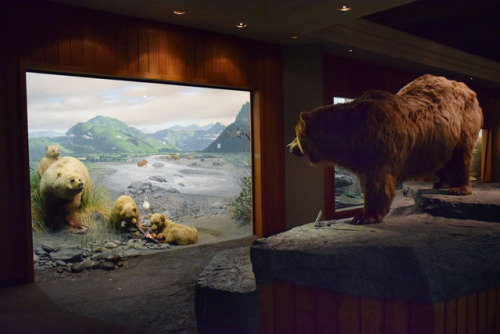
bears in the hall of North American wildlife

Geographic coverage of mammalian species is worldwide but Carnegie Museum of Natural History’s collection’s strength is in North American material.

The collections from Pennsylvania and West Virginia are among the best in the world, and there are mammals from all 50 states. Holdings from the eastern Arctic are the best of any United States museum and include the holotype (specimen used to describe a new species) of a freshwater seal.

Recent acquisitions from Belize, Bonaire, Curaçao, Costa Rica, Dominica, El Salvador, Grenada, St. Vincent and the Grenadines, Guatemala, Honduras, Jamaica, Mexico, Puerto Rico, and Trinidad and Tobago augment historical specimens from Central America.
Filed Under: Blog Tagged With: collections, Hall of North American Wildlife, mammals

October 31, 2016 by wpengine

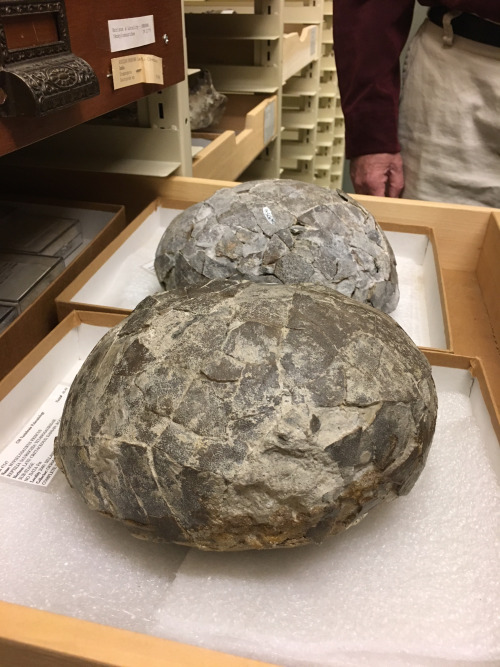
Dinosaur eggs!

dinosaur egg fossils

Dinosaur eggs! These fossilized eggs are part of Carnegie Museum of Natural History’s hidden collection in the Section of Vertebrate Paleontology.

Filed Under: Blog Tagged With: behind the scenes, collections, dinosaur eggs, dinosaurs, fossils, museums

September 6, 2016 by wpengine

Mollusk Collection

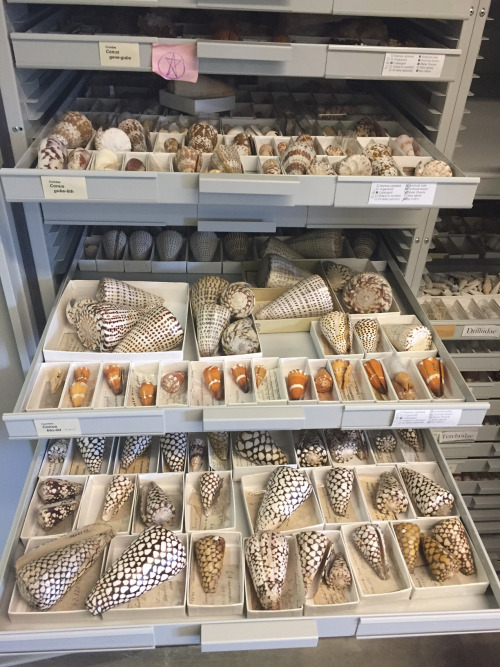
specimen drawers from the Mollusk Collectionby Hayley Pontia

Carnegie Museum of Natural History’s collection of mollusks is home to about 3 million specimens that include more land and freshwater snails from Pennsylvania and its adjacent states than all other U.S. museums combined.

What are mollusks you ask? They are one of the most diverse groups of animals on the planet. They have a soft body with a ‘head’ and ‘tail’ region. Their bodies are most commonly covered in a hard exoskeleton, but some can even have their shells on the inside.

You may know the most common mollusks without even knowing they are mollusks: snails, clams, octopuses, scallops, oysters, and even squids are all part of this phylum. Many people are around these animals, yet know very little about them.

As assistant curator and head of mollusks at Carnegie Museum of Natural History, Tim Pearce spends a lot of time researching and understanding these specimens.  Every second Saturday, Pearce gives tours of the collection found in the basement of the museum for those interested in learning more about these unique species.

Pearce collecting snails at Carrington Point on Santa Rosa Island, California. San Miguel Island is visible in the distance. (Photo by Charles Drost.)

Hayley Pontia is the marketing assistant at Carnegie Museum of Natural History and a student at the University of Pittsburgh. Museum employees are encouraged to blog about their unique experiences of working at the museum.

Filed Under: Blog Tagged With: behind the scenes, collections, mollusks, snails, Tim Pearce

June 8, 2016 by wpengine

A Holotype with a History

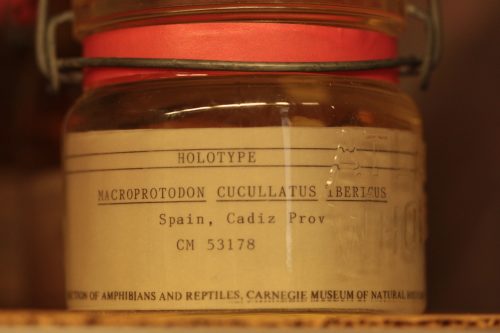
jar with a label that reads "Macroprotodon cucullatus iberius"by José Padial

This jar contains the holotype of Macroprotodon cucullatus iberius, a subspecies of false smooth snake, in the herpetology collection of Carnegie Museum of Natural History.

The holotype is the name-bearer of a species and every species recognized by scientists is associated to an holotype.

The specimen was collected in Cadiz Province, Spain by American herpetologist Stephen Busack. Because of his knowledge of
Spanish, Stephen Busack was deployed in Rota Naval Base during the Vietnam War, and he used his spare time to research the area’s poorly known local fauna of amphibians and reptiles.

His research revealed new species, and the precise locality data he collected is now key to demonstrate the radical transformation that the environment of the area has experienced during the last 40 years.

Many of the populations studied by Busack are now gone. Populations from Cadiz Province are now considered to belong to the species Macroprotodon brevis and it is the smaller and rarest snake of the Iberian Peninsula. It feeds on lizards, baby snakes, blind snakes, and even individuals of its own species!

José Padial is the William and Ingrid Rea Assistant Curator of Herpetology at Carnegie Museum of Natural History. He most recently traveled to the remote Vilcabamba mountains of Peru in the pursuit of biodiversity research. Read more at www.tumblr.com/blog/expeditions-carnegiemnh.

Filed Under: Blog Tagged With: collections, conservation, herpetology, museums, Pittsburgh, snakes

May 4, 2016 by wpengine

Fire Destroys Museum Collection  in Delhi

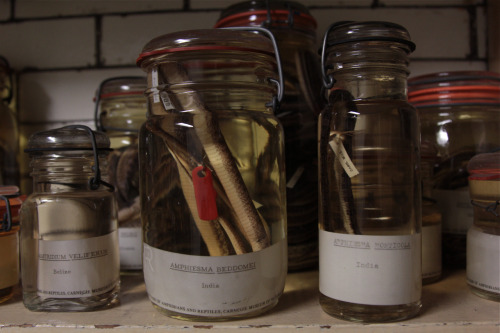
Specimens in Carnegie Museum of Natural History's Alcohol House
Carnegie Museum of Natural History’s collection includes 2855 specimens from India, mostly collected by Carl Gans and collaborators from the National Museum of Natural History in Delhi.

by Jose M. Padial

On April 26, a massive fire devoured the National Museum of Natural History in Delhi,
India.

The museum was home to invaluable collections and played a crucial role in environmental education in a country suffering of rampant habitat destruction.

This is a great loss for nature lovers and for the museum world but also a particular tragedy for the Carnegie Museum of Natural History. The Carnegie has an important historical connection with the museum in Delhi, for during the early stages of its development, curatorial staff from the Carnegie helped to train museum personnel and build their collections.

We have selected some items from the herpetology collection and archives to pay homage to the National Museum in Delhi and express our support and condolences to our colleagues in India.

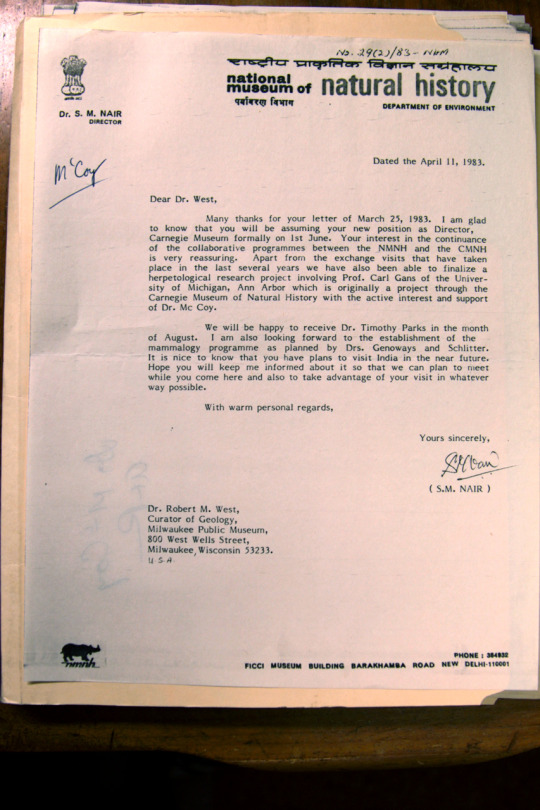
photo of a letter described below

Letter dated April 11, 1983, written by Dr. Nair, director of the National Museum of Natural History in Delhi, and addressed to Dr. Robert M. West, Curator of Geology at the Milwaukee Public Museum, who was about to become director of the Carnegie Museum of Natural History. The letter mentions ongoing collaborations between the two museums, especially in the area of herpetology under the supervision of Dr. Jack McCoy and Dr. Carl Gans.

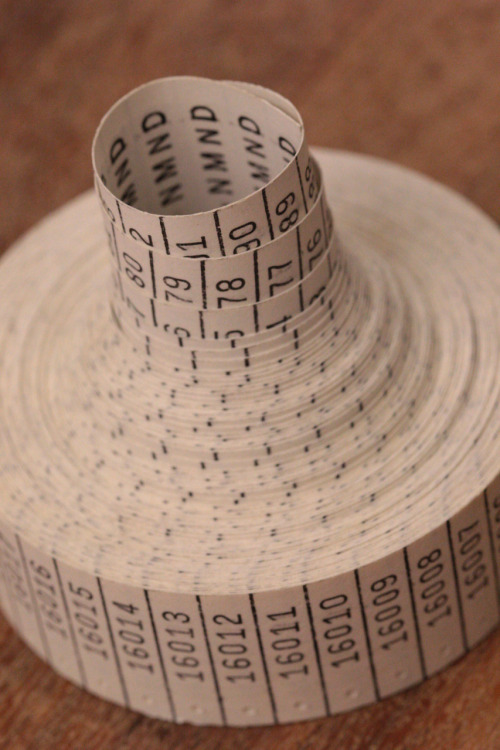
Museum tags for the National Museum of Natural History in Delhi ordered by Carnegie Curator of Amphibians and Reptiles Jack McCoy and fabricated in the US by the National Tag Company
Museum tags for the National Museum of Natural History in Delhi ordered by Carnegie Curator of Amphibians and Reptiles Jack McCoy and fabricated in the US by the National Tag Company.

Museum tags for the National Museum of Natural History in Delhi ordered by Carnegie
Curator of Amphibians and Reptiles Jack McCoy and fabricated in the US by the
National Tag Company.


José Padial is the William and Ingrid Rea Assistant Curator of Herpetology at Carnegie Museum of Natural History. He most recently traveled to the remote Vilcabamba mountains of Peru in the pursuit of biodiversity research. Read more at www.tumblr.com/blog/expeditions-carnegiemnh.

Filed Under: Blog Tagged With: collections, herpetology

sidebar

About

  • Mission & Commitments
  • Directors Team
  • Museum History

Get Involved

  • Volunteer
  • Membership
  • Carnegie Discoverers
  • Donate
  • Employment
  • Events

Bring a Group

  • Groups of 10 or More
  • Birthday Parties at the Museum
  • Field Trips

Powdermill

  • Powdermill Nature Reserve
  • Powdermill Field Trips
  • Powdermill Staff
  • Research at Powdermill

More Information

  • Image Permission Requests
  • Science Stories
  • Accessibility
  • Shopping Cart
  • Contact
  • Visitor Policies
One of the Four Carnegie Museums | © Carnegie Institute | Privacy Policy | Terms of Use | Accessibility
Rad works here logo