• Skip to primary navigation
  • Skip to main content
  • Skip to primary sidebar

Carnegie Museum of Natural History

One of the Four Carnegie Museums of Pittsburgh

  • Visit
    • Buy Tickets
    • Visitor Information
    • Exhibitions
    • Events
    • Dining at the Museum
    • Celebrate at the Museum
    • Powdermill Nature Reserve
    • Event Venue Rental
  • Learn
    • Field Trips
    • Educator Information
    • Programs at the Museum
    • Bring the Museum to You
    • Guided Programs FAQ
    • Programs Online
    • Climate and Rural Systems Partnership
  • Research
    • Scientific Sections
    • Science Stories
    • Science Videos
    • Senior Science & Research Staff
    • Museum Library
    • Science Seminars
    • Scientific Publications
    • Specimen and Artifact Identification
  • About
    • Mission & Commitments
    • Directors Team
    • Museum History
  • Tickets
  • Give
  • Shop

conservation

May 21, 2016 by wpengine

Garfield Going Green

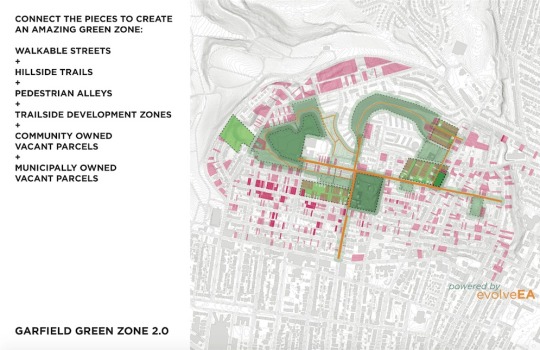
map of plans for Garfield
Proposed plans for Garfield Green Zone 2.0

When city neighborhoods undergo change, the words revitalization, innovation, and gentrification are often parts of important conversation about how development affects neighborhood residents.

Less discussed but equally important for the quality of all life is conservation. A project that was highlighted in an article from NEXTPittsburgh this month shows an exciting marriage of community development and conservation in one of our neighboring communities – Garfield.

Community leaders in Garfield, a neighborhood in Pittsburgh’s rapidly growing east end, are discussing plans to connect vacant lots and transform them into a contiguous, community-owned greenspace.

The project, organized by the Bloomfield Garfield Corporation, would protect urban land from future development.

At Carnegie Museum of Natural History, we view local conservation as paramount to the success of Pittsburgh.

“People hear me quite frequently wax lyrical about the importance of having an experience of nature in our day-to-day lives. It’s nice to see the wealth of local initiatives that allow that to happen,” Carnegie Museum of Natural History Director Eric Dorfman wrote on his blog.

Our museum’s efforts include Birdsafe Pittsburgh, a program established by the museum and seven other local conservation organizations that researches and reduces the incidents of bird injury and death caused by birds colliding with glass windows and facades. Birdsafe’s mission is to educate the community to “make Pittsburgh and beyond a better, safer world for bids.”
Filed Under: Blog Tagged With: conservation, Pittsburgh

May 18, 2016 by wpengine

Flow to Pittsburgh

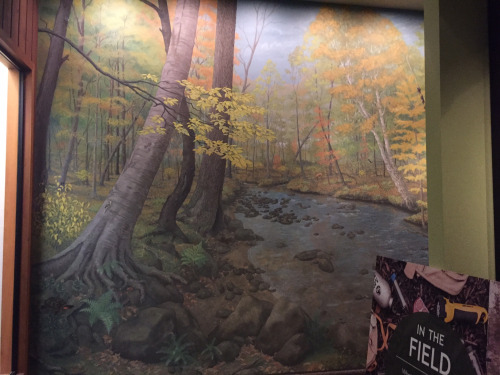
mural of a stream

by Patrick McShea

The scene in a new mural on the second floor of Carnegie Museum of Natural History is a fall morning at Powdermill Nature Reserve, the museum’s field research station which is located some 55 miles southeast of Pittsburgh.

The view is upstream along Powdermill Run, just below the place where the stream absorbs the flow of a tributary known as White Oak Run. These waters, gathered from a portion the western slope of Laurel Ridge, eventually flow through Pittsburgh. Their path to the city, a vertical descent of some 650 feet via the meanders of Loyalhanna Creek, the Kiskiminitas, and Allegheny River, is nearly twice the length of the highway route.

As a vital element of the forested landscape, the stream provides a focal point for considering the diverse life forms supported on Powdermill Nature Reserve’s 2,200 acres.

The artists who created the mural paid careful attention to vegetation, depicting specific trees, shrubs, and grasses. They also populated the scene with a variety of creatures. The closer you study the mural the more living details you’ll notice.

See how many plants and animals you can locate and identify, then make plans to visit Powdermill Nature Reserve at any season of the year.

Curious about Powdermill? Visit on June 4 for the annual public day!

Patrick McShea works in the Education and Visitor Experience department of Carnegie Museum of Natural History. Museum employees are encouraged to blog about their unique experiences and knowledge gained from working at the museum.

Filed Under: Blog Tagged With: conservation, nature, Patrick McShea, Pittsburgh, Powdermill, water

April 19, 2016 by wpengine

In Defense of Dandelions

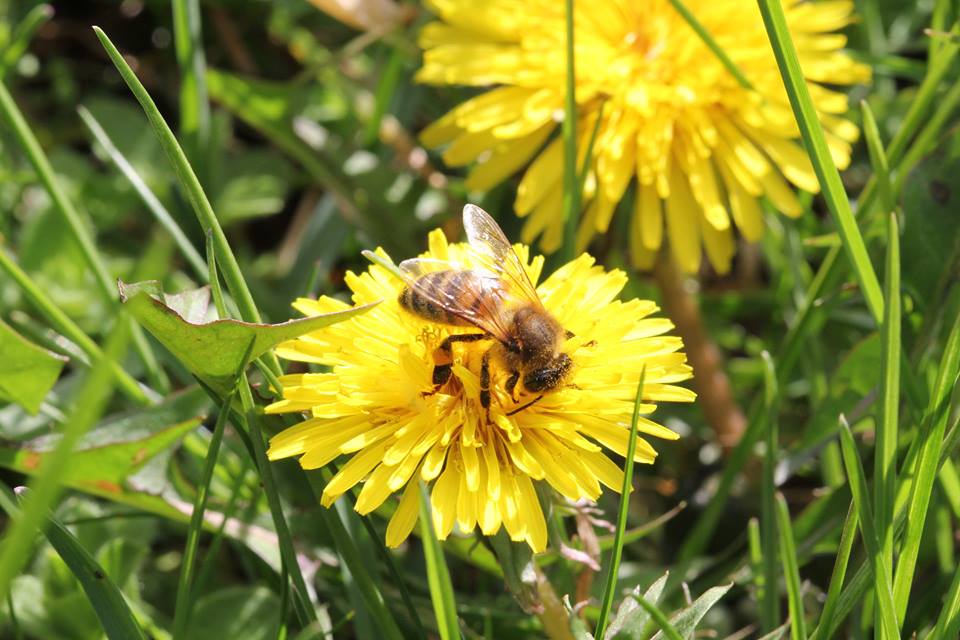
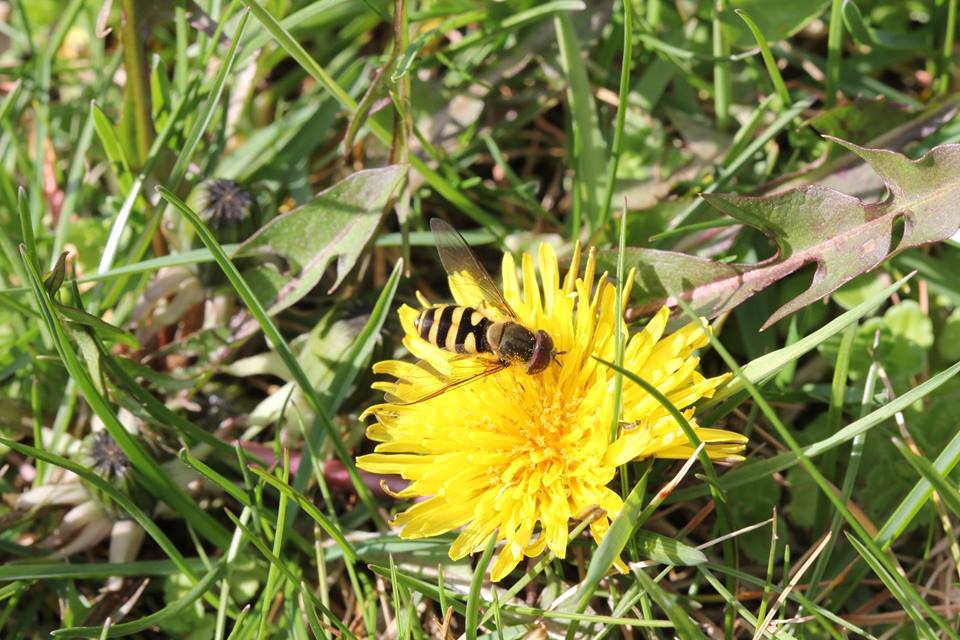
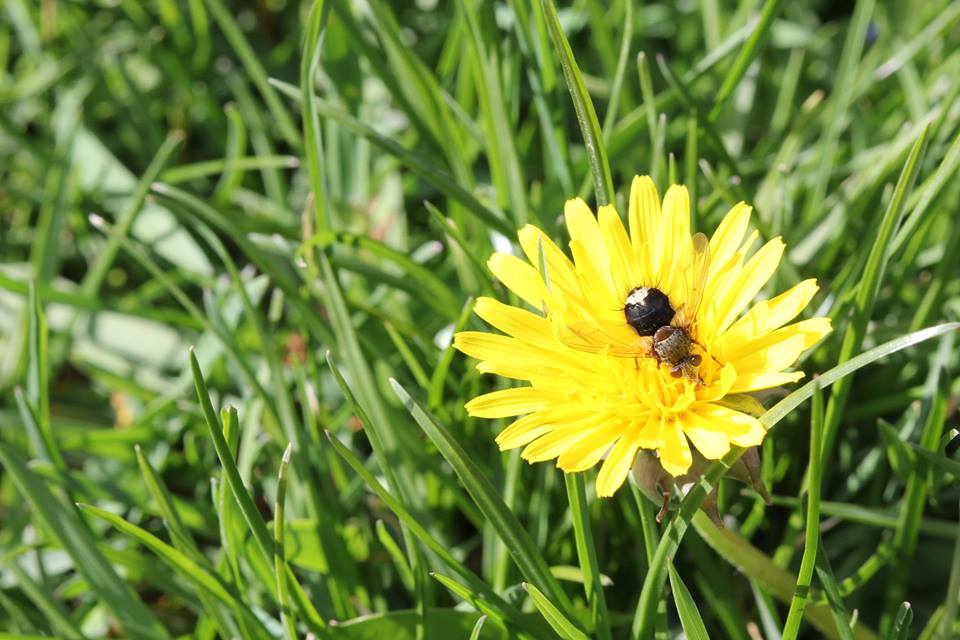
Dandelion in the grass Dandelion with honey bee Dandelion with insect
by Andrea Kautz

Dandelions are surely one of the most detested weeds out there, but if you go out on a sunny spring day, you will notice a variety of insects visiting the bright yellow flowers for nectar and pollen.

This is an important early-season food source for many pollinators including bees and flower-visiting flies like the ones pictured here, visiting dandelions in front of Carnegie Museum of Natural History’s environmental research center– Powdermill Nature Reserve–one afternoon last week.

Without flowering weeds like dandelions, our lawns turn into large pollinator food deserts, so maybe we can learn to put up with them.

After all, they are beautiful!

Andrea Kautz is a research entomologist at Carnegie Museum of Natural History’s Powdermill Nature Reserve. Museum employees are encouraged to blog about their unique experiences and knowledge gained from working for the museum.

Filed Under: Blog Tagged With: conservation, gardening

April 7, 2016 by wpengine

Evolution of the Diorama

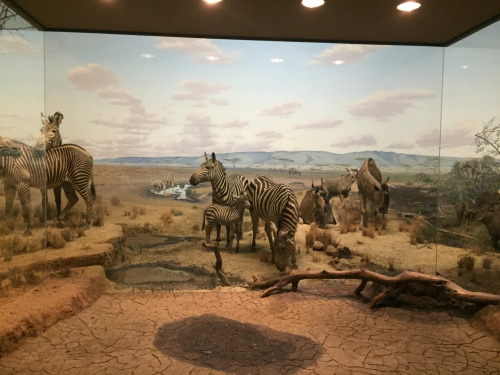
African Wildlife watering hole diorama at CMNH

An Indoor Zoo

Did you ever walk through the zoo and have the frustrating experience of not seeing the animals? Perhaps they were sleeping or hiding out under a rock on a hot summer’s day, for whatever reason–they were not visible.

Our halls of North American and African wildlife allow visitors to see the exotic animals in their natural habitats through expert taxidermy and beautiful background scenes created by artists. Visit anytime of year, anytime of day to see a replica of a Baobab tree towering over a rhinoceros, a zeal of zebras cautiously gathered by a watering hole, and a group of mountain goats precariously perched in their native steep, rocky terrain –all on the second floor of Carnegie Museum of Natural History.

The dioramas have been a staple of our museum for decades, but in the 1920′s they became an example of how museums must evolve with changing cultural attitudes. Our museum changed the display of its wildlife almost 100 years ago as Americans embraced the importance of conservation.

A current exhibition at the museum, “Art of the Diorama,” gives some cultural and historical context to our second floor dioramas.

Many American natural history museums opened and grew alongside the public’s blooming interest in nature in the mid to late 1800′s. Exotic animals were a natural fit to fill the halls of these new institutions. At the time, however, most museums
displayed animals in rectangular glass cases or on shelves with little to no foliage or background.

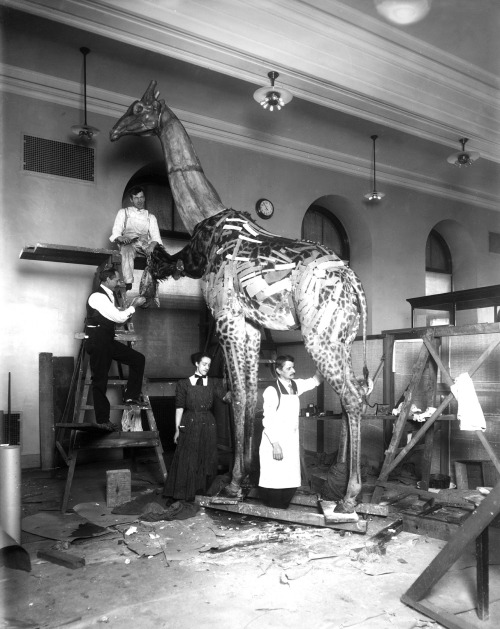
taxidermy giraffe being assembled
A giraffe being prepared for display at Carnegie Museum of Natural History.


As a new conservation movement gained traction, it inspired curators to reevaluate the display of their collections. In the 1920′s, the art of the diorama emerged. In an effort to give context to their animal specimens, museums began to depict them in their natural environment. Through painted background, native plants, and the inclusion of other animals, these new dioramas told a “biological story.” One that curators hoped would help the public understand that animals were not singular objects for display, but living creatures whose needs are worth protecting.

For more information on the evolution of our dioramas, visit “Art of the Diorama” on the first floor of the Carnegie Museum of Natural History.

Filed Under: Blog Tagged With: conservation, dioramas, Hall of African Wildlife, Hall of North American Wildlife, museums

  • « Go to Previous Page
  • Page 1
  • Page 2
  • Page 3
  • Page 4

sidebar

About

  • Mission & Commitments
  • Directors Team
  • Museum History

Get Involved

  • Volunteer
  • Membership
  • Carnegie Discoverers
  • Donate
  • Employment
  • Events

Bring a Group

  • Groups of 10 or More
  • Birthday Parties at the Museum
  • Field Trips

Powdermill

  • Powdermill Nature Reserve
  • Powdermill Field Trips
  • Powdermill Staff
  • Research at Powdermill

More Information

  • Image Permission Requests
  • Science Stories
  • Accessibility
  • Shopping Cart
  • Contact
  • Visitor Policies
One of the Four Carnegie Museums | © Carnegie Institute | Privacy Policy | Terms of Use | Accessibility
Rad works here logo