• Skip to primary navigation
  • Skip to main content
  • Skip to primary sidebar

Carnegie Museum of Natural History

One of the Four Carnegie Museums of Pittsburgh

  • Visit
    • Buy Tickets
    • Visitor Information
    • Exhibitions
    • Events
    • Dining at the Museum
    • Celebrate at the Museum
    • Powdermill Nature Reserve
    • Event Venue Rental
  • Learn
    • Field Trips
    • Educator Information
    • Programs at the Museum
    • Bring the Museum to You
    • Guided Programs FAQ
    • Programs Online
    • Climate and Rural Systems Partnership
  • Research
    • Scientific Sections
    • Science Stories
    • Science Videos
    • Senior Science & Research Staff
    • Museum Library
    • Science Seminars
    • Scientific Publications
    • Specimen and Artifact Identification
  • About
    • Mission & Commitments
    • Directors Team
    • Museum History
  • Tickets
  • Give
  • Shop

entomology

June 30, 2020 by wpengine

Fourth of July and the Firefly

drawing of firefly that says World Firefly Day July 4-5, 2020

Although many fireworks shows are cancelled this Fourth of July, this is a great opportunity to get out over the holiday weekend and enjoy nature’s very own light show during World Firefly Day, on July 4th and 5th!

Fireflies, AKA lightning bugs, are neither flies nor bugs. They are actually a type of beetle with soft wings and the ability to bioluminesce (light up).

There’s a good chance you will see (or have already started seeing) firefly light displays this summer. There are six genera of fireflies that you are likely to encounter in Pennsylvania. Three are diurnal and don’t light up as adults (Ellychnia, Pyropyga, and Lucidota). Their light organs are absent or reduced in the adult stage. The remaining three genera are nocturnal and use light displays as adults. One is Pyractomena, which is a spring-active firefly that has already finished displaying for the year. That leaves Photinus and Photuris as the hosts of nature’s fireworks this Fourth of July. If you pay close attention to the flash patterns you’re seeing in your yard or get a chance to see one up close, you’ll probably be able to tell which one it is!

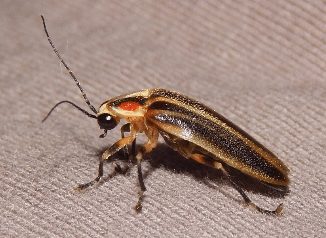
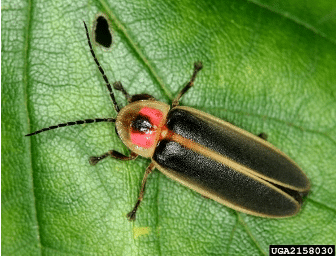
Photinus fireflies (top) are flattened in appearance and their heads are usually concealed from above, whereas Photuris fireflies (bottom) are hump-backed and you can often see their heads from above.
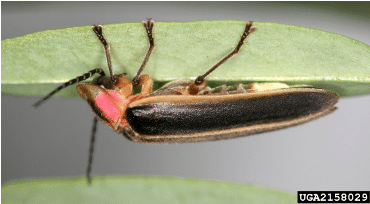
firefly under a leaf

firefly on a leaf during the day
Creative Commons © David Cappaert, Bugwood.org

firefly on gray fabric
Photo credit: Andrea Kautz

Flash patterns vary by species, as do the timing and location of the display. Some species display low to the ground, while others display high in trees. Some are active at dusk, and others after dark. The most common firefly in the eastern U.S. is Photinus pyralis which has a lazy J-shaped flash pattern. Other flash patterns you may have seen are single or multiple rapid blinks. The displays you see are male fireflies advertising to females, who respond inconspicuously with their own flash pattern from a lower perched position. Some “femme fatales” in the genus Photuris will actually hunt by flashing in response to males of other species to lure them in, and then eat them!

Speaking of hunting, firefly larvae (below) are predators that live in moist soils, feeding on slugs and snails, which is a great method of pest control! Adults of some species are predators, but others drink nectar from flowers or simply do not eat at all.
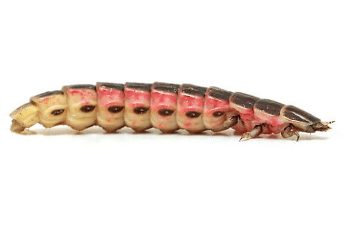
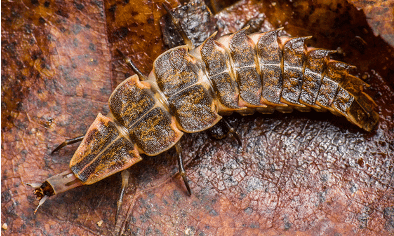
firefly larva
Creative Commons © 2019 Ken Childs

firefly larva
Creative Commons © 2012 Derek Hauffe

The light-producing behavior has its origins in the larvae, which use the glow as a warning to predators that they are toxic. Other animals use bright colors to achieve this, but this wouldn’t be effective for nocturnal species in darkness. Adult fireflies light up to warn predators, but also to communicate with members of their own species, specifically potential mates. The distress signal is different from the mating signal, which you may notice if you capture a firefly in your hand and it starts to blink repeatedly.

We hope you get a chance to celebrate both the Fourth of July and World Firefly Day this year by witnessing some natural firework displays in your own back yard! We encourage you to share your experiences on the Fireflyers International Network Facebook page.

Andrea Kautz is a Research Entomologist at Carnegie Museum of Natural History’s Powdermill Nature Reserve. Museum employees are encouraged to blog about their unique experiences and knowledge gained from working at the museum.

Related Content

What are Murder Hornets?

Eastern Garter Snake Encounter

The World of Bee Vomit

Filed Under: Blog Tagged With: Andrea Kautz, entomology, Museum from Home, Powdermill Nature Reserve, Science News

November 14, 2018 by wpengine

Snowflakes and Snow Fleas

by John Wenzel

river and trees in the snow

When Shakespeare wrote “Now is the winter of our discontent,” he certainly was not referring to entomologists.  Botanists, mammalogists, ornithologists, and herpetologists spend most of the winter in the office waiting for spring. But many entomologists remain busy because insects that live under water go into high gear and treat the winter as their growing season. Hatching from eggs in spring or summer, these aquatic “macroinvertebrates” get their Thanksgiving dinner as the leaves fall into the stream. The insects are grazing and hunting underwater, growing to adulthood, preparing to fly away next spring when the air is warm again.

I was lucky to grow up with a 10 acre woodlot on one side of our house and a 12 acre pond on the other. As a kid, I loved to be out in my row boat or exploring the woods, hunting wildlife, catch and release. My parents encouraged my interests in nature, providing books and equipment that allowed me to increase my knowledge and experience as I grew.

I raised caterpillars through metamorphosis, marked turtles that I would find again years later, and nursed orphaned baby animals. Initially, I had no special preferences other than those that seem to come naturally to all humans. Mammals capture our affection, we all wish we could fly like birds, predators are particularly interesting, as is anything colorful or rare. By the time I was in college, I decided to study insects as a career for many reasons, and chief among them was a very pragmatic element for a striving academic: if you know about insects, you can find fascinating species in your backyard, wherever you live, anywhere in the world.

Since college, I have learned a great deal about many other groups, but when winter is approaching, I enjoy very much being an entomologist.  Even on the coldest day in January, I can go out to a stream and find abundant insects doing their thing, below the ice in the cold water. Some specifically emerge in winter when there are no predators around. At Powdermill Nature Reserve, we have plenty of wonderful winter insects, and it is great fun to hunt for these gems.

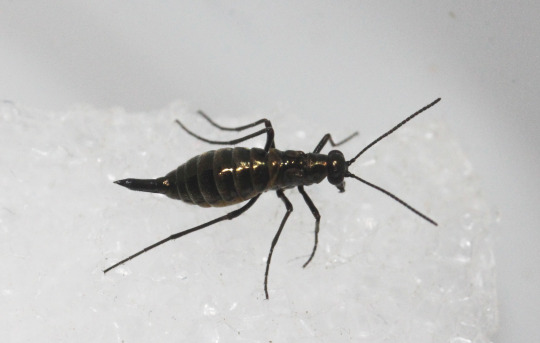
scorpionfly

Here you see a female Boreus scorpionfly who came up from a patch of moss to walk across the snow looking for a male in late December. Also called a snow flea, Boreus is so rare that few entomologists ever see them alive. There is a deep reward in learning to appreciate small things, and I have never regretted becoming an entomologist, especially as winter approaches.

Want to know more about winter bugs? Read about the first Powdermill Christmas Bug Count.

John Wenzel is the Director at Powdermill Nature Reserve, Carnegie Museum of Natural History’s environmental research center. Museum employees are encouraged to blog about their unique experiences and knowledge gained from working at the museum.
Filed Under: Blog Tagged With: entomology, insects, John Wenzel, Powdermill Nature Reserve, Winter

August 29, 2018 by wpengine

Oh MAN(tis)!

by Catherine Giles

Picture it: A crisp, early evening in late spring. The virtually cloudless sky cascades in a brilliant azure backdrop against your humble abode.

You’ve just arrived home from a long, exhausting day of work, yet your mind is still racing:

I need to remember that meeting on Tuesday, answer those important emails, what even is Windows 10?, did I put gas in the car?, what was that notification from my mother in law?

You are definitely ready to unwind and relax for the day!

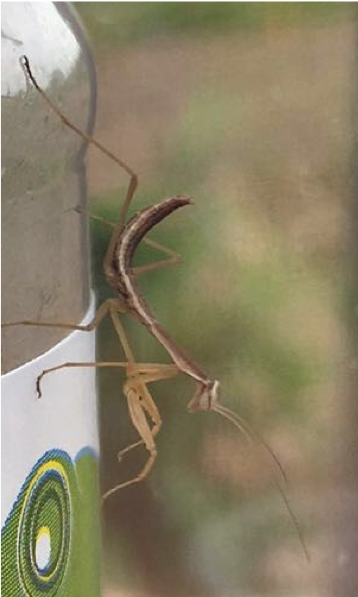
You sling your bags over a shoulder and balance your keys in one hand. You sigh wearily as you slide the key into the lock and, glancing over at the front window, notice a tiny, greenish-brown praying mantis staring back at you inquisitively, like the one pictured below.

praying mantis
A young praying mantis stalks her prey.

Huh. That’s funny.

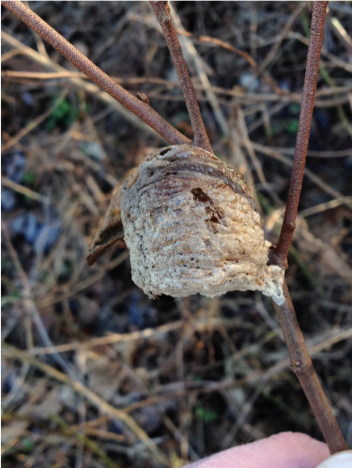
You, entomologist that you are, had found an ootheca, the foamy pouch in which mantises lay their eggs, last week, and decided to try and rear them on your own, giving them a better chance of survival for eventual release into the wild. Early this morning, you’d taken the ootheca out of a humid jar, and arranged it carefully into a brand new aerated container, mimicking seasonal outdoor changes.

ootheca
An ootheca, found outdoors. Photo credit: Jim Fetzner.

How weird that you should see a singular mantis on your window, let alone one this tiny. It probably got in through an open screen or something. You make a mental note to send your landlord a work order.

You unlock and open the door to find another tiny praying mantis on your end table. Whoa! Definitely need to check the screens.

But there’s another mantis on your ceiling. And another on the couch. Two by the sink. Three all over the Taco Bell wrappers in the trash.

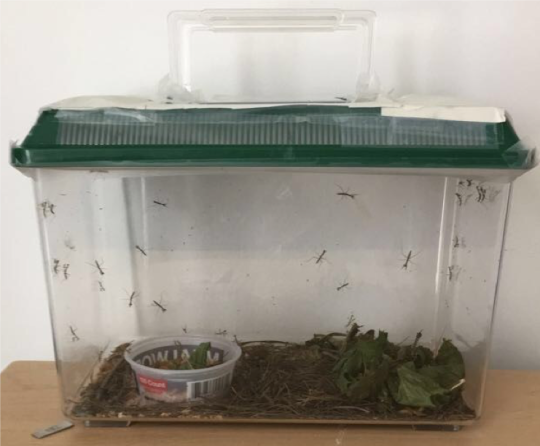
Slowly, with growing horror (and excitement!) you realize the mesh on your brand new aerated container is too large to contain minute mantises, and they’ve escaped to the refuge of your apartment.

You spend the next hour and 45 minutes frantically running around, grabbing handfuls of jumping mantises, throwing them into a (sealed) container, using a broom to pick the ones off the ceiling and praying to the old gods and the new, you can catch them all.

It’s a full-on Pokehunt, and you’re all out of potions and revives.

Nearly 200 thumb-nail sized, jumping, running, scuttling, adorable baby mantises play havoc on your heart strings (and your apartment) and you just have to take care of them. Knowing that mantises like to eat live food, and knowing they’ve gone a full day without it, you decide it’s time to get them some grub.

With all rambunctious insects fully secured, you race to Petco to grab their last container of crickets before closing, pulling Indie 500 stunts (you didn’t get gas earlier, by the way) along Route 8 to make sure your precious mantises have enough food for the day.

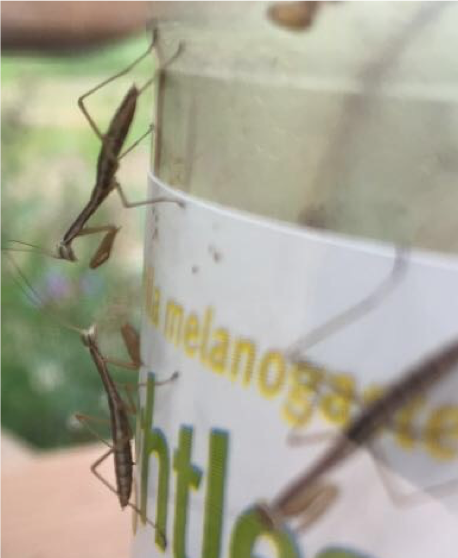
two praying mantises
Two praying mantises practice The Titanic for their peers.


You bought about 30 Acheta domesticus, a common house cricket, in a small container. They’re nearly three times the size of your mantises! What a hearty snack these will be. Trying to be a good mantis Momma, you empty the crickets into the enclosure.

But you’re new at this. Caterpillars you can rear easily, with the right host plant. You’ve had a dog before for goodness sake, this should be easy.

A. domesticus, though, will eat meat. Meat the approximate size and shape of a baby praying mantis.

Oh no.

You wrangle the crickets away from their mantis midnight snack and call it a day. The next day, you’ll get some flightless fruit flies and rear the mantises with less tragic incidents for several more weeks.

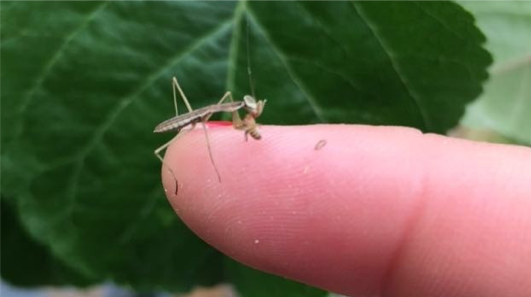
A praying mantis enjoying a refreshing flightless fruitfly.

Eventually, the spring chill warms to light summer breezes, and you’re able to release the mantises into the wilds of your home garden. All in all, you’ve learned a tremendous lesson, and earned a great campfire story, when it comes to rearing and caring for praying mantises.

mantises in their enclosure

Catherine Giles is the Curatorial Assistant of Invertebrate Zoology at the Carnegie Museum of Natural History. Museum employees are encouraged to blog about their unique experiences working at the museum. 

Filed Under: Blog Tagged With: biodiversity, bugs, ecology, entomology, Invertebrate Zoology

sidebar

About

  • Mission & Commitments
  • Directors Team
  • Museum History

Get Involved

  • Volunteer
  • Membership
  • Carnegie Discoverers
  • Donate
  • Employment
  • Events

Bring a Group

  • Groups of 10 or More
  • Birthday Parties at the Museum
  • Field Trips

Powdermill

  • Powdermill Nature Reserve
  • Powdermill Field Trips
  • Powdermill Staff
  • Research at Powdermill

More Information

  • Image Permission Requests
  • Science Stories
  • Accessibility
  • Shopping Cart
  • Contact
  • Visitor Policies
One of the Four Carnegie Museums | © Carnegie Institute | Privacy Policy | Terms of Use | Accessibility
Rad works here logo