• Skip to primary navigation
  • Skip to main content
  • Skip to primary sidebar

Carnegie Museum of Natural History

One of the Four Carnegie Museums of Pittsburgh

  • Visit
    • Buy Tickets
    • Visitor Information
    • Exhibitions
    • Events
    • Dining at the Museum
    • Celebrate at the Museum
    • Powdermill Nature Reserve
    • Event Venue Rental
  • Learn
    • Field Trips
    • Educator Information
    • Programs at the Museum
    • Bring the Museum to You
    • Guided Programs FAQ
    • Programs Online
    • Climate and Rural Systems Partnership
  • Research
    • Scientific Sections
    • Science Stories
    • Science Videos
    • Senior Science & Research Staff
    • Museum Library
    • Science Seminars
    • Scientific Publications
    • Specimen and Artifact Identification
  • About
    • Mission & Commitments
    • Directors Team
    • Museum History
  • Tickets
  • Give
  • Shop

biodiversity

April 27, 2021 by wpengine

Naturally Pittsburgh: Big Rivers and Steep Wooded Slopes

by Patrick McShea

Pittsburghers are accustomed to seeing their hometown visually portrayed with its river-hemmed Downtown as a focal point. If your goal is to understand how the city’s geographical position in the greater landscape of southwestern Pennsylvania influences its wildlife and plant cover, images from different perspectives are useful.

Nine Mile Island, left, and Sycamore Island, right, in the lower Allegheny River. Photo credit: Allegheny Land Trust.

The picture above offers a bird’s eye view down the Allegheny River at a point nine miles upstream from the 325-mile-long waterway’s confluence with the Monongahela River. That much-photographed merge point, which creates the Ohio River, can be spatially located in the frame’s right-of-center background by the hazy blur of Downtown’s tallest buildings. The eye movement required to locate the spot involves tracing steep left-bank wooded bluffs from suburban Penn Hills and along the Pittsburgh neighborhoods of Lincoln-Lemington, Highland Park, and Morningside.

This simple exercise has relevance to the upcoming City Nature Challenge (CNC) for the visual attention it brings to the paired Pittsburgh physical features that keep nature in continual view here – our river system and the steep wooded hillsides carved by these big winding waterways and their tributaries.

Corridors Support Biodiversity

Both features create habitat corridors that serve to enrich the city’s biodiversity. The pair of Bald Eagles with a long record of nesting success on a wooded Monongahela River hillside in Pittsburgh’s Hays neighborhood are the most prominent evidence of this phenomena. Some of the fish they feed their young at this time of year can be regarded as additional evidence.
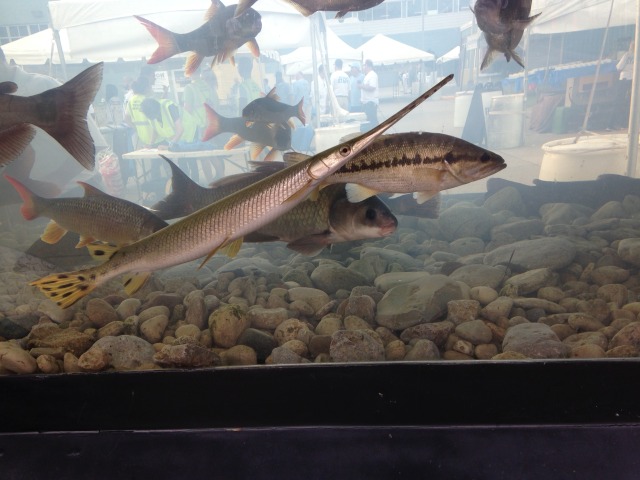
Pittsburgh fish displayed in tank set-up by the Ohio River Valley Water Sanitation Commission.

Many of the organisms supported by Pittsburgh’s wooded and flowing water corridors do not, however, lend themselves to the photo-documentation of the CNC. Some notable tree specimens and spring wildflower stands are found on high inaccessible ledges, river visits by diverse forms of waterfowl occur more frequently in the winter rather than the spring, and the predictability of the dozens fish species found in Pittsburgh’s waters challenges even the anglers who pursue them.

Importance of Incomplete Survey

The solution to this dilemma, as you record CNC observations and interpret the collective results, is simply to regard this important citizen science initiative as necessarily incomplete. In a recent BioScience paper co-authored by Nicole Heller, Curator of Anthropocene Studies at CMNH, analysis of urban biodiversity studies from all over the world pointed to the importance of enhancing public engagement and environmental stewardship. That is something that can certainly happen this year between April 30 and May 3, in a City Nature Challenge that recognizes some unavoidable bio-survey gaps.

Patrick McShea works in the Education and Visitor Experience department of Carnegie Museum of Natural History. Museum employees are encouraged to blog about their unique experiences and knowledge gained from working at the museum.

Citations for research paper:

“The Biological Deserts Fallacy: Cities in Their Landscapes Contribute More than We Think to Regional Biodiversity,” BioScience, Volume 71, Issue 2, February 2021, Pages 148–160,

Erica N Spotswood, Erin E Beller, Robin Grossinger, J Letitia Grenier, Nicole E Heller, Myla F J Aronson, The Biological Deserts Fallacy: Cities in Their Landscapes Contribute More than We Think to Regional Biodiversity, BioScience, Volume 71, Issue 2, February 2021, Pages 148–160, https://doi.org/10.1093/biosci/biaa155

Related Content

Go For a Color Walk

Teaching About Local Wildlife with the City Nature Challenge

Evidence Counts for Absent Creatures – City Nature Challenge

Carnegie Museum of Natural History Blog Citation Information

Blog author: McShea, Patrick
Publication date: April 27, 2021
Share this post!

  • Share on Twitter Share on Twitter
  • Share on Facebook Share on Facebook
  • Share on Pinterest Share on Pinterest
  • Share on LinkedIn Share on LinkedIn
  • Share on Reddit Share on Reddit
  • Share via Email Share via Email

Share this post!

  • Share on Twitter Share on Twitter
  • Share on Facebook Share on Facebook
  • Share on Pinterest Share on Pinterest
  • Share on LinkedIn Share on LinkedIn
  • Share on Reddit Share on Reddit
  • Share via Email Share via Email

Filed Under: Blog Tagged With: biodiversity, City Nature Challenge, Educator Resources, Pat McShea, Pittsburgh

November 7, 2018 by wpengine

Why One Bug Just Won’t Do…

by Bob Androw

When visitors tour the insect collections in the Section of Invertebrate Zoology, the conversation often turns to numbers. How many rooms house the collection? Three, all quite full. How many total drawers are in those rooms? Well, roughly 30,000, at last count. How many specimens are in those drawers? We like to quote a figure of 13 million, give or take a few (but no one has counted recently). How many staff members are there to take care of all those bugs? Well – seven on a good day – that’s just 1,857,143 specimens per staff member…

And then the big questions always hit – why do you have so many specimens? Why do you have so many of the same species?

While there are many rarities represented by one to just a few specimens, the truth is that the majority of species are represented by several to many hundreds of individuals, referred to as a ‘series.’ So how do these series end up in the collection, and what is the purpose for multiple examples of individual species?

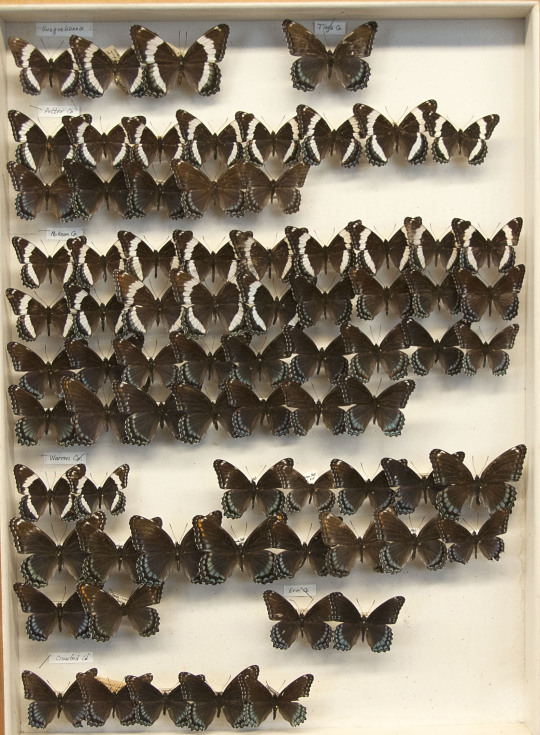
A simple answer, but not one that explains much, is that the age of the collection alone contributes to long series, especially of common species. Since its founding in 1896, if just a single red-spotted purple butterfly (Limenitis arthemis (Drury)), were deposited each year, 122 specimens would now be present. But the series of that common species probably numbers ten times that by now. So how, and why?

set of butterfly specimens

Over the years, museum staff have been active in traveling and collecting and were, and are, continually adding new materials to the collection. But an even greater number of specimens have come in the form of donations – entire collections, representing lifetimes of work, often come to us after their owner’s passing. These are sometimes from professional entomologists, but more often they are the legacy of non-professional, avocational collectors. These donated collections all vary drastically in their holdings, but common species are generally present, increasing the length of series of these taxa in the museum’s collection.

Back to all those red-spotted purples! Collected by a variety of people in a variety of places and times, they provide examples of the individual variation within the species, as well as critical locality and temporal documentation – or data – that help researchers understand the life history and distribution of the species. In these times of increasing global temperatures, the old data can be used as a baseline to compare against current information – does the butterfly still occur where it had in the past? Does it occur further north, now that the climes are more temperate in areas that used to be too cold? Or has it been pushed into higher elevations to evade hotter conditions in its historical habitat? By having large series, there is more data to help fill out the story of this butterfly species’ life history – past and present.

When those red-spotted purples were caught, the collectors were probably aware of what species they were – but what about species that cannot be easily identified in the field? The vast majority of insects are small to minute and cannot be identified until they are prepared and examined under a microscope. In the insect world, small size is coupled with enormous diversity. Entomologists regularly collect long series in the field to increase the odds of documenting more diversity – more specimens likely mean more species.

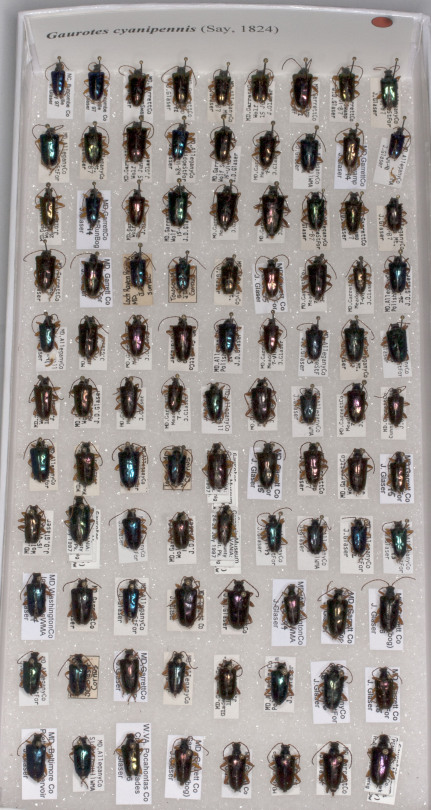
Not only is there a great diversity of species, but many insects exhibit variation within a species – in size, in color, and in differences between females and males. Populational differences are often evident within a species – sometimes to the extent that subspecies are described, discrete in their distribution and readily separated by physical characteristics. In the longhorned beetle Gaurotes cyanipennis (Say), individuals vary in color from blue to green to coppery to purple and all color forms can usually be found together in any given locality. But if you examine a long series of museum specimens you will notice the majority of specimens collected in the central third of Pennsylvania are all purple – rarely any other colors. The reason for this has not yet been determined, but by having long series of this common beetle, the trend can be seen, and questions can be asked.

set of longhorned beetle specimens

Insects can be collected by hand, one specimen at a time, but to more fully sample the biodiversity of a habitat, various types of traps can be deployed: pitfall traps; light traps; intercept and malaise traps; baited traps; with many specially designed to capture specific taxa. Traps allow for passive collecting over time, greatly increasing the volume, and diversity, of specimens compared to what a person could capture by hand. These trap samples can provide long series of specimens, insight into the biodiversity of a habitat and good data on population sizes. Select specimens are prepared, labeled and deposited in the collection and the remainder of the trap sample is archived to be available for future research. The specimens are not unlike the scores of books on a library’s shelves, their data labels all containing a little piece of the story about a living creature’s existence, documenting its occurrence in some place, at some time, on our planet.

So, when asked “why so many?”, the answer is multi-faceted: accumulation of specimens over time, from staff activity and donations of materials; the sheer biodiversity of insects composed of thousands of species; and long series documenting variation, distribution and seasonal occurrence. And chances are, as you read this, dozens more specimens are being added to the amazing insect collection at the Carnegie Museum of Natural History.

Bob Androw is a Scientific Preparator in Invertebrate Zoology. Museum employees are encouraged to blog about their unique experiences and knowledge gained from working at the museum.

Filed Under: Blog Tagged With: biodiversity, Bob Androw, Invertebrate Zoology

August 29, 2018 by wpengine

Oh MAN(tis)!

by Catherine Giles

Picture it: A crisp, early evening in late spring. The virtually cloudless sky cascades in a brilliant azure backdrop against your humble abode.

You’ve just arrived home from a long, exhausting day of work, yet your mind is still racing:

I need to remember that meeting on Tuesday, answer those important emails, what even is Windows 10?, did I put gas in the car?, what was that notification from my mother in law?

You are definitely ready to unwind and relax for the day!

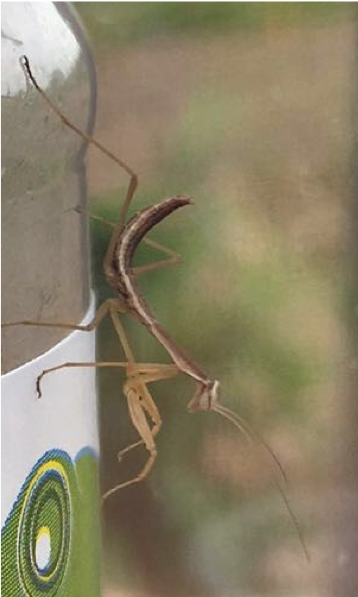
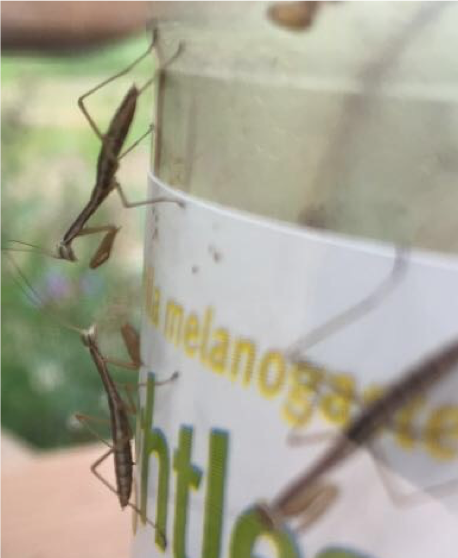
You sling your bags over a shoulder and balance your keys in one hand. You sigh wearily as you slide the key into the lock and, glancing over at the front window, notice a tiny, greenish-brown praying mantis staring back at you inquisitively, like the one pictured below.

praying mantis
A young praying mantis stalks her prey.

Huh. That’s funny.

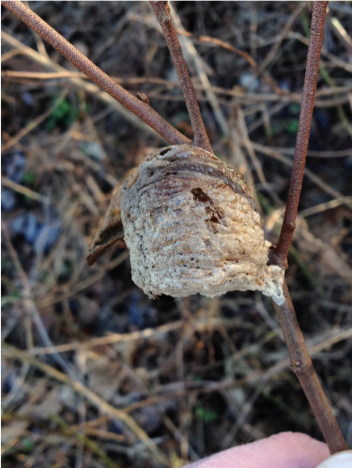
You, entomologist that you are, had found an ootheca, the foamy pouch in which mantises lay their eggs, last week, and decided to try and rear them on your own, giving them a better chance of survival for eventual release into the wild. Early this morning, you’d taken the ootheca out of a humid jar, and arranged it carefully into a brand new aerated container, mimicking seasonal outdoor changes.

ootheca
An ootheca, found outdoors. Photo credit: Jim Fetzner.

How weird that you should see a singular mantis on your window, let alone one this tiny. It probably got in through an open screen or something. You make a mental note to send your landlord a work order.

You unlock and open the door to find another tiny praying mantis on your end table. Whoa! Definitely need to check the screens.

But there’s another mantis on your ceiling. And another on the couch. Two by the sink. Three all over the Taco Bell wrappers in the trash.

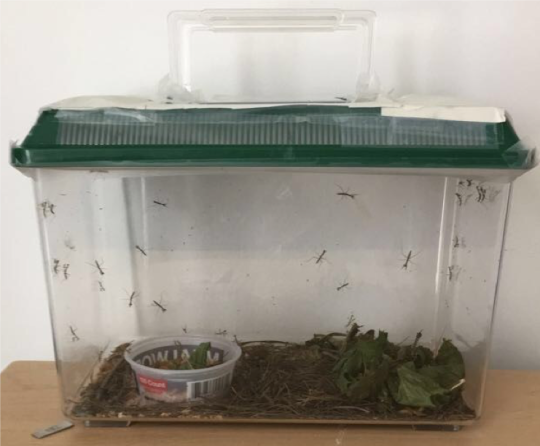
Slowly, with growing horror (and excitement!) you realize the mesh on your brand new aerated container is too large to contain minute mantises, and they’ve escaped to the refuge of your apartment.

You spend the next hour and 45 minutes frantically running around, grabbing handfuls of jumping mantises, throwing them into a (sealed) container, using a broom to pick the ones off the ceiling and praying to the old gods and the new, you can catch them all.

It’s a full-on Pokehunt, and you’re all out of potions and revives.

Nearly 200 thumb-nail sized, jumping, running, scuttling, adorable baby mantises play havoc on your heart strings (and your apartment) and you just have to take care of them. Knowing that mantises like to eat live food, and knowing they’ve gone a full day without it, you decide it’s time to get them some grub.

With all rambunctious insects fully secured, you race to Petco to grab their last container of crickets before closing, pulling Indie 500 stunts (you didn’t get gas earlier, by the way) along Route 8 to make sure your precious mantises have enough food for the day.

two praying mantises
Two praying mantises practice The Titanic for their peers.


You bought about 30 Acheta domesticus, a common house cricket, in a small container. They’re nearly three times the size of your mantises! What a hearty snack these will be. Trying to be a good mantis Momma, you empty the crickets into the enclosure.

But you’re new at this. Caterpillars you can rear easily, with the right host plant. You’ve had a dog before for goodness sake, this should be easy.

A. domesticus, though, will eat meat. Meat the approximate size and shape of a baby praying mantis.

Oh no.

You wrangle the crickets away from their mantis midnight snack and call it a day. The next day, you’ll get some flightless fruit flies and rear the mantises with less tragic incidents for several more weeks.

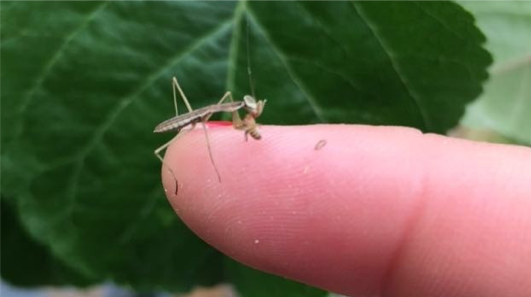
A praying mantis enjoying a refreshing flightless fruitfly.

Eventually, the spring chill warms to light summer breezes, and you’re able to release the mantises into the wilds of your home garden. All in all, you’ve learned a tremendous lesson, and earned a great campfire story, when it comes to rearing and caring for praying mantises.

mantises in their enclosure

Catherine Giles is the Curatorial Assistant of Invertebrate Zoology at the Carnegie Museum of Natural History. Museum employees are encouraged to blog about their unique experiences working at the museum. 

Filed Under: Blog Tagged With: biodiversity, bugs, ecology, entomology, Invertebrate Zoology

December 4, 2017 by wpengine

We Are Nature: Native Plants

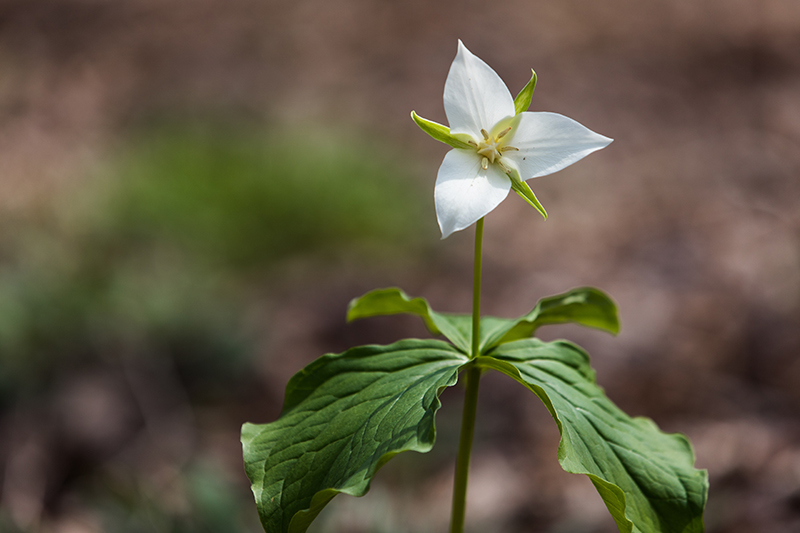
white trillium in the woods
Trillium, a native plant, photographed at Powdermill Nature Reserve

As spring inches closer and closer, there is no better time to start thinking about your garden or even planting some indoor seedlings.

One increasingly popular trend in sustainable landscaping is the planting of native gardens, featuring plants that naturally occur in your area. Starting a native garden can begin to restore biodiversity to even the most urbanized areas.

Not only are native plants good for biodiversity, they are generally low maintenance, having already adapted to your specific climate zone. They often need less watering, and their strong roots hold soil in place to prevent flooding and soil loss during heavy rains.

In western Pennsylvania, there is no shortage of native options for your garden! Pittsburgh is a Zone 6 climate, which includes black-eyed susans, milkweed, royal ferns, columbine, and more! Learn more about zone 6 native plants.


This year, we are sharing simple tips and tricks for greener living in tandem with our exhibition We Are Nature: Living in the Anthropocene, which explores the interconnected relationship between humans and our environment. A first of its kind in North America, the exhibition utilizes interactive exhibits, innovative gallery design, and specimens from our hidden collection in an unflinching exploration of the Anthropocene.

The Anthropocene is the current geological era in which humans are making a profound impact on the geological strata. While the term itself is still being debated by geologists, the museum is embracing it as a social and cultural tool for exploring the broad sum effect humans are having on the planet.

Filed Under: Blog Tagged With: biodiversity, Botany, We Are Nature, We Are Nature: Living in the Anthropocene

August 24, 2016 by wpengine

Reclaiming Nature

Bridge over lotus pond
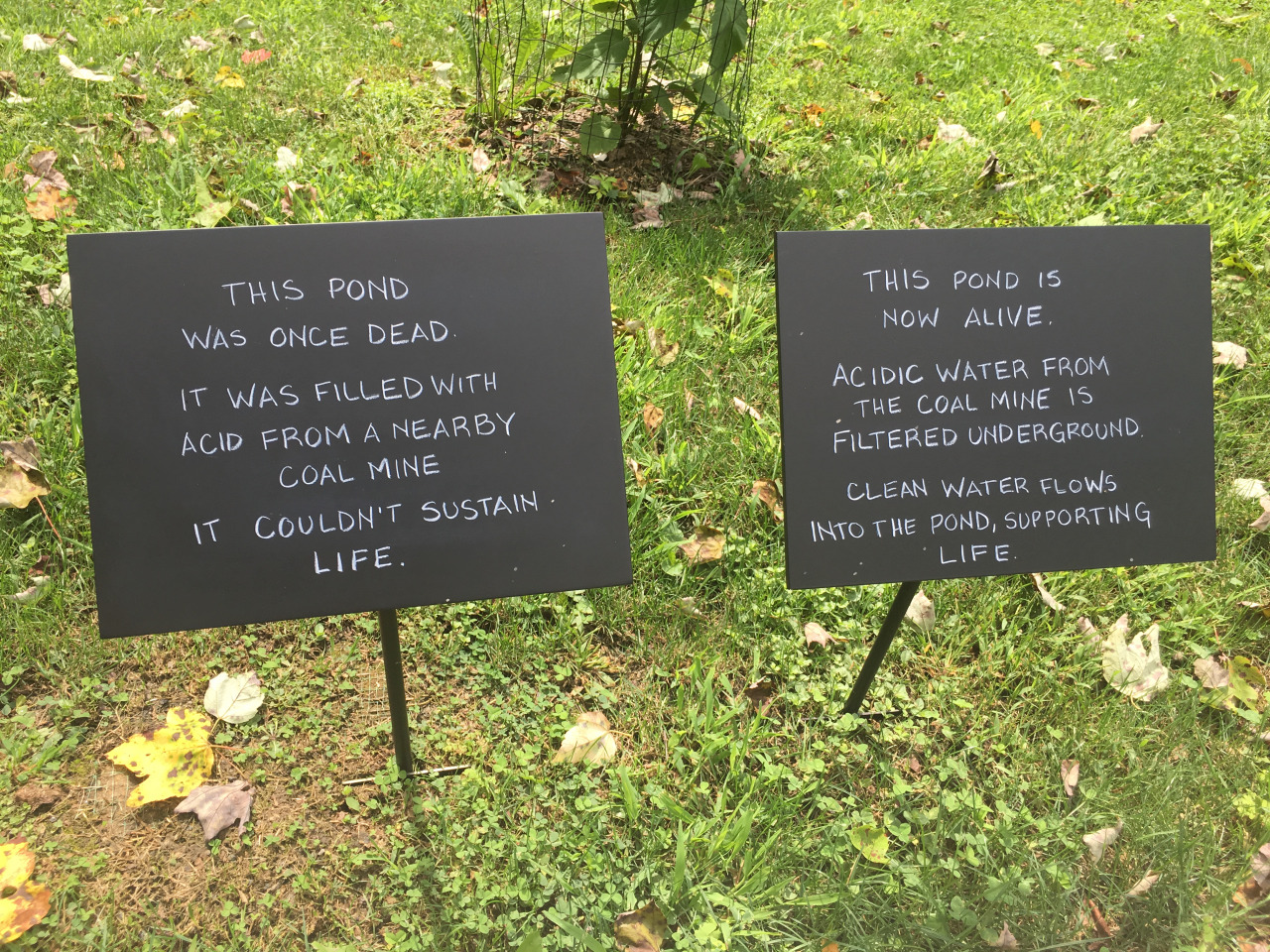
A once dead pond is now alive
Storytime on a toad stool
Human sized bird's nest
Human sized bird’s nest
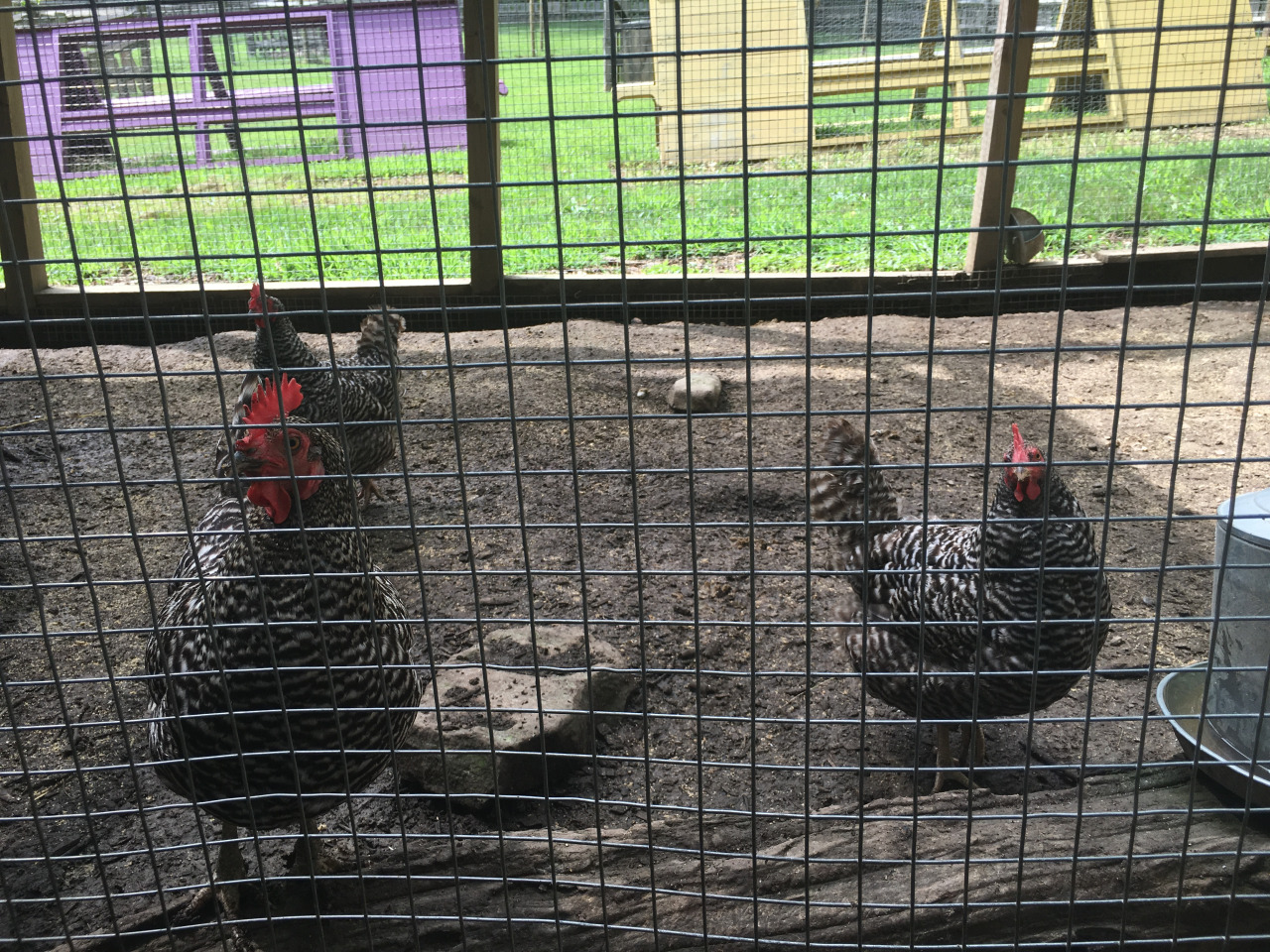
three chickens in a cage
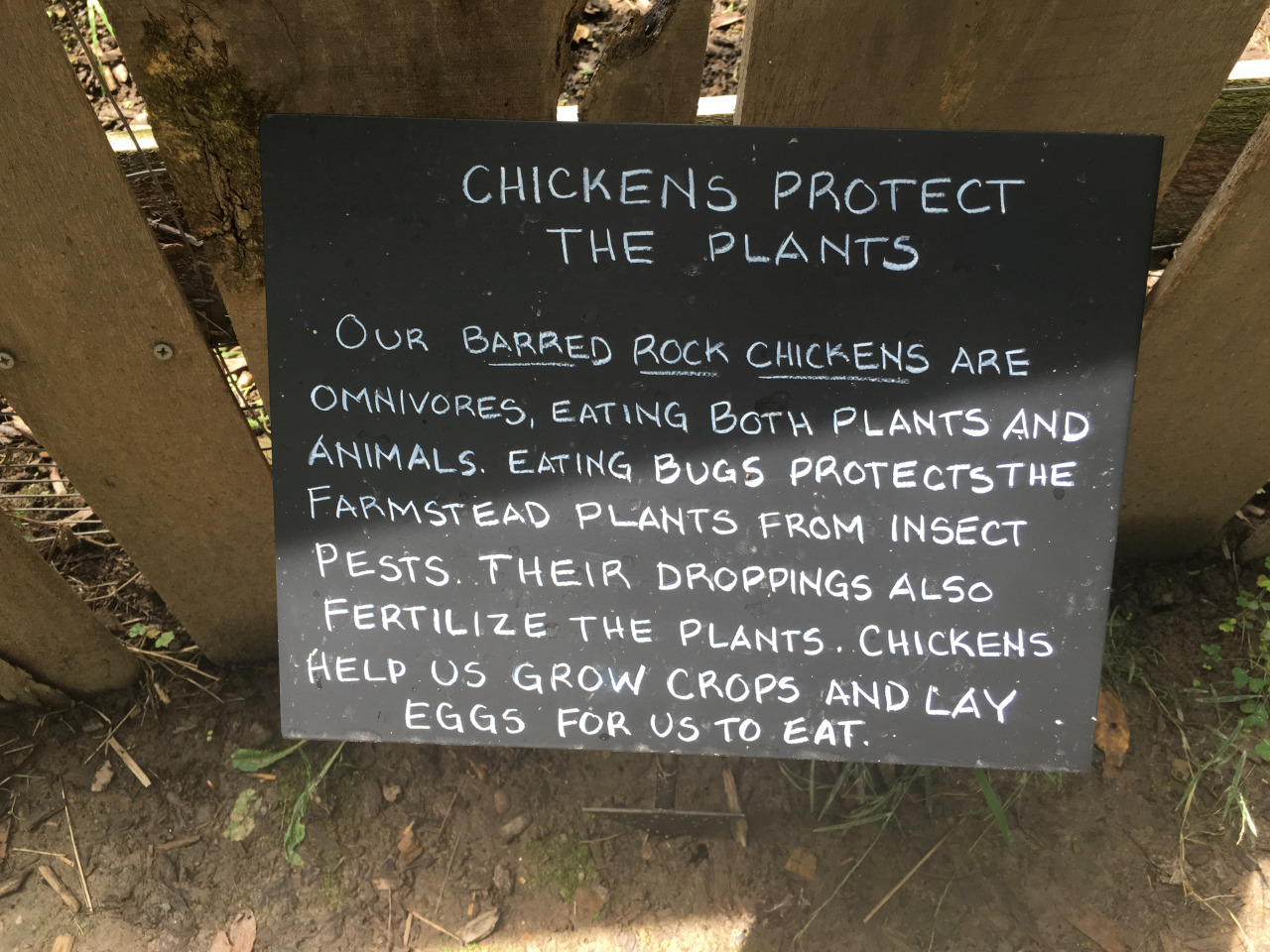
Chickens protect the plants

sign explaining that chickens eat both bugs and plants

by Kathleen Bodenlos

Pittsburgh has a reputation for transforming itself. Once a grimy industrialized city, we have become a network of neighborhoods with green spaces, bike trails, culturally rich attractions, and a thriving economy. The Pittsburgh Botanic Garden mirrors our transformation story.

Reclaiming land from Pittsburgh’s industrial past, they transformed land and ponds into an artistic nature experience. Acres that were once farmed, logged and mined have been reinvented and now offer hiking trails, flowers, and surprising works of art. A Monet worthy pond that was once filled with acid is now alive with lotus. Barred Rock Chickens protect the plants through their natural diet of insects and also help to fertilize the crops.

The gardens offer plenty of surprises for kids from a giant bird nest that could fit a large human family to an enchanted area for reading time complete with toadstools on which to perch.

With 460 acres left to steward, it seems this impressive example of reclamation has only just begun.


Kathleen Bodenlos is the Director of Marketing at Carnegie Museum of Natural History. Passionate about nature, art, and travel she enjoys visiting other organizations with a similar focus on conservation and education.

Filed Under: Blog Tagged With: biodiversity, conservation, nature, Pittsburgh

March 6, 2016 by wpengine

Discoverers Expedition Vilcabamba 2016: Lima

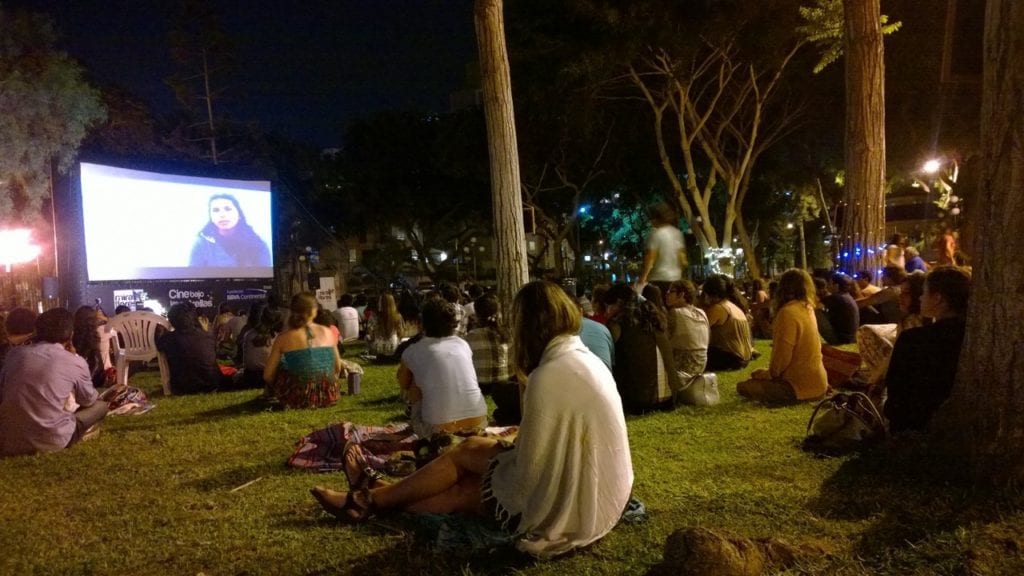
A large crowd meets at night a park of Lima to watch marine biology and and conservation documentaries during an open event of the 36th Annual Symposium on Sea Turtle Biology and Conservation (Photo: Juan C. Chaparro).
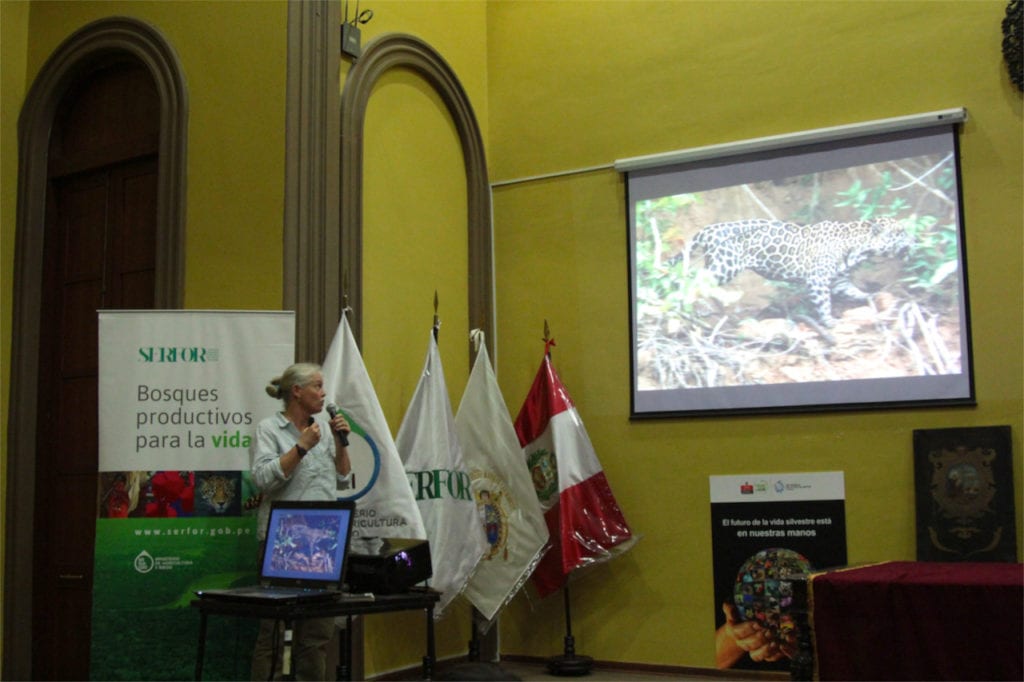
Dr. Corine Vriesendorp, Director of the Andes-Amazon program of the The Field Museum of Natural History, presents preliminary results of the Rapid Biological and Social Inventory #28: Middle Putumayo and Algodon River, Loreto – Perú.
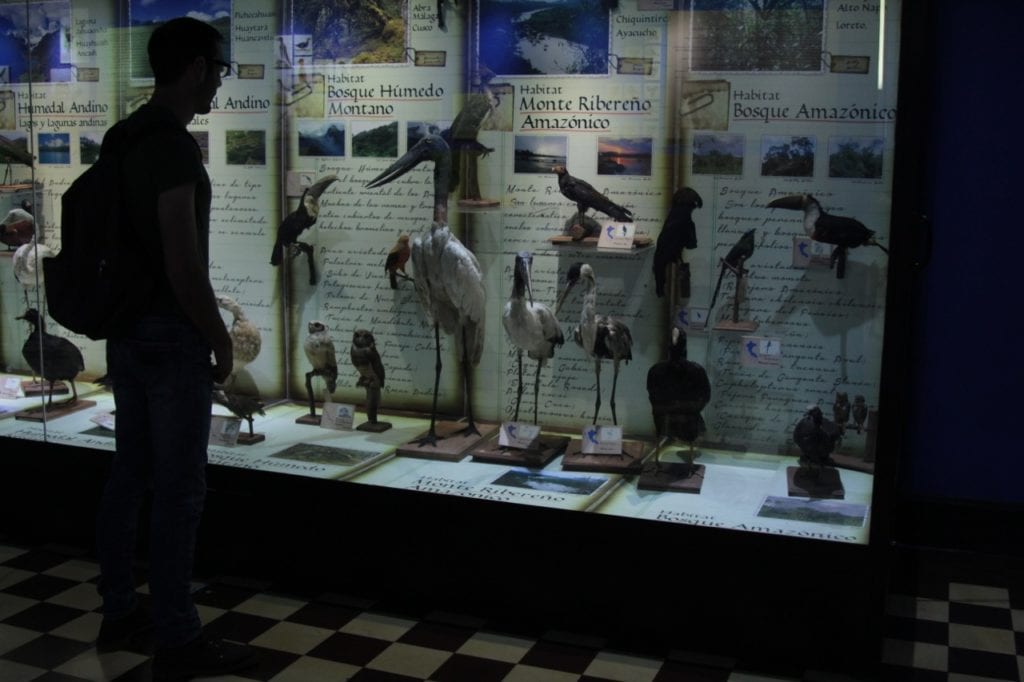
Dr. Santiago Castroviejo takes the opportunity to walk through the exhibits of the Natural History Museum of San Marcos University.
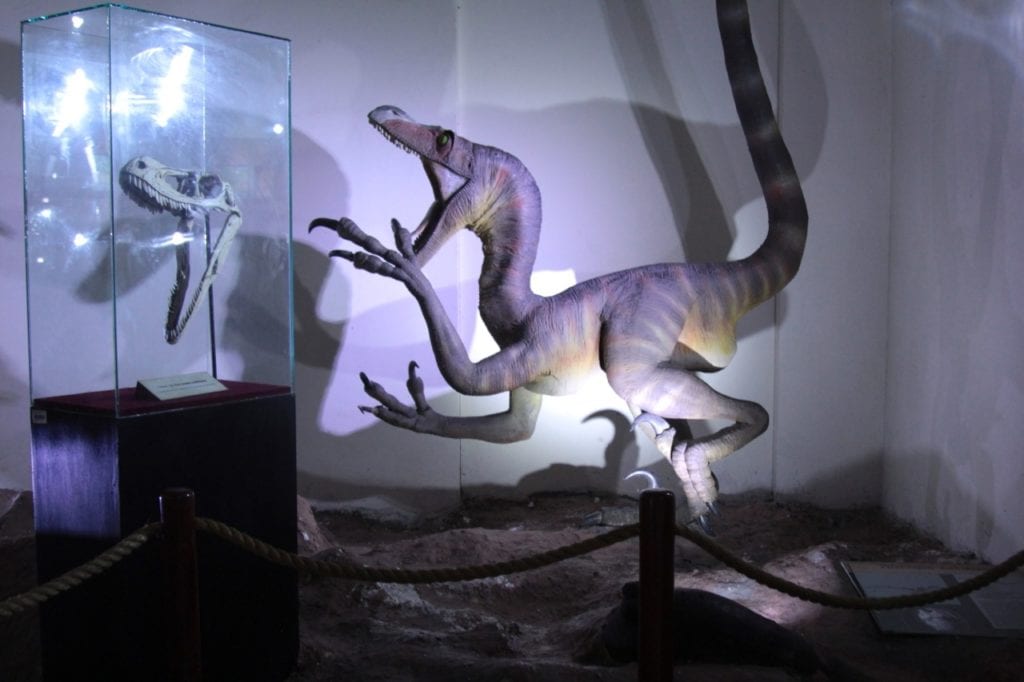
The exhibits at the museum in Lima made me think of my friend and colleague Dr. Matt Lamanna, who is now looking for dinosaurs in Antarctica. Greetings from Lima Matt!
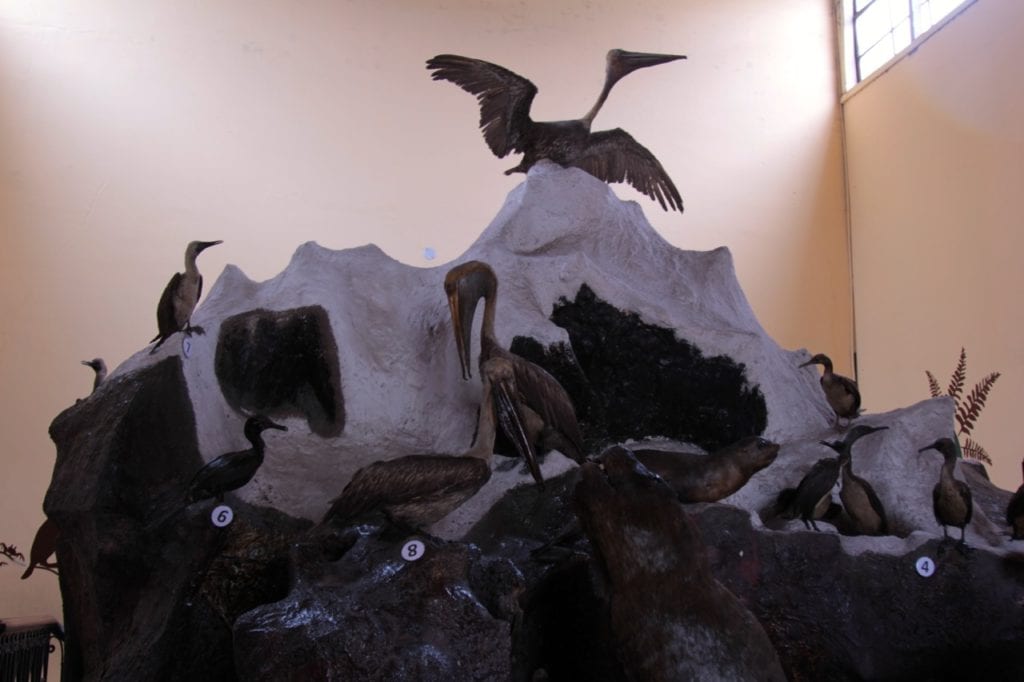
A diorama of the pacific coast around Lima at the Natural History Museum of San Marcos University.
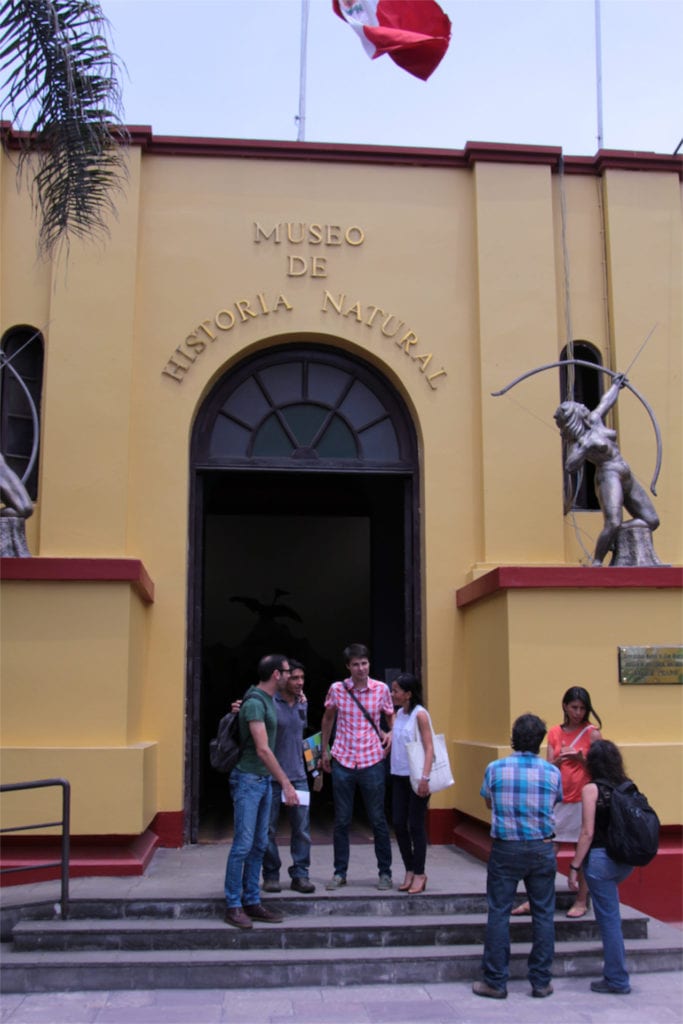
Mammalogists, herpetologists, and ornithologists at the main entrance of the Natural History Museum of San Marcos University.

March 3, 2016

Our last week in Lima was a busy one. We are working from an apartment in the beautiful bohemian neighborhood of Barranco. We have built a lab in the living room where we examine our specimens and refine preliminary identifications performed in the field. Our certainty about what we thought were potential new species grows after checking pertinent literature and pictures of museums specimens. We also work on the paperwork necessary to export part of the samples to the Carnegie Museum of Natural History (half or more will stay in Peru).

In addition, we have been attending two important scientific events that are taking place in Lima this week: the 36th Annual Symposium On Sea Turtle Biology And Conservation, and the Day of Wildlife, celebrated today at the Natural History Museum of San Marcos University.

José Padial and his team of researchers have traveled to the remote Vilcabamba mountains of Peru in the pursuit of biodiversity research. He blogs and sends photos as often as possible capturing his expedition along the way and his return home to the Carnegie Museum of Natural History in Pittsburgh, PA.

Filed Under: Blog Tagged With: biodiversity, expedition, Matt Lamanna

  • Page 1
  • Page 2
  • Go to Next Page »

sidebar

About

  • Mission & Commitments
  • Directors Team
  • Museum History

Get Involved

  • Volunteer
  • Membership
  • Carnegie Discoverers
  • Donate
  • Employment
  • Events

Bring a Group

  • Groups of 10 or More
  • Birthday Parties at the Museum
  • Field Trips

Powdermill

  • Powdermill Nature Reserve
  • Powdermill Field Trips
  • Powdermill Staff
  • Research at Powdermill

More Information

  • Image Permission Requests
  • Science Stories
  • Accessibility
  • Shopping Cart
  • Contact
  • Visitor Policies
One of the Four Carnegie Museums | © Carnegie Institute | Privacy Policy | Terms of Use | Accessibility
Rad works here logo