• Skip to primary navigation
  • Skip to main content
  • Skip to primary sidebar

Carnegie Museum of Natural History

One of the Four Carnegie Museums of Pittsburgh

  • Visit
    • Buy Tickets
    • Visitor Information
    • Exhibitions
    • Events
    • Dining at the Museum
    • Celebrate at the Museum
    • Powdermill Nature Reserve
    • Event Venue Rental
  • Learn
    • Field Trips
    • Educator Information
    • Programs at the Museum
    • Bring the Museum to You
    • Guided Programs FAQ
    • Programs Online
    • Climate and Rural Systems Partnership
  • Research
    • Scientific Sections
    • Science Stories
    • Science Videos
    • Senior Science & Research Staff
    • Museum Library
    • Science Seminars
    • Scientific Publications
    • Specimen and Artifact Identification
  • About
    • Mission & Commitments
    • Directors Team
    • Museum History
  • Tickets
  • Give
  • Shop

global warming

July 30, 2018 by wpengine

None Like It Hot

By Joylette Portlock

July. Long known across the U.S. for fireworks, barbecues, and a desire to stay cool any way we can. Whether it’s air conditioning, swimming pools, beaches or popsicles, the dog days of summer are often reminders that as humans, our comfort depends on an experienced ambient temperature roughly somewhere between 59 and 77 degrees (Fahrenheit).

But what if, instead of 77, it’s a full 40 degrees more: 117 degrees, like it was in California on July 6? Or 105, like it was in Japan last week? Then, it’s more than an issue of comfort; our lives depend on finding a way to stay cool, and in fact more than a hundred people have perished in heat-related deaths globally already this year.

Life in this new age, the Anthropocene, is marked by many things, including a human-caused increase in global heat, commonly referred to as global warming, or climate change. Risk from heat (or wildfires, or floods) is no longer something we have to rely on the overwhelmingly strong scientific consensus about global warming to tell us; every year, climate change impacts are becoming more and more obvious to everyone, whether you have a degree in climate science or not.

Weather and climate are different. Weather is what happens on a day-to-day basis. Climate is the range of weather that we expect and consider normal (i.e., summer is hot) – but normal is changing.
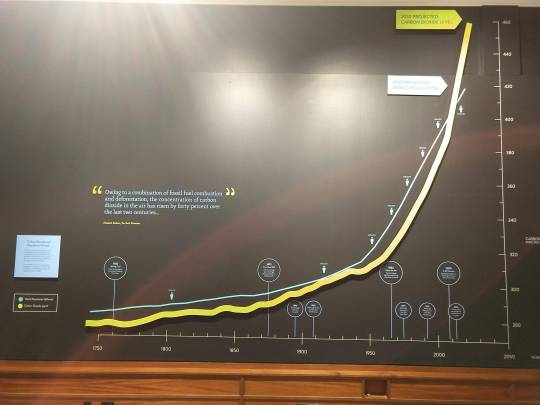
Graph showing the amount of CO2 in the atmosphere and human population
Photo: Graph showing the amount of CO2 in the atmosphere and human population from We Are Nature, on display until September 2018.

We’re now up to over 400 consecutive warmer-than-average months and counting. Carnegie Museum of Natural History’s collections, which span more than 140 years, can help show these shifts in many ways. One of the most important things we can do is to make connections and show the relevance between the basic scientific principles underlying natural phenomena and the evidence all around us; between what’s happening globally and what’s happening locally.
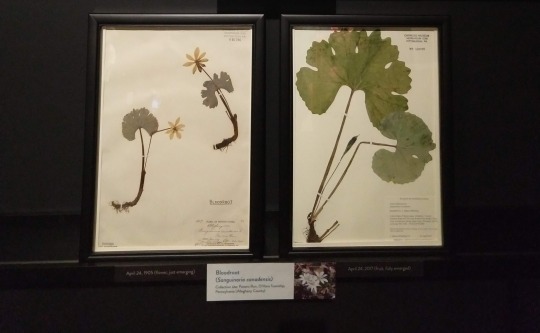
side by side comparison of plant specimens collected 100 years apart
Photo: The growth of plants collected today versus 100 years ago in the same locations, shown in We Are Nature, corroborates the observation of increasingly earlier springtime by documenting earlier maturation of these species.

The globe’s increasing heat is a result of fossil fuel use, food production, and our land use practices. We need energy and food, of course; but it’s critical that we recognize that the systems we impact also impact us. It’s not just our actions, but our interactions with the world around us that are the story. To understand what’s happening and improve our interactions with nature, we have to look at the big picture, and work to meet our needs in ways that minimize disruption to the overall system.

As summer heat waves get longer, more numerous, and more intense (and it seems the whole world is on fire, with deadly fires everywhere from California to Greece to inside the Arctic Circle) one connection is obvious: our need to be cool.

Joylette Portlock, Ph.D., is associate director of science and research at Carnegie Museum of Natural History. She is also executive director of Communitopia, a nonprofit focused on climate change communication, and holds many other roles in the community.
Filed Under: Blog Tagged With: Anthropocene, climate change, global warming, We Are Nature, We Are Nature: Living in the Anthropocene

January 1, 2018 by wpengine

Did you know that coral is expected to be the first casualty?

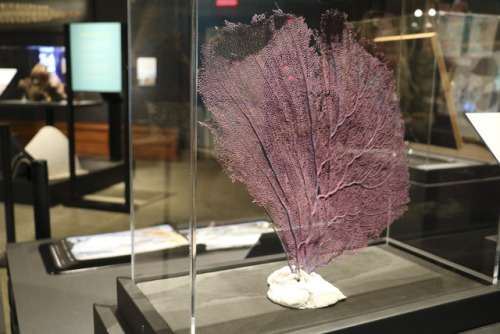
purple specimen of coral

Did you know that coral is expected to be the first casualty of the age of humanity (also known as the Anthropocene)?

In the last 30 years alone, half of the world’s coral has died.

When ocean water warms due to higher CO2 levels, the algae that live in the coral branches can’t survive, leaving the coral without a food source. The Great Barrier Reef experiences more and more coral bleaching daily, as can be seen on this specimen in the new exhibition We Are Nature: Living in the Anthropocene at Carnegie Museum of Natural History.


The Anthropocene is the current geological era in which humans are making a profound impact on the geological strata. While the term itself is still being debated by geologists, the museum is embracing it as a social and cultural tool for exploring the broad sum effect humans are having on the planet in the exhibition We Are Nature: Living in the Anthropocene—open now through summer 2018.

Filed Under: Blog Tagged With: climate change, global warming, We Are Nature, We Are Nature: Living in the Anthropocene

November 28, 2016 by wpengine

Songbirds and Climate Change

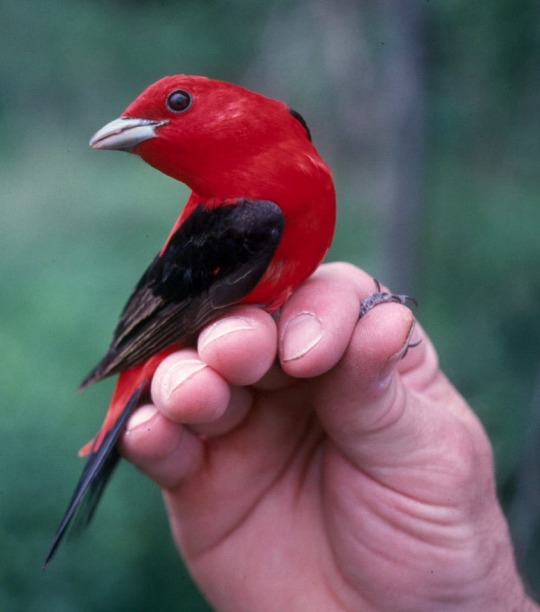
song bird being held by a researcher
How are songbirds in western Pennsylvania adapting to climate change?

Fairly well according to Carnegie Museum of Natural History researchers Molly McDermott and Luke DeGroote, who observed adaptations in a recent paper titled “Global Change Biology.” Their work was covered in Anthropocene Magazine and referenced on NPR’s Science Friday this month.

Using 53 years’ worth of data collected at Powdermill Nature Reserve, Carnegie Museum of Natural History’s environmental research center in Rector Pa., DeGroote and McDermott observed that several species of songbirds have adapted their breeding cycles to warmer weather and earlier springs.

“I think of it as a very hopeful note. We can think of it as mother nature’s resilience, giving us a chance to be doing everything else we could be doing to help birds,” freelance writer Brandon Keim said on Science Friday about his Anthropocene Magazine article on McDermott and DeGroote’s paper.

However, DeGroote says that despite the note of optimism, there’s also an underlying word of caution.

“Because there is a disconnect between plant phenology and migratory timing, there may come a time when birds are no longer able to continue to ‘catch up’ after arrival by breeding earlier,” DeGroote said.

You can read the Anthropocene article or listen to Science Friday, where the segment featuring the research is about three minutes into the full episode at (89:21 to -86:53).

Filed Under: Blog Tagged With: adaptation, Birds, climate change, global warming

sidebar

About

  • Mission & Commitments
  • Directors Team
  • Museum History

Get Involved

  • Volunteer
  • Membership
  • Carnegie Discoverers
  • Donate
  • Employment
  • Events

Bring a Group

  • Groups of 10 or More
  • Birthday Parties at the Museum
  • Field Trips

Powdermill

  • Powdermill Nature Reserve
  • Powdermill Field Trips
  • Powdermill Staff
  • Research at Powdermill

More Information

  • Image Permission Requests
  • Science Stories
  • Accessibility
  • Shopping Cart
  • Contact
  • Visitor Policies
One of the Four Carnegie Museums | © Carnegie Institute | Privacy Policy | Terms of Use | Accessibility
Rad works here logo
