• Skip to primary navigation
  • Skip to main content
  • Skip to primary sidebar

Carnegie Museum of Natural History

One of the Four Carnegie Museums of Pittsburgh

  • Visit
    • Buy Tickets
    • Visitor Information
    • Exhibitions
    • Events
    • Dining at the Museum
    • Celebrate at the Museum
    • Powdermill Nature Reserve
    • Event Venue Rental
  • Learn
    • Field Trips
    • Educator Information
    • Programs at the Museum
    • Bring the Museum to You
    • Guided Programs FAQ
    • Programs Online
    • Climate and Rural Systems Partnership
  • Research
    • Scientific Sections
    • Science Stories
    • Science Videos
    • Senior Science & Research Staff
    • Museum Library
    • Science Seminars
    • Scientific Publications
    • Specimen and Artifact Identification
  • About
    • Mission & Commitments
    • Directors Team
    • Museum History
  • Tickets
  • Give
  • Shop

Hall of African Wildlife

January 9, 2017 by wpengine

Saving the Bonteboks

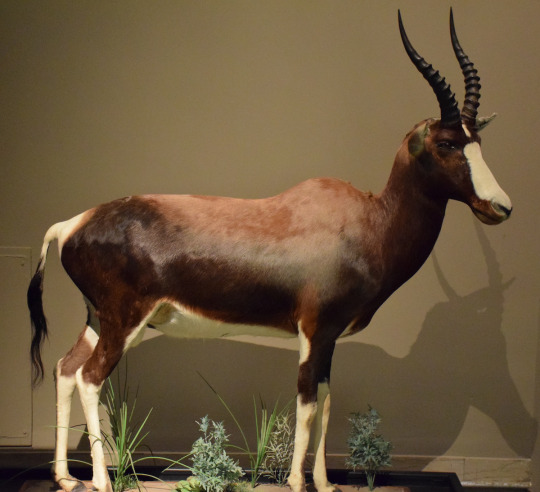
Bontebok on display in the Hall of African Wildlife

Bonteboks, like this one on display in the Hall of African Wildlife, are the rarest antelopes in the world. In Afrikaans, the word bontebok means “colorful antelope,” which is a reference to their white face patches.

Bonteboks were aggressively hunted in the early 1800s to the point of near extinction. By the 1930s, there were only 17 bonteboks in the entire world that all lived on a family farm. Thanks to the work of conservationists and the South African government, there are now about 3,000 bontebocks in zoos, farms, and preserves around the world.

The United States Fish and Wildlife Services (USFWS) confiscated this bontebok taxidermy mount in 2011 in Los Angeles from a shipment that came from South Africa because they suspected it was collected illegally.

Due to our museum’s well-known collection of African mammals, USFWS contacted curators and asked if they would accept the donation and tell the story of bontebok. With the help of members of the Carnegie Discoverers, the museum happily accepted.
Filed Under: Blog Tagged With: Hall of African Wildlife

January 4, 2017 by wpengine

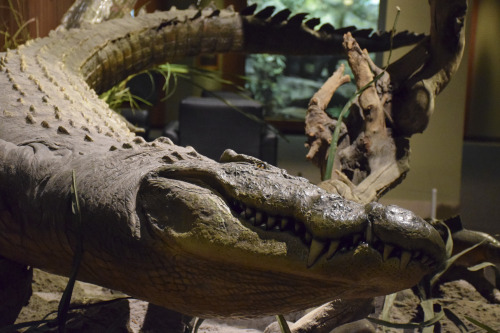
A specimen of Crocodylus niloticus

Crocodylus niloticus

A specimen of Crocodylus niloticus, one of the largest ever collected from Africa, is on display in the Hall of African Wildlife.

This Nile crocodile was more than 17 feet long and weighed nearly a ton when it was collected from Tanzania.

(Photo by Hayley Pontia)

Filed Under: Blog Tagged With: Hall of African Wildlife

July 24, 2016 by wpengine

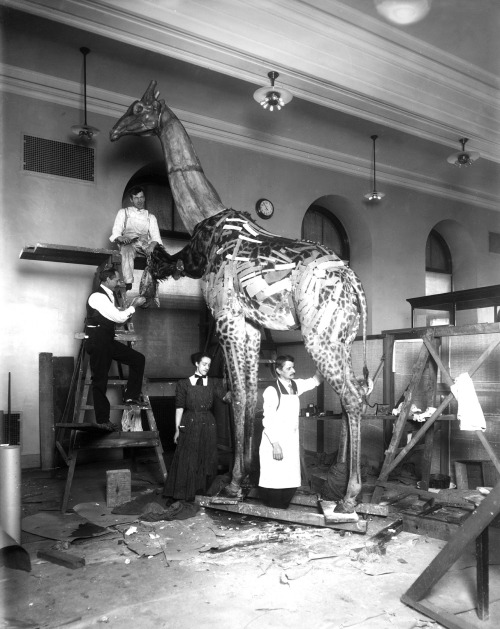
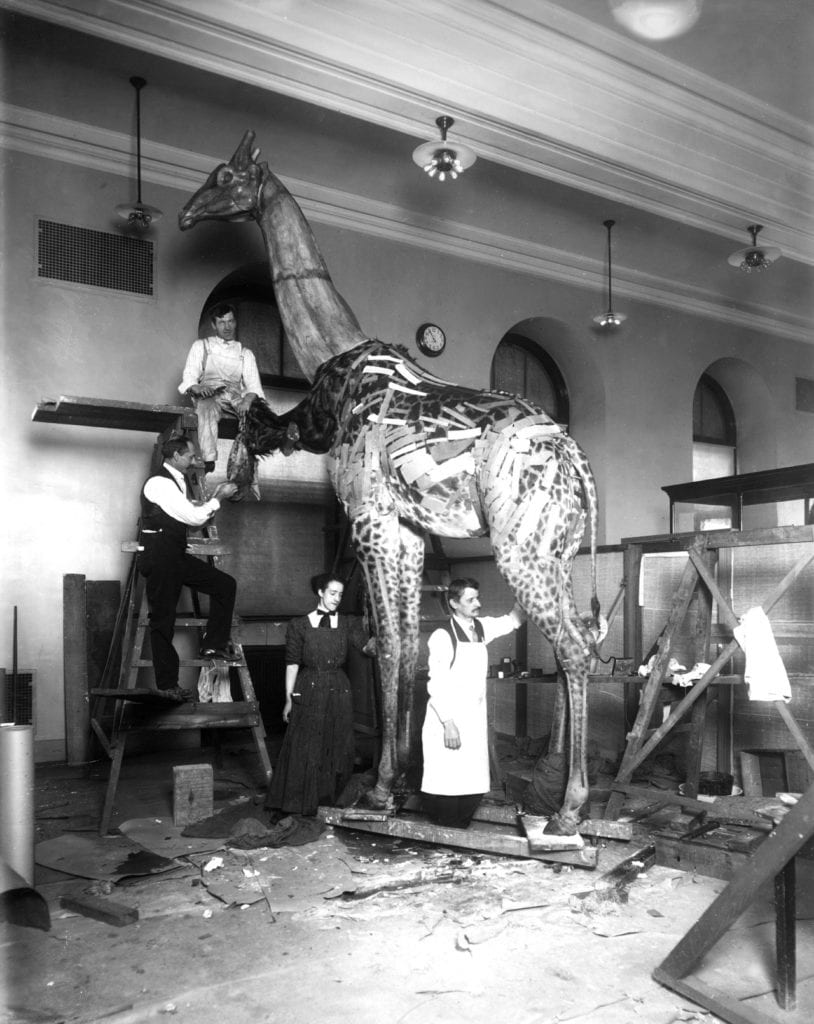
Carnegie Museum of Natural History taxidermists

scientists working to reassemble a taxidermy giraffe

Carnegie Museum of Natural History taxidermists creating the giraffe in the Hall of African Wildlife.

Filed Under: Blog Tagged With: diorama, Hall of African Wildlife, taxidermy

June 3, 2016 by wpengine

Play in the Savannah

Hall of African Wildlife at Carnegie Museum of Natural History

by Patrick McShea

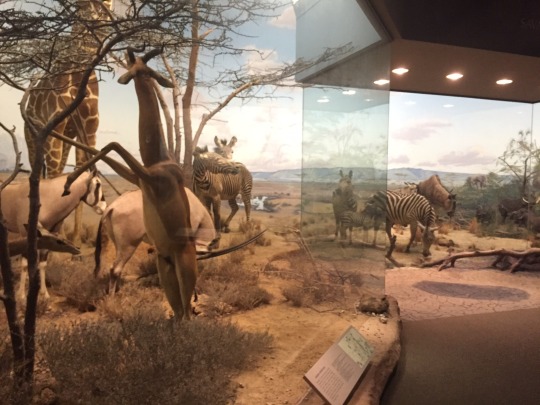
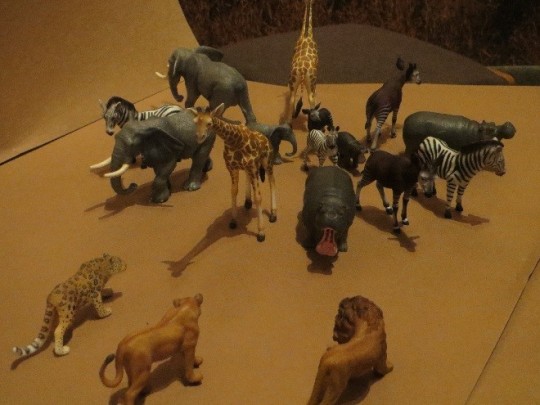
Amid the life sized, realistic diorama’s in Carnegie Museum of Natural History’s Hall of African Wildlife, there is a low table with adjacent seating that is reserved for play on a smaller scale.

Sturdy scale models of Africa’s emblematic species provide all that’s necessary for visitors to make associations, create scenes, simulate and imagine action, and engage in conversation.

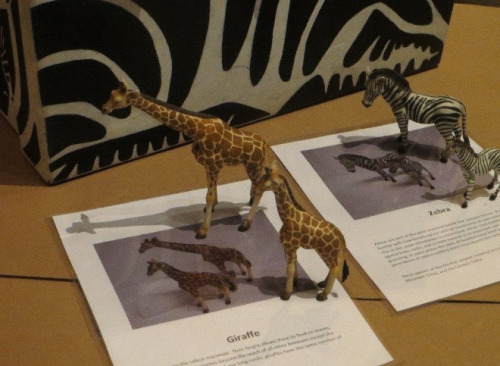
The plastic menagerie is housed in a zebra-striped toolbox, which also contains brief information sheets about featured creatures. Based upon the arrangements I’ve found while checking the table’s animal inventory, a popular pastime involves matching models with respective information sheets.

Giraffe and zebra miniature models

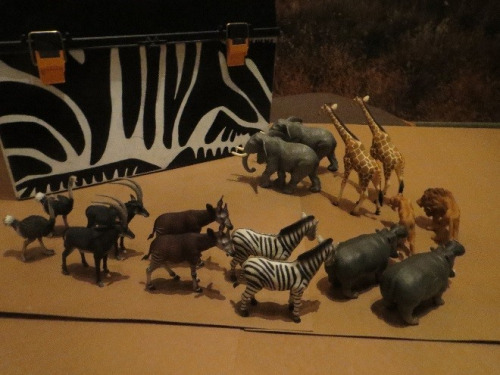
Novel uses include using the toolbox as a prop. Below the box stands-in for Noah’s Ark with the paired animal models in an orderly boarding line.

Savannah animals arranged in pairs

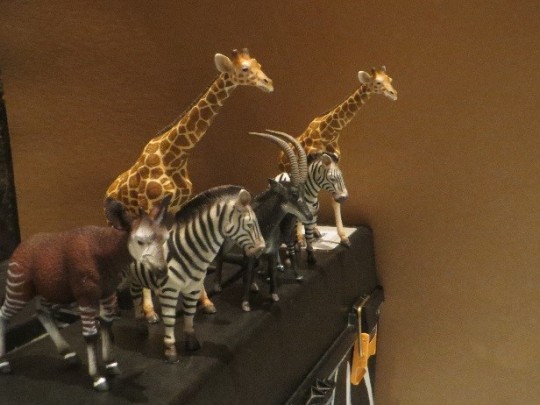
The creator of another scene appeared to imagine toolbox as a mesa with a line of grazers and browsers looking out to scout for predators or perhaps greener feeding grounds.

Savannah animal models

If the replicas’ proximity to dioramas containing life-sized taxidermy mounts invites discussion of scale, the plastic menagerie’s mix of carnivores and herbivores certainly leads to talk of predator and prey relationships. Below a dramatic visitor-constructed scene features a circle of full grown plant-eaters protecting their young from approaching meat-eaters.

Savannah animal models

Patrick McShea works in the Education and Visitor Experience department of Carnegie Museum of Natural History. Museum employees are encouraged to blog about their unique experiences and knowledge gained from working at the museum.

Filed Under: Blog Tagged With: African Wildlife, Education, Hall of African Wildlife, museums, Patrick McShea, Pittsburgh

May 14, 2016 by wpengine

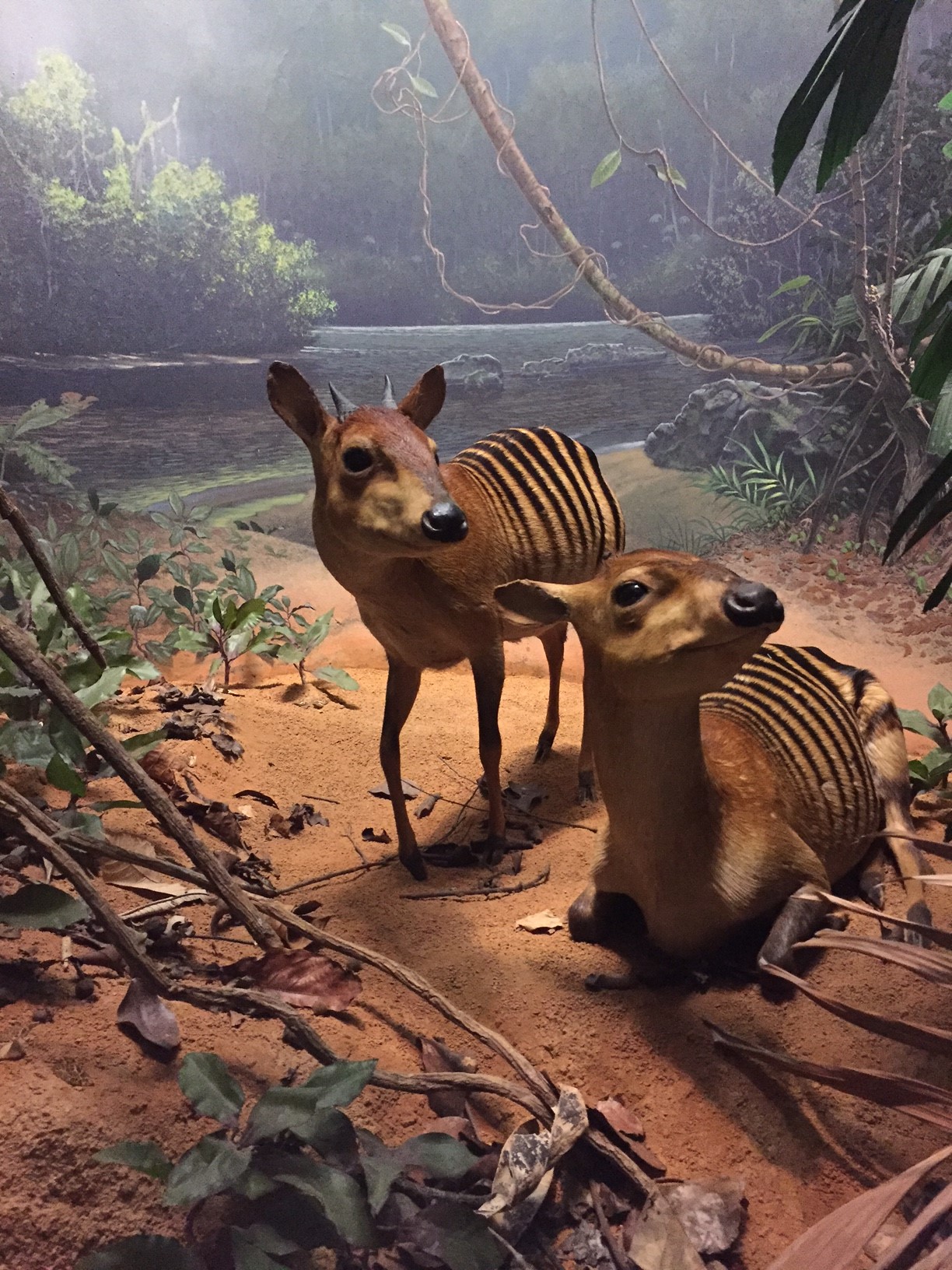
Zebra Duiker Dioramas

2 Zebra Duikers in a diaroma

The Carnegie Museum of Natural History’s Zebra Duikers are shown in their natural habitat, the coastal rain forests of Africa in the Hall of African Wildlife.

Filed Under: Blog Tagged With: diorama, Hall of African Wildlife, museums, Pittsburgh

April 7, 2016 by wpengine

Evolution of the Diorama

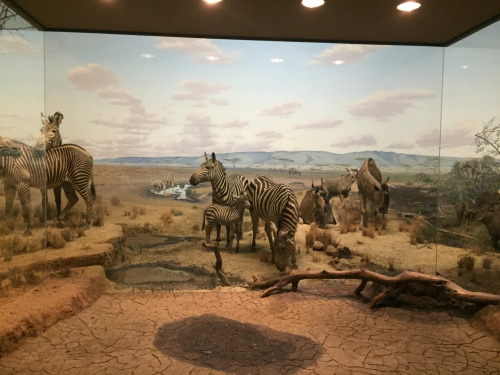
African Wildlife watering hole diorama at CMNH

An Indoor Zoo

Did you ever walk through the zoo and have the frustrating experience of not seeing the animals? Perhaps they were sleeping or hiding out under a rock on a hot summer’s day, for whatever reason–they were not visible.

Our halls of North American and African wildlife allow visitors to see the exotic animals in their natural habitats through expert taxidermy and beautiful background scenes created by artists. Visit anytime of year, anytime of day to see a replica of a Baobab tree towering over a rhinoceros, a zeal of zebras cautiously gathered by a watering hole, and a group of mountain goats precariously perched in their native steep, rocky terrain –all on the second floor of Carnegie Museum of Natural History.

The dioramas have been a staple of our museum for decades, but in the 1920′s they became an example of how museums must evolve with changing cultural attitudes. Our museum changed the display of its wildlife almost 100 years ago as Americans embraced the importance of conservation.

A current exhibition at the museum, “Art of the Diorama,” gives some cultural and historical context to our second floor dioramas.

Many American natural history museums opened and grew alongside the public’s blooming interest in nature in the mid to late 1800′s. Exotic animals were a natural fit to fill the halls of these new institutions. At the time, however, most museums
displayed animals in rectangular glass cases or on shelves with little to no foliage or background.

taxidermy giraffe being assembled
A giraffe being prepared for display at Carnegie Museum of Natural History.


As a new conservation movement gained traction, it inspired curators to reevaluate the display of their collections. In the 1920′s, the art of the diorama emerged. In an effort to give context to their animal specimens, museums began to depict them in their natural environment. Through painted background, native plants, and the inclusion of other animals, these new dioramas told a “biological story.” One that curators hoped would help the public understand that animals were not singular objects for display, but living creatures whose needs are worth protecting.

For more information on the evolution of our dioramas, visit “Art of the Diorama” on the first floor of the Carnegie Museum of Natural History.

Filed Under: Blog Tagged With: conservation, dioramas, Hall of African Wildlife, Hall of North American Wildlife, museums

  • « Go to Previous Page
  • Page 1
  • Page 2
  • Page 3

sidebar

About

  • Mission & Commitments
  • Directors Team
  • Museum History

Get Involved

  • Volunteer
  • Membership
  • Carnegie Discoverers
  • Donate
  • Employment
  • Events

Bring a Group

  • Groups of 10 or More
  • Birthday Parties at the Museum
  • Field Trips

Powdermill

  • Powdermill Nature Reserve
  • Powdermill Field Trips
  • Powdermill Staff
  • Research at Powdermill

More Information

  • Image Permission Requests
  • Science Stories
  • Accessibility
  • Shopping Cart
  • Contact
  • Visitor Policies
One of the Four Carnegie Museums | © Carnegie Institute | Privacy Policy | Terms of Use | Accessibility
Rad works here logo