• Skip to primary navigation
  • Skip to main content
  • Skip to primary sidebar

Carnegie Museum of Natural History

One of the Four Carnegie Museums of Pittsburgh

  • Visit
    • Buy Tickets
    • Visitor Information
    • Exhibitions
    • Events
    • Dining at the Museum
    • Celebrate at the Museum
    • Powdermill Nature Reserve
    • Event Venue Rental
  • Learn
    • Field Trips
    • Educator Information
    • Programs at the Museum
    • Bring the Museum to You
    • Guided Programs FAQ
    • Programs Online
    • Climate and Rural Systems Partnership
  • Research
    • Scientific Sections
    • Science Stories
    • Science Videos
    • Senior Science & Research Staff
    • Museum Library
    • Science Seminars
    • Scientific Publications
    • Specimen and Artifact Identification
  • About
    • Mission & Commitments
    • Directors Team
    • Museum History
  • Tickets
  • Give
  • Shop

Hall of Birds

January 24, 2019 by wpengine

“Amazing, just like a dinosaur!”

Exclamations like this are common among bird biologists, especially when face-to-face with a Pileated Woodpecker or a ferocious Chickadee. Decades of Jurassic Park films have caught us in a tautological trap where birds remind us of dinosaurs—because Hollywood models dinosaurs on birds. From the coordinated flock movements of chickens foraging to the reptilian eyes of a Heron, I often catch myself wanting to say, “Amazing, just like a dinosaur!” But, I restrain myself because my source is mostly Stephen Spielberg.

At the Carnegie Museum of Natural History something that makes the Section of Birds special is its proximity to a world-class collection of dinosaur fossils and the paleontologists they attract. PhD students, like Sam Gutherz from Ohio University, use our collections to study the pulmonary tissue and skeleton of birds to address questions regarding the evolution of the respiratory system in a range of archosaurs.
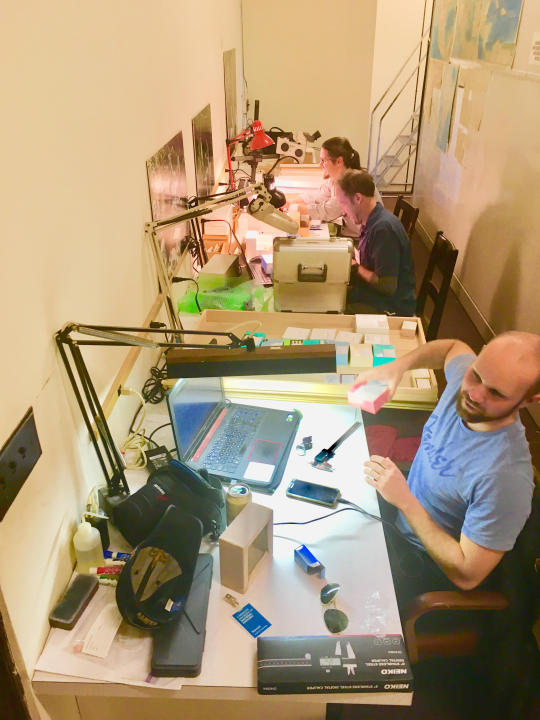
three people working at desks
Sam Gutherz and colleagues from Ohio University measure bird skeletons at the Carnegie Museum of Natural History to better understand the biology of dinosaurs.

Sam visits natural history museums for both the birds and the dinosaurs—systematically measuring bones and testing questions that ultimately support or refute the connection between birds and dinosaurs. Decades of work by scientists like Sam and his colleagues have built a case using multiple lines of evidence that birds evolved from dinosaurs. In fact, paleontologists have been so successful that bird biologists and Hollywood producers stand on their shoulders.

Chase Mendenhall is Assistant Curator of Birds, Ecology, and Conservation at Carnegie Museum of Natural History. Museum employees are encouraged to blog about their unique experiences and knowledge gained from working at the museum.
Filed Under: Blog Tagged With: bird hall, Birds, Chase Mendenhall, dinosaurs, Hall of Birds, paleontology

January 10, 2019 by wpengine

The Crows are Back in Town

By Melissa Cagan and Rachael Carlberg

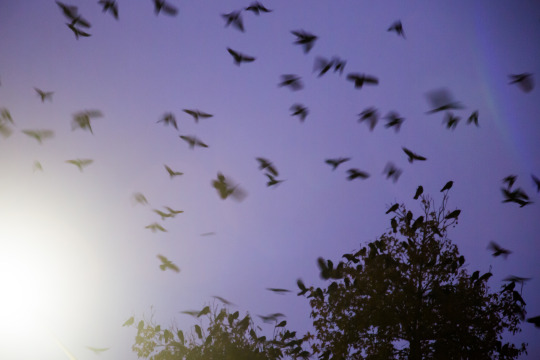
a murder of crows in the sky

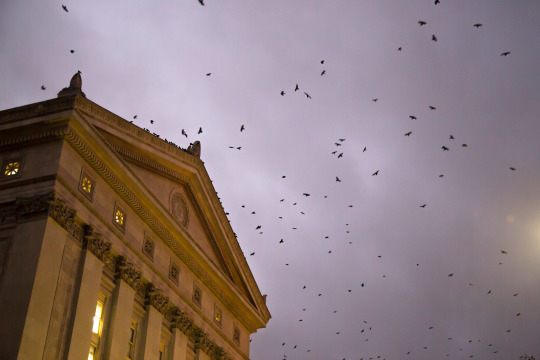
If you looked out your window at sunset in the recent months, you would probably notice a strange phenomenon – hundreds, even thousands, of crows flying from all directions towards the same place.

Where are the crows going?

Well, when the weather starts getting cold, crows will fly into Pittsburgh from surrounding areas to join in one communal roost, a large group of birds that flock together to sleep through cold nights. You may wonder why these crows have chosen a city as their roost site, but there are actually many advantages to choosing an urban roost.  For one thing, cities are usually warmer than rural areas, are well-lit by night lights, and contain fewer predators.  In addition, Pittsburgh has an abundance of large trees that make safe spots for a big crow slumber party!

crows in the sky about a museum

Heads up…

Now – imagine that a hundred (or even a thousand!) birds moved into your neighbor’s place… what sorts of strange things might you start to notice?  Crows are not known for being quiet, so don’t be surprised if it gets super noisy when you’re trying to sleep.  Also, as you might imagine, a roost of crows poses some… sanitary issues as well.  If you live in the city near a roost look out for some lovely crow presents on your streets, sidewalks, or car.

Birds can be trash collectors?

Corvids, the family of birds that crows are a part of, are really smart birds.

In fact, a theme park in France has made use of corvids’ talents by hiring six rooks (a cousin of the crow) to act as garbage collectors throughout the park!

Related Content

Ask a Scientist: Ravens and crows, what’s the difference?

Stuffed Animal Safari: Binocular Activity

Jurassic Days: An Adventure Under the Sea

Filed Under: Blog Tagged With: bird hall, Hall of Birds, Nature 360, Pittsburgh

  • « Go to Previous Page
  • Page 1
  • Page 2

sidebar

About

  • Mission & Commitments
  • Directors Team
  • Museum History

Get Involved

  • Volunteer
  • Membership
  • Carnegie Discoverers
  • Donate
  • Employment
  • Events

Bring a Group

  • Groups of 10 or More
  • Birthday Parties at the Museum
  • Field Trips

Powdermill

  • Powdermill Nature Reserve
  • Powdermill Field Trips
  • Powdermill Staff
  • Research at Powdermill

More Information

  • Image Permission Requests
  • Science Stories
  • Accessibility
  • Shopping Cart
  • Contact
  • Visitor Policies
One of the Four Carnegie Museums | © Carnegie Institute | Privacy Policy | Terms of Use | Accessibility
Rad works here logo
