• Skip to primary navigation
  • Skip to main content
  • Skip to primary sidebar

Carnegie Museum of Natural History

One of the Four Carnegie Museums of Pittsburgh

  • Visit
    • Buy Tickets
    • Visitor Information
    • Exhibitions
    • Events
    • Dining at the Museum
    • Celebrate at the Museum
    • Powdermill Nature Reserve
    • Event Venue Rental
  • Learn
    • Field Trips
    • Educator Information
    • Programs at the Museum
    • Bring the Museum to You
    • Guided Programs FAQ
    • Programs Online
    • Climate and Rural Systems Partnership
  • Research
    • Scientific Sections
    • Science Stories
    • Science Videos
    • Senior Science & Research Staff
    • Museum Library
    • Science Seminars
    • Scientific Publications
    • Specimen and Artifact Identification
  • About
    • Mission & Commitments
    • Directors Team
    • Museum History
  • Tickets
  • Give
  • Shop

Hall of North American Wildlife

August 15, 2016 by wpengine

An Immersive Alaskan Scene

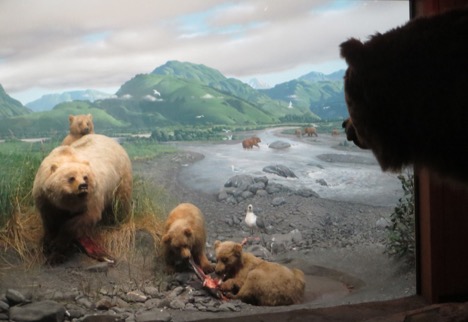
Bears in a diorama in the Hall of North American Wildlife
by Patrick McShea

Well planned dioramas support multiple levels of interpretation. At the Alaskan Brown Bear diorama, however, it’s initially difficult to consider any narrative not focused upon these powerful creatures.

The Kodiak Island scene features nine brown bears – four distant bears are painted into the backdrop landscape and taxidermy mounts of an adult female and three cubs fill the diorama’s left foreground. Facing them from a four-foot high rock ledge outside the exhibit glass, a large male bear adds tension to the display.

The noses of the two adult two adult bears are less than 13 feet apart, a narrow zone that is routinely occupied by museum visitors when they read an adjacent label that highlights the potential for a violent encounter. “Male bears routinely prey on cubs. Fiercely protective, mother bears are known to attack and may even kill larger males that come too close.”

This immersive aspect was created during a 1995 renovation that extensively upgraded an exhibit originally dedicated in 1918.

The upgrade also involved the replacement of king salmon with red or sockeye salmon to accurately represent the species whose summer spawning runs draw bears to the stream. The diorama’s immersive zone is the perfect place to consider how the pair of cubs eating a single fish can represent an enormous transfer of nutrients between ocean and forest ecosystems.

When spawning red salmon return to the stream in which they were born, they do so after spending as long as four years at sea. If they manage to avoid bears and other predators, they still die, often far inland, within a few weeks of spawning. Research studies into the ecological impact of salmon runs have charted the movement of stable nitrogen isotopes from salmon tissue to the stems and leaves of streamside vegetation. The bears, in such cycles, are just intermediary processors.

Patrick McShea works in the Education and Visitor Experience department of Carnegie Museum of Natural History. Museum employees are encouraged to blog about their unique experiences of working at the museum.
Filed Under: Blog Tagged With: diorama, Hall of North American Wildlife, Patrick McShea, Pittsburgh

August 4, 2016 by wpengine

Photo Traps in Conservation

Photo Trap Display

by  Patrick McShea

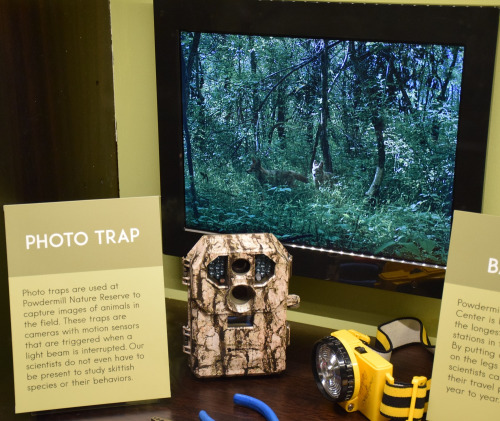
In the Hall of North American Wildlife at Carnegie Museum of Natural History, there’s a display of field
research tools that includes a 14-inch screen that continually shows still images of  bobcats, black bears, and
other seldom seen residents of Powdermill Nature Reserve, the museum’s environmental research center. The images were collected in photo traps, sturdy programmable cameras with shutters triggered by motion or heat sensors.

A photo trap unit rests adjacent to the screen with its lights, lens, and sensors facing outward. The compactness
of the camouflage-patterned device contrasts with enormous contributions such cameras are currently making in wildlife conservation studies. Single cameras can collect photographic evidence of rarely seen species at a low financial cost and with minimal disturbance of the targeted creatures. Arrays of strategically placed cameras can be used to calculate population densities and chart individual territories.

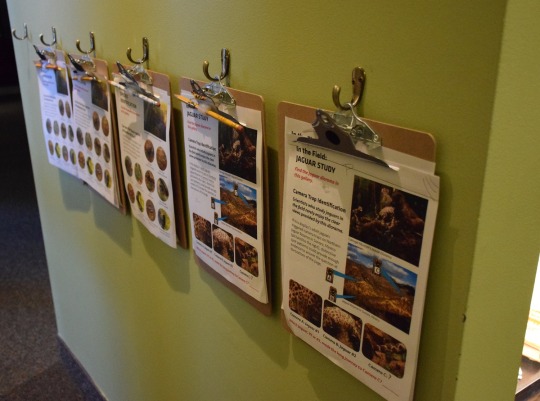
Around the corner from the display a clipboard-mounted activity sheet invites visitors to try their skill at interpreting photo trap evidence at the nearby Jaguar diorama.

clipboards hanging on the wall with activity sheets

For anyone interested in how photo traps are documenting the
continued presence jaguars and ocelots in the American southwest, the US Fish
and Wildlife Service maintains a site of spotted cat images.

Patrick McShea works in the Education and Visitor Experience department of Carnegie Museum of Natural History. Museum employees are encouraged to blog about their unique experiences of working at the museum.
Filed Under: Blog Tagged With: conservation, fieldwork, Hall of North American Wildlife, Patrick McShea

April 7, 2016 by wpengine

Evolution of the Diorama

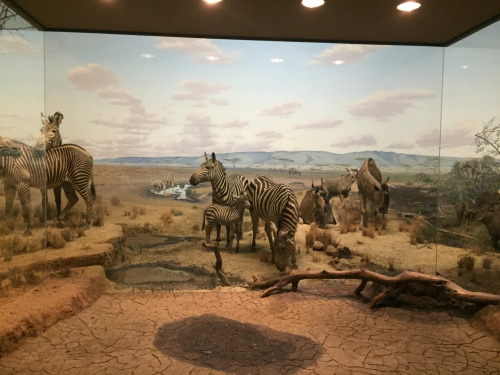
African Wildlife watering hole diorama at CMNH

An Indoor Zoo

Did you ever walk through the zoo and have the frustrating experience of not seeing the animals? Perhaps they were sleeping or hiding out under a rock on a hot summer’s day, for whatever reason–they were not visible.

Our halls of North American and African wildlife allow visitors to see the exotic animals in their natural habitats through expert taxidermy and beautiful background scenes created by artists. Visit anytime of year, anytime of day to see a replica of a Baobab tree towering over a rhinoceros, a zeal of zebras cautiously gathered by a watering hole, and a group of mountain goats precariously perched in their native steep, rocky terrain –all on the second floor of Carnegie Museum of Natural History.

The dioramas have been a staple of our museum for decades, but in the 1920′s they became an example of how museums must evolve with changing cultural attitudes. Our museum changed the display of its wildlife almost 100 years ago as Americans embraced the importance of conservation.

A current exhibition at the museum, “Art of the Diorama,” gives some cultural and historical context to our second floor dioramas.

Many American natural history museums opened and grew alongside the public’s blooming interest in nature in the mid to late 1800′s. Exotic animals were a natural fit to fill the halls of these new institutions. At the time, however, most museums
displayed animals in rectangular glass cases or on shelves with little to no foliage or background.

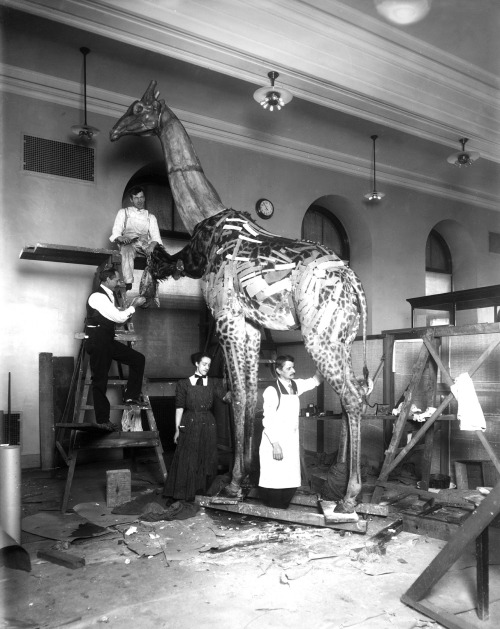
taxidermy giraffe being assembled
A giraffe being prepared for display at Carnegie Museum of Natural History.


As a new conservation movement gained traction, it inspired curators to reevaluate the display of their collections. In the 1920′s, the art of the diorama emerged. In an effort to give context to their animal specimens, museums began to depict them in their natural environment. Through painted background, native plants, and the inclusion of other animals, these new dioramas told a “biological story.” One that curators hoped would help the public understand that animals were not singular objects for display, but living creatures whose needs are worth protecting.

For more information on the evolution of our dioramas, visit “Art of the Diorama” on the first floor of the Carnegie Museum of Natural History.

Filed Under: Blog Tagged With: conservation, dioramas, Hall of African Wildlife, Hall of North American Wildlife, museums

March 23, 2016 by wpengine

North American Wildlife Mural

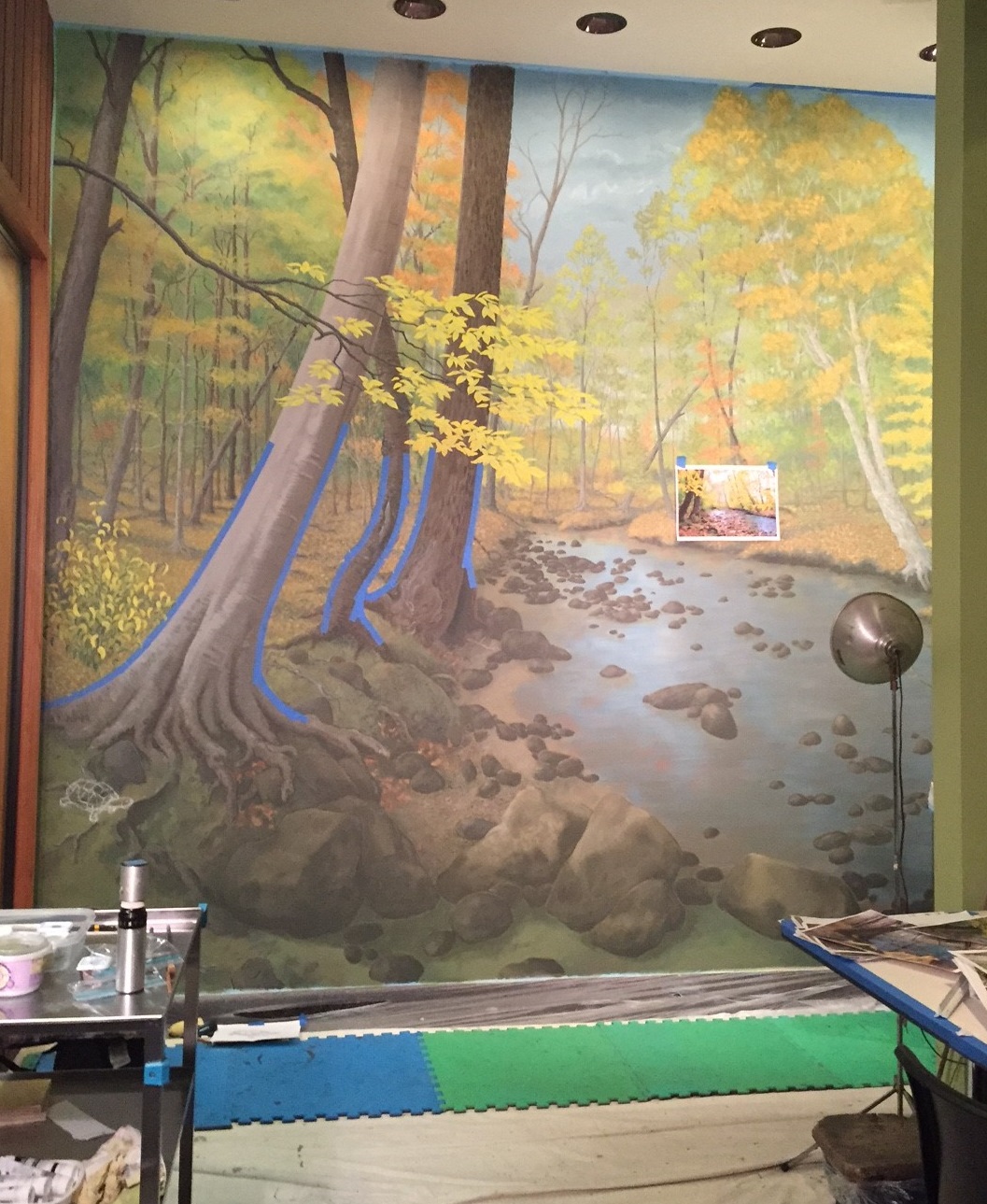
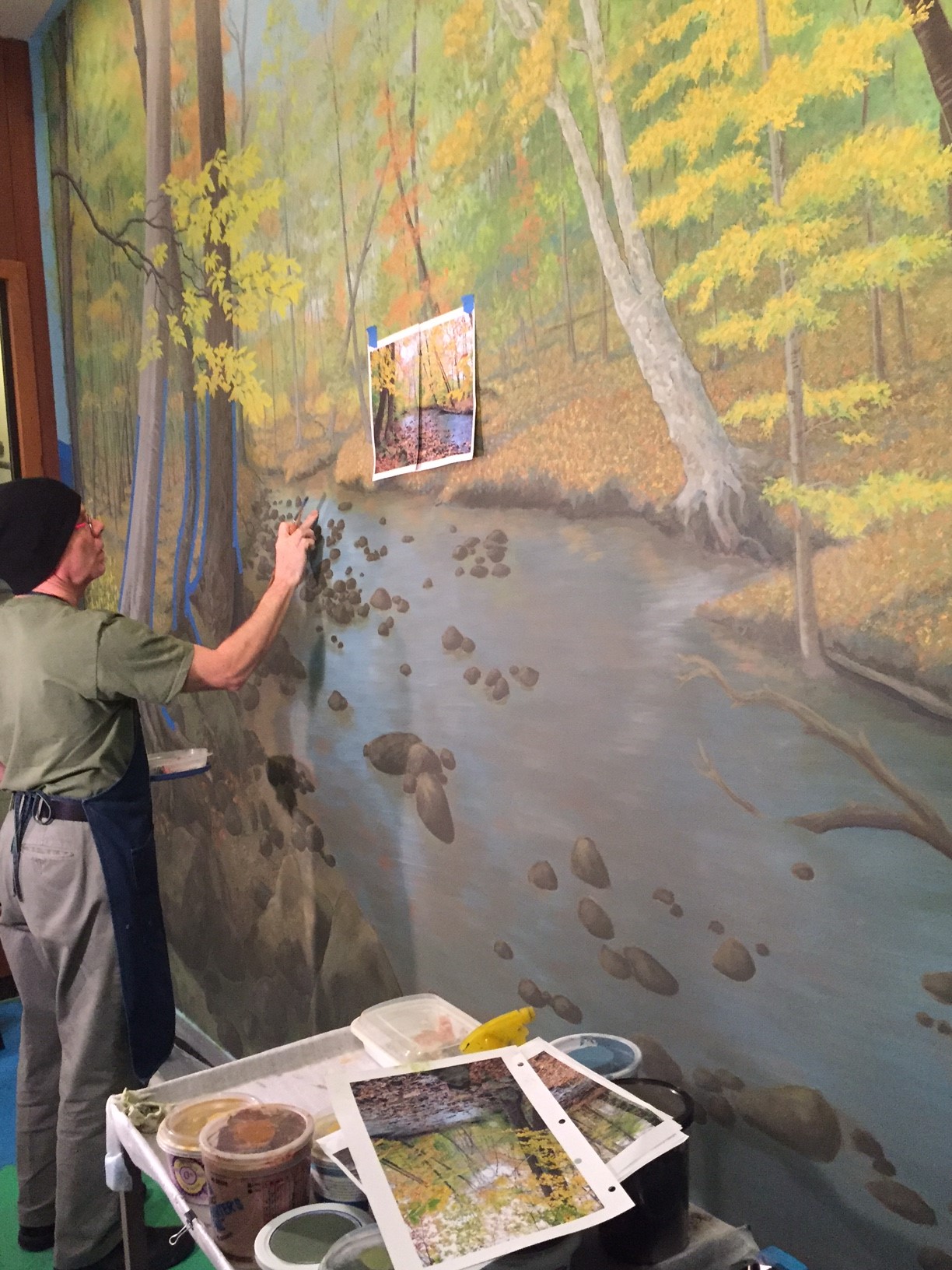
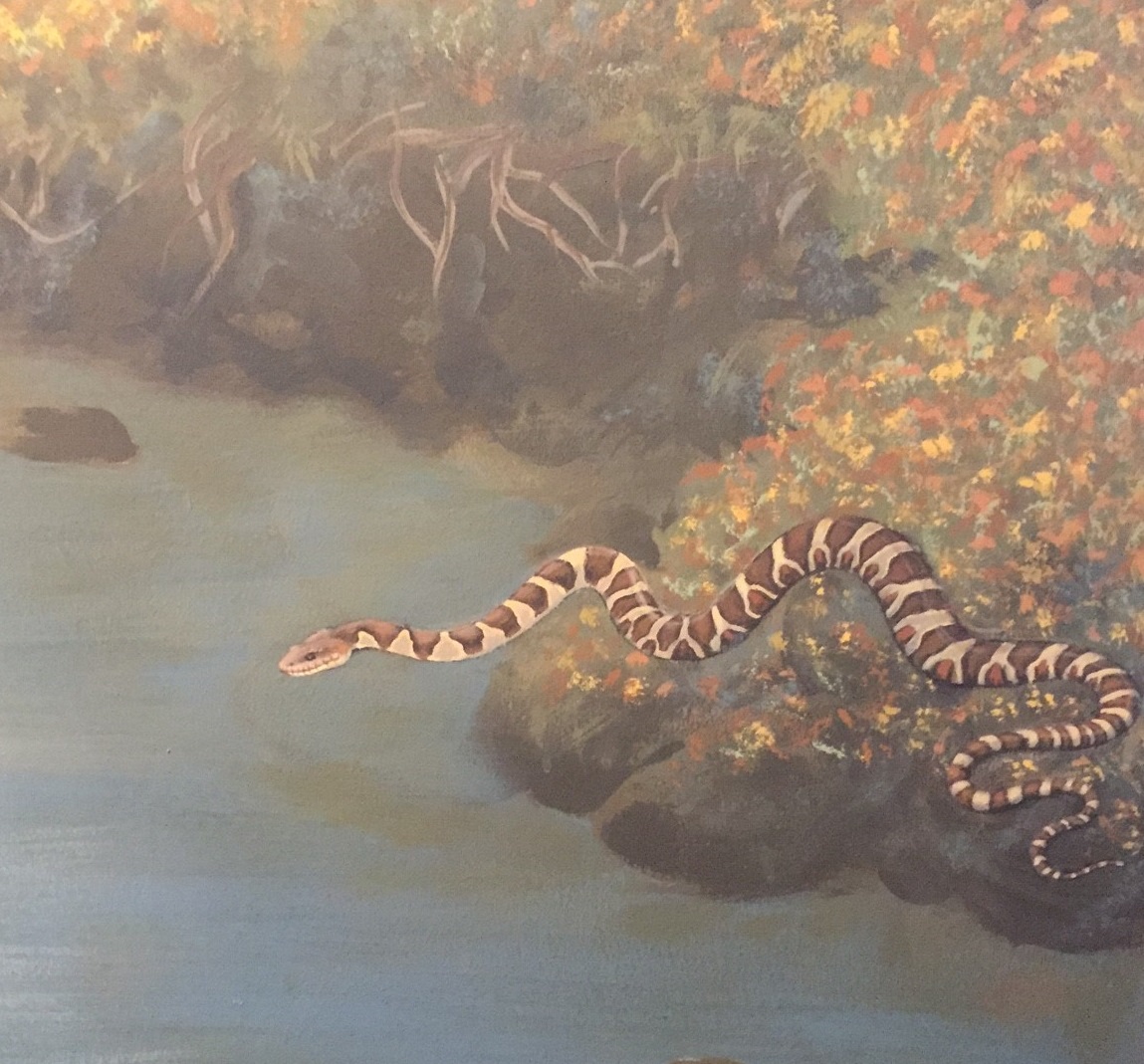
Mural of trees and stream Artist Painting a North American Wildlife Mural North American Wildlife Mural Snake

Visitors to our Hall of North American Wildlife are currently able to watch artists transform a previously blank wall into an intricate and scientifically accurate mural that depicts a tranquil stream running through a forest that’s transitioning from summer to fall.

After several weeks of work our artists have gone from outlines to details, and are currently adding finishing elements such as native wildlife to the scene.

Artists say the project is nearing completion. To see earlier photos of the project, click here.

Filed Under: Blog Tagged With: art, exhibit design, Hall of North American Wildlife

  • « Go to Previous Page
  • Page 1
  • Page 2
  • Page 3
  • Page 4

sidebar

About

  • Mission & Commitments
  • Directors Team
  • Museum History

Get Involved

  • Volunteer
  • Membership
  • Carnegie Discoverers
  • Donate
  • Employment
  • Events

Bring a Group

  • Groups of 10 or More
  • Birthday Parties at the Museum
  • Field Trips

Powdermill

  • Powdermill Nature Reserve
  • Powdermill Field Trips
  • Powdermill Staff
  • Research at Powdermill

More Information

  • Image Permission Requests
  • Science Stories
  • Accessibility
  • Shopping Cart
  • Contact
  • Visitor Policies
One of the Four Carnegie Museums | © Carnegie Institute | Privacy Policy | Terms of Use | Accessibility
Rad works here logo