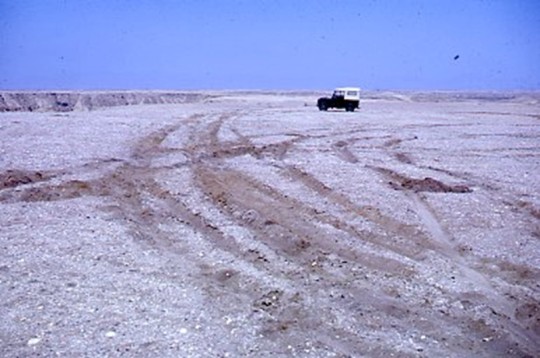
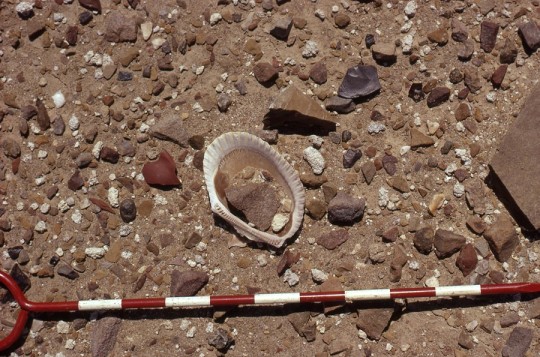
In 1965 I went to the far north coast of Peru to the petroleum town of Talara to conduct dissertation research. In my survey of archaeological sites, I discovered the stratified site of Siches (10,000-4,000 BP), which had an assemblage of mangrove mollusks. This was startling to shell experts since the southern distribution of mangrove environments is now 120 miles north in southern Ecuador. So, how to explain this thermally-anomalous Mollusca assemblage (TAMA) existing in a stark desert landscape? With further research I published articles in 1981 and 1983 in the Annals of Carnegie Museum, proposing that there must have been a change in the ocean current system off this desert coast relating to El Niño (ENSO). By the early 1980’s our research team, devoted to explaining the distribution of other TAMAS at sites as far south as Lima, included Research Associate Dan Sandwiess of the University of Maine and Jack Donahue and Bud Rollins of Pitt’s Geology Department. In 1986, in the Journal of Geoarchaeology we published the article The Birth of El Niño: Geoarchaeological Evidence and Implications, which outraged oceanographers and geologists. They said, “How can you change the ocean current system of the eastern Pacific to explain the presence of your weird shells?” We kept plugging away at this line of research and in 1996 we published in Science, Geoarchaeological Evidence from Peru for a 5000 Years BP. Onset of El Niño. In 2006 Sandweiss and I published Climate Change, El Niño, and the Rise of Complex Society on the Peruvian Coast during the Middle Holocene in a Dumbarton Oaks volume devoted to archaeological research on El Niño. Further documentation of the dramatic changes in the ocean current off the coast of Peru comes from the analysis of fish fauna from Siches by Research Associates Betsy Reitz and Dan Sandwiess in the Bulletin of the Florida State Museum 2019.
In a nutshell, the results of over 50 years of research at coastal sites from Ecuador to Chile provides the following scenario: El Niño was present but of unknown frequency from 13,000 to 8,800, absent or rare between 8,800 to 5,800, infrequent from 5,800 to 3,200, obtaining its modern recurrence intervals about 3,200 years ago. This research on El Niño, the weather catastrophe that impacts not only the Central Andes but is felt around the world as floods and droughts, has revolutionized our thinking on the development of the first civilization in South America, centered on the Peruvian north coast. Circa 5,800 years the warm current washing the Peruvian coast north of Lima was replaced with the cold Peru (Humboldt) current, which brought with it the huge resource of schooling fish, making Peru one of the richest fishing grounds in the world. These fish resources became the foundation for the rise of temple centers on the north coast, on which Research Associate Michael Moseley based his theory of the maritime foundations of Peruvian civilization. All other civilizations are agriculturally based.
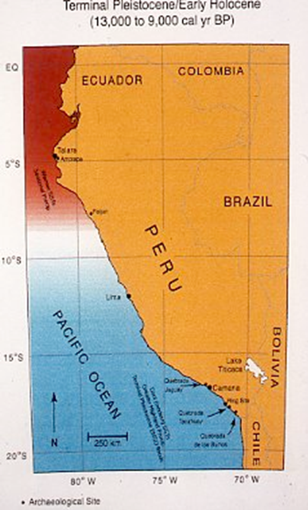
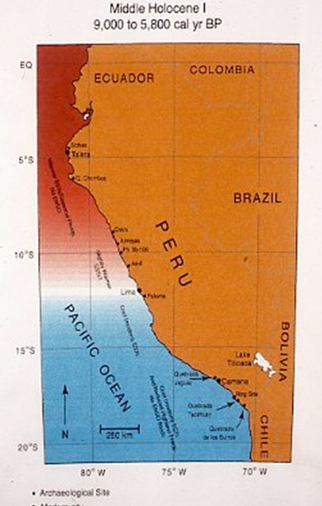
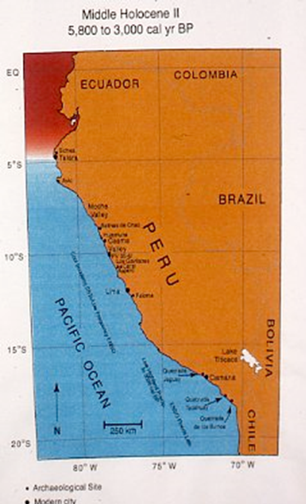
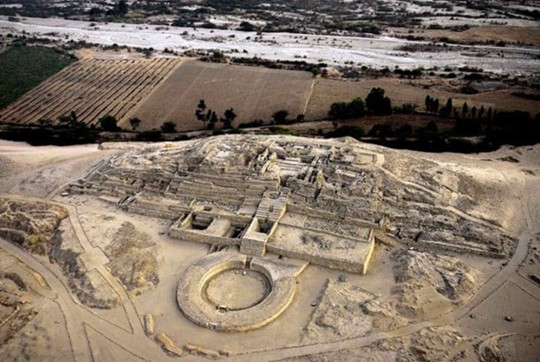
It is amazing that the discovery of insignificant mangrove shells at Siches became the basis for not only proving that El Niño is only 5,800 years old, but provided the causal factors for the origin of Peru’s first civilization. This research just shows that if you live long enough, decades of research will finally pay off with incredible results.
James B. Richardson III is the Emeritus Chief Curator of the Section of Anthropology and Emeritus Professor of Anthropology at the University of Pittsburgh. Museum employees are encouraged to blog about their unique experiences and knowledge gained from working at the museum.
