• Skip to primary navigation
  • Skip to main content
  • Skip to primary sidebar

Carnegie Museum of Natural History

One of the Four Carnegie Museums of Pittsburgh

  • Visit
    • Buy Tickets
    • Visitor Information
    • Exhibitions
    • Events
    • Dining at the Museum
    • Celebrate at the Museum
    • Powdermill Nature Reserve
    • Event Venue Rental
  • Learn
    • Field Trips
    • Educator Information
    • Programs at the Museum
    • Bring the Museum to You
    • Guided Programs FAQ
    • Programs Online
    • Climate and Rural Systems Partnership
  • Research
    • Scientific Sections
    • Science Stories
    • Science Videos
    • Senior Science & Research Staff
    • Museum Library
    • Science Seminars
    • Scientific Publications
    • Specimen and Artifact Identification
  • About
    • Mission & Commitments
    • Directors Team
    • Museum History
  • Tickets
  • Give
  • Shop

Lisa Miriello

August 31, 2023 by Erin Southerland

The Nose that “Sees”

by Lisa Miriello

Despite the common name of the star-nosed mole (Condylura cristata), the 22 fleshy appendages at the end of its snout act more like an eye than a nose. These unique tentacles, or rays, are covered with more than 25,000 Eimer’s organs that hold over 100,000 nerve fibers (more than five times the number in the human hand) and are the most sensitive touch organs of any known mammal.

Given the mole’s poorly developed eyesight, the rays are far more useful for finding prey.

They are constantly moving and touching to identify what’s good to eat and what isn’t. Sensitive whiskers on the head and front feet also act as “feelers,” whether looking for food or navigating their way through dark underground tunnels.
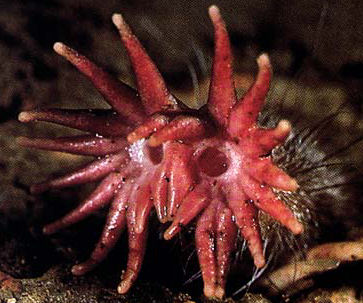
close-up of the nose of a star-nosed mole
“mole-star-nosed-4” by Brandon Motz is licensed under CC BY 2.0

Found throughout much of eastern North America in low elevation areas with moist soils, star-nosed moles are one of three mole species found in Pennsylvania. Their preferred habitat consists of wetlands near streams, lakes, and swamps. The soft moist soil makes it easier to construct tunnels and underground chambers, and the mole’s short neck, powerful shoulders, and heavy claws make them efficient diggers. Shallow tunnels, often temporary, are used for traveling and foraging, while deeper, more permanent tunnels are used for resting, nesting, and escaping cold weather. Condylura is relatively safe from predators while underground but vulnerable to birds of prey, weasels, skunks, foxes, and snakes when out of their tunnels. 

The star-nosed mole is a voracious eater that consumes 50% or more of its body weight each day. More notably, it holds a Guinness World Record for the fastest eating mammal. 

Scientific studies have shown that Condylura can identify and eat prey in less than one-fifth of a second (200 milliseconds). That’s as many as five prey items per second, too fast for the human eye to follow.

Besides the worms, grubs, beetles, and other invertebrates found underground or on the surface, being near water gives them access to another hunting ground where they can find mollusks, aquatic insects, amphibians, and even small fish.
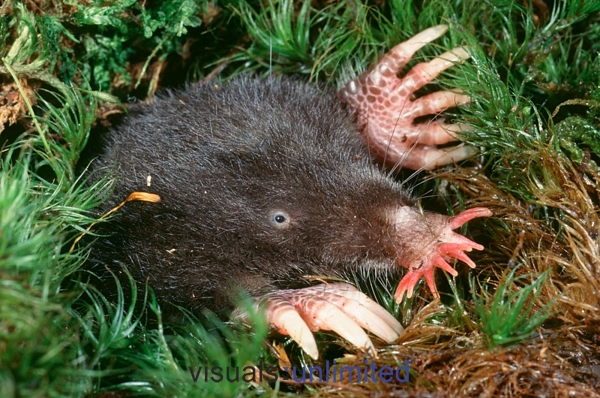
“star-nosed-mole-3” by gordonramsaysubmissions is licensed under CC BY 2.0.

Most moles can swim, but the star-nosed mole is the most aquatic of North American moles. 

Their dense waterproof coat and large paddle-like limbs make them well suited for swimming and diving. They’ve evolved to have twice the lung capacity of other moles, and their long tail, almost one-third the length of its body, acts as a rudder. More time is spent foraging in the water than on land, and they’ve been seen swimming under the ice in winter. This remarkable mole can even smell under water by blowing bubbles, then inhaling the same bubbles to capture the scent molecules inside. 

Not a great deal is known about the reproductive cycle of star-nosed moles. They’re more social than other moles, living in small colonies, and it’s believed that mating pairs stay together through the winter. Breeding season starts in early spring and the female produces only one litter a year, unless the first litter is unsuccessful. After a 45-day gestation period, two to seven pups are born in May and June. The newborns are blind and hairless with their tentacles folded against their snout. About two weeks later the eyes open and the tentacles unfurl and begin to function. The young develop rapidly and leave the nest after about four weeks, reaching full maturity at 10 months. The exact lifespan of this species is unknown but estimated to be 3-4 years in the wild.
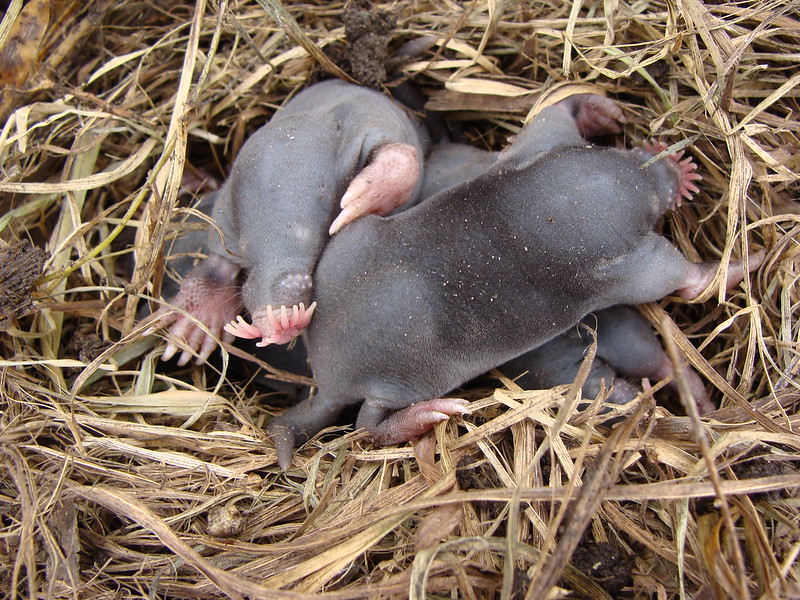
“Baby star-nosed moles” by Hillbraith is Public Domain.

The extraordinary star-nosed mole stands out from other moles in many ways, and is certainly among the most unusual mammals in Pennsylvania. They’re not rare, but they’re not commonly seen even though they spend more time above ground than other moles. They’re active day and night, all year round, so keep your eyes peeled when you’re around water and if you’re lucky you might catch a glimpse of one.

Lisa Miriello is the Scientific Preparator for the Section of Mammals.

Related Content

The Woodchuck…or Groundhog?

Getting from the Fern Hollow Bridge to the Frick Family

World Pangolin Day 2023: The Mysterious Brain Bone

Carnegie Museum of Natural History Blog Citation Information

Blog author: Miriello, Lisa
Publication date: August 31, 2023

Share this post!

  • Share on Twitter Share on Twitter
  • Share on Facebook Share on Facebook
  • Share on Pinterest Share on Pinterest
  • Share on LinkedIn Share on LinkedIn
  • Share on Reddit Share on Reddit
  • Share via Email Share via Email

Filed Under: Blog Tagged With: Hall of North American Wildlife, liocf, Lisa Miriello, mammals, Science News

August 23, 2022 by Erin Southerland

GETTING FROM THE FERN HOLLOW BRIDGE TO THE FRICK FAMILY

by Lisa Miriello 
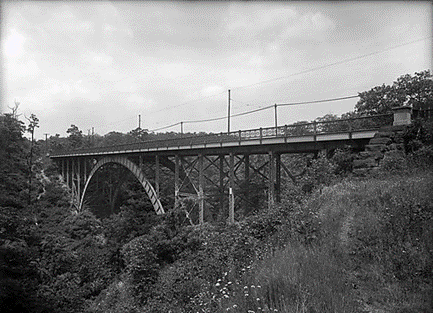
A view of Forbes Avenue bridge crossing over Fern Hollow in Frick Park, 1914. Pittsburgh City Photographer Collection, University of Pittsburgh.

After the Fern Hollow Bridge collapse on January 28, 2022, many commuters found themselves experiencing some traffic headaches as they scrambled to find different ways to and from work or school. My new route takes me past The Frick Pittsburgh, a museum complex in the Point Breeze section of Pittsburgh that includes Clayton, the former home of industrialist Henry Clay Frick.

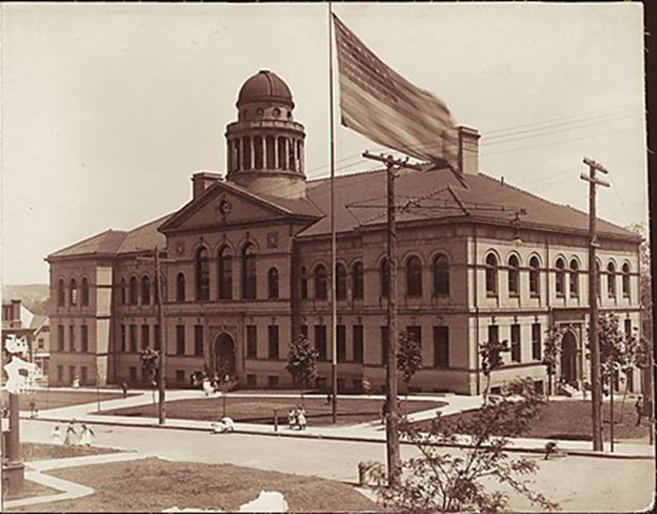
As someone who works in the Section of Mammals, my thoughts while passing the stately grounds often turn to Frick’s son Childs (1883-1965), who grew up here exploring the woods surrounding the estate and attending Sterrett School (now Sterrett Classical Academy), less than a third of a mile away.

Photographer unknown, American, Sterrett School, c. 1900, gelatin silver printing-out paper print, H: 7 1/2 in. x W: 10 5/8 in., Carnegie Museum of Art, Pittsburgh, Second Century Acquisition Fund, 1999.34.2, Photograph © 2021 Carnegie Museum of Art, Pittsburgh.

As Childs grew older his early interest in the natural world turned to more scientific pursuits, and he embarked on a series of collecting expeditions in North America followed by visits to Africa, first in 1909 and again in 1911. But Childs wasn’t looking for “trophies.” By collecting animals at different life stages his goal was to further the knowledge of the lifestyle and habitats of these unfamiliar animals. Many of these specimens were gifted to the Carnegie Museum, and as the shipments arrived from overseas the staff taxidermists had their hands full. 

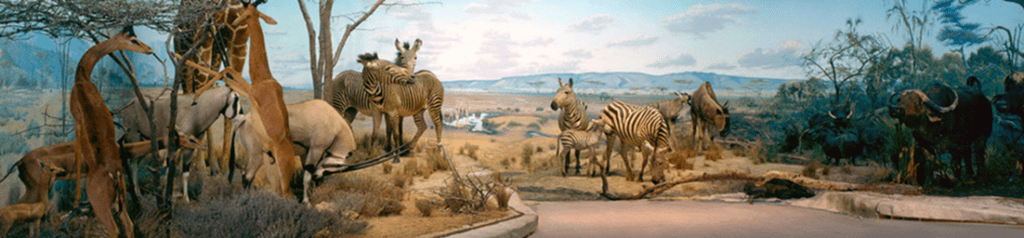
Led by brothers Remi and Joseph Santens these skilled artisans created expressive animal likenesses rather than the static displays that were seen in most museums at the time. Both Santens even visited zoos in New York and Washington, DC, to study the movements of living animals. Preserved plant life from Africa provided even more authenticity to the displays. The African Buffalo (Syncerus caffer) group was especially notable in how it was depicted. The animals appear to be spattered with mud and tramping through brush, a display then-Director W. J. Holland believed to be the first instance in which exhibition specimens had been accurately placed within their supporting environment. In the Carnegie Museum’s 1913 Annual Report he wrote that the group “may possibly provoke comment and criticism, but it is believed to be a step in the right direction, and will likely be followed by the leading taxidermists of the future.“  You can see the African Buffalo, along with other specimens collected by Frick, in the museum’s Hall of African Wildlife.

Carnegie Museum of Natural History, photo by Mindy McNaugher.

While Childs enriched the collection of the natural history museum, other family members left an impact on the city of Pittsburgh as well. His father, Henry Clay Frick (1849-1919), bequeathed 151 acres of land that would become Frick Park. Expanded by hundreds of acres over the years, it’s now the largest of the city’s parks.

Childs’ sister, Helen Clay Frick (1888-1984), was an art collector like her father and helped establish the Henry Clay Frick Fine Arts Library at the University of Pittsburgh. She later had the Frick Art Museum constructed on Clayton’s grounds to showcase her collection of art. This cultural resource opened to the public in 1970.

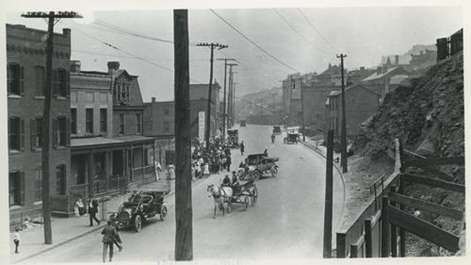
At the end of the day, as my car inches past the peaceful grounds of Clayton, I imagine traffic must have looked a little different over a hundred years ago when “horseless carriages,” horse-drawn vehicles, trolleys, and bicycles all shared the same road in a free-for-all. Today, with traffic signals and defined lanes, at least it’s more of an ordered chaos.

A view of a portion of Grant Boulevard populated with a mixture of automobiles, a horse with buggy, and a bicycle in the background. Grant Boulevard was renamed Bigelow Boulevard in 1916. Thomas Mellon Galey Photographs, Detre Library & Archives, Senator John Heinz History Center
Grant Boulevard | Historic Pittsburgh

Museums and parks can provide welcome relief in a chaotic world, and the Frick family’s contributions to these sanctuaries of art, science, and nature will be enjoyed for generations to come. 

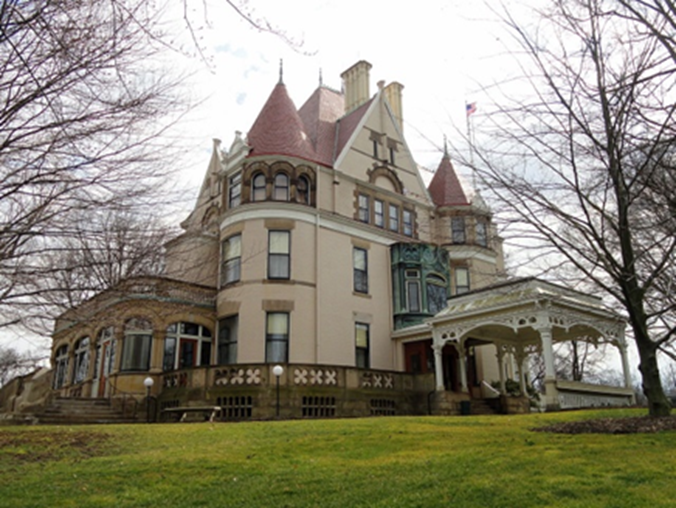
Public domain image of Clayton.

Lisa Miriello is the Scientific Preparator for the Section of Mammals. 

Related Content

Finding Answers: From Museum to Mountains and Back Again

Meet the Mysterious Mr. Ernest Bayet

A Gorilla For Our Imagination

Carnegie Museum of Natural History Blog Citation Information

Blog author: Miriello, Lisa
Publication date: June 10, 2022

Share this post!

  • Share on Twitter Share on Twitter
  • Share on Facebook Share on Facebook
  • Share on Pinterest Share on Pinterest
  • Share on LinkedIn Share on LinkedIn
  • Share on Reddit Share on Reddit
  • Share via Email Share via Email

Filed Under: Blog Tagged With: Hall of African Wildlife, Lisa Miriello, mammals, Science News

July 23, 2018 by wpengine

Giant Sable Antelope

By Lisa Miriello

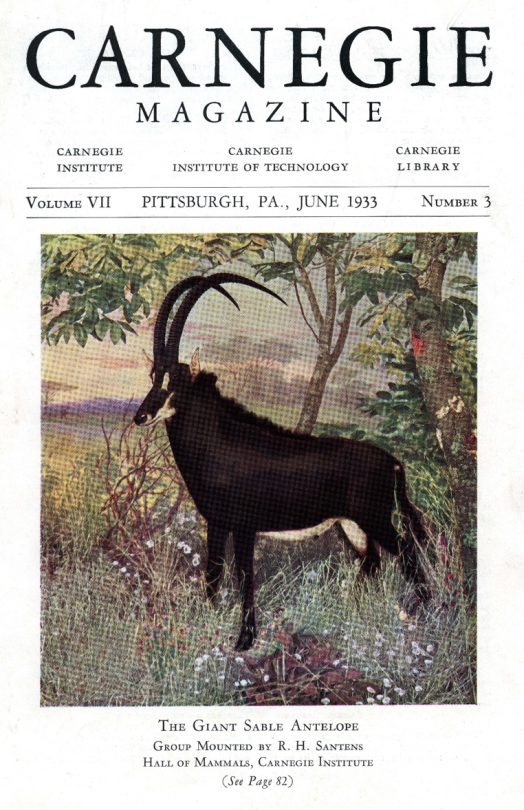
Carnegie magazine cover with giant sable antelope

In 1930, New York publisher Ralph Pulitzer recruited Rudyerd Boulton, the Carnegie Museum of Natural History’s ornithologist, to accompany him to the Portuguese colony of Angola in search of the Giant Sable Antelope. Few American zoologists had explored this region of Africa but Boulton had traveled there in 1925 with the American Museum of Natural History and his knowledge of the territory was invaluable to the Pulitzer party.

Hippotragus niger variani was named as a new subspecies less than fifteen years before the Pulitzer expedition and interest in the scientific community, as well as with big game hunters, grew rapidly. Portuguese authorities soon created new game laws to help protect this rare and impressive animal. Never numerous, today the Giant Sable is critically endangered, threatened by habitat loss, civil war, and poachers. Active conservation efforts continue, but population estimates indicate there are less than a hundred mature individuals, found only in Angola’s Cangandala National Park and the Luando Nature Reserve.

The Carnegie Museum of Natural History is one of only a handful of museums in the country where specimens of the Giant Sable have been preserved. The male collected by Pulitzer was expertly prepared by renowned taxidermy artist R. H. Santens and is exhibited on the museum’s second floor.

Lisa Miriello is the scientific preparator in the Section of Mammals at the Carnegie Museum of Natural History. Museum employees are encouraged to blog about their unique experiences and knowledge gained from working at the museum.

Filed Under: Blog Tagged With: Carnegie Magazine, Hall of African Wildlife, Lisa Miriello, mammals, Section of Mammals

sidebar

About

  • Mission & Commitments
  • Directors Team
  • Museum History

Get Involved

  • Volunteer
  • Membership
  • Carnegie Discoverers
  • Donate
  • Employment
  • Events

Bring a Group

  • Groups of 10 or More
  • Birthday Parties at the Museum
  • Field Trips

Powdermill

  • Powdermill Nature Reserve
  • Powdermill Field Trips
  • Powdermill Staff
  • Research at Powdermill

More Information

  • Image Permission Requests
  • Science Stories
  • Accessibility
  • Shopping Cart
  • Contact
  • Visitor Policies
One of the Four Carnegie Museums | © Carnegie Institute | Privacy Policy | Terms of Use | Accessibility
Rad works here logo