• Skip to primary navigation
  • Skip to main content
  • Skip to primary sidebar

Carnegie Museum of Natural History

One of the Four Carnegie Museums of Pittsburgh

  • Visit
    • Buy Tickets
    • Visitor Information
    • Exhibitions
    • Events
    • Dining at the Museum
    • Celebrate at the Museum
    • Powdermill Nature Reserve
    • Event Venue Rental
  • Learn
    • Field Trips
    • Educator Information
    • Programs at the Museum
    • Bring the Museum to You
    • Guided Programs FAQ
    • Programs Online
    • Climate and Rural Systems Partnership
  • Research
    • Scientific Sections
    • Science Stories
    • Science Videos
    • Senior Science & Research Staff
    • Museum Library
    • Science Seminars
    • Scientific Publications
    • Specimen and Artifact Identification
  • About
    • Mission & Commitments
    • Directors Team
    • Museum History
  • Tickets
  • Give
  • Shop

Matt Lamanna

January 29, 2018 by wpengine

The Dinosaur of a Lifetime

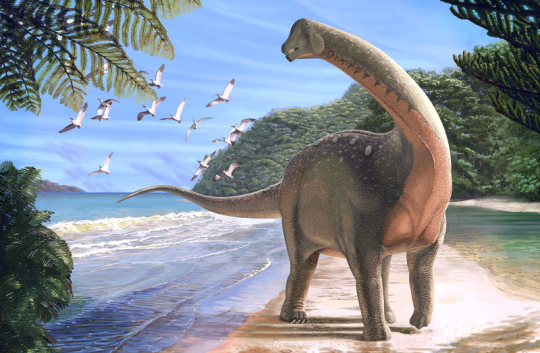
color drawing of a dinosaur on a beach
(Image credit: Carnegie Museum of Natural History / Andrew McAfee)

By Matt Lamanna

January 29, 2018

It might sound a little strange to say, but African dinosaurs have been an important part of my life for a long time. Almost two decades ago, when I was in graduate school at the University of Pennsylvania, and a few years before I took a job here at Carnegie Museum of Natural History, I participated in fossil-hunting expeditions to the Sahara Desert of Egypt. Along with our advisor, my beloved “Boss” Peter Dodson, my fellow students and I had a lot of success, discovering among other fossils the only known skeleton of a new, ~95 million-year-old species that we named Paralititan stromeri in 2001. With a humerus, or upper arm bone, that’s almost as tall as I am, Paralititan is still one of the biggest dinosaurs known to science.

But as fun as those discoveries were to be a part of, some of our team’s most sought-after finds never materialized. In going to Egypt, part of our aim was to find dinosaurs from roughly 80 to 66 million years ago – dinosaurs from the very end of the Cretaceous Period, the third and final time period of the Age of Dinosaurs. Dinosaur fossils of this age are exceedingly rare on all of continental Africa (i.e., Africa excluding the island of Madagascar), not just in Egypt. Surprisingly, however, this has not stopped paleontologists from speculating as to what kinds of dinosaurs might have inhabited Africa at the end of the Cretaceous. Some have proposed that African latest Cretaceous dinosaurs were close relatives of, and therefore similar to, those living on neighboring landmasses at the same time. Other scientists have argued that Africa was an island continent at the end of the Cretaceous, and, because it was cut off from other land areas, it was home to unique dinosaurs that had evolved for millions of years along their own distinctive evolutionary pathways.

Until recently, no one had ever found a reasonably complete dinosaur skeleton from the end of the Cretaceous anywhere on continental Africa. A few isolated bones and minor parts of skeletons had been discovered, but these didn’t tell us much about the dinosaurs to which they belonged – as you can imagine, the more pieces one has of a fossil skeleton, the more one can typically learn about the animal it represents. This, in turn, prevented paleontologists from figuring out whether African latest Cretaceous dinosaurs were truly unique or whether they had close kin on other landmasses. But all of that changed in late 2013, when my friend and colleague Dr. Hesham Sallam of Mansoura University in Egypt—along with his talented students Iman El-Dawoudi, Sanaa El-Sayed, and Sara Saber—discovered the skeleton of a sauropod (long-necked plant-eating dinosaur) at an ~80 million-year-old site in the Dakhla Oasis of the Egyptian Sahara. The dinosaur I’d dreamed about for virtually all of my professional life had finally been found! Even better, Hesham and the team—which also included my close friends Pat O’Connor and Eric Gorscak, plus several other Egyptian and American scientists—invited me to be a part of the study. We soon realized that the creature had a lot to say about the nature of Africa’s last dinosaurs, as its bones suggested close relationships to species living in Europe and Asia at about the same time. These hypotheses were borne out by more rigorous analyses, showing that African latest Cretaceous dinosaurs weren’t island-dwelling weirdos after all – rather, they had close cousins in Eurasia. Today, our team gave the dinosaur its formal scientific name, Mansourasaurus shahinae, and for me, it’s the culmination of a search that’s occupied almost half my life.

Matt Lamanna is a paleontologist and the principal dinosaur researcher at Carnegie Museum of Natural History in Pittsburgh. 

Museum employees are encouraged to blog about their unique experiences and knowledge gained from working at the museum.

Read more about this news on Gizmodo.
Filed Under: Blog Tagged With: dinofest, dinosaur, Matt Lamanna, Vertebrate Paleontology

December 12, 2017 by wpengine

One Step Closer to Jurassic Park?

Amber is fossilized tree resin, hardened over time into a natural plastic. Many people know of amber from the film Jurassic Park, in which scientists extract DNA from blood of dinosaurs that had been bitten by insects that were then entombed in amber. Sadly, however, DNA of non-avian dinosaurs (i.e., all dinosaurs except their descendants, birds) has never been successfully extracted from amber or any other fossil.

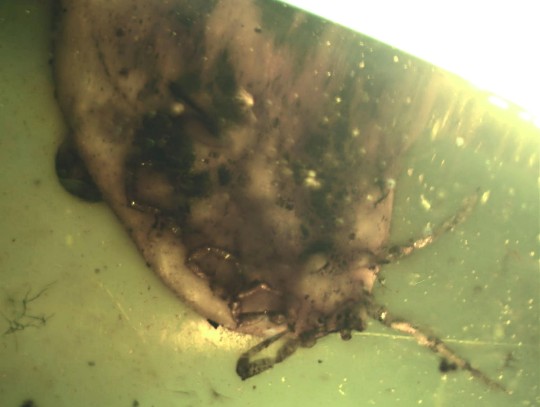
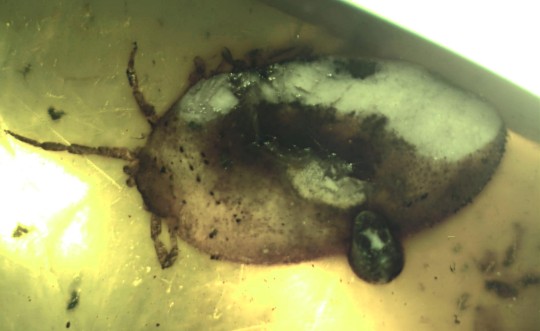
Nevertheless, exciting new discoveries from the Southeast Asian nation of Myanmar (formerly Burma) may bring us one small step closer to someday making Jurassic Park a reality. In a study that appeared today in the prestigious scientific journal Nature Communications, a team led by Enrique Peñalver of the Instituto Geológico y Minero de España in Madrid, Spain described ticks encased in Burmese amber from the middle Cretaceous Period, roughly 100 million years ago, including several specimens of a new tick species named Deinocroton draculi, or “Dracula’s terrible tick.” One of these ticks is engorged by blood, its volume about eight times greater than that of the non-engorged ticks. Furthermore, specialized hairs of skin beetle larvae—which commonly feed on tough organic matter such as skin, hair, or feathers in nests—are attached to the legs of two
Deinocroton ticks. This suggests that these ticks fed on feathered dinosaurs!

Whether the newly-described fossil tick specimens contain traces of dinosaur blood is something that future analyses might tackle. Some of these Deinocroton ticks, including the blood-engorged specimen, have been donated to Carnegie Museum of Natural History (CMNH) by one of the study’s coauthors, Pittsburgh-area geologist and amber collector Scott Anderson. The fossils have been formally incorporated into CMNH’s Invertebrate Paleontology collection and will eventually be put on public display.

tick caught in amber
Top view of the ~100 million-year-old Deinocroton tick from Myanmar that may contain remnants of blood, possibly dinosaur blood.
Photo credit: Scott Anderson.


tick's legs and underside shown from the bottom
The same ~100 million-year-old Deinocroton tick from below.
Photo credit: Scott Anderson.


Filed Under: Blog Tagged With: Albert Kollar, Matt Lamanna, Scott Anderson

December 12, 2017 by wpengine

Ask a Scientist: What is still unknown…

Ask a Scientist: What is still unknown about “The Chicken from Hell?”

Paleontologist Dr. Matt Lamanna helped discover the bird-like dinosaur Anzu wyliei, but he said scientists are still working to answer questions about this unique and fascinating prehistoric animal.


Ask a Scientist is a new short video series where we ask our research staff questions about the millions of amazing objects and specimens stored in our collection. Tune in on YouTube, and submit your own questions via Twitter @CarnegieMNH.

Filed Under: Blog Tagged With: Ask a Scientist, Matt Lamanna

December 10, 2017 by wpengine

Ask a Scientist: What is “The Chicken from Hell?”

Paleontologist Dr. Matt Lamanna shows off fossils and discusses the amazing features of Anzu wyliei, a fierce and feathered prehistoric dinosaur. Dr. Lamanna worked on the team that discovered Anzu wyliei in 2014.


Ask a Scientist is a new short video series where we ask our research staff questions about the millions of amazing objects and specimens stored in our collection. Tune in on YouTube, and submit your own questions via Twitter @CarnegieMNH.

Filed Under: Blog Tagged With: Matt Lamanna, Vertebrate Paleontology

November 17, 2017 by wpengine

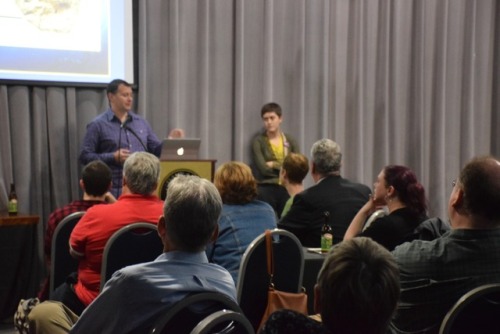
We had a great turn out for our museum Pub Talk

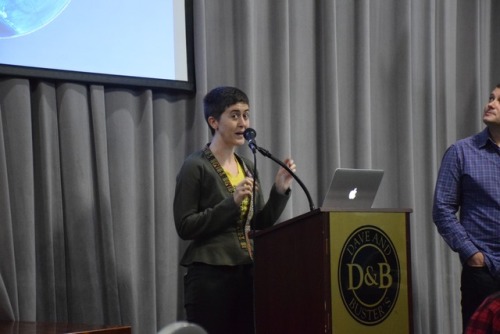
Abby West speaking at a podium

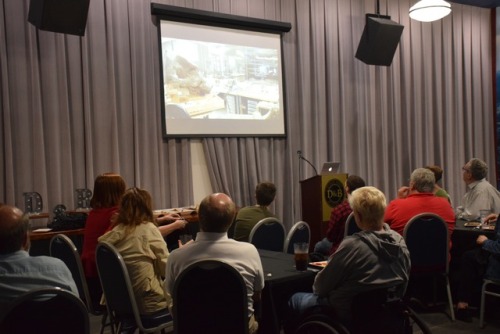
crowd enjoying the pub talk

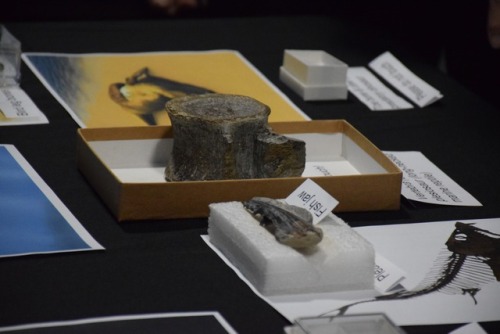
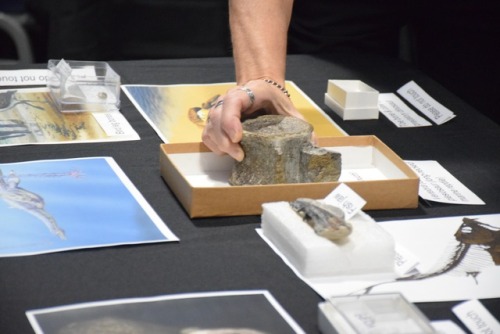
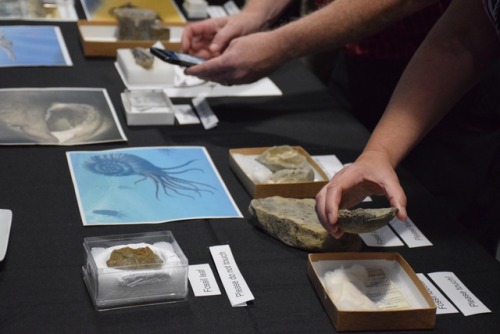
objects from the Antartica expedition

artifacts on a table

artifacts from Antartica

Matt speaking at a podium

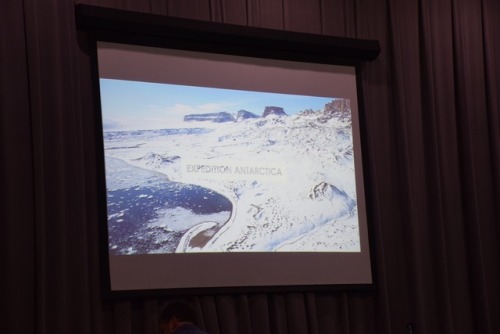
Expedition Antartica Slides

vegetable and cheese trays

We had a great turn out for our museum Pub Talk at Dave and Busters in October hosted! Paleontologists Dr. Matt Lamanna and Dr. Abby West entertained a crowd of about 60 with a talk about their recent expedition to Antarctica as part of the AP3 Project. Their presentation touched on dinosaurs, evolution, how to find fossils, and even very friendly penguins. Matt and Abby also answered questions and brought fossils so that those in attendance could examine and even touch real fossils found in Antarctica. Guests enjoyed some complimentary appetizers and watched the new documentary “Expedition Antarctica,” which will be coming soon to the Earth Theater! Thanks to Matt and Abby and all who came out for a great night of science and fun. For more events like this, follow our museum Meetup page!

Pub Talks is a public relations initiative that brings our science out of the museum and into the public. Different scientists are featured throughout the year at various pubs around the beautiful city of Pittsburgh.

Filed Under: Blog Tagged With: antarctica, Matt Lamanna, Vertebrate Paleontology

October 5, 2017 by wpengine

Tyrannosaurus rex

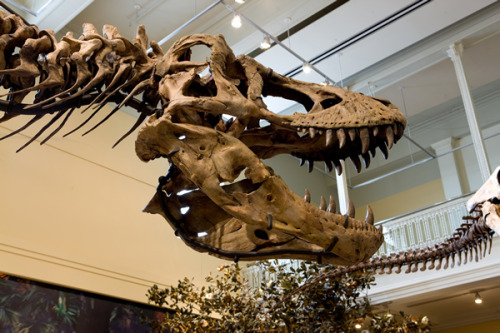
Tyrannosaurus rex was one of the largest predators to ever walk the Earth. Growing up to 46 feet in length and standing 13 feet high at the hips, this meat-eater could weigh up to seven tons.

T. rex was more than just enormous, it was ferocious. It had massive hind legs with three-toed feet, small, strong arms the size of a man’s, and a huge, heavy tail that was used as a counterbalance.

head of a T.rex skeleton
Credit: Joshua Franzos for Carnegie Museum of Natural History

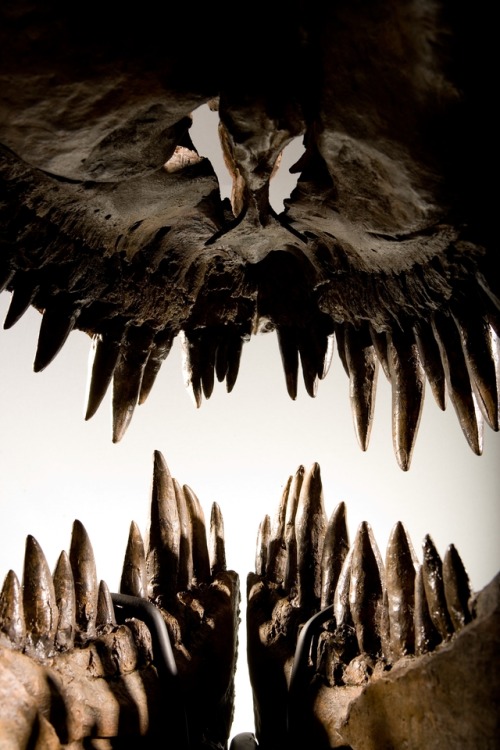
Its skull grew to five feet long and housed strong jaws that created a bone-crushing bite. It had nearly 60 serrated, razor-sharp teeth that grew up to six inches in length. With a name that means “tyrant lizard king,” this dinosaur feasted on the large herbivores of its time.

view of T.rex teeth from inside the dinosaur's mouth
Credit: Joshua Franzos for Carnegie Museum of Natural History

T. rex roamed the western United States and southwestern Canada during the late Cretaceous Period, about 66 to 68 million years ago. The specimen on display at Carnegie Museum of Natural History was discovered in 1902 by Barnum Brown and sent to the American Museum of Natural History. It was bought by the Carnegie Museum in 1941.

This specimen is extremely important because it is the holotype of the species. A holotype is a specimen upon which a given species is based. So, in other words, Carnegie Museum of Natural History’s T. rex is the ‘gold standard’ to which all potential fossils of this notorious meat-eater must forever be compared. Although a few specimens that are now known to belong to T. rex were found prior to the discovery of the holotype, the holotype was, by definition, the first fossil of the species to be recognized by science. Therefore, it can be considered the world’s first specimen of the world’s most famous dinosaur.

Filed Under: Blog Tagged With: dinosaur, dinosaurs, dinosaurs in their time, Matt Lamanna, t-rex, Tyrannosaurus Rex, Vertebrate Paleontology

  • « Go to Previous Page
  • Page 1
  • Page 2
  • Page 3
  • Page 4
  • Page 5
  • Page 6
  • Go to Next Page »

sidebar

About

  • Mission & Commitments
  • Directors Team
  • Museum History

Get Involved

  • Volunteer
  • Membership
  • Carnegie Discoverers
  • Donate
  • Employment
  • Events

Bring a Group

  • Groups of 10 or More
  • Birthday Parties at the Museum
  • Field Trips

Powdermill

  • Powdermill Nature Reserve
  • Powdermill Field Trips
  • Powdermill Staff
  • Research at Powdermill

More Information

  • Image Permission Requests
  • Science Stories
  • Accessibility
  • Shopping Cart
  • Contact
  • Visitor Policies
One of the Four Carnegie Museums | © Carnegie Institute | Privacy Policy | Terms of Use | Accessibility
Rad works here logo