• Skip to primary navigation
  • Skip to main content
  • Skip to primary sidebar

Carnegie Museum of Natural History

One of the Four Carnegie Museums of Pittsburgh

  • Visit
    • Buy Tickets
    • Visitor Information
    • Exhibitions
    • Events
    • Dining at the Museum
    • Celebrate at the Museum
    • Powdermill Nature Reserve
    • Event Venue Rental
  • Learn
    • Field Trips
    • Educator Information
    • Programs at the Museum
    • Bring the Museum to You
    • Guided Programs FAQ
    • Programs Online
    • Climate and Rural Systems Partnership
  • Research
    • Scientific Sections
    • Science Stories
    • Science Videos
    • Senior Science & Research Staff
    • Museum Library
    • Science Seminars
    • Scientific Publications
    • Specimen and Artifact Identification
  • About
    • Mission & Commitments
    • Directors Team
    • Museum History
  • Tickets
  • Give
  • Shop

minerals

January 14, 2022 by Erin Southerland

How Do Minerals Get Their Names?

by Debra Wilson

The naming of minerals has changed over time from its alchemistic beginnings to the advanced science of today. During this span minerals have usually been named for their physical characteristics, the locality where they were discovered, or a person. I have often been asked, “why do most mineral names end in ite?” The suffix “ite” is derived from the Greek word ites, the adjectival form of lithos, which means rock or stone. 

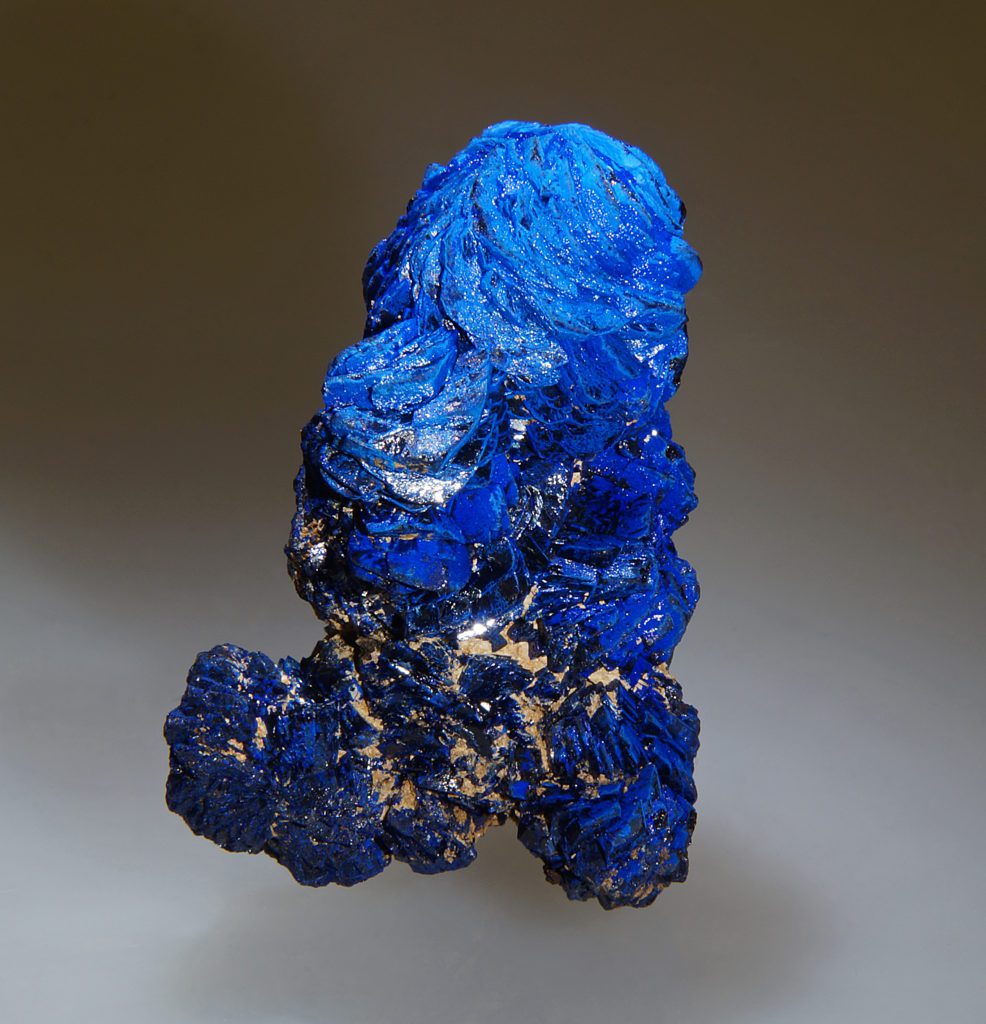
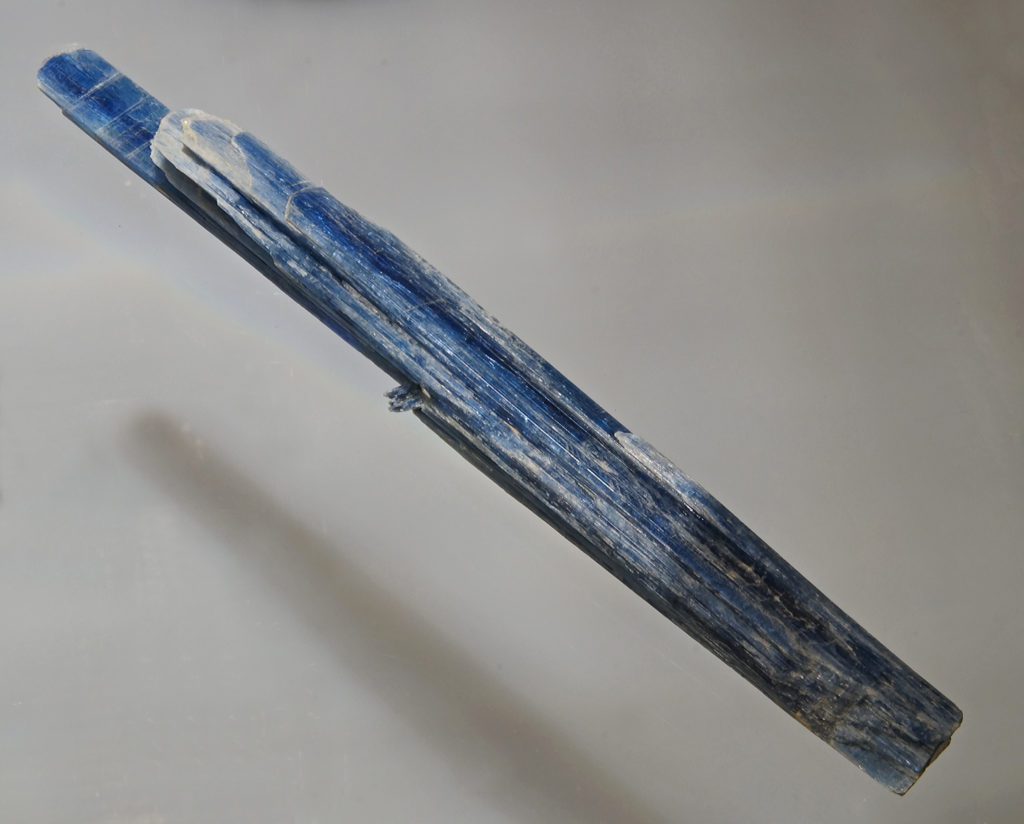
In antiquity, distinctive physical characteristics were often the source for the mineral name. One of these properties is color. For example, Malachite probably comes from the Greek word malakee or malache, used to describe the green leaves of the mallow bush. Azurite comes from azure, the Arabic word for blue, and Kyanite comes from kyanos, the Greek word for blue.  
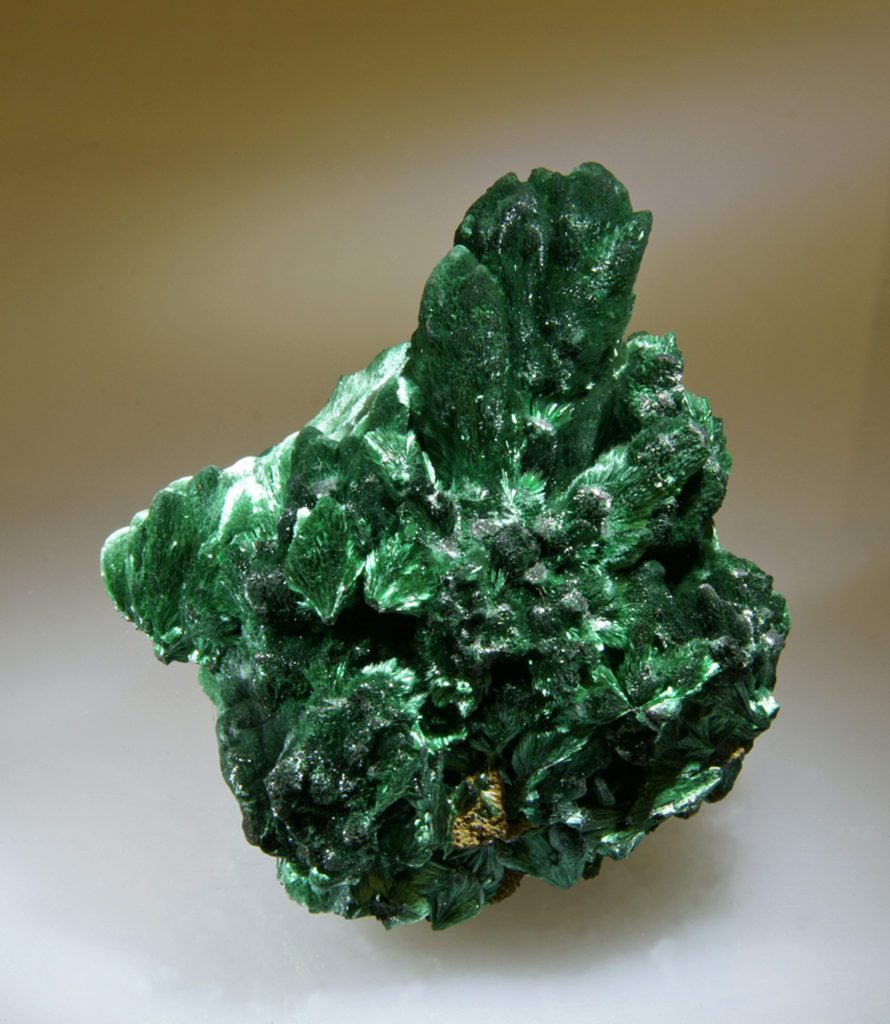
green malachite mineral
Malachite
blue azurite mineral specimen
Azurite
blue kyanite specimen
Kyanite

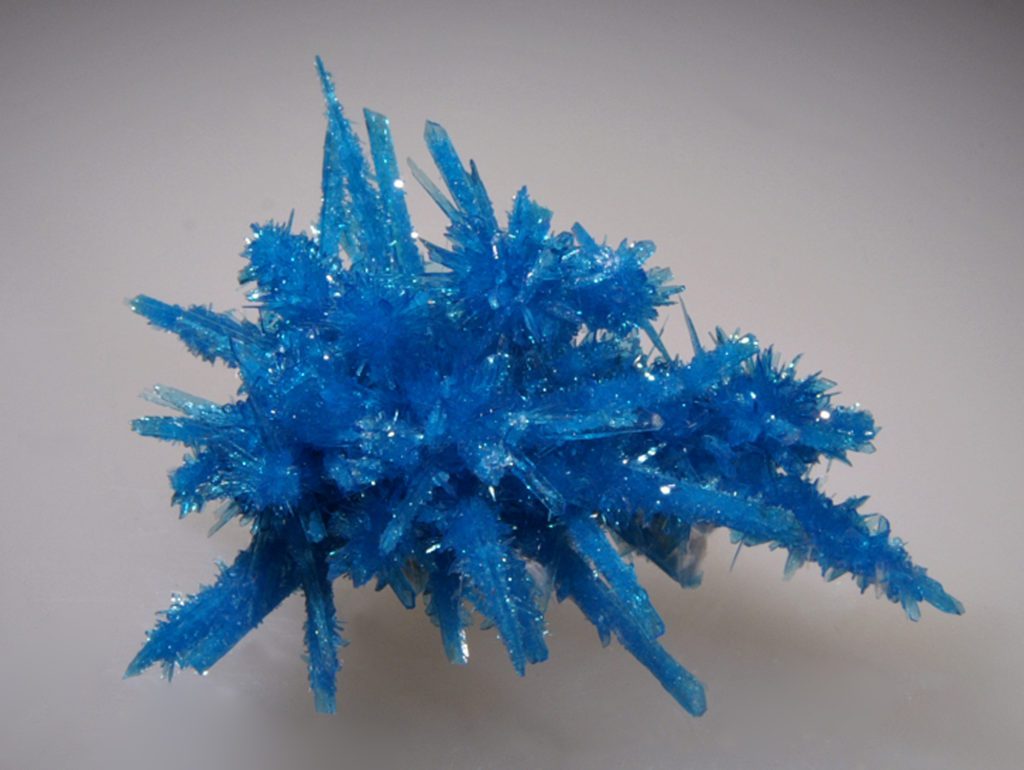
With the advancement of science, some minerals have been named for their chemistry or their structure. For example, Cavansite is named for its chemistry (calcium vanadium silicate), and Pentagonite is named for its five-fold symmetry (a pentagon is five-sided).
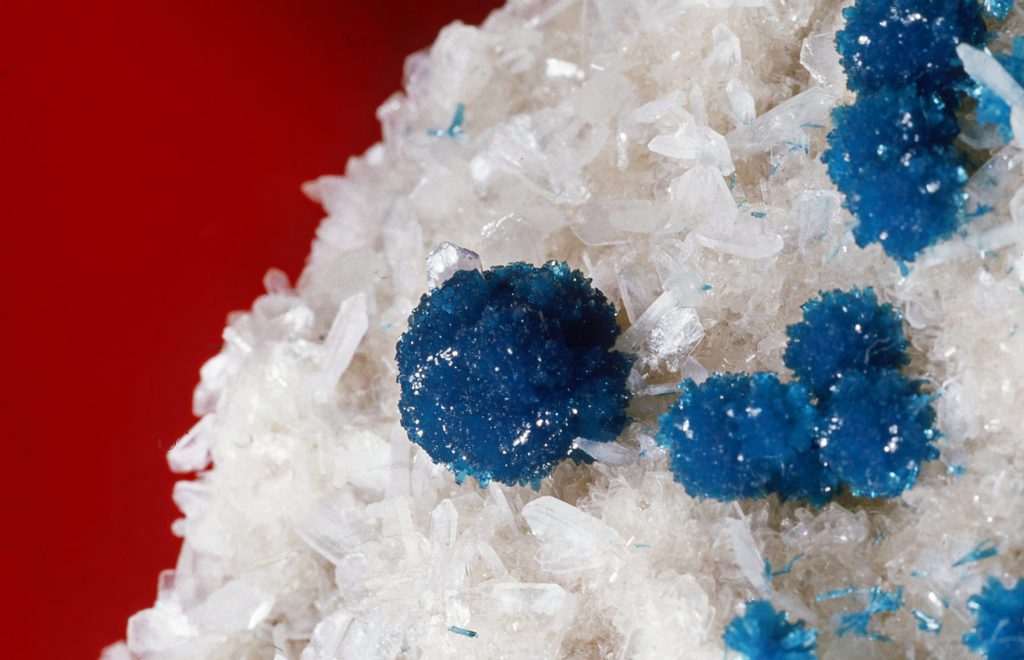
blue and white mineral specimen with red background
Cavansite
bright blue mineral specimen
Pentagonite

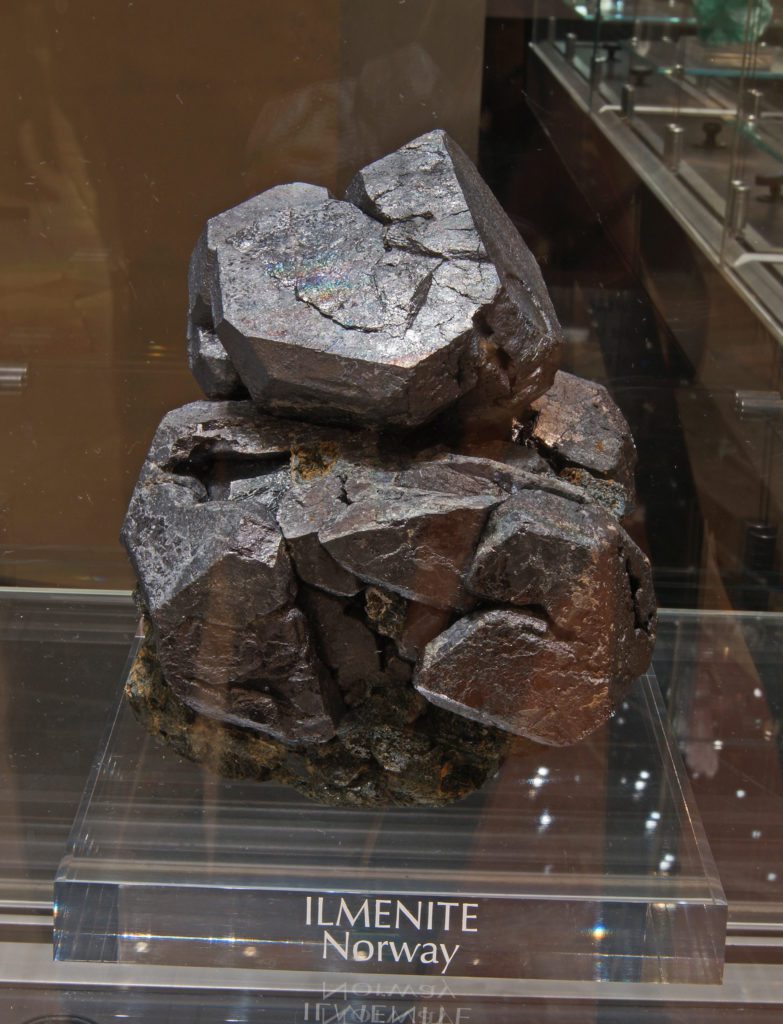
Minerals named for the first locality where they were found are quite obvious for those with a knack for geography: Elbaite was found on the Isle of Elba, Italy; Goosecreekite was found in the New Goose Creek Quarry in Leesburg, Virginia, and Ilmenite was found in the Ilmen Mountains of Russia; to name a few.
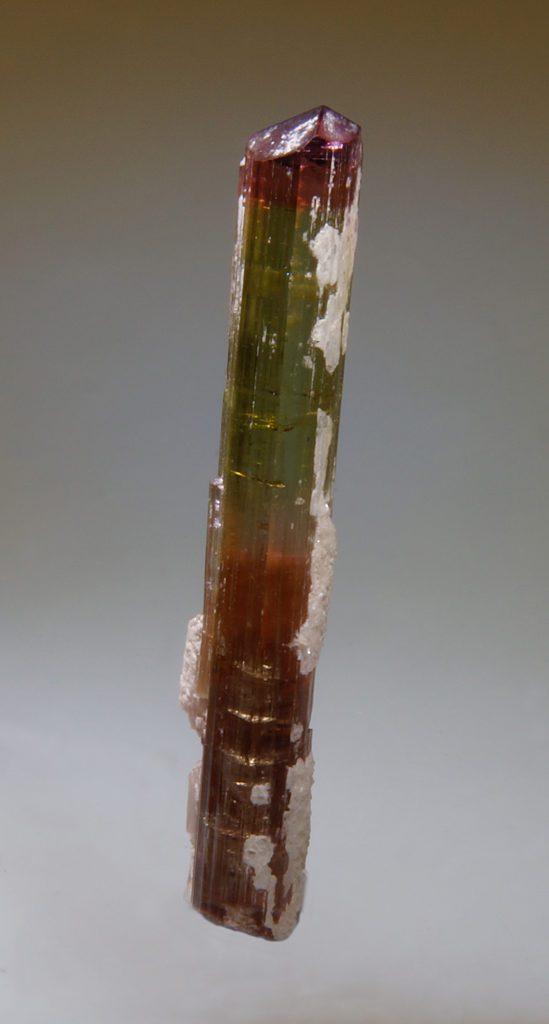
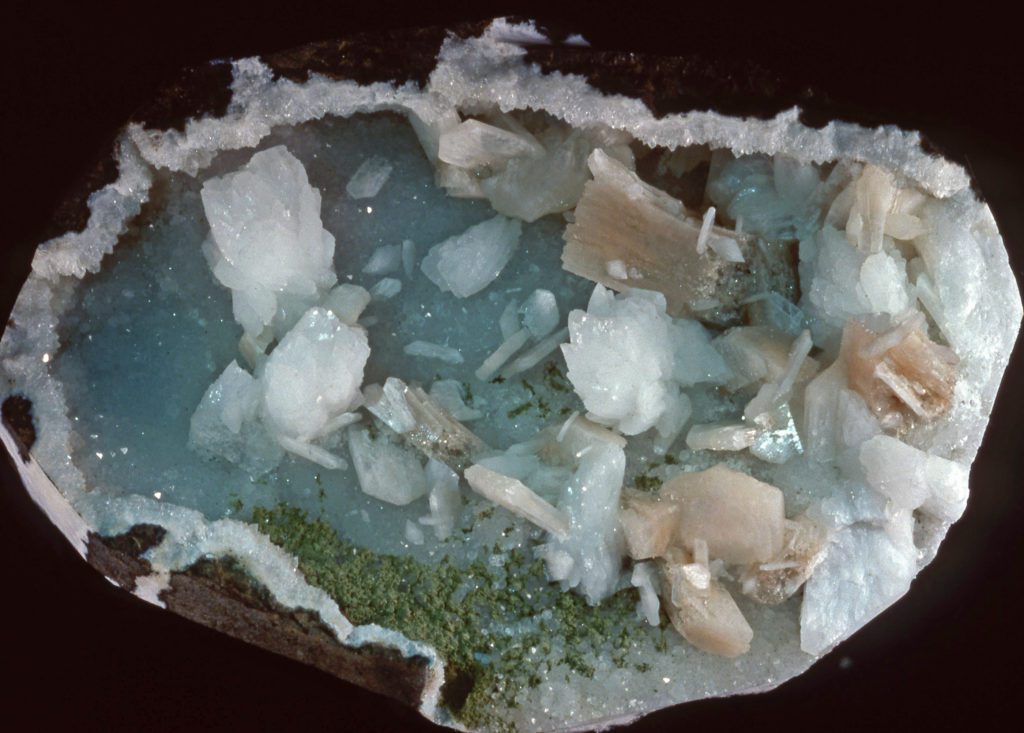
Elbaite
mineral specimen with white, pastel blue, pale pink, and mossy green coloration
Goosecreekite (white crystals)                                     
mineral specimen on a stand that says Ilmenite Norway
Ilmenite

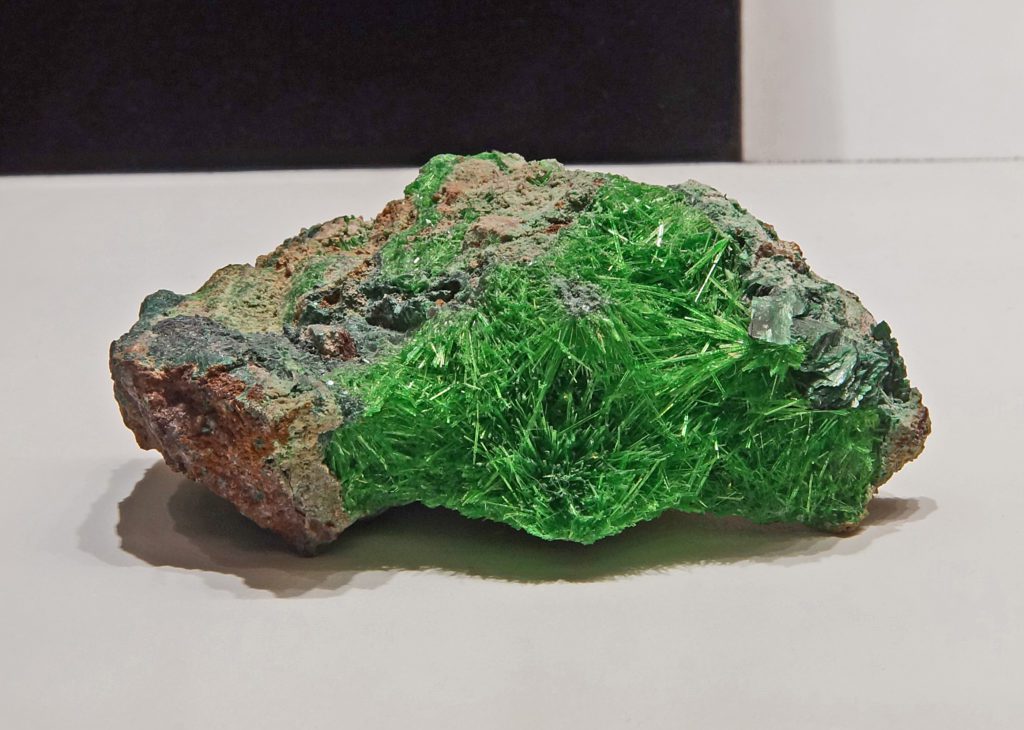
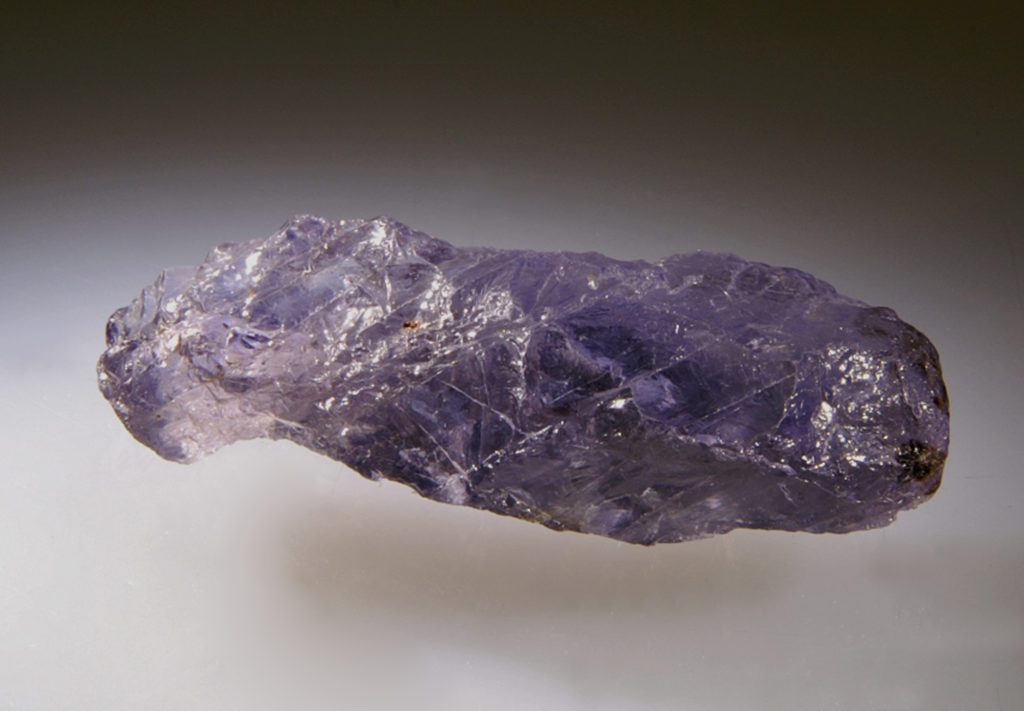
Minerals have also been named for people. Prehnite was the first mineral named for a person, Colonel Hendrik Von Prehn (1733-1785), who is credited with discovering the mineral in 1774 at the Cape of Good Hope in South Africa. Cordierite, a mineral known for its iolite gem variety, was named in 1813 for French mineralogist Louis Cordier (1777-1861), a pioneer in the field of microscopic mineralogy, and in honor of her pioneering research on radioactivity, Marie Sklodowska Curie (1867-1934) had two uranium minerals named for her, Sklodowskite (discovered in 1924) and Cuprosklodowskite (discovered in 1933).
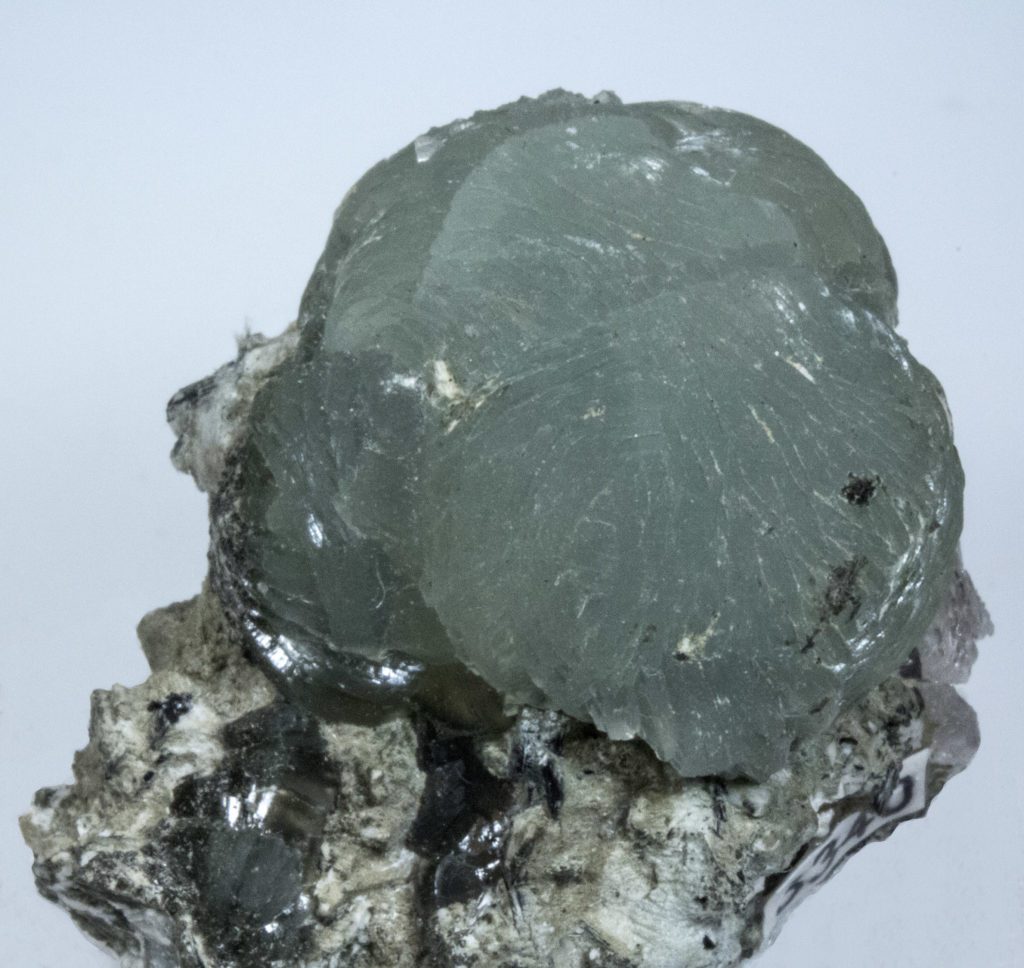
Prehnite
Cordierite variety Iolite
yellow and white mineral specimen
Sklodowskite
Cuprosklodowskite

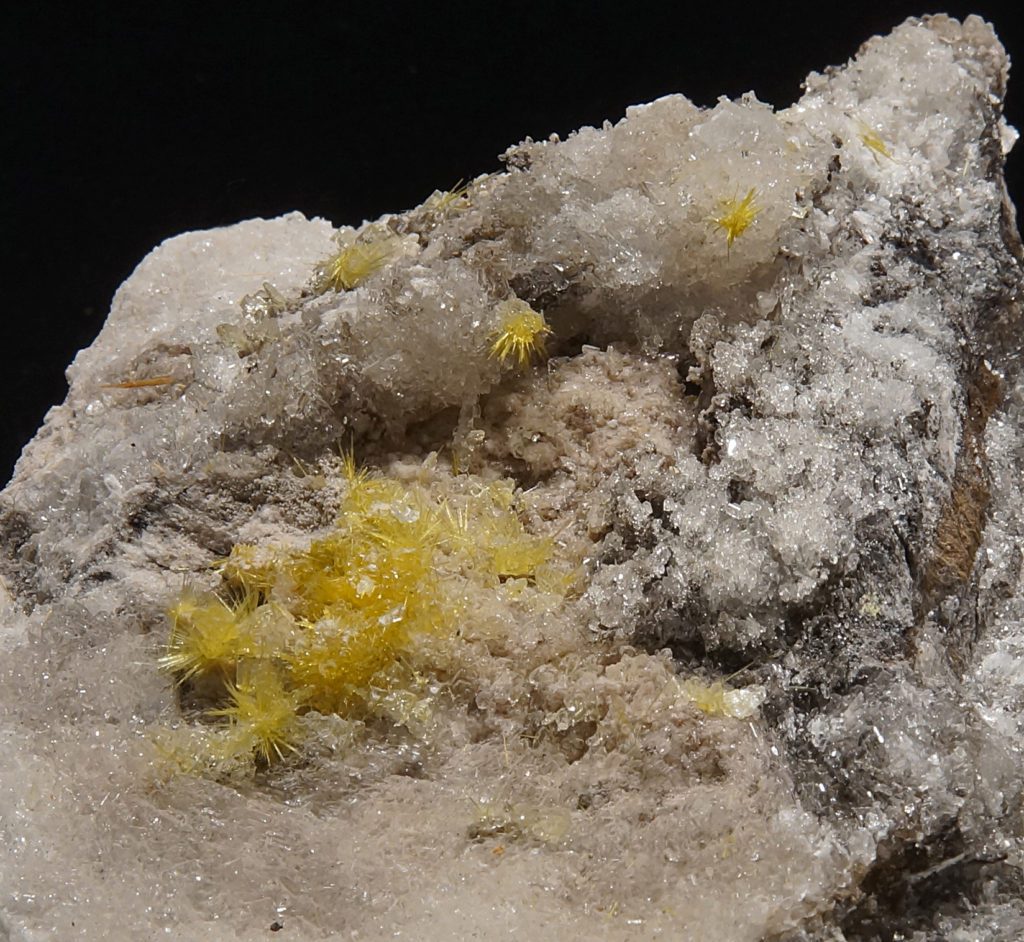
Today new minerals, including the proposed species name, are approved by the Commission on New Minerals, Nomenclature and Classification (CNMNC), under the purview of International Mineralogical Association (IMA), which was formed in 1958. As of November 2021, the IMA recognizes 5,762 official mineral species. In October 2021, one of those species, Oldsite, was named in honor of one of our own museum scientists, Travis Olds, Assistant Curator of Minerals, for his contributions to uranium mineralogy. 

Congratulations Travis!
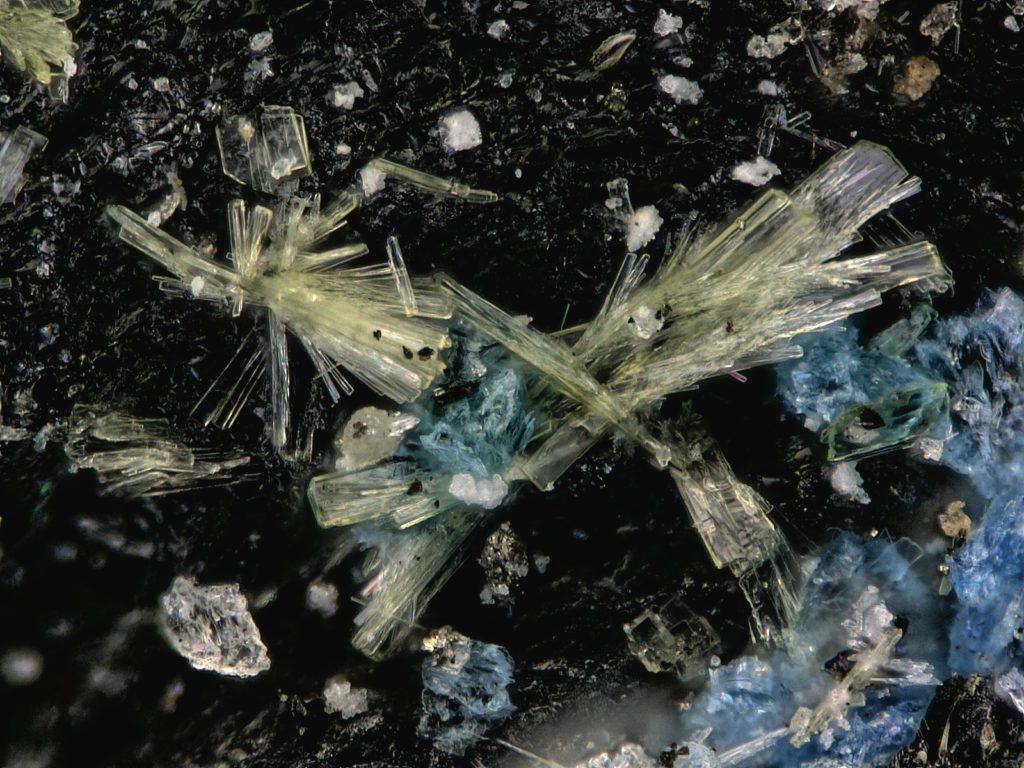
Oldsite (yellow crystals). Photo by Dr. Anthony Kampf. 

More information on Oldsite

More information about Dr. Travis Olds

Debra Wilson is the Collection Manager for the Section of Minerals at Carnegie Museum of Natural History. Museum employees are encouraged to blog about their unique experiences and knowledge gained from working at the museum.

Related Content

Roll Out the Beryl

Master of Optical Illusion

The Mineralogy of Ice Cream

Carnegie Museum of Natural History Blog Citation Information

Blog author: Wilson, Debra
Publication date: January 14, 2022
Share this post!

  • Share on Twitter Share on Twitter
  • Share on Facebook Share on Facebook
  • Share on Pinterest Share on Pinterest
  • Share on LinkedIn Share on LinkedIn
  • Share on Reddit Share on Reddit
  • Share via Email Share via Email

Filed Under: Visitor Info Tagged With: Deb Wilson, Hillman Hall of Minerals and Gems, minerals, Science News

June 23, 2021 by wpengine

Diamonds Are the World’s Best Friend: The Important Roles Diamonds Play in Society

by Shelby Wyzykowski

In the classic 1953 movie “Gentlemen Prefer Blondes” is a memorable musical number performed by silver screen legend Marilyn Monroe. Wearing a striking pink satin gown and dripping in dazzling jewels, she is surrounded on the stage by a bevy of handsome suitors that are dressed to the nines. In this glamorous setting, she sings the praises of diamonds…how nothing in the world can compare to how it feels to possess these glittering gemstones. But off-screen, Monroe’s taste in brilliant baubles was radically different, preferring costume jewelry to the real thing. I have to admit that I agree with Marilyn. Diamonds have never held much interest for me. That is until now. After doing a little research, I’ve discovered that, besides their use in the jewelry industry, there are other ways in which diamonds are utilized in society today. In fact, there is so much more to these captivating stones than just their scintillating sparkle.

Perhaps you’ve heard the adage “one person’s trash is another person’s treasure.” Well, it just might surprise you that this saying holds true for diamonds. In the jewelry world, a diamond with perfect clarity is the much-desired ideal. But in the scientific world, a so-called “poor” specimen that is full of inclusions (imperfections), could hold a treasure trove of geologic information. Researchers are studying them to try and uncover the secrets of the deep-Earth environment. The majority of diamonds are created fairly close to the Earth’s surface, between 93 and 150 miles down. But there are some diamonds, called super-deep diamonds, that come from far down in the Earth’s mantle and are as deep as 500 to 600 miles (the mantle, which is mostly made up of solid and very hot rock, is directly below the Earth’s surface layer, or crust, and makes up more than 80 percent of our planet’s volume). These 3.5 billion-year-old gems formed at a pressure that is 240,000 times the atmospheric pressure at sea level, and this fact makes these tiny stone time capsules extremely valuable to researchers. No doubt geologists would love to travel deep under our planet’s surface like the characters in Jules Verne’s 1864 science fiction novel Journey to the Center of the Earth. Unfortunately they can’t, but these super-deep diamonds are the next best thing to journeying there themselves!

With these diamonds, scientists are uncovering clues to the origins of water on Earth. Did water come from incoming asteroids and comets, or was water an integral component at the planet’s formation? We’re still not quite sure. But diamond research has brought us closer to figuring out how much water lies deep underground. Scientists think that there may in fact be as much water present in our planet’s deep subsurface as there is found in our oceans. They have developed this idea after discovering a special water encased in the inclusions of deep diamonds. Called ICE-VII, this water ice can only be formed under tremendous deep-Earth pressure. In addition to water, geologists have found an elusive mineral in diamond inclusions. Scientists had theorized it to be an extremely common mineral that makes up to 38 percent of the Earth’s volume, but it’s been impossible to create in a lab. Now that it’s been found in nature, researchers have the proof of its existence and have named it Silicate-Perovskite (or Bridgmanite). In addition to Bridgmanite, they have discovered other trace minerals and elements that are commonly present in the Earth’s crust. This means that the materials were subducted (drawn back down into the Earth) billions of years ago by plate tectonics. Deep in the mantle, the materials were encased in a forming deep-diamond and then eventually sent back up to the surface by way of volcanic eruptions. Even more exciting than all of these discoveries is the thought of what geologists still have yet to uncover. They still hope to find carbon from primordial organic matter in these special diamonds. That matter could be a clue to the origins of life on Earth!

specimen of bridgmanite
“Earth’s most abundant mineral finally has a name” by Argonne National Laboratory is licensed under CC BY-NC-SA 2.0

In addition to their contributions to the scientific field, diamonds also have practical uses in society. In the mid-1950’s, synthetic diamonds were invented. Created in a lab, they are chemically and physically exactly the same as natural diamonds. However, these man-made gems do not possess the allure and mystery of natural diamonds, so they are not very desirable in the jewelry market. But since diamonds are the hardest known natural substance, they are ideal for industrial use. For example, they can be pulverized into a fine abrasive that can be made into a “diamond paste” and used for polishing other jewelry-grade gemstones. Small particles of diamond can also be embedded in tools like saw blades, drill bits, and grinding wheels. These diamond-coated tools are very wear-resistant and can be used for mining, deep-sea drilling, and road construction. And there are some ingenious uses for diamonds that you may find to be very surprising. Diamond windows can be made from very thin (thinner than a human hair) diamond membranes. These windows cover X-ray machines, laser openings, and vacuum chambers. A diamond can also make your music sound better. A speaker dome made out of diamonds can vibrate very rapidly because this gem is such a stiff material. So it is ideal for enhancing the performance of high-quality speakers. Diamonds can even help you keep track of time. Small mechanical devices, such as watches, have tiny bearings inside of them that make everything move (in a watch, it’s called its “movement”). A thin coating of diamond makes these parts wear-resistant and ensures accurate time-telling and lasting durability. From helping to build highways to making your timepiece tick, who knew that diamonds could be so useful in so many ways!

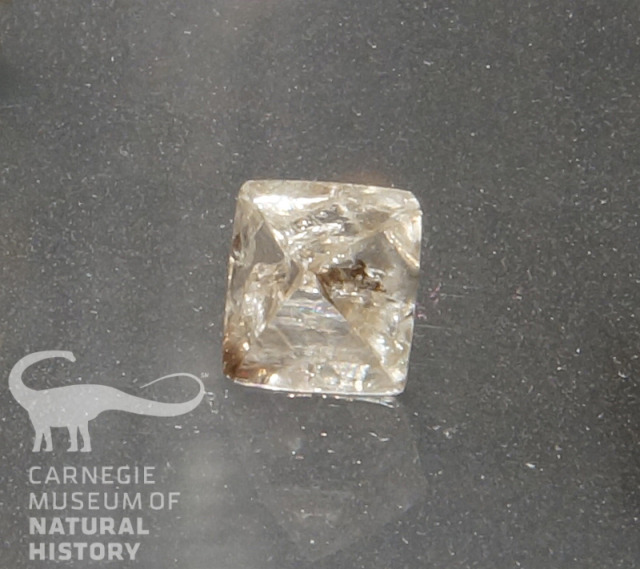
diamond specimen on gray background with dinosaur logo watermark in the left corner
CM18561 is located in the Native Elements case in Hillman Hall of Minerals and Gems. Source: https://carnegiemnh.org/emu_widgets/mineralogy.html#details=ecatalogue.2019718

Yet another important role that diamonds have played in our world is how they have influenced history. The brilliantly blue, supposedly cursed Hope Diamond, for example, has not brought much luck to its owners since it was discovered over 350 years ago. It was in the possession of Marie Antoinette and Louis XVI until their untimely deaths during the French Revolution. Subsequent owners also met with unfortunate outcomes until it was donated to the Smithsonian National Museum of Natural History where it is now safely on display. Another famous diamond, the 750 year-old Koh-i-Noor, has been owned by many royal rulers. It once decorated the Peacock Throne that was used by the Mughal Emperors of India, including Shah Juhan, the builder of the Taj Mahal. Now in England, the stone is part of the Imperial Crown. Due to an alleged curse, it can only ever be worn by the royal family’s female members. Finally, there is the Regent Diamond, which was unearthed in the early 1700’s. After being owned by several rulers, it disappeared during the French Revolution. Years later, it reappeared in the sword of Napoleon. But he was unable to hold onto it for long. After being defeated by the British in the Battle of Waterloo, the once-great ruler was exiled to the tiny island of Elba in disgrace. Since 1987, the Regent’s home has been at the French Royal Treasury in the Louvre in Paris. But you don’t need to travel to France or Great Britain or Washington D.C. to see the Regent Diamond, the Koh-i-Noor, and the Hope Diamond. Replicas of these three stones plus many more world-famous diamond replicas are on display at the Hillman Hall of Minerals and Gems. While you’re there, you can also admire some expertly crafted pieces of authentic diamond jewelry that would make any gem lover’s heart skip a beat.

Even though Hillman’s diamond collection is truly amazing, I can’t help but wonder if it would have impressed someone like Marilyn Monroe. Apart from a single piece of jewelry, the diamond wedding band that was given to her by Joe DiMaggio, she had no real affinity for diamonds. Apparently, the legendary actress didn’t believe that they’re a girl’s best friend. But if she had been given the opportunity to find out about all of the other meaningful ways in which diamonds benefit our world, perhaps this screen siren might have developed a new appreciation for these precious gems. I know that I have. I’d like to think that Marilyn would have too.

Shelby Wyzykowski is a Gallery Experience Presenter in CMNH’s Life Long Learning Department. Museum staff, volunteers, and interns are encouraged to blog about their unique experiences and knowledge gained from working at the museum.

Related Content

Wulfenite and Mimetite: CMNH’s Crystal Banquet

Rockin’ Minerals Coloring Pages

Ask a Scientist: Why do some minerals glow?

Carnegie Museum of Natural History Blog Citation Information

Blog author: Wyzykowski, Shelby
Publication date: June 23, 2021

Share this post!

  • Share on Twitter Share on Twitter
  • Share on Facebook Share on Facebook
  • Share on Pinterest Share on Pinterest
  • Share on LinkedIn Share on LinkedIn
  • Share on Reddit Share on Reddit
  • Share via Email Share via Email

Share this post!

  • Share on Twitter Share on Twitter
  • Share on Facebook Share on Facebook
  • Share on Pinterest Share on Pinterest
  • Share on LinkedIn Share on LinkedIn
  • Share on Reddit Share on Reddit
  • Share via Email Share via Email

Filed Under: Blog Tagged With: Hillman Hall of Minerals and Gems, minerals, minerals and gems, Shelby Wyzykowski, sssminerals, Super Science, Wertz Gallery

June 21, 2021 by wpengine

Wulfenite and Mimetite: CMNH’s Crystal Banquet

by Nicholas Sauer

Scientific information provided by Dr. Carla Rosenfeld, Assistant Curator of Earth Sciences

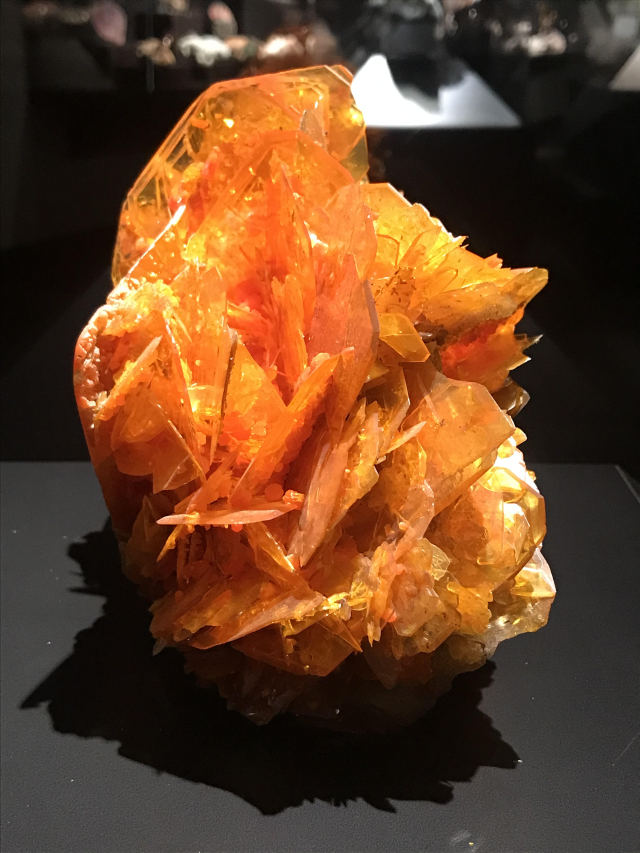
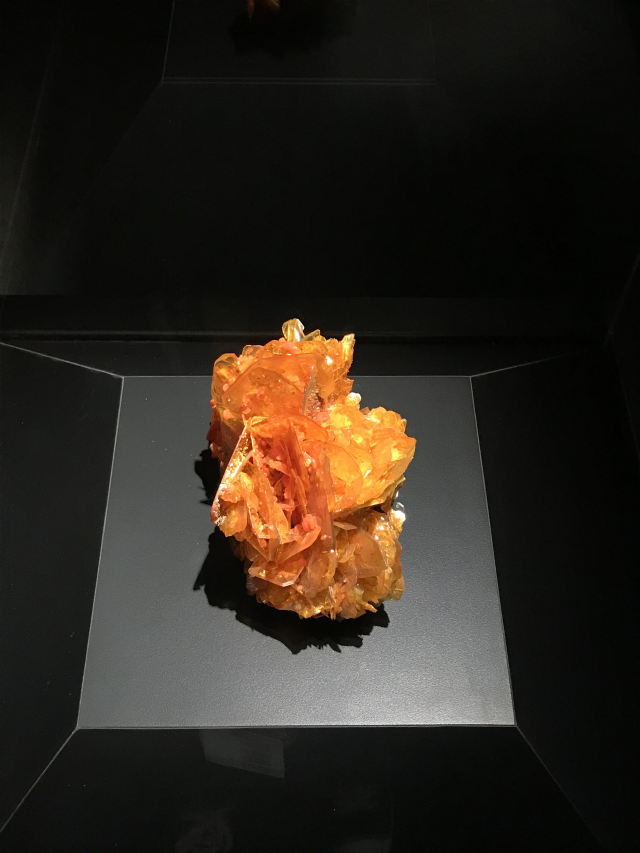
Carnegie Museum of Natural History’s specimen of Wulfenite and Mimetite is one of its most fascinating. It first caught my attention because it looks so distinctly like a piece of abstract art made out of honey barbeque potato chips. It was only afterward that I discovered that the museum’s official nickname for the specimen is appropriately just that, “BBQ Chips.”

wulfenite and mimetite specimen

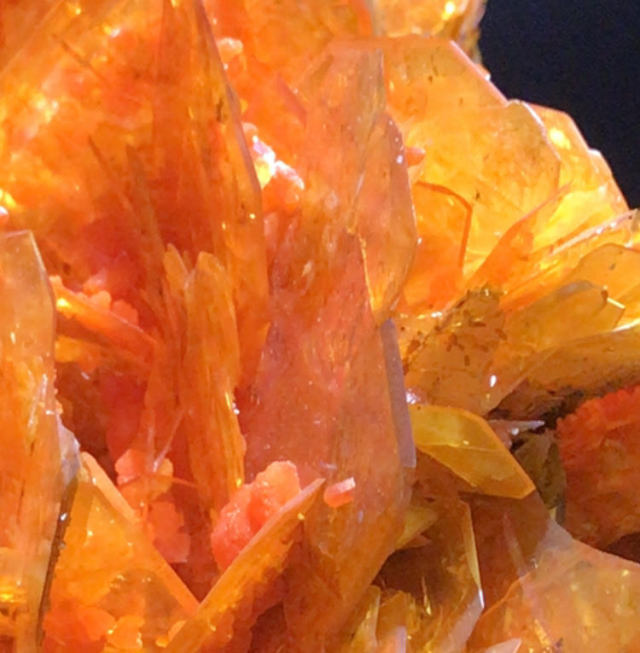
The potato-chip-shaped structures in question are thin, tabular crystals of wulfenite. A crystal is the physical, three-dimensional form that a mineral takes on in nature. The wulfenite is thin, broad, and relatively flat just like a table is, so that’s why scientists classify it as “tabular.” Sometimes, due to the conditions under which it was formed, wulfenite might also take on the shape of small pyramids.

close-up of wolfenite and mimetite specimen

The naming of wulfenite has a fascinating history itself. It was first discovered and described in the late 18th century by Austrian mineralogist Ignaz von Born (1741-1791) who gave it the name plumbum spatosum flavo pellucidum. Now, don’t be intimidated by the Latin, it is just a literal description of what von Born thought he found: yellow glasslike lead ore. Scientists later renamed the mineral wulfenite in 1845 when they discovered a deposit of it in Bleiberg, Austria. The new namesake, Franz Xavier von Wulfen (1728-1805), had spent his professional life studying the lead ores of the area. The mineral was also sometimes called melinose, after the Greek word “meli” meaning “honey,” so it is not surprising that the specimen first brought to my mind the image of honey barbeque chips in color as well as shape. While it was Austrian scientists who gave it its modern-day name, wulfenite exists in many locations around the world, including China, Arizona, and Mexico. Wulfenite even became Arizona’s state mineral in 2017. Our own BBQ chips specimen came from the San Francisco mine in Sonora, Mexico and was acquired in 1988.

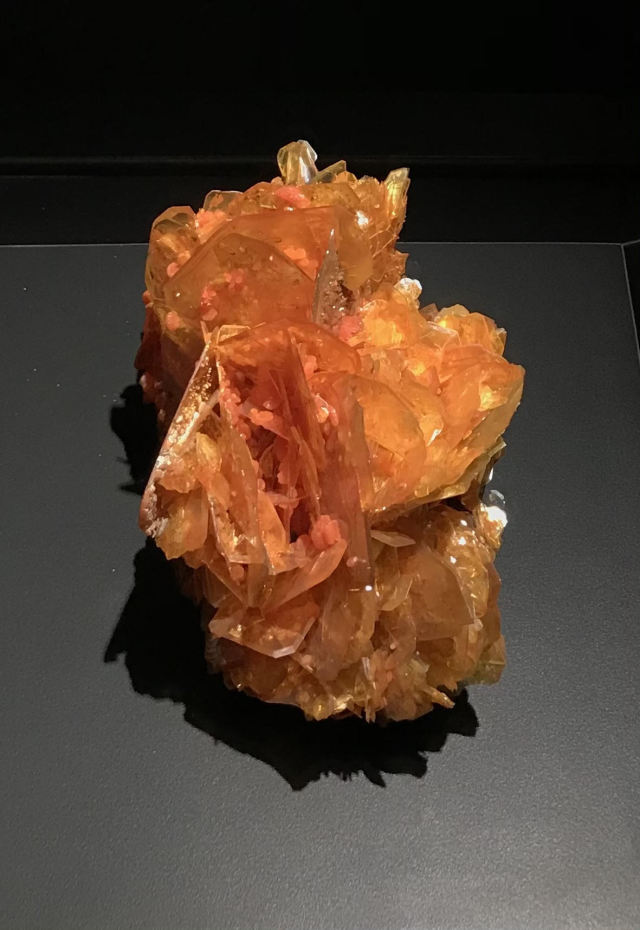
However, there’s more than just wulfenite on display behind the glass in CMNH’s Hillman Hall of Gems and Minerals. If you look closer you will see groups—aggregates—of small spheres interspersed among the crystalline potato chips. These small spheres are composed of the mineral mimetite, which often forms alongside wulfenite in nature as both are leaden in their chemical makeup. Specifically, mimetite is a mineral that forms as a product of the oxidation of galena (lead sulfide) and arsenopyrite (iron arsenic sulfide). Mimetite got its name because it “mimics” the appearance of other lead-based minerals, particularly pyromorphite. The aggregates of mimetite you see at the museum have what scientists call a “botryoidal habit.” Translation: the mineral has a characteristic shape—habit—which in this case is grape-like—“botryoidal,” from the Greek. So, again, it isn’t so outlandish to describe wulfenite as “potato-chipian” when mimetite is described by scientists literally as a “cluster of grapes.” In fact, I’m starting to get a little hungry. Scientists often name their new discoveries after something familiar to them that has a similar shape or property.

But how did “BBQ Chips” come to take on its unique shape and remarkable coloration? Specific patterns of atoms that make up the minerals’ internal structure give wulfenite and mimetite their repeating and intricate form. The color of the specimens depends on their chemical composition. For instance, the wulfenite on display at CMNH gets its fiery orange hue from trace amounts of chromium lurking deep within the crystal. It is ironic that what scientists call an “impurity”—the chromium—gives the wulfenite one of its most striking and aesthetically pleasing features, its coloration. The mimetite, on the other hand, has a similar burnished orange color because of the presence of arsenic, mimetite being composed of lead chloride arsenate.

wulfenite and mimetite specimen from above

The Carnegie Museum of Natural History’s specimen of wulfenite and mimetite showcases the beauty and complexity of the natural world, the entwining of two distinct and breathtaking minerals in one display. Their bright colors and arresting shapes are the product of chemical reactions, time, and specific environmental conditions. The gastronomical names that their coloration and visible structures have garnered over the years—from “BBQ Chips” to “clusters of grapes”—make them a mineralogical feast for scientists and museum patrons alike.

wulfenite and mimetite specimen

Nicholas Sauer is a Gallery Experience Presenter in CMNH’s Life Long Learning Department. Museum staff, volunteers, and interns are encouraged to blog about their unique experiences and knowledge gained from working at the museum.

References

Ascarza, William. “Wulfenite, Arizona’s State Mineral, is Theme for Current Tucson Gem Show.” Tucson.com. 12 April 2020. <https://tucson.com/news/local/wulfenite-arizonas-state-mineral-is-theme-for-current-tucson-gem-show/article_00d6cbc2-80bb-57fd-8288-9ba0f189041f.html>.

“Mimetite.” Smithsonian National Museum of Natural History. <https://geogallery.si.edu/10026354/mimetite>.

“Minerals, Crystals, and Gems: Stepping Stones to Inquiry.” Smithsonianeducation.org. 2013 <http://www.smithsonianeducation.org/educators/lesson_plans/minerals/minerals_crystals.html>.

“Mineral of the Year 2020.” Naturhistorisches Museum Wien. 2020. < https://www.nhm-wien.ac.at/en/research/mineralogy__petrography/mineral_of_the_year>.

Russell, Peter. “Oxidized Zone Minerals.” University of Waterloo. 1 March 2006. <https://waterloo.ca/wat-on-earth/news/oxidized-zone-minerals>.

“Wulfenite.” Smithsonian National Museum of Natural History. <https://geogallery.si.edu/10026003/wulfenite>.

“Wulfenite—Collected from Sonora, Mexico.” Saint Louis Science Center. 2021. <https://www.slsc.org/wulfenite-collected-from-sonora-mexico/>.

Related Content

Pyromorphite from Zambia

An Egg-cellent Hobby!

Super Science Activity: DIY Sundial

Carnegie Museum of Natural History Blog Citation Information

Blog author: Sauer, Nicholas
Publication date: June 21, 2021

Share this post!

  • Share on Twitter Share on Twitter
  • Share on Facebook Share on Facebook
  • Share on Pinterest Share on Pinterest
  • Share on LinkedIn Share on LinkedIn
  • Share on Reddit Share on Reddit
  • Share via Email Share via Email

Share this post!

  • Share on Twitter Share on Twitter
  • Share on Facebook Share on Facebook
  • Share on Pinterest Share on Pinterest
  • Share on LinkedIn Share on LinkedIn
  • Share on Reddit Share on Reddit
  • Share via Email Share via Email

Filed Under: Blog Tagged With: minerals, minerals and gems, Nicholas Sauer, sssminerals, Super Science

March 9, 2021 by wpengine

Section of Minerals and Earth Sciences Celebrates Being Lucky!

The etymology, or origin, of the word ‘luck’ is centuries old and has strong roots in minerals and mining. Although the exact origin is unknown, the verb “lukken,” meaning to “happen by chance” or “happen fortunately,” first appeared in Old English literature sometime in the mid 15th century and is thought to be associated with gambling. According to several sources, this meaning was likely borrowed from earlier Middle Dutch (“gheluc”) or Germanic (“gelücke”) speakers, who applied these words to good fortune and happiness associated with it.

Not long afterwards, beginning around the late 16th century, the traditional German miner’s greeting, “Glück auf!”, which translates to “luck to!” or “luck on!” became popular among many European miners. It describes a hope for good fortune to find ore that will bring riches, and was likely also directed to having luck in safety on their shift underground, since underground mining during that time was extremely dangerous.

The traditional German miner’s greeting, Glück auf.


The more modern term “luck of the Irish” also has likely origins in mining, since Irish immigrants and Irish American miners were considered to be some the most successful and famous prospectors during the gold and silver rush in the Western U.S. in the mid 1800s.

Miners sometimes encountered “unlucky” minerals underground that, at the time, were worthless and not considered pay dirt. Around the 1600s, silver miners in the Bohemia region of Czech Republic and Germany often encountered a dark and dense mineral that they referred to as “pechblende,” or bad-luck ore. This pechblende was actually the mineral uraninite, a major ore of the radioactive element uranium that would later become a hotly contested resource of developing nuclear nations.

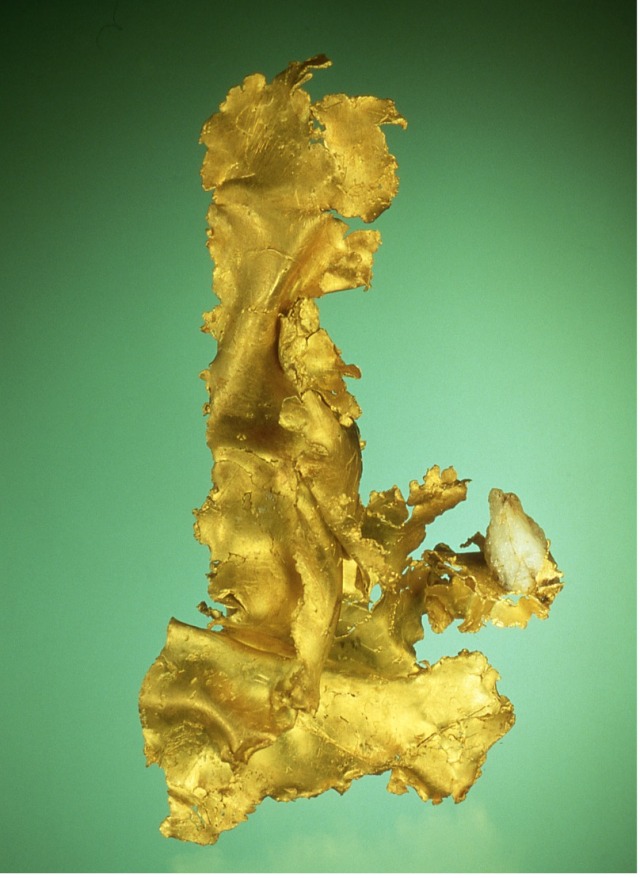
Nowadays, good luck is linked to many minerals, including gold, mythical pots of which receive attention around St. Patrick’s Day. Gold is considered lucky because of its association with wealth and fortune, but did you know that the reason gold is used for money is linked to its mineralogy? Consider gold’s properties as a mineral: it’s very stable (doesn’t spontaneously burst into flames or corrode), melts at a relatively low temperature, and is easily malleable (hammered or pressed). Gold was an ideal candidate to be used as money for early civilizations. Matching all those requirements, plus being the right balance of rare, but not too rare, means that out of over 100 elements in the periodic table, gold hits the sweet spot for monetary value.

A 2.5 ounce leaf gold standing 12.5 cm tall from Tuolumne County, California, on display in the Masterpiece Gallery of Hillman Hall of Minerals and Gems. Photo: Harold and Erica Van Pelt.

Carla Rosenfeld is the Assistant Curator of Earth Sciences, Travis Olds is Assistant Curator of Minerals, and Debra Wilson is Collection Manager of Minerals at Carnegie Museum of Natural History. Museum employees are encouraged to blog about their unique experiences and knowledge gained from working at the museum.

Related Content

Ask a Scientist: Why do some minerals glow?

What’s a Shamrock?

The Connemara Marble: A Cross-Atlantic Connection Between Ireland and Pittsburgh

Share this post!

  • Share on Twitter Share on Twitter
  • Share on Facebook Share on Facebook
  • Share on Pinterest Share on Pinterest
  • Share on LinkedIn Share on LinkedIn
  • Share on Reddit Share on Reddit
  • Share via Email Share via Email

Carnegie Museum of Natural History Blog Citation Information

Blog author: Rosenfield, Carla; Olds, Travis; and Wilson, Debra
Publication date: March 9, 2021

Share this post!

  • Share on Twitter Share on Twitter
  • Share on Facebook Share on Facebook
  • Share on Pinterest Share on Pinterest
  • Share on LinkedIn Share on LinkedIn
  • Share on Reddit Share on Reddit
  • Share via Email Share via Email

Filed Under: Blog Tagged With: Carla Rosenfeld, Debra Wilson, minerals, Science News, Travis Olds

November 9, 2020 by wpengine

Thanksgiving and Nutritional Mineralogy

by Travis Olds

We each have plenty to be thankful and hopeful for this year, but did you know that our traditional American Thanksgiving feast “with all the fixings,” would not be possible without minerals or the people who mine, process, and manufacture the mineral-related materials found in our kitchens?

Kaolinite
Kaolinite. Photo Credit: Debra Wilson

You should thank miners, in part, for the kaolinite clay used to make the fine porcelain china or ceramic plates at your dinner table. When kaolinite is fired in the factory, it partially melts, and crystals of an aluminum-silicate mineral called mullite that hold the ceramic together and give it high heat resistance form on cooling. Also, whether you eat and serve food with silver, steel, or aluminum utensils, extensive work and energy were needed to extract and refine the silver, iron, or aluminum metal necessary for their creation. Silver ore, for example, usually contains many other elements, including lead, zinc, copper, and gold, which can require lengthy chemical or electrochemical processes to separate.

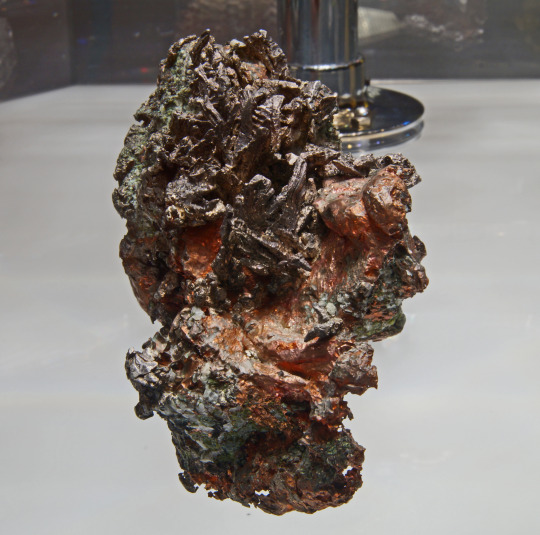
silver on copper
Silver on copper. Photo credit: Debra Wilson

There might also be some unwanted mineral interactions occurring at the dinner table. If your gluttonous Uncle Ned consumes too much salt (sodium) with his gravy and potatoes (high in oxalate) this year, his body may begin to form kidney stones; which are biologically formed minerals made up of crystals of the phosphate mineral struvite and the calcium oxalate mineral whewellite. These biominerals, which can form when your bladder isn’t fully emptied after a sodium or oxalate-rich meal, can be extremely painful, so be sure to drink plenty of water with your meal. Large crystals take time to grow and drinking more water can reduce the concentration of sodium and oxalate in your body, slowing growth of the kidney stones.

Turkey meat, the mainstay of many Thanksgiving meals, also depends heavily on minerals. Did you know that turkeys actually need to swallow small rocks and pebbles, which are made of minerals, in order to digest their food? “Gastroliths,” or stomach stones, are used by other species of birds, reptiles, amphibians, worms, whales, and even some fish to crush their food and provide more nutrients! Fortunately, we humans have a variety of enzymes and strong stomach acids to break down nutrients in the food we eat.

A surprising amount of nutritional science is applied to raising turkeys; their diet is closely monitored and controlled for proper protein and “mineral” content so that they grow large. You have likely heard the term “mineral” applied to many of our dietary items as well, from mineral water, to a variety of products being fortified with vitamins and minerals, or even the advice that it’s important to maintain a healthy balance of minerals in your diet. The term is somewhat misleading because “minerals” in this sense typically refers to individual atomic elements such as potassium or iron, or to other compounds containing these elements, rather than actual minerals in the strict sense. To a mineralogist like me, minerals are naturally occurring crystalline solids made from a specific combination of elements.

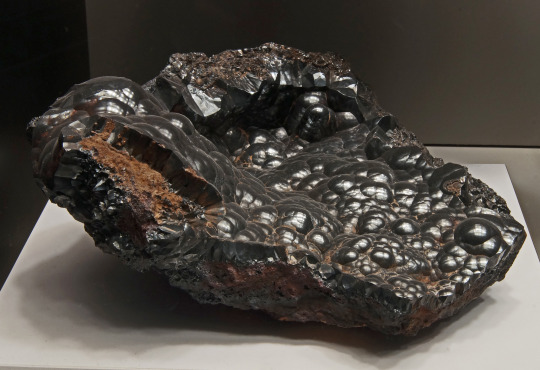
hematite
Hematite. Photo credit: Debra Wilson

Most often, the elements essential for our diet have been pre-digested, extracted or processed by another plant or animal, or have been chemically separated from a mineral source that makes it easier for our bodies to absorb. For example, most rice and cereal in the U.S. is fortified with B-vitamins and iron with a coating of finely ground nutrient powder. While the source of iron used in the fortifying powder varies, it all originates with the iron-oxide minerals hematite and goethite. Plants, bacteria, or stomach acids break down these minerals into iron cations that are easier for our body to process.

Thanksgiving vegetable dishes deserve special attention because plants can be the best sources for certain nutrients. In many cases, fruits and veggies grown on the farm also need help with their diet. Feldspar minerals present in soil hold on strongly to certain elements like K, more commonly known as potassium, making it hard for plants to extract this element. Farmers address this problem by using fertilizers like manure, containing predigested and readily absorbed phosphorous, nitrogen, and potassium, to produce a bountiful harvest

This year, please extend a bit of thankfulness to minerals, but mostly give thanks and recognition to the people that work hard to make your Thanksgiving possible; be it a miner, factory worker, your grocer, butcher, farmer, doctor, or all those working behind the scenes and on the front lines that keep us happy, healthy, and well fed.

Travis Olds is Assistant Curator of Minerals at Carnegie Museum of Natural History. Museum employees are encouraged to blog about their unique experiences working at the museum.

Related Content

Ask a Scientist: What is biogeochemistry? 

Why Do Leaves Change Color?

Beauty From the Ashes

Carnegie Museum of Natural History Blog Citation Information

Blog author: Olds, Travis
Publication date: November 9, 2020

Share this post!

  • Share on Twitter Share on Twitter
  • Share on Facebook Share on Facebook
  • Share on Pinterest Share on Pinterest
  • Share on LinkedIn Share on LinkedIn
  • Share on Reddit Share on Reddit
  • Share via Email Share via Email

Filed Under: Blog Tagged With: gems and minerals, Hillman Hall of Minerals and Gems, minerals, minerals and gems, Museum from Home, Science News, Section of Minerals, Travis Olds

July 15, 2019 by wpengine

Master of Optical Illusion

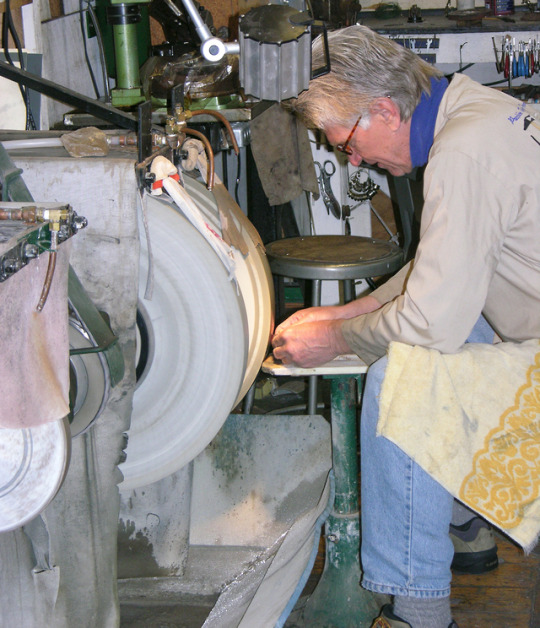
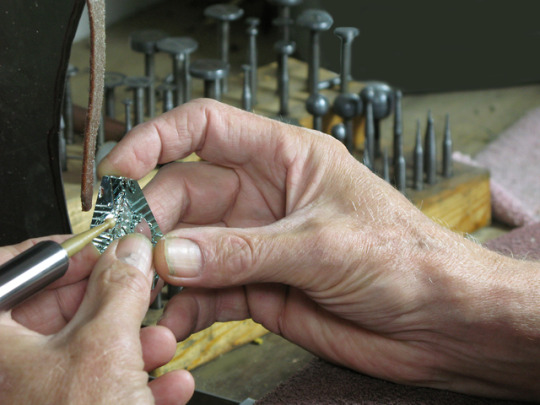
Michael Dyber, known as the Master of Optical Illusion, is among the world’s foremost lapidary artists today. He began working in metal and wood at the age of nine and won his first design competition while still in grade school. After earning his BA degree in Fine Arts and Humanities from New England College, he moved from metal and wood into jewelry design.  He opened his own shop in New Hampshire but began to feel restricted by the pre-cut gemstones available for his artwork. He then turned his artistic focus toward handcrafting his own unique gems. He started by acquiring top quality gem rough and instead of using standard carving and polishing equipment, Michael built his own specialized tools.

Michael Dyber at work in his studio.

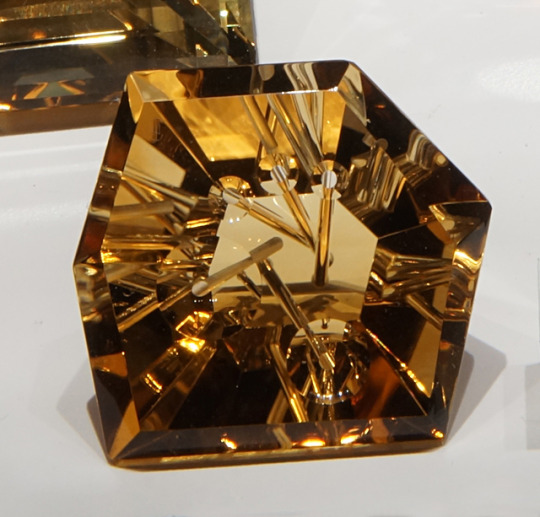
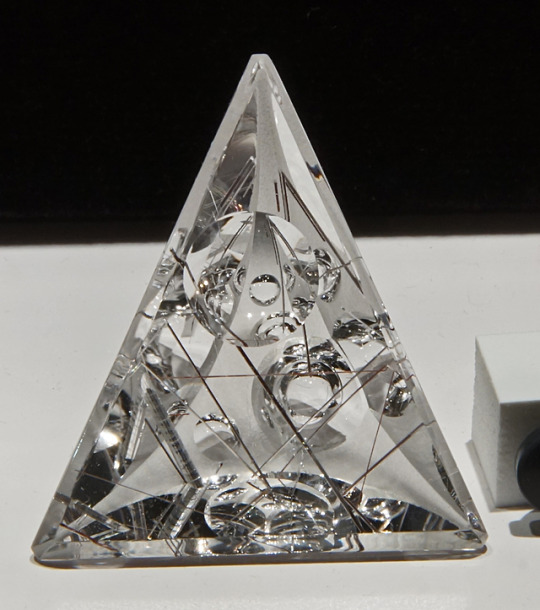
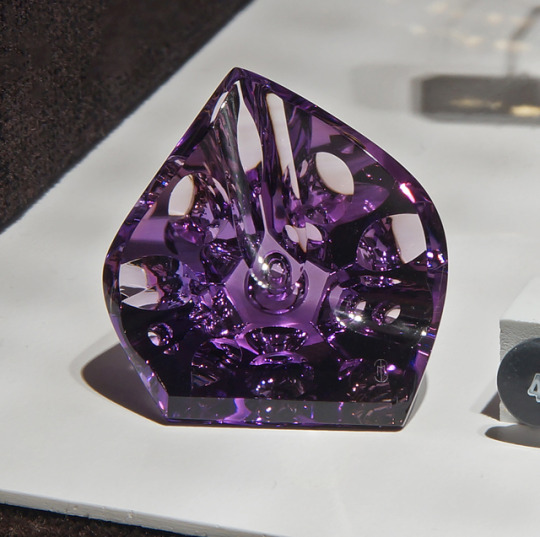
Using these custom-made tools enabled Michael to invent his own unique techniques to create the optical illusions you see within the stones. He calls them the Dyber Optic DishTM, LuminairesTM, Photon PhacetsTM, and ChannelsTM. Each artwork is a one-of-a-kind signed original, based on the characteristics of the individual gem, the hand-crafting skills like the old masters, and the added bonus of Michael’s unique artistic vision. To quote Michael, “My work is asymmetrical, but visually balanced, my goal is to go beyond what has been done, to create infinite designs.”

Wertz Gallery: Gems and Jewelry can now boast of having four pieces of lapidary art on display that were carved by the Master of Optical Illusion, Michael Dyber. Two carvings were purchased in anticipation of a new gem and jewelry gallery and were put on display when Wertz Gallery opened in 2007, one in the Birthstones exhibit and the other in the Quartz as a Gemstone exhibit.

95.45 carat quartz variety citrine entitled “Straw” in the November section of the Birthstones exhibit.
74.15 carat rutilated quartz entitled “Sliders” in the Quartz as a Gemstone exhibit.

The third was on temporary display in 2014 (May 31st thru August 31st) during the special exhibit in Wertz Gallery that featured all of Michael’s twenty-three award-winning carvings and some of his new creations. We purchased one of his new creations after the exhibit and put it on permanent display later that year in the Quartz as a Gemstone exhibit.

86.41 carat quartz variety amethyst entitled “Twist” in the Quartz as a Gemstone exhibit.

The fourth carving was put on display just last month (June 18th) in the Birthstones exhibit. It was donated to the museum by Michael in 2015.

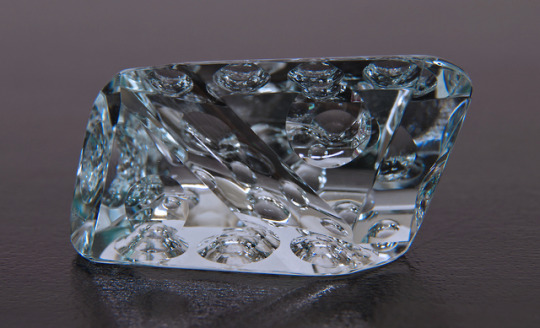
32.95 carat beryl variety aquamarine (untitled) in the March section of the Birthstones exhibit.

These carvings began with gem rough from Brazil and they utilize three of the four techniques that Michael has created. Straw has Dyber Optic DishesTM and LuminairesTM; Sliders has Dyber Optic DishesTM ; Twist and the untitled carving have Dyber Optic DishesTM and ChannelsTM. Eventually we would like to add to the collection a piece of lapidary art that has his Photon PhacetsTM technique. It will be exciting to see what new technique Michael comes up with next!

Debra Wilson is the Collection Manager for the Section of Minerals at Carnegie Museum of Natural History. Museum employees are encouraged to blog about their unique experiences and knowledge gained from working at the museum.

Filed Under: Blog Tagged With: Deb Wilson, Debra Wilson, Michael Dyber, minerals, minerals and gems, Section of Minerals

  • « Go to Previous Page
  • Page 1
  • Page 2
  • Page 3
  • Page 4
  • Interim pages omitted …
  • Page 8
  • Go to Next Page »

sidebar

About

  • Mission & Commitments
  • Directors Team
  • Museum History

Get Involved

  • Volunteer
  • Membership
  • Carnegie Discoverers
  • Donate
  • Employment
  • Events

Bring a Group

  • Groups of 10 or More
  • Birthday Parties at the Museum
  • Field Trips

Powdermill

  • Powdermill Nature Reserve
  • Powdermill Field Trips
  • Powdermill Staff
  • Research at Powdermill

More Information

  • Image Permission Requests
  • Science Stories
  • Accessibility
  • Shopping Cart
  • Contact
  • Visitor Policies
One of the Four Carnegie Museums | © Carnegie Institute | Privacy Policy | Terms of Use | Accessibility
Rad works here logo