• Skip to primary navigation
  • Skip to main content
  • Skip to primary sidebar

Carnegie Museum of Natural History

One of the Four Carnegie Museums of Pittsburgh

  • Visit
    • Buy Tickets
    • Visitor Information
    • Exhibitions
    • Events
    • Dining at the Museum
    • Celebrate at the Museum
    • Powdermill Nature Reserve
    • Event Venue Rental
  • Learn
    • Field Trips
    • Educator Information
    • Programs at the Museum
    • Bring the Museum to You
    • Guided Programs FAQ
    • Programs Online
    • Climate and Rural Systems Partnership
  • Research
    • Scientific Sections
    • Science Stories
    • Science Videos
    • Senior Science & Research Staff
    • Museum Library
    • Science Seminars
    • Scientific Publications
    • Specimen and Artifact Identification
  • About
    • Mission & Commitments
    • Directors Team
    • Museum History
  • Tickets
  • Give
  • Shop

mummy

June 21, 2018 by wpengine

Why Were Cats Mummified in Ancient Egypt?

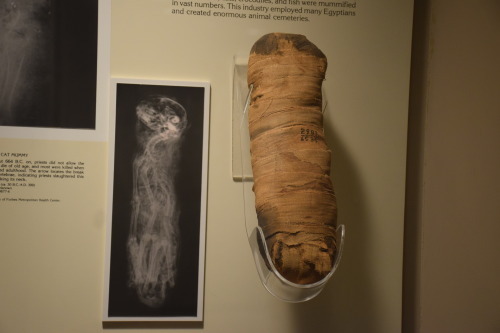
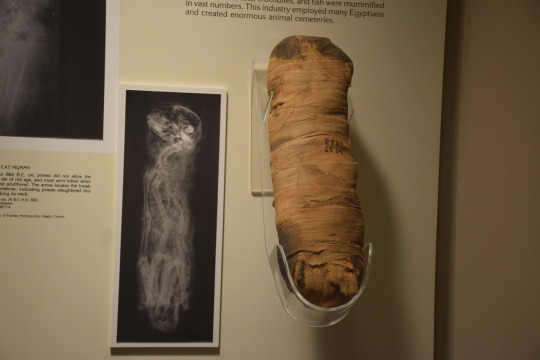
mummified cats and x-rays of them

In ancient Egypt, cats were sacred animals. People dedicated mummified cats at the sanctuary of the cat goddess Bastet as offerings. The sanctuary was located in the city of Bubastis where the remains of numerous cat mummies and small cat sculptures have been found.

Cats were also pets, just like they are today, and were sometimes mummified and placed in tombs with their owners. The belief was that by placing cats and their owners in the same tomb the pair could remain together in the Afterlife.
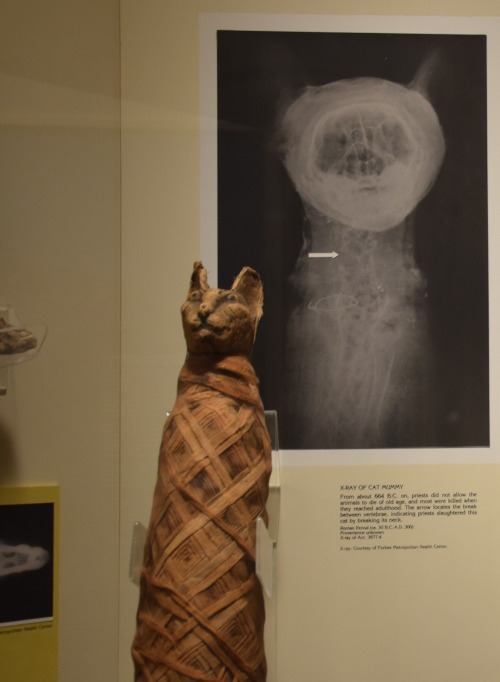
mummified cats and x-rays of them

Pictured above are mummified cats and x-rays of them on display in Carnegie Museum of Natural History’s Walton Hall of Ancient Egypt.
Related Content

Archaeological Adventures in Ancient Egypt

Egypt and the Nile

Tunic Decoration from Egypt

Filed Under: Blog Tagged With: ancient egypt, cats, mummy, Walton Hall of Ancient Egypt

January 8, 2018 by wpengine

We may be known for our dinosaurs but…

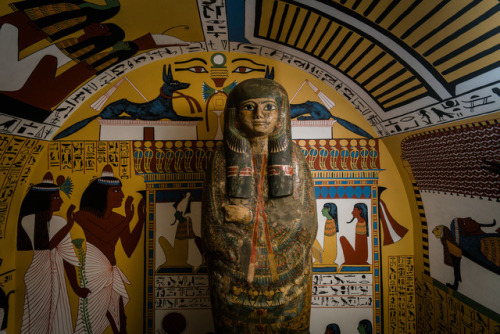
ornate Egyptian coffin on display at the museum

We may be known for our dinosaurs but Carnegie Museums of Pittsburgh’s collection actually began with Egypt. Purchased by Andrew Carnegie, the first object accessioned (acc. 1-1) is a Dynasty 21 Egyptian coffin that belonged to a chantress of Amun, who was probably a temple singer.

Before the coffin was sealed, a floral wreath made of woven leaves, grass, and flowers was placed across the mummy’s chest. Such wreaths are important in the study of ancient Egyptian flora.

(Photo by Josh Franzos) 

Filed Under: Blog Tagged With: mummy, Walton Hall of Ancient Egypt

July 16, 2016 by wpengine

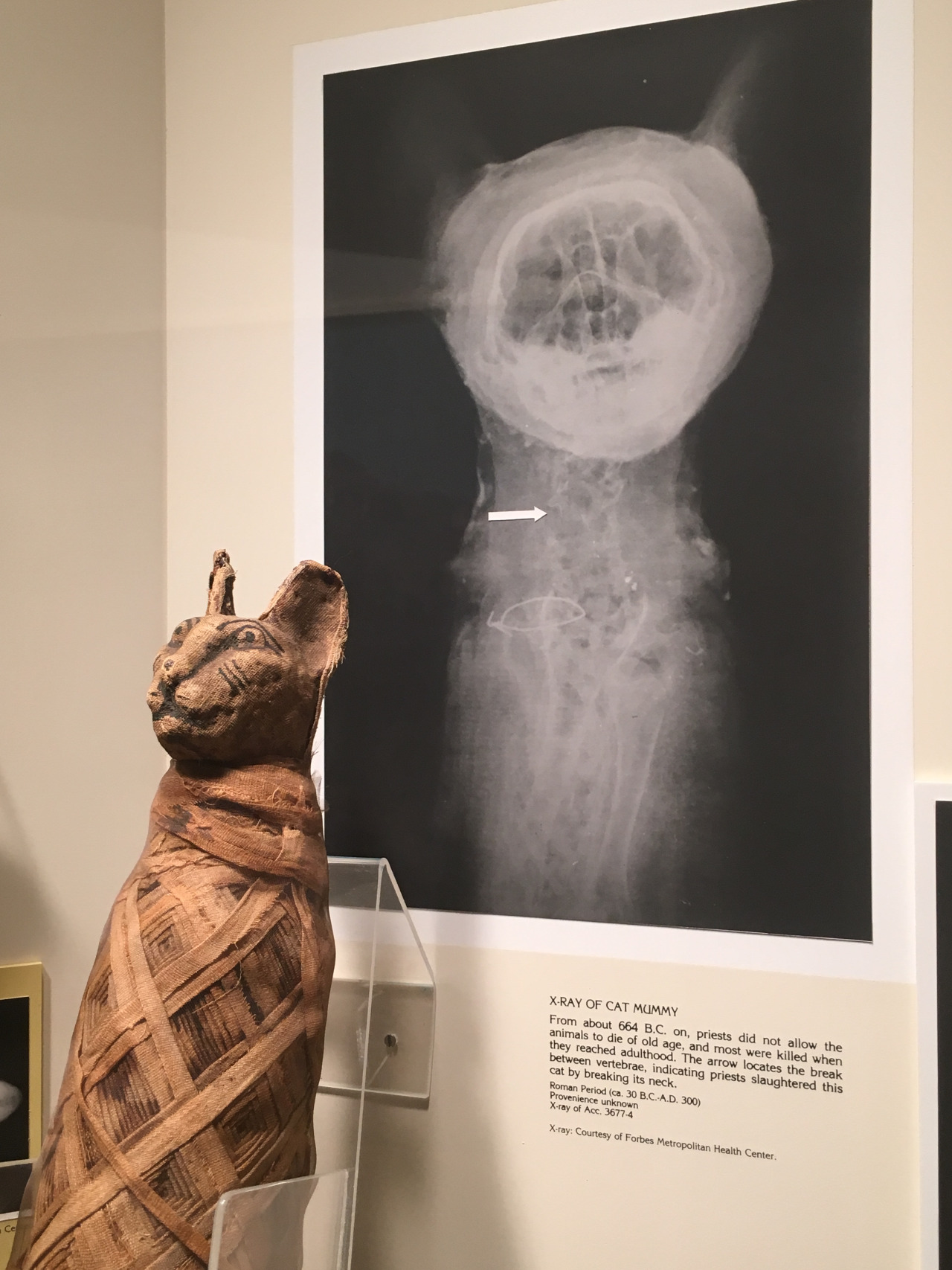
Ancient Egyptian Cat Mummies

mummified cat and x-ray image on display
Mummified cat and x-ray image on display.

In ancient Egypt, cats were sacred animals. People dedicated mummified cats at the sanctuary of the cat goddess Bastet as offerings. The sanctuary was located in the city of Bubastis where the remains of numerous cat mummies and small cat sculptures have been found.

Cats were also pets, just like they are today, and were sometimes mummified and placed in tombs with their owners. The belief was that by placing cats and their owners in the same tomb the pair could remain together in the Afterlife.

Filed Under: Blog Tagged With: anthropology, mummy, Pittsburgh, Walton Hall of Ancient Egypt

March 13, 2016 by wpengine

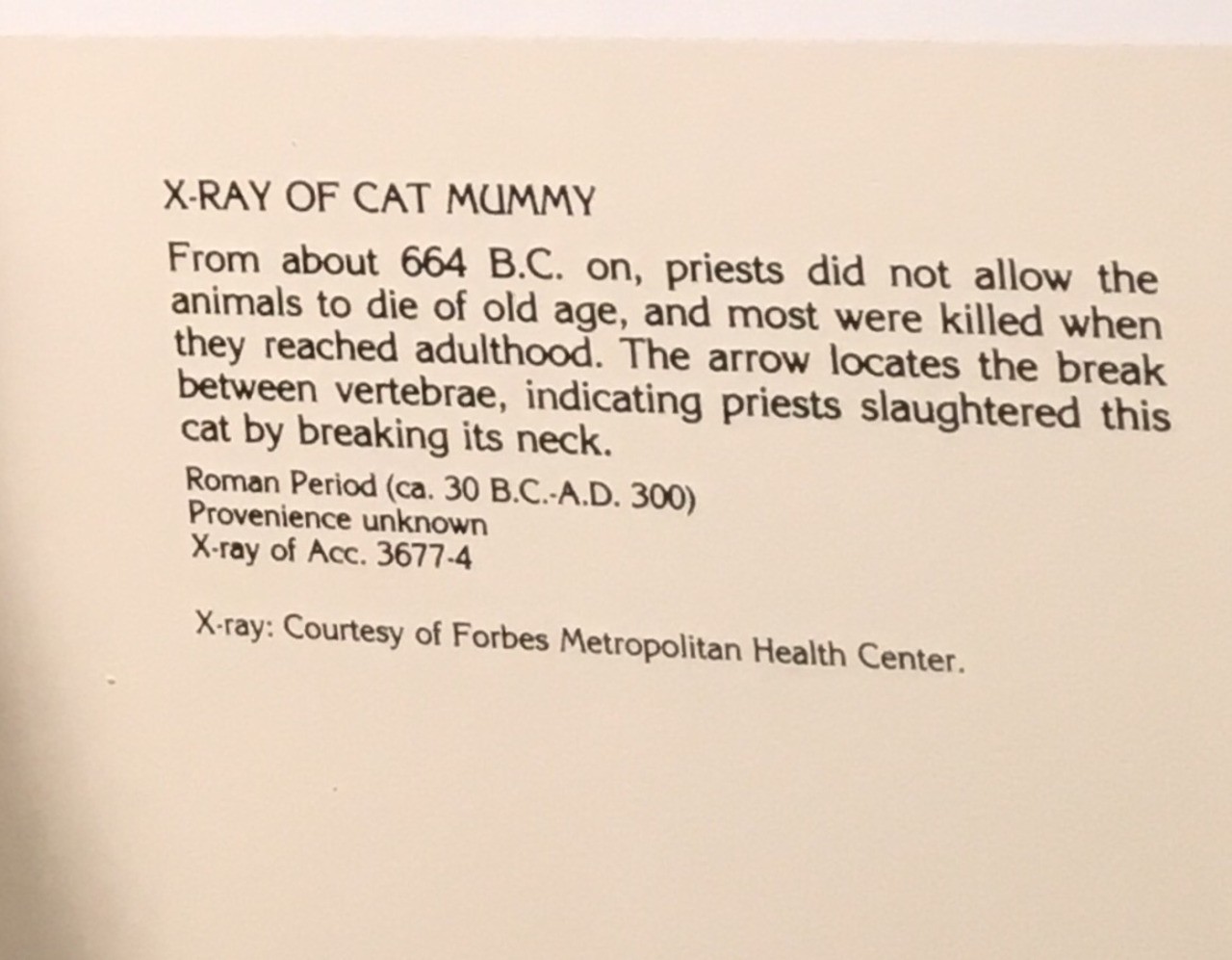
X-ray of a Cat Mummy

X-ray of a Cat MummyDescription Plaque for Cat Mummy and X-ray

Filed Under: Blog Tagged With: ancient egypt, anthropology, mummification, mummy, Walton Hall of Ancient Egypt

sidebar

About

  • Mission & Commitments
  • Directors Team
  • Museum History

Get Involved

  • Volunteer
  • Membership
  • Carnegie Discoverers
  • Donate
  • Employment
  • Events

Bring a Group

  • Groups of 10 or More
  • Birthday Parties at the Museum
  • Field Trips

Powdermill

  • Powdermill Nature Reserve
  • Powdermill Field Trips
  • Powdermill Staff
  • Research at Powdermill

More Information

  • Image Permission Requests
  • Science Stories
  • Accessibility
  • Shopping Cart
  • Contact
  • Visitor Policies
One of the Four Carnegie Museums | © Carnegie Institute | Privacy Policy | Terms of Use | Accessibility
Rad works here logo