• Skip to primary navigation
  • Skip to main content
  • Skip to primary sidebar

Carnegie Museum of Natural History

One of the Four Carnegie Museums of Pittsburgh

  • Visit
    • Buy Tickets
    • Visitor Information
    • Exhibitions
    • Events
    • Dining at the Museum
    • Celebrate at the Museum
    • Powdermill Nature Reserve
    • Event Venue Rental
  • Learn
    • Field Trips
    • Educator Information
    • Programs at the Museum
    • Bring the Museum to You
    • Guided Programs FAQ
    • Programs Online
    • Climate and Rural Systems Partnership
  • Research
    • Scientific Sections
    • Science Stories
    • Science Videos
    • Senior Science & Research Staff
    • Museum Library
    • Science Seminars
    • Scientific Publications
    • Specimen and Artifact Identification
  • About
    • Mission & Commitments
    • Directors Team
    • Museum History
  • Tickets
  • Give
  • Shop

plants

June 25, 2018 by wpengine

Could Polyjuice Potion Be Real?

By Mason Heberling

“This is the most complicated potion I’ve ever seen. Lacewing flies, leeches, fluxweed, and knotgrass. Well, they’re easy enough.” –Hermione Granger

Polyjuice potion was one of the most critical potions in the Harry Potter series.  Polyjuice potion was difficult to concoct, but well worth the effort (and horrible taste). When brewed correctly, it allows the drinker to take the form of another person (or in the case of Hermione’s accidental brew…a cat).

As explained in the books, polyjuice potion is a complex mixture, that takes about a month to concoct.  For obvious reasons, the recipe is found in the Restricted Section of Hogwart’s Library.

Two of the ingredients are, in fact, real plants!
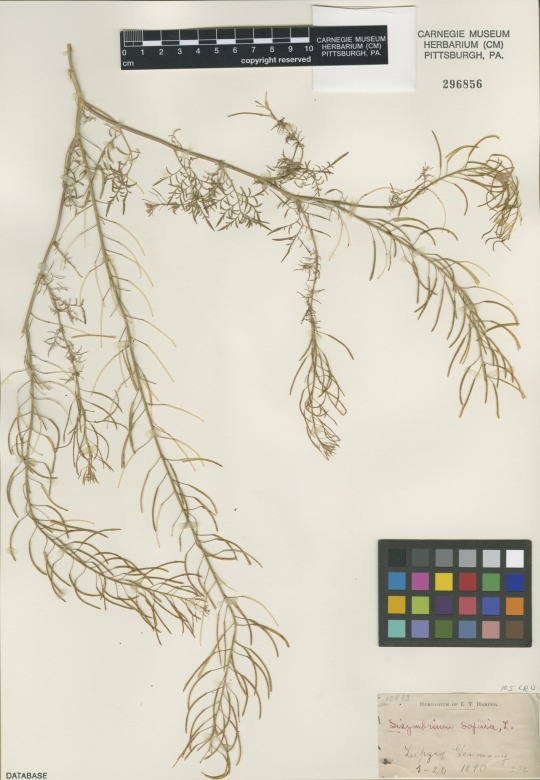
flixweed specimen

Shown here is “flixweed” (Descurainia Sophia), a plant in the mustard family (Brassicaceae), native to Europe and temperate Asia.  This specimen was collected in 1890 in Germany.

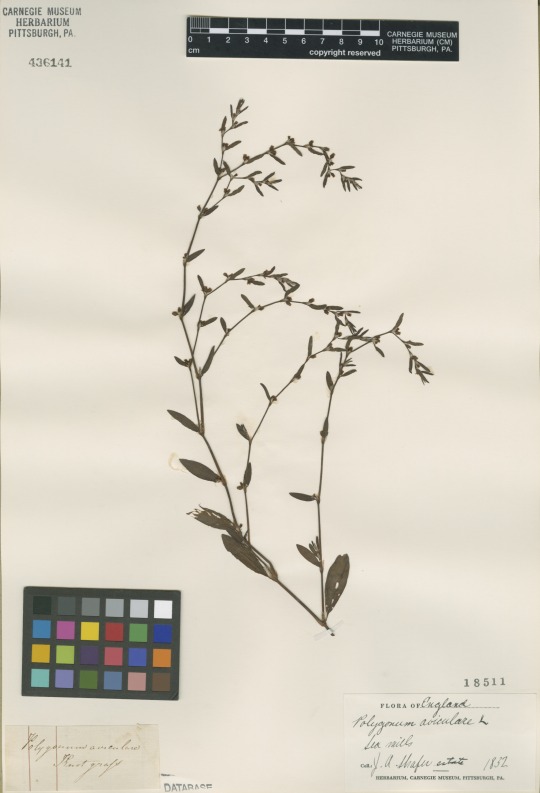
Another plant, crucial to Polyjuice potion, is “knotgrass.”  Knotgrass (or more commonly known in the US, “knotweed”) refers to species in the genus Polygonum in the buckwheat family (Polygonaceae). Shown here is a specimen of common knotgrass (Polygonum aviculare), collected in England in 1832.  This was 49 years before Dumbledore was even born!
knotgrass specimen

We don’t know who collected this specimen, but perhaps it was Nicolas Flamel, said to have made the sorcerer’s stone, who was 505 years old in 1832.

Learn more about Potions, Herbology, Care of Magical Creatures, and more at our upcoming 21+ Potterfest After Dark and brand new all ages Potterfest Theme Night. 
Filed Under: Blog Tagged With: Botany, Mason Heberling, plants

June 13, 2018 by wpengine

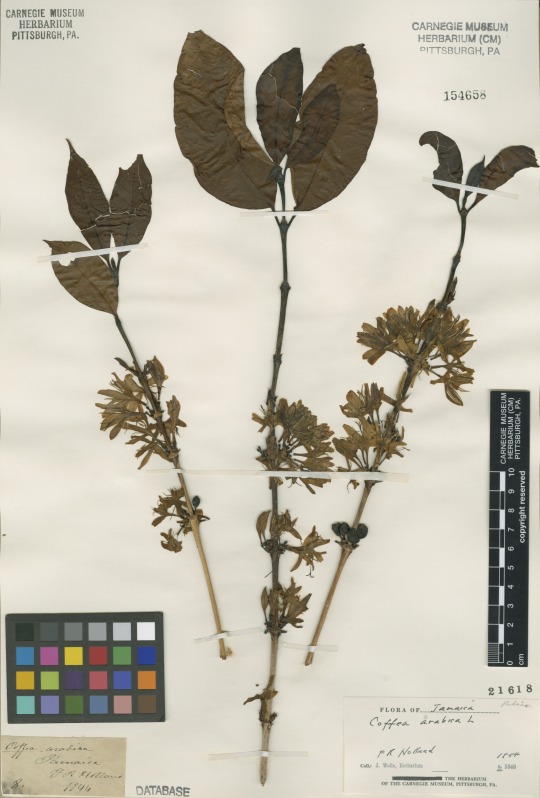
Coffee Specimens from Jamaica

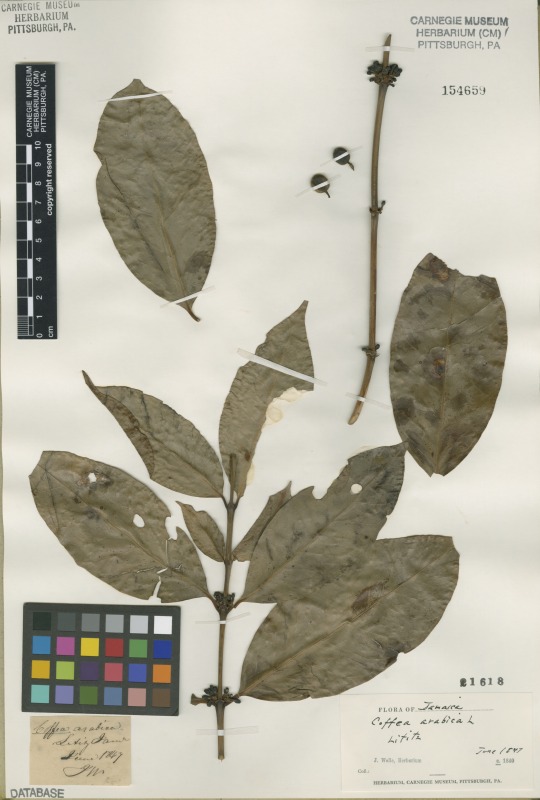
coffee plant specimen

This should wake you up! This specimen of coffee (Coffea arabica) was collected in June 1847 in Jamaica by Jacob Wolle.  Coffea arabica, the source of Arabica beans, is the main species of coffee consumed by humans, and is cultivated worldwide.  The coffee “bean” is the seed – the hard pit inside the coffee fruit.

Why does the Carnegie Museum have coffee specimens from Jamaica from the 1840s, you might ask?  Surprisingly, some of the oldest specimens in the Carnegie Museum herbarium were collected in Jamaica!  Jacob Wolle was the grandfather of William Holland, one of the first directors of the Carnegie Museum (from 1901-1922). Holland himself was born in Jamaica, where his father was a Moravian missionary. The CM herbarium has 2,514 specimens from Wolle’s collection, dating as far back as 1819!

The coffee specimen below, also from Jamaica, was collected by former Carnegie Museum director William Holland’s father, Francis R. Holland in 1844.

coffee plant specimen

This post was inspired by a group of artists from Vietnam whose art is inspired by coffee and coffee plantations.  They stopped by the herbarium earlier this year for inspiration.

Botanists at Carnegie Museum of Natural History share pieces of the herbarium’s historical hidden collection on the dates they were discovered or collected. Check back for more!

Filed Under: Blog Tagged With: Botany, coffee, plants

October 28, 2016 by wpengine

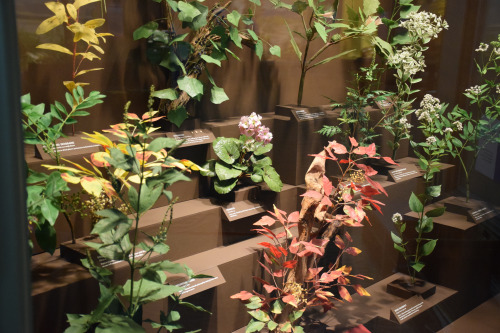
Don’t let that pretty foliage fool you.

Don’t let that pretty foliage fool you. This case in Botany Hall is full of local plant species that are poisonous or irritating to humans.

Of the nearly 3,500 plant species in Pennsylvania, about 100 can cause rashes, skin irritation, or even death.

Plants like poison ivy, primrose, common ragweed and other nefarious plants found in and around Pittsburgh are included in the case. Take a closer look at Carnegie Museum of Natural History!

Filed Under: Blog Tagged With: Botany, botany hall, plants, poisonus

April 16, 2016 by wpengine

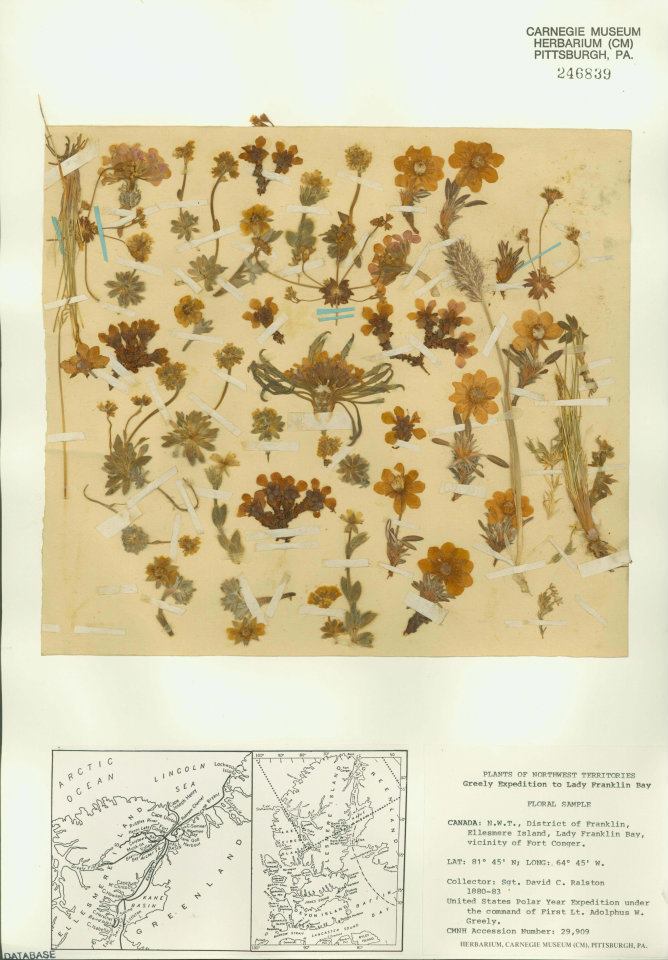
Plants of the Northwest territories

Pressed flowers from the Northwest territories

From our botany collection: “Plants of the Northwest territories” that were collected on an expedition in the 1880s


Filed Under: Blog Tagged With: Botany, plants

March 18, 2016 by wpengine

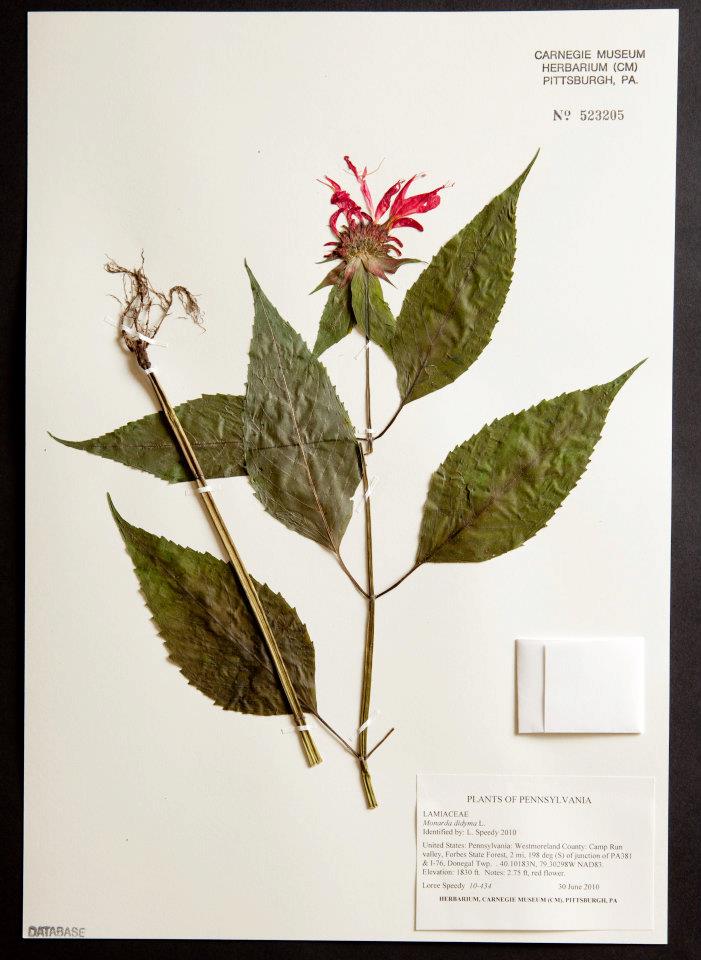
Bee-balm

Pressed leaves and flowers of Bee-balm

Bee-balm (Monarda didyma Linnaeus) specimen in the Botany collection. Image credit: Josh Franzos/Carnegie Museum of Natural History.

Filed Under: Blog Tagged With: nature, plants

  • « Go to Previous Page
  • Page 1
  • Interim pages omitted …
  • Page 5
  • Page 6
  • Page 7

sidebar

About

  • Mission & Commitments
  • Directors Team
  • Museum History

Get Involved

  • Volunteer
  • Membership
  • Carnegie Discoverers
  • Donate
  • Employment
  • Events

Bring a Group

  • Groups of 10 or More
  • Birthday Parties at the Museum
  • Field Trips

Powdermill

  • Powdermill Nature Reserve
  • Powdermill Field Trips
  • Powdermill Staff
  • Research at Powdermill

More Information

  • Image Permission Requests
  • Science Stories
  • Accessibility
  • Shopping Cart
  • Contact
  • Visitor Policies
One of the Four Carnegie Museums | © Carnegie Institute | Privacy Policy | Terms of Use | Accessibility
Rad works here logo