• Skip to primary navigation
  • Skip to main content
  • Skip to primary sidebar

Carnegie Museum of Natural History

One of the Four Carnegie Museums of Pittsburgh

  • Visit
    • Buy Tickets
    • Visitor Information
    • Exhibitions
    • Events
    • Dining at the Museum
    • Celebrate at the Museum
    • Powdermill Nature Reserve
    • Event Venue Rental
    • Gift Cards
  • Learn
    • Field Trips
    • Educator Information
    • Programs at the Museum
    • Bring the Museum to You
    • Guided Programs FAQ
    • Programs Online
    • Climate and Rural Systems Partnership
  • Research
    • Scientific Sections
    • Science Stories
    • Science Videos
    • Senior Science & Research Staff
    • Museum Library
    • Science Seminars
    • Scientific Publications
    • Specimen and Artifact Identification
  • About
    • Mission & Commitments
    • Directors Team
    • Museum History
  • Tickets
  • Give
  • Shop

plants

November 12, 2018 by wpengine

Pennsylvania Botany 2018

by Bonnie Isaac

Carnegie Museum of Natural History (CMNH) was well represented at PA Botany 2018. The 4th Biennial Pennsylvania Botany Symposium took place on November 2nd and 3rd at the Penn Stater Hotel and Conference Center. CMNH staff were there in full force.  PNR Director John Wenzel, Post-Doctoral Fellow Mason Heberling, Botany Collection Manager Bonnie Isaac, and Botany Curatorial Assistant Sarah Williams attended in addition to over 200 other people. This event features a day of workshops followed by a day of presentations. CMNH Botany folks were involved in both the workshops and the symposium talks. Williams & Isaac assisted workshop leaders, Heberling was a student in one of the workshops, and Wenzel was a symposium speaker.  CMNH Botany volunteer Joe Isaac was the instructor for the workshop for Botanical Consultants.
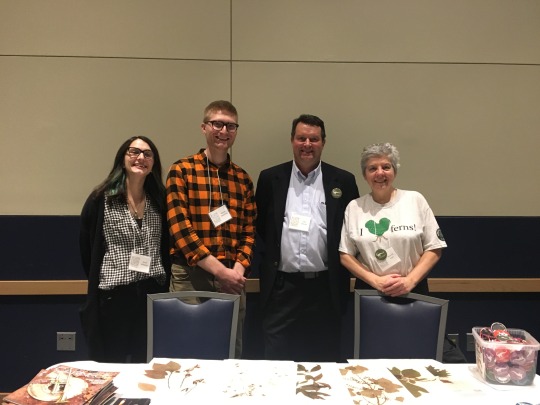
Curatorial Assistant Sarah Williams, Post-Doctoral Fellow Mason Heberling, PNR Director John Wenzel and Botany Collection Manager Bonnie Isaac at CMNH Table in the Exhibitor hall at PA Botany 2018.

John Wenzel’s presentation highlighted some of the exciting things going on at Powdermill Nature Reserve and CMNH integrating botany and technology. John showed the crowd some of the cool techniques developed at PNR for forest study using drones and computer simulation of trees as well as introducing them to the new AR Perpetual Garden App available for free in app stores. This app helps people learn about the effects of the deer population on an environment. It shows how the forest should look compared to how the forest looks when deer are over abundant. The app features Woodland In Balance vs. Woodland Out of Balance Scenarios along with dialogue to explain the differences and why they differ.

CMNH Botany has been active in this event since its inception in 2012. We hope to see more people attend this conference on plants and how important they are.  You can find more information for this conference and other plant related items at PABotany.org.

Bonnie Isaac is the Collection Manager in the Section of Botany. Museum employees are encouraged to blog about their unique experiences and knowledge gained from working at the museum.
Filed Under: Blog Tagged With: Bonnie Isaac, Botany, John Wenzel, Mason Heberling, plants, Powdermill Nature Reserve, Sarah Williams

October 12, 2018 by wpengine

New England Aster – Aren’t you glad you Aster?

by Bonnie Isaac

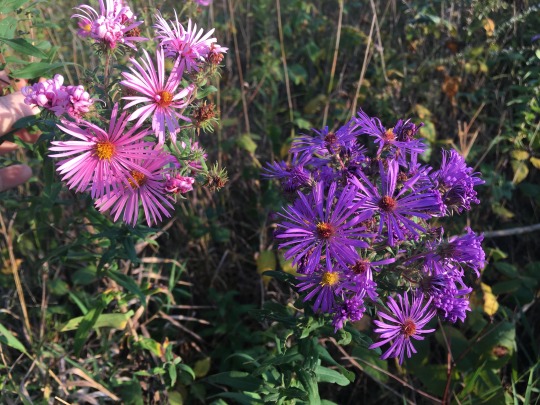
New England Aster

Fall is typically the time of year when we think plants are getting ready for winter. Think of trees changing colors and losing their leaves. Actually, some plants are just beginning to come into their own at this time of year.  The New England Aster is at its prime bloom now.  The purple, or sometimes pink, ray flowers are a spectacular sight along our open roadsides and fields.

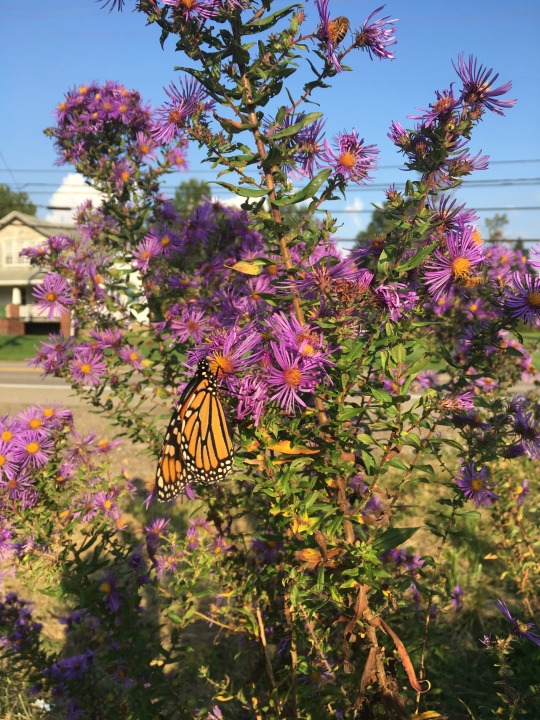
Monarch butterfly on New England Aster

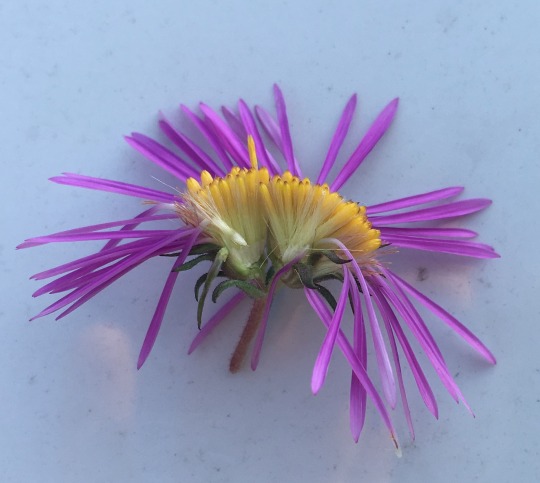
New England Aster is common across Pennsylvania and is known from almost all counties in the commonwealth. This beautiful plant is a member of the Aster family which is commonly called the Composite family.  This family is called the composite family because the flower heads are made up of many small flowers (florets) close together composing what looks like one larger flower.

detail of New England Aster florets


Next time you look at a dandelion, daisy, or sunflower, look closely. You can see many florets. Flowers, like the New England Aster, that bloom late in the year, are very important sources of nectar for bees and butterflies.

Bonnie Isaac is the Collection Manager in the Section of Botany. Museum employees are encouraged to blog about their unique experiences and knowledge gained from working at the museum.
Filed Under: Blog Tagged With: Bonnie Isaac, Botany, flowers, pennsylvania, plants

October 8, 2018 by wpengine

Collected on This Day in 1995

by Mason Heberling

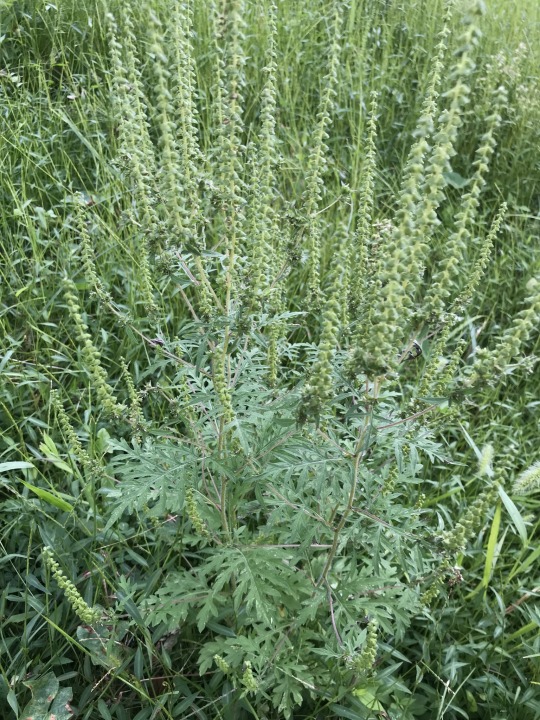
common ragweed

Fall allergies causing you grief?

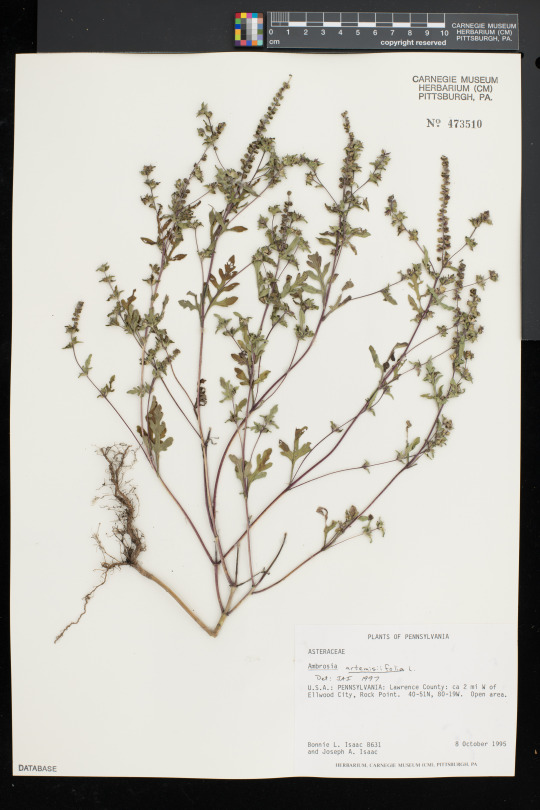
Ragweed is a plant many people are (all too) familiar with.  Or at least their bodies are.  Common ragweed (Ambrosia artemisiifolia) is actually native to North America, but has been introduced across the world.  In many cases, this plant (or other ragweed species) are to blame for seasonal pollen allergies known as “hay fever.”  In summer and early fall, ragweed plants produce copious numbers of pollen grains, which are dispersed in the wind.  Don’t blame those insect-pollinated plants with showy flowers for your allergy troubles.  Wind pollinated plants like ragweed are your culprit.

ragweed specimen

This ragweed specimen was collected by Bonnie and Joe Isaac in Lawrence county, Pennsylvania on October 8, 1995.  Bonnie is the collection manager in the Section of Botany at the Carnegie Museum of Natural History, an active plant collector and field botanist, and an expert on the plants of Pennsylvania.

Although ragweed is native to the US, historical records (pollen deposited in sediment cores) suggest that this species was far less common in North America before European colonization.  This is perhaps not too surprising considering the species thrives in disturbed habitats that came with European colonization and urbanization.  A study published in 2014 by Martin and colleagues in the journal Molecular Ecology extracted DNA from nearly 500 historic herbarium specimens dating back to the 1800s to measure the genetic makeup prior to widespread changes to the landscape in the late 19th century. Combined with data from recent collections, they found shifts in the genetic makeup of ragweed populations as the species was expanding in the United States.

Botanists at the Carnegie Museum of Natural History share digital specimens from the herbarium on dates they were collected. They have embarked on a three-year project to digitize nearly 190,000 plant specimens collected in the region, making images and other data publicly available online. This effort is part of the Mid-Atlantic Megalopolis Project (mamdigitization.org), a network of thirteen herbaria spanning the densely populated urban corridor from Washington, D.C. to New York City to achieve a greater understanding of our urban areas, including the unique industrial and environmental history of the greater Pittsburgh region. This project is made possible by the National Science Foundation under grant no. 1801022.  

This specimen is now online: Ambrosia artemisiifolia.

Filed Under: Blog Tagged With: Botany, collected on this day, Mason Heberling, plants

October 8, 2018 by wpengine

Botany Near Home

by Mason Heberling

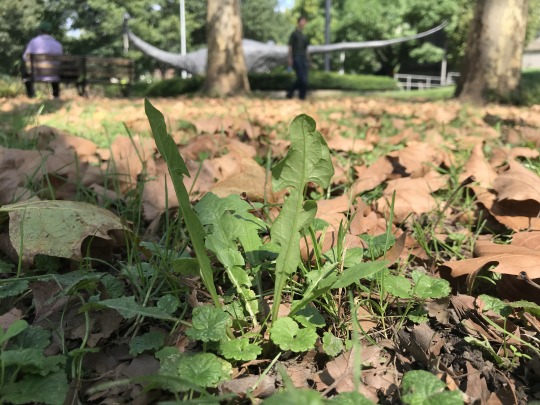
dandelion outside Carnegie Museum of Natural History

Human activities are changing our very notion of what is “natural.”  We are surrounded by nature, no matter whether we are in an asphalt parking lot in Pittsburgh or deep in the Allegheny National Forest.  This conclusion was a central theme (and namesake) of the recent exhibition at the Carnegie Museum of Natural History titled We Are Nature: Living in the Anthropocene.  The Anthropocene is an interdisciplinary, far-reaching conceptual framework for understanding, managing, protecting, and celebrating our natural heritage in a new era of global human influence on the Earth’s systems.

Is there value to nature in the city?  How about the mowed lawn in your backyard? Or the weeds in sidewalk cracks? It’s easy to overlook nature in human dominated environments, but it is something special.

While the Anthropocene as a formal term is quite new, many of the basic concepts behind it are far from it.

I recently stumbled across an inspiring, forward thinking essay by Otto Jennings entitled “Botany Near Home.”  I do not know the date or where it was published.

Affiliated with the Carnegie Museum from 1904 until his death in 1964, Jennings made many contributions throughout his career, serving as the Curator of Botany, Director of Education, and eventually Director of the museum.  He also was Professor and Head of the Department of Biological Sciences at the University of Pittsburgh, having advised many students.  His legacy remains to this day for his influence on the museum, botany, conservation, and environmental education.

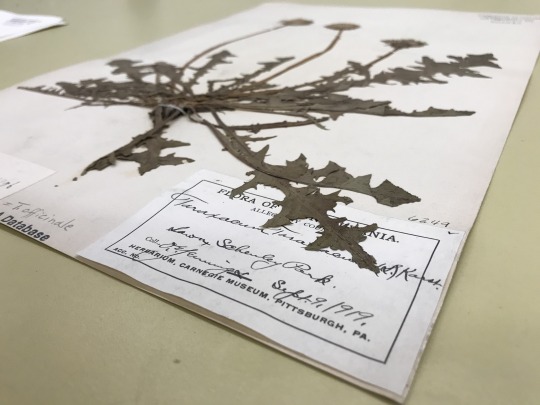
Specimen of Taraxacum offiniale (dandelion)
Specimen of Taraxacum offiniale (dandelion) collected by Otto Jennings on Sept. 9, 1919 in the lawn outside of the museum.

In his short essay, Jennings asserts that you do not need to go far to teach and learn botany hands-on. He writes, “…the teacher need not have to break up regular class schedules or to go to the trouble of organizing a field-trip to some more or less distant place.”

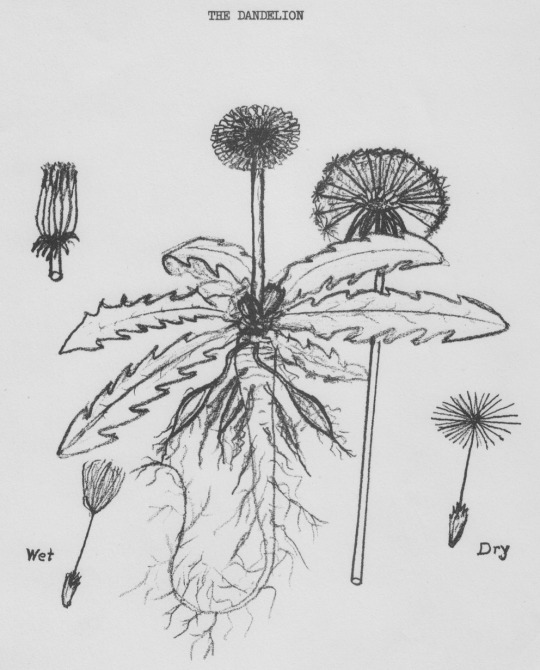
He continues, “Various plants grow in backyards and vacant lots which were not planted there by anyone. How did it get there?  Our back in a semi-business part of Oakland, in Pittsburgh, has had ailanthus trees, wild cherries, elderberries, southern fireweed, plantains, smartweeds, asters, a goldenrod, a thistle, and many dandelions. How did they get there?  Such a question might well be put to the school children as a quiz contest – and let them work out the answers.”  Jennings then focuses the rest of the essay on the fascinating biology of the common dandelion and advocates the use of this often overlooked, common plant to teach botany.

Drawing of dandelion by Otto Jennings 
Drawing of dandelion by Otto Jennings

While this basic essay may not seem like much, there is an important point.  We often think of “nature” as something far away, something you visit.  But indeed, you can find botany near home.  And once you look for it, it is a fascinating world. Even the common species aren’t as boring as you might think, once you take the time to look closely.

In the city blocks around the Carnegie Museum of Natural History alone, there are currently 104 species of plants recorded by citizen scientists in iNaturalist.  That’s right, 104! And I would presume this is far from a complete inventory.

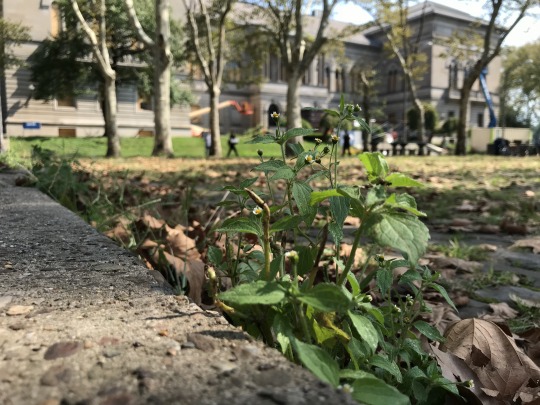
Peruvian daisy in a sidewalk crack
You can see a surprising amount of diversity in sidewalk cracks. Pictured here thriving in a sidewalk crack outside the museum is Galinsoga quadriradiata, commonly known as Peruvian daisy.  This species is common to urban environments.  So common to Pittsburgh, it is even known as “Pittsburgh Weed.”

What about urban diversity captured in the museum herbarium?  Of the 170,000+ plant specimens collected in Pennsylvania alone, over 15,000 (!) were explicitly described by the collector as growing in a human-made habitat (defined broadly, including words such as urban, sidewalk crack, vacant lot, roadside, railway, waste area, industrial, etc).

Despite the importance of appreciating life in human-dominated environments, it is also important to recognize the inherent and functional value of “pristine” nature. Managing for the “natural” is one of many difficult topics to tackle in the Anthropocene. What exactly is nature?  What should nature be?  Is there inherent value in all species? What species are priorities to conserve? How do we balance the perceived needs of human society with that of biodiversity?

These are just some of the many questions without easy answers.  But as we define our collective future in the Anthropocene, let’s always appreciate “botany near home.”

–

For more on the urban plants of Pittsburgh, be sure to check out the book Wild Urban Plants of the Northeast published in 2010 by Peter Del Tredici. https://librarycatalog.einetwork.net/Record/.b29413795

Also, be sure to check out the recent activity book published by the Cleveland Museum of Natural History.  It was designed for use by parents and teachers to engage young people with nature, even in the city.

Mason Heberling is a Postdoctoral Research Fellow in the Section of Botany at the Carnegie Museum of Natural History. Museum employees are encouraged to blog about their unique experiences working at the museum.

Botanists at the Carnegie Museum of Natural History have embarked on a three-year project to digitize nearly 190,000 plant specimens collected in the region, making images and other data publicly available online. This effort is part of the Mid-Atlantic Megalopolis Project (mamdigitization.org), a network of thirteen herbaria spanning the densely populated urban corridor from Washington, D.C. to New York City to achieve a greater understanding of our urban areas, including the unique industrial and environmental history of the greater Pittsburgh region. This project is made possible by the National Science Foundation under grant no. 1801022. Any opinions, findings, and conclusions or recommendations expressed in this material are those of the author(s) and do not necessarily reflect the views of the National Science Foundation.

Filed Under: Blog Tagged With: Anthropocene, Botany, Mason Heberling, nature, Otto Jennings, plants

October 2, 2018 by wpengine

Collected on This Day in 1982

by Mason Heberling

Corn is a staple crop known well by many across the world.  Corn is used in a variety of ways including human food (from corn on the cob to corn syrup), animal feed, ethanol production, and especially this time of year, fall decoration and corn mazes. Corn is an economically important crop worldwide, with over 81 acres expected to have been harvested in the US alone this year.  But where did this plant come from?

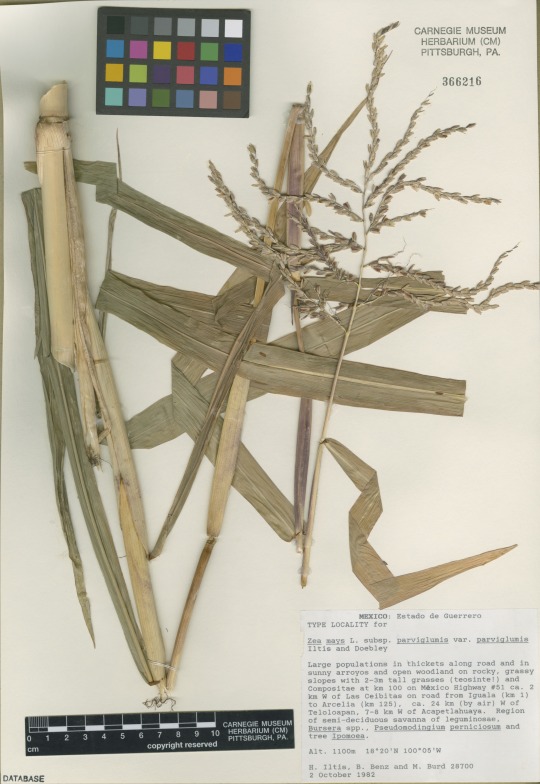
corn specimen

Corn, better known to many as maize (Zea mays), is a domesticated plant.  Yes, plants can be domesticated, just as your pets.  Corn was domesticated from a wild grass species known as teosinte in Mexico approximately 8,700 years ago.  Like many other food crops, corn was domesticated by humans through artificial selection – that is, through selective breeding for traits of interest over many generations, causing the evolution of a species.  In the case of corn, teosinte evolved through human intervention by selecting seed from plants with desirable traits (such as large cobs), planting those seeds, again selecting the “best” plants, and repeating over decades.  Eventually, teosinte evolved from a many branching grass with small seed cobs to what we recognize as corn today – tall, unbranched plants with large, tasty cobs.

This specimen is of a species of teosinte (Zea mays subspecies parviglumis) that is thought to be the close relative of the domesticated crop we know today (Zea mays subspecies mays).  This specimen was collected near the site of domestication in Mexico on October 2, 1982 by Hugh Iltis, a botanist and geneticist at the University of Wisconsin-Madison who studied teosinte species, and an influential conservationist.   Note the species name on the label “Zea mays L. subsp. parviglumis var. parviglumis Iltis and Doebley” – his name at the end denotes Iltis was one of the scientists who named the taxonomic variety new to science in 1980. It was also collected in the “type locality,” meaning from the same spot where the specimen used to describe the species was collected.

Botanists at the Carnegie Museum of Natural History share digital specimens from the herbarium on dates they were collected. They have embarked on a three-year project to digitize nearly 190,000 plant specimens collected in the region, making images and other data publicly available online. This effort is part of the Mid-Atlantic Megalopolis Project (mamdigitization.org), a network of thirteen herbaria spanning the densely populated urban corridor from Washington, D.C. to New York City to achieve a greater understanding of our urban areas, including the unique industrial and environmental history of the greater Pittsburgh region. This project is made possible by the National Science Foundation under grant no. 1801022.  

Filed Under: Blog Tagged With: agriculture, Botany, collected on this day, Mason Heberling, plants

September 18, 2018 by wpengine

Hidden Treasure of Pittsburgh Found

by Bonnie Isaac

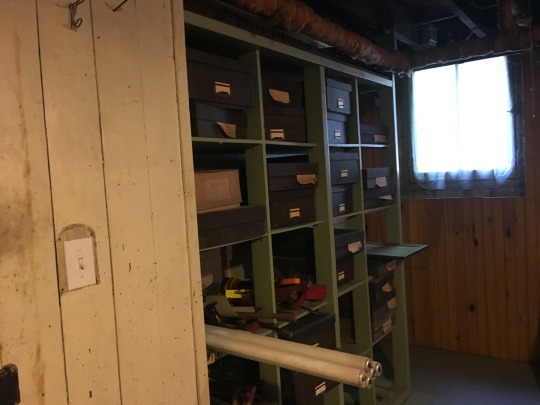
Recently I received a call from a woman who had bought an estate and discovered a hidden treasure in the basement. The basement contained 28 boxes of herbarium specimens. These boxes contained the private herbarium of Charles Boardman. Boardman was a research associate of Botany here at the museum from 1951 until his death on January 5, 1983. He had built his own herbarium space in his basement. These specimens are already mounted and in remarkably good shape for having been stored in a basement unattended for over 30 years.

Herbarium space built in the basement of Charles Boardman’s house with boxes of specimens.

Amazingly enough, there was also a letter with the collection with some details about his life. Charles Boardman was born in Buffalo, New York in 1903. Mr. Boardman attended the Massachusetts Institute of Technology and became a professional engineer. Charles was especially interested in mosses which led to his affiliation with Carnegie’s own Otto Jennings. Boardman accompanied Jennings on many field trips and collected specimens for the Manual of Mosses of Western Pennsylvania written and illustrated by Jennings. Boardman’s moss collection was donated to Duke University at his request shortly after his death. His vascular plant collection remained hidden in his basement until just a few weeks ago.

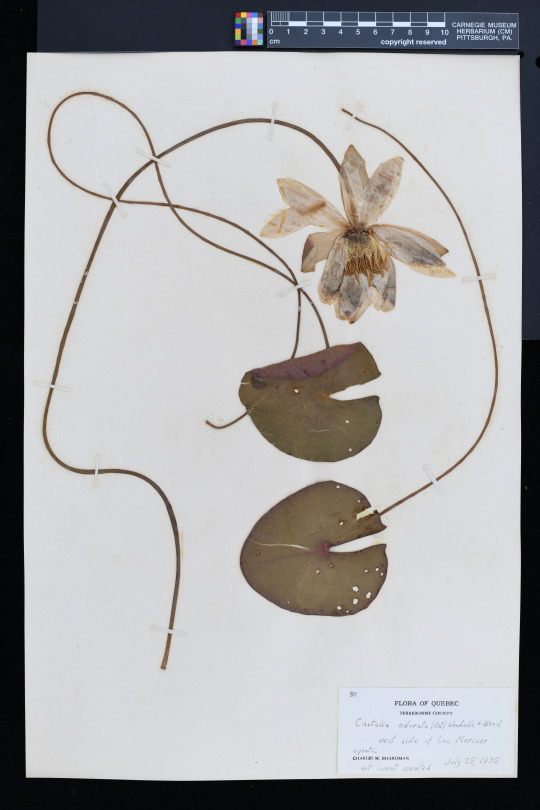
Water lily specimen
Water lily specimen found in Boardman’s personal herbarium.

Most of the specimens are from the 1930’s and 1940’s collected from Pennsylvania and beyond. In the coming weeks and months, we will process this amazing gift to see how many specimens are in this hidden treasure and put them into the main herbarium here at the museum for researchers to use in the future. You never know where a historic treasure may be lurking.

Bonnie Isaac is the Collection Manager in the Section of Botany. Museum employees are encouraged to blog about their unique experiences and knowledge gained from working at the museum.
Filed Under: Blog Tagged With: Bonnie Isaac, Botany, Charles Boardman, herbarium, Mason Heberling, Pittsburgh, plants

  • « Go to Previous Page
  • Page 1
  • Interim pages omitted …
  • Page 3
  • Page 4
  • Page 5
  • Page 6
  • Page 7
  • Go to Next Page »

sidebar

About

  • Mission & Commitments
  • Directors Team
  • Museum History

Get Involved

  • Volunteer
  • Membership
  • Carnegie Discoverers
  • Donate
  • Employment
  • Events

Bring a Group

  • Groups of 10 or More
  • Birthday Parties at the Museum
  • Field Trips

Powdermill

  • Powdermill Nature Reserve
  • Powdermill Field Trips
  • Powdermill Staff
  • Research at Powdermill

More Information

  • Image Permission Requests
  • Science Stories
  • Accessibility
  • Shopping Cart
  • Contact
  • Visitor Policies
One of the Four Carnegie Museums | © Carnegie Institute | Privacy Policy | Terms of Use | Accessibility
Rad works here logo