• Skip to primary navigation
  • Skip to main content
  • Skip to primary sidebar

Carnegie Museum of Natural History

One of the Four Carnegie Museums of Pittsburgh

  • Visit
    • Buy Tickets
    • Visitor Information
    • Exhibitions
    • Events
    • Dining at the Museum
    • Celebrate at the Museum
    • Powdermill Nature Reserve
    • Event Venue Rental
  • Learn
    • Field Trips
    • Educator Information
    • Programs at the Museum
    • Bring the Museum to You
    • Guided Programs FAQ
    • Programs Online
    • Climate and Rural Systems Partnership
  • Research
    • Scientific Sections
    • Science Stories
    • Science Videos
    • Senior Science & Research Staff
    • Museum Library
    • Science Seminars
    • Scientific Publications
    • Specimen and Artifact Identification
  • About
    • Mission & Commitments
    • Directors Team
    • Museum History
  • Tickets
  • Give
  • Shop

reptiles

September 13, 2018 by wpengine

A Herp Collection Mystery

by Jennifer Sheridan
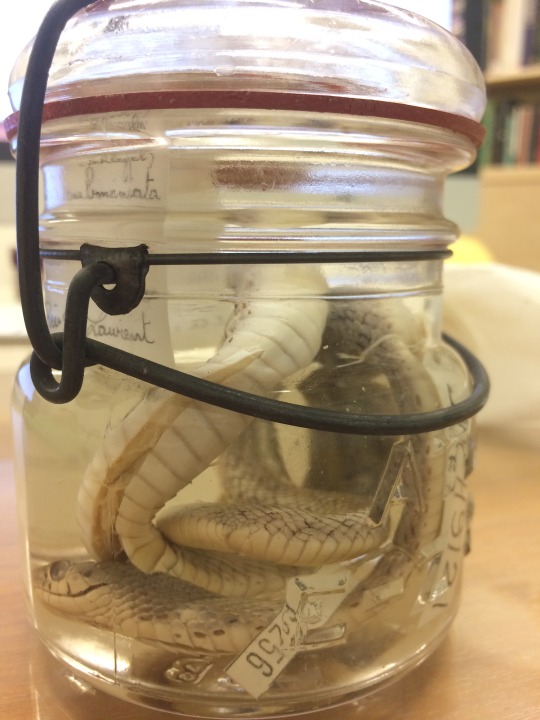
snake specimen

Part of the fun of being a new curator is getting to know the collections. In preparing for an upcoming talk (Scientists Live on Facebook on September 19th), I was sorting through our collections database to see what specimens we have from Southeast Asia, where I do most of my research. I came across a record that intrigued me: a fairly common snake (Rhabdophis subminiatus) from a potentially uncommon locality. The jar label says “Indonesia, Java”—Java being one of the islands in the Indonesian archipelago, which also happens to be the world’s most populous island. But the exact location detail is what caught my eye: Ternate.
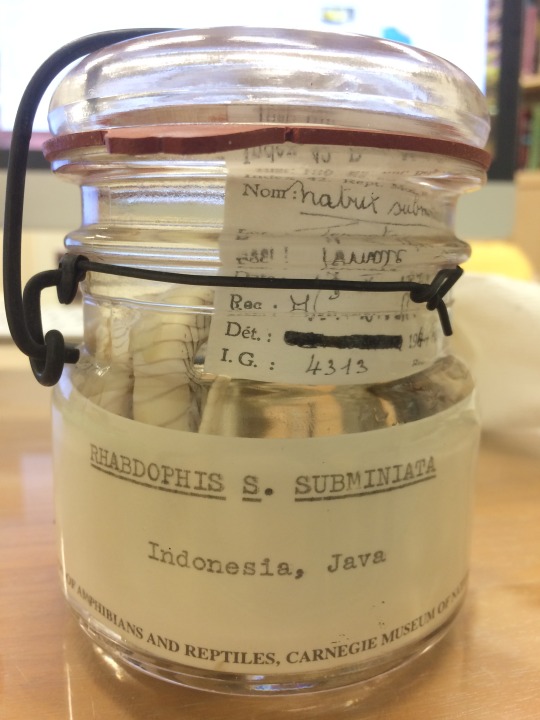
snake specimen from Indonesia

If you happen to be from Southeast Asia or you’re a biogeography buff, you may know that Ternate is not in fact on Java, but is itself a tiny island in eastern Indonesia, off the coast of Halmahera, which is part of the Maluku group. Biogeographically this area is interesting because it lies just east of Wallace’s Line, an imaginary dividing line that separates the flora and fauna of Sundaland (mainland Southeast Asia) from that of Austronesia (Australia, New Guinea, and associated islands). This area played a key role in our understanding of biogeography because it was while he was traveling across Indonesia that Alfred Russel Wallace noticed that there was a very distinct change in the species of plants and animals found in Borneo and Bali (west of the line), compared to those on Sulawesi and Lombok (east of the line), despite the fact that those islands are not separated by a large distance. He noted this in his journals and scientists later named this dividing line after him, once they learned that the plants and animals west of the line originated in mainland SE Asia, while those east of the line originated in Australia.

But Ternate is interesting not simply because of its geographic location, but because of Wallace’s relationship to it. Ternate is where Wallace was when he wrote his famous letter to Charles Darwin in 1858, while laid up in bed with fever, explaining to Darwin his idea of evolution by natural selection. Amazingly these two people had arrived at the same idea totally independently of one another, half a world apart. They had shared correspondence prior to 1858, and it was this letter from Wallace that prompted Darwin to jointly publish his own work alongside Wallace’s, thus introducing to the world for the first time the idea of evolution by natural selection, which has allowed us to understand the natural world.
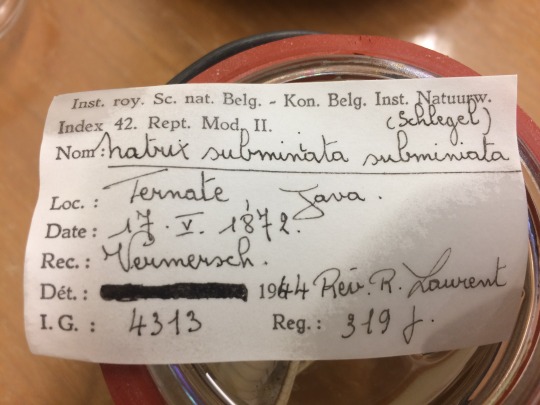
notes about the snake specimen from Indonesia

Coming back to the specimen, I had been hoping that perhaps it was collected by Wallace or one of his team, but the record is from 1872, ten years after Wallace had returned to England. The listed collector, Vermersch, is not a collector known to me or other herpetologists I’ve checked with who work in SE Asia, and we have no additional details on the specimen. Given that I cannot find a record of a city called Ternate on the island of Java, and the fact that all of Indonesia may have been known as the Java Sultanate at the time, my guess is that this specimen is actually from Ternate, and not Java proper. This specimen also has the distinction of being one of our oldest, so for me, and anyone else studying biogeography of SE Asia, this specimen becomes doubly interesting and valuable, and will definitely be one of the highlights of any upcoming tours of the Alcohol House! I’m looking forward to finding more secret treasures as I get to know our collection.

Jennifer A. Sheridan is the Assistant Curator in the Section of Herpetology at the Carnegie Museum of Natural History. Museum employees are encouraged to blog about their unique experiences and knowledge gained from working at the museum.

Filed Under: Blog Tagged With: Alfred Russel Wallace, amphibians, amphibians and reptiles, herpetology, Mason Heberling, reptiles, snakes

July 26, 2018 by wpengine

New Member of the Section of Herpetology

By Jennifer Sheridan

The Section of Herpetology has welcomed a new curator—me! I’m happy to be writing this blog post as a way of introducing myself and to be joining the Carnegie Museums family.

I moved here from Singapore, where I was Assistant Professor of Environmental Studies for the past four years at Yale-NUS College, a small liberal-arts college entering its sixth year of operation. It was fantastic, but I’m very much looking forward to my new role as curator. People often ask me what exactly a curator does, and in my case, it won’t be too different from my job as a professor: my time will be divided between research & curation, outreach & education, and service to the museum (providing input for exhibits, for example). At Yale-NUS, about two-thirds of my time was teaching (education) and service, and about one-third was research, so I’m looking forward to being able to devote a larger portion of my time (closer to 50%) to research now that I’m here.

Additionally, it’s exciting to have such a great collection on hand with which to answer questions about ecological responses to climate change, one of the main foci of my research. In fact, a recent paper of mine relied heavily on specimens from the Carnegie Museum of Natural History. My co-authors and I used more than 350 specimens from this museum, plus more than 900 specimens from 15 other museums, collected between 1901–2000, to examine how wood frog body size and breeding have shifted in response to climate change.

maps showing body size changes
Image credit: Nick Caruso

We found that breeding and size shifted as predicted at broad spatial scales, but when we examined the data at finer spatial scales, local changes in climate did not accurately predict local body size changes. This suggests that climate itself is not the driving factor of observed body size changes, but rather that there is another mechanism driving such changes, that also correlates with climate. Moving forward, I’ll be combining examinations of the collections with field work to uncover other ways that amphibians have responded to climate change, whether through shifts in body size, breeding date, or geographic range, and what impacts that might have on ecosystem function. I’m excited to be here with such great resources for answering these interesting questions!

Jennifer Sheridan is the Assistant Curator in the Section of Herpetology at the Carnegie Museum of Natural History. Museum employees are encouraged to blog about their unique experiences and knowledge gained from working at the museum.
Filed Under: Blog Tagged With: amphibians, Anthropocene, climate change, herpetology, Jennifer Sheridan, reptiles

June 20, 2018 by wpengine

Snakes, snails, and puppy dog tails

By: Kaylin Martin, M.Sc. and Timothy A. Pearce, PhD

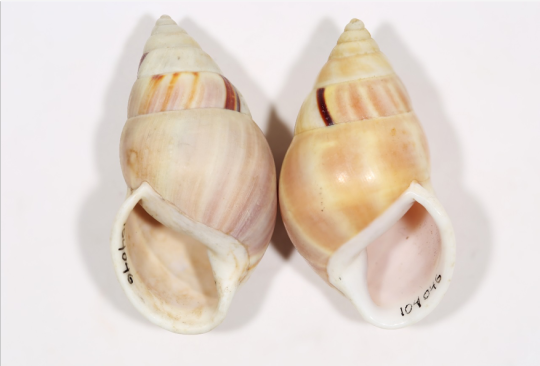
Asymmetries in nature are noteworthy because they usually mean something interesting is going on. Most snail-eating snakes in the family Pareidae are remarkable for having more teeth on the right lower jaw than on the left. The vast majority of snails worldwide coil clockwise (dextral) while, in contrast, the counter-clockwise coiling (sinistral) snails tend to be scarce, usually on the order of 1/10,000 to 1/100,000.

Sinistral (left) versus dextral (right) of shells Amphidromus inversus. CM 104046.
Sinistral (left) versus dextral (right) of shells Amphidromus inversus. CM 104046. Photo by Kaylin Martin, M.Sc., 2018.

Recent experiments demonstrate that pareid snakes are more successful at eating dextrally coiling snails, evidently because having more teeth in the right jaw helps the snake to extract the snail’s body from the shell. Upon striking a dextral snail, with the aperture on the right, the snake advances and retracts its mandibles along the snail’s forebody. The sequential movements of this mandibular walk extract the snail’s soft body from its shell. Conversely, when a pareid snake strikes a sinistrally coiled snail, it finds the snail’s aperture on the left, and consequently the snake’s stereotypical right-handed behavior is less successful at grasping the snail’s body. The asymmetry in the snake’s mandibles means that sinistrally coiled snails escape predation by these snakes more often than do dextrally coiled snails.

Could the pareid snakes be an evolutionary force that favors sinistrally coiled snails? The ranges of Pareidae and Amphidromus almost entirely overlap, both groups occurring in Southeast Asia from China to Indonesia. Quite a few other land snail species in that part of the world are known to coil sinistrally, although in most of these other genera, the whole species is sinistral, rather than showing polymorphism (showing both forms) for coiling direction. The two facts, that sinistrally coiled snails escape predation more often, and that the ranges of the predator and the prey largely overlap, both support the idea that the asymmetry in the snake’s jaw provides an evolutionary force resulting in a greater proportion of sinistral snails in Southeast Asia. This conclusion was also reached in a study by Hoso et al. (2010).

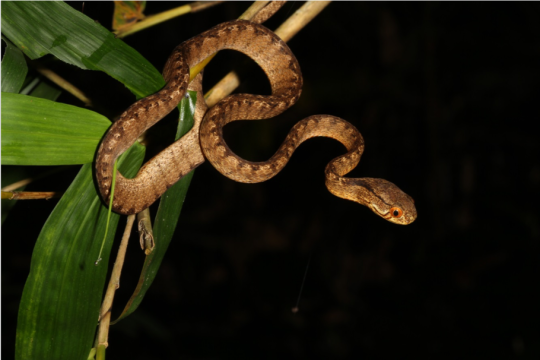
The snake Pareas carinatus and the snail Amphidromus inversus are both tree-dwelling. In controlled lab experiments, the snake is known to eat Amphidromus, as well as other genera of snails. However, we are not sure whether the snake actually eats Amphidromus inthe wild because data are scarce on Pareas diets in their natural environment. So, whether the snake could have influenced the unusual predominance of left handedness in Amphidromus species makes logical sense, but remains unresolved.

Pareas carinatus from Cat Tien, Vietnam
Pareas carinatus from Cat Tien, Vietnam.  Photo by Paul S. Freed, 2011.

Dozens of other snail eating snakes exist, for example many species in the genus Sibon throughout the tropical Americas, but their jaws do not show asymmetry, so they would not influence snail coiling direction.

We know of no other predator that is known to specialize in prey that have a particular “handedness.” Further studies on diets of pareid snakes would advance scientific understanding of specialized predator-prey interactions, ecological adaptation, and coevolution between the arboreal snakes and snails of southeast Asia.

And given that we are talking about snakes and snails, we must also mention puppy dog tails. The tails of many dogs do coil, and of those that coil, many of them coil off to the side. As judged by a survey of coiling dog tails in a Google Image search, dog tails that coil to the left or to the right appear to be about equally represented. So, puppy dog tail coiling direction also appears to be polymorphic…

Timothy A. Pearce, PhD, is the head and curator of collections of the Section of Mollusks at Carnegie Museum of Natural History. Kaylin Martin, M.Sc, is the curatorial assistant in the Section of Amphibians and Reptiles. Museum employees are encouraged to blog about their unique experiences and knowledge gained from working at the museum.
Literature Cited

Hoso, M., Kameda, Y., Wu, S.P., Asami, T., Kato, M. & Hori, M. 2010. A speciation gene for left–right reversal in snails results in anti-predator adaptation. Nature Communications, 1:133; DOI: 10.1038/ncomms1133.

Filed Under: Blog Tagged With: amphibians and reptiles, mollusks, reptiles, snails, snakes

April 2, 2018 by wpengine

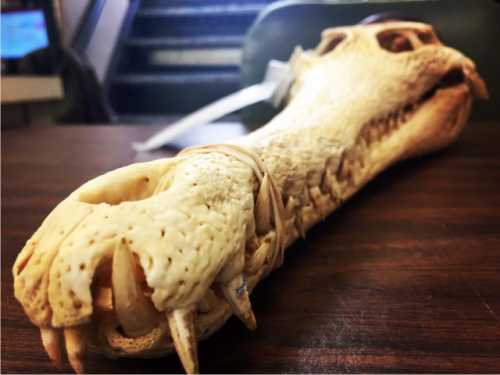
Slender-snouted crocodile skull

crocodile skull

This slender-snouted crocodile skull in Carnegie Museum of Natural History’s Alcohol House was used to determine that each African region had a unique crocodile species. You can see this skull and its story on display at the new We Are Nature. Look for the Alcohol House media interactive in the gallery!


This post was originally posted on our curatorial assistant’s Instagram, which features specimens in the museum’s historic Alcohol House.

Filed Under: Blog Tagged With: alcohol house, reptiles, We Are Nature, We Are Nature: Living in the Anthropocene

March 8, 2018 by wpengine

Ask a Scientist: What is inside the Alcohol House?

Curatorial Assistant Kaylin Martin gives us a brief tour of one of the museum’s fascinating hidden collections, the Alcohol House— home to more than 200,000 reptile and amphibian specimens that are jarred and preserved in alcohol.


Ask a Scientist is a new short video series where we ask our research staff questions about the millions of amazing objects and specimens stored in our collection. Tune in on YouTube, and submit your own questions via Twitter @CarnegieMNH.

Filed Under: Blog Tagged With: alcohol house, Kaylin Martin, reptiles

December 8, 2017 by wpengine

In a historic building at our museum

jars in the alchohol house

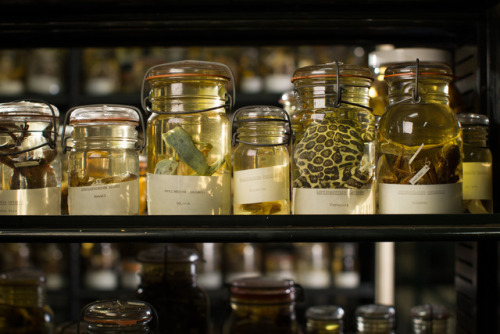
In a historic building at our museum, we have 1,223 species of amphibians and 2,467 species of reptiles in the collection. This building is called the Alcohol House because most of the specimens are stored in 70% ethanol alcohol.

Filed Under: Blog Tagged With: alcohol house, amphibians, reptiles

  • « Go to Previous Page
  • Page 1
  • Page 2
  • Page 3
  • Go to Next Page »

sidebar

About

  • Mission & Commitments
  • Directors Team
  • Museum History

Get Involved

  • Volunteer
  • Membership
  • Carnegie Discoverers
  • Donate
  • Employment
  • Events

Bring a Group

  • Groups of 10 or More
  • Birthday Parties at the Museum
  • Field Trips

Powdermill

  • Powdermill Nature Reserve
  • Powdermill Field Trips
  • Powdermill Staff
  • Research at Powdermill

More Information

  • Image Permission Requests
  • Science Stories
  • Accessibility
  • Shopping Cart
  • Contact
  • Visitor Policies
One of the Four Carnegie Museums | © Carnegie Institute | Privacy Policy | Terms of Use | Accessibility
Rad works here logo