• Skip to primary navigation
  • Skip to main content
  • Skip to primary sidebar

Carnegie Museum of Natural History

One of the Four Carnegie Museums of Pittsburgh

  • Visit
    • Buy Tickets
    • Visitor Information
    • Exhibitions
    • Events
    • Dining at the Museum
    • Celebrate at the Museum
    • Powdermill Nature Reserve
    • Event Venue Rental
  • Learn
    • Field Trips
    • Educator Information
    • Programs at the Museum
    • Bring the Museum to You
    • Guided Programs FAQ
    • Programs Online
    • Climate and Rural Systems Partnership
  • Research
    • Scientific Sections
    • Science Stories
    • Science Videos
    • Senior Science & Research Staff
    • Museum Library
    • Science Seminars
    • Scientific Publications
    • Specimen and Artifact Identification
  • About
    • Mission & Commitments
    • Directors Team
    • Museum History
  • Tickets
  • Give
  • Shop

RW Moriarty Science Seminars

February 11, 2022 by wpengine

Moriarty Science Seminar: The mysterious megaraptorids: giant-clawed meat-eating dinosaurs from the southern continents

R.W. Moriarty Science Seminar Presents: The mysterious megaraptorids: giant-clawed meat-eating dinosaurs from the southern continents

Speakers: Matt Lamanna, Carnegie Museum of Natural History
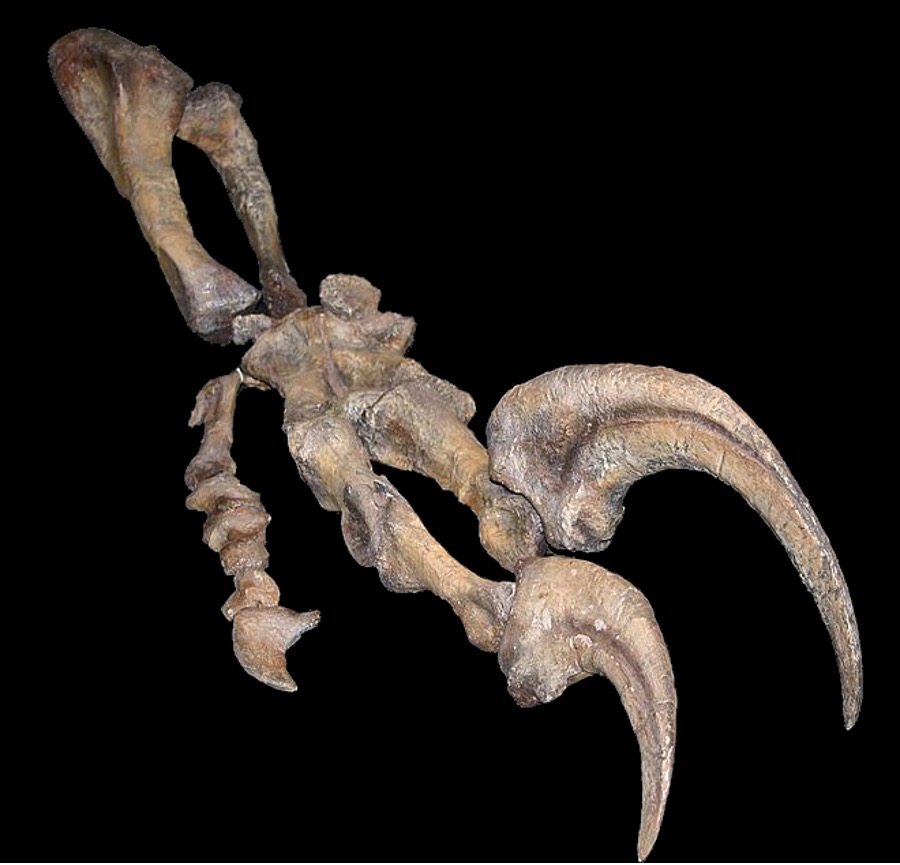
Articulated antebrachium (forearm) and manus (hand) of eponymous megaraptorid Megaraptor namunhuaiquii. The largest, innermost claw at right is approximately 40 cm (~16 inches) in length. Credit: Wikipedia (raffaele sergi from Pinerolo, Italia – dinosauri 013 Uploaded by FunkMonk).


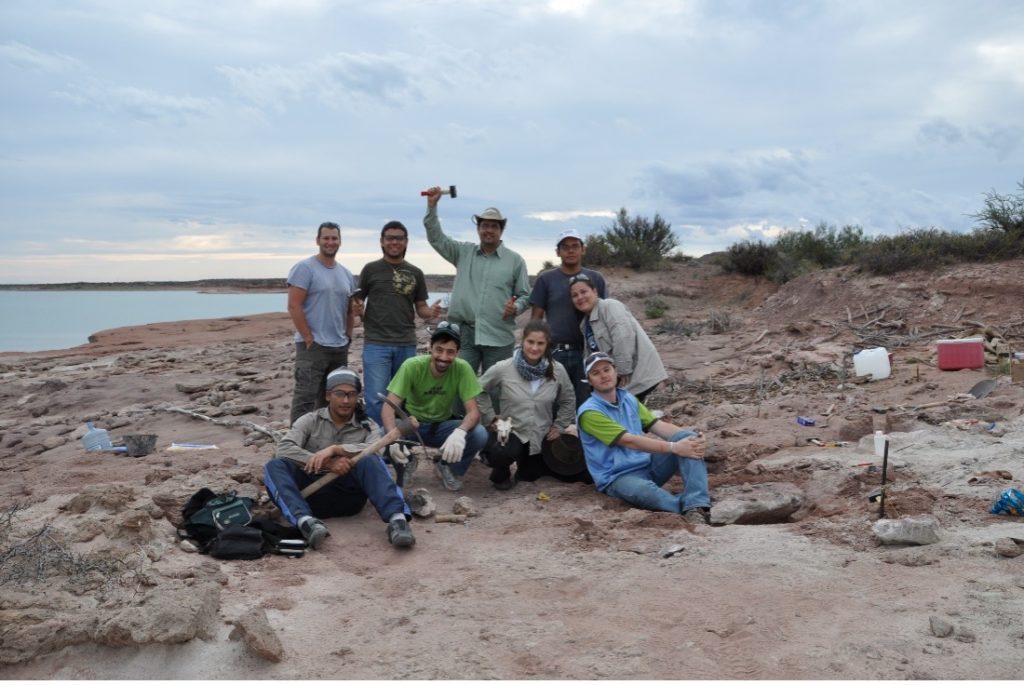
The field team celebrates the discovery of the most complete adult skeleton of the megaraptorid Megaraptor namunhuaiquii yet found, on the shore of Lago Barreales, Neuquén Province, northern Patagonia, Argentina. Credit: Matt Lamanna.

Abstract: Over the past quarter-century, paleontological field explorations in landmasses that once comprised the Southern Hemisphere supercontinent of Gondwana have yielded fossil finds representing a host of new and unusual dinosaurs. Among the most extraordinary of these are Megaraptoridae, an enigmatic group of large-bodied, Cretaceous-aged (~125–66 million-year-old) theropods (generally predatory dinosaurs) characterized by low and elongate skulls, proportionally small but sharp teeth, extensively air-filled bones, and, most strikingly, powerfully built forelimbs tipped with enormous claws on the innermost two digits. In this R.W. Moriarty Science Seminar, Dr. Lamanna will present several of he and his Argentine collaborators’ recent megaraptorid discoveries and their implications for scientific understanding of the anatomy, phylogenetic relationships, and paleoecology of these mysterious Cretaceous carnivores. Among these finds are two exceptionally preserved skeletons that cast significant new light on megaraptorid morphology and evolutionary history, strengthening the hypothesis that these animals are Gondwanan cousins of tyrannosaurids, the theropod group that includes the notorious Tyrannosaurus rex.

Bio: Matt Lamanna is the Mary R. Dawson Associate Curator of Vertebrate Paleontology and the principal dinosaur researcher at Carnegie Museum of Natural History. Born and raised in the Finger Lakes region of Upstate New York, he received his B.Sc. from Hobart College in 1997 and his M.Sc. and Ph.D. from the University of Pennsylvania in 1999 and 2004, respectively. Within the past 25 years, he has directed or co-directed field expeditions to Antarctica, Argentina, Australia, China, Croatia, Egypt, and Greenland that have resulted in the discovery of numerous new species of dinosaurs and other fossil animals from the Cretaceous Period, the third and final time period of the Age of Dinosaurs; indeed, he is one of only a handful of paleontologists to have found dinosaur fossils on all seven continents. Lamanna served as chief scientific advisor to Carnegie Museum of Natural History’s $36M Dinosaurs in Their Time exhibition and has appeared on television programs for PBS (NOVA), the Discovery Channel, the History Channel, A&E, the Science Channel, and more.

Register Now

Tagged With: RW Moriarty Science Seminars

February 2, 2022 by wpengine

Moriarty Science Seminar: Rethinking Plant Heat Tolerances and Photosynthetic Strategies of Tropical Plants

R.W. Moriarty Science Seminar Presents: Rethinking Plant Heat Tolerances and Photosynthetic Strategies of Tropical Plants

Speakers: Timothy Perez

Rethinking Plant Heat Tolerances and Photosynthetic Strategies of Tropical Plants

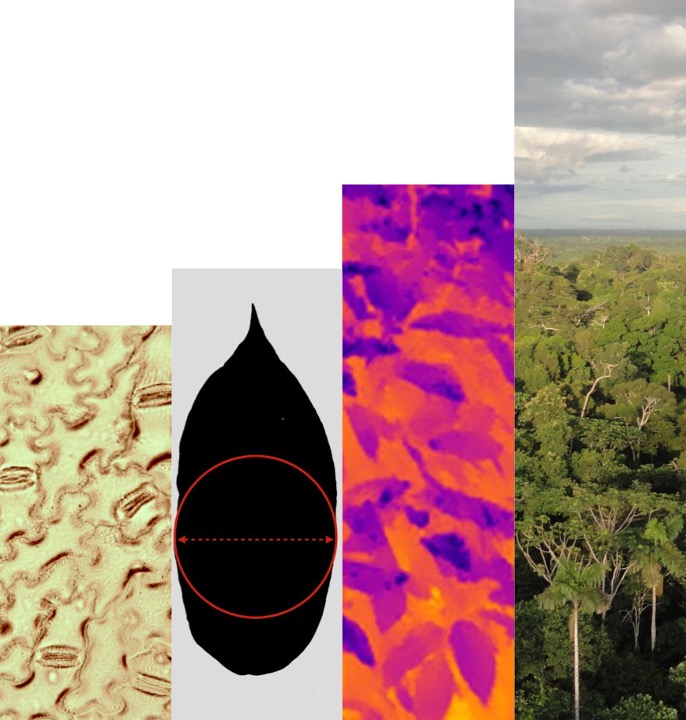
Stomata and leaf size thermoregulatory traits, a thermograph of leaves, and a tropical forest.

Abstract: As climate changes so too do the compositions of terrestrial plant communities that sequester carbon and mitigate climate change. However, the physiological mechanisms underpinning these changes are unclear. To understand these mechanisms, Perez and collaborators studied the photosynthetic heat tolerances (PHTs) and carbon assimilation strategies of tropical plants. In this talk he discusses their findings, which suggest that scientists need to rethink how PHTs are measured and assumed to influence plant performance. He also presents research that highlights how plant PHTs are unlikely to improve carbon assimilation at high temperatures, but may characterize thermal generalists with slow resource acquisition strategies. Finally, he presents a case-study using the genus Scalesia, endemic to the Galapagos, that indicates how climate selects for different photosynthetic strategies.

Bio: Timothy grew up in Upstate New York and in 2010 obtained a BSc in plant biology from the University of Vermont. After four years of working for NGO’s, the Bureau of Land Management, and as a research assistant, Timothy started a PhD in the Feeley Lab at the University of Miami. After obtaining his PhD in 2019, Timothy began a postdoctoral position in the Michaletz Lab at the University of British Columbia in Vancouver, Canada, where he is currently a Killam Postdoctoral Scholar. Timothy’s research focuses on how plant ecophysiology can be used to understand plant responses to climate change, and he is motivated by a desire to develop tools that aid plant conservation.

Register Now

Tagged With: RW Moriarty Science Seminars

January 11, 2022 by Kathleen

Moriarty Science Seminar: Understanding the Mid-Atlantic Flora…One Specimen at a Time

R.W. Moriarty Science Seminar Presents: Understanding the Mid-Atlantic Flora…One Specimen at a Time

Speakers: Cindy Skema, Morris Arboretum of the University of Pennsylvania

Plant collections and their archiving in herbaria form a cornerstone in the foundation of plant science studies. We will discuss the why, how, and where of this work, as well as the process of digitization, i.e., how we bring these invaluable specimens into the digital realm. The Mid-Atlantic Megalopolis (MAM) Project, a National Science Foundation funded collaboration between 13 institutions including Carnegie Museum of Natural History, has enabled the digitization of >1.2 million specimens since 2016 and the creation of a virtual consortium of herbaria throughout the Mid-Atlantic. I will introduce the project, its participants, and outcomes. We will end with a consideration of Ripariosida hermaphrodita (Virginia mallow), a case study that uses MAM data to better understand the biology of a plant that is threatened in the Mid-Atlantic region.

Photo description:
Close-up of a high resolution image of an herbarium specimen of Cornus florida (flowering dogwood), taken as part of the MAM Project’s herbarium digitization efforts. Copyright Morris Arboretum of the University of Pennsylvania.

Register Now

Tagged With: RW Moriarty Science Seminars

December 22, 2021 by Kathleen

Moriarty Science Seminar: Resilience and adaptation to climate change and environmental shifts in ancient Egypt and Nubia

R.W. Moriarty Science Seminar Presents: Resilience and adaptation to climate change and environmental shifts in ancient Egypt and Nubia- the 4.2 ka BP and 3.2 ka BP events reconsidered

Speakers: Nadine Moeller and Emilie Sarrazin

In the history of ancient Egypt, two periods of important societal change have often been linked to major climatic events: the transition from the Old Kingdom to the First Intermediate Period, connected with the so-called “4.2 ka BP event,” and the end of the New Kingdom, roughly associated with the “3.2 ka BP event.” In both instances, seemingly unprecedented periods of aridification are thought to have had a direct impact on the (dis)organization of ancient societies in Egypt, Nubia, and the broader Near East. While the appeal of such a theory is undeniable, the proxy data on which this narrative is based are rarely critically assessed, and the link between the environmental and historical data is rarely conclusively made.

This lecture proposes to re-examine the evidence for both climatic and sociocultural changes at the end of the Old and the New Kingdoms in Egypt and Nubia, with a particular focus on settlement data. The growth, contraction, shifting, and abandonment of sites often reflect important changes happening beyond their bounds. In this regard, the benefits and limitations of using proxy data to explain changes in those settlement patterns will be reviewed, particularly when these changes coincided with periods traditionally associated with societal “collapse” in the scholarly literature.

Register Now

Event photograph copyright Gregory Marouard

Tagged With: RW Moriarty Science Seminars

November 22, 2021 by Kathleen

Moriarty Science Seminar: Is climate change shading out our forest wildflowers?

R.W. Moriarty Science Seminar Presents: Is climate change shading out our forest wildflowers?

Speaker: Ben Lee, Ph.D., Botany at CMNH

Description coming soon.

Register Now

Tagged With: RW Moriarty Science Seminars

November 22, 2021 by Kathleen

Moriarty Science Seminar: Building a Practice of Community Archaeology at Indian Run/Pandenarium

R.W. Moriarty Science Seminar Presents: Building a Practice of Community Archaeology at Indian Run/Pandenarium (Site 36ME253)

Speaker: Angela Jaillet-Wentling, PA DCNR

At the Indian Run or Pandenarium settlement site (36ME253), archaeology helps shine a light on the story of a free African American community in the Antebellum North. Twentieth century histories focused heavily on the enslavers and the white community surrounding the settlement, but the archaeological insight provided by the work undertaken by graduate students at the Indiana University of Pennsylvania (Angela Jaillet-Wentling, 2011 and Samantha Taylor, 2018) has begun to tell the stories of the Black community itself. By fleshing out the history lying underfoot, archaeological investigation has helped to generate descendant interest and involvement moving forward, as well as bridge the gap from past to present peoples. As one of several collaborators, work has focused not on a retelling but on developing a more nuanced and in-depth understanding of the settlement’s history. By adding more context to our understanding, a far more complex picture emerges of how the inhabitants fashioned a life of their own making from a structured landscape.

Register Now

Tagged With: RW Moriarty Science Seminars

  • « Go to Previous Page
  • Page 1
  • Interim pages omitted …
  • Page 8
  • Page 9
  • Page 10
  • Page 11
  • Page 12
  • Go to Next Page »

sidebar

About

  • Mission & Commitments
  • Directors Team
  • Museum History

Get Involved

  • Volunteer
  • Membership
  • Carnegie Discoverers
  • Donate
  • Employment
  • Events

Bring a Group

  • Groups of 10 or More
  • Birthday Parties at the Museum
  • Field Trips

Powdermill

  • Powdermill Nature Reserve
  • Powdermill Field Trips
  • Powdermill Staff
  • Research at Powdermill

More Information

  • Image Permission Requests
  • Science Stories
  • Accessibility
  • Shopping Cart
  • Contact
  • Visitor Policies
One of the Four Carnegie Museums | © Carnegie Institute | Privacy Policy | Terms of Use | Accessibility
Rad works here logo