• Skip to primary navigation
  • Skip to main content
  • Skip to primary sidebar

Carnegie Museum of Natural History

One of the Four Carnegie Museums of Pittsburgh

  • Visit
    • Buy Tickets
    • Visitor Information
    • Exhibitions
    • Events
    • Dining at the Museum
    • Celebrate at the Museum
    • Powdermill Nature Reserve
    • Event Venue Rental
  • Learn
    • Field Trips
    • Educator Information
    • Programs at the Museum
    • Bring the Museum to You
    • Guided Programs FAQ
    • Programs Online
    • Climate and Rural Systems Partnership
  • Research
    • Scientific Sections
    • Science Stories
    • Science Videos
    • Senior Science & Research Staff
    • Museum Library
    • Science Seminars
    • Scientific Publications
    • Specimen and Artifact Identification
  • About
    • Mission & Commitments
    • Directors Team
    • Museum History
  • Tickets
  • Give
  • Shop

Sabrina Spiher Robinson

August 2, 2024 by Erin Southerland

The Moon Snails Neverita duplicata and Euspira heros: Cannibal Predators of the Sea! … who also enjoy a nice algae salad

by Sabrina Spiher Robinson and Tim Pearce

Imagine you’re a clam, hanging out in your cozy little hole under shallow ocean water, with your siphon out, just filtering lunch out of the water current, happy as a…you. Then, all of a sudden, something flips you gently out of that hole.

You pull in your siphon and your foot, clamp shut your valves. You’re pretty tough to get open, strong adductor muscles keep your two shells held tightly together, and you’ve survived danger by closing up shop and waiting before. And nothing seems to be trying to pry you open, even though something has wrapped itself around you, and is now pulling you down into the sand with it. Then:

scrape scrape scrape

scrape scrape scrape

scrape scrape scrape

Or imagine you’re a young moon snail, Neverita duplicata – one of the most common species of moon snails that live on the eastern seaboard of North America. You’re a gastropod with a lovely round grayish shell, such that people call it a “shark eye,” and you’ve got a huge foot that can come out of that shell and cover almost all of your body – or all of your prey’s body!  But at the moment you’re just cruising along the sand, slurping at a bit of detritus. Suddenly, you’re enveloped by something. You instinctively pull your body into your shell and tightly close your door-like operculum for safety. Then your aperture is covered by…something familiar?  Then:

scrape scrape scrape

scrape scrape scrape

scrape scrape scrape

It doesn’t matter how tightly the clam clamps, or how mighty the young snail’s foot, both are going to come to the same fate, slowly. 

scrape scrape scrape

scrape scrape scrape

scrape scrape scrape

Eventually, your shell is penetrated. A rasping radula – a mollusk’s organ containing its teeth – has bored a hole through your shell with the help of a gentle acid secreted by a gland by the mouth, and then you feel a burning: gastric juices are being pumped through the hole to begin to digest your flesh. Your killer begins to slurp you up, right where you lie, wrapped up in their hug, as you’re slowly eaten alive.

The young moon snail might have figured out who its killer was before the end: that’s how it eats too. The thing is, moon snails are cannibals, the larger preying on the smaller.

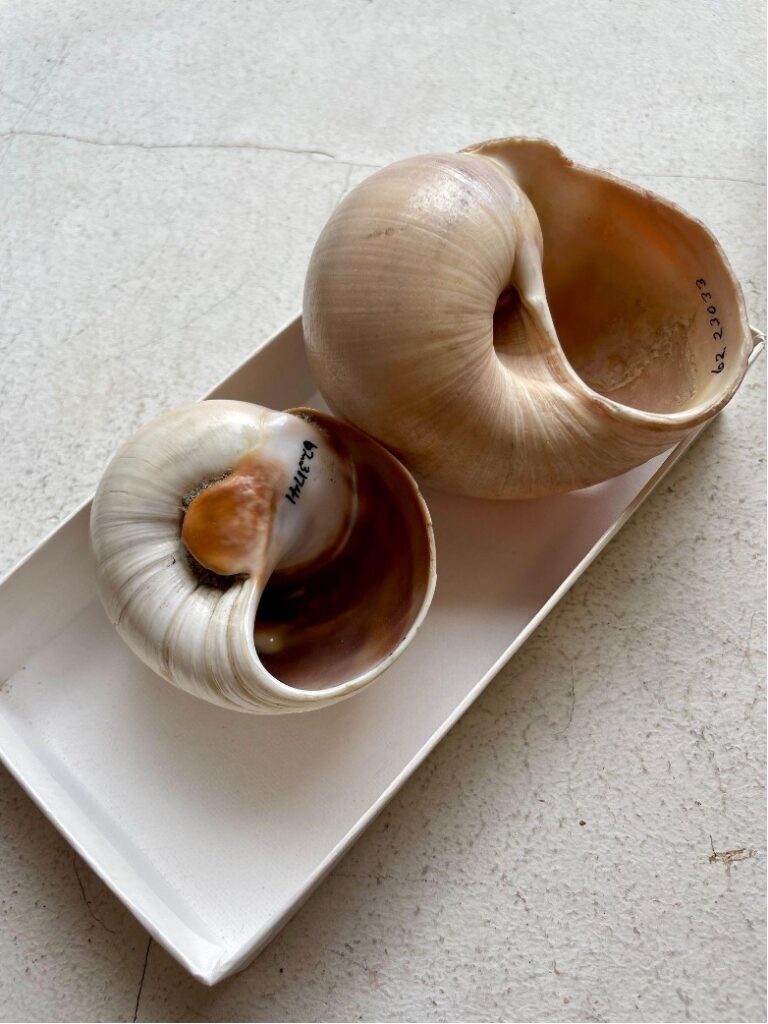
There are hundreds of kinds of moon snails all over the world, but the ones that are probably most familiar to beach goers on the eastern coast of the USA are two species also commonly called “shark eyes” – Neverita duplicata and Euspira heros. From the top, they’re hard to tell apart (the spire on E. heros is a little pointier than on N. duplicata) but once you flip them over, it becomes easy to distinguish them: N. duplicata, the Atlantic moon snail, has a big callus over its umbilicus, and E. heros, the Northern moon snail, doesn’t.  Technically, only the Atlantic moon snail has a shark eye shell, but since they’re often mixed up with Northern moon snails, the term shark eye is sometimes applied to them too. 

N. duplicata, left; E. heros, right. Photo credit: Sabrina Spiher Robinson

These two moon snails aren’t the only marine gastropods that drill their prey and digest them alive to suck them up for dinner – lots of marine gastropods are predatory drills. But moon snails have distinct boreholes that allow people to identify when a shell has been bored specifically by a moon snail – scientists can even tell the difference between the Atlantic and Northern species’ holes. These “countersunk” holes look like little funnels, wider on the outside of the shell than on the inside. Other kinds of drilling snails leave behind straight-sided holes.

These unique boreholes allow scientists to track the evolution of moon snails from the Miocene to recent times. One group of researchers found that moon snail cannibalism might have driven a kind of coevolution between and among moon snail species. Because one moon snail can make dangerous prey for a fellow moon snail predator, over time moon snails seem to have learned to drill other moon snails at a spot on their shells that allowed the predator to cover the prey’s entire aperture, preventing the strong foot of their prey from fighting back. This means boring through a thicker part of the shell, however, so it takes longer to hold down and bore through the prey snail’s shell. But the record of natural selection in fossils throughout time suggests the added cost must be worth the benefit of moving target drilling zones. Meanwhile, small moon snails almost always lose out to larger ones when attacked, so both N. duplicata and E. heros have evolved to get bigger and bigger over time – although a bigger snail is also a more enticing snack target. Same-sized moon snails don’t even bother to attack one another, suggesting that a fellow moon snail is just too dangerous a prey when the winner of the battle between snails is a toss-up. As evidence that these are often battles between predator and prey snails, there are many incomplete boreholes found – a moon snail started attacking another moon snail, but only managed to get the job halfway done before the prey moon snail escaped. [1]

To be fair, moon snails aren’t just vicious cannibals – they also enjoy the snail equivalent of a nice salad. Another study that analyzed the tissues of moon snails revealed that their bodies have the chemical signatures of omnivores. The technique is called stable isotope analysis, wherein scientists use the ratio of carbon and nitrogen isotopes in an animal’s body to determine its diet, in broad terms. Carbon exists in three isotope forms, meaning the number of protons is the same in all three atoms, but the number of neutrons is different in each (carbon-12, carbon-13, and carbon-14); Nitrogen also has three isotope forms, nitrogen-14, nitrogen-15, and nitrogen-16. The vast majority of carbon on Earth is carbon-12, which is a stable isotope, as is carbon-13, meaning they do not decay over time; nitrogen-14 and -15 are stable, and make up the vast majority of nitrogen atoms. Different plants and animals have different ratios of carbon and nitrogen isotopes. The ratios of isotopes in plants and animals differ and these differences transfer to the body of the consumer, and so the isotope ratios of a meat-eating animal will differ from those of a vegetarian animal, and an omnivorous animal will be different again. Scientists were surprised to find that wild moon snail isotopes suggested they also ate non-animals, so to check their findings they fed captive moon snails nothing but clams, and then tested their isotopes – which looked exactly as one would expect in an all-meat diet. Apparently the wild moon snails were actually eating things other than meat, probably algae. This was a big deal, since so much of the literature on moon snails is about their predatory drilling! [2]

Moon snail shells are a relatively common find on east-coast beaches (and another moon snail, Euspira lewisii, is a common find on the west coast), but if you’re at the beach this summer, there’s more to look for than just shells – moon snails also leave behind very distinctive egg nests, often called “sand collars.” The fertilized female snail nestles into a little hole in the sand (as all moon snails do during the day when they’re not feeding) and produces a sheet of mucus, which she mixes with sand and pushes up to the surface, as she does so, the sheet curls around her shell and eventually right around to form a ring. This fusion of mucus and sand grains solidifies, she attaches her thousands of eggs to it, and then covers those with another layer of mucus and sand. Once the eggs are ready to hatch after a few weeks, when the next high tide comes along the eggs let go thousands of little larvae called veligers, which will drift off to finish developing into baby snails who will eventually settle into the intertidal zone and start lives for themselves. Once the eggs hatch, the collar becomes brittle and disintegrates, but if you find one that’s still plastic-y on the beach, leave it! There are thousands of tiny baby vicious predators in there waiting to hatch! Awww.
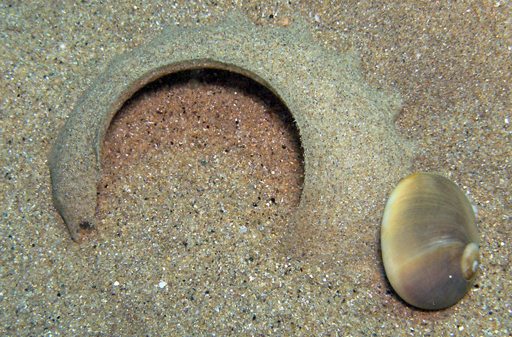
A sand collar full of shark eye eggs. Image credit: Blenni, Public domain, via Wikimedia Commons.

Sabrina Spiher Robinson is Collection Assistant for the Section of Mollusks and Tim Pearce is Head of the Section of Mollusks at Carnegie Museum of Natural History.

References

[1] Gregory P. Dietl and Richard R. Alexander, Post-Miocene Shift in Stereotypic Naticid Predation on Confamilial Prey from the Mid-Atlantic Shelf: Coevolution with Dangerous Prey PALAIOS Vol. 15, No. 5 (Oct., 2000), pp. 414-429

[2] Casey MM, Fall LM and Dietl GP, You Are What You Eat: Stable Isotopic Evidence Indicates That the Naticid Gastropod Neverita duplicata Is an Omnivore. Front. Ecol. Evol. 4:125. (2016) doi: 10.3389/fevo.2016.00125

RELATED CONTENT

Oysters Swim Towards a Siren Soundscape

Slipper Snails Slide Between Sexes in Stacks

The Busyconidae Whelks, Homebodies of the East Coast

Carnegie Museum of Natural History Blog Citation Information

Blog author: Pearce, Timothy A.; Robinson, Sabrina Spiher
Publication date: July 31, 2024
Share this post!

  • Share on Twitter Share on Twitter
  • Share on Facebook Share on Facebook
  • Share on Pinterest Share on Pinterest
  • Share on LinkedIn Share on LinkedIn
  • Share on Reddit Share on Reddit
  • Share via Email Share via Email

Filed Under: Blog Tagged With: mollusks, Sabrina Spiher Robinson, Science News, Section of Mollusks, Spotlight on Science, Spotlight on Science Mollusks, Tim Pearce

July 26, 2024 by Erin Southerland

The Busyconidae Whelks, Homebodies of the East Coast

by Sabrina Spiher Robinson and Tim Pearce

We try not to have strong favorites among the mollusks of the world in the CMNH Section of Mollusks, but it’s hard not to love the whelks. They leave behind big, beautiful shells for shell collectors on our east coast and Gulf beaches; they’re instantly recognizable as a family— Busyconidae — and pretty easy to tell apart at the species level by an amateur. Some of the species are sinistral, left-coiling snails, which are otherwise rare among gastropods. They live long and move slowly, reminding us all that slow and steady is an optimal way to approach life.  They taste good! The traditional Italian American dish scungilli is often described as “conch,” but conchs only live in our warm southern waters, and what is usually sold in American markets for scungilli is actually whelk meat. (In Italy, they also eat sea snails, under a lot of different names, but the Mediterranean has different families of marine gastropods.)

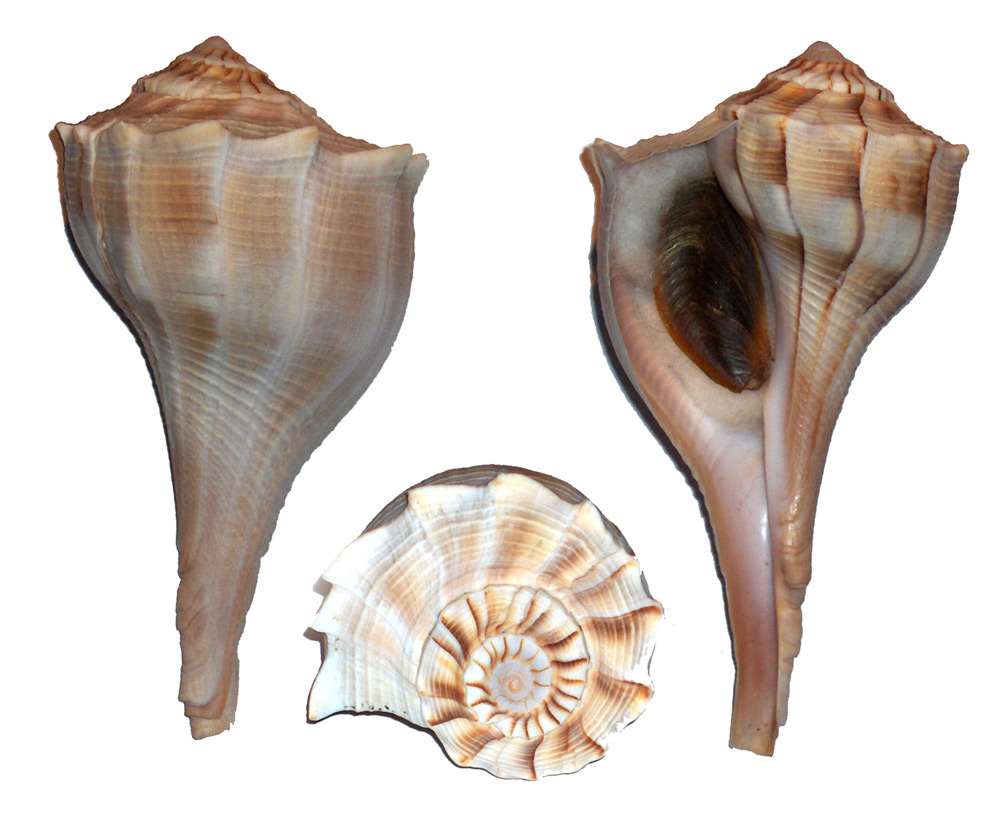
three view of a lightning whelk
The lightning whelk, Sinistrofulgar perversum, a left-coiling gastropod. Public domain, via Wikimedia Commons.

Now, whelks are maybe not the most sophisticated of marine snails: unlike some gastropods with eye stalks and relatively good sight abilities, whelks have eye spots, which don’t do much more than detect light and dark. Studies of their sense of smell reveal them to have a tenuous ability at best to follow scent trails of prey in the water, and they’ve been observed just kind of slowly zig-zagging back and forth in the mud, apparently hoping to run into a clam. Once they find a clam, some whelks wedge the edge of their own shell between the valves of their prey, and just pry for as long as it takes to pop it open. Other species of whelk rock the edge of their own shells back and forth against the opening of a bivalve, slowly chipping its valves apart. 

I mean, look: it isn’t much, but it’s honest work. Whelks are just a great family of sea snails. And Busycon whelks are endemic to the east coast of North America, meaning they’ve only ever been found here. Hometown heroes, if you will.

Our east coast whelks are committed homebodies partly because they evolved relatively late among mollusk families, in the Oligocene, a period spanning from 33.9 – 23 million years ago.  The family Busyconidae first emerged in the fossil record in the Mississippian Sea, which had been a shallow extension of what is now the Gulf of Mexico that reached far inland along the route of what is now the Mississippi River. At the end of the Oligocene, the planet’s climate cooled and as ice formed at the poles, sea levels fell, eliminating this inland sea in North America — the whelks then found themselves in the Gulf.

Mollusks have existed on Earth clear back to the Cambrian Era, 540 million years ago. Most modern marine gastropod families began evolving earlier than the Busycons, which meant they were around when all the continents on Earth were one giant supercontinent called Pangea. But Pangea had already broken apart before the Busycons appeared in the fossil record.

Now, here’s the thing, if you are a marine gastropod only suited to shallow, intertidal waters, and you come into being along the coast of a supercontinent, given enough time, your family can spread around the entire coastline of that supercontinent. Then, as it begins to break up, your populations break up with it, and in a few dozen millions of years, your family has populations all over the Earth. But if you are a marine gastropod only suited to shallow, intertidal waters, and you come into being when the North Atlantic has already split from Europe, your family can’t make it across the open sea to go anywhere else. And so, the Busycon family of whelks found themselves in the Gulf of Mexico, near the shore, and began to spread from there, east and west, south and north, until today they exist from the Yucatan Peninsula up to about Cape Cod (it gets too cold for them further north).

five views of a knobbed whelk
Knobbed whelk, Busycon carica. H. Zell, CC BY-SA 3.0, via Wikimedia Commons.

Buccinidae whelks, however, can handle arctic cold. They first evolved in the Northeast Pacific Ocean, and they eventually spread along the coastlines across the Bering Strait and down onto the North American west coast, across the Canadian Arctic to the North American east coast and the European eastern Atlantic. They’ve actually made it almost everywhere! But Buyscons can’t take that kind of cold.

There are other factors that limit their spread, one is the ocean currents around the Gulf and western Atlantic. Although Cuba is just 90 miles from the Florida Keys, whelks, which are plentiful in Florida, have never managed to cross the Gulf Stream to colonize Cuba. But one of the main things that keep Busycon whelks from getting anywhere is that, unlike most marine mollusks, they never have a free-swimming larval form, in which they could disperse more widely on ocean currents. Most marine snails have a life cycle that starts with an egg and then proceeds after hatching to a free-swimming larva. Basically, most baby marine mollusks are plankton. And in this state, they can float around and sometimes disperse pretty far afield on ocean currents. As long as they end up in suitable habitat when it’s time for them to metamorphosize into their adult forms, marine mollusks can theoretically end up living hundreds of miles from where they were spawned.

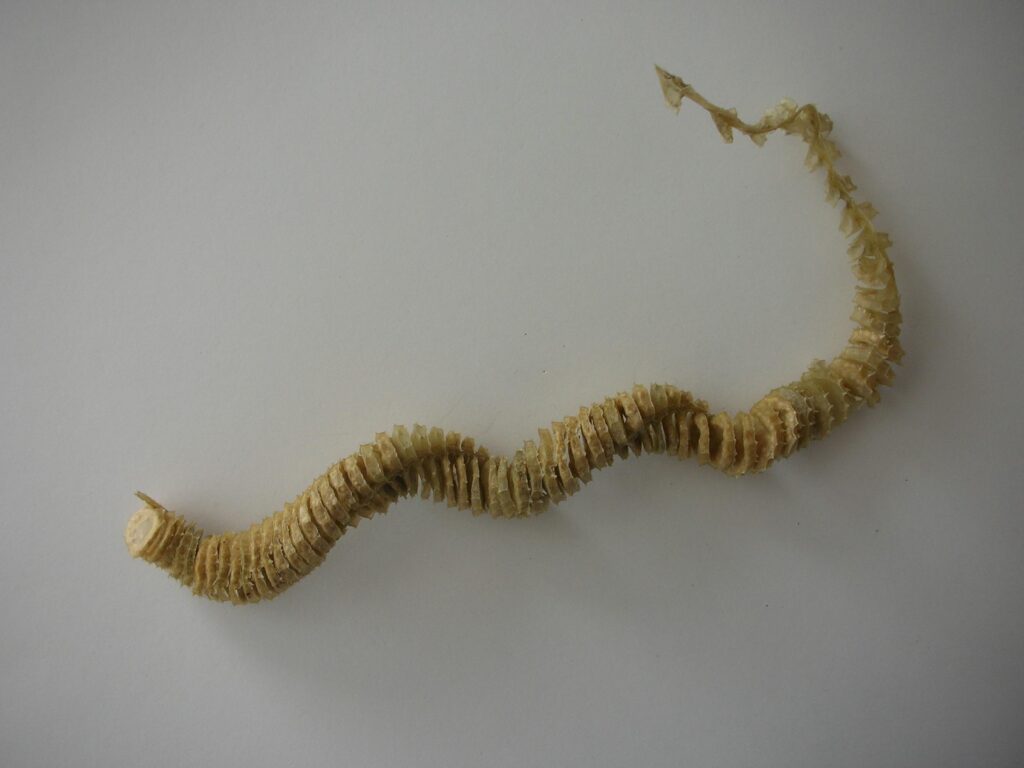
But whelks don’t have this free-swimming period in their youth. Adult females are inseminated directly by males and then lay strings of egg cases (which are also reliably common finds on our eastern beaches) in which the little baby whelks grow and hatch as fully formed miniature snails. Then they just crawl off.

knobbed whelk egg case
The egg case of a knobbed whelk, Busycon carica. Gtm at en.wikipedia, Public domain, via Wikimedia Commons.

And they’re not very fast crawlers, even for snails. Whelks make their living by eating bivalves, but they’re never in a hurry to find them — in multiple observational studies over many decades, no one has ever seen a Busycon whelk move further than 150 meters in a day, and those go-getters were the outliers; many days whelks barely move at all. Many factors conspire to keep whelks close to their birthplace.

channeled whelk
The channeled whelk, Busycotypus canaliculatus. Credit: Skye McDavid, CC BY-SA 4.0, via Wikimedia Commons.

Whelk populations are so localized that some researchers think it’s important to identify and treat separately groups of whelks in distinct geographic locations not at all far from each other. In 2022, several scientists at the Virginia Institute of Marine Science (VIMS) published a paper on channeled whelks (Busycotypus canaliculatus) documenting their genetic diversity in different geographic locations. They did this as part of a study of the channeled whelk population in general, to recommend how to manage the whelk fishery. (Whelks are increasingly harvested and sold as “conch” – and sometimes as clam strips!) In America, individual states manage their own fisheries of all kinds, but this isn’t always done well. In order to keep the fishing of any species (fish, mollusk, crab, shrimp, what have you) productive and sustainable, it’s important not to take more from the sea than can be replenished, and not to take animals that haven’t lived long enough to have reproduced (which is why some fisheries have size limits, as a proxy for the age and sexual maturity of the animal being harvested). But without good data on population size as well as age and size at sexual maturity, effective management and limit setting is basically impossible, and too often states don’t err on the side of caution. When allowable takes are too large, or allowed to include juvenile animals, the population of the fishery will plummet, and this has happened in different places and different times among the whelks. So, the VIMS project was meant to contribute data to help manage the whelk fisheries along the east coast sustainably.

The VIMS scientists caught whelks in ten different locations, from Buzzards Bay in Massachusetts down to Charleston, South Carolina, and sequenced their DNA. They found significant genetic divergence between the three sampled populations from the Carolinas and the populations in Virginia and north. But the scientists also found pretty big divergences across all the locations, even in populations as geographically close to one another as Virginia Beach, VA, and the Virginia Eastern Shore, about a hundred miles away across the mouth of the Chesapeake Bay.

Morphologically, all these whelks look pretty much alike, but genetically, they’re very isolated and distinct populations, with very little breeding among locations. Busycon whelks stay so close to home that each of their little geographically specific populations genetically diverge from one another since they never get far enough to meet and mate with whelks in other relatively close locations. The VIMS authors suggested that different whelk populations in different places might require different fishery management based on size at age of maturity, which seemed to change across genetically different populations. And so, it isn’t as simple as managing the “whelk fisheries on the east coast,” or even the “whelk fisheries in Virginia.” Because Channeled whelk populations are so isolated from one another, they might need to be managed as fisheries in Charleston, SC and Ocean City, MD, and so forth, specifically.  [1]

After all that, I should tell you, though, that there is one exception to this east coast endemic story: at some point about a hundred years ago, a population of channeled whelks was introduced to San Francisco Bay. They’ve been prospering there ever since, but they can’t spread any further on the west coast because the water outside the bay is too cold for them.  That’s an extremely genetically isolated population, in an unusual environment for Busycon whelks – maybe someday it might become distinct enough from its east coast forebears to become its own species?

[1] Askin, Samantha E.; Fisher, Robert A.; Biesack, Ellen E.; Robins, Rick; and McDowell, Jan, Population Genetic Structure in Channeled Whelk Busycotypus canaliculatus along the U.S. Atlantic Coast (2022). Transactions of the American Fisheries Society. DOI: 10.1002/tafs.10374

Sabrina Spiher Robinson is Collection Assistant for the Section of Mollusks and Tim Pearce is Head of the Section of Mollusks at Carnegie Museum of Natural History.

Related Content

Oysters Swim Towards a Siren Soundscape

Slipper Snails Slide Between Sexes in Stacks

The Hermit Crab and the Moon Snail

Carnegie Museum of Natural History Blog Citation Information

Blog author: Pearce, Timothy; Robinson, Sabrina Spiher
Publication date: July 26, 2024

Share this post!

  • Share on Twitter Share on Twitter
  • Share on Facebook Share on Facebook
  • Share on Pinterest Share on Pinterest
  • Share on LinkedIn Share on LinkedIn
  • Share on Reddit Share on Reddit
  • Share via Email Share via Email

Filed Under: Blog Tagged With: Molluks, Sabrina Spiher Robinson, Spotlight on Science, Spotlight on Science Mollusks, Tim Pearce

May 15, 2024 by Erin Southerland

Slipper Snails Slide Between Sexes in Stacks

Or, Crepidula fornicata say, “Trans Rights!”

…if they don’t get eaten by their siblings first.

by Sabrina Spiher Robinson
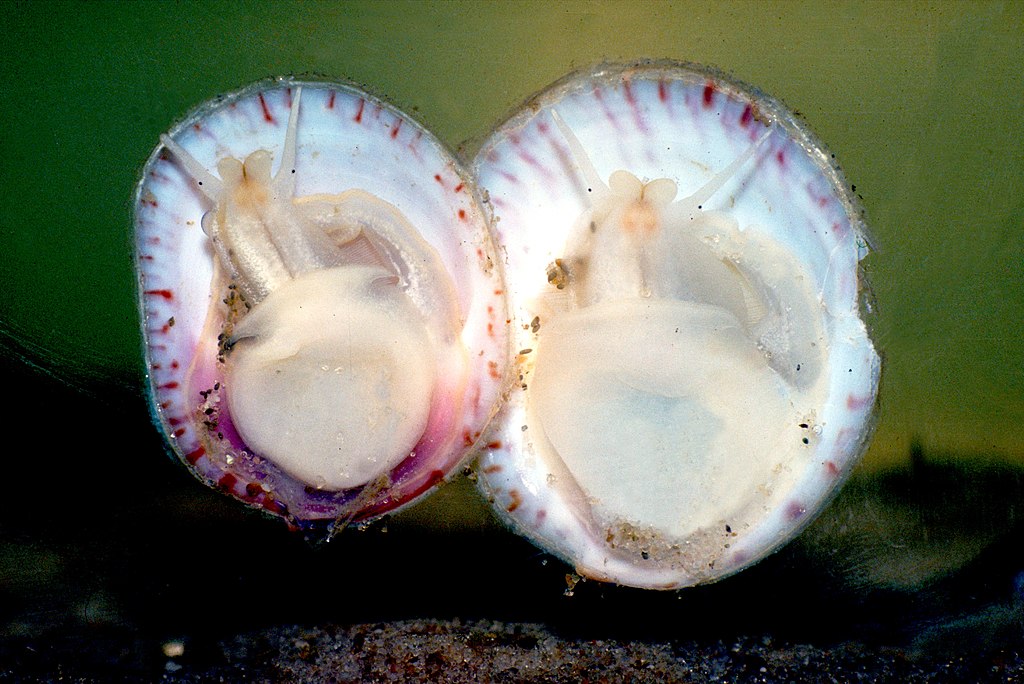
A pair of slipper snails seen from below.
A pair of slipper snails seen from below. Image credit: Ecomare/Sytske Dijksen, CC BY-SA 4.0 https://creativecommons.org/licenses/by-sa/4.0, via Wikimedia Commons
A stack of Crepidula fornicata, grown together (with a little chiton, another type of mollusk, hanging out on the top of the family).
A stack of Crepidula fornicata, grown together (with a little chiton, another type of mollusk, hanging out on the top of the family). Image credit: User Lamiot on fr.wikipedia, CC BY-SA 1.0 https://creativecommons.org/licenses/by-sa/1.0, via Wikimedia Commons

Slipper snails, Crepidula fornicata, are a common find for shell collectors along the American east coast, and in some places on the west coast as well, where they have been accidentally introduced as an invasive species. But just because they’re common, doesn’t mean they’re not interesting – in fact, they’re one of the most well-studied marine snails, and all of that study has revealed a creature with a fascinating life cycle.

Crepidula are protandrous hermaphrodites – this means that all slipper snails begin their lives as male, and end their lives as female. As juveniles, they wander over the substrate, preferring hard surfaces like rocks, dock pilings, other shells, and even horseshoe crabs. But most C. fornicata will choose to settle on top of another C. fornicata, who might be settled atop another, and another, and so on. They live in stacks, sometimes of up to a dozen animals, one balancing on top of the next until their shells grow around each other, and they can no longer move, becoming sessile (stationary) by default.

Of course, a stack of all males won’t get very far reproductively. So, it’s time for at least a few C. fornicata to begin the next stage in their lives, and transition to females. Several things influence when the change takes place, primarily the animal’s size, because producing gametes is energetically costly: more sperm takes more energy than less sperm, and eggs take more energy than sperm altogether. But it’s not so straightforward as just growing to a certain size and changing sex. If there are no females around, for instance, some males will transition to females at smaller sizes than they usually would.¹  Alan Carillo-Boltodano and Rachel Collin write:

“In our experiment, pairs of snails (one small and one large) were kept in cups, either together or partitioned off with fine or coarse mesh, or partitioned, but switched from side to side to allow contact with the cup mate’s pedal mucus. The larger snails that were allowed contact with the smaller companions grew faster, and generally changed sex sooner, than did the larger snails in the barrier treatments, which allowed no physical contact. The smaller snails that were allowed contact with the larger cup mate delayed sex change compared to those separated from their cup mates … Our results suggest that the cue that affects size and time to sex change requires some kind of physical interaction that is lost when the snails are separated. Furthermore, contact with another snail’s pedal mucus does not compensate for the loss of physical contact.”²

In other words, when the slipper snails are in actual contact with each other, they seem to send signals to one another that help to coordinate growth and sex change.

In general, though, males will wait until they’re a certain size to transition, because larger males are more reproductively successful than smaller males, as determined by experiments that genetically test offspring to see whose genes were most successful in the stack. There’s one exception to this though – sneaky little guys! Male Crepidula inseminate females directly, so in general the male right on top of the female at the bottom of the stack will be the most successful fertilizer, and then the male on top of him, and then the others on top of them can’t reach and are out of luck for the moment. But! The smallest juvenile Crepidula, who have not yet chosen a stack of their own, have been found to sneak up on the substrate next to the female, inseminate her, and sneak away, using a strategy that gets around “bigger = more sperm.”³

Larger males might have more reproductive success than smaller males, but no one has more reproductive success than slipper snails who have transitioned to females. Eggs are a much bigger energy investment for an animal than sperm are, and so becoming a female requires a certain size to make the transition worthwhile. But once a slipper snail is female, she has a couple reproductive advantages: in the first place, she can hoard sperm for a long time, including her own from when she was a male, so she always has plenty of material to fertilize her eggs. This also means that while only a third or a quarter of the embryos will have a given male’s DNA, they’ll all have hers. Secondly, Crepidula females brood their young. Unlike many marine mollusks, who release their eggs and sperm into the water column where they meet and the embryo has to grow up among the plankton, at risk of becoming a meal for many things before they ever even get to grow into larvae, Crepidula keep their eggs in brooding pouches. Females keep between 15 and 20 pouches inside their shells, each containing between 50 and 450 embryos. She’ll brood them until they turn into larvae that can swim about on their own, keeping them safe to grow at least for a little while.

And thus, every Crepidula fornicata begins their life as a tiny, and sometimes sneaky, roaming male, sowing his wild oats; eventually he finds a nice stack to settle down on to become a dad; and then they transition sexes and live out her days as mother and base of the stack, brooding little babies in safety until they’re ready to hatch into larvae. Slipper snails make small stacks, but big happy families.

However, perhaps nowhere is safe. Once the eggs are brooding in their capsules, the mother slipper snail has no way to transfer additional nutrients or oxygen to the embryos.  This environment of scarcity leads some species of Crepidula embryos to start cannibalizing each other! The embryos of Crepidula coquimbensis, a species of Crepidula first described in Chile, have at least been found to be choosy about eating their brothers and sisters. Brood capsules are fertilized by multiple males, meaning all the embryos have the same mother, but not every embryo has the same father. It was discovered that cannibalistic embryos were much more likely to eat their half-siblings than their full siblings, thus protecting embryos they shared a complete set of DNA with. It’s still not known how these embryos recognize kinship, though.⁴ In another species of Crepidula, Crepidula navicella, a gene in some of the embryos in each capsule switches on and arrests their development, basically turning them into meals for their siblings, a genetic predisposition to being either a cannibalizer or a cannibalizee.⁵

Of course, once the larvae are released into open water, all bets are off, and a lot of filter-feeding animals, including other mollusks, including other Crepidula, might eat them. However, Jan Pechenik reports:

“… in our study the same adults usually ingested their own larvae at much slower rates than predicted from the rates at which they cleared water of phytoplankton. These slower rates may in part reflect an inability or reluctance of adults to ingest particles of such large size …  However, most of the larvae that we observed being entrained into adult feeding currents were ingested, and later appeared in feces, and adults were capable of ingesting larvae that were larger … Thus, lower than predicted rates of [larvae eating] by C. fornicata more likely reflect larval behavior – deliberate or not – reducing the likelihood of [getting drawn] into the adult feeding current, as suggested previously from studies with [other marine filter feeders].”⁶

At least baby Crepidula, once free, seem to have developed a way to avoid being eaten by their parents, if not their siblings!

Sabrina Spiher Robinson is Collection Assistant for the Section of Mollusks at Carnegie Museum of Natural History.

References:

[1] Proestou, Dina A., Goldsmith, Marian, Twombly, Sarah (2008) “Patterns of Male Reproductive Success in Crepidula fornicata Provide New Insight for Sex Allocation and Optimal Sex Change.” The Biological Bulletin (Lancaster), vol. 214, no. 2, 2008, pp. 194–202, https://doi.org/10.2307/25066676.

[2] Carrillo-Baltodano, Allan, and Collin, Rachel (2015). “Crepidula Slipper Limpets Alter Sex Change in Response to Physical Contact with Conspecifics.” The Biological Bulletin (Lancaster), vol. 229, no. 3, 2015, pp. 232–42, https://doi.org/10.1086/BBLv229n3p232.

[3] Broquet, Thomas, et al. “The Size Advantage Model of Sex Allocation in the Protandrous Sex-Changer Crepidula fornicata: Role of the Mating System, Sperm Storage, and Male Mobility.” The American Naturalist, vol. 186, no. 3, 2015, pp. 404–20, https://doi.org/10.1086/682361.

[4] Brante A, Fernández M, Viard F (2013) Non-Random Sibling Cannibalism in the Marine Gastropod Crepidula coquimbensis. PLoS ONE 8(6): e67050, doi:10.1371/journal.pone.0067050

[5] Lesoway, MP, Collin, R, Abouheif, E. (2017) “Early activation of MAPK and apoptosis in nutritive embryos of calyptraeid gastropods.” J. Exp. Zool. (Mol. Dev. Evol.) 328B: 449–461. doi:10.1002/jez.b.22745.

[6] Pechenik, Jan, Blanchard, Michel, Rotjan, Randi (2004) “Susceptibility of Larval Crepidula fornicata to Predation by Suspension-Feeding Adults.” Journal of Experimental Marine Biology and Ecology., vol. 306, no. 1, 2004, pp. 75–94, https://doi.org/10.1016/j.jembe.2004.01.004.

Related Content

Oysters Swim Towards a Siren Soundscape

Shark-ish Beasts versus Cephalopods: Which is Predator, Which is Prey, and is One an Artist?

Diet-wise, Snails are Like Cows, Not Bugs

Carnegie Museum of Natural History Blog Citation Information

Blog author: Robinson, Sabrina Spiher
Publication date: May 15, 2024

Share this post!

  • Share on Twitter Share on Twitter
  • Share on Facebook Share on Facebook
  • Share on Pinterest Share on Pinterest
  • Share on LinkedIn Share on LinkedIn
  • Share on Reddit Share on Reddit
  • Share via Email Share via Email

Filed Under: Blog Tagged With: mollusks, Sabrina Spiher Robinson, Science News, Spotlight on Science, Spotlight on Science Mollusks

January 9, 2024 by Erin Southerland

Oysters Swim Towards a Siren Soundscape

by Sabrina Spiher Robinson

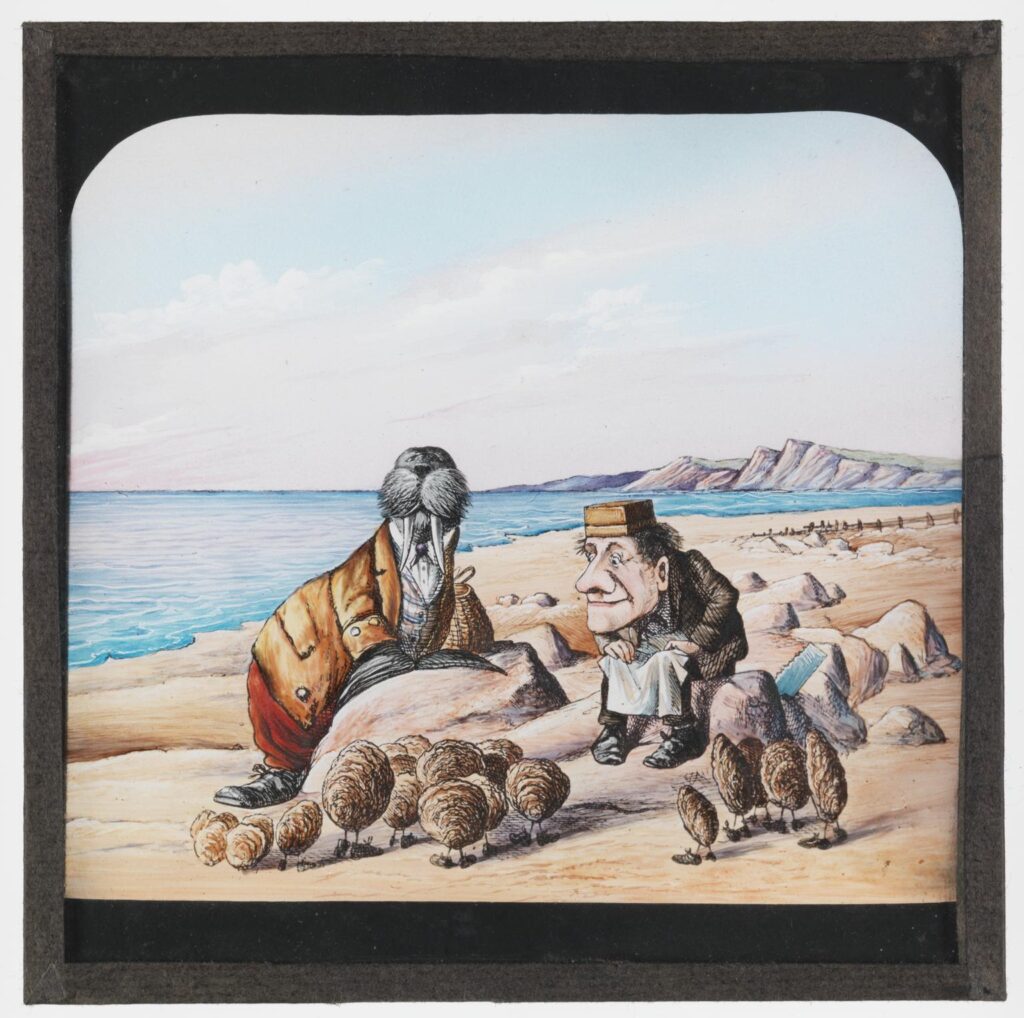
illustration of a walrus and a person on a beach looking at oysters with feet
Illustration by Sir John Tenniel. Creative Commons Attribution-NonCommercial-ShareAlike 4.0 License.¹

“’O Oysters, come and walk with us!’

The Walrus did beseech.

‘A pleasant walk, a pleasant talk,

Along the briny beach:

We cannot do with more than four,

To give a hand to each …

Four other Oysters followed them,

And yet another four;

And thick and fast they came at last,

And more, and more, and more—

All hopping through the frothy waves,

And scrambling to the shore …

‘O Oysters,’ said the Carpenter,

‘You’ve had a pleasant run!

Shall we be trotting home again?’

But answer came there none—

And this was scarcely odd, because

They’d eaten every one.”

In 1872, Lewis Carroll included the poem “The Walrus and the Carpenter” in his classic book Through the Looking Glass.  The Walrus calls out to the oysters to join him and the Carpenter on a walk along the seashore; the young oysters don’t know any better and come to join him. Eventually, all the oysters are eaten up.  But can one really sing a siren song to make an oyster come to them? An informed answer to this question requires some background knowledge information about an underappreciated form of wildlife.

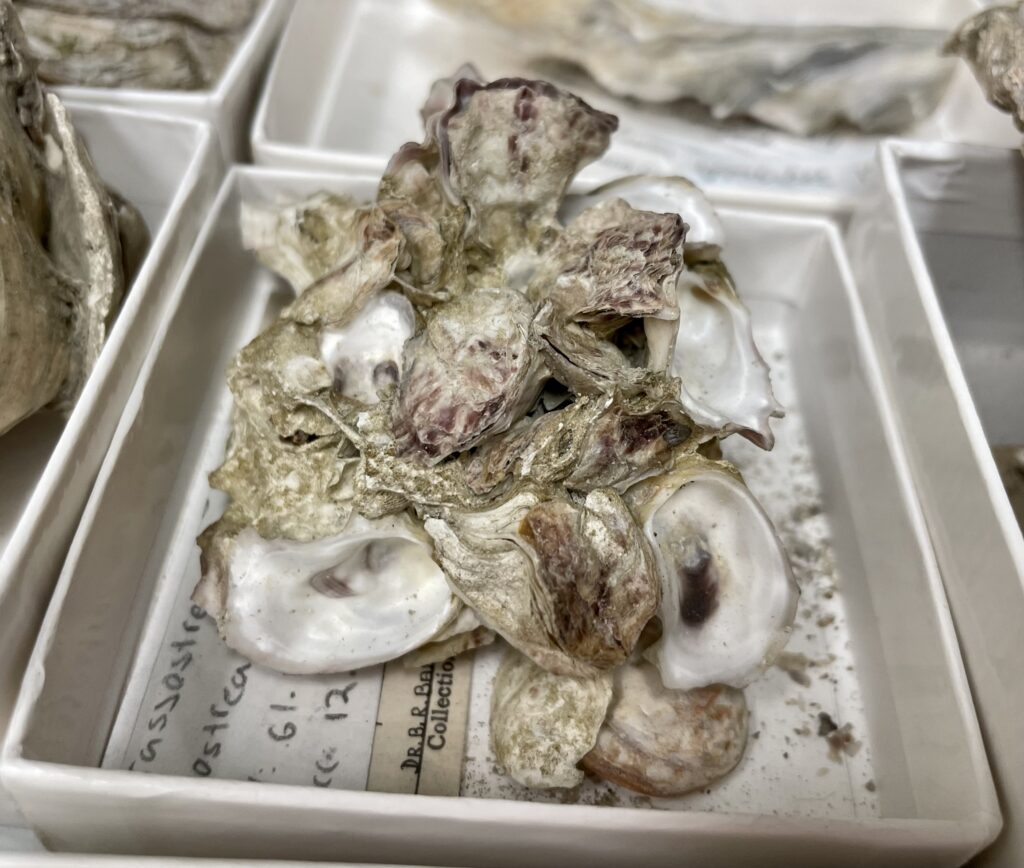
oyster shells on cultch in a box
The favored subsurface described as “cultch” is depicted in this cluster of oyster shells of the species Crassostrea virginica.

Oysters live in reefs, submerged ridges or mounds of stable material, and baby oysters prefer to settle on a base — called “cultch” — of old oyster shells. Where conditions are favorable, oysters have plenty of company. When a team of researchers investigated the diversity of oyster reefs in the Gulf of Mexico, they detailed the incredible number of creatures that live on the reefs where oysters form: 115 species of fish and 41 species of crustaceans made the Gulf oyster reefs their homes, at very high densities and in communities containing up to 52 species at a time.  Other researchers have documented multiple corals, mollusks, and worms that live primarily on oyster reefs. Unfortunately, erosion from coastal development, wetland destruction, unsustainable harvesting, and pollution have decimated populations of the Atlantic coast’s native oyster, Crassostrea virginica, which is bad news for coastal marine habitats in general.²

The importance of oyster reefs as marine habitats for multiple species is only one reason to preserve and reconstruct them.  Oysters, as filter-feeding animals, provide an incredible service to the water quality of the estuaries they inhabit.  They are also, of course, an important food source along America’s east coast.

The complications of rebuilding and repopulating oyster reefs are many.  Pollution must be reduced, especially the run-off of agricultural fertilizers.  Such fertilizers “enrich” underwater environments in a process called eutrophication.

Eutrophication causes massive blooms of algae that set off a chain of events  disastrous for bodies of water and their inhabitants: the algae can release toxins on its own, but most commonly it overwhelms host ecosystems by blocking sunlight and killing all of the other plants in the water. Eventually the algae die too, and as all these dead plants decay, eaten away by multiplying bacteria that use up what little oxygen is left, dead zones form that suffocate underwater animals.  This decay also lowers the pH of the water, leading to acidification that harms and kills animals (especially mollusks, whose shells dissolve in a very acidic environment).  Additionally, if sediment erosion is not  reduced, these water-borne materials eventually bury and suffocate oysters.  

Oyster bed substrates that have been destroyed by human construction or aggressive commercial dredging can  be replaced with cultch that is attractive to baby oysters.  However, baby oysters must be recruited to the rebuilt reefs, either from the natural population of oyster larvae, or from hatchery-grown larvae reintroduced to the environment.

So, how to attract a baby oyster to your newly constructed oyster reef?  First, let’s consider the life cycle of C. virginica, and the critical importance of age range in young oyster populations.  In the first year of their adult lives, oysters are male. At certain times of the year, in response to pheromonal cues from their fellow oysters on the reef, they release clouds of billions of sperms. Older oysters on the reef, creatures transitioned into females after a year or two of life, release millions of eggs into these clouds of sperm. About two days after an egg is fertilized, the oyster larvae have become what are called veligers, and they begin to feed on particles in the water and to seek a place to call home.  During this time, they develop a foot, and once they arrive on some promising substrate, they can crawl around, looking for just the right spot.  At this point they are called spat.  Soon the spat lose their feet and cement themselves to the spot they will call home for the rest of their lives, which can be more than a dozen years in the wild.

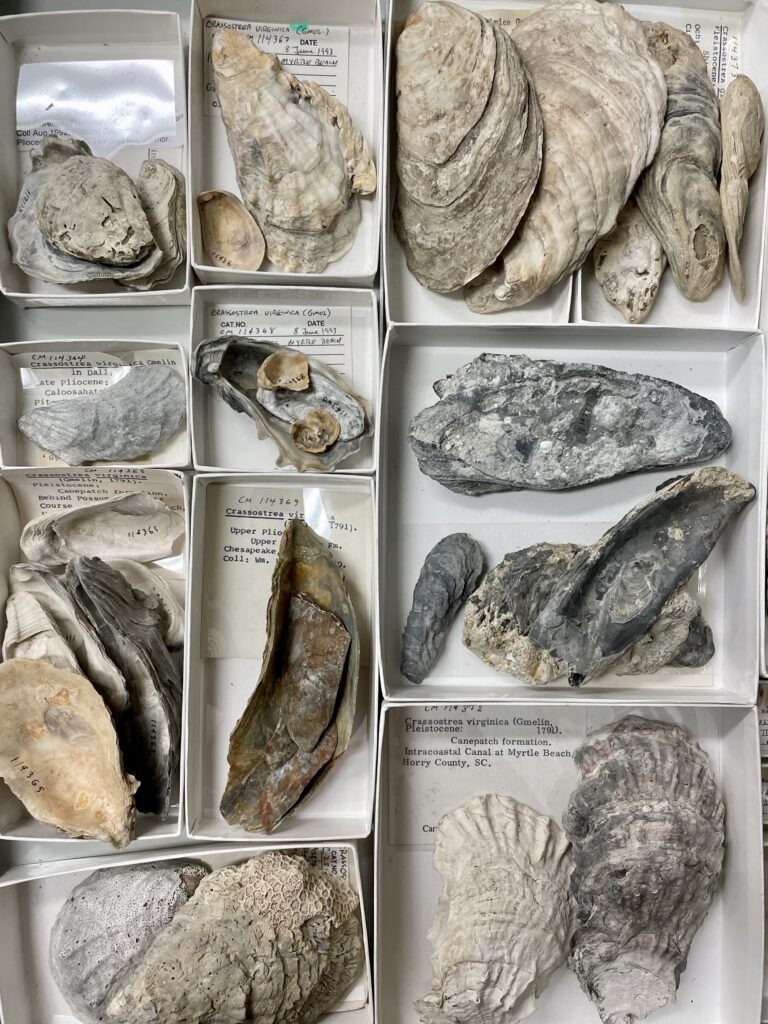
small boxes of oyster shells
Crassostrea virginica, from the CMNH collection, multiple shells that look completely different, but represent a single species. Epicures report taste differences  according to where exactly each oyster lived.

It was long unknown how much choice an oyster veliger had in determining where it landed.  Until the 1990s scientists thought that baby oysters had very little control over their movement in the water. In 2022, Australian scientists studying the Australian flat oyster, Ostrea angasi, proved that oyster veligers could very deliberately move to get to a surface they preferred to make their permanent home on.³

How this discovery occurred is of particular interest. The Australian researchers were testing the effects of soundscapes on oyster larvae, following experiments conducted in America in Pamlico Sound in North Carolina.  Soundscapes are the collective sounds of a given environment: all the noises of human and non-human animal activity, along with environmental sounds of wind and water and precipitation.  In 2014, researchers in North Carolina were experimenting with ways to attract oyster larvae to their newly built conservation reefs. They discovered that by recording the soundscape of a healthy oyster reef and playing it in the water, they attracted a much higher number of spat on experimental tiles near the recordings.  Apparently, the baby oysters heard the sound of a healthy oyster reef and headed towards it to make their homes.⁴

How do oysters hear? Humans and other land animals hear through a system of air compression.  Sound waves compress air in certain patterns, and tiny hairs within our ears translate those compressions into electrical signals that are then sent to the brain for further interpretation as sound.  Underwater, animals hear through particle vibration: sound waves vibrate from particle to particle in the denser medium of water, where the particles are in direct contact with one another, even the water contained in the bodies of fish and invertebrates. Underwater animals have sensing structures that translate these vibrations into electrical signals that the animal then interprets in some way.⁵

Following up on the work of the North Carolina scientists, the Australian scientists confirmed in lab studies using underwater speakers in a completely currentless body of water, that oyster larvae were deliberately swimming towards the sounds of a healthy reef to settle.  When they tried this technique on human-made conservation reefs, oyster recruitment increased on the artificial cultch — an important finding, since if baby oysters don’t find the newly deployed conservation reefs quickly, the reefs become covered in algae, making it very difficult for oyster spat to attach to them.⁶

And so, recording and replaying the soundscape of a healthy oyster reef — populated by snapping shrimp, oyster toadfish, and many other creatures that call a healthy oyster reef home — can help with the recruitment of baby oysters to human-made reefs for the purposes of conserving and growing the endangered population of C. virginica.  Not only can oyster larvae “hear,” they can — and will — very deliberately swim toward the sounds of a healthy reef.  And truly, who amongst us could deny the siren song of the snapping shrimp and the oyster toadfish?

Listen:

Coastal Conservatory

Center for Marine Sciences and Technology (CMAST)

Sabrina Spiher Robinson is Collection Assistant for the Section of Mollusks at Carnegie Museum of Natural History.

Notes:

  1. Science Museum Group. Magic lantern slide depicting Alice’s Adventures in Wonderland, Walrus, Carpenter and Baby Oysters. 1951-316/11Science Museum Group Collection Online. Accessed 9 January 2024. https://collection.sciencemuseumgroup.org.uk/objects/co8362656/magic-lantern-slide-depicting-alices-adventures-in-wonderland-walrus-carpenter-and-baby-oysters-lantern-slide.
  2. La Peyre Megan K., Aguilar Marshall Danielle, Miller Lindsay S., Humphries Austin T. Oyster Reefs in Northern Gulf of Mexico Estuaries Harbor Diverse Fish and Decapod Crustacean Assemblages: A Meta-Synthesis  Frontiers in Marine Science, Vol. 6, 2019 https://www.frontiersin.org/articles/10.3389/fmars.2019.00666
  3. Williams, B. R., McAfee, D. & Connell, S. D. Oyster larvae swim along gradients of sound. Journal of Applied Ecology, Vol 59, 2002, pp. 1815–1824 https://besjournals.onlinelibrary.wiley.com/doi/full/10.1111/1365-2664.14188
  4. Ashlee Lillis, David B. Eggleston, DelWayne R. Bohnenstiehl Oyster Larvae Settle in Response to Habitat-Associated Underwater Sounds PLOS ONE 9(1). October 30, 2013 https://journals.plos.org/plosone/article?id=10.1371/journal.pone.0079337#amendment-0
  5. Nedelec, S.L., Campbell, J., Radford, A.N., Simpson, S.D. and Merchant, N.D. Particle motion: the missing link in underwater acoustic ecology. Methods Ecol Evol vol 7, 2016, pp. 836-842 https://besjournals.onlinelibrary.wiley.com/doi/full/10.1111/2041-210X.12544
  6. McAfee, D., Williams, B. R., McLeod, L., Reuter, A., Wheaton, Z., & Connell, S. D. Soundscape enrichment enhances recruitment and habitat building on new oyster reef restorations. Journal of Applied Ecology, vol. 60, 2023, pp.111–120 https://besjournals.onlinelibrary.wiley.com/doi/10.1111/1365-2664.14307

Related Content

Shark-ish Beasts Versus Cephalopods: Which Is Predator, Which Is Prey, and Is One an Artist?

Prozac and Caffeine in Our Wastewater: Effect on Freshwater Mollusks

Can Snails Feel Love?

Carnegie Museum of Natural History Blog Citation Information

Blog author: Robinson, Sabrina Spiher
Publication date: January 9, 2024

Share this post!

  • Share on Twitter Share on Twitter
  • Share on Facebook Share on Facebook
  • Share on Pinterest Share on Pinterest
  • Share on LinkedIn Share on LinkedIn
  • Share on Reddit Share on Reddit
  • Share via Email Share via Email

Filed Under: Blog Tagged With: mollusks, Sabrina Spiher Robinson, Science News, Section of Mollusks, Spotlight on Science, Spotlight on Science Mollusks, Tim Pearce

sidebar

About

  • Mission & Commitments
  • Directors Team
  • Museum History

Get Involved

  • Volunteer
  • Membership
  • Carnegie Discoverers
  • Donate
  • Employment
  • Events

Bring a Group

  • Groups of 10 or More
  • Birthday Parties at the Museum
  • Field Trips

Powdermill

  • Powdermill Nature Reserve
  • Powdermill Field Trips
  • Powdermill Staff
  • Research at Powdermill

More Information

  • Image Permission Requests
  • Science Stories
  • Accessibility
  • Shopping Cart
  • Contact
  • Visitor Policies
One of the Four Carnegie Museums | © Carnegie Institute | Privacy Policy | Terms of Use | Accessibility
Rad works here logo