• Skip to primary navigation
  • Skip to main content
  • Skip to primary sidebar

Carnegie Museum of Natural History

One of the Four Carnegie Museums of Pittsburgh

  • Visit
    • Buy Tickets
    • Visitor Information
    • Exhibitions
    • Events
    • Dining at the Museum
    • Celebrate at the Museum
    • Powdermill Nature Reserve
    • Event Venue Rental
  • Learn
    • Field Trips
    • Educator Information
    • Programs at the Museum
    • Bring the Museum to You
    • Guided Programs FAQ
    • Programs Online
    • Climate and Rural Systems Partnership
  • Research
    • Scientific Sections
    • Science Stories
    • Science Videos
    • Senior Science & Research Staff
    • Museum Library
    • Science Seminars
    • Scientific Publications
    • Specimen and Artifact Identification
  • About
    • Mission & Commitments
    • Directors Team
    • Museum History
  • Tickets
  • Give
  • Shop

Scientist Takeover

September 16, 2020 by Kathleen

Scientist Takeover: What is a Dichotomous Key?

A dichotomous key is a tool that allows the user to determine the identity of items in the natural world, such as trees, wildflowers, mammals, reptiles, rocks, and fish. Keys consist of a series of choices that lead the user to the correct name of a given item.

Let’s think of a plant or animal and practice using a very simple example of a dichotomous key together!

[gravityform id=”68″ title=”false” description=”false”]
Filed Under: Blog Tagged With: Scientist Takeover, Super Science Days

September 15, 2020 by wpengine

Scientist Takeover: Mammals!

What is the largest mammal?

This is an easy one because it is not even close; the blue whale, which is also the largest animal to ever live on Earth, weighs around 100 tons (220,000 pounds) and is about 100 feet long. Females are typically larger than males. Despite their bulk, blue whales are filter feeders subsisting on krill, small crustaceans less than an inch in length.

In 1758, Carl Linnaeus gave the blue whale the Latin name Balaenoptera musculus. The first part, Balaenoptera, the genus name, means winged whale for its long, slender flippers; the second part, the species name, is thought to be a joke by Linnaeus because it is also the species name he gave to the house mouse, Mus musculus.

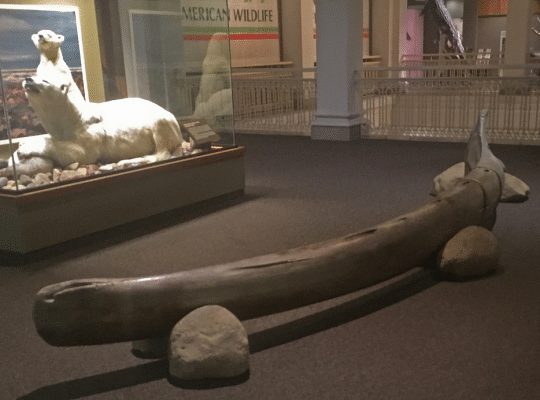
Here is the left mandible (lower jaw) of a blue whale on the second floor in the Carnegie Museum of Natural History. Notice that it dwarfs the adult polar bear behind it.

What is the smallest mammal?

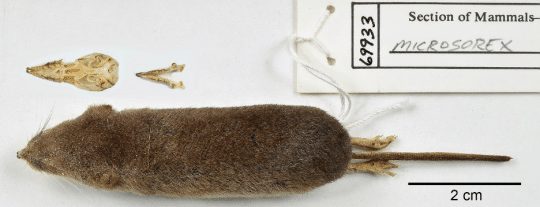
This is harder than the largest one—the blue whale—because there are two mammals considered to be very close in weight: the Etruscan shrew with a Mediterranean and Asian distribution weighs in about 1.8 grams, which is less than the bumblebee bat from Thailand and Myanmar, weighing in around just 2 grams, but the shrew is longer than the bat. Remember there are 28 grams in one ounce and 2 grams is the weight of one paperclip!

This is the smallest North American mammal, the American pygmy shrew. This example, from the research collections of the Carnegie Museum of Natural History, is under four inches in total length.

What is the fastest land mammal?

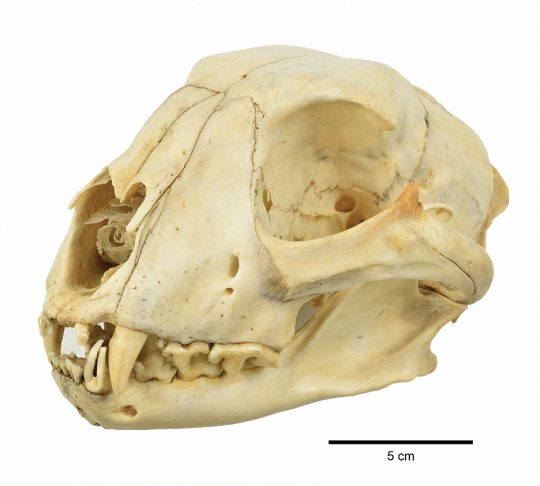
The cheetah is hands down the fastest, but it does not sustain speed over a great distance; the cheetah is a burst-predator with a chase lasting typically less than a minute. The cheetah goes from 0 to 60 miles per hour in about three seconds, which is what a good sports car can do! At top speed, the length of one stride is 21 feet and there are four strides per second.

Everything about the cheetah is built for speed and hunting. This view of a skull in the research collection of Carnegie Museum of Natural History shows enormous orbits for its large eyeballs providing keen vision and its very large nasal opening, which allows more oxygen to enter the lungs.

What is the slowest land mammal?

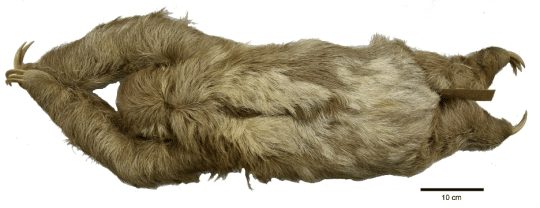
The name says it all…sloth! There are two types of sloths found in the tropics of Central America and northern South America, usually called three-toed and two-toed sloths. This is a misnomer as both types have three toes on their hindfeet; what differs is the number of fingers on the forefeet. So, they really should be called three- and two-fingered sloths. Both sloths live most of their lives in trees on a diet of leaves and move so slowly or so little that algae grow on their fur, providing camouflage. Of the two sloths, the three-digited one is smaller and slower.

This skin of a three-toed sloth from the research collection of the Carnegie Museum of Natural History shows a mammal built for hanging around in trees, with its long arms and hook-like claws on all four limbs.

What is the strongest mammal?

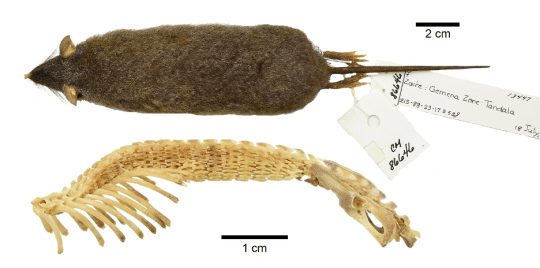
This is just a playful question. It usually isn’t one of the comparisons that scientists try to make.  However, the armored hero shrew seems like a good nominee. This shrew lives in the forested region of central Africa. Its spinal column is unique among mammals. The mid-portion is extremely modified with many interlocking bony tubercles that project forward and backward to fortify the spine. The exact purpose is unknown. However, it has been reported that a full-grown man could stand on the back of an armored shrew without harming the animal.

The skin and partial vertebral column of an armored hero shrew from the research collection of the Carnegie Museum of Natural History shows the beautifully intricate bony structure of the spinal column, which lies hidden inside of a perfectly normal looking long-haired shrew.

John Wible is Curator of the Section of Mammals and Sue McLaren is Collection Manager of the Section of Mammals at Carnegie Museum of Natural History. This post is part of Super Science Days: Scientist Takeover! 

Related Content

Stuffed Animal Safari: Mountain Goats

Meowfest: Oglebay Good Zoo Big Cats

Giraffes at The Wilds

Filed Under: Blog Tagged With: John Wible, mammals, Scientist Takeover, Super Science Days

September 15, 2020 by wpengine

Super Science: The Virtual Amazon

No, we’re not talking about a video game featuring an ancient woman warrior. We’re talking about making the museum’s Amazon Basin collections electronically accessible to the people of that region, as well as to scientists and the public. Through collaboration with the indigenous people whose cultures these objects represent, we hope to more widely and authentically share information about the way of life in Amazon Basin villages. The significance of fishing, hunting, gardening, and even rituals ablaze with celebrated feather work can all be better understood through the visual exploration of materials already in the CMNH collection.

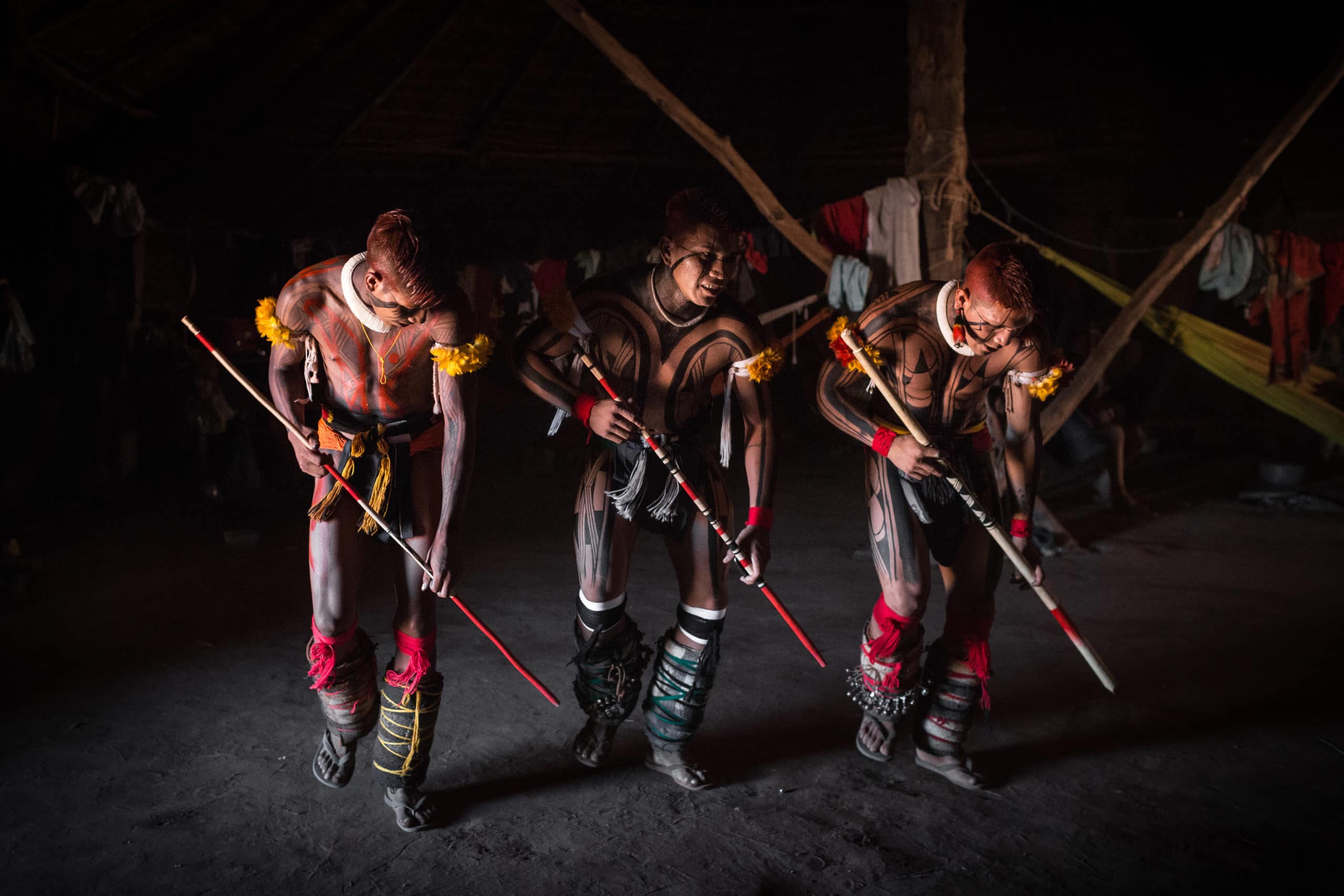
Three young Kuikuro men singing joking songs during the manioc festival (Carlos Fausto, June 2017).

With the ongoing massive deforestation in the Amazon by neo-Brazilians for logging, farming, and mining, the “lungs of the world” are under threat, as are the lives of the indigenous people whose way-of-life depends on the flora and fauna of the forest they have managed successfully for centuries. If the forest disappears, or is even diminished much more, its loss will have a devastating effect on the world’s climate. A number of scientists and non-government organizations (NGOs) from Brazil and other countries are partnering with the indigenous people to preserve their lands, their cultures, and their lives.

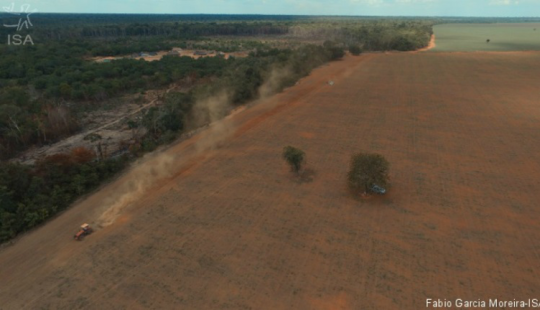
The border between the Território do Xingu and a neo-Brazilian soybean farm is very distinct.

Although the CMNH project will take some time—and a lot of planning and resources, the growth of collaborative efforts to address the looming threats to the Amazon Basin have made conditions optimal to bring collections-centered stories to the American public. The idea to provide wider access to the artifacts got started two years ago, when on September 2, 2018, Museu Nacional, the national museum of Brazil, was almost entirely destroyed by a fire. The blaze destroyed a magnificent natural history collection, and also one of the largest archeological and ethnographic collections in the world. The institution’s holdings of Amazon Basin material were unparalleled, and are now gone.

By great good fortune and the foresight of then-curator James B. Richardson, the CMNH Section of Anthropology developed an outstanding Amazon Basin collection, starting in the early 1980s. Richardson was also a professor of anthropology, and divided his time between the University of Pittsburgh and the museum. As an archeologist working in Peru, he regularly advised South American-focused graduate students. Whenever one of these students prepared for fieldwork, Richardson would make museum funds available for artifact collection and shipping. Through this process, and aided by purchase of existing collections, the museum amassed materials from 72 Amazon Basin tribes. The three most-complete assemblages (with associated collectors) are from the Yanomamo [Dr. Giovanni B. Saffirio], the Kayapo [Dr Darrel A. Posey], and the Kuikuro [Dr Michael J. Heckenberger]. With the loss of Museu Nacional, these collections are now the best and most complete in the world.

The COVID-19 pandemic has made it difficult to predict project timing, but we plan to eventually document every relevant item with high-resolution digital images, and a smaller number with 3-D images, beginning with the Kuikuro collection. Ideally, we would like to bring several Kuikuro people to Pittsburgh to co-curate the artifacts by identifying component materials, and explaining each item’s creation process and use.

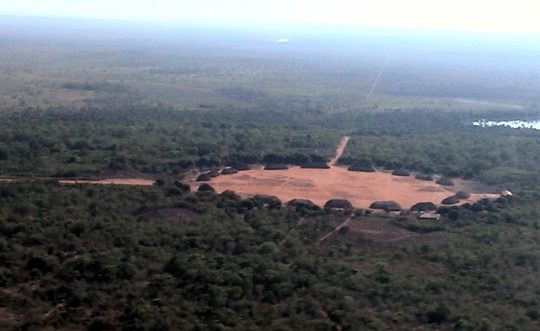
Aerial view of Ipatse village, the main Kuikuro settlement. The basic layout of Xingu villages has remained unchanged for over 800 years.

Dr. Heckenberger, whose archeological findings were recently featured on the Discovery Channel’s 3-part series, “Lost Cities of the Amazon,” continues to work with the Kuikuru in the upper Xingu River basin. Chief Afukaka Kuikuro, who helped Heckenberger gather materials for the museum in the early 1990s, and is involved in other collaborative projects, will likely play a critical role. Because ethnographers were historically male, women’s views and artifacts got short shrift in museum research. In an effort to remedy such bias, several Kuikuro women will be included in the project.

Working around the computer. Archeologist and CMNH Research Associate Michael J. Heckenberger is second from the left. Chief Afukaká is on the right.
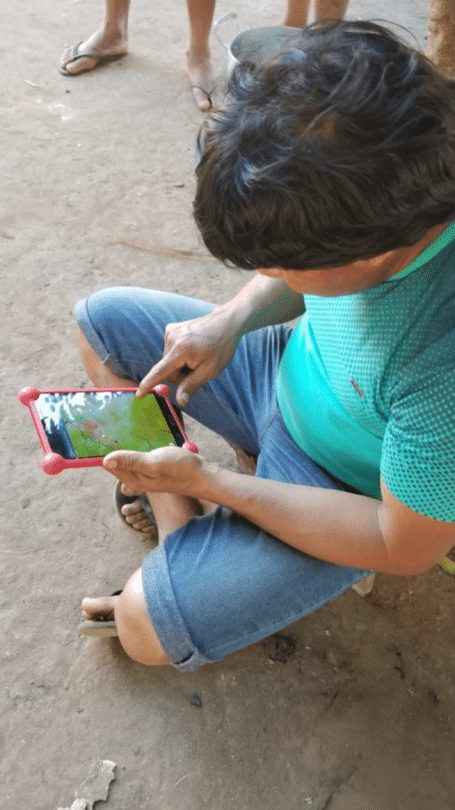
Kuikuro man using the mapping function on his cell phone.

What will be the outcome of this endeavor? At the very least, a small exhibit in the museum will make select artifacts accessible to the people of the Pittsburgh Region as windows into the culture of the Kuikuro. Other possibilities include an online catalog, or a large installation with visiting Kuikuro to present lectures and show the films of film-maker Takumā Kuikuro. At the very least, artifact images will be shared with the Kuikuro themselves, so that they have a record that will remain available to their craftworkers, children, and grandchildren.

These ambitious plans might not happen anytime soon. With time and funding, however, bringing these wonderful objects to the attention of the public will provide a glimpse of life in a very different world. The Kuikuro have much knowledge to share, and we’d like to be a part of making it available to the rest of the world.

Sunrise over the Xingu river, at Ipatse village.

Additional resource: The Xingu Firewall

Deborah Harding, M.A. is the Collection Manager of the Section of Anthropology at Carnegie Museum of Natural History. This blog is part of Super Science Days: Scientist Takeover! 

Related Content

Scientist Takeover: What is a Dichotomous Key?

Super Science: What’s an Ornithologist?

Women in Science at Carnegie Museum of Natural History

Filed Under: Blog Tagged With: Scientist Takeover, Super Science Days

September 14, 2020 by Kathleen

Super Science: What’s an Ornithologist?

Today on the blog we’ll be talking all about birds, so thanks for joining me. If you’ve ever wanted to learn more about birds but didn’t know where to begin, then you’ve come to the right place. Whether you’re a young person just starting to take an interest in science or an adult looking to delve deeper, I think you’ll find some interesting surprises on our adventure. What do we call a scientist who studies birds? If you guessed ornithologist, you’re right! The word comes from the Greek for “bird” and “discourse on;” ornis and logos respectively.

So, with that info in mind, can you guess what an ornithologist’s cereal says when they pour milk over it at breakfast? Hint: Think bird names. Give up? “Snipe, Grackle, Peep!”

Tools Ornithologists use to observe birds

  1. A notebook to record your careful observations.
  2. A a bird field guide. If you don’t have one, check one out from your local library to expand your knowledge. You can use such a guide to confirm which birds you’ve observed and documented in your notes. You should also consult the Cornell Lab of Ornithology online. If you’ve ever heard birds chirping in our Hall of North American Wildlife, those recordings came from Cornell University’s archive!
  3. Binoculars! These are a must, whether you’re someone who wants to take your birdwatching to whole a new level of detail, or a kid who wants to tackle a fun project with their adult.

Make Your Own Binoculars!

Supplies Needed

  • Two cardboard toilet paper tubes
  • Scissors
  • Stapler
  • Clear tape
  • Paint, magic markers, stickers, and/or wrapping/construction/scrapbooking paper

Directions

  1. Decorate your two cardboard tubes. Be creative! You can paint them, cover them with stickers, draw on them—you name it! If you choose to wrap your cardboard tubes with paper, make sure to ask your adult for help. They’ll help you measure the paper and cut it to size so that it will cover each tube just right. Your adult can also help you to tape the newly sized paper to each tube accurately.
  2. Have your adult safely staple the two tubes together with one staple at each end of your new cardboard binoculars. Voila! You’re ready to have fun using your imagination as you learn about birdwatching and the roles birds play in our everyday life.

Whether you live in the city, suburbs, or in a rural area, birds are a major part of your environment. The Oakland neighborhood of Pittsburgh, home to Carnegie Museum of Natural History, is no exception. Great Blue Herons (Ardea herodias) are no strangers and Peregrine Falcons (Falco peregrinus) are known to nest at the very top of the Cathedral of Learning.

In the autumn at twilight you’re bound to see clouds of starlings and crows getting ready to migrate. As for the crows and starlings, don’t worry, you’re not in a Alfred Hitchcock movie, it is a perfectly natural formation. These birds flock together for protection from another bird that calls Pittsburgh home, the Great Horned Owl. As humans we’re slowly becoming more conscious of the fact that we share our urban spaces with birds. Carnegie Museum of Natural History is doing its best to keep birds safe as we strive to coexist with the natural world around us. Last year, in 2019, the museum in conjunction with Birdsafe Pittsburgh began applying experimental films to its windows to help birds see the glass and avoid death from a collision.

I hope this blog has either encouraged you to give birdwatching a try for the first time, or rekindled an interest of longstanding. Birding allows all of us to more deeply explore our local ecosystems and to appreciate our indelible link with the natural world.

Nicholas Sauer is a Gallery Presenter and Natural History Interpreter in Carnegie Museum of Natural History’s LifeLong Learning Department.

Filed Under: Visitor Info Tagged With: Scientist Takeover

  • « Go to Previous Page
  • Page 1
  • Page 2

sidebar

About

  • Mission & Commitments
  • Directors Team
  • Museum History

Get Involved

  • Volunteer
  • Membership
  • Carnegie Discoverers
  • Donate
  • Employment
  • Events

Bring a Group

  • Groups of 10 or More
  • Birthday Parties at the Museum
  • Field Trips

Powdermill

  • Powdermill Nature Reserve
  • Powdermill Field Trips
  • Powdermill Staff
  • Research at Powdermill

More Information

  • Image Permission Requests
  • Science Stories
  • Accessibility
  • Shopping Cart
  • Contact
  • Visitor Policies
One of the Four Carnegie Museums | © Carnegie Institute | Privacy Policy | Terms of Use | Accessibility
Rad works here logo