DIY Helicopter Seeds from CarnegieMNH on Vimeo.
Taking Flight
Super Science Activity: Straw Rockets
Energy is necessary for flight, but how do scientists know how much is enough? You can make your own rocket to test different methods of liftoff!
*This activity requires adult supervision
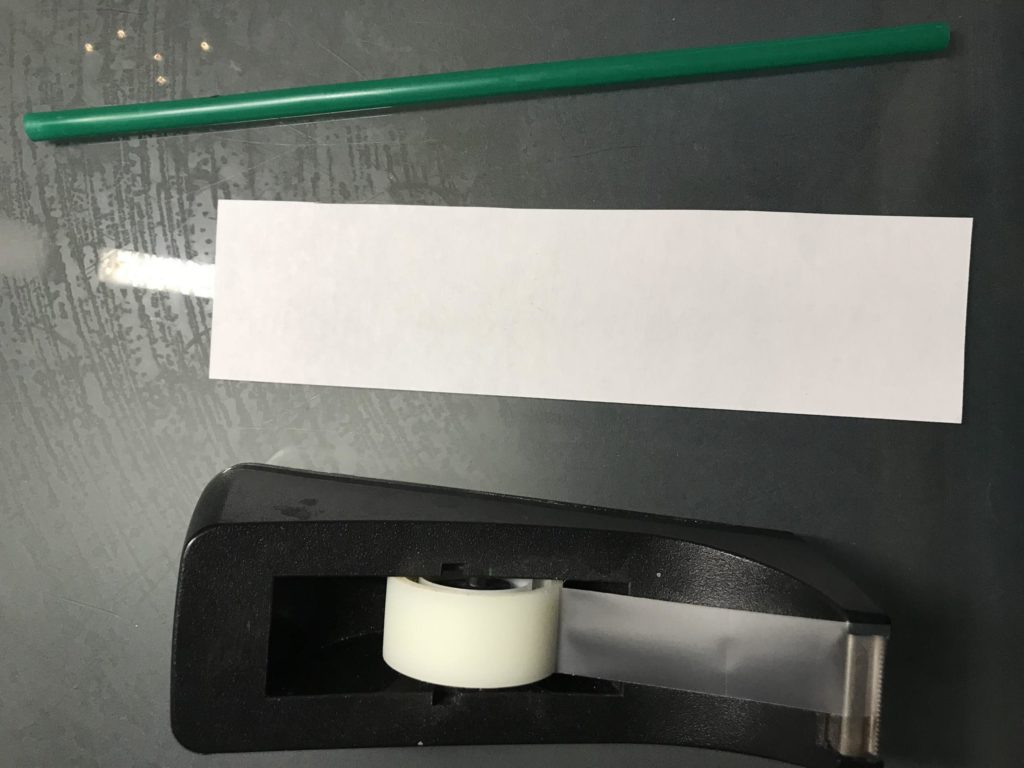
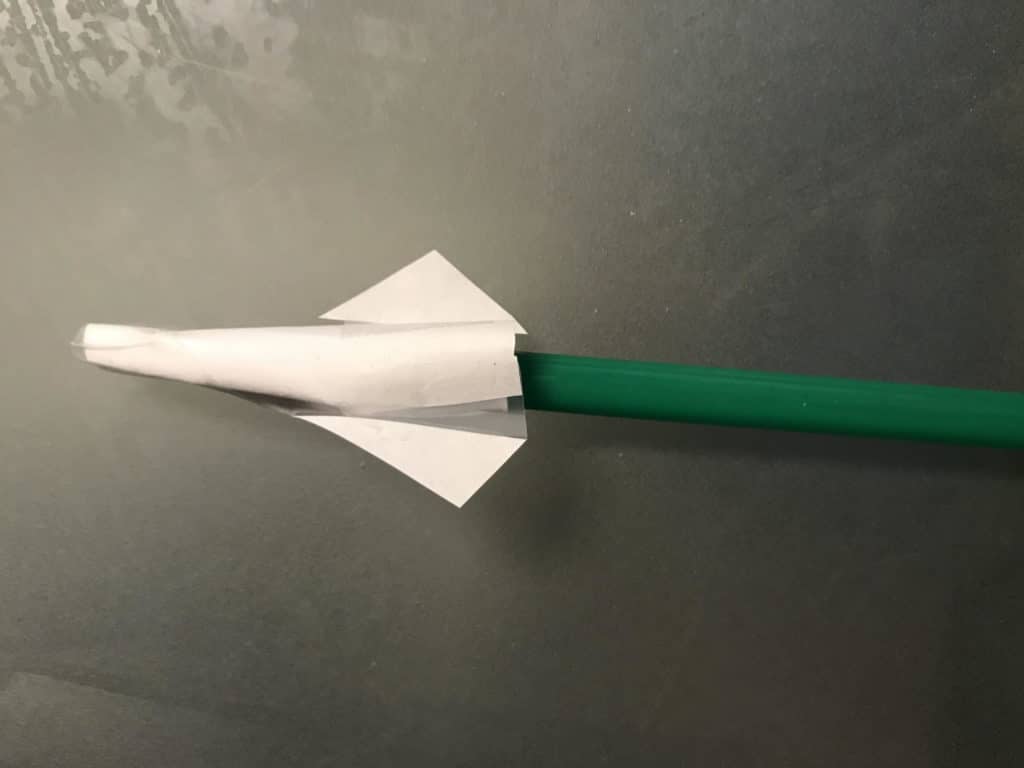
What You’ll Need to Make Straw Rockets
- Plastic straws
- Printer paper or similar quality paper
- Scissors
- Tape
- OPTIONAL: crayons/markers
Directions
- Using scissors, cut a thin strip of paper roughly 2 inches wide.
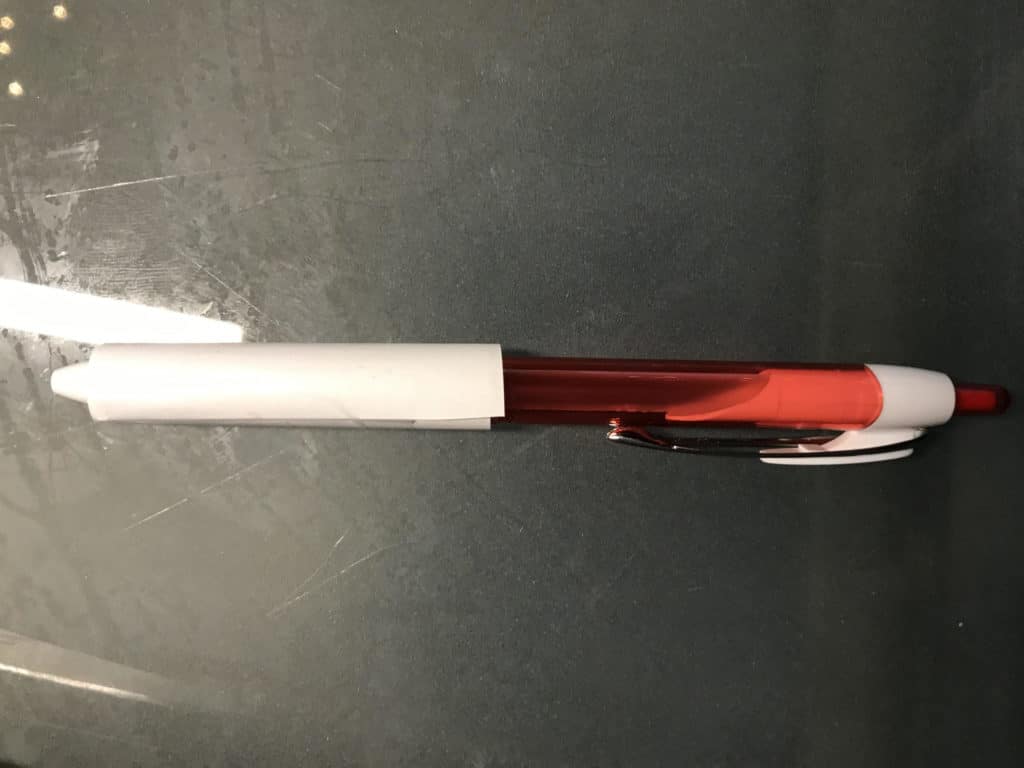
- Wrap the paper into a cylinder shape (TIP: use a pencil or another plastic straw to help the paper keep its shape).
- Tape the paper at the seam to secure it.
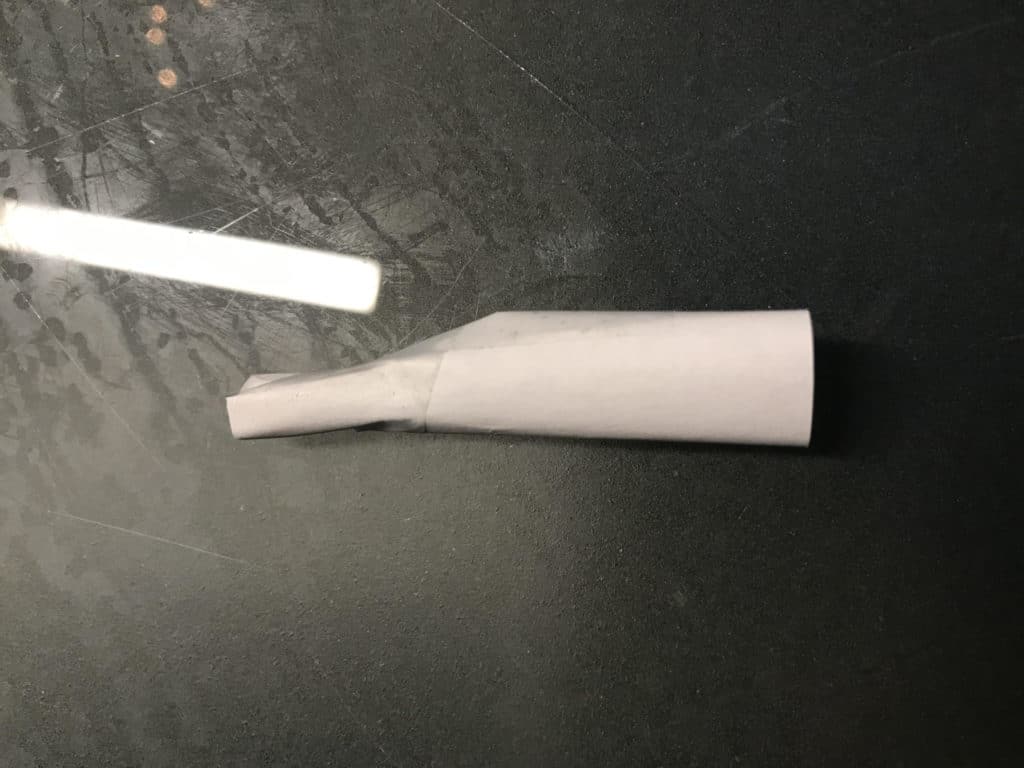
- Take one end of the paper and fold it into a triangle shape. Tape down to secure the “nose” of the rocket (it’s ok if it’s not a perfect point!).
- Cut 2 triangles from your leftover paper and tape them to the bottom of your rocket, parallel from each other. This is the rockets tail and will help it glide in the air easier (TIP: make sure the bottom of your rocket has an opening big enough for your straw to fit into).
- OPTIONAL: using crayons or markers, make a design on your rocket.
- Once you’re satisfied with your rocket, place it on your plastic straw and blow through the other end
Observe:
So, what’s really happening? When you blow into the straw, you’re releasing hot air, which naturally wants to rise into the atmosphere. Because the air is being pushed through a narrow space in the straw, it launches the rocket into the air for a briefly—however, your rocket can’t create energy to keep itself in the air like a real rocket or animals like birds and insects can. Because it doesn’t have its own energy to keep it airborne, and because of Earth’s gravity, your rocket falls to the ground.
However, there’s also something else going on—although the air you blew into the straw is pushing your rocket up and away, there’s also air pushing against your rocket the minute it leaves your straw. This is called drag or air resistance, and it’s a real issue scientists and pilots face when trying to fly.
For the best results of this experiment, try making a few different rockets—try different shapes and sizes. Which one “flies” the longest?
Sponsors


Winging It: Quetzalcoatlus and the History of Aviation
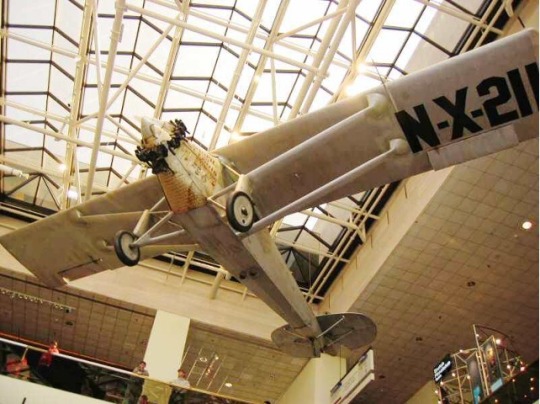
When I see Quetzalcoatlus northropi soaring above the Cretaceous in Dinosaurs in Their Time, I’m often reminded of the Spirit of St. Louis suspended aloft at the Smithsonian National Air and Space Museum. It might sound strange that a pterosaur from 70 million years ago would bring to mind an icon of twentieth century flight, but Q. northropi is a perfect starting point for exploring modern aviation history and the interconnections between nature and aeronautical engineering.
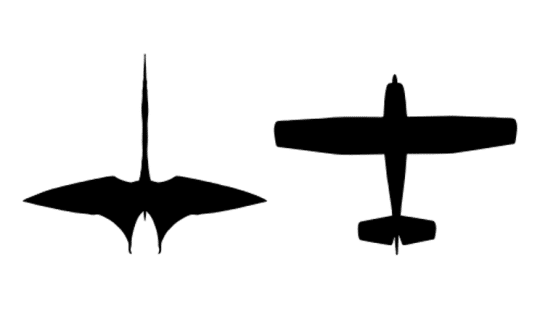
When I was first introduced to Q. northropi, I knew it was named after the Mesoamerican feathered serpent god Quetzalcoatl, but I assumed the northropi part came from the name of the paleontologist who discovered the great pterosaur’s remains. I soon found to my surprise that the specific name northropi was bestowed in honor of Jack Northrop, the aeronautical engineer who experimented with flying wing aircraft designs in the 1940s. When the pterosaur was discovered in Big Bend National Park in the early 1970s by graduate student Douglas A. Lawson from the University of Texas at Austin, Lawson and his advisor were struck by its size (adults could grow as large as a giraffe), wingspan (up to 36 feet), and its lack of a tail. The last of these three features made Northrop a natural namesake for the species. As the fantastic news of Quetzalcoatlus spread in 1975, the journal Science unveiled one of its most memorable cover pages: depicted on the cover of its mid-March issue to dramatic effect is a Northrop flying wing aircraft (think the grandfather of the Stealth bomber), Quetzalcoatlus, a Pteranodon (with a puny wingspan of only 18 feet), and a condor (looking like a harmless sparrow in comparison). From the moment of its discovery in Far West Texas, Quetzalcoatlus northropi captured the imagination of both the paleontological and aviation communities and does so to this day.
The tailless design of Northrop’s flying wing allowed for better fuel efficiency and increased aerodynamics compared to traditional airplane designs. Debate, however, has raged over whether or not Quetzalcoatlus’s anatomy allowed the creature its own advantage in flight…or if it could fly at all. The jury is still out on the particulars of Q. northropi’s flying ability. Recent theorizing, from the mind of paleontologist Michael Habib, has the pterosaur capable of perhaps short flights powered by quadrupedal take-off as opposed to bipedal take-off, the method used by birds. Regardless of the debate, Q. northropi has itself inspired experimentation in drone technology. In 1985, at the behest of the Smithsonian, engineer Paul MacCready and a team of fellow scientists built and tested an orthocopter modeled after Quetzalcoalus with a modified wingspan of 18 feet. While the project was not without its technical hiccups, the team successfully test-flew their human-constructed pterosaur over Death Valley that year. This drone, called QN, is now housed at the Smithsonian National Air and Space Museum and remains an ambitious and fascinating example of how scientists attempt to fathom the biomechanics of extinct species. With this in mind, maybe it isn’t so strange that I’ve imagined Quetzalcoatlus and the Spirit of St. Louis in the same thought after all.
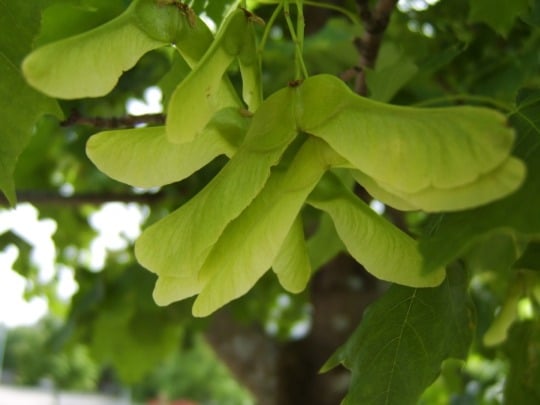
While Q. northropi’s flying skills remain ambiguous, its namesake’s design is indeed found directly in nature. Northrop’s flying wing shares its form and function with the seeds of the Javanese flying cucumber (Alsomitra macrocarpa), a fruit-bearing vine found in Southeast Asia. When its fruit, football-sized gourds, have ripened they release their seeds from high in the canopy of the rainforest. These seeds, light-weight, papery in texture, and shaped like flying wings glide to the ground sometimes several hundred meters away using autogyration to guide and slow their descent; this is the same phenomenon, for example, that guides maple trees’ “whirligig” seeds, known scientifically as samaras, to the ground. Nature is full of designs and forms that aeronautical engineers mine for the advancement of flight technology. Paul MacCready, when lecturing before an esteemed audience at MIT, once called dragonflies, hummingbirds, and hawk moths “nature’s helicopters.” Happily, each of those animals will be common in Southwestern Pennsylvania when spring and summer finally return. So, whether you’re marveling at Quetzalcoatlus northropi any time of year at the Carnegie Museum of Natural History or taking a leisurely walk at your local park, you’ll be able to ponder with renewed attention the interconnections between the natural world and the science of aviation.
Nicholas Sauer is a Gallery Experience Presenter in CMNH’s Life Long Learning Department. Museum staff, volunteers, and interns are encouraged to blog about their unique experiences and knowledge gained from working at the museum.
Works Cited
Bryner, Jeanna. “How Huge Flying Reptiles Got Airborne.” Livescience.com. 7 Jan. 2009. <https://www.livescience.com/3190-huge-flying-reptiles-airborne.html>.
Carlson, Mark. “Northrop’s Radical Flying Wing Bomber of the 1940s.” July 2020. <https://www.historynet.com/northrops-radical-flying-wing-bomber-of-the-1940s.htm>.
MacCready, Paul and John Langford. “Human-Powered Flight: Potentials.” MIT Gardner Lecture, 27 April 1998. MIT Video Productions. <https://www.youtube.com/watch?v=t8C8-BB_7nw>.
Miller, David. “It’s A Bird; It’s a Plane; It’s a…Cucumber?” Boston University. 25 Nov. 2012. <http://blogs.bu.edu/bioaerial2012/2012/11/25/the-stabilizing-characteristics-of-alsomitra-macrocarpa/>.
“Texas Pterosaur Flies into Spotlight this National Fossil Day.” The University of Texas at Austin, Jackson School of Geosciences. 17 Oct. 2018. <https://www.jsg.utexas.edu/news/2018/10/texas-pterosaur-flies-into-limelight-this-national-fossil-day/>.
Related Content
Super Science: She-Ra, the American Kestrel
Super Science: She-Ra, the American Kestrel
Hi, my name is She-Ra and I’m an American kestrel. A scientist might call me Falco sparverius because that’s my species’ scientific name, but my friends just call me She-Ra or sometimes RaRa as a nickname! I may look small, but I am not—I am big, I am brave, and I am important.
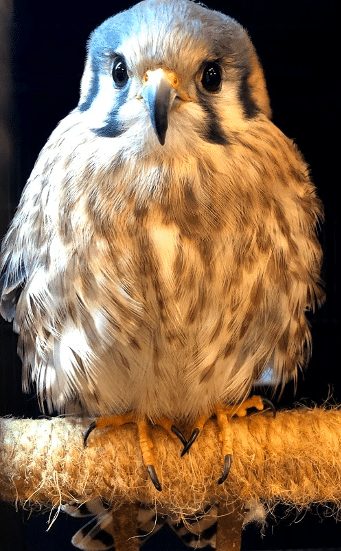
Kestrels like me are a part of the falcon family and are closely related to bigger birds like peregrine falcons. All the other falcons are bigger than us, because we are the smallest member of the falcon family in North America, where we are also the most populous and widely distributed falcon species. This means that there are a lot of birds like me living in the wild!
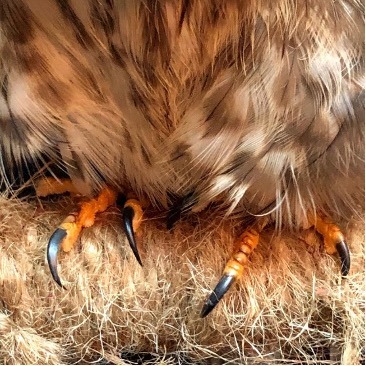
Falcons like me are raptors, or birds of prey, which means that we are meat eating birds. Wild kestrels will eat all sorts of insects, small rodents, lizards, and even smaller birds! We like to grab our prey with the sharp talons on our feet. Just like humans, some of us like to eat certain type of prey over others. My favorites are mice and bugs!
I live at Carnegie Museum of Natural History in Pittsburgh, Pennsylvania, but I used to live in the wild. But I can’t live in the wild anymore: four years ago, I was hit by a car and broke my wrist, which is in the top-central part of my wing. I was taken in by the nice humans at the West Virginia Raptor Rehabilitation Center after my accident, who nursed me back to health. But even after I got better, they realized that I was never going to be able to fly well enough again to survive in the wild—even though kestrels are fierce, we’re also tiny, and sometimes bigger birds of prey try to pick on us. If I returned to the wild, I wouldn’t be able to fly away from a bigger bird! I also wouldn’t be able hover in midair, which is something really cool that kestrels can do.
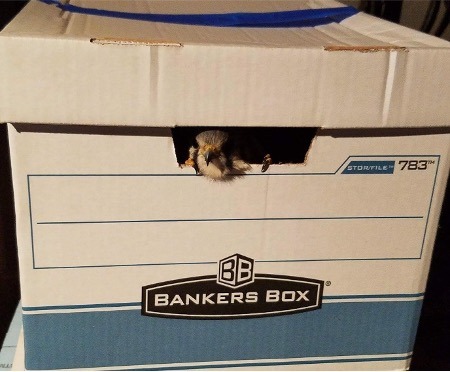
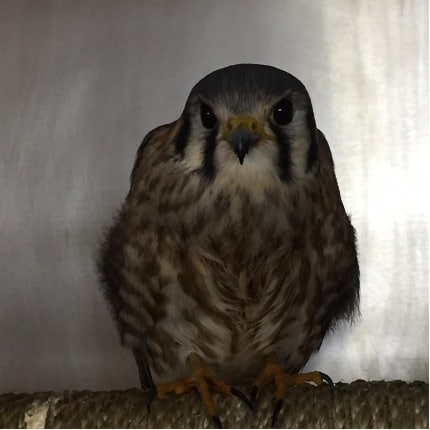
Because I couldn’t return to the wild, I needed somewhere to live, so I came to the museum, where my coworker humans take good care of me. Yes, I have coworkers because I am a bird with a job! I am an educational ambassador animal, which means I help my coworkers teach people about kestrels by appearing in Live Animal Encounters.
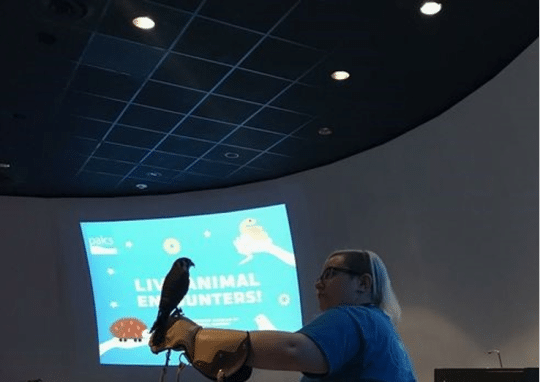
Coming to live at the museum took a lot of special planning, care and attention. I am protected by something called the Migratory Bird Treaty Act of 1918, as are all kestrels and over 1,000 other migratory bird species in North America. The museum needed to get special permits, which gave them permission to have me live here. There are even special permits for my coworkers, which grants them the great privilege of working with me!
The Migratory Bird Treaty Act of 1918 is important because it keeps birds safe. It prohibits people from killing or injuring birds or removing them from the wild. There are special cases like mine, where a bird needs to live somewhere they can be cared for by humans, but they are an exception. Something you may be surprised to hear is that the Treaty Act also protects eggs and nests, and even things like feathers! That’s right—even taking a feather from a protected migratory bird out of the wild is prohibited!
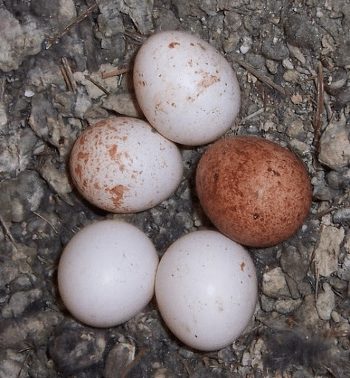
Even though kestrels are the most populous and widely spread falcon species, wild populations seem to be decreasing. No one is quite sure why there are fewer kestrels in the wild, but some possible reasons include human interference with our habitats, the use of pesticides, bigger birds preying on us more often, and road collisions (like what happened to me).
There are things you can do to help keep my wild relatives safe. One big thing is please don’t litter, especially on roads. Litter attracts delicious bugs and mice and kestrels might try to hunt them and get hit by a car. Another thing you can do is respect our space; if you see us in the wild, just leave us alone. If we seem to be sick or injured, please call the local game commission or a wildlife rehabilitation center, they have people that are trained to take care of us, much like my coworkers are trained to care for me.
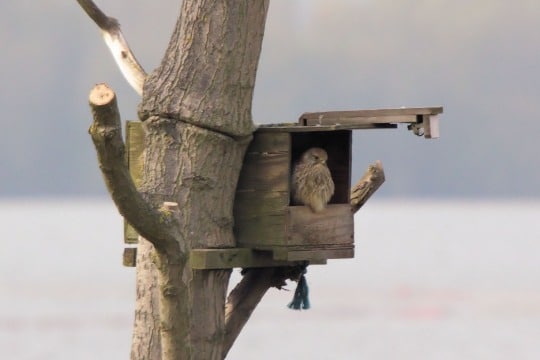
If you really feel like you want to do something more to help kestrels, look into building a nest box, which will give my wild relatives somewhere safe to lay their eggs and raise their babies. If you build a nest box, you can even monitor whether any kestrels come to use it and report that information. That will help scientists learn where kestrels are living and keep track of how many of us are in the wild!
Thank you for taking the time to read my story! I hope you enjoyed learning about me and my relatives. Please check out the videos linked below. I am the star and they can teach you even more information about me!
To report injured kestrels, or other wildlife:
PA Game Commission Southwest Region: 724-238-9523
Humane Animal Rescue: 412-345-7300
Jo Tauber is the Gallery Experience Coordinator in CMNH’s Life Long Learning Department. Museum staff, volunteers, and interns are encouraged to blog about their unique experiences and knowledge gained from working at the museum.
Related Content
Sensory Bin Idea: Flying animals bin
Detecting Objects with Invisible Waves: Using Radar, Sonar, and Echolocation to “See”
Bird Coloring Pages!
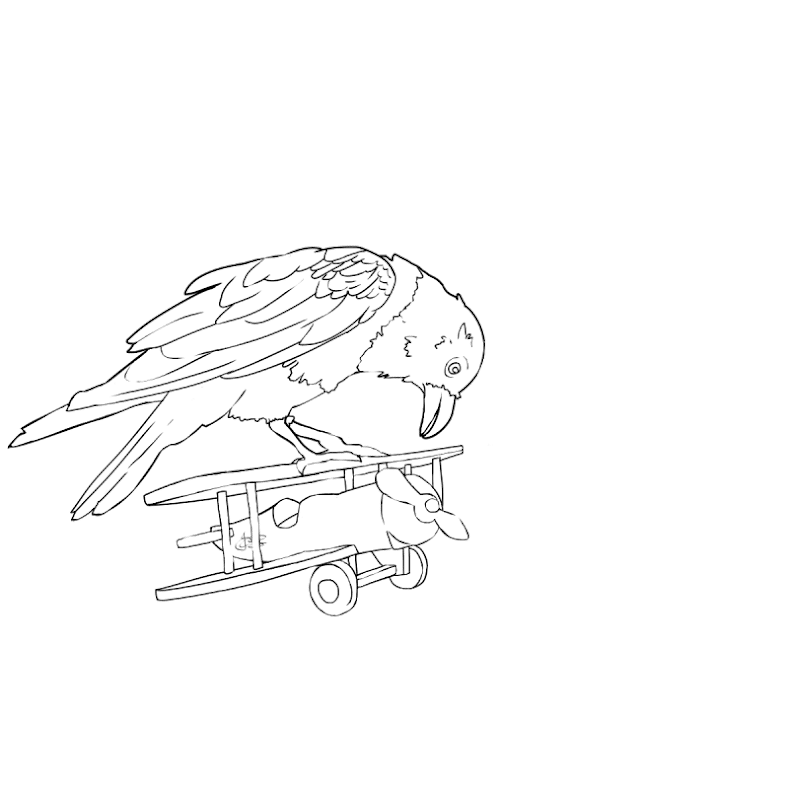
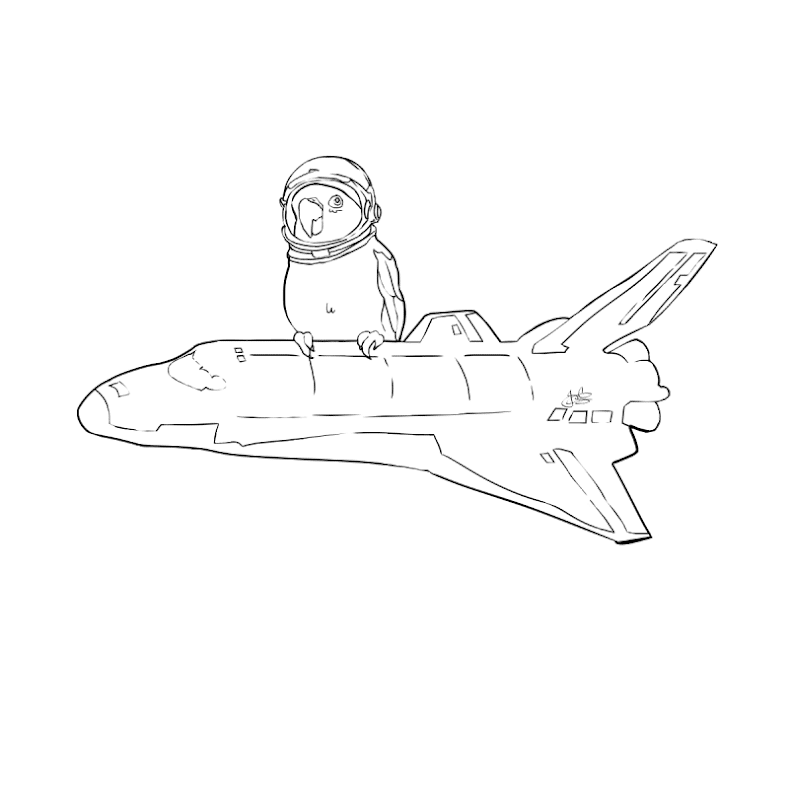
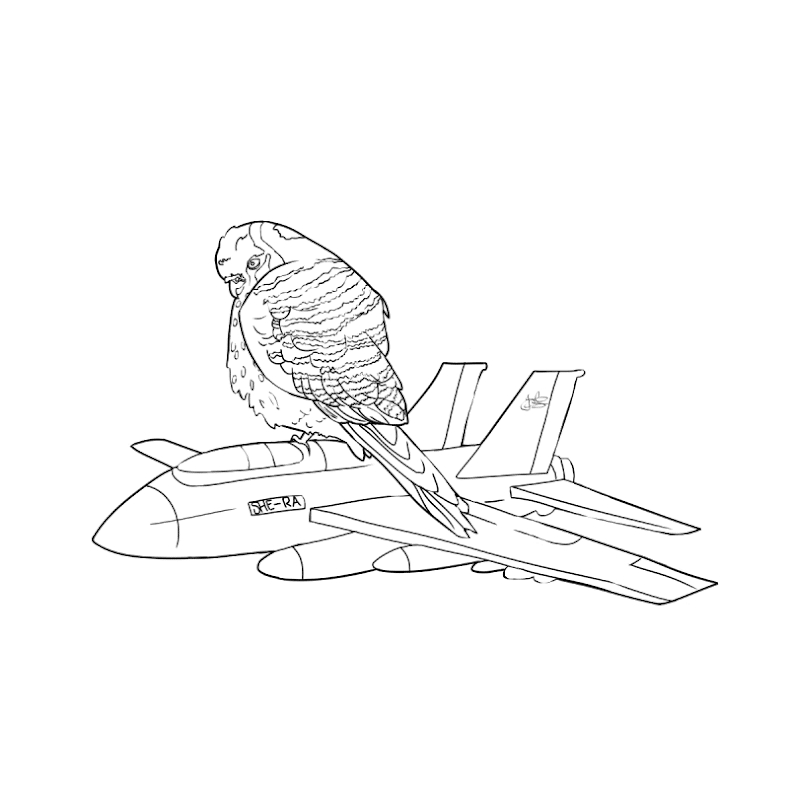
Have fun coloring images featuring animals from our living collection this week drawn by Gallery Presenter and Floor Captain, Jess Sperdute. You can meet some of the animals in the living collection during our Virtual Live Animal Encounters!
Sensory Bin Idea – Flying Animals Bin
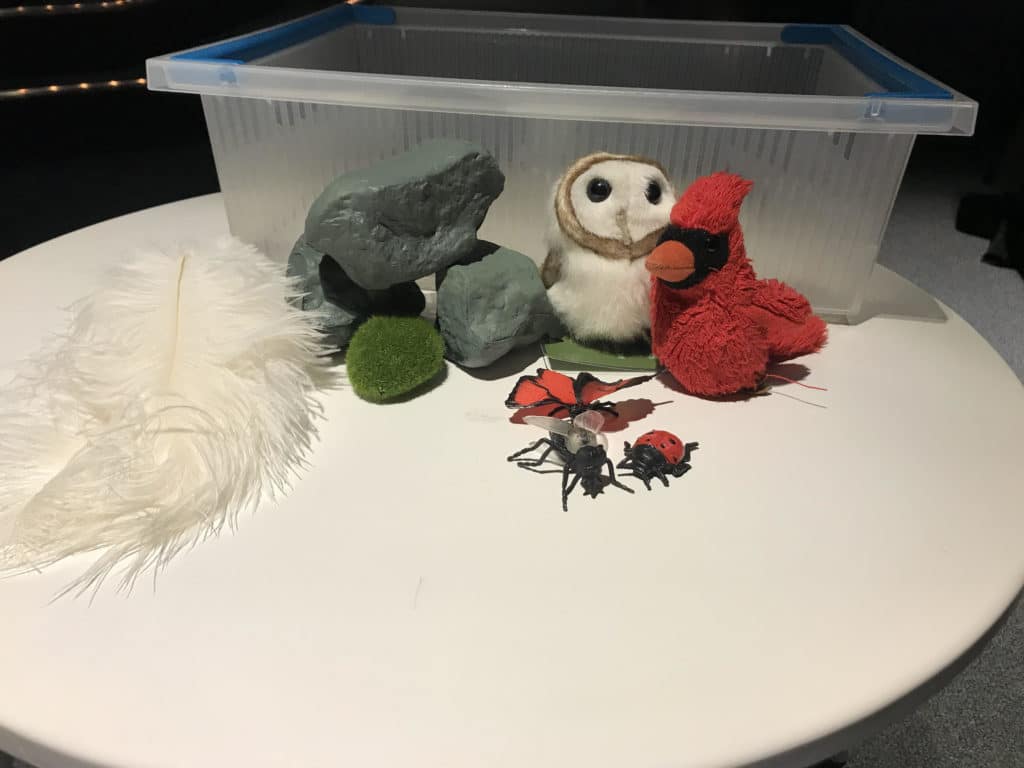
We have a great sensory bin idea for you–create a Flying Animals Sensory Bin with materials you have at home!
What is a Sensory Bin?
Sensory bins are great tools for younger children or children who might have sensory processing disorders to experience some relaxed sensory learning activities. For example, a sensory bin might include textures that encourage fun or textures that you might want your child to get used to (like sand perhaps) as well as goaled learning activities, like foam letters or numbers. In this activity, we suggest including toy animals to learn more.
Flying animals living in different ecosystems use the materials they have at their disposal to their advantage, but not every ecosystem is the same; cardinals may use a very different strategy when building their nests up high in trees than a sandpiper, who typically construct simple nests near the shores where they search for food. The same can be said for various insect species and even mammals like bats. You can choose multiple flying animals as inspiration for a sensory bin, too!
Materials Recommended
- 1 small/medium-sized bin
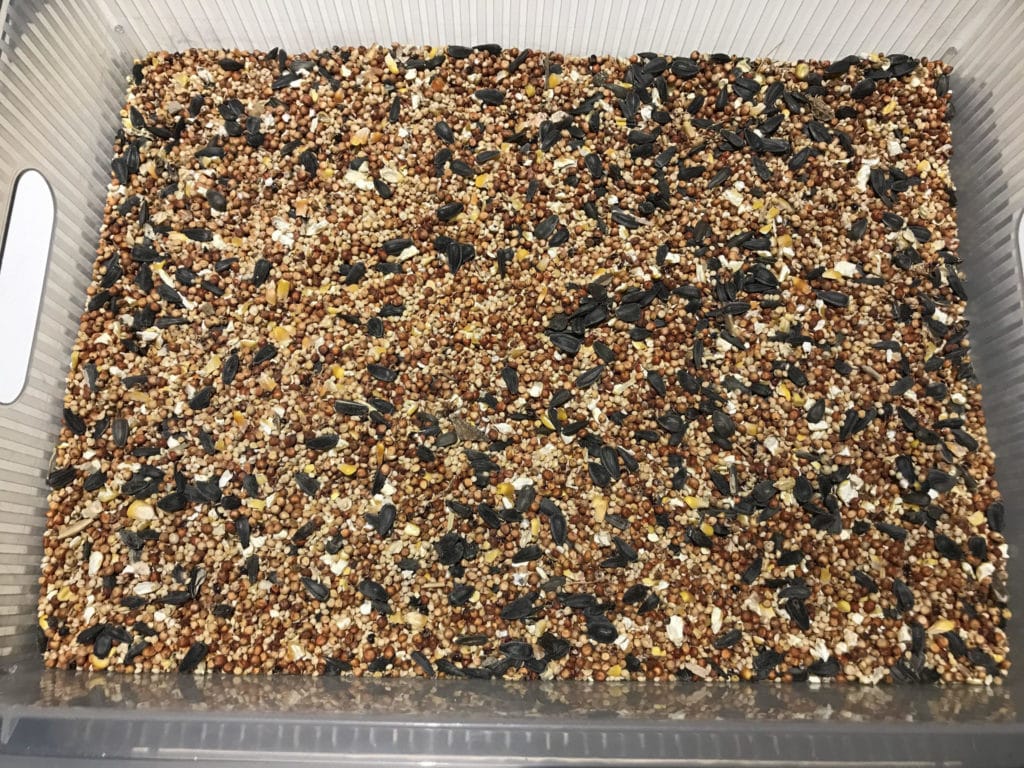
- Bird seed (or a granulated substance like rice or sand)
- Plastic insects/birds/bat toys
- Sticks or fake grasses
- Rocks
- Feathers*
*Be careful not to use feathers you find outside—these can carry a lot of different germs! Use craft feathers instead.
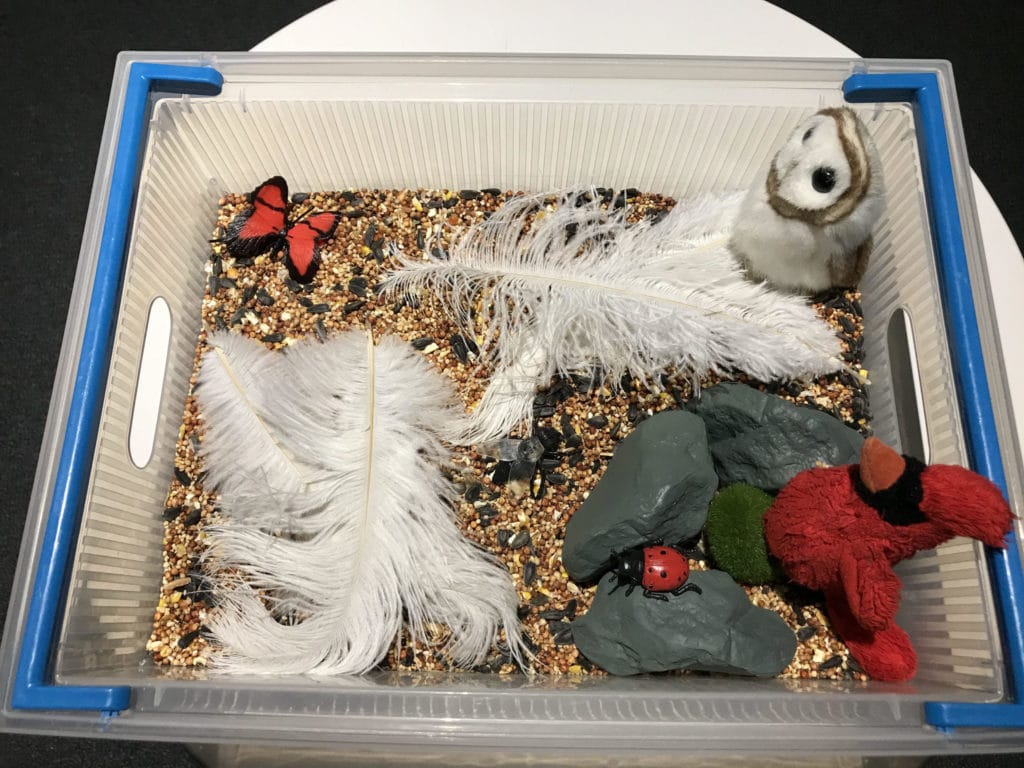
Directions
- Pour enough bird seed or granulated substance into your large container to cover the bottom completely.
- Decide what animal you want your bin to focus on (you can also create an entire ecosystem with multiple animals!).
- Where does this animal live? What types of materials would be in its habitat (sticks, rocks, etc.). If the animal lives in a cold place, how would they keep warm? What would they need in a habitat with little water?
- Place your animals and other materials inside the sensory bin. Get creative! Do some of your flying insects like to burrow? Place them under the seeds and out of sight.
We’ll be working on more sensory friendly content as soon as we can, find it on our Sensory Friendly Saturdays Page.
For more activities to complete with your household, check our our Super Science Saturday Page.
Sponsors