Every November, Veterans Day reminds us to acknowledge the sacrifice of fellow workers who have served in our Nation’s military. In recent years, I’ve found books can sometimes create enough common ground for such recognitions to go beyond the simple statement, “Thank you for your service.”
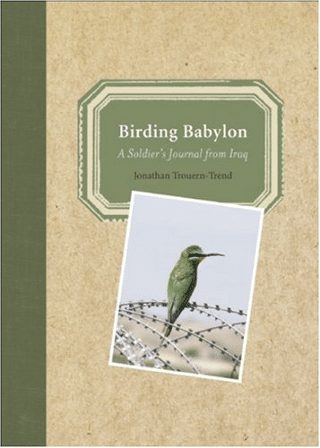
Birding Babylon, a pocket-sized Sierra Club book published in 2006, enabled me to learn more about CMNH Finance Manager Brian Nusida’s service as a Marine Squad Leader during two combat tours in Iraq. The book is a simple compilation of bird sighting blog posts by Sergeant First Class Jonathan Trouern-Trend, of the Connecticut National Guard, during his year-long deployment to Iraq. After reading the book, I left the copy on Brian’s desk while dropping off a routine expense report. “I didn’t know the names,” Brian reported the next time we passed in a museum hallway, “but I recognized some of the birds.” The exchange was the first of an ongoing series of conversations that have allowed me to begin understanding both the risks he faced and the responsibilities he shouldered as an American soldier.
In our most recent exchange Brian updated me on the fate of the Birding Babylon copy. “The book you left for me is currently in Afghanistan although I cannot say with who or their branch of service. I believe 3 Marines and a soldier have had that book with them over there. Some even signed the first flap before returning it. It’s a well-traveled book.”
A book I borrowed from Carnegie Library sparked a conversation with Security Guard David Lanier about his Air Force service decades ago in Vietnam. In the spring of 2018 when the Pittsburgh Arts and Lectures series brought author and University of Southern California professor Viet Thanh Nguyen to speak at Carnegie Music Hall, I prepared for the event by reading one of his recent books titled, Nothing Ever Dies: Vietnam and the Memory of War. Within that scholarly work, as part of a discussion of Zippo Lighters as icons of American military involvement in Vietnam, Nguyen refers to a 2007 publication titled Vietnam Zippos: American Soldiers’ Engravings and Stories (Sherry Buchanan, University of Chicago Press). The library had a copy of the book, and one morning when I set the copy on the counter of the Security Console to sign-out some keys, Dave took note of the cover and immediately reached for it saying, “Hey! I had one of those.” Once again, the book served as an ice breaker for later conversations about risk and responsibility of military service.
More than twenty-four years ago, Carnegie Magazine set a standard for broad sharing of information about the past service of museum employees in an article by freelance writer Mike Sajna, titled, From the Sands of Iwo Jima to Carnegie Museums: Our Guards in World War II. You can read the article here.
Patrick McShea works in the Education and Visitor Experience department of Carnegie Museum of Natural History. Museum employees are encouraged to blog about their unique experiences and knowledge gained from working at the museum.
