• Skip to primary navigation
  • Skip to main content
  • Skip to primary sidebar

Carnegie Museum of Natural History

One of the Four Carnegie Museums of Pittsburgh

  • Visit
    • Buy Tickets
    • Visitor Information
    • Exhibitions
    • Events
    • Dining at the Museum
    • Celebrate at the Museum
    • Powdermill Nature Reserve
    • Event Venue Rental
    • Gift Cards
  • Learn
    • Field Trips
    • Educator Information
    • Programs at the Museum
    • Bring the Museum to You
    • Guided Programs FAQ
    • Programs Online
    • Climate and Rural Systems Partnership
  • Research
    • Scientific Sections
    • Science Stories
    • Science Videos
    • Senior Science & Research Staff
    • Museum Library
    • Science Seminars
    • Scientific Publications
    • Specimen and Artifact Identification
  • About
    • Mission & Commitments
    • Directors Team
    • Museum History
  • Tickets
  • Give
  • Shop

Erin Southerland

October 7, 2021 by Erin Southerland

Making Time Disappear

by Joann Wilson

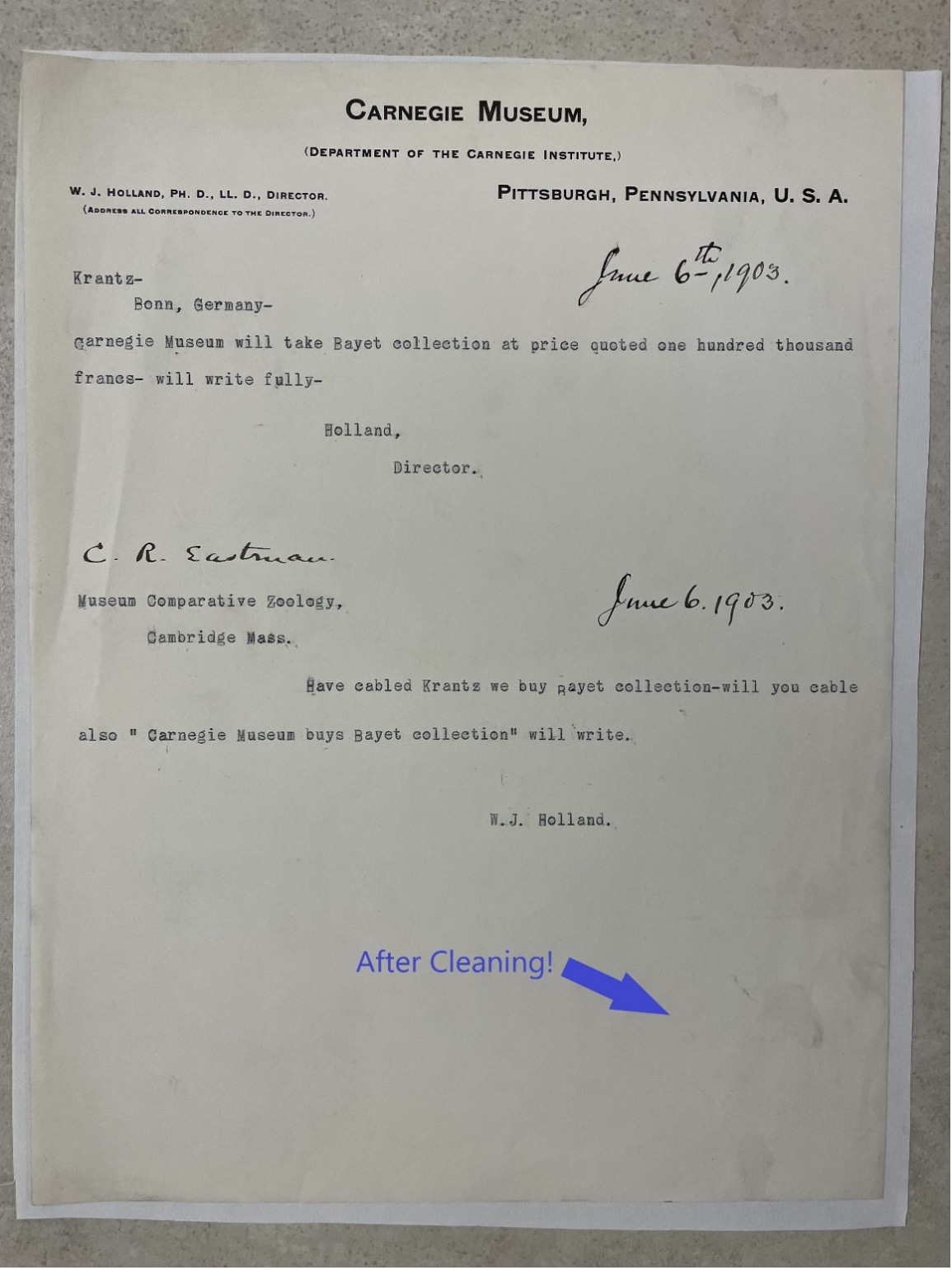
Archivists control time. During a recent visit to the Carnegie Museum of Natural History Library, Kelsea Collins, Carnegie Museum Library Cataloger, demonstrated the magic of archival restoration on a 118-year-old document.  Kelsea, along with Marie Corrado, Carnegie Museum of Natural History Library Manager, guided me to a windowless, climate-controlled section of the Natural History Library. In this room, rows of hand bound documents, and other archival materials, rest at a constant 65–68-degrees Fahrenheit.     

Cleaning Historic Documents

On a flat surface, ready for cleaning, lay an historic “wove” paper cable. “Wove” paper production was introduced in 1750 at a time when paper was made by hand. It is sometimes confused with another of material, known as “laid” paper. Both types are made from wood pulp. The type of mesh, used during manufacturing, generates the differing appearance. Wove paper has a more uniform look when held up to the light.  Laid paper has lines, grooves, and sometimes, watermarks. By the early 1800’s, machines were introduced to make paper in greater quantities. Kelsea indicated that our 118-year-old document was likely made by machine, not by hand.   
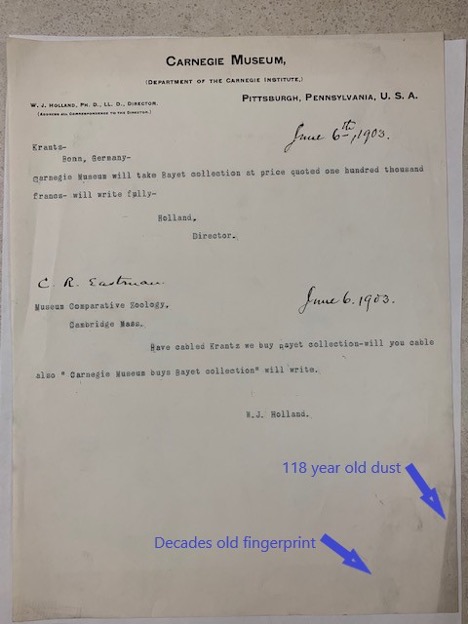
historic document with arrows pointing out dust and fingerprints on the bottom right corner
Before cleaning:  118-year-old document from the Carnegie Museum of Natural History Library.
historic document with arrow pointing to where there was previously much more dust and fingerprints
Same document after cleaning.

Having washed her hands, Kelsea was ready for restoration. Current practice from the Library of Congress recommends clean, dry hands, without gloves for the handling of rare and old documents. Nitrile and cotton gloves, used in previous decades, can easily rip fragile paper. In less than a minute, and with just a few gentle swipes of a dry, vulcanized rubber sponge, Kelsea removed discernible marks from the past. Long forgotten fingermarks faded and dust lines, possibly from coal, disappeared. Our document still has a trace of the century old fingerprints, but the dust lines are almost completely gone. Skilled archivists know when to stop.  
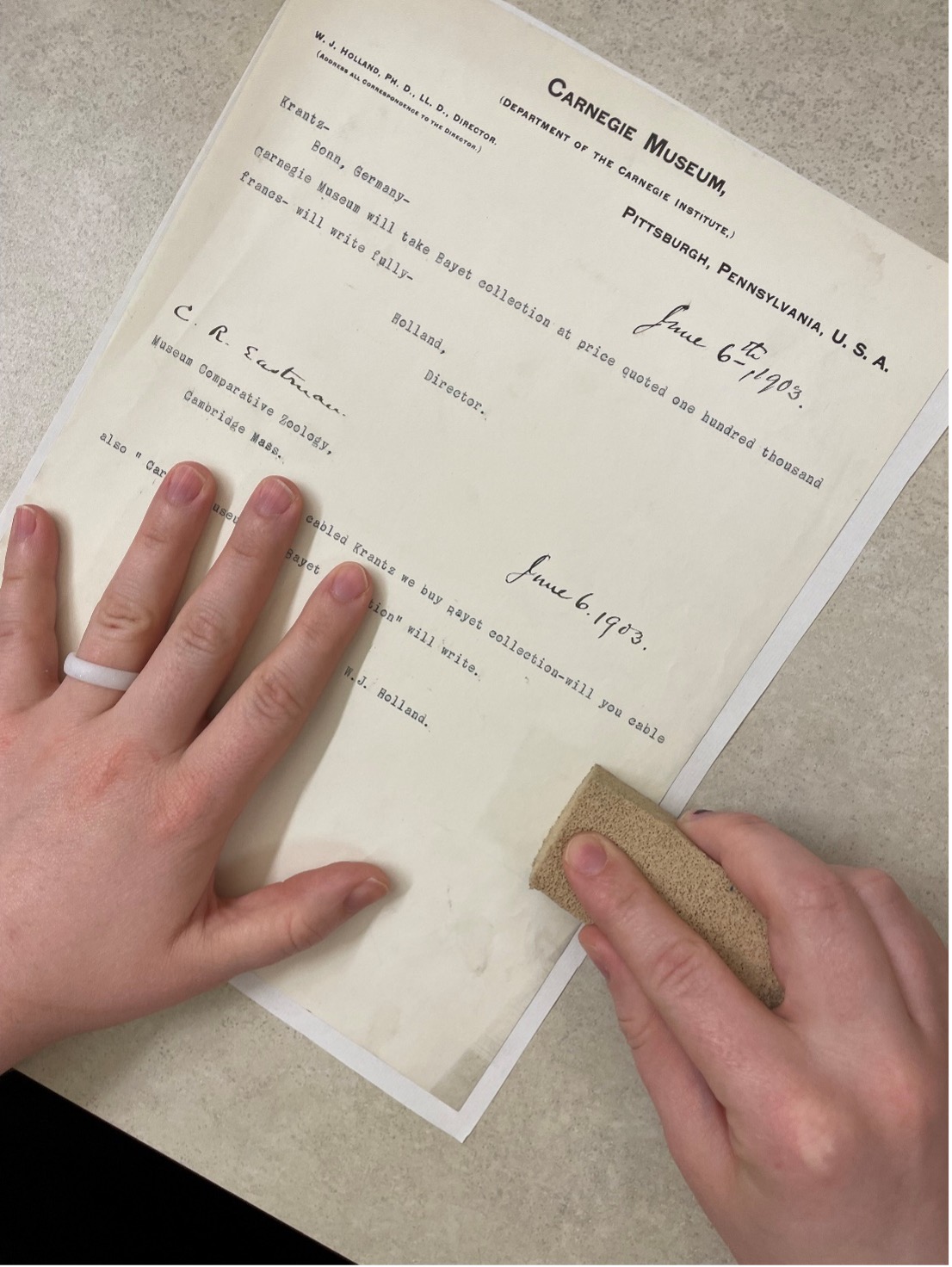
historic document being cleaned by hand with a vulcanized rubber sponge
Document cleaning with a vulcanized rubber sponge.  The Library of Congress recommends cleaning rare documents without gloves.

So, the next time you see an old document, take a moment to see if there are traces of fingerprints or other marks from the past. Then remember the archivists and librarians that deftly decide, whether or not, to make time disappear.   

Many thanks to Kelsea Collins, Carnegie Museum Library Cataloger and Marie Corrado, Carnegie Museum of Natural History Library Manager for taking the time to share this story. Joann Wilson is an Interpreter for the Education Department at Carnegie Museum of Natural History. Museum employees are encouraged to blog about their unique experiences and knowledge gained from working at the museum.

Related Content

Meet the Fossil Detectives in the Basement

A Deeper Look at Dioramas

Sharing Shipping Space with Amphibians and Reptiles

Carnegie Museum of Natural History Blog Citation Information

Blog author: Wilson, Joann
Publication date: October 7, 2021

Share this post!

  • Share on Twitter Share on Twitter
  • Share on Facebook Share on Facebook
  • Share on Pinterest Share on Pinterest
  • Share on LinkedIn Share on LinkedIn
  • Share on Reddit Share on Reddit
  • Share via Email Share via Email

Share this post!

  • Share on Twitter Share on Twitter
  • Share on Facebook Share on Facebook
  • Share on Pinterest Share on Pinterest
  • Share on LinkedIn Share on LinkedIn
  • Share on Reddit Share on Reddit
  • Share via Email Share via Email

Filed Under: Blog Tagged With: Joann Wilson, Science News

January 15, 2021 by Erin Southerland

King’s Dream and Natural History

During the summer of 1963, Martin Luther King Jr. referenced the geographic high ground of our region in his “I Have a Dream” speech when he intoned:

“Let freedom ring from the heightening Alleghenies of Pennsylvania.” 

Fifty-seven summers later, in the face of indisputable evidence that King’s dreams have not become reality, many institutions are renewing commitments to equal opportunities at all levels of their operations. In the field of natural history, a territory that’s neither defined nor bound by museum walls, there have been clear calls for more and safer opportunities to explore the great outdoors, to routinely participate in experiences that build an interest in natural history.

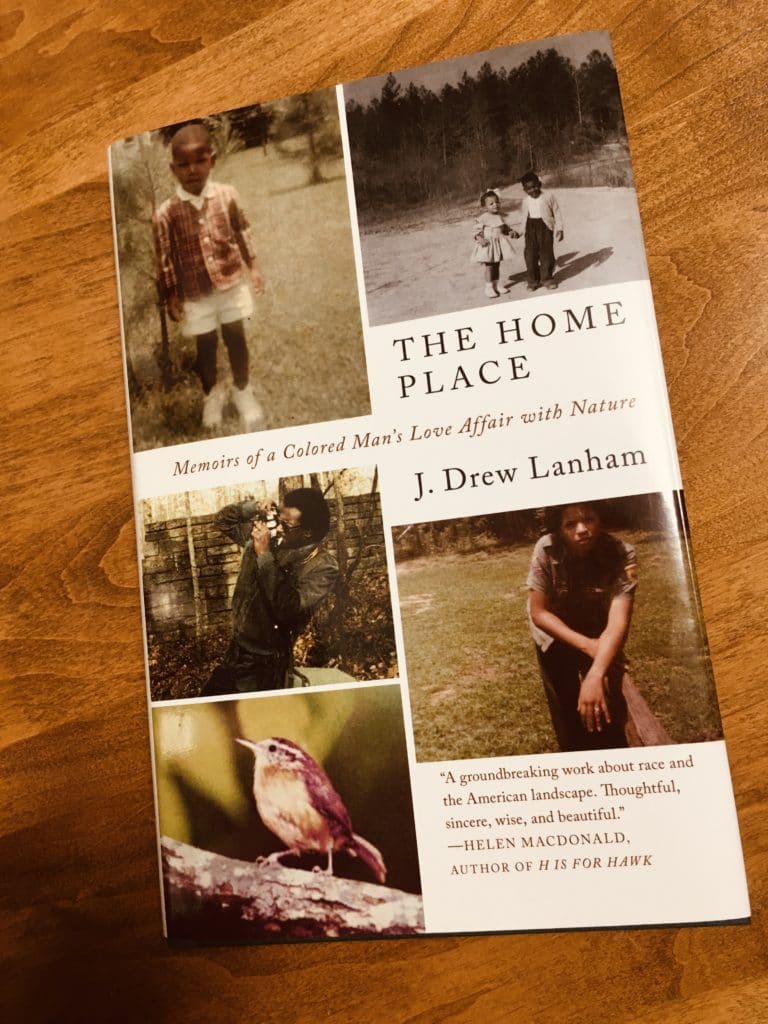
photo of the book "The Home Place: Memoirs of a Colored Man's Love Affair with Nature" by J. Drew Lanham

One of the most articulate calls can be found in The Home Place: Memoirs of a Colored Man’s Love Affair with Nature, a highly praised 2016 book by J. Drew Lanham, professor of wildlife ecology at Clemson University. In a chapter titled, Birding While Black, the author describes a field work incident while checking small mammal traps in a remote section of South Carolina mountains in the company of a white female wildlife biologist.  The two, both South Carolina Department of Natural Resources biologists, were followed, turn for turn, on twisting logging roads by three white men in a battered pickup truck, triggering, before the pursuit was abandoned, what Lanham terms “an edge that I’d only experienced in very bad dreams.”

Several paragraphs later, Lanham offers this:

The wild things and places belong to all of us. So while I can’t fix the bigger problems of race in the United States – can’t suggest a means by which I, and others like me, will always feel safe – I can prescribe a solution in my own small corner. Get more people of color “out there.” Turn oddities into commonplace. The presence of more black birders, wildlife biologists, hunters, hikers, and fisher folk will say to others that we, too, appreciate the warble of a summer tanager, the incredible instinct of a whitetail buck, and the sound of wind in tall pines. Our responsibility is to pass something on to those coming after. As young people of color reconnect with what so many of their ancestors knew – that our connections to the land run deep, like taproots of mighty oaks; that the land renews and sustains us – maybe things will begin to change.

For many of us there’s a clear “ask” in Lanham’s statements. Our answers and actions have potential to move the heightening Alleghenies region closer to King’s dream.

Patrick McShea works in the Education and Visitor Experience department of Carnegie Museum of Natural History. Museum employees are encouraged to blog about their unique experiences and knowledge gained from working at the museum.

Related Content

Harriet Tubman was a Naturalist

What Does it Mean to be for a Place?

We Are Nature: Living in the Anthropocene (Video)

Filed Under: Blog Tagged With: Museum from Home

December 23, 2020 by Erin Southerland

Collected on this Day in 1934

Has your Charlie Brown tree lost its needles yet?

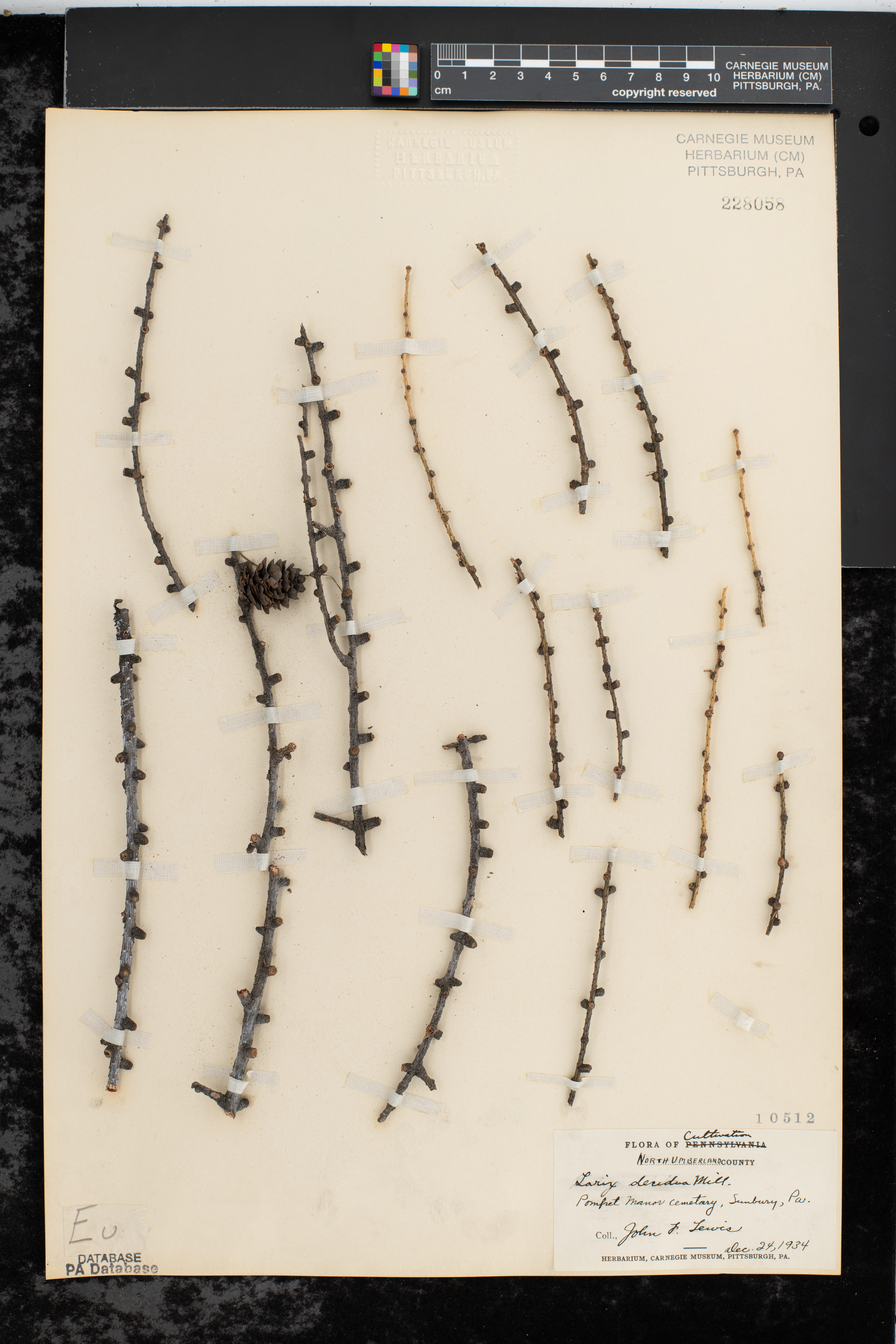
dried specimen of larch on an herbarium sheet

Not all needled-leaved trees are evergreen! Yes, there are deciduous species in the Pine family (Pinaceae).  That is, unlike most needle-leaved trees that retain their leaves all year long (evergreen), there are several conifer species that shed their leaves each year for the winter. Perhaps most famous are a group of species called larches.

No, this needle-free specimen of twigs and a cone wasn’t collected by Charlie Brown on Christmas Eve. Rather, this humble yet festive specimen of European larch (Larix decidua) was collected by J.F. Lewis on December 24, 1934.  Native to the mountains of central Europe, this species was planted in a cemetery in Northumberland county (central Pennsylvania).  It is highly likely the tree is still there – many decades later – as European larches can live for many hundreds of years (perhaps even a thousand years!).  

The herbarium at California University of Pennsylvania is named for the person who collected this specimen – John Franklin Lewis.

European larch recently made the big time news too, featured in a new study published in the scientific journal Science. The researchers used leaf out and leaf fall data collected from across Europe since the late 1940s for four tree species (including European larch). Surprisingly they found that trees may drop their leaves much earlier than expected with ongoing climate change.  In other words, as spring temperatures warm, deciduous trees produce leaves earlier in the spring, but this also causes trees to drop their leaves earlier in the fall.  This means that climate change may not result in longer growing seasons, as has been previously predicted.  You can read more about this study here.

Find this Charlie Brown larch specimen (and more) here.

Check back for more! Botanists at the Carnegie Museum of Natural History share digital specimens from the herbarium on dates they were collected. They are in the midst of a three-year project to digitize nearly 190,000 plant specimens collected in the region, making images and other data publicly available online. This effort is part of the Mid-Atlantic Megalopolis Project (mamdigitization.org), a network of thirteen herbaria spanning the densely populated urban corridor from Washington, D.C. to New York City to achieve a greater understanding of our urban areas, including the unique industrial and environmental history of the greater Pittsburgh region. This project is made possible by the National Science Foundation under grant no. 1801022.

Mason Heberling is Assistant Curator of Botany at Carnegie Museum of Natural History. Museum employees are encouraged to blog about their unique experiences and knowledge gained from working at the museum.

RELATED CONTENT

Collected on This Day in 1884: Beech Drops

Peppermint: A Hybrid Herb for the Holidays

Ask a Scientist: What makes poinsettias so special?

Filed Under: Blog Tagged With: Botany, collected on this day, Mason Heberling, Science News

September 7, 2018 by Erin Southerland

BirdSafe Infinity Scarf

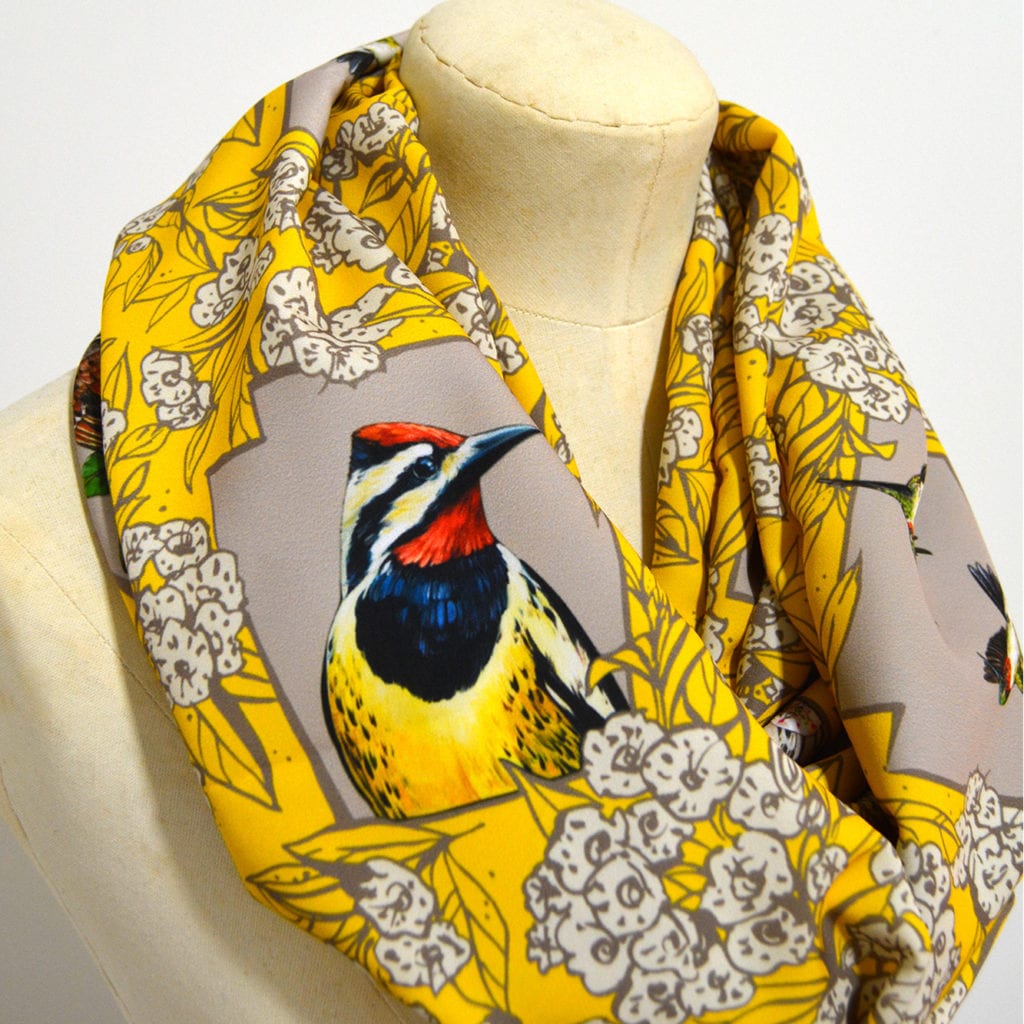
birdsafe infinity scarf

Pittsburgh artist Ashley Cecil created the art for the beautiful BirdSafe Infinity Scarf. Cecil was inspired by the work of BirdSafe Pittsburgh, a group that is actively working to reduce bird mortality due to collisions with glass.

The scarf features six bird species that are native to Pittsburgh and the Pennsylvania State Flower, Mountain Laurel.

Available in the museum store.

Filed Under: Visitor Info Tagged With: gift shop

September 4, 2018 by Erin Southerland

Birds on a Wire Mug

birds on a wire mug

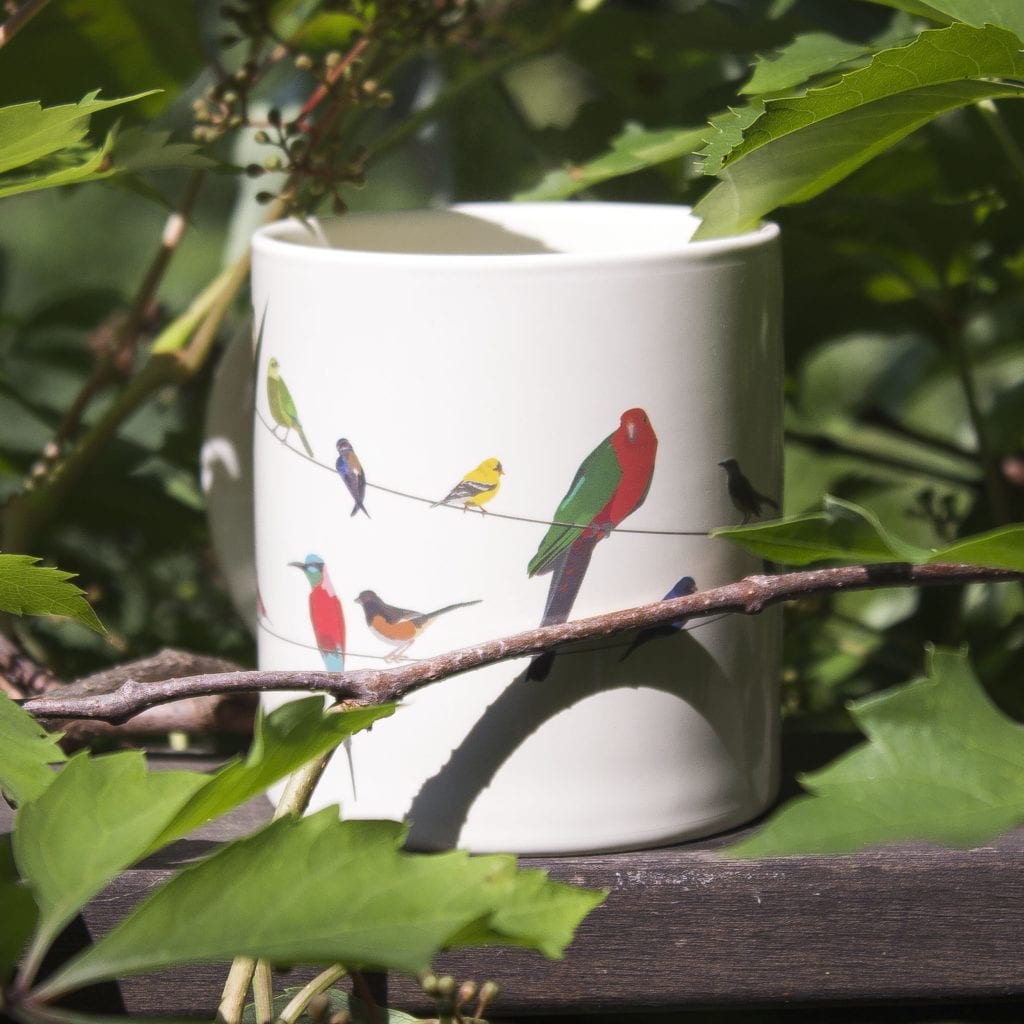
Brighten up your day with this mug featuring birds on a wire. Pull the mug from the cabinet and all 18 birds will be black shadows. But once you pour your hot coffee or tea into the mug, a rainbow of colorful birds will appear like magic. Available for $17 in the museum store.

Filed Under: Visitor Info Tagged With: gift shop

August 27, 2018 by Erin Southerland

Bird Bingo

bird bingo

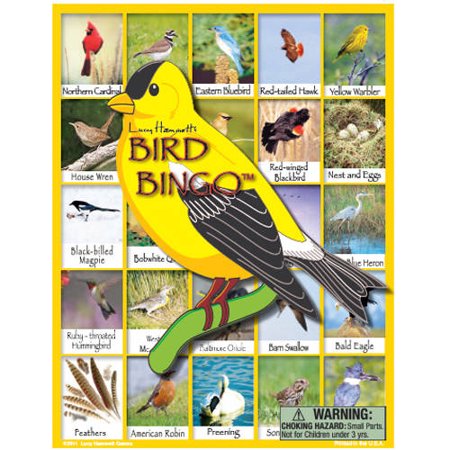
Learn to identify different bird species by playing Bird Bingo. It’s a fantastic learning tool for kids that’s fun for adults, too. Pick it up for $16 in the museum store.

Filed Under: Visitor Info Tagged With: gift shop

  • « Go to Previous Page
  • Page 1
  • Interim pages omitted …
  • Page 21
  • Page 22
  • Page 23
  • Page 24
  • Go to Next Page »

sidebar

About

  • Mission & Commitments
  • Directors Team
  • Museum History

Get Involved

  • Volunteer
  • Membership
  • Carnegie Discoverers
  • Donate
  • Employment
  • Events

Bring a Group

  • Groups of 10 or More
  • Birthday Parties at the Museum
  • Field Trips

Powdermill

  • Powdermill Nature Reserve
  • Powdermill Field Trips
  • Powdermill Staff
  • Research at Powdermill

More Information

  • Image Permission Requests
  • Science Stories
  • Accessibility
  • Shopping Cart
  • Contact
  • Visitor Policies
One of the Four Carnegie Museums | © Carnegie Institute | Privacy Policy | Terms of Use | Accessibility
Rad works here logo