• Skip to primary navigation
  • Skip to main content
  • Skip to primary sidebar

Carnegie Museum of Natural History

One of the Four Carnegie Museums of Pittsburgh

  • Visit
    • Buy Tickets
    • Visitor Information
    • Exhibitions
    • Events
    • Dining at the Museum
    • Celebrate at the Museum
    • Powdermill Nature Reserve
    • Event Venue Rental
  • Learn
    • Field Trips
    • Educator Information
    • Programs at the Museum
    • Bring the Museum to You
    • Guided Programs FAQ
    • Programs Online
    • Climate and Rural Systems Partnership
  • Research
    • Scientific Sections
    • Science Stories
    • Science Videos
    • Senior Science & Research Staff
    • Museum Library
    • Science Seminars
    • Scientific Publications
    • Specimen and Artifact Identification
  • About
    • Mission & Commitments
    • Directors Team
    • Museum History
  • Tickets
  • Give
  • Shop

wpengine

March 9, 2020 by wpengine

Collected on this Leap Day in 1984

Unnamed, but not forgotten!

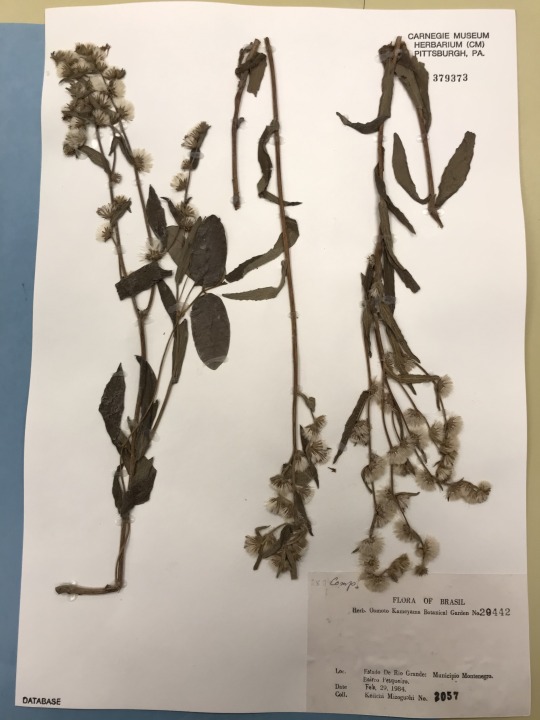
Today, we celebrate the 9th birthday of this specimen collected 36 years ago.

This specimen was collected on leap day, February 29, 1984 in Brazil by Keiichi Mizoguchi.

Fun fact: In the Carnegie Museum herbarium, there are 85 specimens collected on leap day, collected between 1872 until 1990.  That’s a lot of leap years!

Aside from it being collected on leap day, the specimen label might seem even more unique.  Where most herbarium specimen labels have the species name, this one is blank.  A big blank spot. The collector did not identify this specimen, nor has anyone else in the past 36 years (yet).  This is an “indetermined” or unidentified specimen.  It is filed in the sunflower family (Asteraceae) based on its flowers, but it is otherwise not identified.
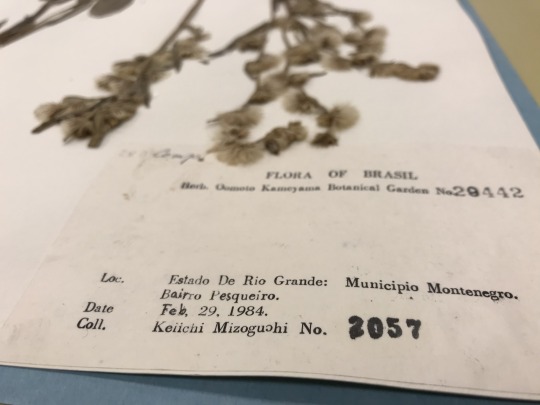
We can’t forget about these unidentified specimens.  Especially those collected on leap day!

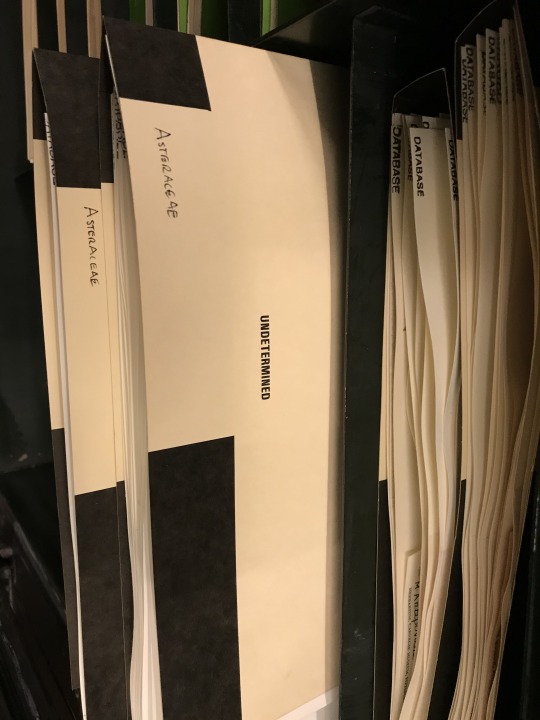
Specimens in the herbarium are arranged by plant family, then genus, then geography (where it was collected), and in nearly every genus, at the bottom of all these folders is a black colored folder labelled “undetermined” (also called “indet.”) that includes those specimens that have not yet been identified to species.  Of the over 525,000 specimens in the Carnegie Museum herbarium, about 2% (= 10,588 specimens), are not (yet) identified to species.
This specimen is most likely a member of a species already known to science, but an expert has not yet identified this particular specimen. However, many undetermined specimens may be undescribed (that is, new to science).  The name and description of new species (alpha taxonomy) is a major purpose of herbaria. A study in 2010 estimated that of the estimated 70,0000 species yet to be described, over HALF are lying in herbaria right now! They also found that only 16% of new species descriptions were done within 5 years of specimen collection, and 25% of new species descriptions involved specimens that were more than 50 years old!

Study abstract here: http://www.pnas.org/content/107/51/22169.abstract

Taxonomy (branch of science on classification of organisms) is always changing.  Species names are changed, what was once thought to be one plant species or family is split into many, and what was thought to be several species is lumped into one. And with further information or upon review by experts in particular plant groups, specimens are determined to be a different species than what the original collector called it. Annotation labels are added to specimens all the time – these labels revise the species listed on the original label. A typical annotation label includes the revised species name and details, the name of the person making the annotation, and the date.

Some specimens can have many annotations, which nicely demonstrates the community culture of science as a process with constant revision as we learn more about the world around us.

Find this specimen here. Check back, maybe it’ll have a species name on it by next leap year!

Check back for more! Botanists at the Carnegie Museum of Natural History share digital specimens from the herbarium on dates they were collected. They are in the midst of a three-year project to digitize nearly 190,000 plant specimens collected in the region, making images and other data publicly available online. This effort is part of the Mid-Atlantic Megalopolis Project (mamdigitization.org), a network of thirteen herbaria spanning the densely populated urban corridor from Washington, D.C. to New York City to achieve a greater understanding of our urban areas, including the unique industrial and environmental history of the greater Pittsburgh region. This project is made possible by the National Science Foundation under grant no. 1801022.

Mason Heberling is Assistant Curator of Botany at the Carnegie Museum of Natural History. Museum employees are encouraged to blog about their unique experiences and knowledge gained from working at the museum.
Filed Under: Blog Tagged With: Botany, collected on this day, Mason Heberling, Science News

March 9, 2020 by wpengine

The Connemara Marble: A Cross-Atlantic Connection Between Ireland and Pittsburgh

Irish Dippy the dinosaur statue

Fig. 1: Irish Dippy

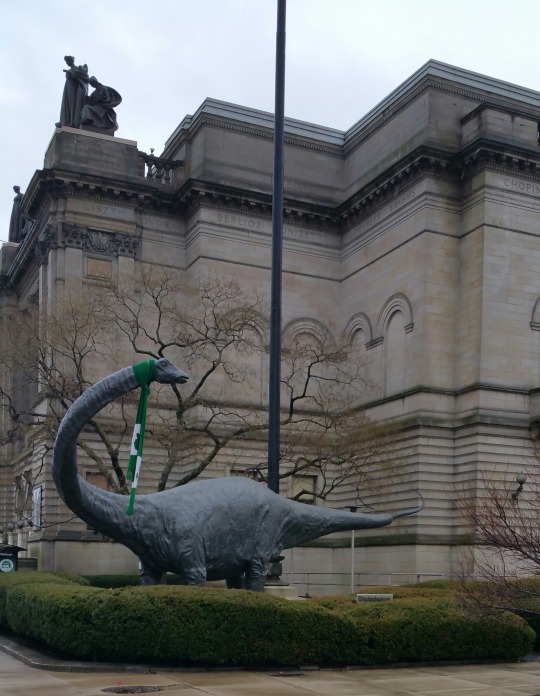
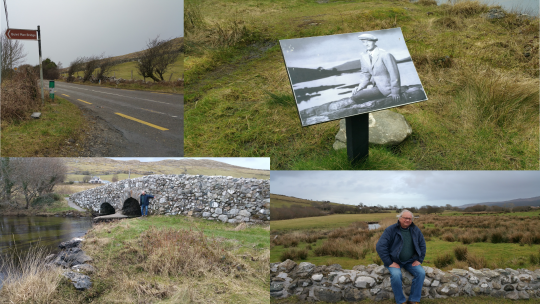
Each March in celebration of St. Patrick’s Day, the full-size dinosaur replica of Dippy (Diplodocus carnegii) that stands guard outside the Carnegie Complex along Forbes Avenue in Oakland, is draped in an iconic Irish scarf (Fig. 1). Inside the classic halls of the Carnegie Complex is a green marble from County Galway, western Ireland. It is called Connemara Marble and is ubiquitous in the museum’s architectural floor designs. Before visiting Ireland for the first time in 2015, my only reference to the green Isle was watching a classic John Wayne and Maureen O’Hara movie, titled, The Quiet Man circa 1952. Much of the movie was filmed amongst the Connemara landscapes and many of the films iconic locations survive to this very day, such as the famous Quiet Man Bridge (Fig. 2).  Moreover, researchers from the Carnegie Museum, National University of Ireland Galway, Connemara Marble Industries Ltd., Moycullen and Mount Holyoke College in Massachusetts, are investigating the significance of this Irish green marble in the architectural design of the Carnegie Institute Extension built by Alden & Harlow in 1907 (Fig. 3), Kollar et al., 2017; Feely et al., 2019, and Kollar et al., in review.

Fig. 2: Quiet Man bridge

Fig. 3: Connemara Map

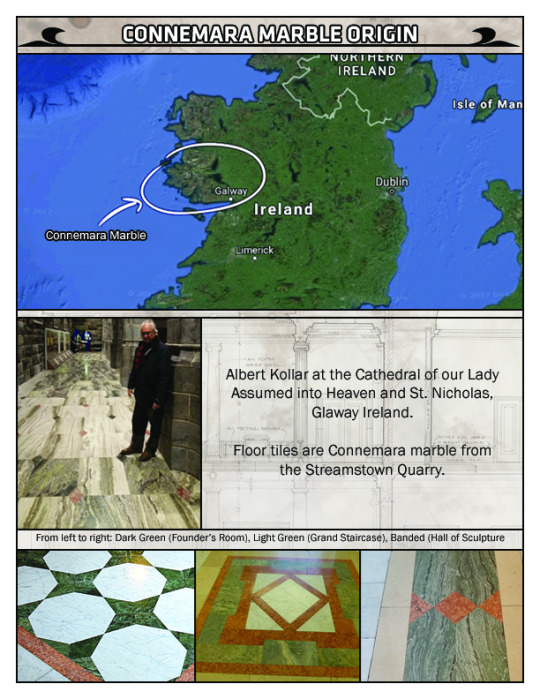
The Streamstown Quarry in Western Ireland

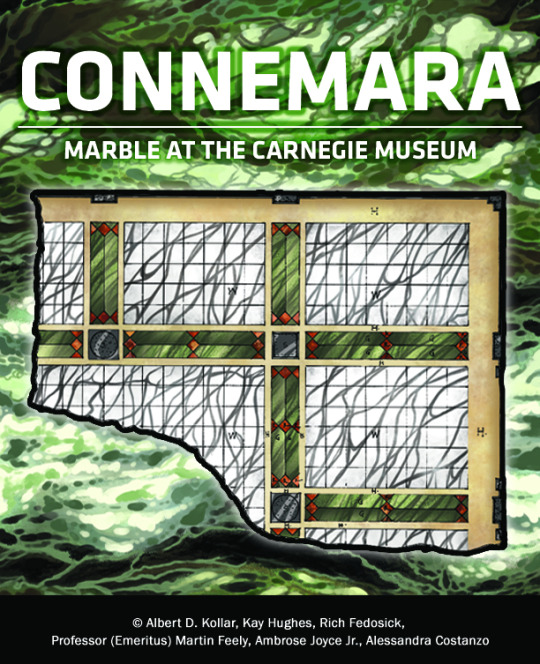
A cross-Atlantic research connection between Ireland and Pittsburgh was initiated in the winter of 2015, when I visited Martin Feely at the National University of Ireland, Galway, an expert on the geology of the Connemara Marble, and Ambrose Joyce, owner of the Streamstown quarry. The objective was to determine the provenance and geology of the Carnegie’s Connemara Marble quarry and to compare the varieties of colored marbles used in the Carnegie’s floor tiles against other buildings with Connemara Marble from the Streamstown quarry (Fig. 4).  The Connemara Marble can be found in the twelve public spaces, corridors, and private rooms, including the Hall of Sculptures, Grand Staircase, Green Room, President’s Office, and entrance corridors to the Carnegie Library of Pittsburgh. A unique use of Connemara Marble is as inlays in the design of the Thistle, the Scottish National flower in the Music Hall Foyer walls.

Fig. 4: Connemara Marble at the Carnegie Museum 

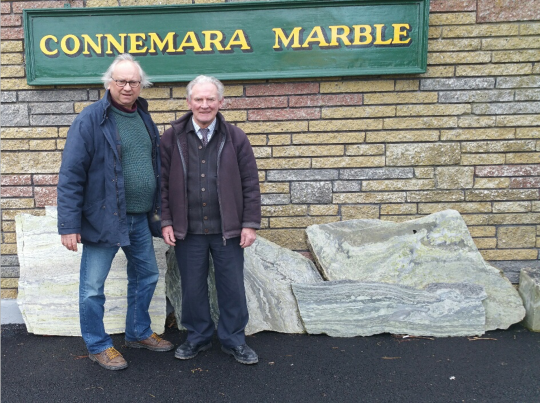
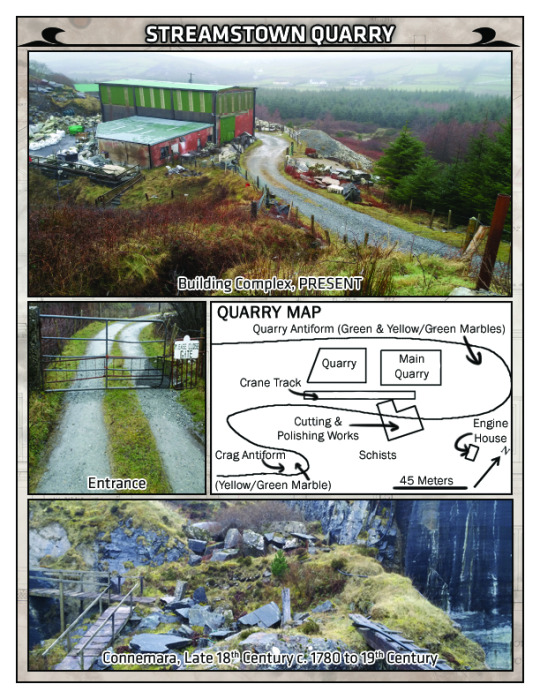
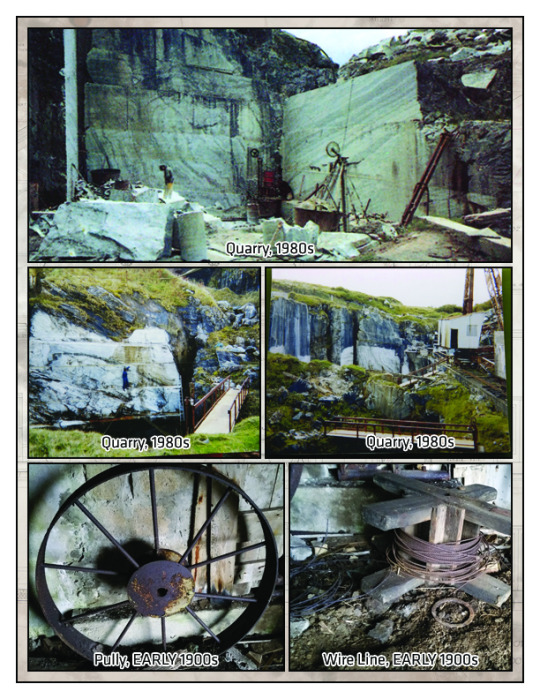
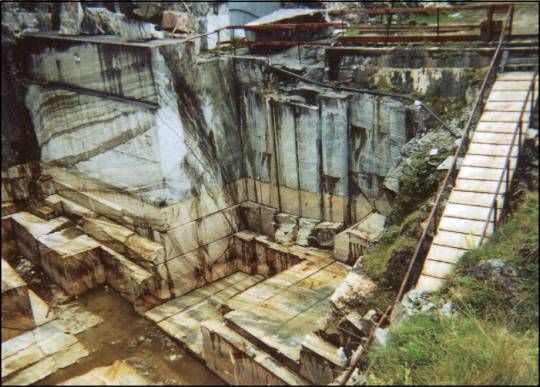
The best way to get to the Streamstown Quarry is by car. The 50-mile drive, along the N59 from Galway to Clifden takes about an hour and 15 minutes through quaint villages and along scenic winding roadways. Understandably, it rained that day as it commonly does in County Galway, circa 45 inches per year. In comparison, Pittsburgh receives about 36 inches of rain per year. Like Pittsburgh, Galway has lush green landscapes because of the annual rainfall.  Visible from the road are mountainous outcrops and lakes e.g. the Twelve Bens quartzite mountains formed over millions of years ago. Their present topography resulted from ice-sculpting during the last glacial maximum. The peat bogs in the low-lying regions formed 5,000 years ago. The history of the Streamstown quarry (Fig. 5) was always best recounted by the patriarch of the family Ambrose Joyce Sr., who sadly passed away in 2015 (Fig. 6 a, b). The entrance to the quarry is hidden from the main road and access is through a gate and then along a minor road shared by other land owners – access to the quarry is strictly by permission only, from Ambrose Joyce. The quarry and its buildings are surrounded by stockpiles of large marble blocks (Fig. 7). I walked around the quarry with Ambrose Joyce Jr. to see the old equipment and hear about the marble quarrying operations dating back to its late 19th century active period (Fig. 8). Then we viewed the modern quarry (Fig. 9) as Martin Feely explained the geology of the 650 Ma. pre-Cambrian limestone that would become green marble during the Ordovician Period some 470 million years ago.

Fig. 5: Streamstown Quarry

Fig. 6 a: Ambrose Joyce, Sr. 

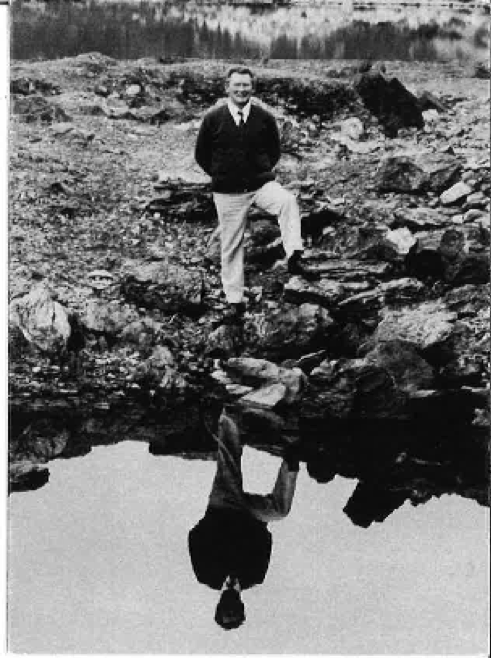
Fig. 6 b: Ambrose Joyce, Sr. and Albert Kollar

Fig. 7: Streamstown Quarry setting

Fig. 8: Streamstown Quarry history

Fig. 9: Albert Kollar, Martin Feely, Ambrose Joyce Jr.

We returned to Galway via the Connemara Marble Industries Ltd., Moycullen, County Galway to meet with the Joyce family (Fig. 10). At the Connemara Marble Industries Ltd., Moycullen marble souvenirs and jewelry are produced for the tourist trade using the marble extracted from Streamstown quarry (Fig. 11, 12, 13).  Today, the ongoing global demand for Connemara Marble, for use in interior decoration projects, is supplied by the Italian company Antonlini. They source the marble from another Connemara marble quarry located several miles to the east of the Streamstown quarry.

Fig. 11: Christmas ornaments

Fig. 12: Coaster and Cube Shamrock

Fig. 13: Kennedy, Joyce, and rosary shamrock

Global Heritage Stone Resource

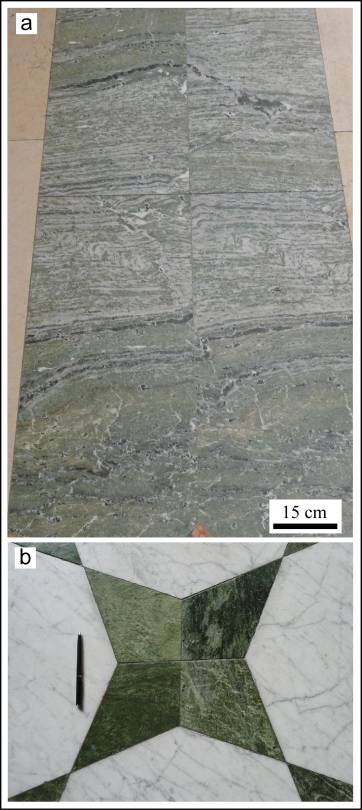
In 2019, the Connemara Marble was proposed as a Global Heritage Stone Resource with a citation to the Connemara Marble used in the Carnegie Museum (Wyle Jackson et al. 2020)  This Irish Heritage Stone was a much sought-after green marble for use in architecture, buildings and sculptures in Ireland, England, and the United States from the mid-19th century to the early 20th century including the Carnegie’s Hall of Sculpture (Fig. 14 a) and the Founder’s Room (Fig. 14 b) floor designs.

Figs. 14 a and b: Floor tiles

Have a Happy St. Patrick’s Day.

Albert D. Kollar is the Collection Manager in the Section of Invertebrate Paleontology at Carnegie Museum of Natural History. Museum employees are encouraged to blog about their unique experiences and knowledge gained from working at the museum.
Filed Under: Blog Tagged With: Albert Kollar, invertebrate paleontology, Science News

March 9, 2020 by wpengine

Summer Dreaming

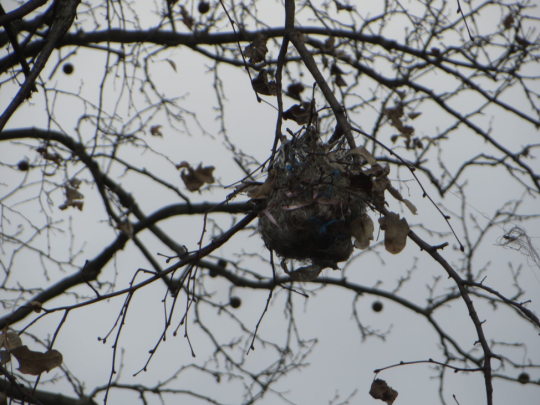
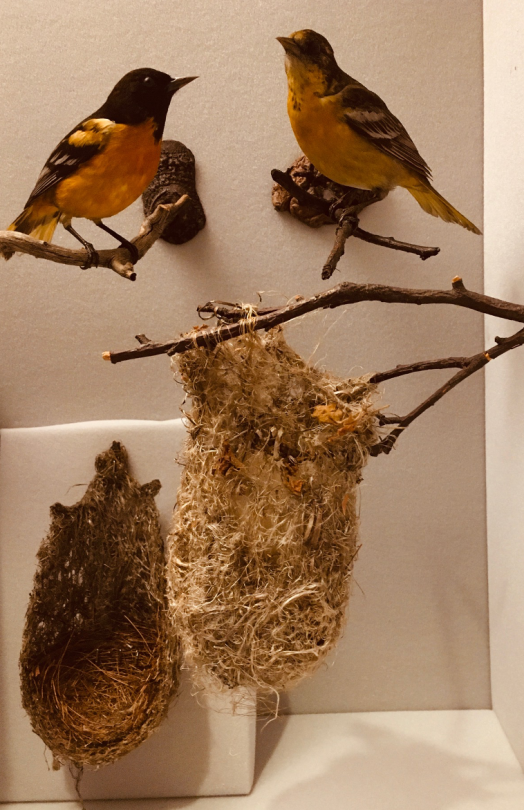
At this time of year, the sight of some battered bird-built structures can trigger summer dreams. Consider the Baltimore Oriole nest dangling from a linden branch above a Flagstaff Hill sidewalk in Pittsburgh’s Schenley Park.  Watch the bundle of plant fiber and ribbon scraps sway in a cold late winter wind and you might be able to imagine the nest partially concealed by bright green leaves and periodically visited by a bird with goldfish-orange feathers.

Baltimore Oriole pair in CMNH Bird Hall with nest and nest cross-section.

Such out of season thoughts are far from original. One hundred and sixty-one years ago, and some 500 miles northeast of Pittsburgh, naturalist Henry David Thoreau used a different common name for the species when he referenced the bright and melodic warm season residents in a winter journal entry.

What a reminiscence of summer, a fiery hangbird’s nest dangling from an elm over the road when perhaps the thermometer is down to -20, and the traveler goes beating his arms beneath it! It is hard to recall the strain of that bird then.

Henry David Thoreau – journal entry                                                                                                           December 22, 1859

Patrick McShea works in the Education and Visitor Experience department of Carnegie Museum of Natural History. Museum employees are encouraged to blog about their unique experiences and knowledge gained from working at the museum.
Filed Under: Blog Tagged With: Education, Patrick McShea

March 9, 2020 by wpengine

Big Foot

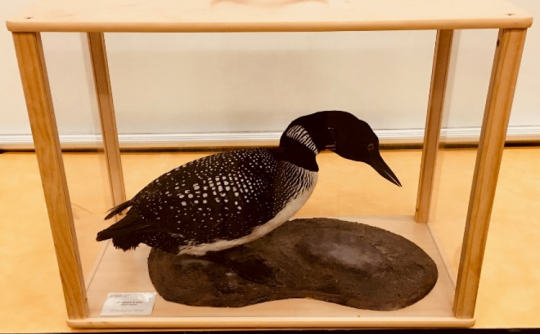
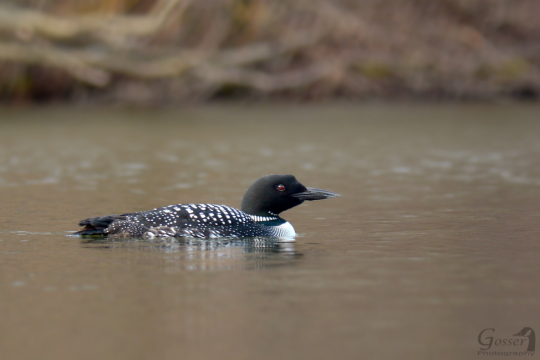
Studying anatomical details on taxidermy mounts can enhance field observations of wildlife. A common loon in the museum’s Discovery Basecamp, offers a great example of this benefit.

Within an acrylic-sided display box, the nearly two-foot long stuffed bird rests on a tiny simulated mud island, as if the spear-billed creature just waddled from the water on its large and widely-spaced webbed feet.

Common loons don’t do much waddling from the water in western Pennsylvania. That behavior occurs much farther north where the species’ summer range includes much of Canada and a northerly strip of the US stretching eastward from the upper Great Lakes to New England. Here the fish-eating birds push themselves from the waters of their home lakes mostly to reach immediately adjacent nests.

Photo by Steve Gosser.

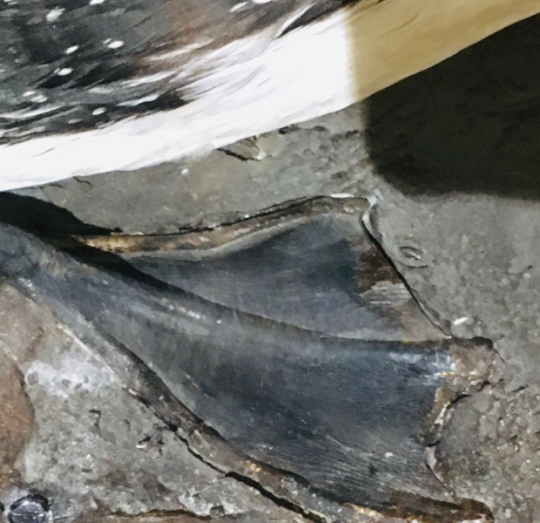
Loons do make seasonal appearances on Pittsburgh area waters during migration rest stops, however. Although their big feet aren’t visible to shore-bound observers during these visits, it’s the hidden actions of the flexible spatula-sized paddles, that makes loon watching such a challenging endeavor.  

Just when you bring a resting loon into binocular focus, the bird can disappear in a minute-long feeding dive and reappear, in an unpredictable direction, many yards from its original location.

The bird’s unseen propulsion is well explained in a 2012 post in Maine Birds, a blog by Colby College biology professor Herb Wilson.

When a loon is first diving from the surface, it breaks the surface by alternating strokes with the left and right leg.  Once underwater, the legs beat synchronously.

The lateral placement of the legs makes for hydrodynamic efficiency.  If the legs were close together, the turbulent eddies created by one leg would interfere with smooth movement through the water of the other leg.  The lateral arrangement allows a loon to generate maximum thrust while minimizing hydrodynamic drag.

The feet of loons are large and webbed.  The real power in swimming is generated by the rearward movement of those webbed feet against the water.  When the loon moves its feet forward during the recovery stroke, the toes are brought together causing the web to collapse and minimizing the effort needed to get the foot ready for the next power stroke.

Spring appearances of migrating loons in western Pennsylvania normally occur between mid-March and early May. Forty miles north of Pittsburgh, common loons are known to visit the deep water sections of Lake Arthur in Moraine State Park.

Patrick McShea works in the Education and Visitor Experience department of Carnegie Museum of Natural History. Museum employees are encouraged to blog about their unique experiences and knowledge gained from working at the museum.
Filed Under: Blog Tagged With: Education, Patrick McShea

February 27, 2020 by wpengine

CMNH Hosts Science Bowl

Learning in museum exhibit halls and classrooms isn’t normally presented as a competition. This situation changed on four days in late January, however, when more than 700 students visited the museum to compete in the Allegheny Intermediate Unit’s Science Bowl.

For the third year, the museum had the privilege of collaborating with the Allegheny Intermediate Unit to host this vibrant competition. The Allegheny Intermediate Unit (AIU) is a regional public agency that acts as a liaison between suburban school districts in the county and the Pennsylvania Department of Education. Science Bowl, one of many academic events planned annually by the AIU, is open to students in grades four through eight from schools throughout Allegheny County and even reaching some neighboring counties.

image

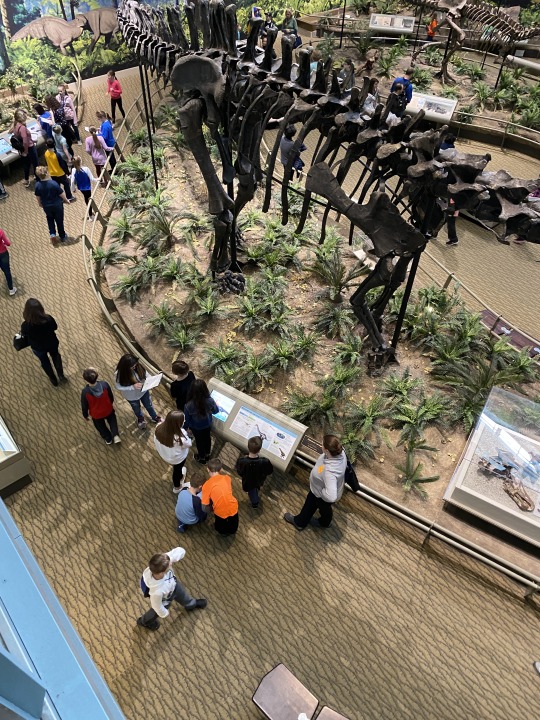
Students search for clues about dinosaur anatomy and diet in Dinosaurs in Their Time during Science Bowl.

Working in small teams, students complete a series of challenges which change each year. This year, guided by the museum’s natural history interpreters, students compared skeletal structures in mounted dinosaurs, studied details in images composed by professional photographers, and made firsthand observations of fur, feathers, and scales.

Amy Davis, Career Ready State Project Co-Director and Western PA Gifted Liaison for Teaching and Learning for the Allegheny Intermediate Unit, starts planning Science Bowl in April. Students from dozens of districts in Allegheny, Washington, and Westmoreland Counties have participated during the more than 20 years the AIU has been offering the competition. Amy feels the experience is a valuable one for the students. “It gives the students a chance to work together, to be creative, and to meet kids from other schools. They not only get to see the museum, but we take it a step further.”

In Dinosaurs in the Their Time, students were given a series of descriptions of dinosaurs and were challenged to locate and identify the species. Descriptions included clues about the dinosaur’s diet, estimated weight, length, and skeletal features.

Students studied photographs in National Geographic: 50 Greatest Wildlife Photographs, to identify species’ scientific names, determine what the subject is doing in the photo, and understand the perspective of the photographer.

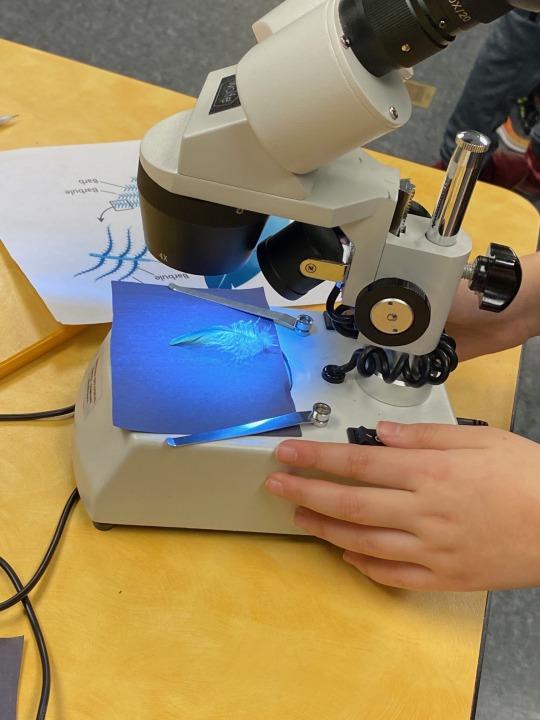
In museum classrooms, teams compared feathers with the aid of microscopes, sketched scales of various snakes, and described mammal fur color patterns to decipher how each covering aids the animal’s survival.

image

 Using microscopes, students compared vaned and downy feathers in the classroom challenge. The activity is based on the museum’s Fur, Feathers, Scales extended tour.

Lisa Donovan and Dr. Chuck Herring, teachers with South Fayette Township School District, attended Science Bowl with 24 students. “The students like to do the hands-on activities,” Ms. Donovan said. “They like the freedom to explore the museum.”

Dr. Herring looks forward to Science Bowl each year. “The kids really enjoy the challenge,” he commented. “It gets them to think, but not to the point of frustration.”

After participating in the challenges and completing a worksheet with museum-wide questions, teams gathered in the Lecture Hall for the awards ceremony.

image

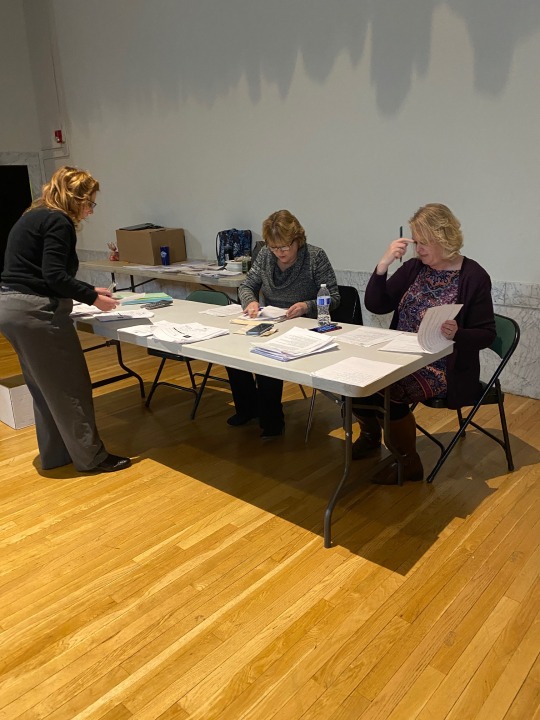
Amy Davis and her colleagues from the AIU scored the challenges and awarded the top three teams in the two categories. A perfect score consisted of 63 points.

When asked what challenges they enjoyed the most, students’ answers ranged from dinosaurs to photos to snake skins. One student smiled and added, “Definitely using the microscopes.”

Jessica Romano is a Museum Education Writer at Carnegie Museum of Natural History. Museum staff, volunteers, and interns are encouraged to blog about their unique experiences and knowledge gained from working at the museum.
Filed Under: Blog

February 27, 2020 by wpengine

The Real James Bond and his Connection to CMNH

Bondi. Tyto alba bondi.

Did you know a subspecies of barn owl (Tyto alba bondi) is named after James Bond? James Bond the ornithologist that is.

The holotype specimen of Tyto alba bondi was collected by past Carnegie Museum of Natural History curator Arthur C. Twomey on April 7, 1947 at French Harbor, Isla Roatan, Honduras and later described by Kenneth C. Parkes, another curator at CMNH, together with Allan R. Phillips.

A soon-to-be-released book The Real James Bond: A True Story of Identity Theft, Avian Intrigue and Ian Fleming tells the story of the ornithologist and author of Birds of the West Indies, and how his name became the name of Fleming’s incredibly popular epic thriller series. Fleming, an avid birder himself, admits to lifting the name directly from Birds of the West Indies and acknowledges that the real James Bond’s actions outshine anything the fictional James Bond has done.

Photo credit: Kaylin Martin

The new book includes an image of museum specimen CM P131548, Tyto alba bondi, a subspecies first described in the Annals of the Carnegie Museum. It is endemic to Roatán and Guanaja in the Bay Islands off the coast of Honduras.

Tyto alba bondi is not the only nod to birds that Ian Fleming made in his James Bond stories. Goldeneye is a species of duck, the name of Ian Fleming’s estate in Jamaica, and a 1995 James Bond movie. Not only that, in Die Another Day, 007 goes undercover in Cuba as an ornithologist, a nice little “Easter egg” for those who know the real story of James Bond.

Want to learn more about the James Bond Barn Owl? Consult the December 1978 issue of Annals of the Carnegie Museum, available online here.

Holotype of Tyto alba bondi. Parkes, Kenneth C., and Allan R. Phillips. 1978. Two new Caribbean subspecies of Barn Owl (Tyto alba) with remarks on variation in other populations. Annals Carnegie Museum, 479-492. Page 486, Published 1 December 1978.

Filed Under: Blog Tagged With: Birds

  • « Go to Previous Page
  • Page 1
  • Interim pages omitted …
  • Page 48
  • Page 49
  • Page 50
  • Page 51
  • Page 52
  • Interim pages omitted …
  • Page 206
  • Go to Next Page »

sidebar

About

  • Mission & Commitments
  • Directors Team
  • Museum History

Get Involved

  • Volunteer
  • Membership
  • Carnegie Discoverers
  • Donate
  • Employment
  • Events

Bring a Group

  • Groups of 10 or More
  • Birthday Parties at the Museum
  • Field Trips

Powdermill

  • Powdermill Nature Reserve
  • Powdermill Field Trips
  • Powdermill Staff
  • Research at Powdermill

More Information

  • Image Permission Requests
  • Science Stories
  • Accessibility
  • Shopping Cart
  • Contact
  • Visitor Policies
One of the Four Carnegie Museums | © Carnegie Institute | Privacy Policy | Terms of Use | Accessibility
Rad works here logo