• Skip to primary navigation
  • Skip to main content
  • Skip to primary sidebar

Carnegie Museum of Natural History

One of the Four Carnegie Museums of Pittsburgh

  • Visit
    • Buy Tickets
    • Visitor Information
    • Exhibitions
    • Events
    • Dining at the Museum
    • Celebrate at the Museum
    • Powdermill Nature Reserve
    • Event Venue Rental
  • Learn
    • Field Trips
    • Educator Information
    • Programs at the Museum
    • Bring the Museum to You
    • Guided Programs FAQ
    • Programs Online
    • Climate and Rural Systems Partnership
  • Research
    • Scientific Sections
    • Science Stories
    • Science Videos
    • Senior Science & Research Staff
    • Museum Library
    • Science Seminars
    • Scientific Publications
    • Specimen and Artifact Identification
  • About
    • Mission & Commitments
    • Directors Team
    • Museum History
  • Tickets
  • Give
  • Shop

Featured Exhibitions

August 25, 2025 by

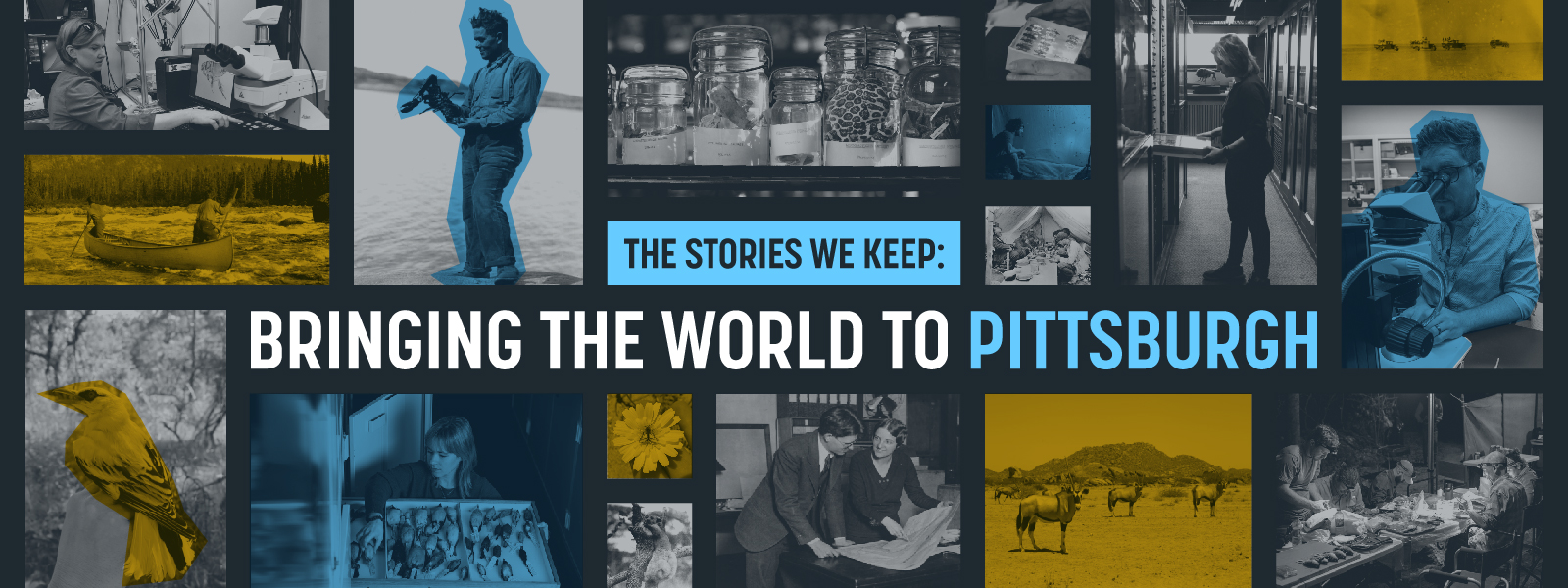
The Stories We Keep: Bringing the World to Pittsburgh

The Stories We Keep: Bringing the World to Pittsburgh banner

Open through January 11, 2027 | R.P. Simmons Family Gallery

When Andrew Carnegie founded the museum more than 125 years ago, he sought to “bring the world to Pittsburgh,” and today, the museum cares for over 22 million objects and specimens from around the world. But why do natural history museums collect objects and specimens? How do they care for them? What is their purpose? The Stories We Keep: Bringing the World to Pittsburgh explores these big questions about natural history museums through five distinct stories featuring the vast Carnegie Museum of Natural History collection. 

Through hands-on games and activities, expansive collection displays, and digital experiences, The Stories We Keep: Bringing the World to Pittsburgh invites you to consider what it means to collect and why natural history museum collections matter. In this exhibition, you will:

• Discover stories from past and present scientific expeditions to Angola.

• Encounter the Baron Ernest de Bayet collection of invertebrate fossils, one of the museum’s earliest and largest acquisitions.

• Watch conservation and collections staff care for collections in the Visible Lab. Ask them your questions during designated Visible Lab Q&A times daily at 11:30 a.m. and 2:00 p.m.

• Create your own collection drawer, play an insect guessing game, and browse archival photos.

• Uncover 1898-1922 museum director William J. Holland’s role in shaping the museum into a world-class institution. 

• Get to know the scientists who collect, care for, and study the 13 million specimens in the Invertebrate Zoology collection, and why each bug in the collection is a data point that helps us understand our world.

• Learn about Indigenous guides like Paul Commanda (Nbisiing) and George Carey (Omuskego) who led museum expeditions across northern Ontario, Quebec, and Labrador.*

• Listen to clips from season two of the museum’s We Are Nature podcast and see objects and specimens featured in the episodes.

Plan Your Visit

The Stories We Keep: Bringing the World to Pittsburgh on ABC News

Take a peek at the exhibition and the work behind its creation with Sarah Crawford, Director of Museum Experience, and ABC News: “Exhibition of rarely seen fossils now on display at the Carnegie Museum of Natural History.”


We Are Nature

Dive deeper into the museum’s impressive collection on season two of the We Are Nature podcast, a companion to The Stories We Keep: Bringing the World to Pittsburgh. While the first season centered on collective climate action, the second season features items from the museum’s collections as windows into the science of the Anthropocene, as discussed by curators, collection managers, and community members. Listen to the podcast here.


Science Stories

Take a deeper look at the museum collections in the words of the experts who care for and study them.
shelves of specimens preserved in glass jars
Natural History Collection Managers: The Stewards of Time Travel 
Staff Favorites: Dolls in the Museum’s Care
a person posing for the camera holding a gecko
From Collections User To Collections Manager
signature on paper
Meet the Mysterious Mr. Ernest Bayet
Black and white photo of a man in a suit holding a book. He is surrounded by books and plants.
Bayet and Krantz: 16 Words (Part 1)
mortality layer rock specimen
Hunting For Fossil Frogs In Wyoming
specimen of Marumba verdeciae
Natural History Discoveries
How to Prepare Insect Specimens

The Stories We Keep: Bringing the World to Pittsburgh is the second installment of The Stories We Keep exhibition series, following The Stories We Keep: Conserving Objects from Ancient Egypt, which went on view in 2024. 


* All content in this section of The Stories We Keep: Bringing the World to Pittsburgh was created in collaboration with North Bay Museum. Original content for the exhibition OUR GUIDES WERE REALLY GOING PLACES NISHNAABEG E-PAAMWINGEWAAD WAASA ZHAAWAG was curated and generously shared by Joan McLeod Shabogesic, Naomi Hehn, and Kirsten Greer. All of this content was edited, with permission, from the GUIDES exhibition or created in partnership with the Nipissing First Nation, Dokis First Nation, Nipissing University, and the North Bay Museum. 

Filed Under: Exhibitions, Featured Exhibitions

February 4, 2025 by

Uprooted: Plants Out of Place

Now Open | Hall of Botany and Third Floor Overlook

Even in urban environments, we see and rely on plants daily. Many of these plants are native to where we live, but many are introduced from other parts of the world. In the groundbreaking exhibition Uprooted: Plants Out of Place, visitors explore more than 4,800 square feet of Carnegie Museum of Natural History to learn how plants ride along as passengers, not drivers, from one region to another, and the consequences when an introduced plant becomes a harmful invasive species in its new environment. Uprooted showcases the museum’s historic herbarium collection, home to the largest collection of Western Pennsylvanian plants in the world, providing a magnified view of the interactions invasive plants have with their neighboring plant and animal communities, as well as of the environmental problems they present. The exhibition also shares stories of holistic invasive species management from community organizations around Pittsburgh.

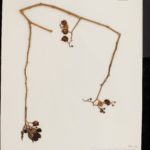
In the Hall of Botany, visitors discover the stories of invasive plant species including stiltgrass, garlic mustard, and multiflora rose, and how scientists track them. This exhibition showcases dioramas on permanent display through a new lens. What’s more, the exhibition offers a rare look at specimens from the historic Carnegie Museum of Natural History Herbarium, as well as plant illustrations from community partner Hunt Institute for Botanical Documentation. A plant smell station and touchable plant models engage the senses to enrich the overall visitor experience.

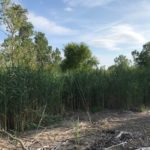
On the Third Floor Overlook, photos of itadori (knotweed) by celebrated Japanese photographer Koichi Watanabe, commissioned specifically for Uprooted, draw visitors in to learn more about the critical issue of land stewardship and how human actions impact plants in our ecosystems. In this striking space, visitors learn about native plants that support diverse habitats and careful language use on the subject of native and non-native plants.


Stories and Resources

Before or after your visit to the museum, dive into introduced species Science Stories written by museum researchers and educators.

museum label with grains of rice representing stilt grass seeds
Uprooted: Inside the Museum’s New Exhibition on Invasive Plants
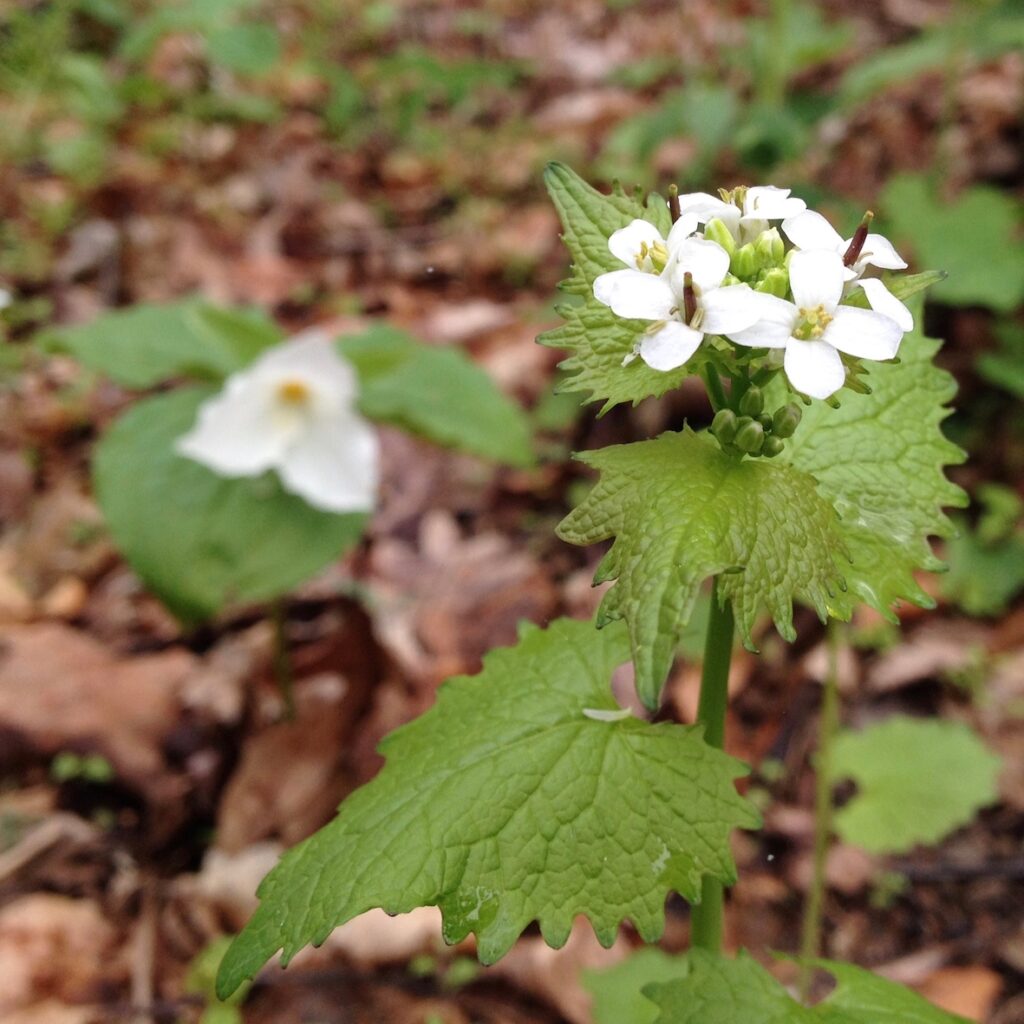
garlic mustard
City Nature Challenge: Noticing Invasive Plants 
Japanese knotweed on a riverbank
What’s in a Name? Japanese Knotweed or Itadori
The Vine That Ate Pittsburgh? Not yet.
bittersweet specimen on herbarium sheet
Collected on this Day in 1951: Bittersweet
Collected on this Day in 1930: Native…or Not?
pressed plant
From cultivation to invasion: a common route
taxidermied plants
Collected on this Day in 2012: Wintercreeper

two people outdoors looking at plants
Museum researchers studying the effects of invasive species.
Garlic mustard, introduced as a kitchen herb.
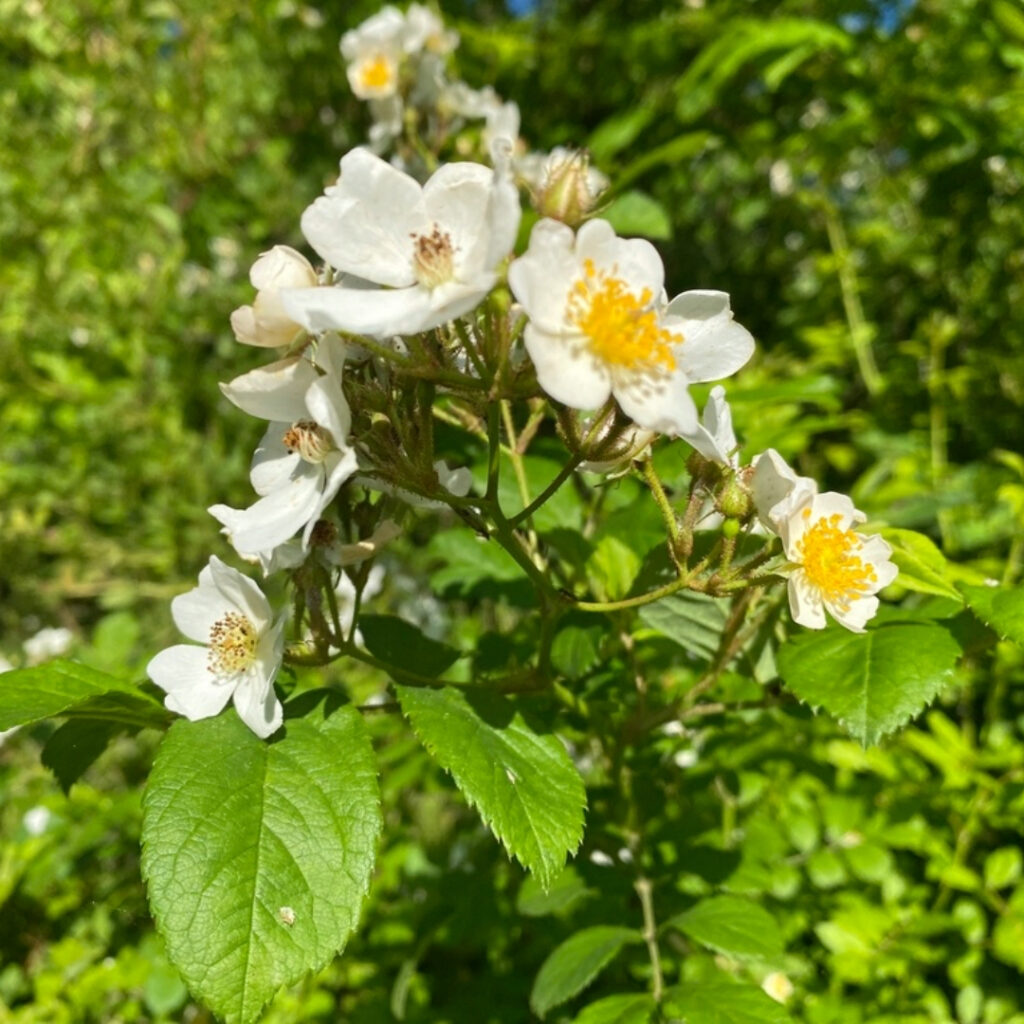
multiflora rose
Multiflora rose, intentionally planted and now common in forests.
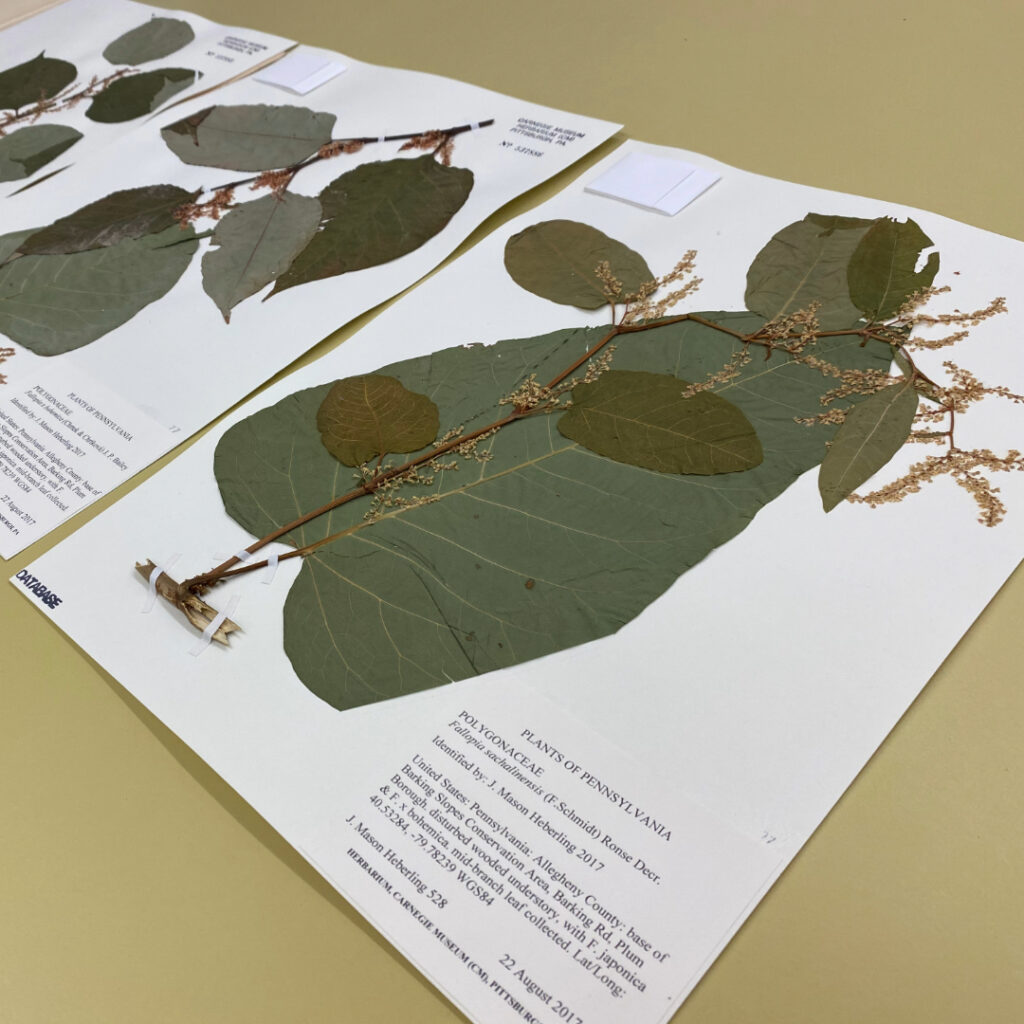
knotweed specimens
Herbarium specimens track centuries of environmental change.
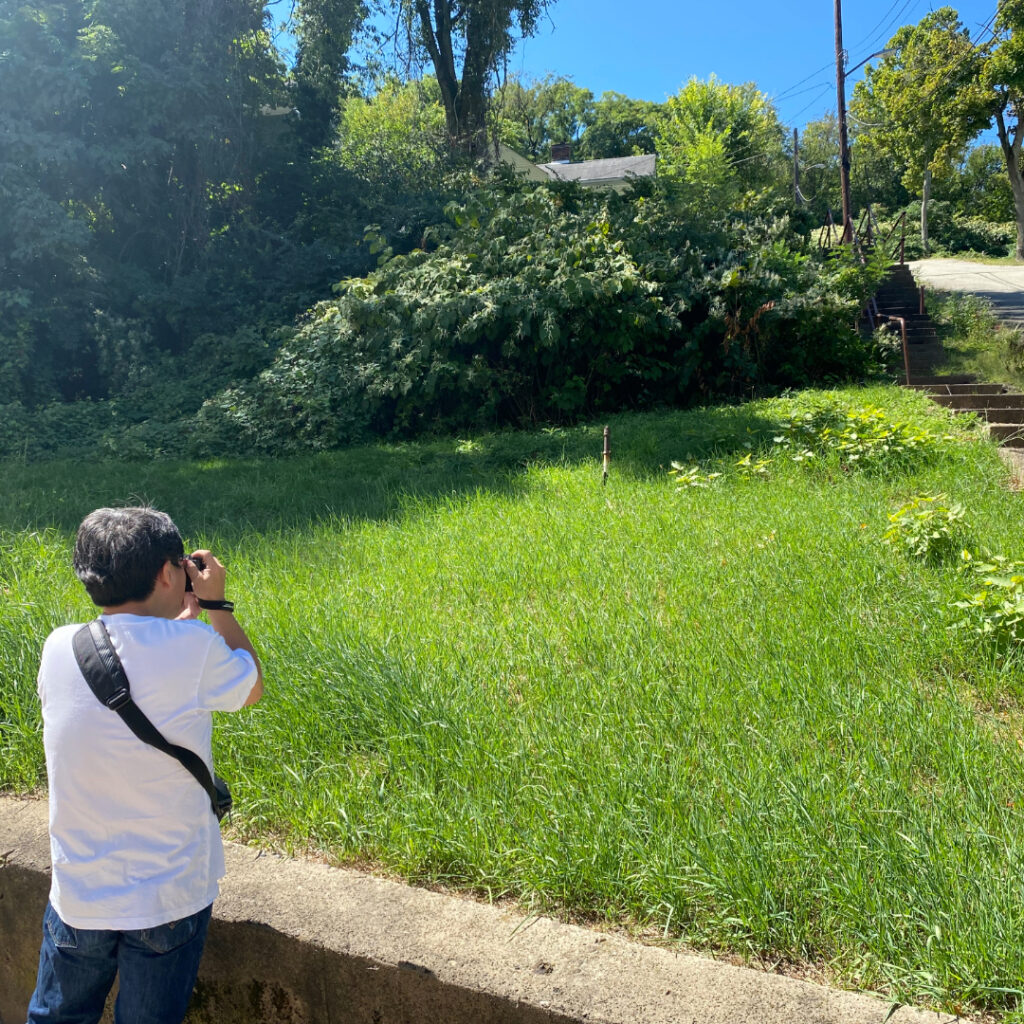
Koichi Watanabe photographing itadori (knotweed).

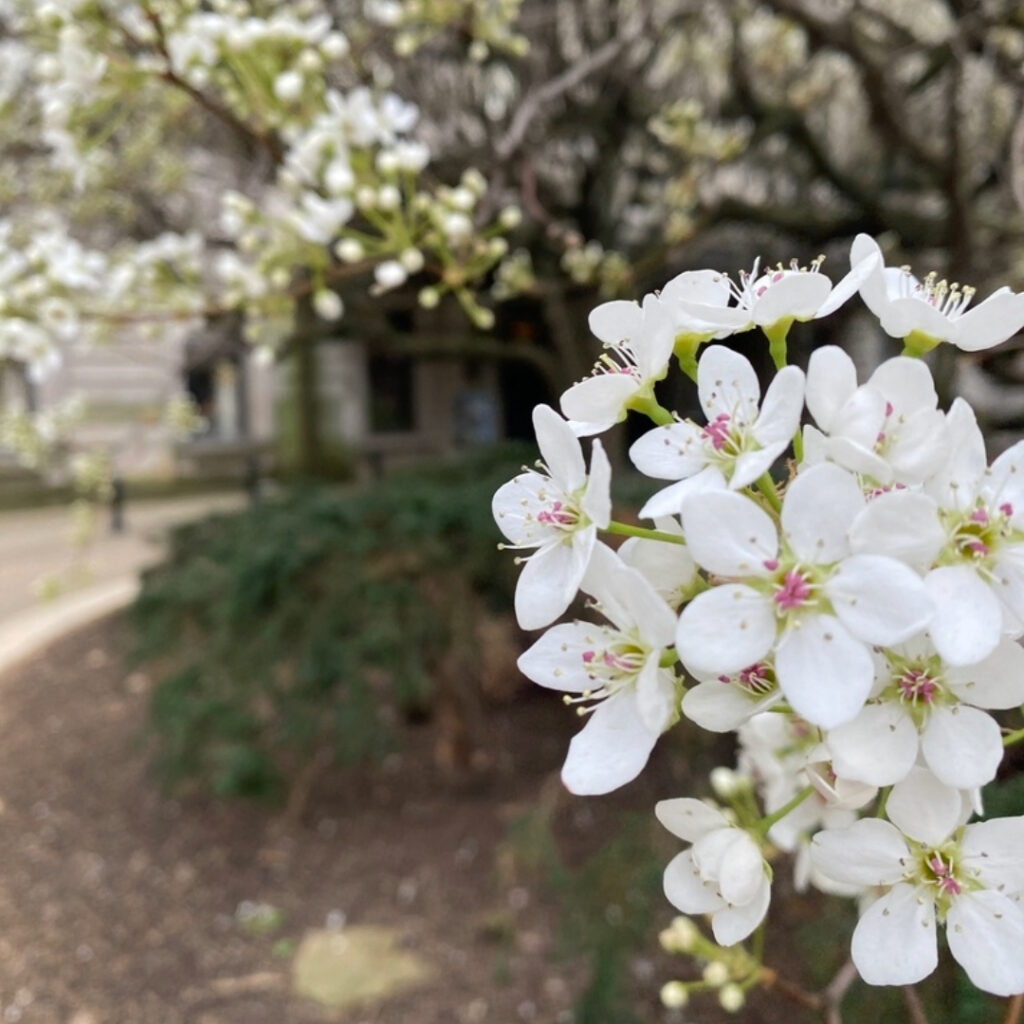
Callery pear, a common ornamental illegal to sell in Pennsylvania.

*Thank you to our community partners!*

Allegheny GoatScape
Dr. Craig Barrett, West Virginia University
Dr. Jocelyn E. Behm, Temple University
Dr. Rachel Reeb
Dr. Raja Adal, University of Pittsburgh
Erin Mallea
Garfield Community Farm
Hunt Institute for Botanical Documentation
Koichi Watanabe
Lauren Kosslow, West Virginia University
Meining Wang
Peyton Phillips, Temple University
Pittsburgh Parks Conservancy
Sean Stewart and the Lab at Silver Eye 

This work was made possible through support from the Richard King Mellon Foundation.

Filed Under: Exhibitions, Featured Exhibitions

July 2, 2018 by wpengine

We Are Nature: Future Thinking

By: Pat McShea

image

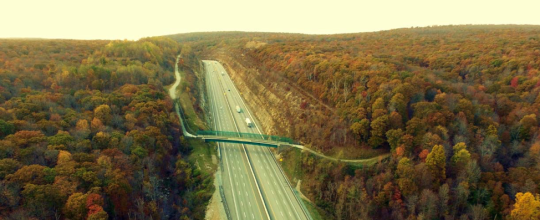
Although activities in the Future Thinking Lab section of We Are Nature seldom focus on the past, historic examples of the process are important. Some 50 miles southeast of Pittsburgh, travelers on the Pennsylvania Turnpike pass steel and concrete proof of regional future thinking dating back to at least the 1960s.

image

Photo credit: Gibson-Thomas Engineering

At mile mark 100.5, where the busy east/west route crosses over the crest of the mountain fold known variously as Laurel Hill, Laurel Mountain, and Laurel Ridge, the highway passes under the Laurel Highlands Hiking Trail.

image

Photo: Gibson-Thomas Engineering

image

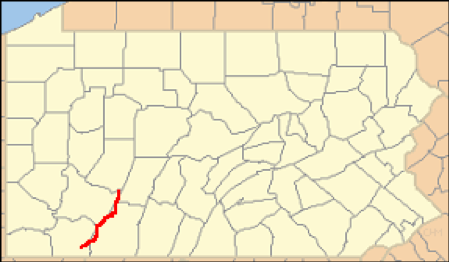
This 70-mile long footpath winds along the ridge crest between water gaps carved by the Conemaugh River on the north, and the Youghiogheny River on the south. The turnpike crossing is located between mile posts 36 and 37, as measured from the trail’s southern terminus in Ohiopyle.

Credit for this recreational resource, which was officially dedicated in 1976, rests largely with the Western Pennsylvania Conservancy and Pennsylvania’s Bureau of State Parks. The WPC, an 86-year-old Pittsburgh-based conservation organization, began acquiring key tracts on the ridge in the 1960’s for state parks, game lands, and forests. The Bureau of State Parks, which constructed the trail across the resulting patchwork of public and private land, has maintained the path under the auspices of Laurel Ridge State Park.

The trail is but one “product” from decades of future thinking, future planning, and future actions by many organizations and individuals. Far-sighted land conservation efforts on Laurel Hill, which include the establishment and operation of the Museum’s Powdermill Nature Reserve, also protect water supplies and biodiversity, and create recreational opportunities ranging from bicycling to downhill skiing.

Patrick McShea works in the Education and Visitor Experience department of Carnegie Museum of Natural History. Museum employees are encouraged to blog about their unique experiences and knowledge gained from working at the museum.

Filed Under: Blog, Exhibitions, Featured Exhibitions Tagged With: We Are Nature, We Are Nature: Living in the Anthropocene

sidebar

About

  • Mission & Commitments
  • Directors Team
  • Museum History

Get Involved

  • Volunteer
  • Membership
  • Carnegie Discoverers
  • Donate
  • Employment
  • Events

Bring a Group

  • Groups of 10 or More
  • Birthday Parties at the Museum
  • Field Trips

Powdermill

  • Powdermill Nature Reserve
  • Powdermill Field Trips
  • Powdermill Staff
  • Research at Powdermill

More Information

  • Image Permission Requests
  • Science Stories
  • Accessibility
  • Shopping Cart
  • Contact
  • Visitor Policies
One of the Four Carnegie Museums | © Carnegie Institute | Privacy Policy | Terms of Use | Accessibility
Rad works here logo