• Skip to primary navigation
  • Skip to main content
  • Skip to primary sidebar

Carnegie Museum of Natural History

One of the Four Carnegie Museums of Pittsburgh

  • Visit
    • Buy Tickets
    • Visitor Information
    • Exhibitions
    • Events
    • Dining at the Museum
    • Celebrate at the Museum
    • Powdermill Nature Reserve
    • Event Venue Rental
  • Learn
    • Field Trips
    • Educator Information
    • Programs at the Museum
    • Bring the Museum to You
    • Guided Programs FAQ
    • Programs Online
    • Climate and Rural Systems Partnership
  • Research
    • Scientific Sections
    • Science Stories
    • Science Videos
    • Senior Science & Research Staff
    • Museum Library
    • Science Seminars
    • Scientific Publications
    • Specimen and Artifact Identification
  • About
    • Mission & Commitments
    • Directors Team
    • Museum History
  • Tickets
  • Give
  • Shop

January 11, 2023 by

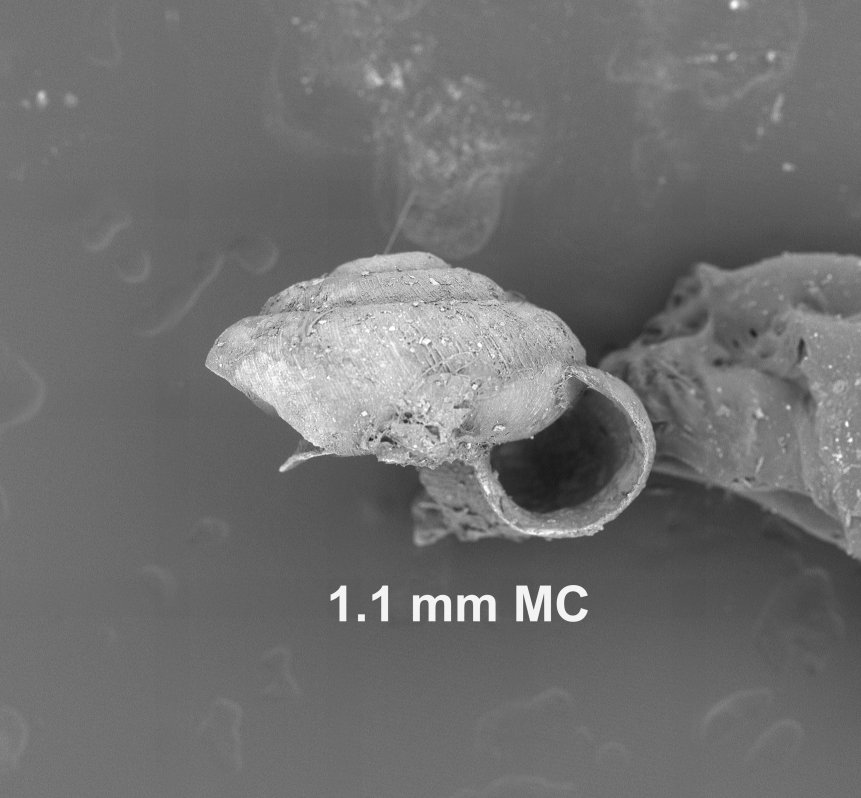
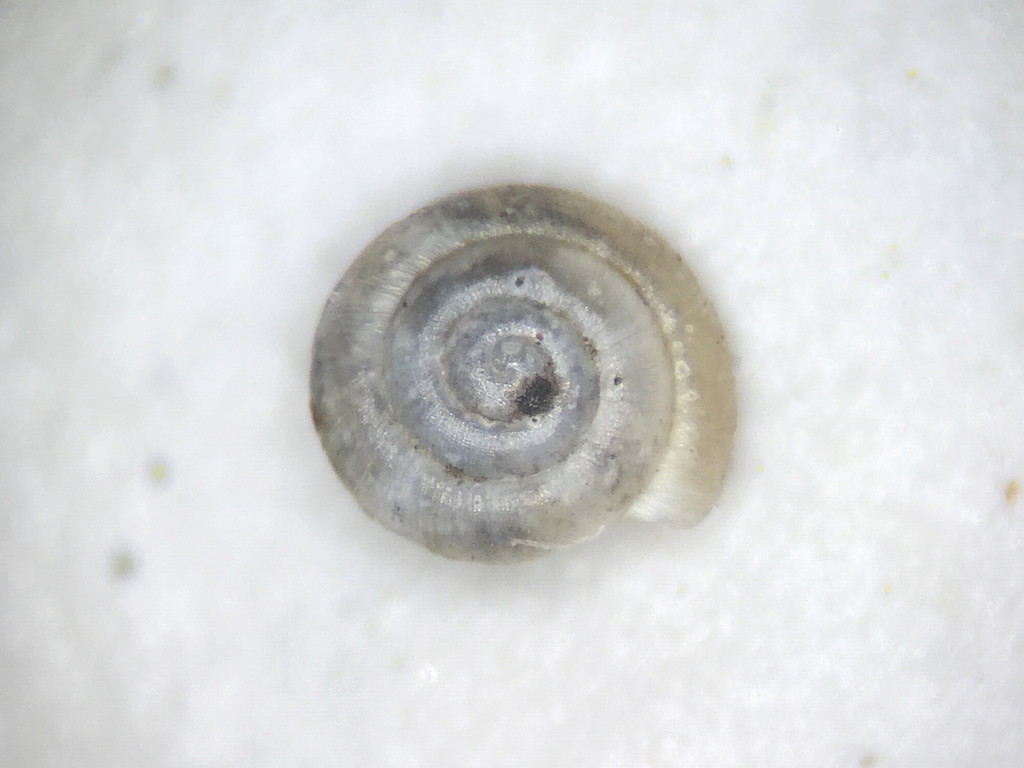
Punctum smithi

Image Usage Information

  • David Lang
  • CC BY-NC 4.0 DEED
  • Additional information about this specimen

Family: Punctidae

Common name: Lamellate Spot

Discovery: Morrison, 1935

Non-native

Identification

Width: ≈1.2 mm
Height: ≈0.6 mm
Whorls: 4+

The tiny shell of Punctum smithi is similar to its congener species – a depressed heliciform shape with a thin lip and an open umbilicus. However, its whorls are slightly flattened, so they are oval in cross-section (Pilsbry, 1948). The shell is sculpted with ridges, and these are crossed by spiral lines that vary in depth, giving the texture a “beaded” appearance. The aperture contains a recessed basal tooth, as suggested by its name.

Ecology

This species is a leaf litter denizen, usually found with P. minutissimum (Hubricht, 1985).

Taxonomy

This species has no known synonyms.

Distribution

Punctum smithi occurs in scattered colonies in the Southeast from Maryland to northern Georgia. It is widely reported in Virginia.

Conservation

NatureServe Global Rank: G4
NaatureServe State Rank: S3
January 11, 2023 by

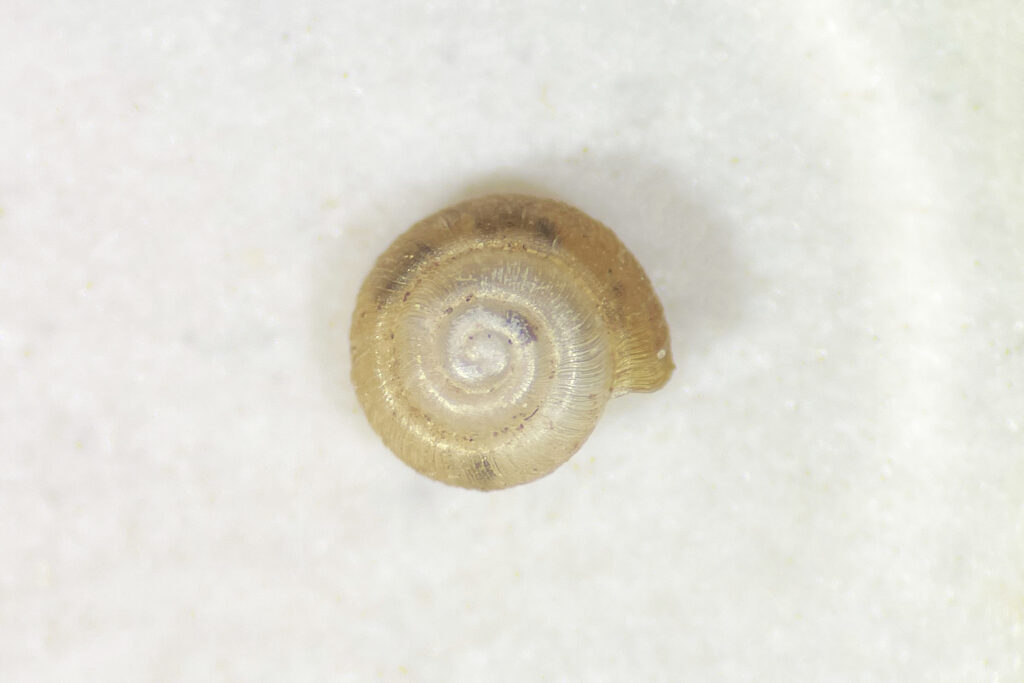
Punctum minutissimum

Image Usage Information

  • David Lang
  • CC BY-NC 4.0 DEED
  • Additional information about this specimen

Family: Punctidae

Common name: Small Spot

Discovery: I. Lea, 1841

Identification

Width: ~1.0-1.5 mm
Height: ~0.75 mm
Whorls: 4+

The fragile shell of Punctum minutissimum is a depressed heliciform shape. Its rounded whorls are covered with a pattern of fine, regular ribs. The shell is a golden-to-reddish-brown color, thin lipped, with a deep umbilicus. Its close relative P. blandianum has a lower spire and wider umbilicus.

Ecology

Punctum minutissimum is one of the most common and widespread snails living in forest leaf litter. Its numbers are often closely correlated with the richness of its habitat. In central Tennessee it was abundant and significantly associated with soils having a high moisture content, neutral pH, and leaf litter (Coney et al., 1982). It was also abundant and favored rich habitats in northern Maine (Nekola, 2008), New York (Beier et al., 2012), and Maryland (Hotopp, 2002).

Taxonomy

Synonyms for P. minutissimum are P. pygmaeum, and Helix minutissima.

Distribution

This animal can be found throughout the East (except for southern Florida), and west into the Great Plains. In Virginia reports are scattered across the state.

Conservation

NatureServe Global Rank: G5
NatureServe State Rank: S4

January 11, 2023 by

Punctum blandianum

Image Usage Information

  • The Academy of Natural Sciences of Philadelphia
  • CC BY-NC 4.0 DEED
  • For additional information about this specimen: Gary Rosenberg (rosenberg.ansp@drexel.edu)

Family: Punctidae

Common name: Brown Spot

Discovery: Pilsbry, 1900

Identification

Width: ≈1.1-1.3 mm
Height: ≈0.7 mm
Whorls: 4+

The shell of Punctum blandianum has a low conoidal spire and is pale brown (Pilsbry, 1948). It is thin-lipped, with a bowl-like umbilicus. The shell is sculptured with fine ribs. In many respects it is similar to P. minutissimum, but its shell is relatively lower, its umbilicus slightly wider, and its aperture slightly smaller.

Ecology

Punctum blandianum is found in damp leaf litter in forests. In dolomite valleys within its range it displaces P. minutissimum (Pilsbry, 1948).

Taxonomy

This species has no known synonyms.

Distribution

This animal is endemic to the southern Appalachian Mountains, found in a half-dozen states from West Virginia to Alabama. In Virginia it is reported in several southwestern counties. Its name has no synonyms.

Conservation

NatureServe Global Rank: G4
NatureServe State Rank: S2S4

January 11, 2023 by

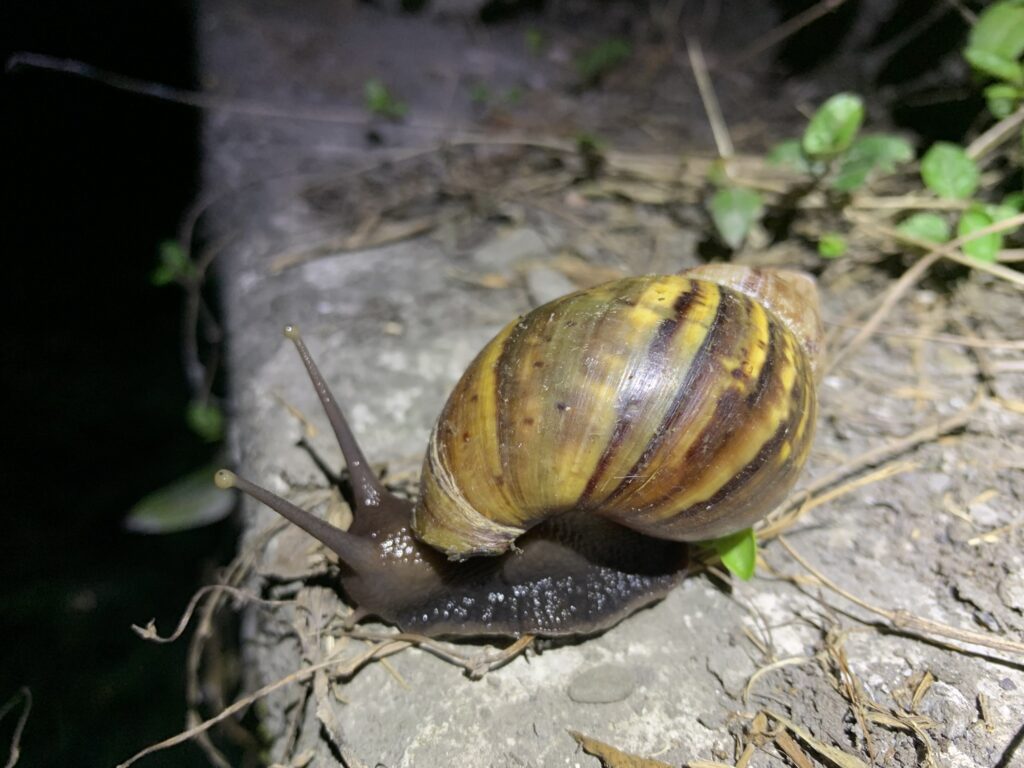
Lissachatina fulica

Family: Achatinidae

Common name: Giant African Land Snail

Discovery: Bowdich, 1822

Non-native

Identification

Width: ~120 mm
Height: 50-200 mm 
Whorls: 7-10

This tropical snail’s shell is cone-shaped, often marked with alternating radial bands of brown and tan (White-McLean, 2011). The aperture is simple, thickened along the columella, and the umbilicus is closed. The live animal may vary in color from tan to dark brownish. This species is conspicuously larger than other land snails in the Northeast.

Ecology

Lissachatina fulica is one of the planet’s best-known land snails. It is large, prolific, widely introduced, and easily kept in captivity. The species is cultivated for food, the pet trade, and mucus production for skin treatments. It is frequently used as a model animal for anatomical, physiological, and medical research (e.g. Mukherjee et al., 2017).

This land snail is primarily an herbivore, feeding upon a wide variety of plants including bananas, cotton, bread fruit, hemp, coffee, cocoa, rubber tree, various legumes, and many others (in Godan, 1979). However, it can be cannibalistic, and has been observed preying upon other gastropods as well (Myer et al., 2009).

Lissachatina fulica has been introduced to many tropical islands, often with disastrous effects. In Hawaii and elsewhere, the predatory land snail Euglandina rosea introduced to control L. fulica has caused mass extinction of native snails through predation (e.g.  Civeyrel and Simberloff, 1996).

The invasiveness potential of L. fulica in the U.S. is ranked relatively highly (Cowie et al., 2009). Modelling of potential L. fulica invasion areas in India identified 2 million km2 at moderate risk to very high risk of invasion (Rekha Sarma et al., 2015). In South America, widespread introductions are reported and large areas of the coasts, highlands, and Amazon River basin have invasion potential (Borrero et al., 2009). Higher relative humidity is an important predictive factor in the model.

Lissachatina fulica is an intermediate host for the rat lungworm Angiostrongylus cantonensis, which can be transmitted to people, causing a form of meningitis (Stockdale Walden et al., 2015). Work in Florida shows this parasite is also carried by some other species of land snails, both native and introduced (Stockdale Walden et al., 2017).

Taxonomy

A synonym is Achatina fulica. There are several subspecies and congeners.

Distribution

Lissachatina fulica is native to East Africa, but has been spread around Earth’s tropical zone. In the United States there are populations in Hawaii and Florida. In Pittsburgh, Pennsylvania, an immature individual was found outside in a public park, in summer (Tim Pearce, pers. comm. 2017).

Conservation

NatureServe Rank: G5, Secure.
Importation of this non-native species is regulated by the U.S. Dept. of Agriculture (Anonymous, 2017). The State of Florida has an ongoing eradication program.

While this tropical snail may not be able to tolerate the northern Northeast Region’s winter outdoor climate, it might be able to persist in southern parts of the region. It can also be perpetuated and spread by plant nurseries or illegal pet trade. Its potential to transmit rat lungworm to people or domestic animals should be a concern as well.

January 11, 2023 by

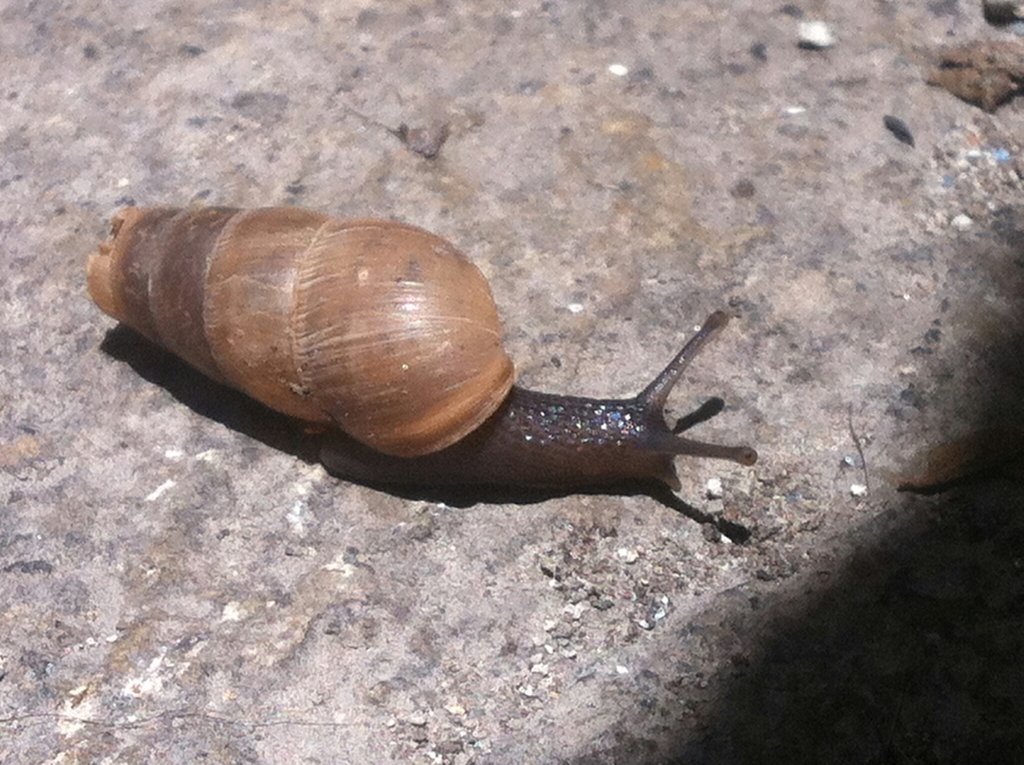
Rumina decollata

superior view of decollate snail, with dark body and head and light but not translucent oblong shell

Image Usage Information

  • Alberto López Osorio, iNaturalist
  • CC BY-NC 4.0 DEED
  • Additional information about this specimen

Family: Achatinidae

Common name: Decollate Snail

Discovery: Linnaeus, 1758

Introduced Species

Identification

Height: 22.5-30.0 mm
Width: 10-11 mm
Whorls: 4.0-5.5

The shell of Rumina decollata is a tall, tapering cylinder with a truncated apex (Pilsbry, 1946; Kerney & Cameron, 1979). The lip is simple and thin. The whorls are sculptured with irregular growth wrinkles and occasional fine spiral striae. Shells are light-colored – tan, white, or light brown, and a bit glossy. The animal is a pale yellow.

The shell’s apex does break off in stages, but the animal inside remains protected by a shell-like plate at the break. Juvenile shells are narrow, taller and tapering, with a blunt apex.

Ecology

In Mediterranean areas, it is found in dry, open habitats upon calcium-rich soils (Kerney & Cameron, 1979). Its eggs are 2.5 mm in diameter, relatively large. This snail is ominivorous, and is sometimes sold as a control agent for garden pest slugs and snails. Some states have banned this trade.

Taxonomy

Synonyms for R. decollata include Helix decollata, Stenogyra decollata, Bulimus decollata, and B. multilatus.

Distribution

Rumina decollata is introduced in North America from the Mediterranean. It has been introduced to the Atlantic, Gulf, and Pacific Coasts. In Virginia, specimens are reported only from Norfolk.

Conservation

NatureServe Global Rank: G5
NatureServe State Rank: Not listed

Author: Ken Hotopp
Publication date:2/2013

January 11, 2023 by

Opeas pyrgula

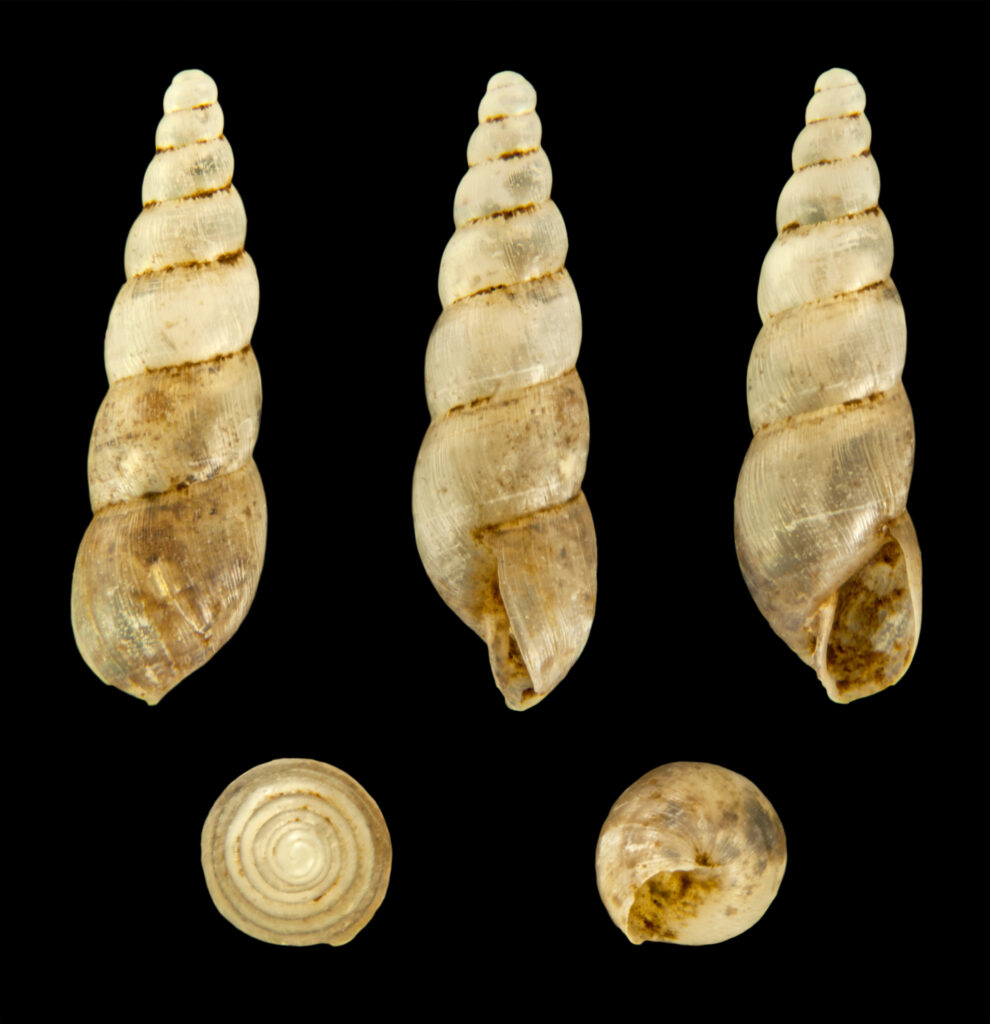
All five anatomical views of sharp awlsnail, dorsal showing elongated cone shape with tight whirls at top
  • Wikimedia Commons User H. Zell
  • CC BY-NC 3.0 DEED
  • 4f3782f6-8b1d-4947-af0c-cea4a2a431c1

Family: Achatinidae

Common name: Sharp Awlsnail

Discovery: Schmacker and Boettger, 1891

Non-native

Identification

Width: 2.2 mm
Height: 8 mm
Whorls: 7

Opeas pyrgula has a small, elongate shell. The whorls have deep sutures and light radial striations. The outside edge of the aperture curves forward near its insertion, though not as dramatically as in O. pumilum. The animal is a deep yellow color.

Ecology

In North America O. pyrgula is known from developed habitats, such as alleys (Vanatta in Pilsbry, 1946) and parks. It can be locally abundant.

Taxonomy

This species has no known synonyms.

Distribution

This animal is from Asia, introduced along the Gulf and Atlantic Coasts from Texas to Pennsylvania (NatureServe, 2013). In Virginia it has been collected in the Norfolk area.

Conservation

NatureServe Global Rank: G5
NatureServe State Rank: SNA

Author: Ken Hotopp
Publication date: 3/2023
  • « Go to Previous Page
  • Page 1
  • Interim pages omitted …
  • Page 27
  • Page 28
  • Page 29
  • Page 30
  • Page 31
  • Interim pages omitted …
  • Page 53
  • Go to Next Page »

sidebar

About

  • Mission & Commitments
  • Directors Team
  • Museum History

Get Involved

  • Volunteer
  • Membership
  • Carnegie Discoverers
  • Donate
  • Employment
  • Events

Bring a Group

  • Groups of 10 or More
  • Birthday Parties at the Museum
  • Field Trips

Powdermill

  • Powdermill Nature Reserve
  • Powdermill Field Trips
  • Powdermill Staff
  • Research at Powdermill

More Information

  • Image Permission Requests
  • Science Stories
  • Accessibility
  • Shopping Cart
  • Contact
  • Visitor Policies
One of the Four Carnegie Museums | © Carnegie Institute | Privacy Policy | Terms of Use | Accessibility
Rad works here logo