• Skip to primary navigation
  • Skip to main content
  • Skip to primary sidebar

Carnegie Museum of Natural History

One of the Four Carnegie Museums of Pittsburgh

  • Visit
    • Buy Tickets
    • Visitor Information
    • Exhibitions
    • Events
    • Dining at the Museum
    • Celebrate at the Museum
    • Powdermill Nature Reserve
    • Event Venue Rental
    • Gift Cards
  • Learn
    • Field Trips
    • Educator Information
    • Programs at the Museum
    • Bring the Museum to You
    • Guided Programs FAQ
    • Programs Online
    • Climate and Rural Systems Partnership
  • Research
    • Scientific Sections
    • Science Stories
    • Science Videos
    • Senior Science & Research Staff
    • Museum Library
    • Science Seminars
    • Scientific Publications
    • Specimen and Artifact Identification
  • About
    • Mission & Commitments
    • Directors Team
    • Museum History
  • Tickets
  • Give
  • Shop

January 11, 2023 by

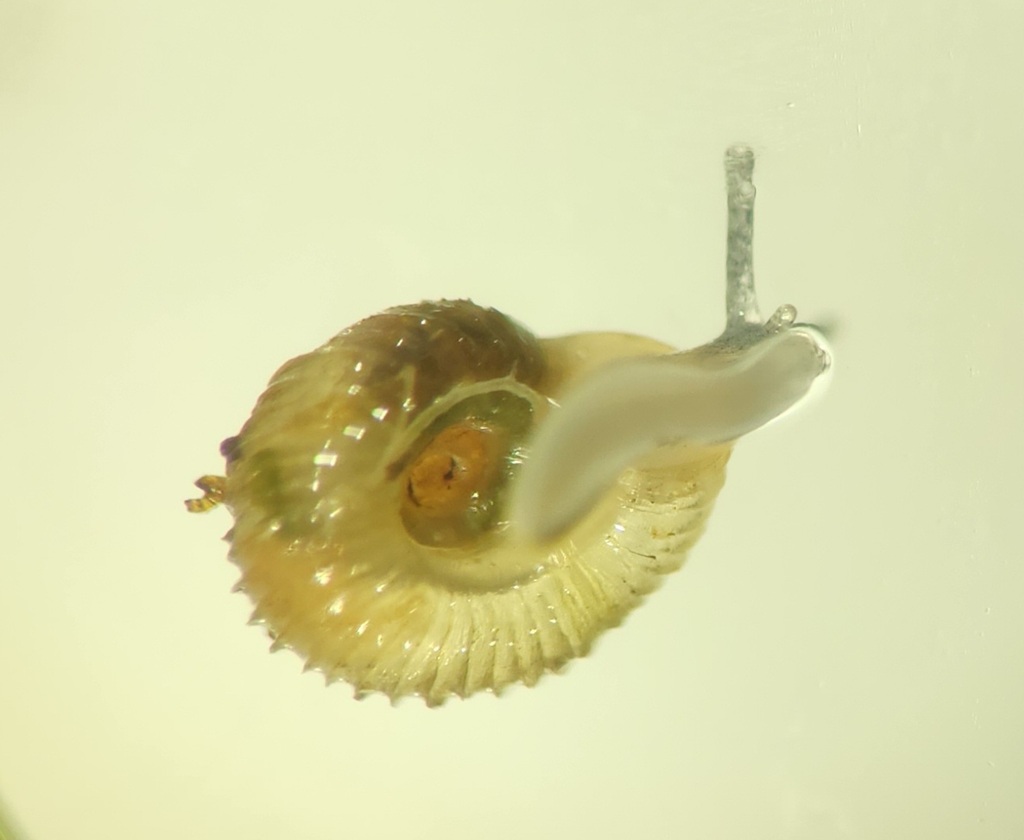
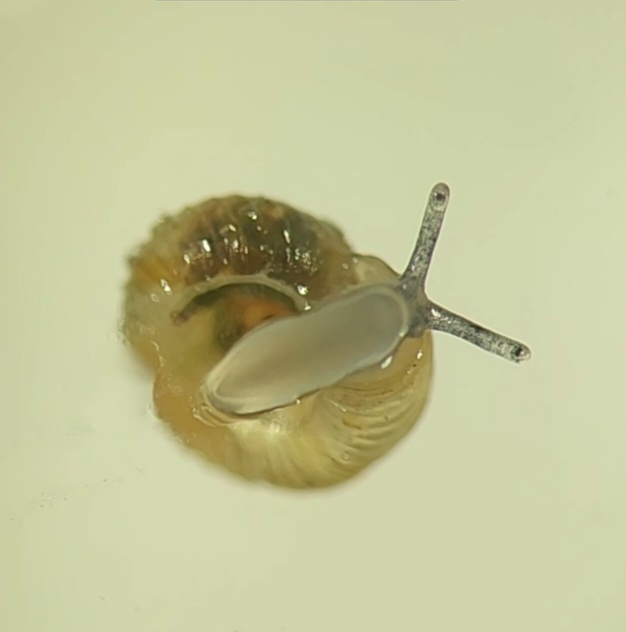
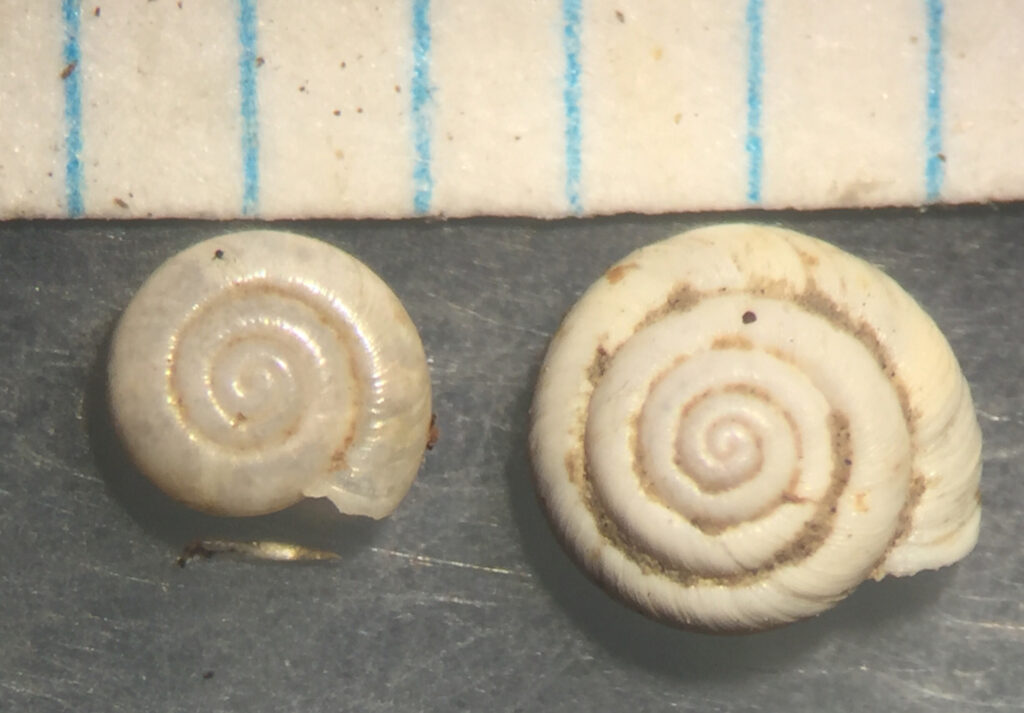
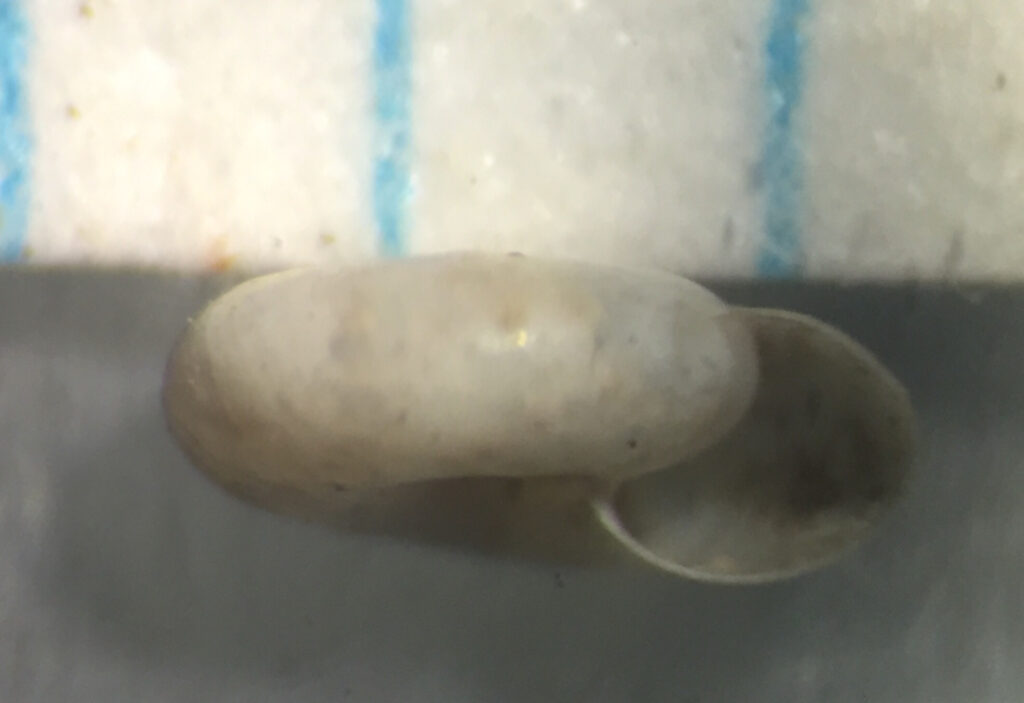
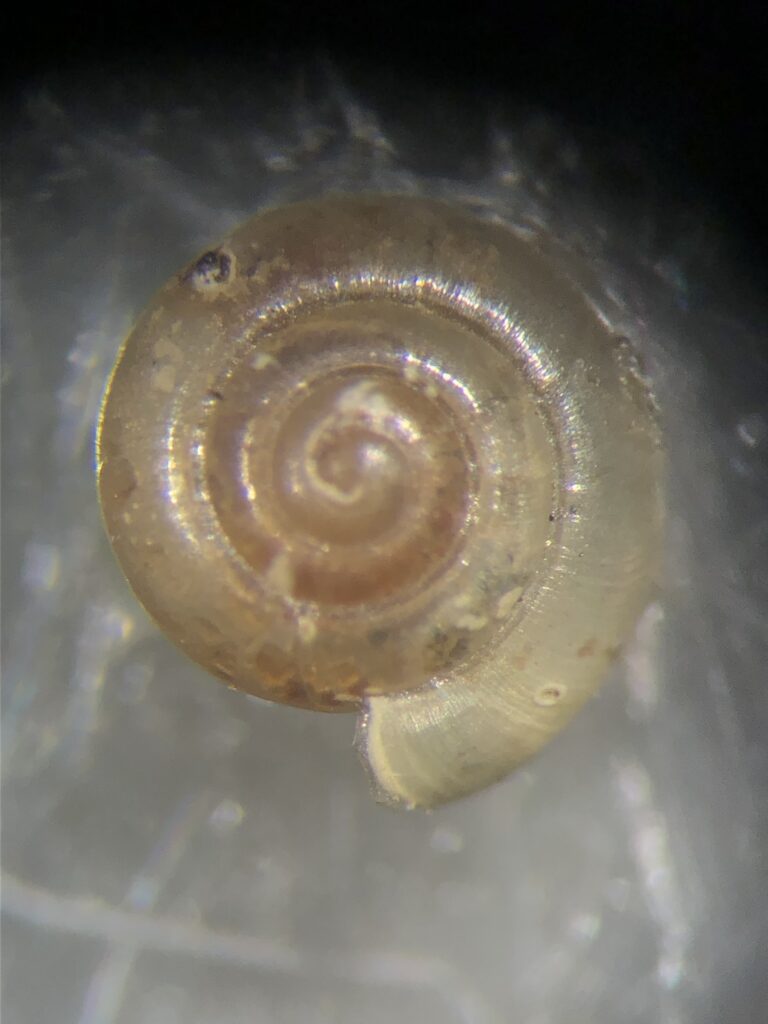
Striatura ferrea

Image Usage Information

  • Waynevand
  • CC BY-NC 4.0 DEED
  • Additional information about this specimen

Family: Gastrodontidae

Common name: Black Striate

Discovery: E.S. Morse, 1864

Identification

Width: 2.5-3 mm
Height: 1.4 mm
Whorls: 3+

Striatura ferrea has a beautiful, finely-textured shell, appearing almost silky, and it is larger than the other striates. The shell has low radial ridges and delicate spiral striae. The live animal is very dark in color, while the shell is usually silvery or steel gray. The open umbilicus is much narrower than that of its relatives, measuring less than half a millimeter in diameter. The aperture is large and rounded, with a simple lip.

Ecology

Like its relatives, S. ferrea lives in leaf litter in hardwood forests, though usually at low-to-moderate densities and never abundant (e.g. Hotopp, 2002; Beier et al, 2012). In Maine it was found to be most frequent at dry, acid forest sites (Nekola, 2008).

Taxonomy

This species has also been known as Striatura (Striaturops) ferrea and Zonites ferreus.

Distribution

Striatura ferrea is found from the Smoky Mountains north through the Appalachian Mountains to Maine and west to Michigan. In Virginia, there are museum records for scattered western counties, but it also probably occurs in some northern counties (e.g. Hubricht, 1985).

Conservation

NatureServe Global Rank: G5
NatureServe State Rank: S3
January 11, 2023 by

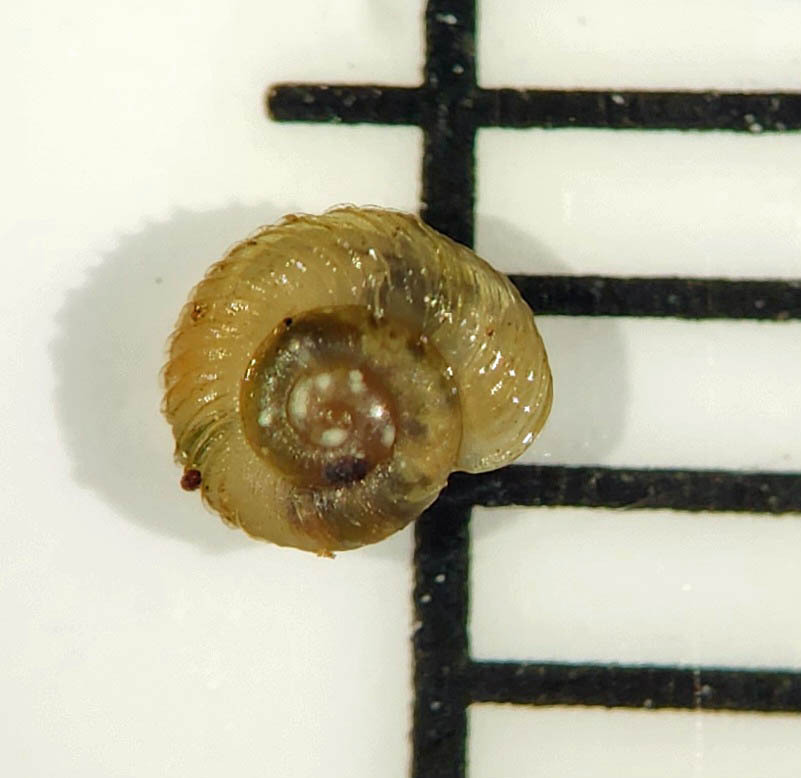
Pseudohyalinia exigua

Family: Gastrodontidae

Common name: Ribbed Striate

Discovery: Stimpson, 1850

Identification

Width: 2.3 mm
Height: 1.25 mm
Whorls: 3+

The shell of Pseudohyalinia exigua is uniquely sculptured, with fine spiral lirae creating a crosshatch pattern interrupted by taller transverse ridges. No other tiny shell bears this one-of-a-kind microsculpture. The umbilicus is open and wider than the aperture, which is rounded and simple.

Ecology

Striatura exigua is a common snail of mesic forest habitats in the Northeast. It was the second most common snail at a dozen upland study sites in the Adirondack Mountains (Beier et al, 2012), and it occurred at all but the wettest and richest sites in northern Maine (Nekola, 2008). In the central Appalachian Mountains, where it lives in damp leaf litter and swampy woods (Hubricht, 1985; LeGrand et al, 2006), it becomes somewhat less frequent (e.g. Hotopp, 2002).

Taxonomy

Synonyms for S. exigua include: Helix annulata, H. exigua, Pseudohyalina exigua, Striatura exigua, and Zonites exiguus.

Distribution

This animal’s range includes much of the Midwestern and eastern states and Canadian Provinces. In Virginia it is found in the western part of the state.

Conservation

NatureServe Global Rank: G5
NatureServe State Rank: S2
Virginia’s wildlife action plan: Tier IV

January 11, 2023 by

Polygyriscus virginianus

Image Usage Information

  • Ken Hotopp
  • CC BY-NC 4.0 DEED

Family: Helicodiscidae

Common name: Virginia Fringed Mountain Snail

Discovery: Burch, 1947

Identification

Width:  1.9 – 4.2 mm
Height: ≈1.3 mm
Whorls: 4+

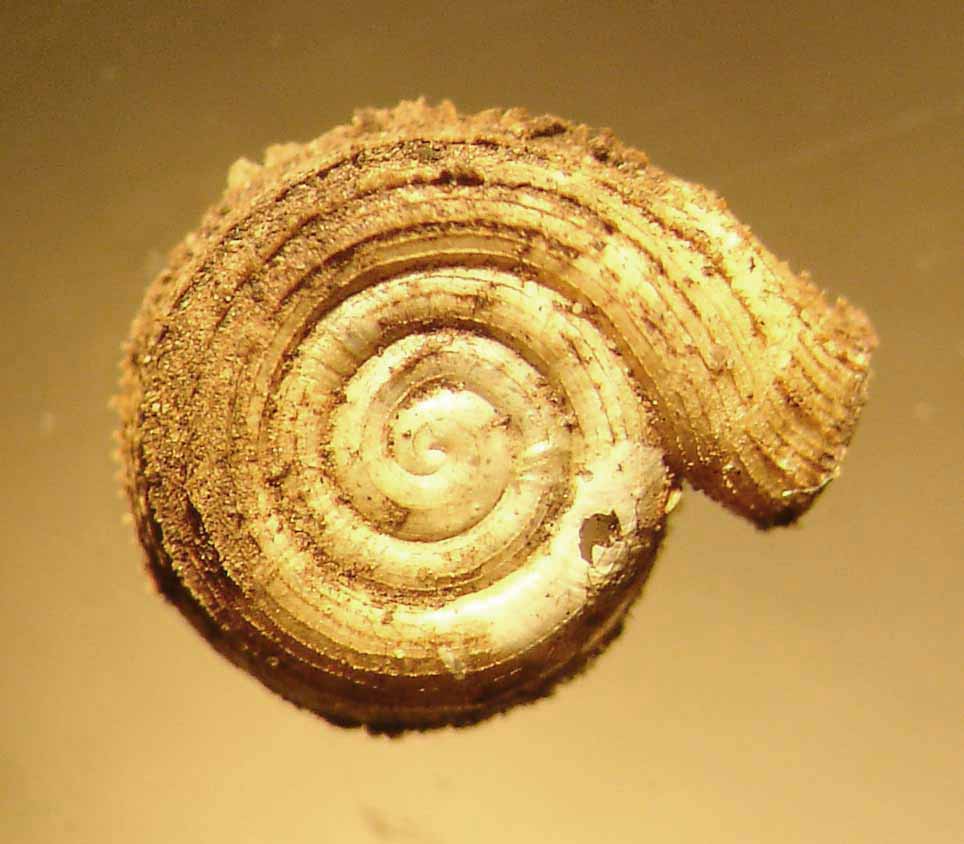
The small shell of Polygyriscus virginianus is flattened top and bottom, with rather deep whorls. The apex does not rise above the body whorl, and the umbilicus is only slightly impressed. The final part of the body whorl narrows and is deflected downward, becoming detached from the previous whorl. The aperture is slightly thickened, and contains a recessed transverse lamella. A second lamella is present on the upper palatal surface, receding into the opening.

The shell is sculptured with a series of spiral “comb-like” deciduous fringes, typically lost from the lower surfaces but retaining 8-10 series above (Solem, 1975). The animal is pale, and presumably blind like others in its family.

Ecology

Shells of P. virginianus are found mainly on and near forested dolomitic bluffs along the New River in the vicinity of Radford, Virginia. They are typically excavated from 10-30 cm of stony scree mixed with leaves and wood at the foot of slopes, below outcrops, or at the bases of trees; or beneath larger stones and talus. However, the handful of live animals that have been recovered have ranged from within 1 cm of the surface to 45 cm (Batie, 1987; Pearce & Hotopp, 2011).

Taxonomy

A synonym for P. virginianus is Polygyra virginiana.

Distribution

This animal is reported only from Pulaski County, Virginia.

Conservation

NatureServe Global Rank: G1
NatureServe State Rank: S1
State Status: Endangered
Virginia wildlife action plan: Tier I
Federal Status: Endangered

January 11, 2023 by

Lucilla singleyana

Image Usage Information

  • Benjamin Schwartz
  • CC BY-NC 4.0 DEED
  • Additional information about this specimen

Family: Helicodiscidae

Common name: Smooth Coil

Discovery: Pilsbry, 1889

Identification

Width: 2-2.5 mm
Height: ~1 mm
Whorls: 3+

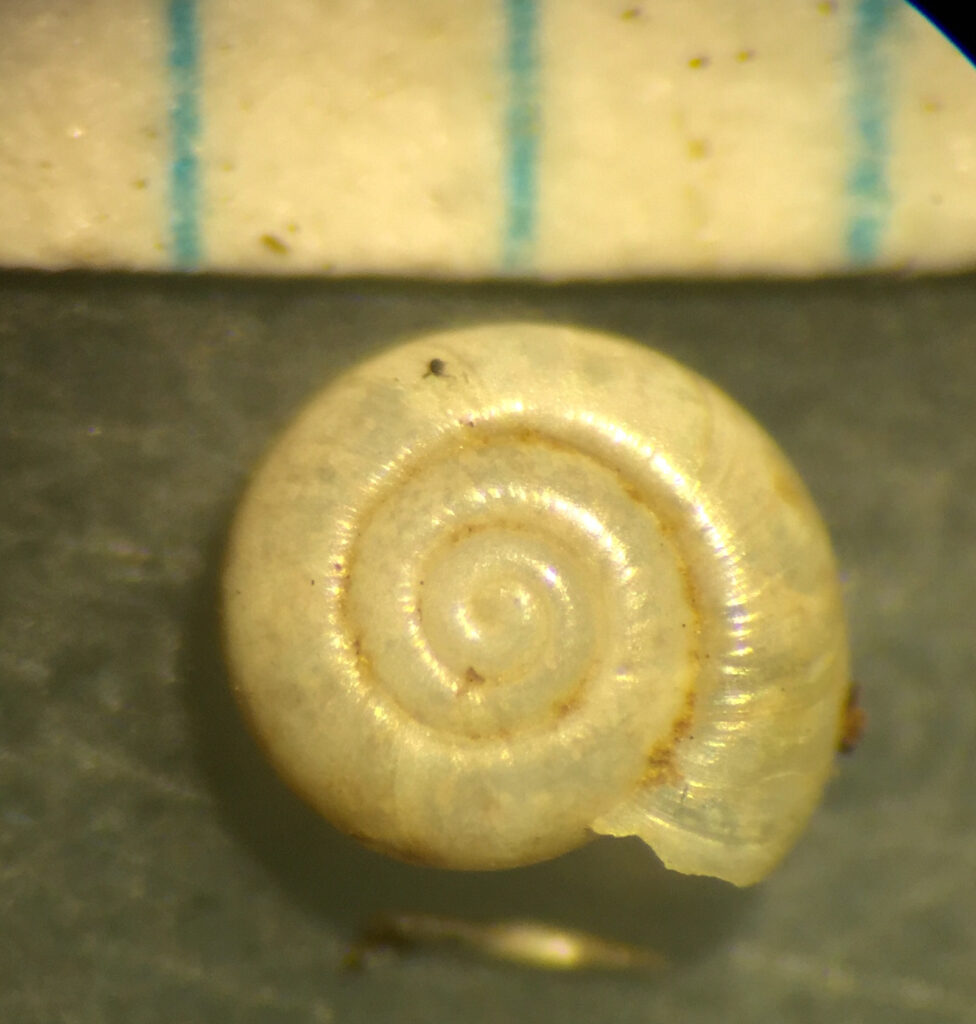
The tiny, fragile, translucent shell of Lucilla singleyana has a glossy surface marked by growth wrinkles and some additional radial grooves. Under high magnification, very faint spiral lirae may become apparent. The open umbilicus is about one-third the diameter of the entire shell, and the aperture is about the same size as the umbilicus.

In eastern Europe where this species and its relative L. scintilla are introduced, they are distinguished by shell color, size, and shape (Horsák et al, 2009). The shell of Lucilla scintilla is whitish, larger and taller than L. singleyana. Both Lucilla species have a smooth and glossy shell surface, while Hawaiia species exhibit a crosshatch of fine striae.

Ecology

Lucilla singleyana prefers open land, including dry grasslands, bare rock and talus, roadsides, and urban terrain (Nekola, 2009).

Taxonomy

Synonyms for Lucilla singleyana include Helicodiscus singleyanus, Helicodiscus (Hebetodiscus) singleyanus singleyanus, Hyalinala eviuscula, H. texana, Zonites singleyanus, and Zonitoides singleyanus.

Distribution

This animal is known from much of the northeastern and midwestern United States. In Virginia it is reported from only a few mid-western counties.

Conservation

NatureServe Global Rank: G5, Secure.
NatureServe State Rank: Virginia, S2S4, Imperiled to Apparently Secure.

January 11, 2023 by

Lucilla scintilla

Image Usage Information

  • Howard Horne
  • CC BY-NC 4.0 DEED
  • Additional information about this specimen

Family: Helicodiscidae

Common name: Oldfield Coil

Discovery: R.T. Lowe, 1852

Identification

Width: 2-2.5 mm
Height: 1.25 mm
Whorls: 4+

The rounded whorls of the shell of Lucilla scintilla gradually increase in size as they grow outward. The final whorl descends slightly towards the aperture, which has a subtly reflected, though still rather narrow, lip. It is marked by vein-like lines that are usually darker in color than the rest of the translucent shell. The suture is well-impressed, and some growth lines can be seen on the final whorl. This shell lacks spiral lirae.

In eastern Europe where this species and its relative L. singleyana are introduced, they are distinguished by shell color, size, and shape (Horsák et al, 2009). The shell of Lucilla scintilla is yellowish, smaller, and flatter than L. singleyana. Both Lucilla species have a smooth and glossy shell surface, while Hawaiia species exhibit a crosshatch of fine striae.

Ecology

This animal prefers open, grassy areas. It is most frequently encountered in fields, meadows, and along roads and railroads. On occasion it may also be found in caves (Hubricht, 1985). In Europe, it and L. singleyana are reported to live in small holes and cracks up to a meter deep in the soil (Kerney, 1999).

Taxonomy

Lucilla scintilla has also been known as Helicodiscus inermis, H. intermedius, and H. singleyanus inermis.

Distribution

Lucilla scintilla has been reported from the Middle Atlantic, Southeastern, and Midwestern United States. In Virginia, it is listed as a vulnerable species.

Conservation

NatureServe Global Rank: G4, Apparently Secure.
NatureServe State Rank: Virginia, S2S4, Imperiled to Apparently Secure; West Virginia SH, Historic.

January 11, 2023 by

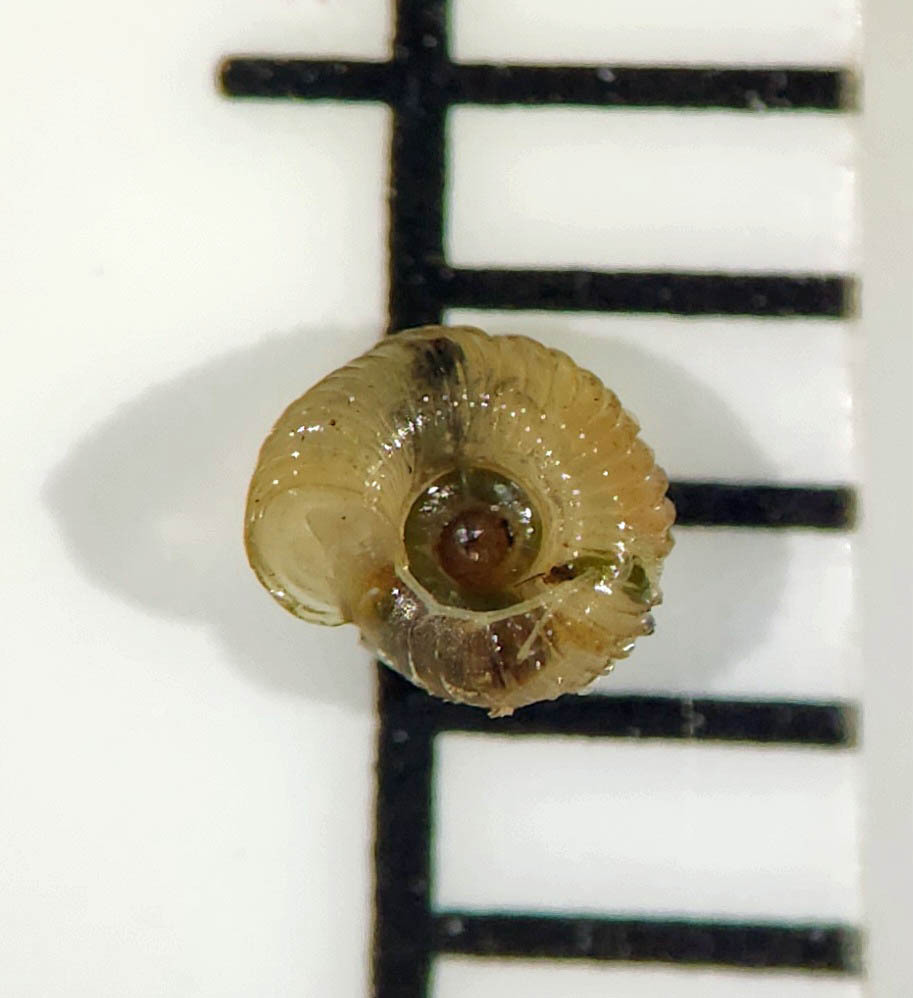
Punctum vitreum

Image Usage Information

  • The Academy of Natural Sciences of Philadelphia
  • CC BY-NC 4.0 DEED
  • For additional information about this specimen: Gary Rosenberg (rosenberg.ansp@drexel.edu)

Family: Punctidae

Common name: Glass Spot

Discovery: H.B. Baker, 1930

Identification

Width: ~1.2 – 1.4 mm
Height: ~0.8 – 0.9 mm
Whorls: 4+

Punctum vitreum has a shell sculpture of fine radial riblets that are set widely apart. Between these are smaller ribs of growth, crossed by spiral striae (Pilsbry, 1948). The shell is heliciform, depressed, with a thin lip and open umbilicus, as are other Punctum. The shell spire is lower than in P. minutissimum, and the shell is more yellow and transparent.

Ecology

This species lives in forest leaf litter, often with P. minutissimum (Hubricht, 1985).

Taxonomy

A synonym is P. pygmaeum.

Distribution

Punctum vitreum is reported from Pennsylvania and New Jersey, west to Iowa and south to Texas, however, it is absent from the deep Southeastern states such as Georgia and Florida. In Virginia, Punctum vitreum is reported in widely scattered counties around the state.

Conservation

NatureServe Global Rank: G5
NatureServe State Rank: S3
  • « Go to Previous Page
  • Page 1
  • Interim pages omitted …
  • Page 26
  • Page 27
  • Page 28
  • Page 29
  • Page 30
  • Interim pages omitted …
  • Page 53
  • Go to Next Page »

sidebar

About

  • Mission & Commitments
  • Directors Team
  • Museum History

Get Involved

  • Volunteer
  • Membership
  • Carnegie Discoverers
  • Donate
  • Employment
  • Events

Bring a Group

  • Groups of 10 or More
  • Birthday Parties at the Museum
  • Field Trips

Powdermill

  • Powdermill Nature Reserve
  • Powdermill Field Trips
  • Powdermill Staff
  • Research at Powdermill

More Information

  • Image Permission Requests
  • Science Stories
  • Accessibility
  • Shopping Cart
  • Contact
  • Visitor Policies
Stay in the loop! Sign up for our newsletter(s).
One of the Four Carnegie Museums | © Carnegie Institute | Privacy Policy | Terms of Use | Accessibility
Rad works here logo