• Skip to primary navigation
  • Skip to main content
  • Skip to primary sidebar

Carnegie Museum of Natural History

One of the Four Carnegie Museums of Pittsburgh

  • Visit
    • Buy Tickets
    • Visitor Information
    • Exhibitions
    • Events
    • Dining at the Museum
    • Celebrate at the Museum
    • Powdermill Nature Reserve
    • Event Venue Rental
  • Learn
    • Field Trips
    • Educator Information
    • Programs at the Museum
    • Bring the Museum to You
    • Guided Programs FAQ
    • Programs Online
    • Climate and Rural Systems Partnership
  • Research
    • Scientific Sections
    • Science Stories
    • Science Videos
    • Senior Science & Research Staff
    • Museum Library
    • Science Seminars
    • Scientific Publications
    • Specimen and Artifact Identification
  • About
    • Mission & Commitments
    • Directors Team
    • Museum History
  • Tickets
  • Give
  • Shop

January 10, 2023 by

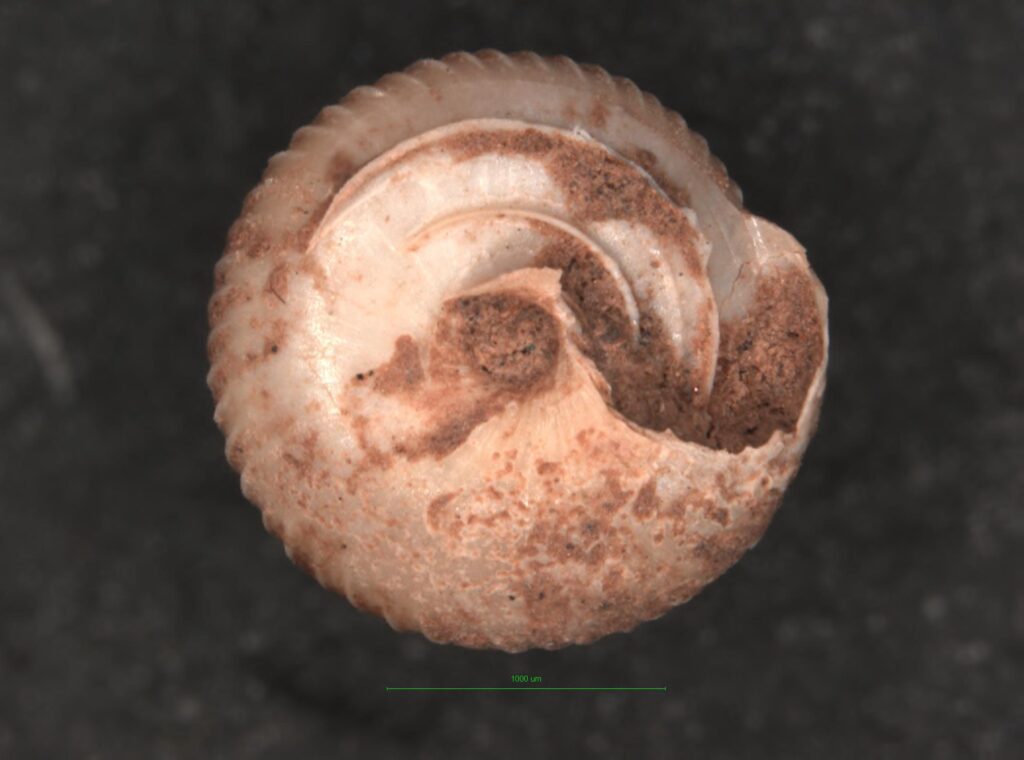
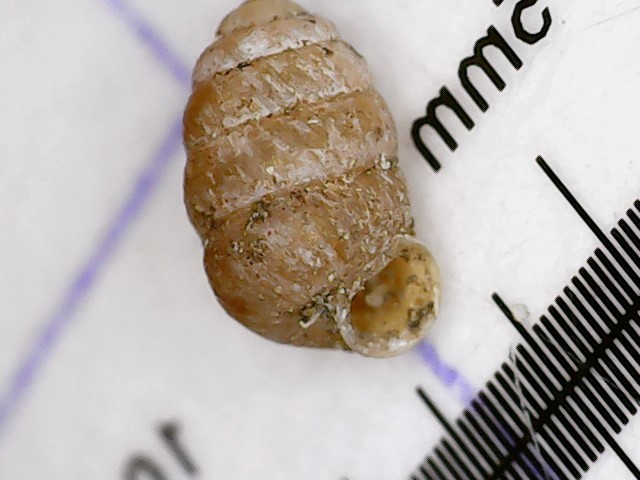
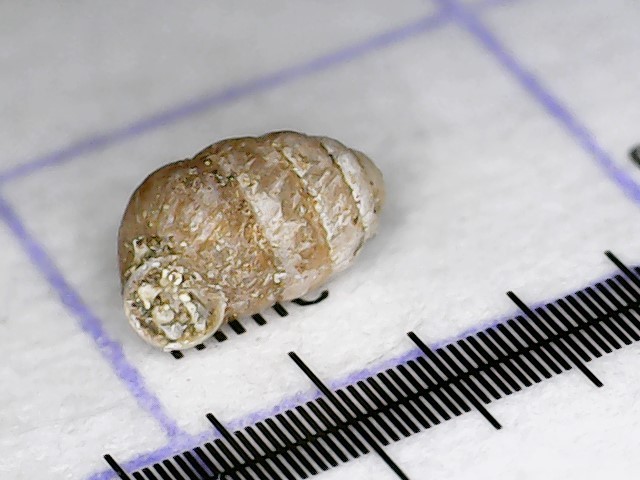
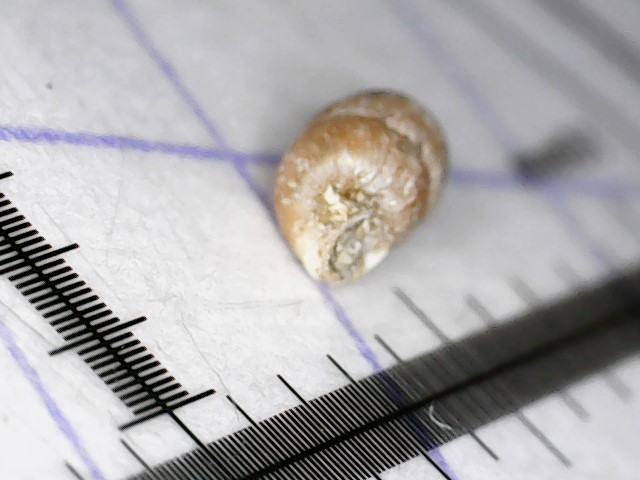
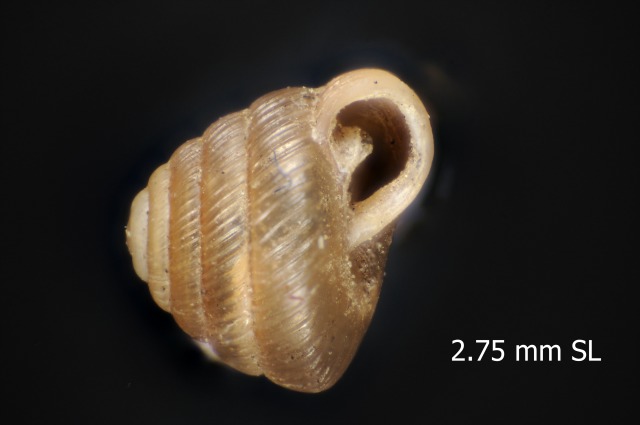
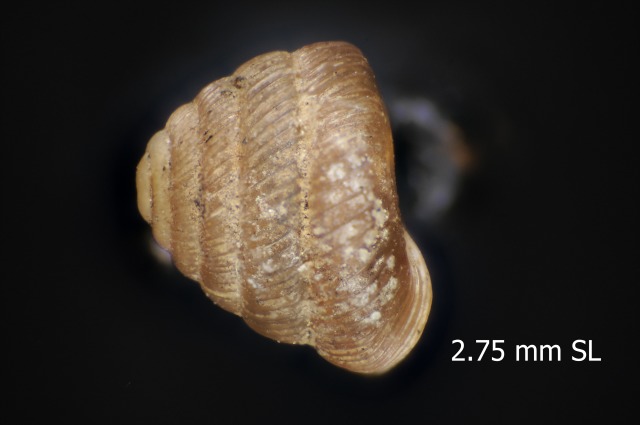
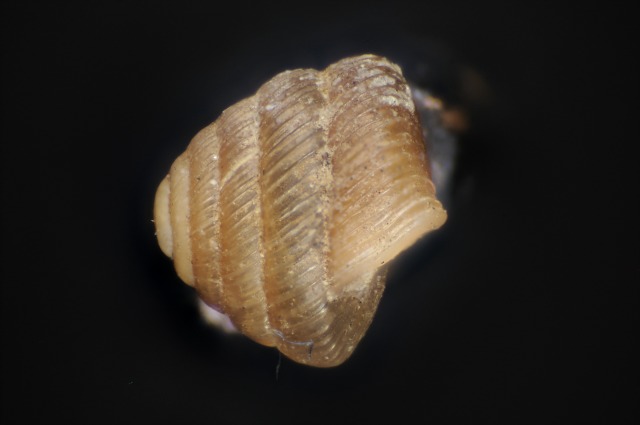
Strobilops affinis

Image Usage Information

  • The Academy of Natural Sciences of Philadelphia
  • CC BY-NC 4.0 DEED
  • For additional information about this specimen: Gary Rosenberg (rosenberg.ansp@drexel.edu)

Family: Strobilopsidae

Common name: Eightfold Pinecone

Discovery: Pilsbry, 1893

Identification

Width: 2.7 mm
Height: 2.5 mm tall
Whorls: 6

Strobilops affinis is a dome-shaped shell sculptured with minute transverse ribs. The aperture has a reflected edge and the umbilicus is perforate to umbilicate. Elongated lamellae are visible in the aperture.  Within the interior are a series of rather short, nearly equal-length lamellae that can often be seen through the bottom of live and fresh-dead shells.

Ecology

This species is found on logs during wet weather and on leaf litter during drier parts of the year, in mixed hardwood forests (Hubricht, 1985). It is also reported from grassland and fen habitats in association with marl beds (NatureServe, 2017).

Taxonomy

There are no synonyms.

Distribution

Strobilops affinis ranges from Missouri and Minnesota east to Pennsylvania, Massachusetts, Maine and New York, but more sparsely in the east. It is reported it from four counties in New York based on museum records (Hotopp and Pearce, 2007). It is listed as Critically Imperiled in Pennsylvania. 

This enigmatic species was previously reported in West Virginia by multiple investigators but never by Hubricht, who spent a fair amount of time in the state.  His closest records were from Meigs County, Ohio.  Specimens examined from the Carnegie Museum labeled as this species were either S. aeneus or S. labyrinthicus, therefore its occurrence in West Virginia remains doubtful (Dourson, 2015).

Conservation

NatureServe Global Rank: G4, apparently secure. NatureServe State Ranks: Pennsylvania, S1; not ranked in several other states.
January 10, 2023 by

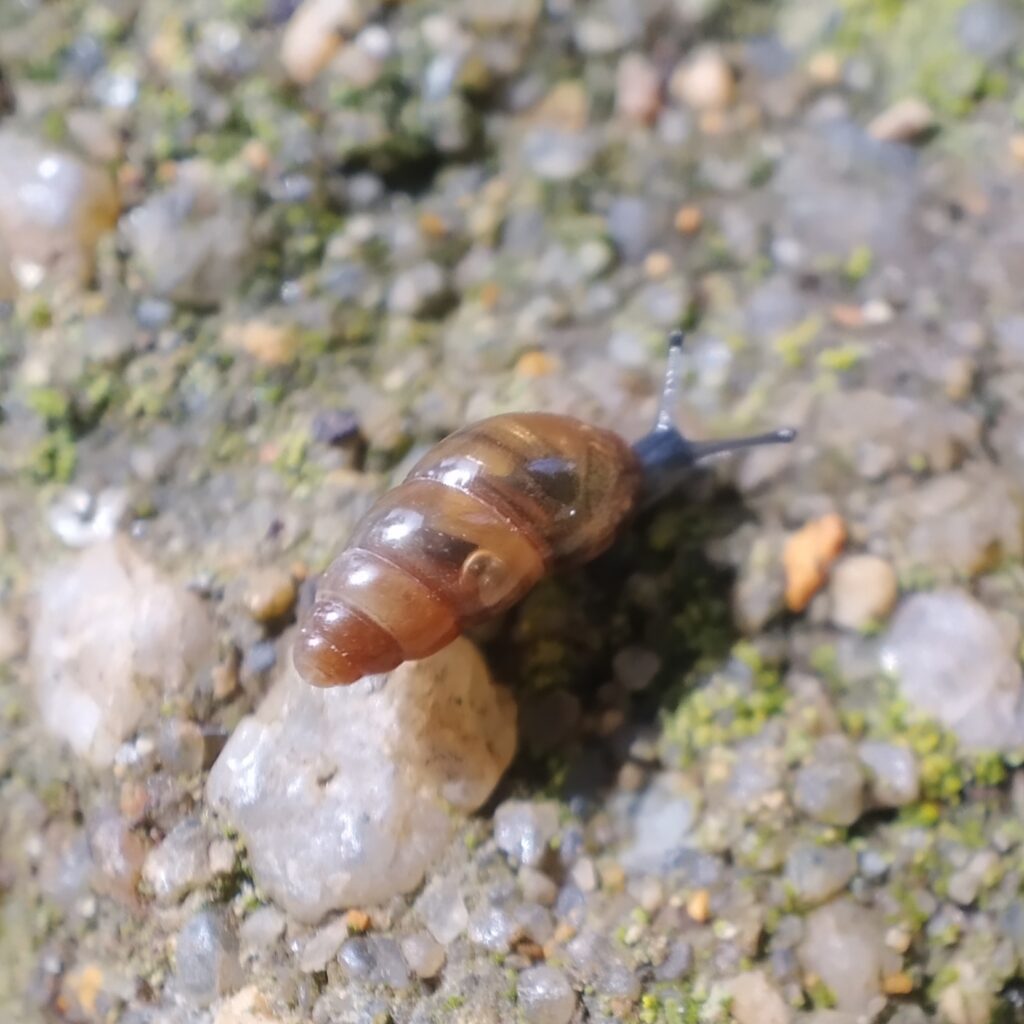
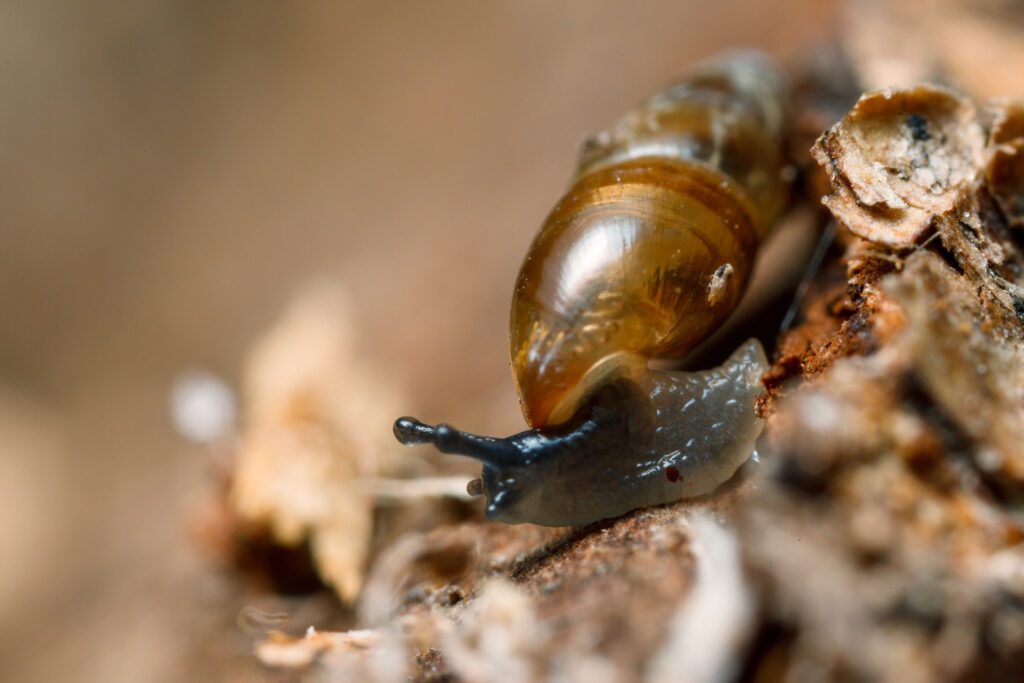
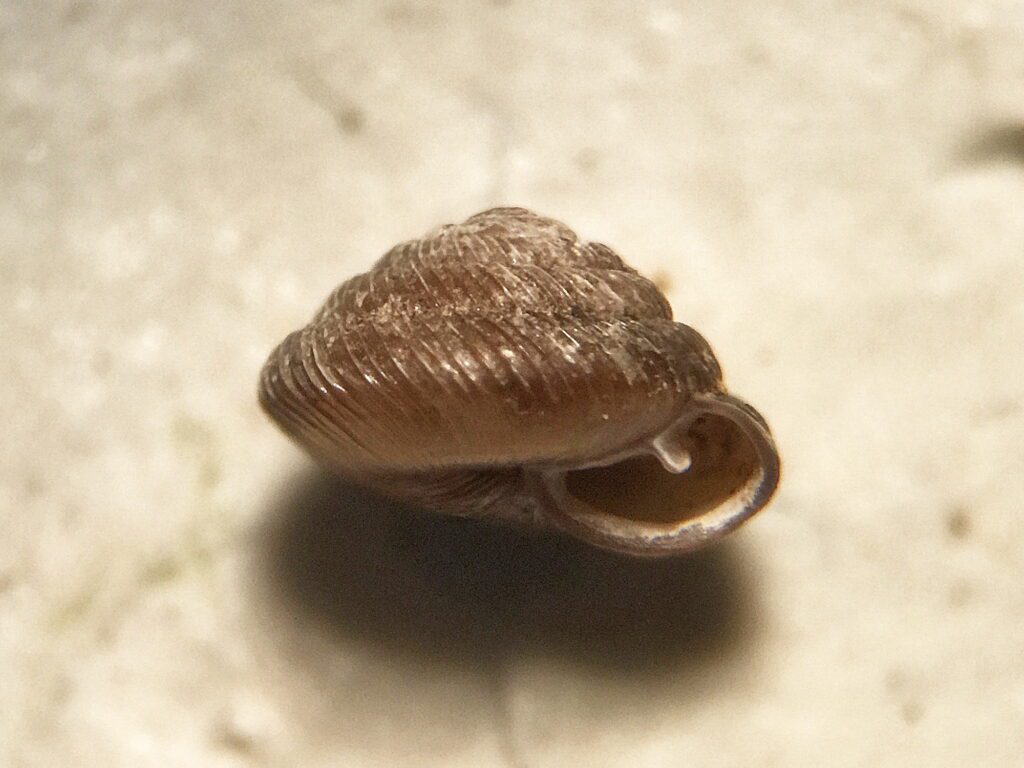
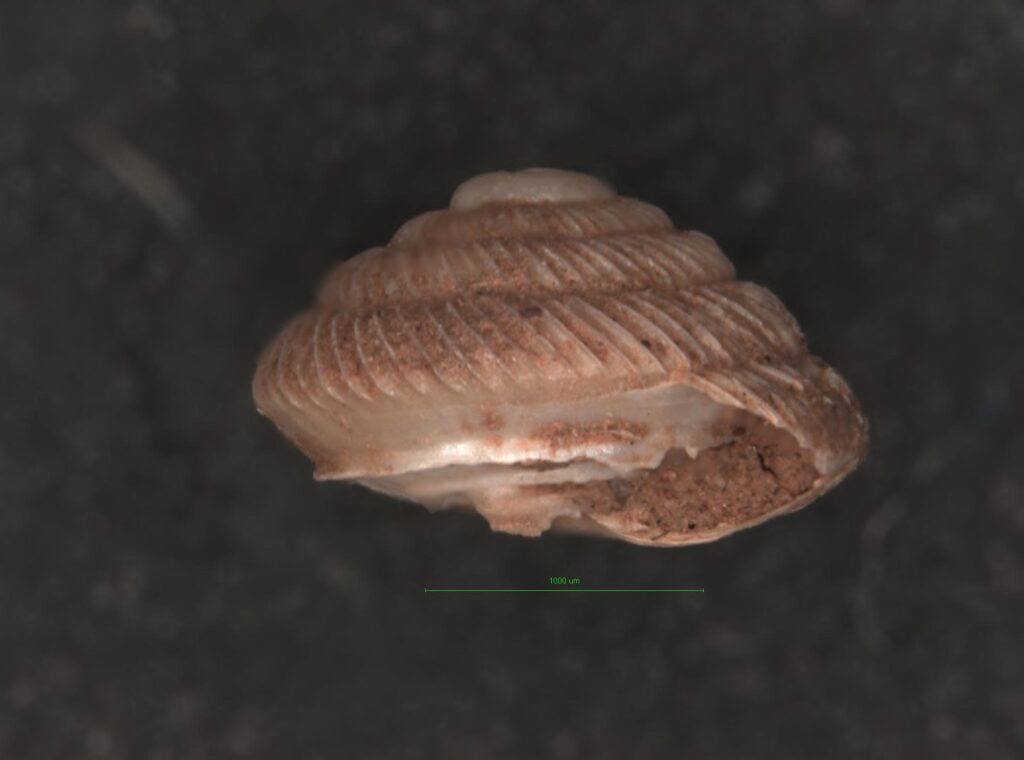
Strobilops aeneus

Image Usage Information

  • delang, iNaturalist
  • Public Domain
  • Additional information about this specimen

Image Usage Information

  • University of Michigan Museum of Zoology
  • Public Domain
  • For additional information about this specimen: Taehwan Lee (taehwanl@umich.edu)

Family: Strobilopsidae

Common name: Bronze Pinecone

Discovery: Pilsbry, 1926

Identification

Width: 2.4 – 2.8 mm
Height: 1.5 – 2.0 mm
Whorls: 6

The shell of this species is dark reddish-brown and is covered with curved radial ridges. The periphery of shells in this genus is generally rounded, but on S. aeneus it is a bit angular. The pattern of the lamellae, as seen through the base, is alternating short-long-short-long. The aperture is wider than it is tall, with a bit of a reflected lip. The shell sculpture is somewhat smoother on the base, which is narrowly umbilicate.

Ecology

Strobilops aeneus is found upon old logs and in leaf litter, sometimes with S. labyrinthicus. In Tennessee this species was on flatter, drier, and more acid sites, and absent from wet or very rich sites (Coney et al, 1982).

Taxonomy

Synonyms for S. aeneus are Strobila labyrinthica, Strobilops aenea, S. labyrinthica, and S. l. strebeli.

Distribution

This snail ranges widely through the middle and eastern parts of the US, though it is sparse in the north and rare in New England (Hubricht, 1985). It is spread throughout most of Virginia.

Conservation

NatureServe Global Rank: G5
NatureServe State Rank: S4

January 10, 2023 by

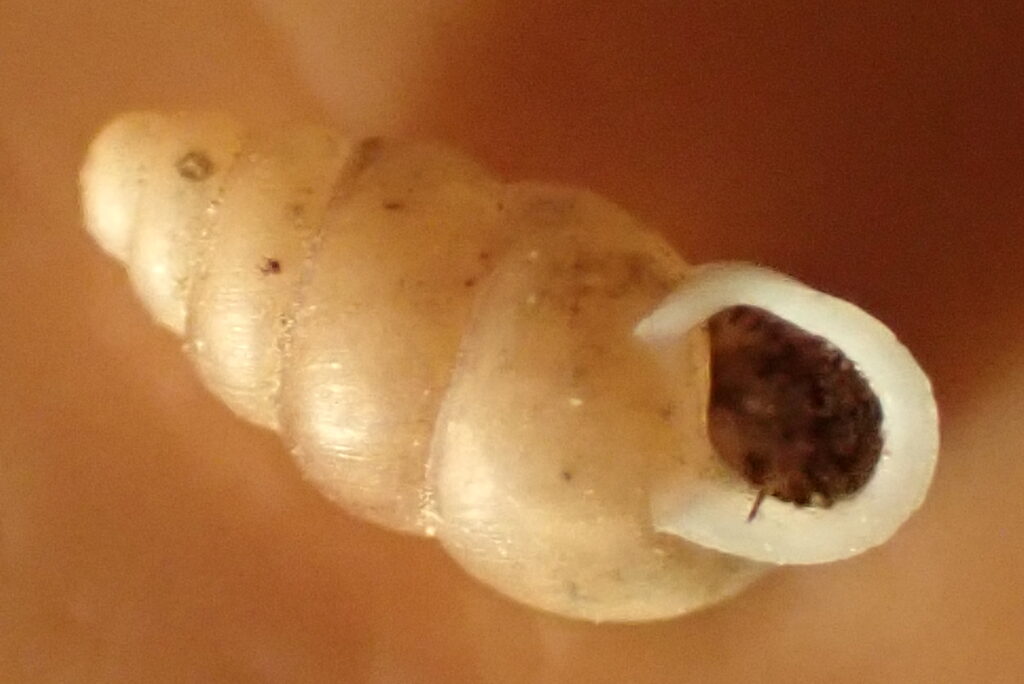
Pupoides nitidulus

Image Usage Information

  • Ozarkpoppy
  • CC BY-NC 4.0 DEED
  • Additional information about this specimen

Family: Pupillidae

Common name:

Discovery: C.B. Adams, 1841

Identification

Height: ~4.8 mm
Width: ~2.0 mm
Whorls: 6

This species is easily distinguished from all other regional pupillid land snails by its large (>4 mm tall), conical, brown shell with a strongly whitened apertural margin and no apertural lamellae.

Ecology

Pupoides nitidilus is a marked calcium-lover (calciphile) that is found under stones, leaf litter under red cedar, in thin grass turf and thatch accumulations on rock outcrops, bedrock glades, xeric prairie, and old fields. In the western Plains, it is also occasional in riparian forests (Nekola & Coles, 2010).

Taxonomy

Synonyms for this animal’s name include Pupa arizonensis, Pupa albilabris, Pupoides marginatus.

Distribution

This species ranges across most of the southeastern two-thirds of North America, ranging from southeastern Arizona north to the Black Hills of South Dakota and west-central Wisconsin, east to the north shores of Lakes Erie and Ontario, western Vermont, and south into peninsular Florida.

In Virginia, this species has been reported from across the entire state. It appears to be more frequent in limestone districts in the western mountains.

Conservation

NatureServe Global Rank: G5
NatureServe State Rank: S4

January 10, 2023 by

Pupilla muscorum

Image Usage Information

  • Maëlan ADAM
  • CC BY-NC 4.0 DEED
  • Additional information about this specimen

Family: Pupillidae

Common name: Widespread Column

Discovery: Linnaeus, 1758

Identification

Height: ~3.6 mm
Width: ~1.7 mm
Whorls: 6-7

This species is easily distinguished from all other pupillid land snails in the region by having a shell that is relatively large (more than 3.5 mm tall), dark reddish-brown in color, and columnar in shape

Ecology

Occupied habitats differ greatly between populations restricted to these two distribution centers. Northern and Western populations occur in undisturbed native habitats on bare soil, under stones, on turf, in thin leaf litter accumulations on sandy or rocky shorelines, and in tundra (Nekola & Coles, 2010). In the western mountains it also commonly occurs in rocky woodland and sandy riparian forest.  East-central North American populations, however, are generally limited to human-disturbed habitats such as road verges, vacant lots, abandoned quarries, old fields, and concrete culverts (Hubricht, 1985). Less-disturbed carbonate cliff, glade, and grassland sites are also occasionally used.

Taxonomy

Given the differences in ecology, it is not surprising that DNA analysis documents that multiple species are present in North America under the umbrella of “P. muscorum.”The east-central North American populations are introduced European animals referable to true P. muscorum (Nekola et al., 2009; von Proschwitz et al., 2009). In fact, the genetic haplotype found around Cedar Rapids, Iowa — a region with a sizeable population of Czech immigrants — is identical to that occurring around Brno in the eastern Czech Republic (Nekola, unpublished data). The northern and western populations, however, represent one or more undescribed native North American species, distantly related to the Eurasian Pupilla alpicola (Nekola, unpublished data). Additional research is needed to sort out the taxonomy of these animals.

Distribution

Historically, P. muscorum was considered to have a Holarctic distribution, ranging across middle and northern latitudes of both Eurasia and North America. In North America two distinct ranges were apparent: One set of populations ranged from Alaska to Newfoundland and south down the Rocky Mountains to Arizona and New Mexico. The second set was restricted from eastern Iowa and the western Great Lakes states east to the Atlantic seaboard (Oughton, 1948; Pilsbry, 1948).

In Virginia, all populations represent naturalized European P. muscorum. While currently reported only from the far north of the state, more should be expected from disturbed, calcareous habitats in the central and northern mountains, as well as the Washington, DC metroplex.

Conservation

NatureServe Global Rank: G5
NatureServe State Rank: S1 (but introduced)
Virginia’s wildlife action plan: Tier IV

January 10, 2023 by

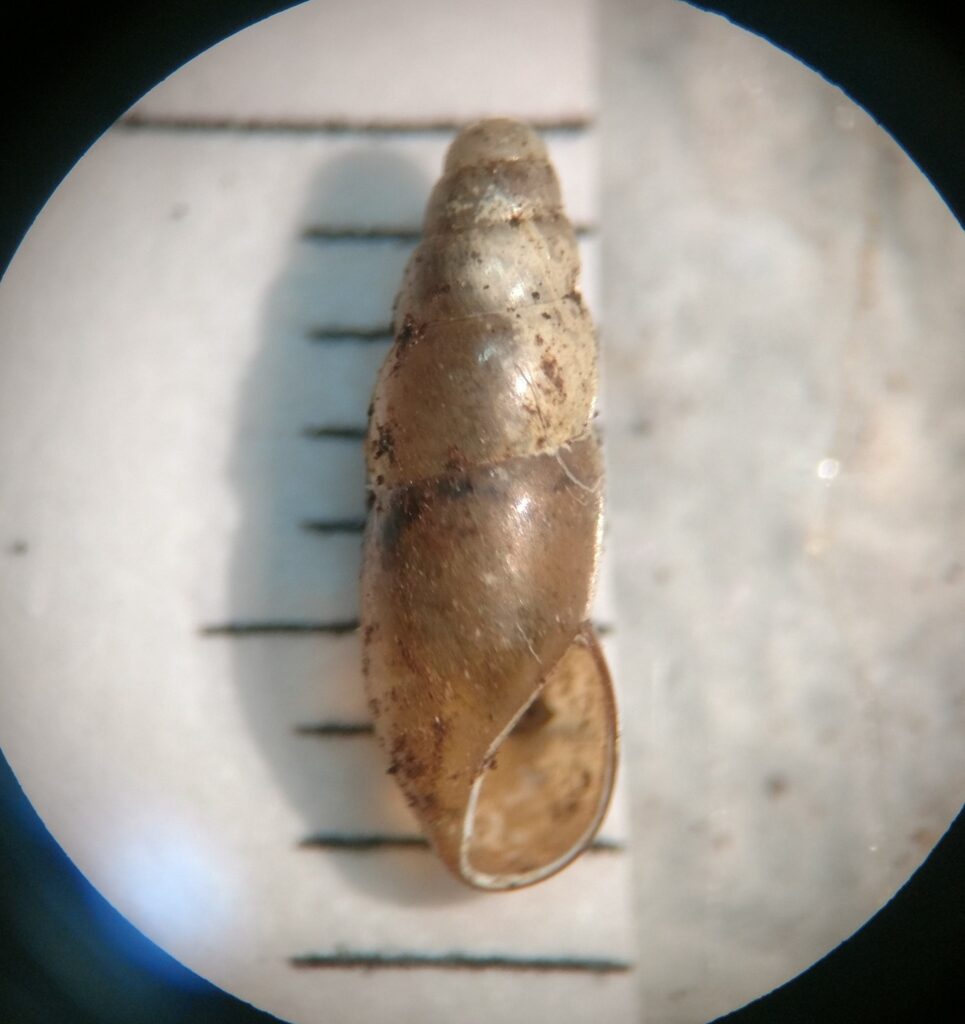
Cochlicopa morseana

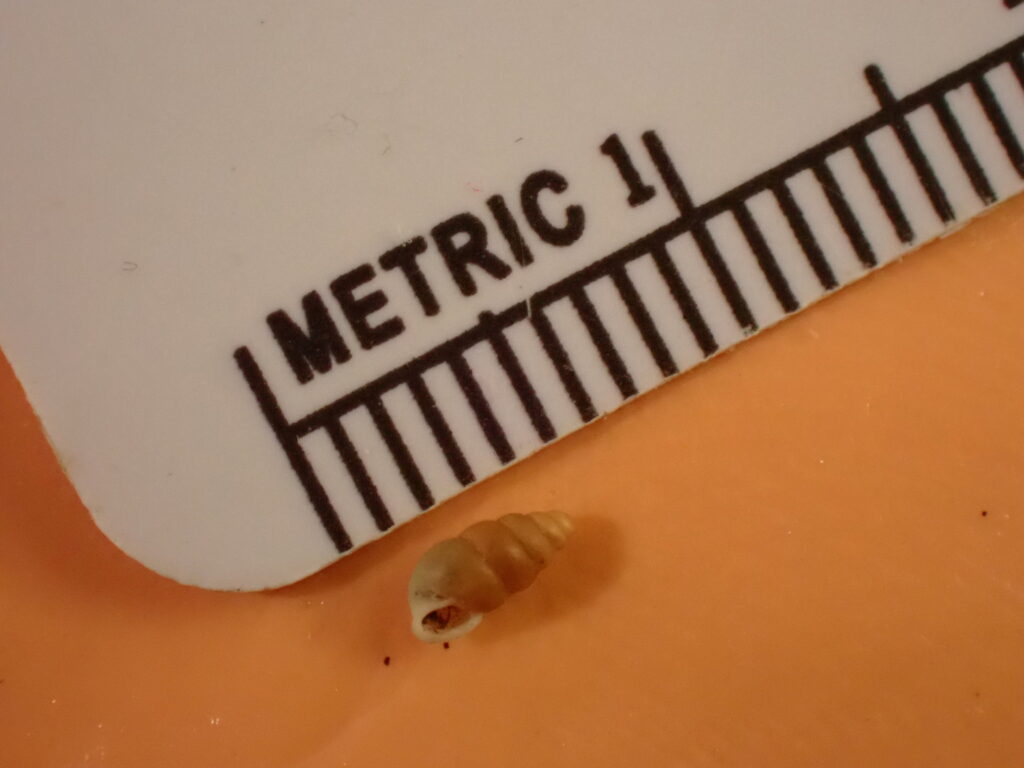
measured shell of appalachian pillar snail, at just over 7mm long from aperture to spire

Image Usage Information

  • Barb Graham
  • CC BY-NC 4.0 DEED
  • Additional information about this specimen

Family: Cionellidae

Common name: Appalachian Pillar

Discovery: Doherty, 1878

Identification

Width: 2.3- 2.5 mm
Height: 6.6- 7.2 mm
Whorls: 5+

This animal’s shell is columnar, with impressed sutures and an obtuse apex. It may be colored yellow to dark amber. This shell stands out among leaf litter and other shells because of its glossy shine and elongate shape. It is taller and browner than Cochlicopa lubrica.

Ecology

Cochlicopa morseana is a forest animal that occurs in the leaf litter of cool, ma­ture woodlands.It tends to occur at low densities in deep leaf litter. In Tennessee it was found in leaf litter and log microhabitats (Coney et al, 1982).

Taxonomy

Cochlicopa morseana has also been known as Cionella morseana, Cochlicopa lubrica appalachicola, C. l. morseana, and Ferussacia subcylindrica.

Distribution

This is an Eastern species occurring from Québec south to northern Alabama and Arkansas. In Virginia it is found in the western highlands.

Conservation

NatureServe Global Rank: G5, Secure.

Author: Ken Hotopp, Meegan Winslow
Publication date: 9/2012

January 10, 2023 by

Cochlicopa lubricella

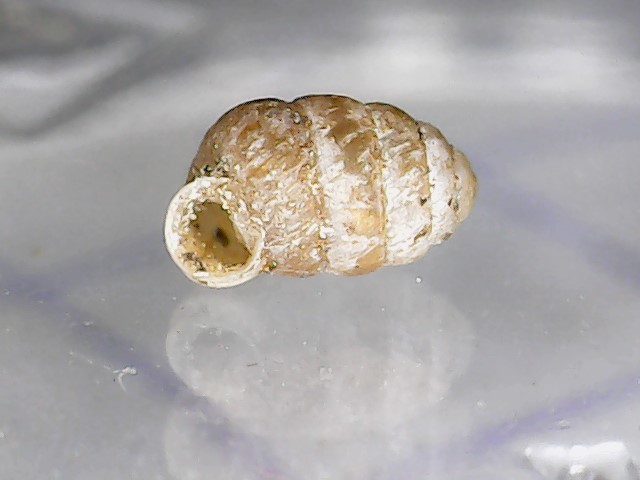
View of thin pillar from the back, spire closest to viewer, showing elongated shell with small silvery head coming from aperture

Image Usage Information

  • Guilherme Ramos
  • CC BY-NC 4.0 DEED
  • Additional information about this specimen
Thin pillar profile view of head and eyestalks

Image Usage Information

  • Pekka Malinen
  • CC BY-NC-SA 4.0 DEED
  • Additional information about this specimen

Family: Cionellidae

Common name: Thin Pillar

Discovery: Porro, 1838

Identification

Width: 2.1-2.5 mm
Height: 4.5- 6.8 mm
Whorls: 5+

The elongate shell of this animal is small, yellowish-brown, and sometimes has a rosy lip color. It is smaller and more cylindrical than C. lubrica, though there may be some size overlap.

Ecology

Cochlicopa lubricella can occur in colonies on developed sites, sometimes on lawns and around driveways. Densities may reach dozens per square meter. It is sometimes reported with C. lubrica, noting that the two are taxonomically very similar. However, C. lubricella tends to favor richer and drier habitats (Kerney & Cameron, 1979). In Maine it occurs scattered in a variety of forest habitats (Nekola, 2008).

Taxonomy

Cochlicopa lubricella has also been known as Cionella lubricella.

Distribution

Cochlicopa lubricella is introduced from Europe. In North America it ranges across southeastern Canada and the Northeastern and Midwestern United States, reported as far west as South Dakota. Its distribution in Virginia is patchy and poorly known.

Conservation

NatureServe Global Rank: G5, Secure.

Author: Ken Hotopp, Meegan Winslow
Publication date: 9/2012
  • « Go to Previous Page
  • Page 1
  • Interim pages omitted …
  • Page 47
  • Page 48
  • Page 49
  • Page 50
  • Page 51
  • Interim pages omitted …
  • Page 53
  • Go to Next Page »

sidebar

About

  • Mission & Commitments
  • Directors Team
  • Museum History

Get Involved

  • Volunteer
  • Membership
  • Carnegie Discoverers
  • Donate
  • Employment
  • Events

Bring a Group

  • Groups of 10 or More
  • Birthday Parties at the Museum
  • Field Trips

Powdermill

  • Powdermill Nature Reserve
  • Powdermill Field Trips
  • Powdermill Staff
  • Research at Powdermill

More Information

  • Image Permission Requests
  • Science Stories
  • Accessibility
  • Shopping Cart
  • Contact
  • Visitor Policies
One of the Four Carnegie Museums | © Carnegie Institute | Privacy Policy | Terms of Use | Accessibility
Rad works here logo