• Skip to primary navigation
  • Skip to main content
  • Skip to primary sidebar

Carnegie Museum of Natural History

One of the Four Carnegie Museums of Pittsburgh

  • Visit
    • Buy Tickets
    • Visitor Information
    • Exhibitions
    • Events
    • Dining at the Museum
    • Celebrate at the Museum
    • Powdermill Nature Reserve
    • Event Venue Rental
  • Learn
    • Field Trips
    • Educator Information
    • Programs at the Museum
    • Bring the Museum to You
    • Guided Programs FAQ
    • Programs Online
    • Climate and Rural Systems Partnership
  • Research
    • Scientific Sections
    • Science Stories
    • Science Videos
    • Senior Science & Research Staff
    • Museum Library
    • Science Seminars
    • Scientific Publications
    • Specimen and Artifact Identification
  • About
    • Mission & Commitments
    • Directors Team
    • Museum History
  • Tickets
  • Give
  • Shop

January 10, 2023 by

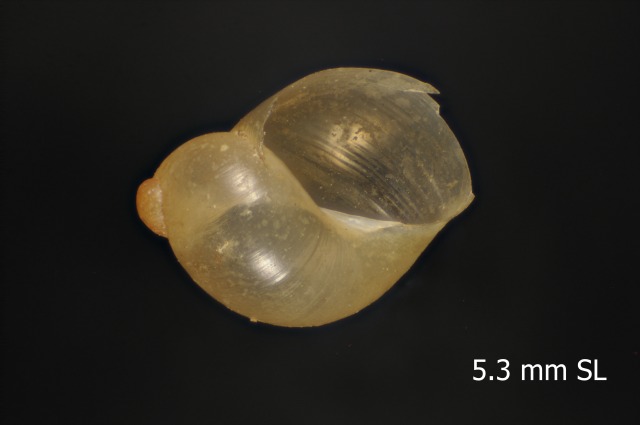
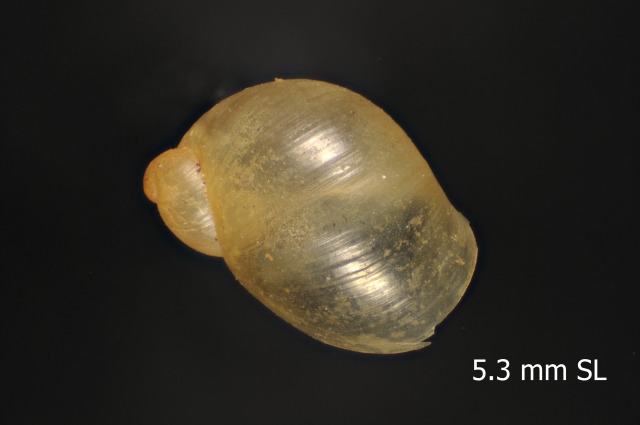
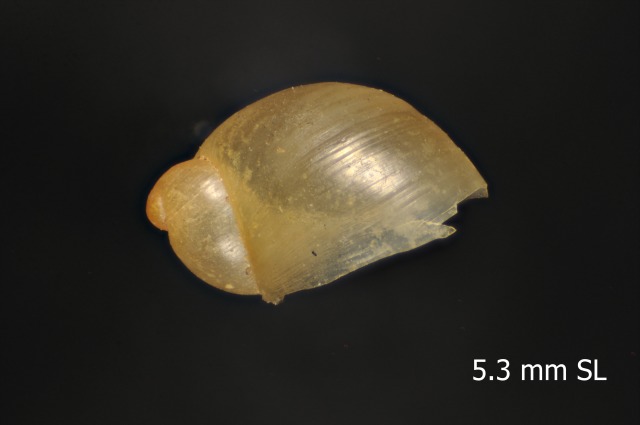
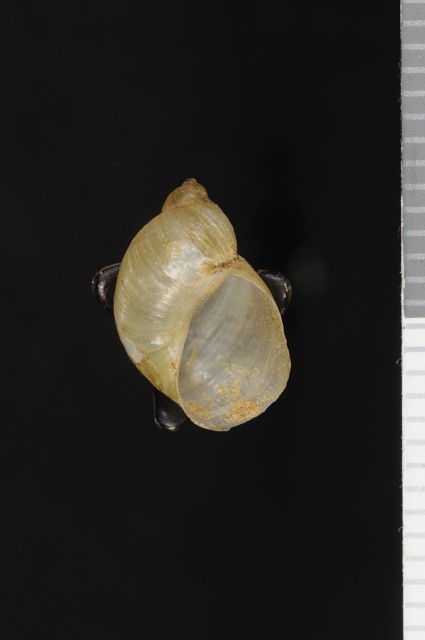
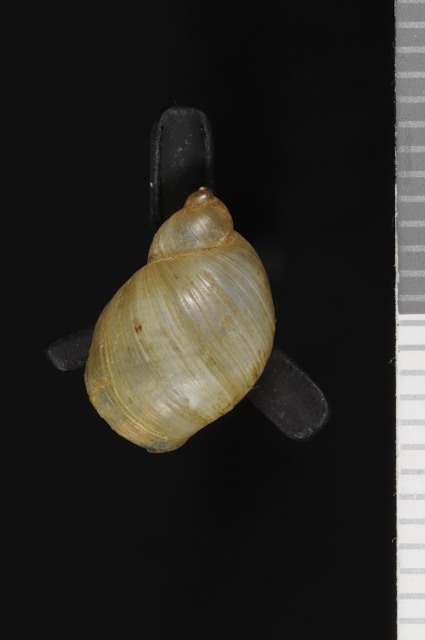
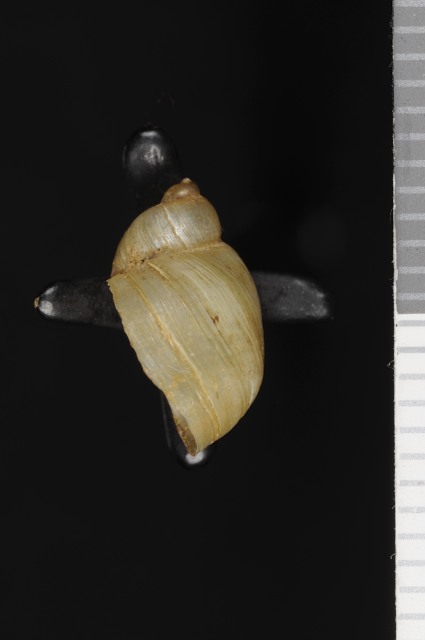
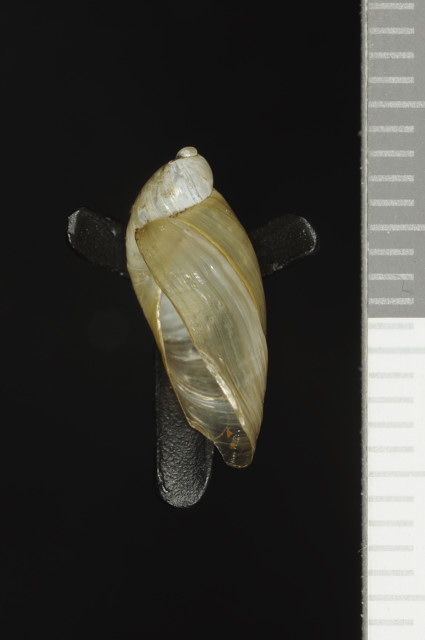
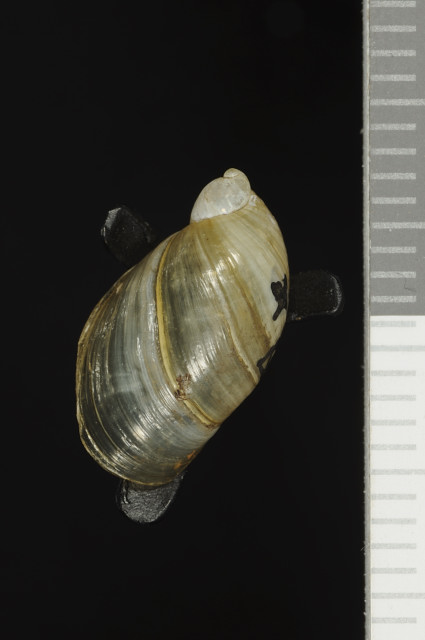
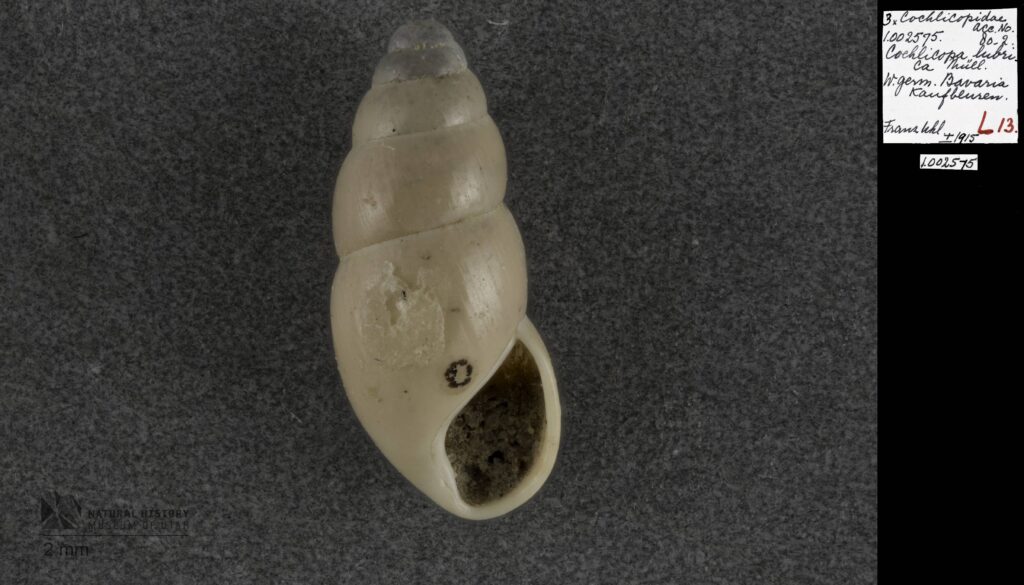
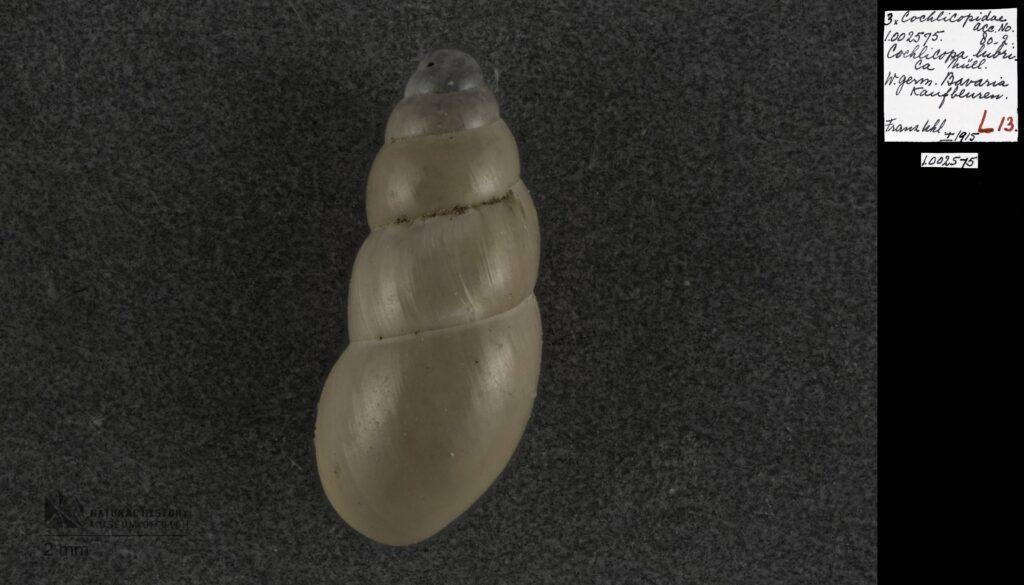
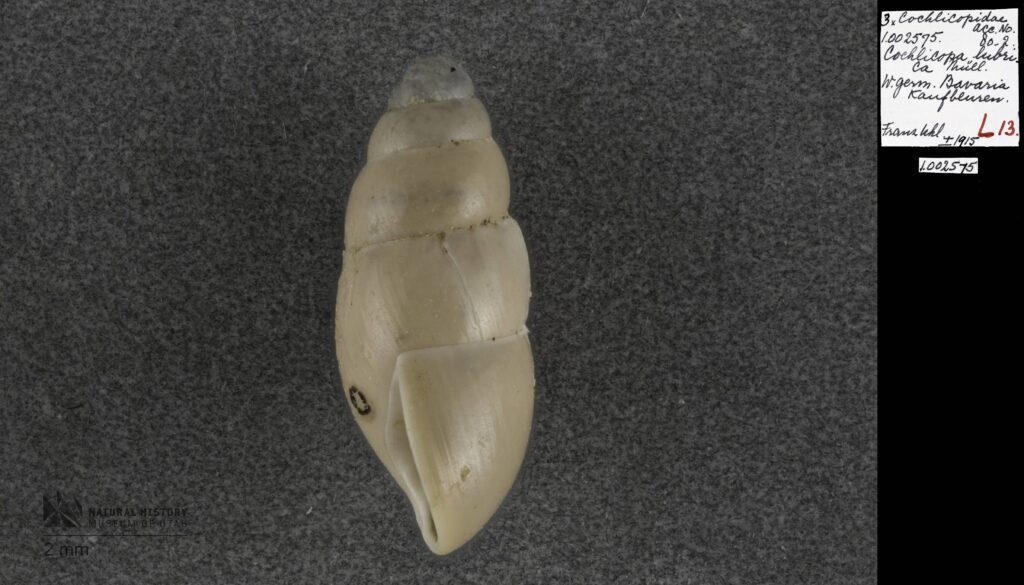
Cochlicopa lubrica

glossy pillar shell with thickened aperture edge highlighted
dorsal view of glossy pillar, highlighting the tapered shape from aperture to rounded spire
profile view of glossy pillar shell, with thickened aperture edge closest to viewer

Image Usage Information

  • Natural History Museum of Utah
  • Public Domain
  • For additional information about this specimen: Christy Bills (cbills@nhmu.utah.edu)

Family: Cionellidae

Common name: Glossy Pillar

Discovery: Müller, 1774

Identification

Width: 2.4-2.9 mm
Height: 5.0-7.5 mm
Whorls: 5+

The glossy shell of this animal is robust, with rounded whorls and im­pressed sutures. It is shorter and wider than the Appalachian Pillar, usually with a body whorl of more than 2.4 mm diameter. The aperture has a thickened edge and the gradually-tapered spire is rounded at the top.

Ecology

This holarctic species is found in a variety of open habitats – wetlands, grasslands, or roadsides (Hubricht, 1985). In Maine this species favors calcium-rich habitats and is most frequent in shrub carr wetlands and on limestone outcrops (Nekola, 2008).

Taxonomy

Synonyms for Cochlicopa lubrica include Bulimus lubricoides, B. lubricus, Cionella lubrica, C. sybcylindrica, Ferussacia subcylindrica, Helix lubricus, Zua buddii, and Z. lubricoidea.

Distribution

In North America it occurs from British Columbia and Hudson Bay in Canada, south to California, Kansas and Virginia. In Virginia it is absent except for the west, north, and Chesapeake County.

Conservation

NatureServe Global Rank: G5, Secure.

Author: Ken Hotopp and Meegan Winslow
Publication date:9/2012

January 10, 2023 by

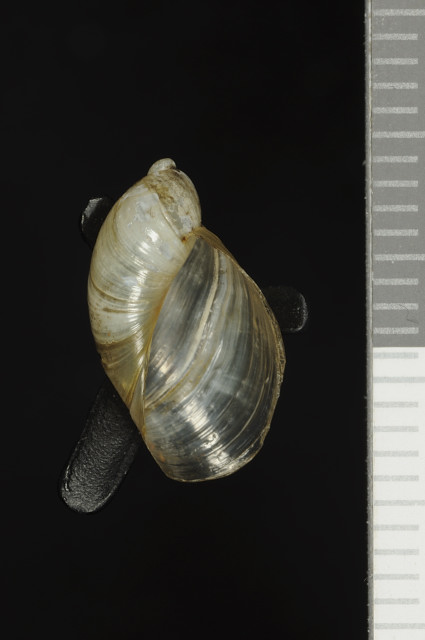
Succinea wilsonii

Image Usage Information

  • The Academy of Natural Sciences of Philadelphia
  • CC BY-NC 4.0 DEED
  • For additional information about this specimen: Gary Rosenberg (rosenberg.ansp@drexel.edu)

Family: Succineidae

Common name: Golden Ambersnail

Discovery: I. Lea, 1864

Identification

Height: 9.7-14.0 mm
Width: 5.9-8.0 mm
Whorls: 3-4

The shell of Succinea wilsonii is transparent and glossy, with fine growth lines and sometimes light spiral striations (Grimm, 1975). It has rapidly expanding whorls, a wide aperture, and moderately impressed sutures. The shape of the apex varies somewhat, from elongate to more attenuated. Shell color is greenish yellow, yellow, or orange-yellow. The body is gray speckled with black, and has dark tentacle and a lighter-colored foot.

Ecology

This snail is found in brackish marshes, rarely freshwater, at the foot of plants or on bare soil (Grimm, 1975). It occurs in colonies that vary by shell form, which may be due to founder effect or ecotypes (Grimm, 1975).  However, genitalia are diagnostic.

Taxonomy

Synonyms for S. wilsonii include Succinea bayardi, S. crisfeldi, S. pronophobus, S. pyrites, and S. wilsoni.

Distribution

Succinea wilsonii may be found in the Canadian Maritime provinces and the states of the Middle Atlantic, from New York to Georgia. In Virginia it is reported from tidewater counties.

Conservation

NatureServe Global Rank: G4
NatureServe State Rank: S4

January 10, 2023 by

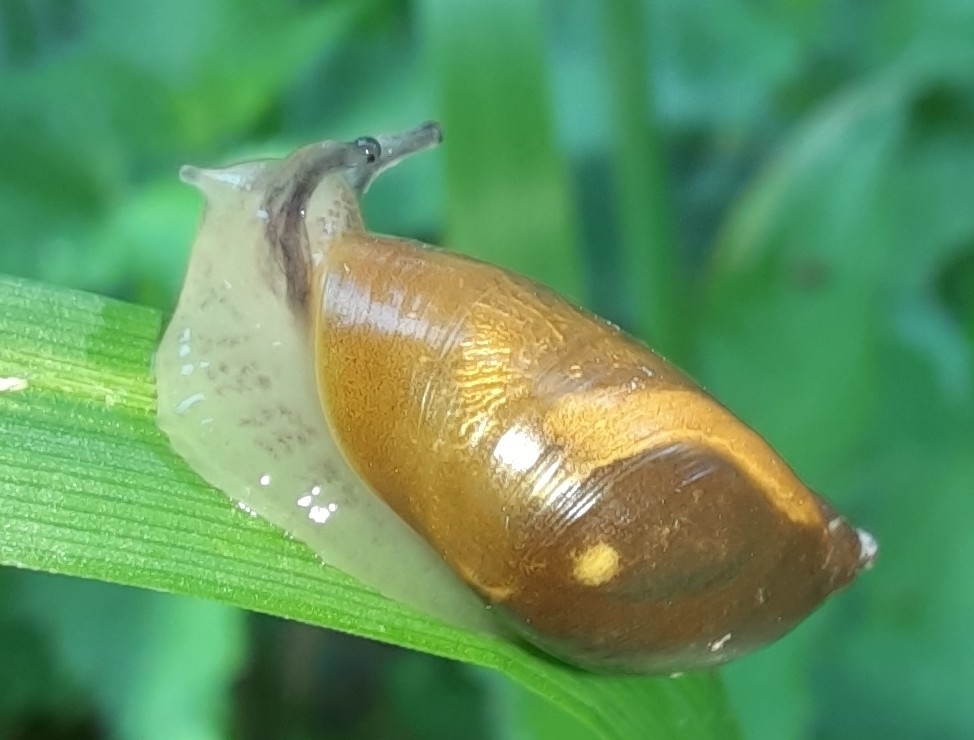
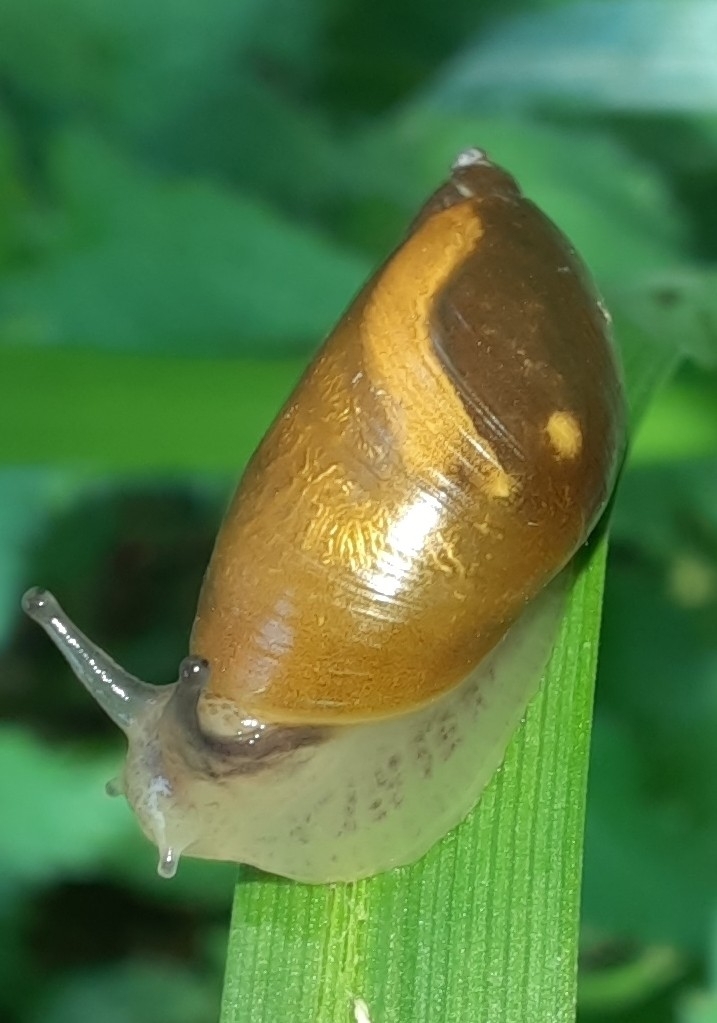
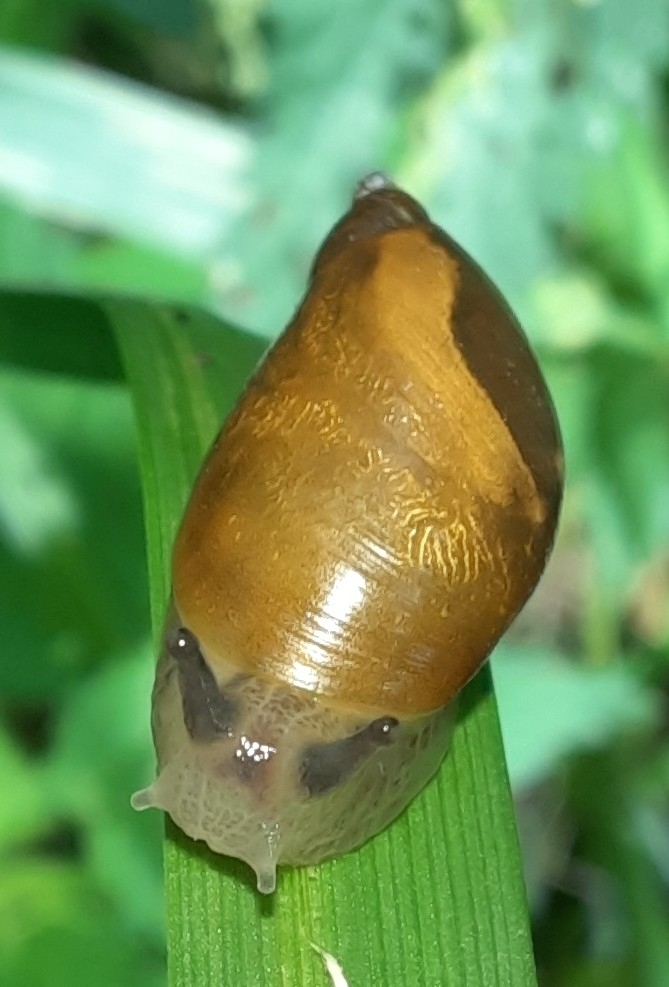
Succinea putris

Image Usage Information

  • Amalia Herrera Grau
  • CC BY-NC 4.0 DEED
  • Additional information about this specimen

Family: Succineidae

Common name: European Ambersnail

Discovery: Linnaeus, 1758

Non-native

Identification

Height: ~10-17 mm
Whorls: ~2.8-4.0

The shell of this animal is fragile and elongate, with a large aperture (Kerney and Cameron, 1979). The spire is well less than half the shell height. The shell suture is relatively shallow, and the shell is translucent yellowish or grayish. The animal is gray or cream-colored with gray antennae.

Distinguishing the cryptic shells of this genus can be problematic. Succinea putris has a narrower, sleeker form and flatter final whorl than the North American native Novisuccinea ovalis (Say, 1817).

Ecology

Succinea putris is a wetland snail of Europe and Siberia, often common around ponds, swamps, wet meadows, streams, and irrigation systems. It is an explosive breeder, and at high densities can be a pest of ornamental plants (Hotopp, pers. obs.).

In Poland, S. putris reproduced from May to September with early and late peaks, and snails grew fastest in June-October (Kuźnik-Kowalska et al., 2013). Eggs were laid in clusters of 5-64, and hatched in 11-28 days. Snails matured in approximately 160 days, at about 3.0 whorls in size. Lifespan was 210-420 days (7-14 months), suggesting a semelparous (single mating bout) lifecycle. However, the authors warn of wide local variation in life history. In Lithuania, S. putris brought into the laboratory lived 13-17 months, but likely longer in the wild (Ðatkauskienë, 2005). In the field, S. putris laid an average of 48 ±12 eggs. Overwintering snails were mostly juveniles.

In Europe Succinea putris is an important intermediate host of Elaphostrongylus cervi, one of the parasites that causes cervid brainworm disease in caribou, elk, and moose (e.g. Kuligowska, 2009). However, this parasite does not appear to be transmitted to non-cervid hosts as can happen with the related Parelaphostrongylus tenuis (Mason, 1989). Succinea putrisis also a host of trematodes (e.g. Ataev et al., 2016).

Taxonomy

Succinea putris is part of a family whose taxonomy is not well understood. Looking at allozymes and internal anatomy of putative S. putris in western New York, Hoagland and Davis (1987) distinguished an undescribed cryptic species and suggest that S. putris is a species complex.

The species has also been known as Helix putris and Succinea amphibia.

Distribution

This ambersnail appears to be widely introduced in parts of the Northeast Region, though distinguishing succineids by shell shape can be confusing. It appears to be common in the farmlands of central New York State, and along the coast and in nurseries in Maine (Hotopp, pers. obs.), though museum specimen records are patchy.

Conservation

NatureServe Rank: G5, Secure.
The European Succinea putris, perhaps a species complex, appears to be rapidly expanding its range in some agricultural and coastal areas in the Northeast Region.

January 10, 2023 by

Succinea indiana

Image Usage Information

  • The Academy of Natural Sciences of Philadelphia
  • CC BY-NC 4.0 DEED
  • For additional information about this specimen: Gary Rosenberg (rosenberg.ansp@drexel.edu)

Family: Succineidae

Common name: Xeric Ambersnail

Discovery: Pilsbry, 1905

Identification

Width: 6-7 mm
Height: 10-11 mm
Whorls: 3.5

The shell is very thin, roundly ovate, and yellow-brown with a reddish apex. Minute growth lines and wrinkles are present. The whorls are very convex with the last one inflated. The aperture is 7-8 mm in length, and its lower lip is arced or slightly flat (Pilsbry, 1905, 1948). The animal’s mantle is plain dark gray (Hubricht, 1958). The genus Succinea has a swollen genital opening (Pilsbry, 1948).

Dissection may be necessary to identify succineid species. Hubricht (1958) notes that the penis of S. indiana is like that of S. campestris, which is to say, the penis appears to be wide but actually consists of a thick sheath around a thin penis (Pilsbry, 1948). No penial appendix is present.

Note that Succineidae show a great deal of intraspecific variation in size and proportions, both within and between sites (Pilsbry, 1948).

Ecology

The snail occupies dry, sunny ground (Hubricht, 1985). Its type locality is a grassy hillside (Hubricht, 1958). Little is known about its ecology.

Taxonomy

Succinea vaginacontorta is a synonym.

Distribution

The snail is widely distributed across the eastern half of the US, with populations scattered as far west as the Dakotas and Oklahoma, south to Florida, and north to Maine and Ontario, Canada. In the northeastern US, records include Delaware, Maine, Maryland (Queen Annes and Talbot Counties), New Jersey, and counties throughout New York and Pennsylvania. Hubricht (1985) considers S. indiana’s range incompletely known because it is only identifiable through dissection.

Conservation

NatureServe Global Rank: G5, Globally Secure.

January 10, 2023 by

Succinea campestris

placeholder

Family: Succineidae

Common name: Crinkled Ambersnail

Discovery: Say, 1817

Identification

Width: 7-11.5 mm
Height: 10-17 mm
Whorls: 3.5

The shell is very thin, globose (short and wide), and with a short spire. The shell color is dull opaque white, pale tan, or translucent gray with white or tan marks, axial growth wrinkles, and microscopic granulations. The aperture is wide and about ¾ of the shell length. Deep sutures lie between the whorls. The body itself is whitish (Pilsbry 1948; Burke, 2013). In the genus Succinea, the edge of the genital opening is swollen (Burch, 1962).

Dissection may be necessary to identify succineid species. The penis of S. campestris appears to be wide, but it actually consists of a thick sheath around a thin penis. The epiphallus loops back onto its base, and there is no penial appendix. The bursa copulatrix duct is long and thin (Pilsbry, 1948).

Note that Succineidae show a great deal of intraspecific variation in size and proportions, both within and between sites (Pilsbry, 1948).

Ecology

Succinea campestris is only found on ocean shorelines, where it inhabits grasses on beach dunes (Hubricht, 1985). Little is known about its ecology.

Taxonomy

Succinea inflata is a synonym.

Distribution

The species ranges along the entire US Atlantic coast from Florida and Louisiana to Maine. Northeastern populations have been found in Maine, Maryland, New Jersey (Cape May Co.), New York, Pennsylvania (York Co.), and Virginia.

Conservation

NatureServe Global Rank: G4, Secure.

January 10, 2023 by

Oxyloma subeffusum

Image Usage Information

  • The Academy of Natural Sciences of Philadelphia
  • CC BY-NC 4.0 DEED
  • For additional information about this specimen: Gary Rosenberg (rosenberg.ansp@drexel.edu)

Family: Succineidae

Common name: Chesapeake Ambersnail

Discovery: Pilsbry, 1948

Identification

Height: 10-14 mm
Whorls: 2+

The shell of Oxyloma subeffusum is very fragile and has a very short spire. It is much like O. effusum but smaller. The length of the aperture in relation to the overall shell length is intermediate between O. effusum and O. retusum – approximately 3/4. On the glossy surface, growth-wrinkles can be seen. The basal margin of the aperture is rounded.

Ecology

Oxyloma subeffusum can be found near ponds, rivers, and marshes, especially in muddy areas (Hubricht 1985).

Taxonomy

A synonym for O. subeffusum is O. effusa subeffusa

Distribution

As indicated by its common name, Oxyloma subeffusum is found in the region of the Chesapeake Bay and surrounding areas, from Pennsylvania to Virginia. However, its distribution is not entirely clear due to confusion with its close relatives.

Conservation

NatureServe Global Rank: G3
NatureServe State Rank: S1
Virginia’s wildlife action plan: Tier III

  • « Go to Previous Page
  • Page 1
  • Interim pages omitted …
  • Page 48
  • Page 49
  • Page 50
  • Page 51
  • Page 52
  • Page 53
  • Go to Next Page »

sidebar

About

  • Mission & Commitments
  • Directors Team
  • Museum History

Get Involved

  • Volunteer
  • Membership
  • Carnegie Discoverers
  • Donate
  • Employment
  • Events

Bring a Group

  • Groups of 10 or More
  • Birthday Parties at the Museum
  • Field Trips

Powdermill

  • Powdermill Nature Reserve
  • Powdermill Field Trips
  • Powdermill Staff
  • Research at Powdermill

More Information

  • Image Permission Requests
  • Science Stories
  • Accessibility
  • Shopping Cart
  • Contact
  • Visitor Policies
One of the Four Carnegie Museums | © Carnegie Institute | Privacy Policy | Terms of Use | Accessibility
Rad works here logo