• Skip to primary navigation
  • Skip to main content
  • Skip to primary sidebar

Carnegie Museum of Natural History

One of the Four Carnegie Museums of Pittsburgh

  • Visit
    • Buy Tickets
    • Visitor Information
    • Exhibitions
    • Events
    • Dining at the Museum
    • Celebrate at the Museum
    • Powdermill Nature Reserve
    • Event Venue Rental
  • Learn
    • Field Trips
    • Educator Information
    • Programs at the Museum
    • Bring the Museum to You
    • Guided Programs FAQ
    • Programs Online
    • Climate and Rural Systems Partnership
  • Research
    • Scientific Sections
    • Science Stories
    • Science Videos
    • Senior Science & Research Staff
    • Museum Library
    • Science Seminars
    • Scientific Publications
    • Specimen and Artifact Identification
  • About
    • Mission & Commitments
    • Directors Team
    • Museum History
  • Tickets
  • Give
  • Shop

January 10, 2023 by

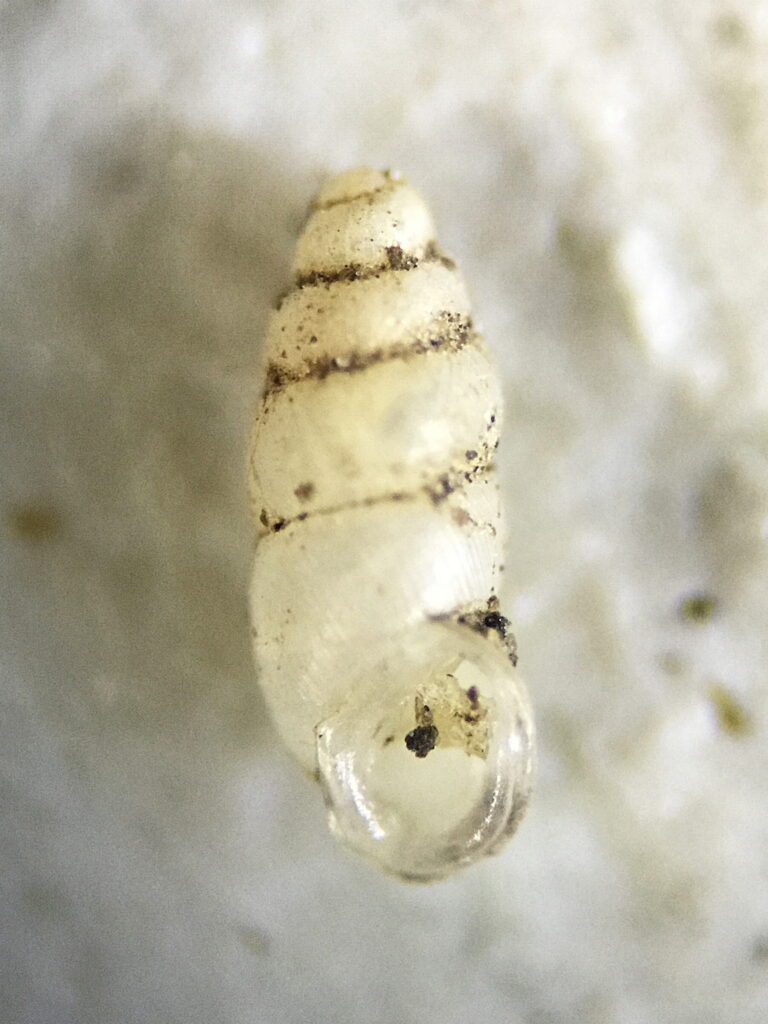
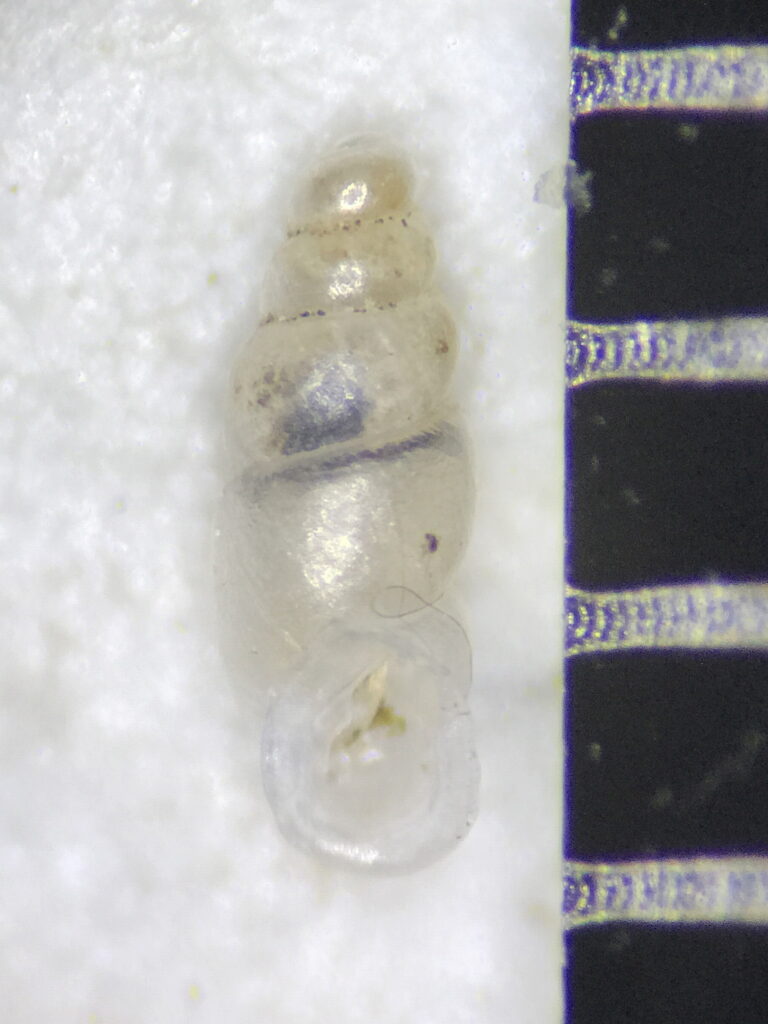
Carychium nannodes

Image Usage Information

  • David Lang
  • CC BY-NC 4.0 DEED
  • Additional information about this specimen

Family: Ellobiidae

Common name: File Thorn

Discovery: G. H. Clapp, 1905

Identification

Width: 0.5 mm
Height: 1.4 mm
Whorls: 4+

This long, slender shell is nearly devoid of microsculpture, and it is smaller than its relatives. The narrow body whorl does not break the plane of the shell’s aperture. It is white, with subtle teeth on each side of the aperture. The lip is very reflected and flat, especially at the columella. The aperture is not thickened within.

Ecology

Carychium nannodes is found on wooded slopes and talus, buried in deep piles of leaves and in pits left by the roots of fallen trees. Despite having similar habitats, C. nannodes, C. exile, and C. clappi are rarely found together (Hubricht 1985).

Taxonomy

No synonyms are known for this species.

Distribution

Carychium nannodes is found in most states east of the Mississippi River, from New York in the north to Mississippi in the south. In Virginia it is widely reported in the western part of the state.

Conservation

NatureServe Global Rank: G5, secure
January 10, 2023 by

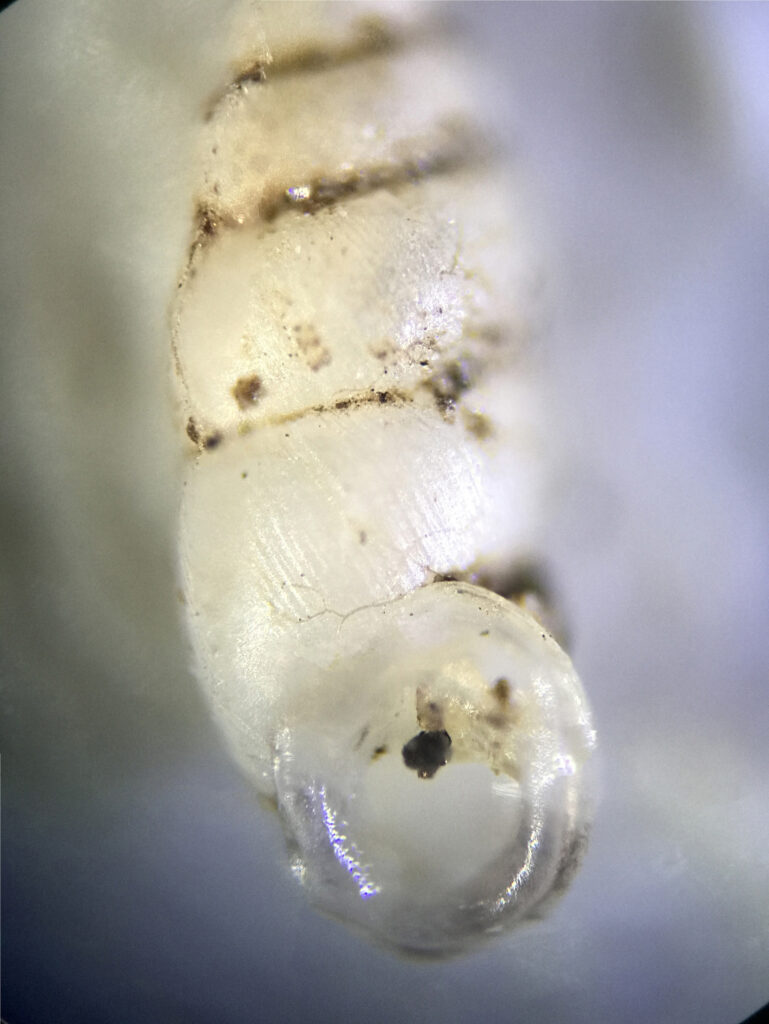
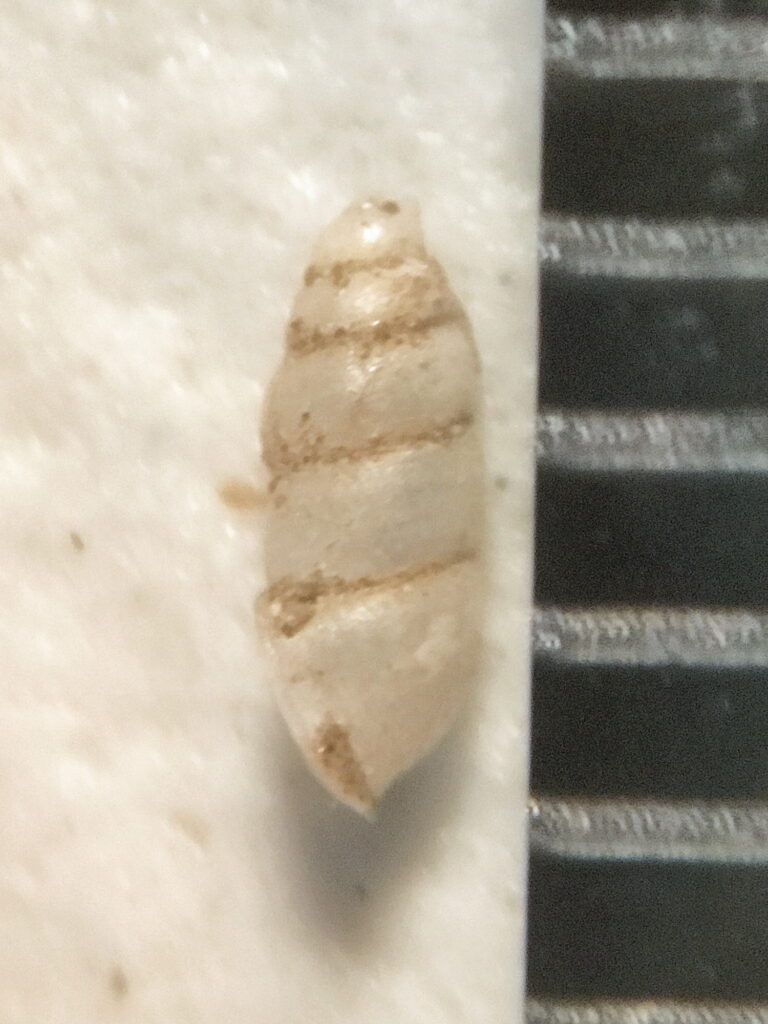
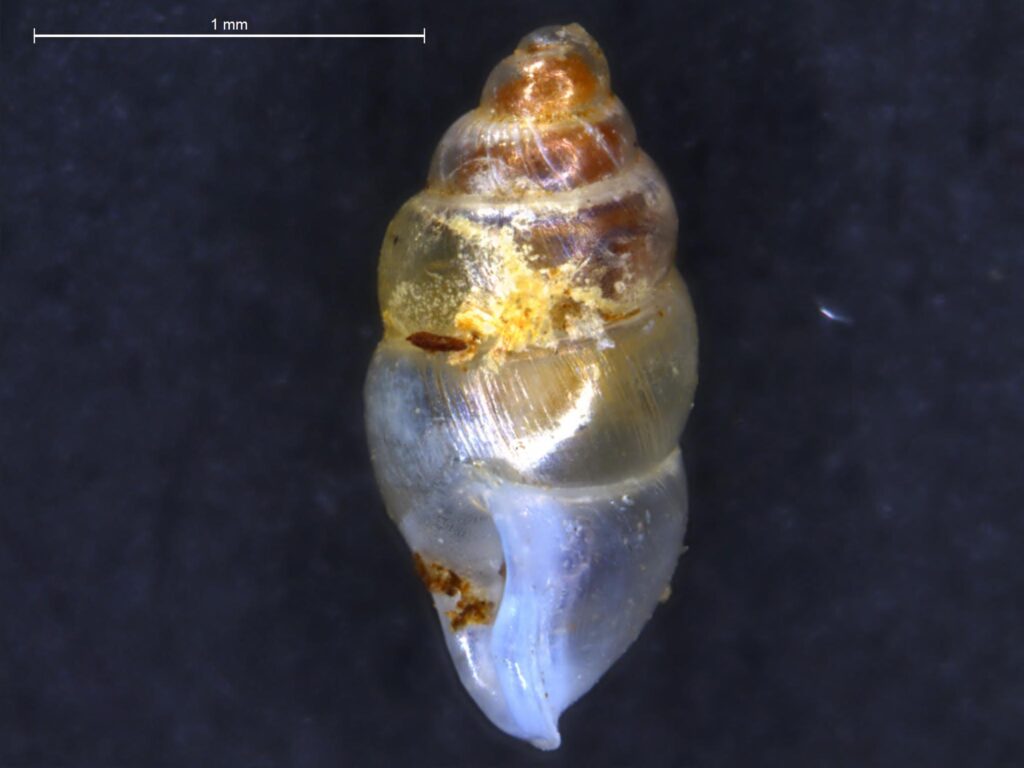
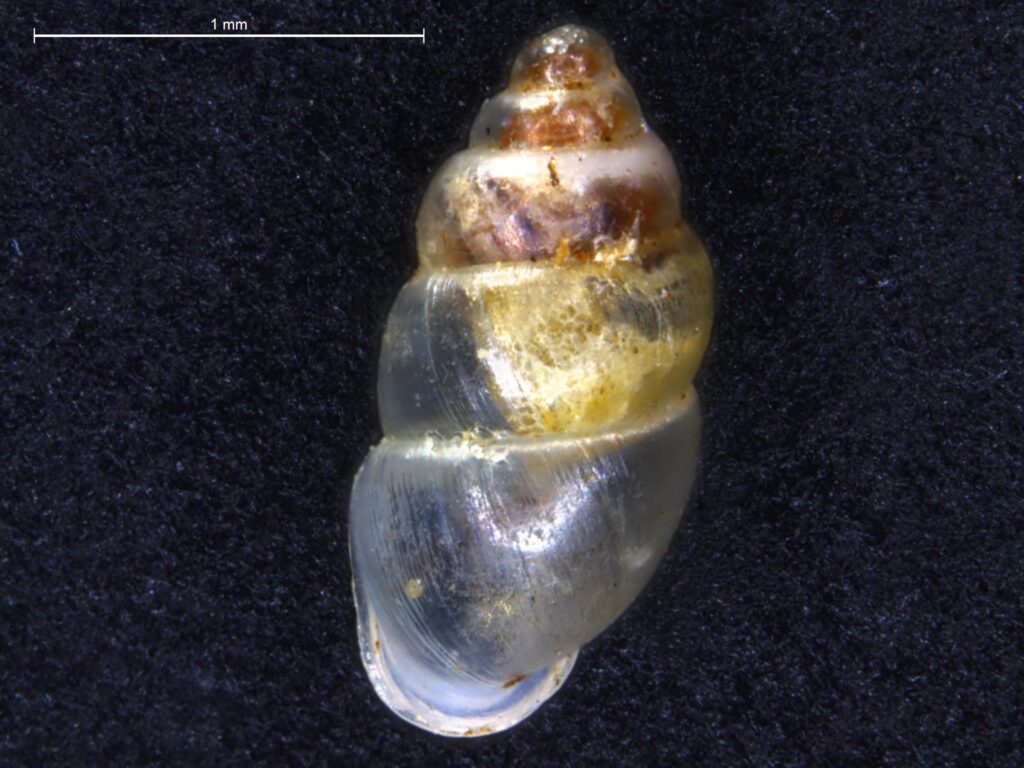
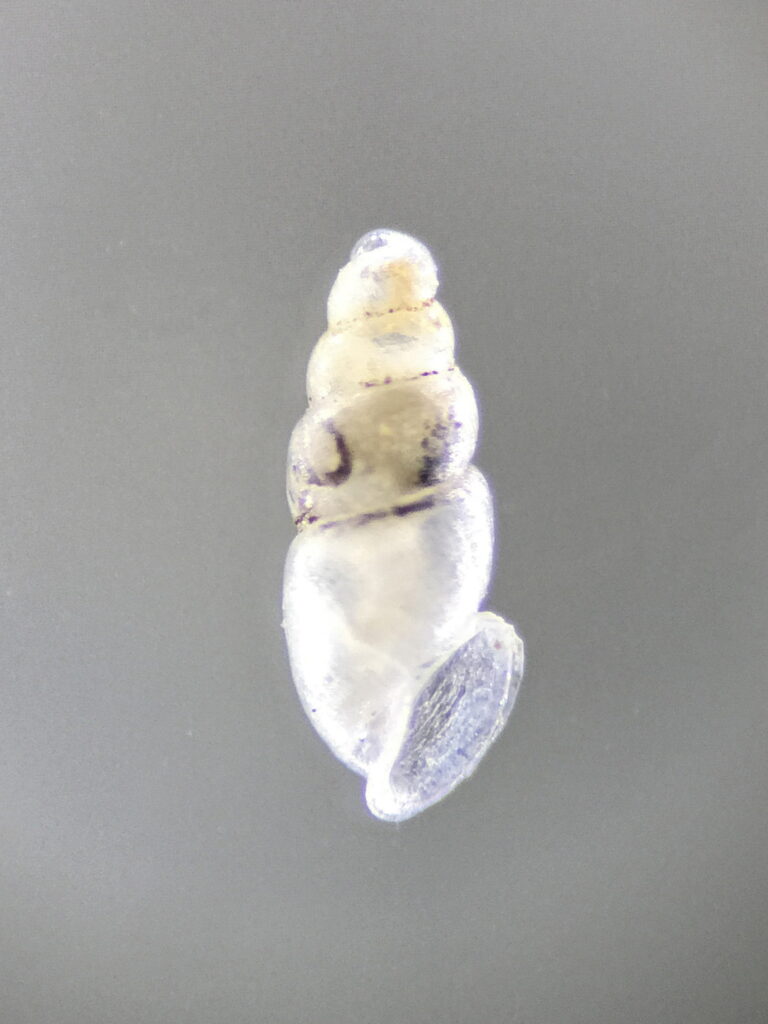
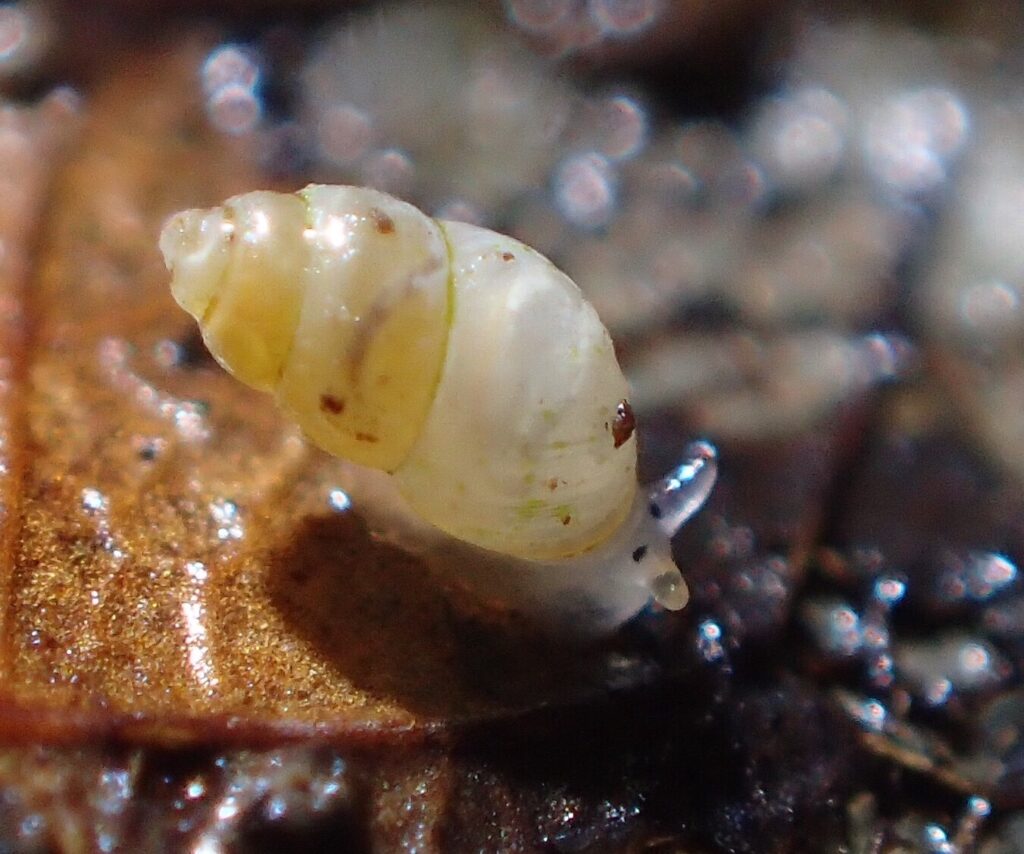
Carychium minimum

Image Usage Information

  • berneska
  • CC BY-NC 4.0 DEED
  • Additional information about this specimen

Image Usage Information

  • Alex Bairstow
  • CC BY-NC 4.0 DEED
  • Additional information about this specimen

Family: Ellobiidae

Common name: Herald Thorn

Discovery: Müller, 1774

Non-native

Identification

Width: 0.9 mm
Height: 1.6-1.9 mm
Whorls: ~4.5 mm

This Eurasian thorn has a relatively fatter shell than its native North American congeners. The glossy shell of Carychium minimum is nearly transparent and colorless (Kerney and Cameron, 1979). Its peristome is thickened and bears three denticles, though only the parietal denticle is pronounced.

Ecology

This tiny and fragile animal is a blind leaf litter denizen, like others in its genus. It has an affinity for wet places – damp forests and marshes (Kerney and Cameron, 1979).

Taxonomy

No synonyms are known for this species.

Distribution

There are scattered records for this Eurasian species across North America. In the Northeast are some early records, but also several recent finds in the Pittsburgh, PA area by Tim Pearce, and in wet areas near Ithaca, NY by Weigand and Jochum (2010). Though some records are from greenhouses or nearby, Carychium minimum may be more frequent and naturalized in North American than records indicate (Weigand and Jochum, 2010).

Conservation

NatureServe Global Rank: G5, secure
January 10, 2023 by

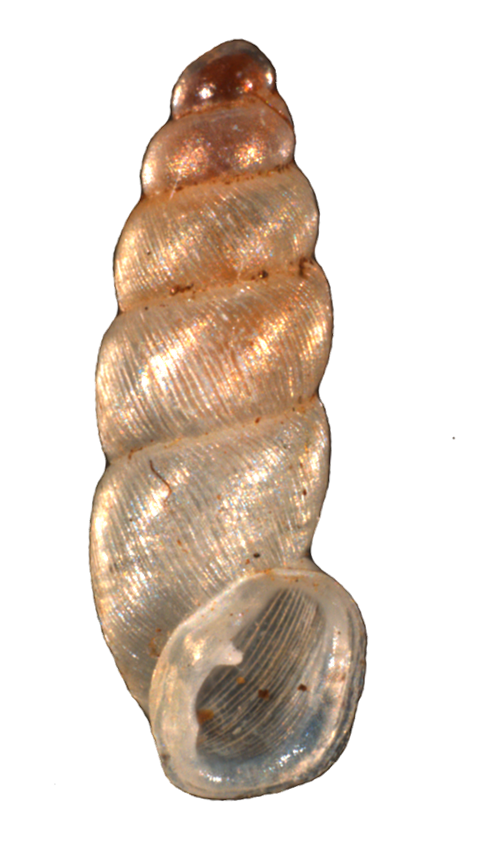
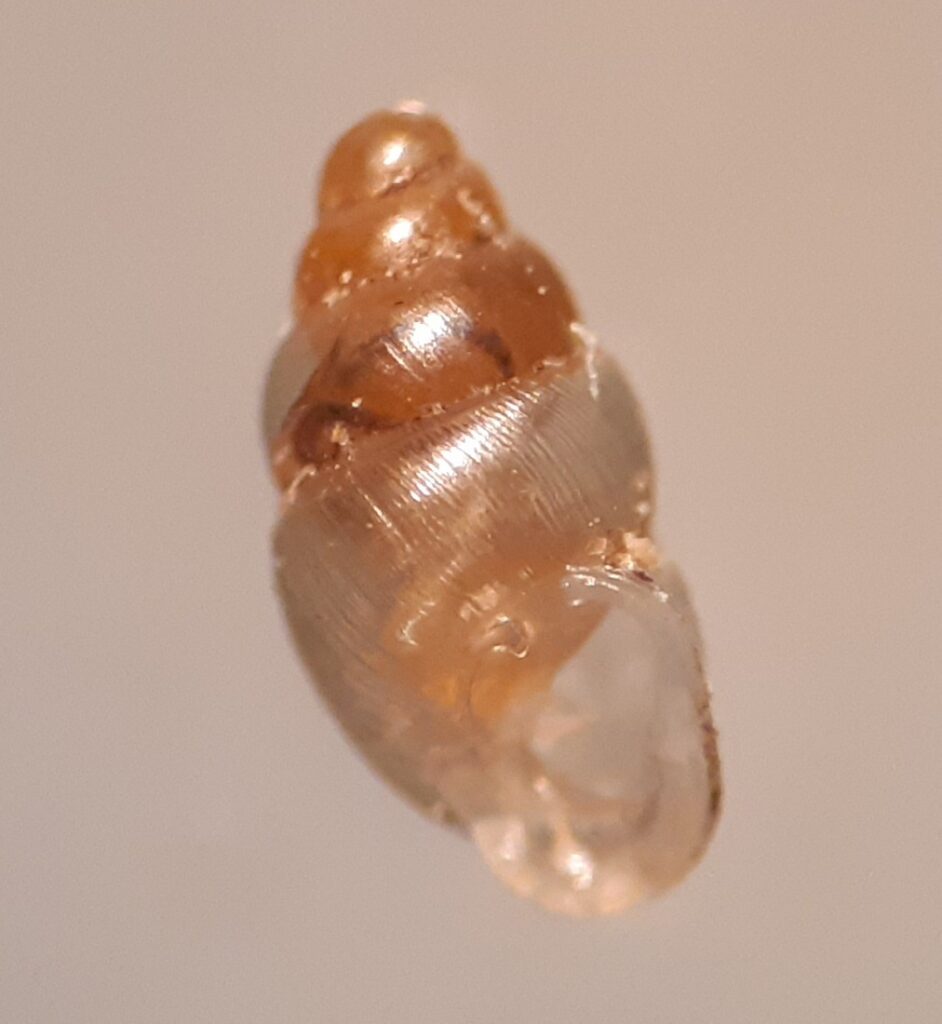
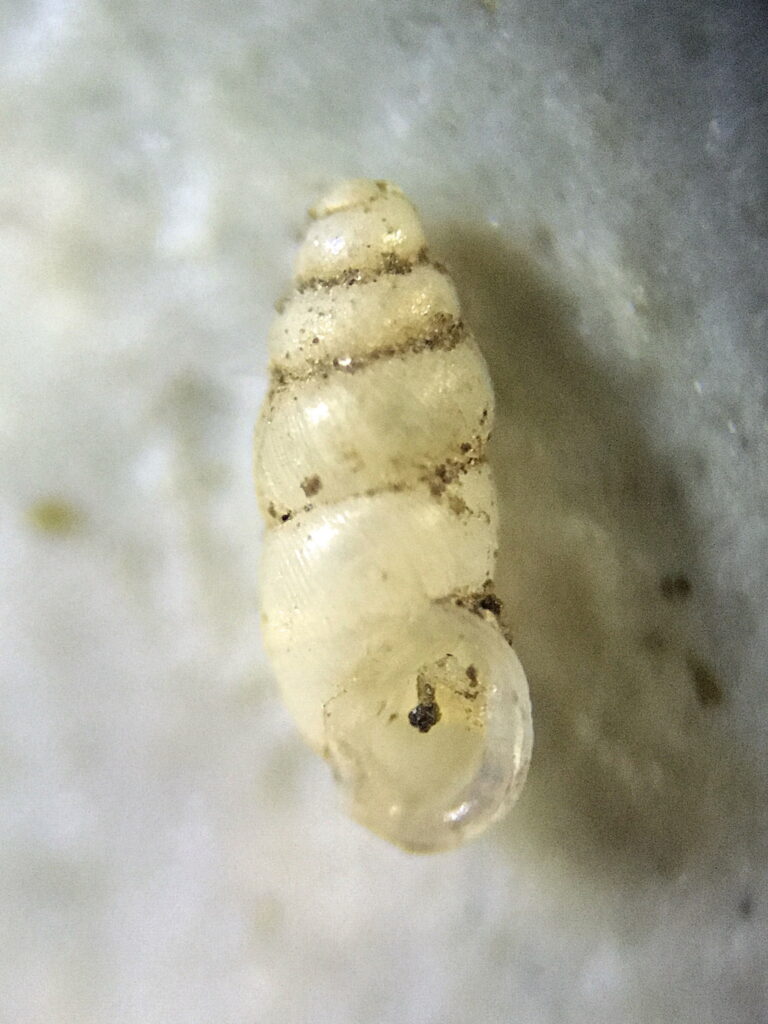
Carychium exile

Image Usage Information

  • David Lang
  • CC BY-NC 4.0 DEED
  • Additional information about this specimen

Family: Ellobiidae

Common name: Ice Thorn

Discovery: I. Lea, 1842

Identification

Width: 0.6-0.8 mm
Height: 1.7-2.2 mm
Whorls: 5+

This shell is sculptured with close, regular, rounded radial ridges that are especially distinct on the final two whorls. These ridges may be less distinct on older specimens. Its very similar congener Carychium clappi has sharp-edged, flat-topped ridges (J. Nekola, pers obs). Carychium exile is taller than C. exiguum and tapers more gradually towards the summit. Carychium exile has a convex body whorl. The outer lip is vertical, aligning the reflected aperture with the overall angle of the shell. The aperture is thickened within, and a small lamella that continues farther into the shell can be seen on the parietal wall.

Ecology

Like C. clappi and C. nannodes, this snail can be found on wooded slopes and talus, buried in deep piles of leaves and in pits left by the roots of fallen trees. Individuals are often found sandwiched in the biofilm between two leaves. In Tennessee, C. exile was significantly associated with a number of habitat factors, including soil moisture, leaf litter, neutral soils on limestone, very steep slopes, and late stages of forest succession (Coney at al., 1982). It is rarely found with C. clappi or C. nannodes (Hubricht 1985).

Taxonomy

No synonyms are known for this species.

Distribution

Though patchy in occurrence, this snail is widespread throughout the Eastern and Midwestern United States and Canadian provinces, as far west as the Dakotas, north to Quebec, and south to Mississippi. In Virginia it is reported from counties throughout the western part of the state. Some older records of this species in the Mid-Atlantic may be examples of the more recently-described C. clappi.

Conservation

NatureServe Global Rank: G5, secure
January 10, 2023 by

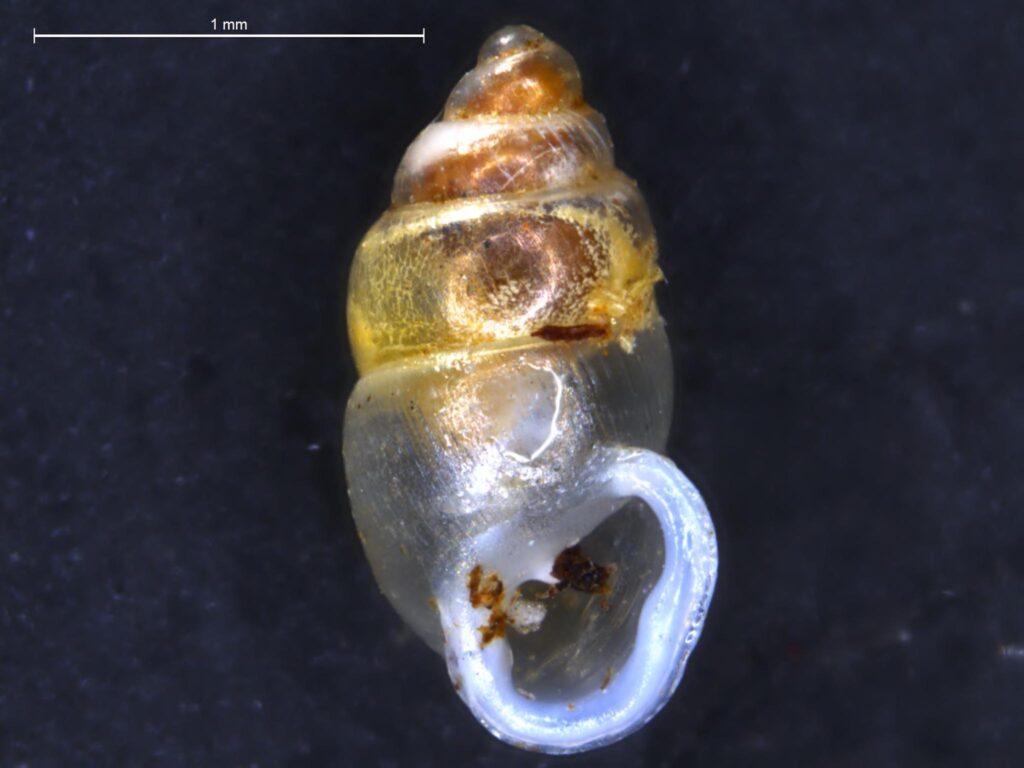
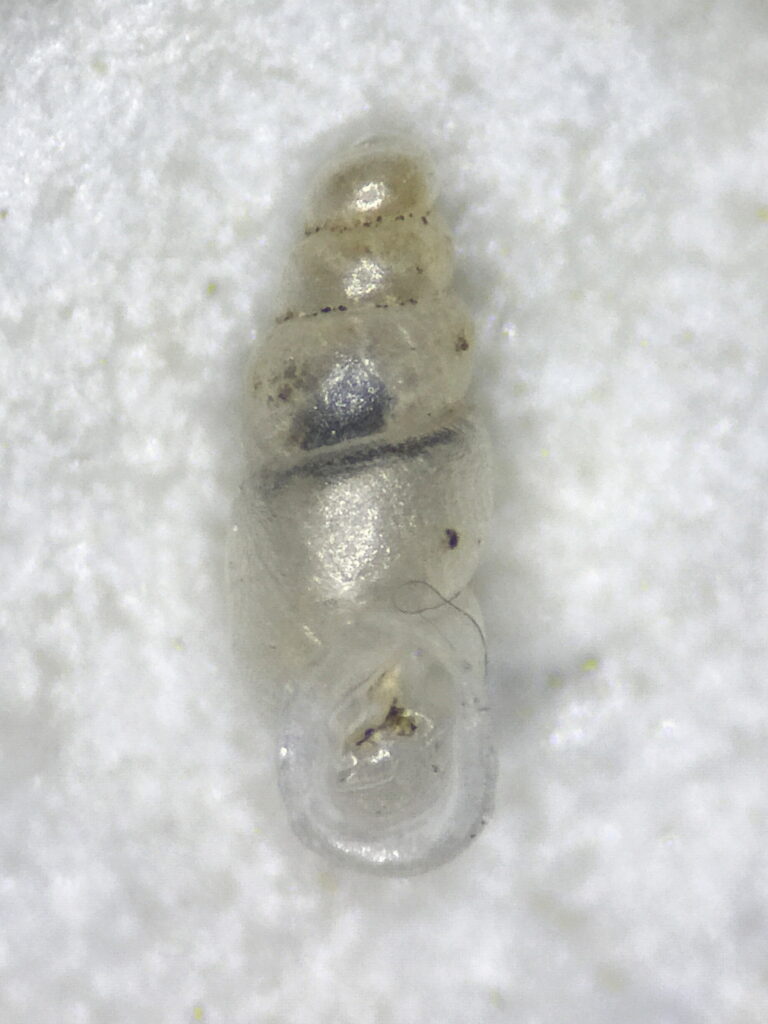
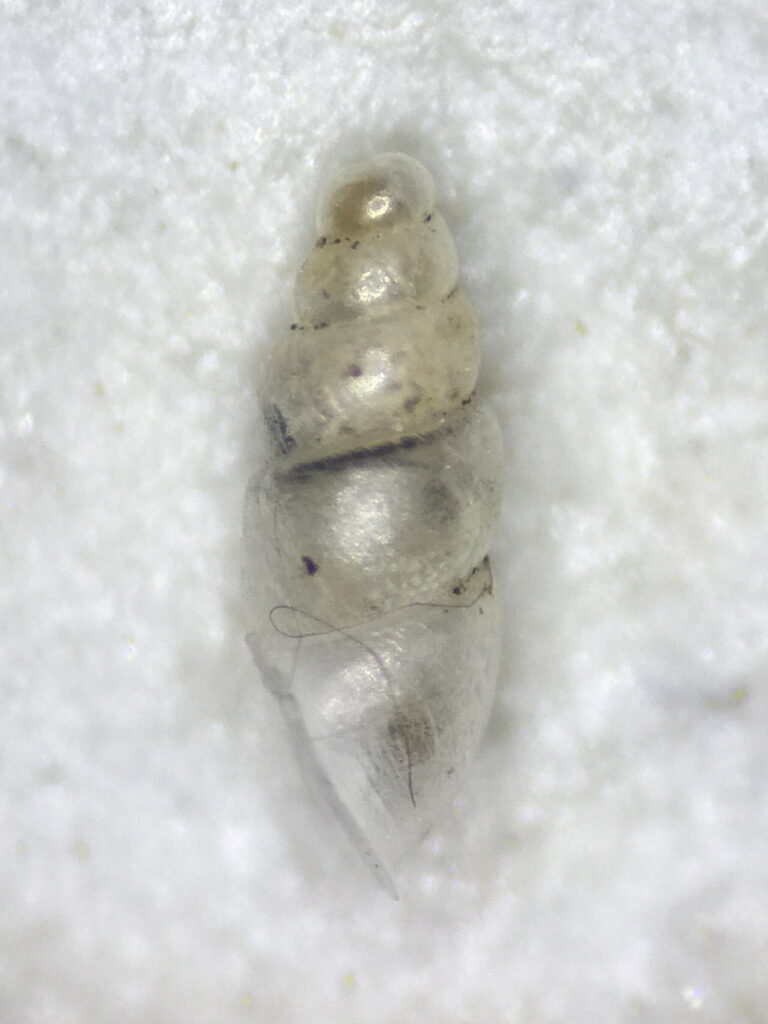
Carychium exiguum

Image Usage Information

  • University of Michigan Museum of Zoology, Division of Mollusks (UMMZ:Mollusk)
  • Public Domain
  • For additional information about this specimen, email Taehwan Lee (taehwanl@umich.edu)

Family: Ellobiidae

Common name: Obese Thorn

Discovery: Say, 1822

Identification

Width: 0.75 mm
Height: 1.7 mm
Whorls: 4+

This animal’s shell is stouter than other Carychium, with a mainly smooth surface (Pilsbry, 1948). Some very faint striation may be seen on the final whorls. An important diagnostic characteristic is that the bulging body whorl of the shell breaks the plane of the aperture (Hubricht, 1963). The reflected aperture is oval-shaped, with a sinuous outer lip, and thickened within on the lower portion. On the parietal wall is a lamella which continues further into the shell. The aperture is one-third the height of the shell.

Ecology

This snail prefers damp, more calcium-rich environments, and may sometimes be found with C. exile (Hubricht, 1985). In the north of its range it is reported from wetland sites (Nekola, 2008).

Taxonomy

Carychium exiguum has also been known as Carychium euphaeum, C. existelium, C. perexiguum, and Pupa exigua.

Distribution

Carychium exiguum is found scattered through the Eastern and Midwestern United States and Canadian provinces, reaching as far south and west as Colorado, and as far north as New Brunswick. Its occurrence is very patchy in Virginia and other Appalachian states.

Conservation

NatureServe Global Rank: G3, Vulnerable.

January 10, 2023 by

Carychium clappi

Image Usage Information

  • Dan Dourson
  • CC BY-NC 4.0 DEED

Family: Ellobiidae

Common name: Appalachian Thorn

Discovery: Hubricht, 1959

Identification

Width: 0.7-0.8 mm
Height: 1.7-2.0 mm
Whorls: 5+

The shell of Carychium clappi is whitish and elongate like its relatives, with close radial ridges. It is difficult or impossible to distinguish from its congener C. exile, raising the question of whether it is indeed a distinct species. According to Hubricht (1951) C. clappi may be distinguished by its larger size, whiter shell, and a less rounded, more angular top upon its ridges. The aperture is not heavily thickened within, as is usual in C. exile.

Ecology

Like C. exile, this snail can be found on wooded slopes and talus, buried in deep piles of leaves and in pits made by the roots of fallen trees. Despite having similar habitats, C. clappi, C. nannodes, and C. exile are rarely found together (Hubricht, 1985).

Taxonomy

Carychium clappi was originally described as Carychium costatum before being proposed as C. clappi (Hubricht, 1959).

Distribution

Carychium clappi is found throughout the southern Appalachian Mountains, from Pennsylvania in the north to Alabama in the south. In Virginia it is reported from counties throughout the western part of the state. Because it is very similar to or possibly the same species as C. exile, its range may not be correctly delineated.

Conservation

NatureServe Global Rank: G5, Secure.

January 10, 2023 by

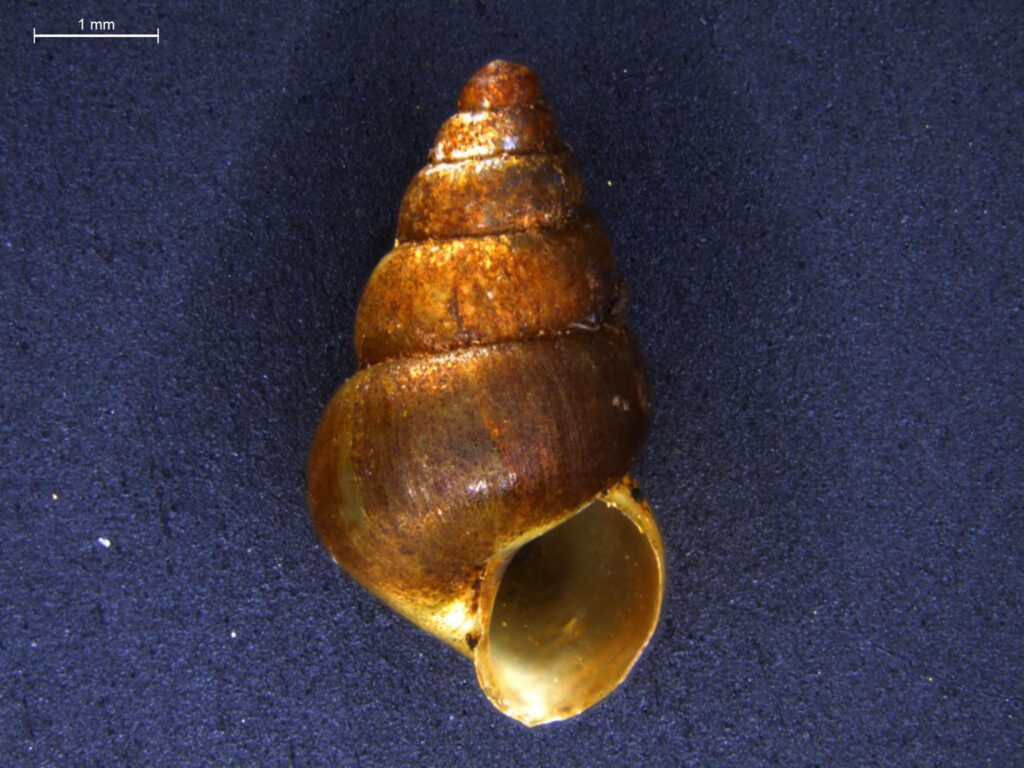
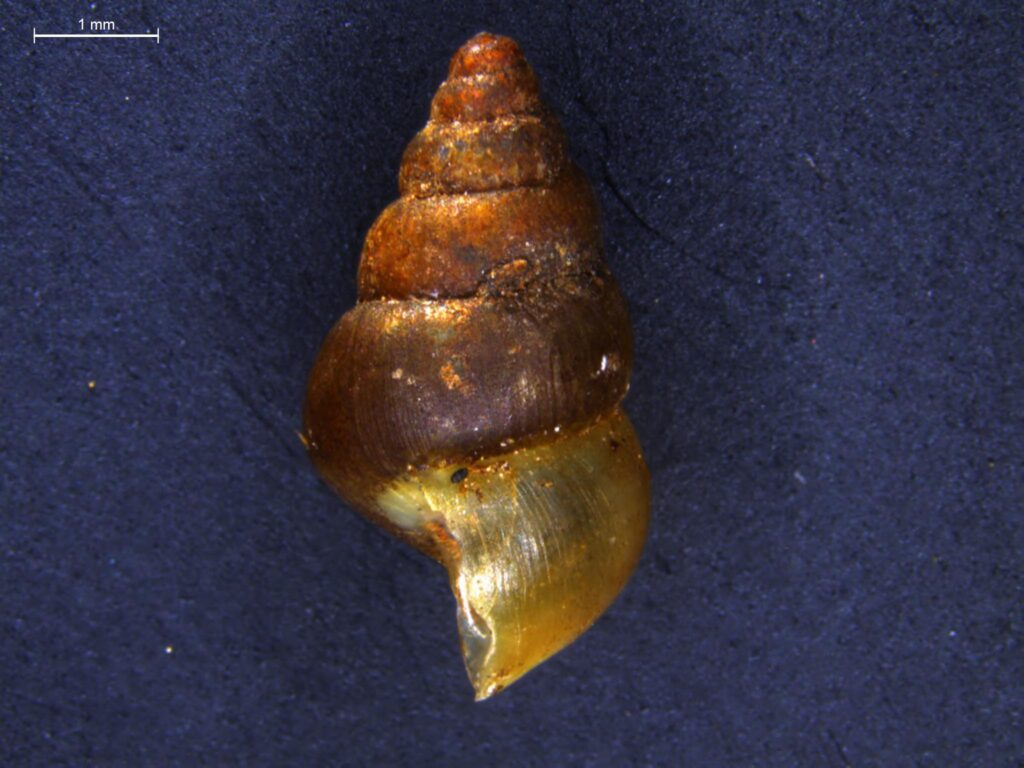
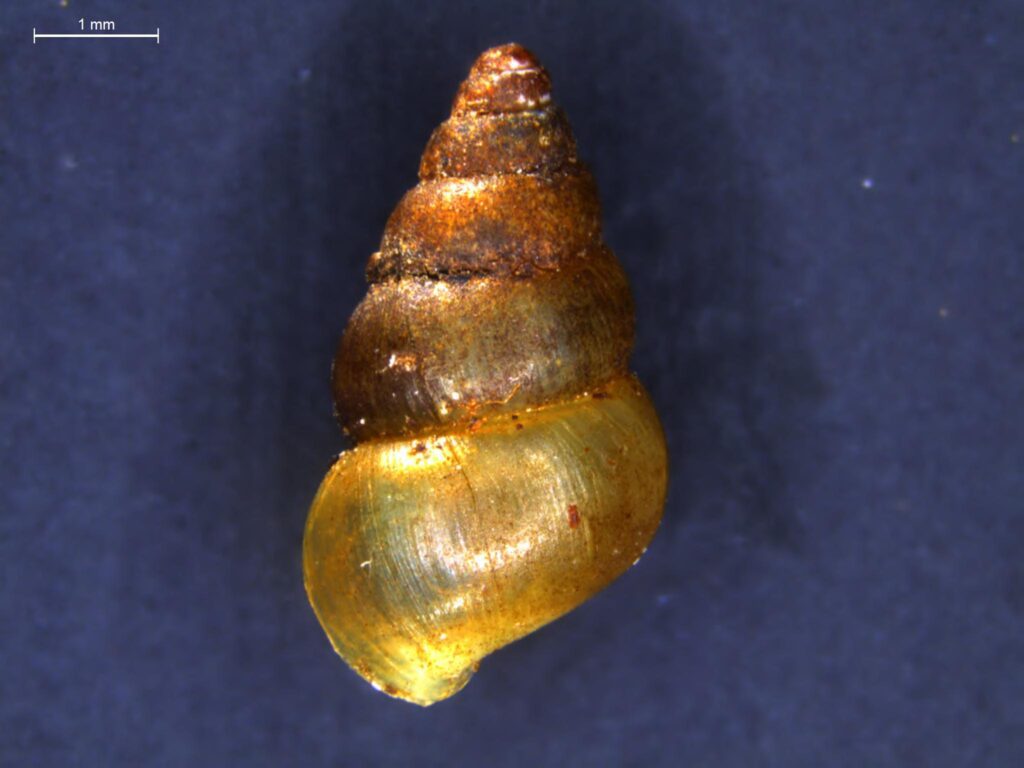
Pomatiopsis lapidaria

Image Usage Information

  • University of Michigan Museum of Zoology, Division of Mollusks
  • Public Domain
  • For additional information about this specimen, please contact: Taehwan Lee (taehwanl@umich.edu)

Family: Pomatiopsidae

Common name: Slender Walker

Discovery: Say, 1817

Identification

Height: ~5.5-8.5 mm
Width: ~2.5-3.5 mm
Whorls: ~6.0-7.5

This amphibious snail and its sister species may have more in common with aquatic snails than with land snails. They have an operculum and vestigial gills. The animal is dark, and its shell dark reddish-brown. The shell has rounded whorls with impressed sutures. The apex is acute, the aperture simple (Jokinen, 1992). Shells are dimorphic, with male shells being narrower and having more whorls.

Ecology

Despite its semi-aquatic characteristics, P. lapidaria is usually found out of water on mud or debris near wetlands and streams, and in riparian forest, sometimes more than 100 meters from permanent water. Colonies among leaf litter and rocks can be dense, and they appear to favor calcium-rich habitats.

In Michigan, there are two breeding periods, in early summer and in fall (Dundee, 1957). The sex ratio of females to males is approximately 3:1. Mating is during wetter periods, with the male approaching and crawling upon the female to initiate copulation, which may last for two to 10 hours. Two dozen or more eggs are laid singly in the damp litter or soil (not in water), and hatch in five to seven weeks. Adults live up to three years, but rarely crawl more than two meters from where they were born.

Taxonomy

There are no synonyms.

Distribution

Pomatiopsis lapidaria is widespread in eastern North America. Virginia specimens have been found in scattered locations but are concentrated in the western counties.

Conservation

NatureServe Global Rank: G5
NatureServe State Rank: S4

  • « Go to Previous Page
  • Page 1
  • Interim pages omitted …
  • Page 50
  • Page 51
  • Page 52
  • Page 53
  • Go to Next Page »

sidebar

About

  • Mission & Commitments
  • Directors Team
  • Museum History

Get Involved

  • Volunteer
  • Membership
  • Carnegie Discoverers
  • Donate
  • Employment
  • Events

Bring a Group

  • Groups of 10 or More
  • Birthday Parties at the Museum
  • Field Trips

Powdermill

  • Powdermill Nature Reserve
  • Powdermill Field Trips
  • Powdermill Staff
  • Research at Powdermill

More Information

  • Image Permission Requests
  • Science Stories
  • Accessibility
  • Shopping Cart
  • Contact
  • Visitor Policies
One of the Four Carnegie Museums | © Carnegie Institute | Privacy Policy | Terms of Use | Accessibility
Rad works here logo