• Skip to primary navigation
  • Skip to main content
  • Skip to primary sidebar

Carnegie Museum of Natural History

One of the Four Carnegie Museums of Pittsburgh

  • Visit
    • Buy Tickets
    • Visitor Information
    • Exhibitions
    • Events
    • Dining at the Museum
    • Celebrate at the Museum
    • Powdermill Nature Reserve
    • Event Venue Rental
  • Learn
    • Field Trips
    • Educator Information
    • Programs at the Museum
    • Bring the Museum to You
    • Guided Programs FAQ
    • Programs Online
    • Climate and Rural Systems Partnership
  • Research
    • Scientific Sections
    • Science Stories
    • Science Videos
    • Senior Science & Research Staff
    • Museum Library
    • Science Seminars
    • Scientific Publications
    • Specimen and Artifact Identification
  • About
    • Mission & Commitments
    • Directors Team
    • Museum History
  • Tickets
  • Give
  • Shop

Amy Henrici

November 1, 2016 by wpengine

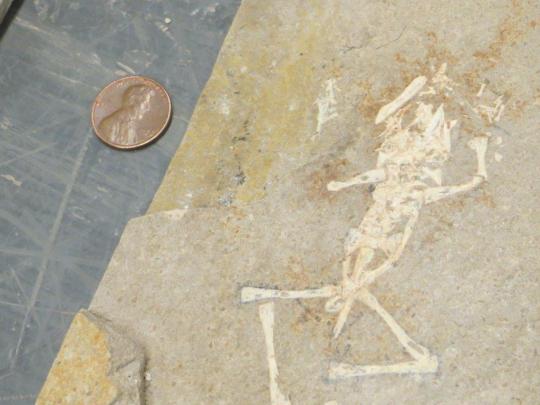
Frog Fossil Hunt in Nevada

frog fossil

Frog fossil from eastern Nevada.

by Patrick McShea

Dinosaurs get all the attention, but fossils of less glamorous creatures also contribute much to our understanding of evolution and extinction. Consider frogs for example. These widely distributed amphibians first appear in the fossil record roughly 190 million years ago. Since then they have
survived numerous events, including mass extinction, changing climate, and the rearrangement
of continents through plate tectonics.

The study of how frogs adapted to changing environments over vast stretches of time is especially important today in light of dramatic declines of many frog species due to rapid climate change, habitat fragmentation, the global spread of disease, and broad changes in land use.

Frogs are not ignored in Carnegie Museum of Natural History’s Dinosaurs in Their Time.  A rectangular display case near the terminus of Diplodocus carnegeii’s exquisitely tapered tail, a cast featuring tiny frog bones from Dinosaur National Monument shares space with the holotype skull of a Jurassic crocodile.

The bones represent a species that must have sometimes dwelled in the literal shadows of sauropod dinosaurs. The species was named Rhadinosteus parvus in a scientific research paper by Amy Henrici, a paleontologist who is the collection manager for the Carnegie’s Section of Vertebrate Paleontology.

Amy has conducted research and published findings on other frog fossils, and regularly serves as a peer reviewer for the research papers of other scientists studying the frog fossils. This fall, at the annual meeting of the Society of Vertebrate Paleontology (SVP) in Salt Lake City, Amy will be presenting
information about an ongoing study of frog fossils from eastern Nevada.

My interest in her research and publications is deeper than that of an admiring co-worker. Amy and I have been married for 28 years, and several times I have worked as her field assistant. This fall, I’ll fill that
role again when she conducts post-SVP Meeting field work at two sites in eastern Nevada. As a museum educator I plan to post pictures and updates about the fossil-hunting expedition, so stay tuned! More frog posts are coming.
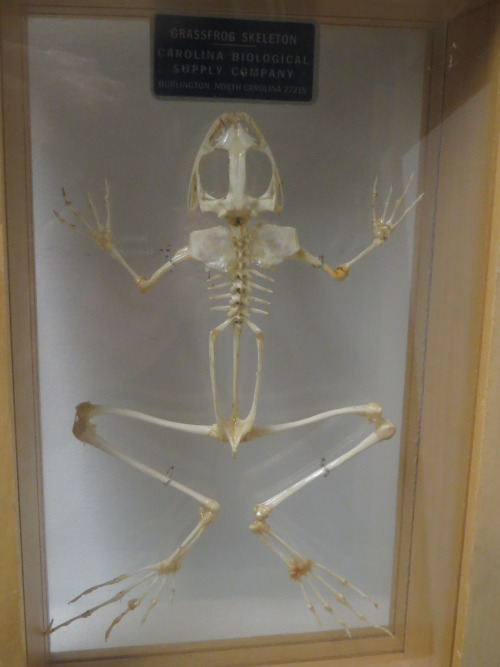
Grass frog skeleton in the CMNH teaching collection

Grass Frog skeleton in the CMNH teaching collection.
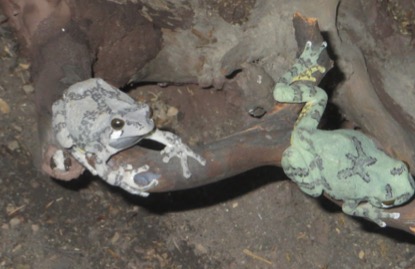
Eastern Gray Tree Frogs in the Pennsylvania Amphibians display on the Daniel G. & Carole L. Kamin T-rex Overlook

(Eastern Gray Tree Frogs in the Pennsylvania Amphibians display on the Daniel G. & Carole L. Kamin T-rex Overlook.)


Patrick McShea works in the Education and Visitor Experience department of Carnegie Museum of Natural History. Museum employees are encouraged to blog about their unique experiences of working at the museum.
Filed Under: Blog Tagged With: Amy Henrici, fossils, Patrick McShea

August 29, 2016 by wpengine

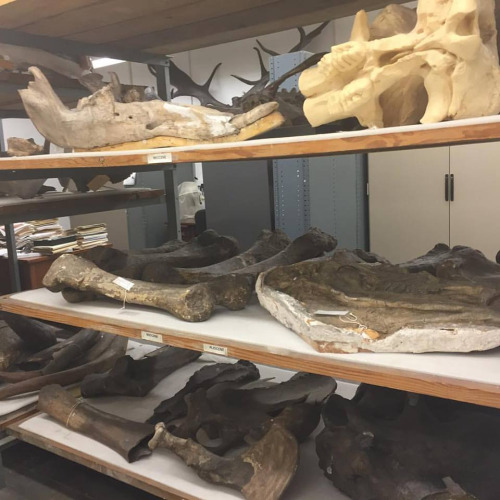
Bones in the Basement

Bones on a shelf

by Hayley Pontia
If you thought there were a lot of bones on display in the Carnegie Museum of Natural History, think again. Many of the 22 million objects and scientific specimens in the museum’s collection are kept in storage and used for scientific research.

Amy Henrici, Collection Manager for Vertebrate Paleontology, manages the Vertebrate Paleontology collection, which houses fossils that span through 465 million years of prehistoric history. It is the fourth largest collection in the country and includes 79,464 catalogued specimens: 80 percent are mammals, 11 percent fish, 5 percent reptiles (including 690 dinosaur fossils), 3 percent amphibians, and .5 percent birds.

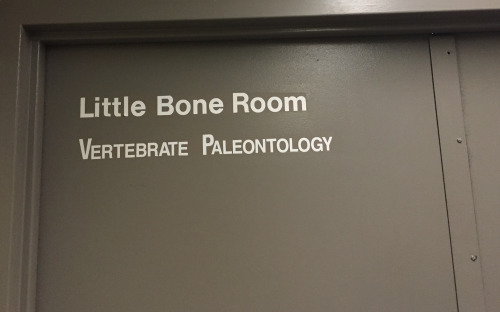
Most of the dinosaur specimens are archived in the Big Bone Room and the Little Bone Room. Contrary to popular belief, the description of these rooms is in relation to the space available, not the size of the bones.

Little bone room door


Hayley Pontia is the marketing assistant at Carnegie Museum of Natural History and a student at the University of Pittsburgh. Museum employees are encouraged to blog about their unique experiences of working at the museum.
Filed Under: Blog Tagged With: Amy Henrici, behind the scenes, fossils, museums, paleontology, Pittsburgh

February 18, 2016 by wpengine

Blue Fleece Jacket

Hikers in the forest
by Patrick McShea

Call it simple digital entertainment.

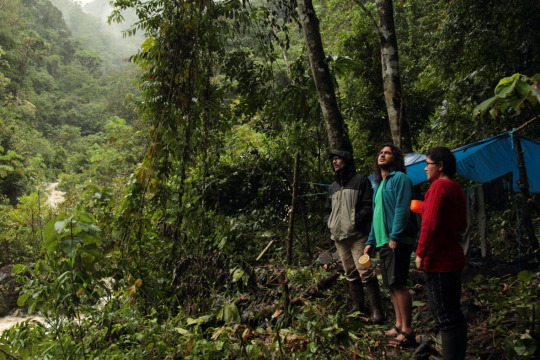
While checking the Tumblr blog of Carnegie Museum of Natural History for pictures and progress reports from the remote mountains of Peru, (Discoverers Expedition Vilcabamba 2016), I’ve been paying close attention to the garments worn by the field crew.

Weeks ago, when José Padial let fellow museum employees know about his team’s need for clothing that could provide insulation under ponchos, Amy Henrici and I assembled a bag of various fleece and wool items.

Today, in one of Maira Duarte’s beautiful photos, I spotted an old friend. The aqua blue fleece jacket that had once kept me warm on many miles of cross-country skiing in the Laurel Highlands was providing a similar benefit to an expedition member in very different terrain on another continent.

Patrick McShea works in the Education and Visitor Experience department of Carnegie Museum of Natural History. Museum employees are encouraged to blog about their unique experiences of working at the museum.

Filed Under: Blog Tagged With: Amy Henrici, expedition, Patrick McShea, peru, photography

  • « Go to Previous Page
  • Page 1
  • Interim pages omitted …
  • Page 3
  • Page 4
  • Page 5

sidebar

About

  • Mission & Commitments
  • Directors Team
  • Museum History

Get Involved

  • Volunteer
  • Membership
  • Carnegie Discoverers
  • Donate
  • Employment
  • Events

Bring a Group

  • Groups of 10 or More
  • Birthday Parties at the Museum
  • Field Trips

Powdermill

  • Powdermill Nature Reserve
  • Powdermill Field Trips
  • Powdermill Staff
  • Research at Powdermill

More Information

  • Image Permission Requests
  • Science Stories
  • Accessibility
  • Shopping Cart
  • Contact
  • Visitor Policies
One of the Four Carnegie Museums | © Carnegie Institute | Privacy Policy | Terms of Use | Accessibility
Rad works here logo