• Skip to primary navigation
  • Skip to main content
  • Skip to primary sidebar

Carnegie Museum of Natural History

One of the Four Carnegie Museums of Pittsburgh

  • Visit
    • Buy Tickets
    • Visitor Information
    • Exhibitions
    • Events
    • Dining at the Museum
    • Celebrate at the Museum
    • Powdermill Nature Reserve
    • Event Venue Rental
  • Learn
    • Field Trips
    • Educator Information
    • Programs at the Museum
    • Bring the Museum to You
    • Guided Programs FAQ
    • Programs Online
    • Climate and Rural Systems Partnership
  • Research
    • Scientific Sections
    • Science Stories
    • Science Videos
    • Senior Science & Research Staff
    • Museum Library
    • Science Seminars
    • Scientific Publications
    • Specimen and Artifact Identification
  • About
    • Mission & Commitments
    • Directors Team
    • Museum History
  • Tickets
  • Give
  • Shop

Andrea Kautz

May 26, 2021 by wpengine

Can’t Touch This

by Andrea Kautz

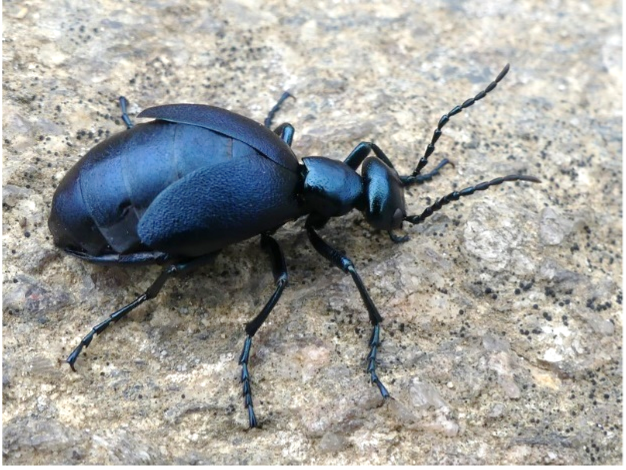
From the name of them, you may guess “blister beetles” are insects you might not want to handle. However, they sure are beautiful to look at! We’ve been noticing blister beetles out and about at Powdermill over the last week or so. Some fly around clumsily, while other flightless species scurry among the leaf litter. Beetles in this family (Meloidae) secrete a defensive substance called cantharidin, a skin irritant that can cause blistering. They are also very toxic when consumed, and can be fatal for livestock if present in the hay supply.
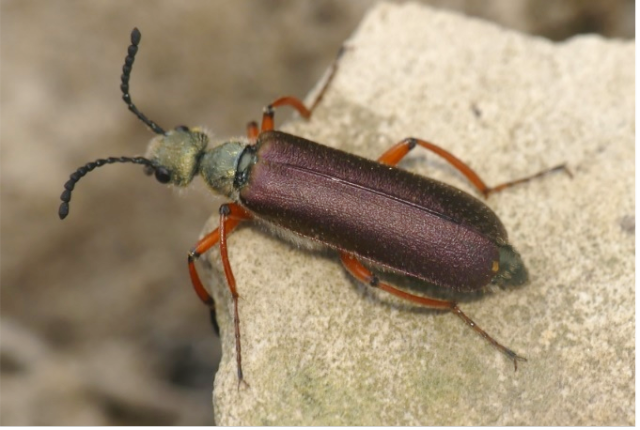
Multi-colored blister beetle on a rock.
Shiny blue blister beetle on a rock.
Two different genera of blister beetles that are common in SW Pennsylvania: Lytta (top) and Meloe (bottom). Top image credit: Shaun Pogacnik. Bottom image credit: Christian Grenier.

Blister beetles are parasites, mostly in the nests of ground-nesting bees and wasps. Watch this short video clip to learn more about their life cycle. Spoiler alert: In this species, the newly hatched beetle larvae clump together and attract a male bee using a fragrance, and then transfer to the female he mates with, ultimately gaining access to her nest, where they feed on both the pollen provisions and the bee larvae themselves!

Whether larvae or adults, these striking beetles certainly have a fascinating dark side. There is always more than meets the eye when it comes to entomology!

Andrea Kautz is a Research Entomologist at Carnegie Museum of Natural History’s Powdermill Nature Reserve. Museum employees are encouraged to blog about their unique experiences and knowledge gained from working at the museum.

Related Content

A Little Harbinger of Spring…

Oh Deer, That’s a Lot of Parasites!

Fourth of July and the Firefly

Carnegie Museum of Natural History Blog Citation Information

Blog author: Kautz, Andrea
Publication date: May 26, 2021
Share this post!

  • Share on Twitter Share on Twitter
  • Share on Facebook Share on Facebook
  • Share on Pinterest Share on Pinterest
  • Share on LinkedIn Share on LinkedIn
  • Share on Reddit Share on Reddit
  • Share via Email Share via Email

Share this post!

  • Share on Twitter Share on Twitter
  • Share on Facebook Share on Facebook
  • Share on Pinterest Share on Pinterest
  • Share on LinkedIn Share on LinkedIn
  • Share on Reddit Share on Reddit
  • Share via Email Share via Email

Filed Under: Blog Tagged With: Andrea Kautz, beetles, Powdermill, Powdermill Nature Reserve, Science News

December 14, 2020 by wpengine

Oh deer, that’s a lot of parasites!

by Andrea Kautz

When a permitted hunter harvested a deer from Powdermill Nature Reserve in mid-November, I took the opportunity as an entomologist to inspect the hide for parasites. I was not surprised to find deer ticks and deer keds on the animal, but I was surprised by how many parasites there were, and the presence of two additional species of ticks not previously known from Powdermill.

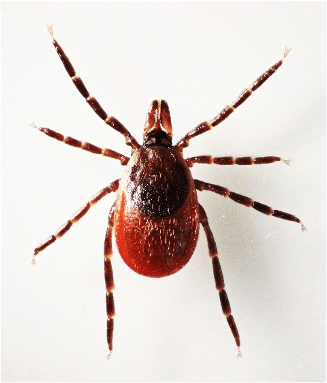
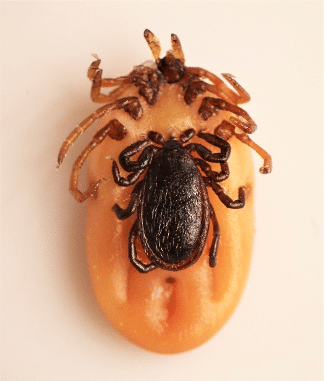
Deer ticks (Ixodes scapularis) are infamous to most Pennsylvanians as the main vectors of Lyme disease. Over 300 deer ticks were found on this single deer, so that should give you an idea of how they can be so abundant, especially in areas with high deer densities. Adult females (Picture 1) were mostly found attached to the skin, in the process of becoming engorged with blood. Many adult males were also found on the deer, but since they don’t require a blood meal, what were they doing on a host? It turns out, a deer is a great place to locate a mate! While the female is attached for days feeding on blood, a male can easily locate and mate with her by inserting his mouthparts into an opening on her ventral side. Many of the females removed from the deer had a male attached (Picture 2).

deer tick
female deer tick with male deer tick attached

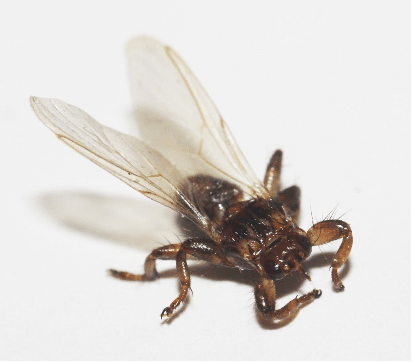
Deer keds (Lipoptena cervi) are sometimes called tick flies because of their resemblance to ticks (both are flattened dorsoventrally), but they behave rather differently. Keds move much faster than ticks, and don’t remain attached for long periods of time while feeding. They are indeed true flies, in the same group of insects as the typical house fly, but they remove their wings once they locate a host, to make it easier to move within the dense hair. The adult females and males both feed on blood, and the female carries one larva at a time internally, giving birth to a mature larva ready to pupate. This is rare among insects, which typically lay many eggs at one time. About 450 keds were collected off this one deer, so the strategy seems to be working for them!

deer ked

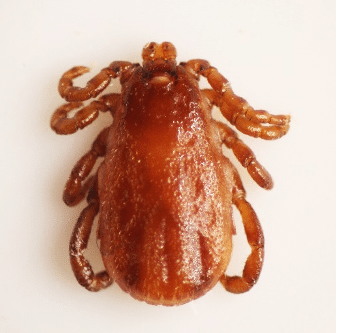
Winter ticks (Dermacentor albipictus) are closely related to the more familiar American dog tick (Dermacentor variabilis), but have a different life cycle. While most ticks utilize different hosts throughout their life cycle (feeding on three different animals as a larva, nymph, and adult), winter ticks spend their whole life on a single host, most commonly a deer, elk, or moose. They can be a serious problem for moose when infestations are severe. Three males of this species were collected off the deer. Although the winter tick has a broad distribution across North America, this trio represents the first Powdermill record.

winter tick

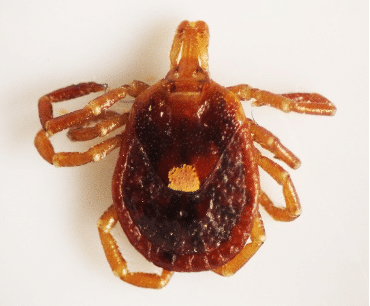
The fourth and final parasite recovered from the deer was a single female Lone Star tick (Amblyomma americanum). Easily recognized by the white dot on the back of adult females, Lone Star ticks are found across the eastern U.S. and use a variety of mammals and birds as hosts. This is our first time encountering this species at Powdermill as well!

Lone Star tick

Penn State is conducting a citizen science project called PA Parasite Hunters to learn more about deer parasitology and vector-borne diseases, so the keds and ticks we collected will be sent there in order to contribute to these important studies.

Andrea Kautz is a Research Entomologist at Carnegie Museum of Natural History’s Powdermill Nature Reserve. Museum employees are encouraged to blog about their unique experiences and knowledge gained from working at the museum.

Related Content

An Annual Return to My Bug-Loving Roots

Bobcats

Ask a Scientist: What are murder hornets?


Carnegie Museum of Natural History Blog Citation Information

Blog author: Kautz, Andrea
Publication date: December 14, 2020

Share this post!

  • Share on Twitter Share on Twitter
  • Share on Facebook Share on Facebook
  • Share on Pinterest Share on Pinterest
  • Share on LinkedIn Share on LinkedIn
  • Share on Reddit Share on Reddit
  • Share via Email Share via Email

Filed Under: Blog Tagged With: Andrea Kautz, insects, Museum from Home, Powdermill Nature Reserve, Science News

November 24, 2020 by wpengine

One man’s trash is another man’s weather instrument

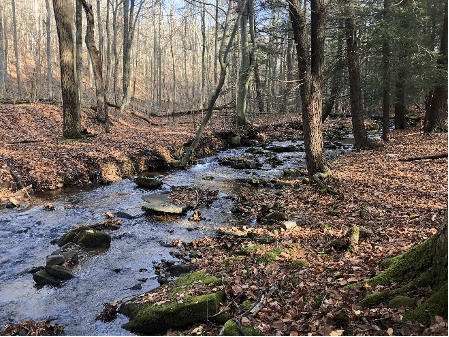
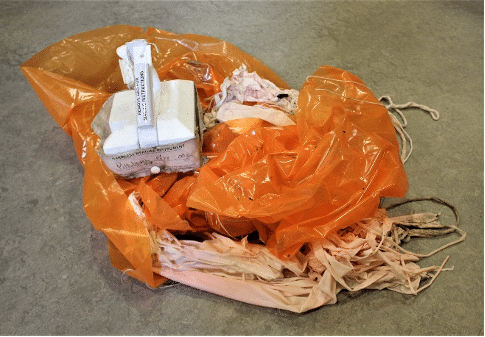
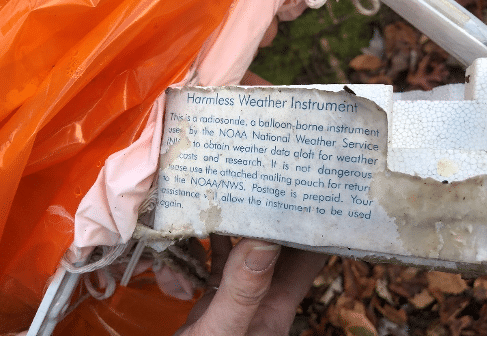
A piece of debris was recovered by staff Friday afternoon while hiking along Powdermill Run at Carnegie Museum of Natural History’s biological research station, Powdermill Nature Reserve. What initially looked like nothing more than a pile of orange plastic garbage turned out to be something much more exciting! It was actually the remains of a weather balloon carrying a recording instrument called a radiosonde.

Powdermill Run, where the instrument was found. Thank you to Bobby Ankney, Maintenance Manager at Powdermill, for wading across the stream to recover it!

These devices are deployed by the National Weather Service in order to gather data about the upper atmosphere. A large balloon (5 feet in diameter) filled with helium or hydrogen gas carries the radiosonde upward at a rate of 1,000 feet/minute. The balloon can reach an altitude of over 20 miles before it expands (due to decreasing air pressure) to a diameter of 20-25 feet and pops. Temperatures at that height can be as cold as -130⁰F!

crumpled weather balloon

During its ascent, the radiosonde transmits data on temperature, pressure, humidity, and GPS location to a ground tracking antenna. GPS data indicate wind speed and direction during the flight. After the balloon pops, an orange parachute carries the spent instrument slowly to the ground, where it may be recovered and returned to the National Weather Service to be reused.

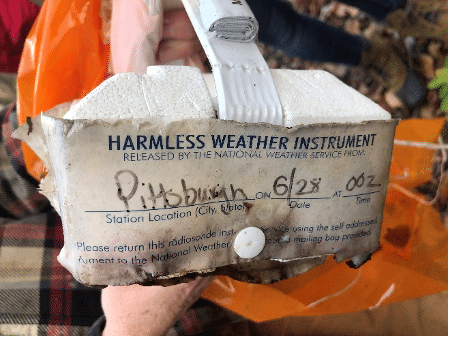
close up of weather balloon label that says "Harmless Weather Instrument"
label on weather balloon

The radiosonde we found was deployed in Pittsburgh on June 28, 2020. Pittsburgh is one of 69 stations in the contiguous United States and over 800 worldwide. Weather balloons at each station are typically deployed at the same time each day, 365 days a year. Data from these instruments are used in weather forecasting, air pollution modelling, and climate change research. While removing litter from the environment is a great thing to do anyway, in this case there was a bonus learning and recycling opportunity included. Cool!

Andrea Kautz is a Research Entomologist at Carnegie Museum of Natural History’s Powdermill Nature Reserve. Museum employees are encouraged to blog about their unique experiences and knowledge gained from working at the museum.

Related Content

Finding Nature in Your Local Streams

The Molecular Lab at Powdermill

Lasius Will Amaze-i-Us

Filed Under: Blog Tagged With: Andrea Kautz, Powdermill Nature Reserve, Science News

July 13, 2020 by wpengine

The Molecular Lab at Powdermill

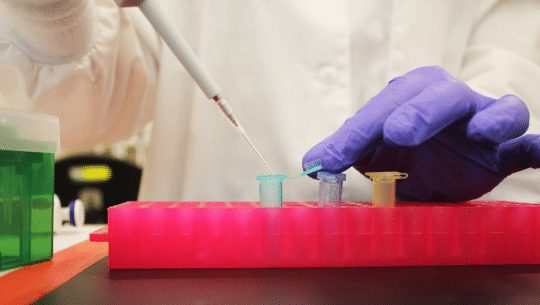
scientist using a syringe and test tube

The Molecular Lab at Powdermill is a great resource because it allows us to analyze samples in-house from field studies being conducted on the reserve.

Currently, we are extracting and amplifying insect DNA from Chimney Swift feces in order to determine the dietary composition of these declining aerial insectivores. We are also screening swabs taken from amphibians and reptiles surveyed across the reserve for the presence of pathogens such as chytrid fungus, which is decimating amphibian populations across the globe.

Another ongoing lab effort involves devising a protocol for the detection of gill lice DNA from trout stream water samples. Gill lice are parasites that attach themselves to the gills of trout. This protocol would allow us to detect the presence of the parasite from a sample of water alone, without having to catch and examine the trout directly.

Andrea Kautz is a Research Entomologist at Carnegie Museum of Natural History’s Powdermill Nature Reserve. Museum employees are encouraged to blog about their unique experiences and knowledge gained from working at the museum.

Related Content

Relevance and the Spirit of Research at Powdermill

From Metes and Bounds to GPS

What is a Caterpillar Database?

Filed Under: Blog Tagged With: Andrea Kautz, Museum from Home, Powdermill Nature Reserve

June 30, 2020 by wpengine

Fourth of July and the Firefly

drawing of firefly that says World Firefly Day July 4-5, 2020

Although many fireworks shows are cancelled this Fourth of July, this is a great opportunity to get out over the holiday weekend and enjoy nature’s very own light show during World Firefly Day, on July 4th and 5th!

Fireflies, AKA lightning bugs, are neither flies nor bugs. They are actually a type of beetle with soft wings and the ability to bioluminesce (light up).

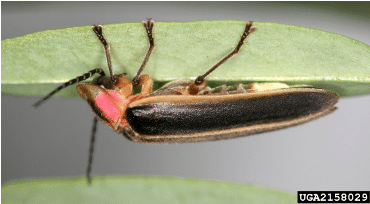
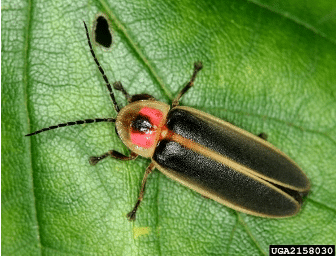
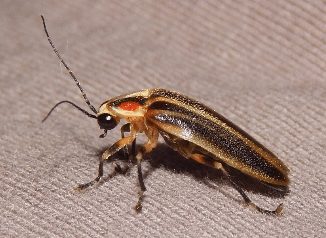
There’s a good chance you will see (or have already started seeing) firefly light displays this summer. There are six genera of fireflies that you are likely to encounter in Pennsylvania. Three are diurnal and don’t light up as adults (Ellychnia, Pyropyga, and Lucidota). Their light organs are absent or reduced in the adult stage. The remaining three genera are nocturnal and use light displays as adults. One is Pyractomena, which is a spring-active firefly that has already finished displaying for the year. That leaves Photinus and Photuris as the hosts of nature’s fireworks this Fourth of July. If you pay close attention to the flash patterns you’re seeing in your yard or get a chance to see one up close, you’ll probably be able to tell which one it is!

Photinus fireflies (top) are flattened in appearance and their heads are usually concealed from above, whereas Photuris fireflies (bottom) are hump-backed and you can often see their heads from above.

firefly under a leaf
firefly on a leaf during the day
Creative Commons © David Cappaert, Bugwood.org
firefly on gray fabric
Photo credit: Andrea Kautz

Flash patterns vary by species, as do the timing and location of the display. Some species display low to the ground, while others display high in trees. Some are active at dusk, and others after dark. The most common firefly in the eastern U.S. is Photinus pyralis which has a lazy J-shaped flash pattern. Other flash patterns you may have seen are single or multiple rapid blinks. The displays you see are male fireflies advertising to females, who respond inconspicuously with their own flash pattern from a lower perched position. Some “femme fatales” in the genus Photuris will actually hunt by flashing in response to males of other species to lure them in, and then eat them!

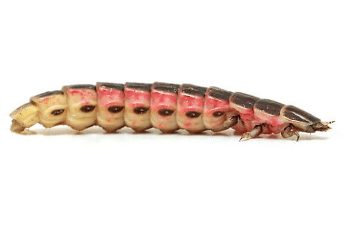
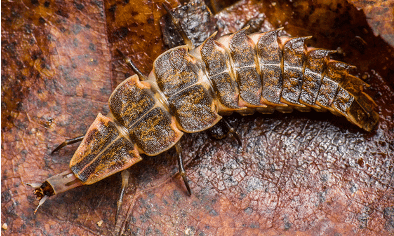
Speaking of hunting, firefly larvae (below) are predators that live in moist soils, feeding on slugs and snails, which is a great method of pest control! Adults of some species are predators, but others drink nectar from flowers or simply do not eat at all.

firefly larva
Creative Commons © 2019 Ken Childs
firefly larva
Creative Commons © 2012 Derek Hauffe

The light-producing behavior has its origins in the larvae, which use the glow as a warning to predators that they are toxic. Other animals use bright colors to achieve this, but this wouldn’t be effective for nocturnal species in darkness. Adult fireflies light up to warn predators, but also to communicate with members of their own species, specifically potential mates. The distress signal is different from the mating signal, which you may notice if you capture a firefly in your hand and it starts to blink repeatedly.

We hope you get a chance to celebrate both the Fourth of July and World Firefly Day this year by witnessing some natural firework displays in your own back yard! We encourage you to share your experiences on the Fireflyers International Network Facebook page.

Andrea Kautz is a Research Entomologist at Carnegie Museum of Natural History’s Powdermill Nature Reserve. Museum employees are encouraged to blog about their unique experiences and knowledge gained from working at the museum.

Related Content

What are Murder Hornets?

Eastern Garter Snake Encounter

The World of Bee Vomit

Filed Under: Blog Tagged With: Andrea Kautz, entomology, Museum from Home, Powdermill Nature Reserve, Science News

September 4, 2019 by wpengine

Box Turtle Time Capsule

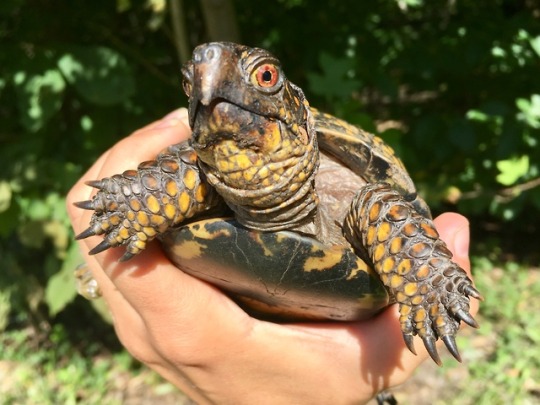
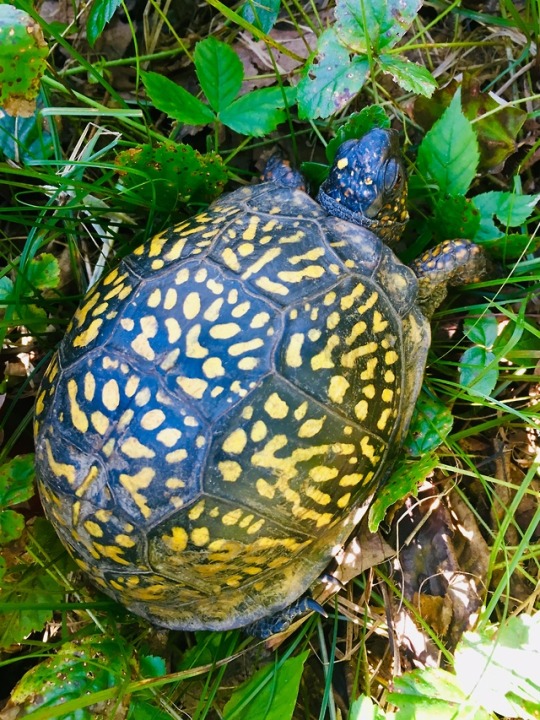
box turtle

The year is 1974. Powdermill founder and Carnegie Museum of Natural History Director Dr. Graham Netting measures and marks a female box turtle found on the reserve and releases her. He estimates her age to be at least 16 years old. One wonders if he had any idea that during the 45 years since, Powdermill staff would continue to find her, alive and well.

box turtle
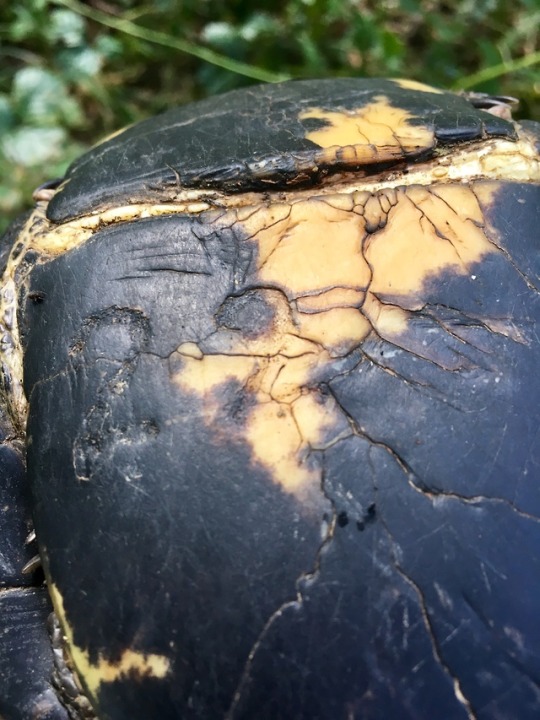
box turtle shell marked 22

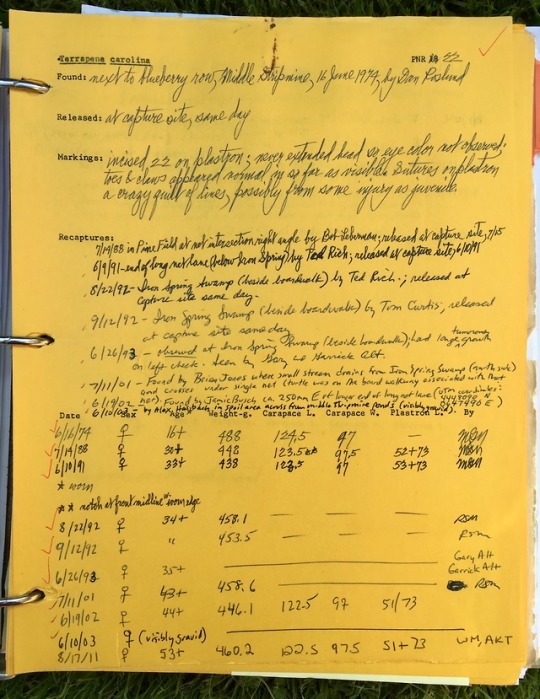
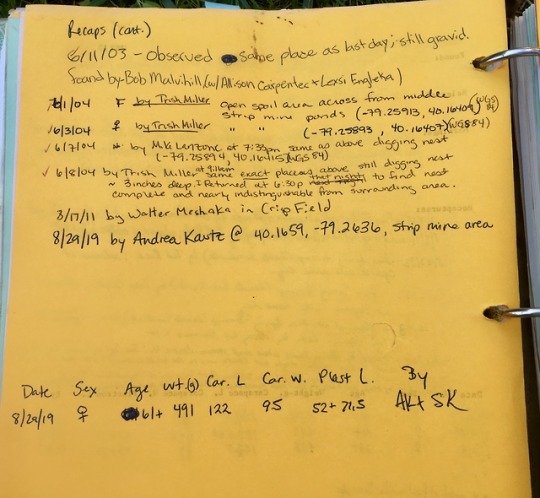
We had the pleasure of encountering box turtle 22, as she is known, on August 29. The number etched into her bottom shell is still readily visible all these years later. She was last seen 8 years ago in 2011, and again 8 years before that, in 2003. In all, she has been recaptured 15 times since 1974! For a 61-year-old (at least), she is looking good and is as close to her 16-year-old weight as we’ve ever seen. Box turtles are known to live for over 100 years in captivity, but often much less in the wild due to predation and disease. Males typically travel more than females, covering distances of up to 10 km in 14 months!

data sheet about box turtle 22

Field stations like Powdermill are so valuable to biologists because of the knowledge that can be gained from these long-term datasets. Perhaps it will be another 8 years until we see her again, and who knows how many more decades she will continue to roam the forests of the reserve. After all, with an approximate birth year of 1958, she is about as old as Powdermill itself (founded in 1956).

Andrea Kautz is a Research Entomologist at Carnegie Museum of Natural History’s Powdermill Nature Reserve. Museum employees are encouraged to blog about their unique experiences and knowledge gained from working at the museum.

Filed Under: Blog Tagged With: Andrea Kautz, Graham Netting, Powdermill, Powdermill Nature Reserve

  • Page 1
  • Page 2
  • Go to Next Page »

sidebar

About

  • Mission & Commitments
  • Directors Team
  • Museum History

Get Involved

  • Volunteer
  • Membership
  • Carnegie Discoverers
  • Donate
  • Employment
  • Events

Bring a Group

  • Groups of 10 or More
  • Birthday Parties at the Museum
  • Field Trips

Powdermill

  • Powdermill Nature Reserve
  • Powdermill Field Trips
  • Powdermill Staff
  • Research at Powdermill

More Information

  • Image Permission Requests
  • Science Stories
  • Accessibility
  • Shopping Cart
  • Contact
  • Visitor Policies
One of the Four Carnegie Museums | © Carnegie Institute | Privacy Policy | Terms of Use | Accessibility
Rad works here logo