• Skip to primary navigation
  • Skip to main content
  • Skip to primary sidebar

Carnegie Museum of Natural History

One of the Four Carnegie Museums of Pittsburgh

  • Visit
    • Buy Tickets
    • Visitor Information
    • Exhibitions
    • Events
    • Dining at the Museum
    • Celebrate at the Museum
    • Powdermill Nature Reserve
    • Event Venue Rental
  • Learn
    • Field Trips
    • Educator Information
    • Programs at the Museum
    • Bring the Museum to You
    • Guided Programs FAQ
    • Programs Online
    • Climate and Rural Systems Partnership
  • Research
    • Scientific Sections
    • Science Stories
    • Science Videos
    • Senior Science & Research Staff
    • Museum Library
    • Science Seminars
    • Scientific Publications
    • Specimen and Artifact Identification
  • About
    • Mission & Commitments
    • Directors Team
    • Museum History
  • Tickets
  • Give
  • Shop

Andrew Carnegie

March 25, 2021 by wpengine

Carnegie’s Cactus: Carnegie gigantea

by Patrick McShea

Diplodocus carnegii, a sauropod star of Dinosaurs in Their Time, is not the only large organism exhibited at Carnegie Museum of Natural History that bears the founder’s name. Within the Hall of Botany, the tree-sized saguaro cactus whose prickly form visually anchors the Sonoran Desert diorama is a species know to science as Carnegie gigantea.
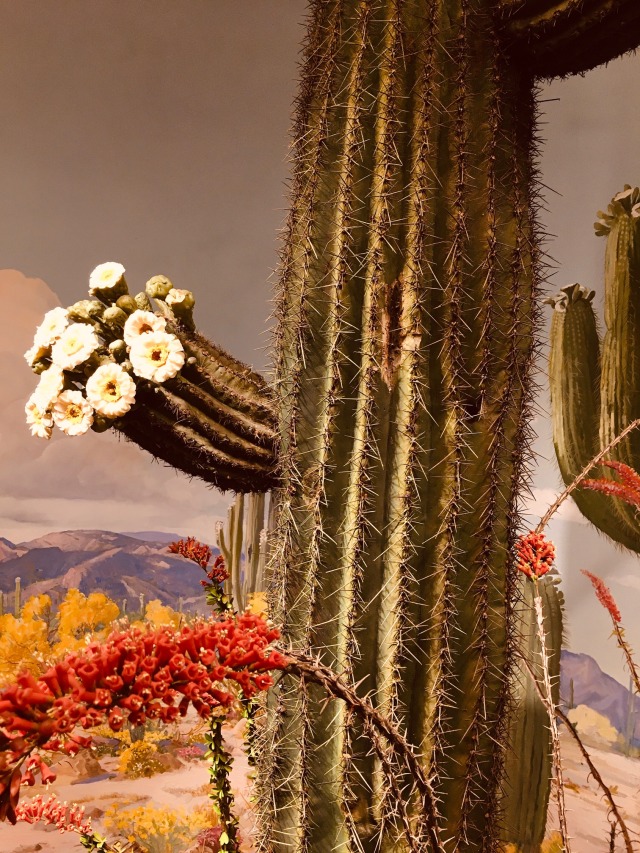
Carnegie gigantea
A blooming saguaro in a diorama depicting the Sonoran Desert of southern Arizona.

The name honors Andrew Carnegie’s support, through the Carnegie Institution, for the 1903 establishment of the Desert Botanical Laboratory in Tucson, Arizona. This groundbreaking research facility, which enabled long-term studies of desert plant adaptations, was sold to the U.S. Forest Service in 1940, and later was purchased by the University of Arizona in 1956.

Today the facility is known simply as the Desert Laboratory, and visitors to its website find an immediate reference to its location on Tumamoc Hill, a site of cultural and spiritual significance to the Tohono O’odham and other Native peoples. A mission statement follows, clarifying the expanded scope of the Laboratory’s work:

The role of the Desert Laboratory is to build on the complementary strengths of culture, science, and community rooted at Tumamoc Hill and the larger Sonoran Desert to become an integrative hub of novel research, education, and outreach about how linked human and natural systems face the future of life in the desert.

Ongoing studies of the Desert Laboratory’s 5,800 saguaros fit perfectly into this mission because of the plant’s importance to the region’s Native peoples for thousands of years.
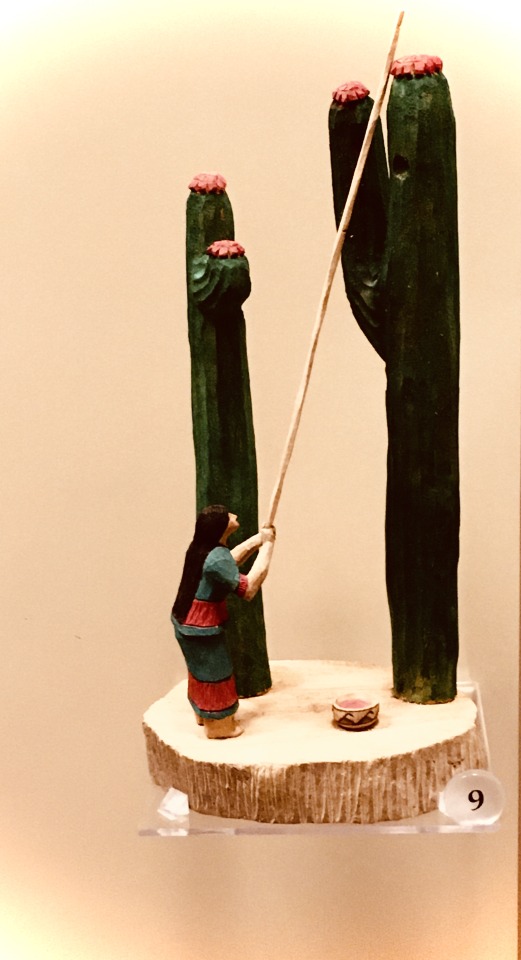
A carving depicting the saguaro harvest.

In Pittsburgh, museum visitors can learn something about the ancient connection between people and the iconic cactus by following a Hall of Botany stop with one in the Alcoa Foundation Hall of American Indians. Here, near the middle of the exhibition’s central corridor, a series of displays exploring use of plants by Native peoples includes a carving by artist Danny Flores (Tohono O’odham) that depicts the traditional harvest of saguaro fruit by Tohono O’odham women.

Consider the walk between the blooming life-sized saguaro in the Sonoran Desert diorama and the tiny carved replica to represent a spring-into-summer transition when white cactus blossoms, pollinated by bird, bat, or insect, transform into ripening red fruit.

A text panel near the model explains how gathered fruit is boiled to create a syrup which is then fermented into wine used in rituals invoking the summer rains to begin. The label also identifies the source of the specialized harvesting tool, an implement as long as a saguaro is tall. The pole is a saguaro rib, a part of the wood skeleton that once helped to hold a massive cactus upright.

Patrick McShea works in the Education and Visitor Experience department of Carnegie Museum of Natural History. Museum employees are encouraged to blog about their unique experiences and knowledge gained from working at the museum.

Related Content

Cactuses, and the Spine of Appalachia

Plant Blindness

Groundhog Architecture

Carnegie Museum of Natural History Blog Citation Information

Blog author: McShea, Patrick
Publication date: March 25, 2021
Share this post!

  • Share on Twitter Share on Twitter
  • Share on Facebook Share on Facebook
  • Share on Pinterest Share on Pinterest
  • Share on LinkedIn Share on LinkedIn
  • Share on Reddit Share on Reddit
  • Share via Email Share via Email

Share this post!

  • Share on Twitter Share on Twitter
  • Share on Facebook Share on Facebook
  • Share on Pinterest Share on Pinterest
  • Share on LinkedIn Share on LinkedIn
  • Share on Reddit Share on Reddit
  • Share via Email Share via Email

Filed Under: Blog Tagged With: Andrew Carnegie, botany hall, Educators, Museum from Home, Pat McShea

April 1, 2019 by wpengine

Bayet’s Bounty: The Invertebrates That Time Forgot

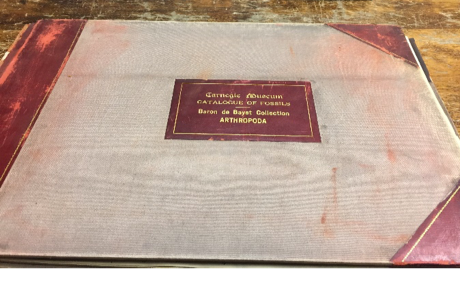
book about the baron de bayet collection
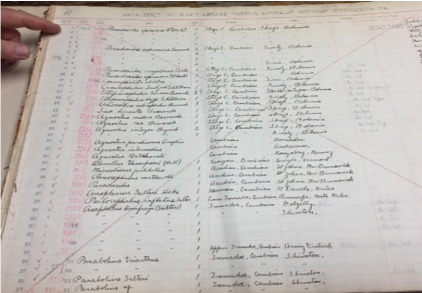
interior of book about baron de bayet collection

Albert Kollar, Collections Manager for the Carnegie Museum of Natural History Section of Invertebrate Paleontology, is on a mission to re-examine the Bayet Collection, a collection of 130,000 invertebrate and vertebrate fossils brought to the Carnegie more than 100 years ago.  Albert is re-examining the invertebrate portion of the Bayet (pronounced “Bye-aye”), which as it turns out, is 99.9% of the collection.

The story starts with a last-minute trip that began on July 8, 1903 by Carnegie Director William Holland, who had received word of a world-class fossil collection that had been put up for sale in Europe by the Baron de Bayet, secretary to the cabinet of Leopold II of Belgium.  Holland immediately booked passage to Europe on the steamer “New York” to complete the deal.  At stake were 130,000 invertebrates, combined with a small number of vertebrate fossils (several on display in the Dinosaurs in Their Time exhibition), sought by museums throughout Europe, Great Britain and the United States.  This collection became the largest addition to the department of paleontology at the Carnegie Institute, since the discovery of the dinosaur Diplodocus carnegii, at Sheep Creek, Wyoming in 1899.

Mr. Carnegie personally wrote a check for $25,000 for the project, a sum so large it exceeded the entire 1903 budget for all art and natural history acquisitions combined. Eventually, Mr. Holland negotiated a price of just under $21,000 with the Baron de Bayet for the entire collection. Another $2,300 was spent to pack, insure and transport everything back to Pittsburgh.  Twenty men and women worked for three weeks to meticulously wrap each fossil in cotton, batting, or straw and by September 1903, two hundred and fifty-nine crates arrived safely in Pittsburgh.  Storage of the crates was an issue, since the Carnegie Museum building would not be completed until 1907; so Mr. Holland rented space in a warehouse on 3rd Street in Pittsburgh for storage of 210 of the 259 crates.

This decision, however, almost destroyed the collection when a fire broke out on the upper floors of the 3rd Street warehouse.  On December 30, 1903, Mr. Holland wrote, “Yesterday brought with it a fire in which it appeared as if the Bayet collection, the acquisition of which we had so prided ourselves, was destined to go up in smoke.”  Fortunately, the Pittsburgh Fire Department contained the fire to the upper floors and the Bayet collection, stored on the lower floor, and meticulously wrapped and crated, survived with minimal damage. The crates returned to the Carnegie Institute to dry out.

In early 1904, William Holland hired Dr. Percy Raymond, a graduate of Yale University, to be the first curator of Invertebrate Paleontology.  His primary directive was to catalog and organize the Invertebrate portion of the Bayet collection. Today, over 100 years later, Albert Kollar with the help of Pitt Geology student E. Kevin Love, is undertaking a multi-year project to translate Percy Raymond’s beautifully hand-written catalogs and to migrate all 130,000 specimens into a new database.

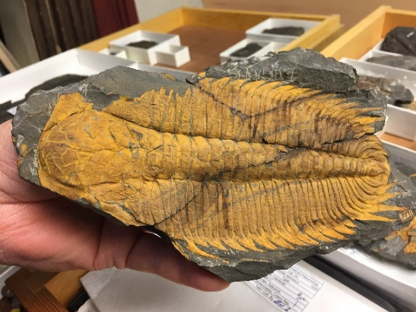
Pictured below is (BH1) the very first Bayet specimen cataloged by Percy Raymond.  BH1 is an exquisite 510-million-year-old, CM 1828 Paradoxides spinosus, a 17.17 cm or 7” long trilobite from Skreje, Bohemia – or the Czech Republic of today.

trilobite fossil

Albert’s goal in revisiting the Bayet collection is to better understand the great history of the how, why and where of fossils collected in the late 19th century, especially in Europe the birthplace of paleontology and geology.  “This project will give us insight into why certain Bayet fossils were recovered from classic European fossil localities, many of which are designated stratotype (significant geologic time reference) regions.  These fossils and localities have been used to document the validity of evolution, extinction, and the Geologic Time Scale over the last 100 years.  With an improved database, we hope to better appreciate the scientific value of the entire collection and create new statistical measures for future research and education.”

When asked if he expected any surprises as we go forward, Albert smiled, “Not until all the data has been analyzed will we have an opportunity to review the collection’s full scientific worth.”

Check back in a few months, Bayet’s invertebrates may have a few secrets yet to share.

Many thanks to Carnegie Museum Library Manager, Xianghua Sun for help researching this post.

Joann Wilson is an Interpreter in the Education department at Carnegie Museum of Natural History. Museum employees are encouraged to blog about their unique experiences and knowledge gained from working at the museum.

Filed Under: Blog Tagged With: Albert Kollar, Andrew Carnegie, fossils, geology, invertebrate paleontology, paleontology, Pittsburgh, SWK2, Trilobite, William Holland

August 17, 2018 by wpengine

Memoirs of the Carnegie Museum Volume 1, Number 1

By John Wible

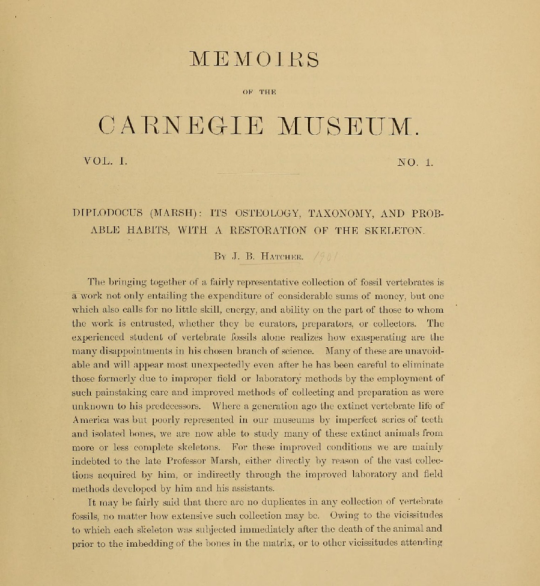
Memoirs of the Carnegie Museum, Volume 1, Number 1

William J. Holland, Director of the Carnegie Museum, announced a new publication series, the Memoirs of the Carnegie Museum, by stating … “To the fame of Pittsburgh as the seat of some of the most Cyclopean industries of the age is being added reputation as a seat of learning. Under the cloud of smoke, which attests the industry of her inhabitants, and is the sign of her material prosperity, live men who find their pleasure in exploring the wonders of the material universe, and the record of their discoveries and researches will be from year to year be found.”

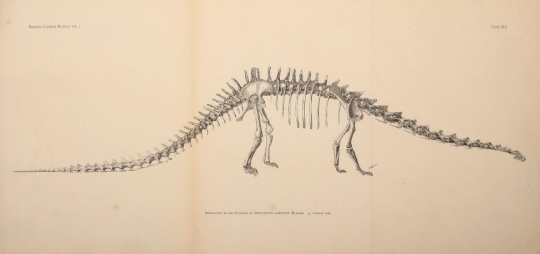
The very first number of this new series was published in July 1901. It announced the discovery of a new species of dinosaur, Diplodocus carnegii, which staff paleontologist John Bell Hatcher named for the museum’s founder, Andrew Carnegie. Hatcher’s 63-page text included a bone-by-bone description of two skeletons collected in 1899 and 1900 from the same quarry in Sheep Creek, Wyoming. Given the number of vertebrae (backbones), most of the text is about them!

Hatcher restored the skeleton in a pose “the animal must have frequently assumed when feeding upon the soft and succulent plants that grew in abundance along the shores of the shallow waters about and in which these Dinosaurs lived” (p. 57).

drawing of diplodocus carnegii fossil

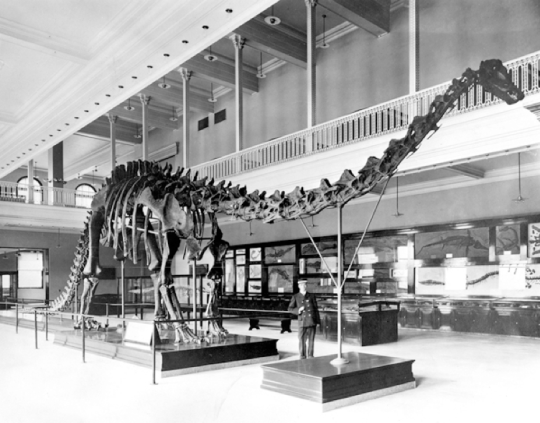
This is the pose for Dippy that most Pittsburghers will remember in the old dinosaur hall.

diplodocus carnegii fossil in Dinosaur Hall

In fact, many museum goers around the world know the same pose because Andrew Carnegie donated casts of Diplodocus carnegii to the major museums in Europe, Mexico, and Argentina. The Pittsburgh mount changed in 2007 to bring it up-to-date with current scientific knowledge. To see the updated pose, you will have to come visit the museum.

John Wible, PhD, is the curator of the Section of Mammals at Carnegie Museum of Natural History and editor of Annals of Carnegie Museum. John’s research is focused on the tree of life of mammals, understanding the evolutionary relationships between living and extinct taxa, and how the mammalian fauna on Earth got to be the way it is today. He uses his expertise on the anatomy of living mammals to reconstruct the lifeways of extinct mammals. John lives with his wife and two sons in a house full of cats and rabbits in Ross Township. Museum employees are encouraged to blog about their unique experiences and knowledge gained from working at the museum.

Filed Under: Blog Tagged With: Andrew Carnegie, diplodocus carnegii, Dippy 125, John Bell Hatcher, Mason Heberling

August 10, 2018 by wpengine

Mastodon Restoration

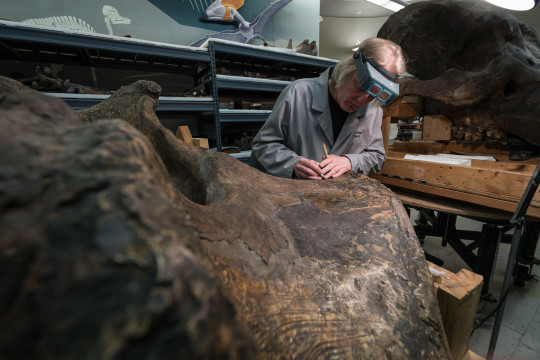
Dan Pickering working on mastodon restoration

What does a Scientific Preparator do? Part of Dan Pickering’s really cool job is carefully restoring museum specimens. In this photo he’s working on our mastodon specimen, one of Andrew Carnegie’s first acquisitions for the museum.

After having 120 years of “stuff” put on it to “preserve” it while it was on display, it needed significant restoration work.

All of this “stuff” was applied to the mastodon specimen over time:

·     Shellac

·     Varnish

·     Paint

Plus, cracks, cavities, and broken and missing areas were kept up with:

·     Plaster

·     Putty

·     Bondo

·     Glue

·     Epoxy

·     Wood

·     Chicken wire

·     Metal pins

On top of all that, soot built up on the mastodon when the museum was free and the doors were kept wide open.

Everything from shellac to soot must be removed or corrected to modern standards to restore this historically valuable specimen.

However, not all of these materials can be removed because most fossils are found as partial skeletons. When work is complete, you shouldn’t be able to see which parts are real bones and which parts were added – the skeleton should look cohesive. But if you look closely (from within five feet or so), different tones, colors, and textures will reveal real bones vs. elements added during restoration.

You can watch Dan and other Scientific Preparators at work on the mastodon in PaleoLab.

Filed Under: Blog Tagged With: Andrew Carnegie, Dan Pickering, museums, Paleolab, restoration

January 11, 2018 by wpengine

Did you know that in addition to needing a larger museum…

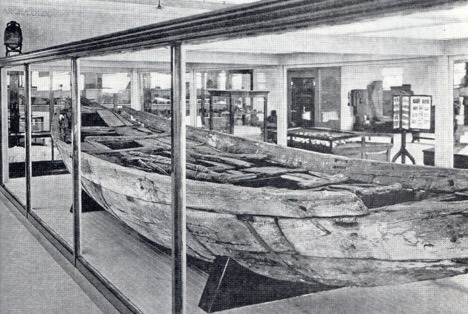
Egyptian funerary boat

Did you know that in addition to needing a larger museum building to house our Diplodocus, Dippy, the 1907 expansion was required because Andrew Carnegie purchased our 32-foot long wooden Egyptian funerary boat?

Carnegie apparently purchased the boat without the knowledge of then Director, W.J. Holland, who upon its
arrival, told The Pittsburgh Times that he “had not been in correspondence with anyone regarding such a relic.”

Still, by July 24, 1901, Holland reported to The Pittsburgh Post that “Mr. Carnegie is ever on the lookout to purchase antiquities that will tend to carry out his idea of making the Carnegie Museum the most comprehensive and complete institution of the kind in the world… Mr. Carnegie is thoughtful to the extreme in this respect and we are never at a loss to find a good place for anything that may come.”

This boat is still on display today in Walton Hall of Ancient Egypt!

Filed Under: Blog Tagged With: Andrew Carnegie, museum history, Walton Hall of Ancient Egypt

October 16, 2017 by wpengine

Jar from the Alcohol House

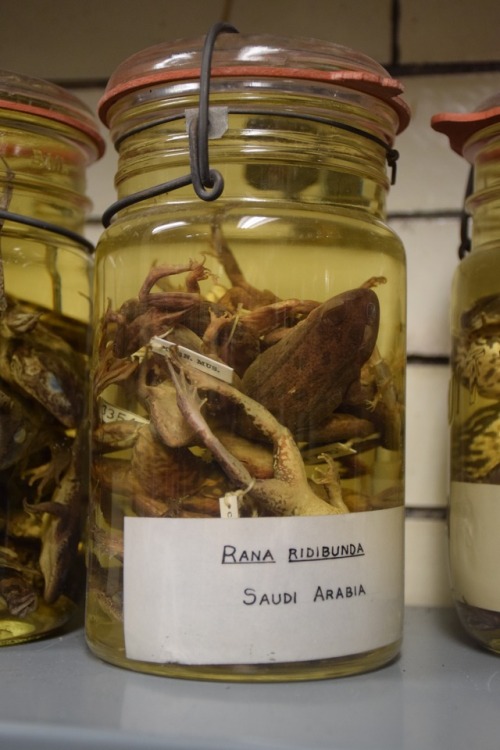
This jar in our Alcohol House dates back to the 1890s, when the museum was first founded by steel tycoon and philanthropist Andrew Carnegie.  

This jar in our Alcohol House dates back to the 1890s, when the museum was first founded by steel tycoon and philanthropist Andrew Carnegie.

The Alcohol House is home to more than 250,000 amphibian and reptile specimens from around the world and is named for the 70% ethanol alcohol that preserve them.

Filed Under: Blog Tagged With: alcohol house, amphibian, Andrew Carnegie

sidebar

About

  • Mission & Commitments
  • Directors Team
  • Museum History

Get Involved

  • Volunteer
  • Membership
  • Carnegie Discoverers
  • Donate
  • Employment
  • Events

Bring a Group

  • Groups of 10 or More
  • Birthday Parties at the Museum
  • Field Trips

Powdermill

  • Powdermill Nature Reserve
  • Powdermill Field Trips
  • Powdermill Staff
  • Research at Powdermill

More Information

  • Image Permission Requests
  • Science Stories
  • Accessibility
  • Shopping Cart
  • Contact
  • Visitor Policies
One of the Four Carnegie Museums | © Carnegie Institute | Privacy Policy | Terms of Use | Accessibility
Rad works here logo