• Skip to primary navigation
  • Skip to main content
  • Skip to primary sidebar

Carnegie Museum of Natural History

One of the Four Carnegie Museums of Pittsburgh

  • Visit
    • Buy Tickets
    • Visitor Information
    • Exhibitions
    • Events
    • Dining at the Museum
    • Celebrate at the Museum
    • Powdermill Nature Reserve
    • Event Venue Rental
  • Learn
    • Field Trips
    • Educator Information
    • Programs at the Museum
    • Bring the Museum to You
    • Guided Programs FAQ
    • Programs Online
    • Climate and Rural Systems Partnership
  • Research
    • Scientific Sections
    • Science Stories
    • Science Videos
    • Senior Science & Research Staff
    • Museum Library
    • Science Seminars
    • Scientific Publications
    • Specimen and Artifact Identification
  • About
    • Mission & Commitments
    • Directors Team
    • Museum History
  • Tickets
  • Give
  • Shop

archaeology

March 5, 2021 by wpengine

Follow Your Dreams, My 70 Years as an Archaeologist

Archaeology usually conjures up Indiana Jones as an example of the thrills and dangers of archaeological research. Archaeology is a relatively safe occupation, although there are exceptions, such as the archaeologist who stood on top of a Mayan pyramid who was struck by lightning. There are many fields of archaeology that focus on geographic areas and time periods, from hunters and gatherers over hundreds of thousands of years to the last 10,000 years of the rise of civilizations around the world. There are many cultural specialties in archaeology such as Egyptology, Classical archaeology, focusing on the Mediterranean Greek and Roman, Mayan, Inca, U.S. Southwest and so forth. A field represented in Pittsburgh is Biblical archaeology at the Pittsburgh Theological Seminary with its Kelso Museum of Near Eastern Archaeology. At the University of Pittsburgh in the Department of Anthropology there is a focus on Mexico, Central and South America, Eastern Europe, China, and Central Asia with currently over 30 graduate students and faculty conducting research in these regions.

The Section of Anthropology of the Carnegie Museum of Natural History, for over 100 years, has conducted archaeological research in Egypt, Israel, Central Asia, Caribbean, Costa Rica, Peru, the Upper Ohio Valley and holds collections from other areas of the Americas and the world though donations or purchase. The richness of the Section’s collections can be seen in Walton Hall of Ancient Egypt, Polar World: Wyckoff Hall of Arctic Life, and Alcoa Foundation Hall of American Indians.

From an early age I wanted to be an archaeologist. My father was worried that archaeology wouldn’t provide much of a livelihood, so he arranged a visit with the director of the Peabody Museum at Harvard when I was a teenager. My father asked the director J. O Brew if one could make a living as an archaeologist and he answered, “it’s better if you’re independently wealthy.” This didn’t deter me from following my dream of becoming an archaeologist. My archaeological career is filled with luck and serendipity where seizing an offered archaeological opportunity or discovery of a significant artifact, not only guided my research, but where I worked. I have a parallel career in historic colonial sites and in prehistoric maritime adaptations. I became intrigued with archaeology at an early age visiting the Springfield Science Museum and joining a chapter of the Massachusetts Archaeological Society based at the museum. I went out on their excavations at sites in the Connecticut River Valley, one which was in 1957 in South Hadley where I learned how to uncover burials. From summering in the Lake George area of New York State I became interested in historic archaeology due to all the French and Indian War (1754-1763) forts in the region. In 1952 at age 16, I was a crew member for two summers at the excavations of Fort William Henry, made famous by James Fenimore Cooper’s novel The Last of the Mohicans.
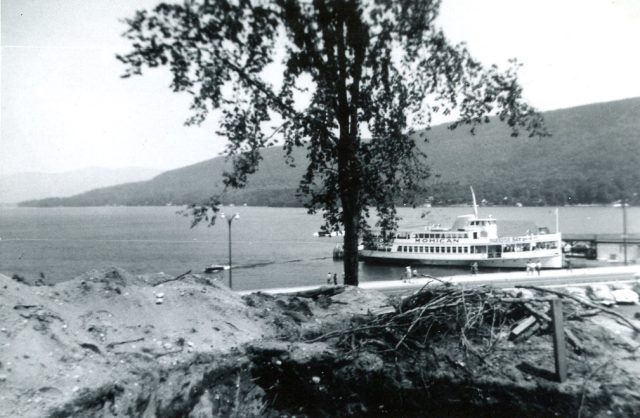
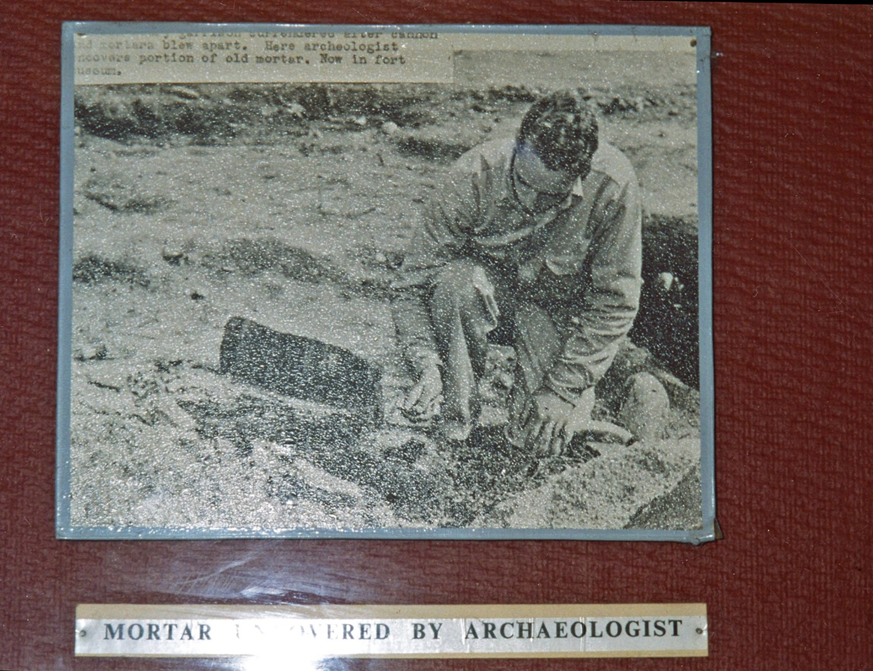
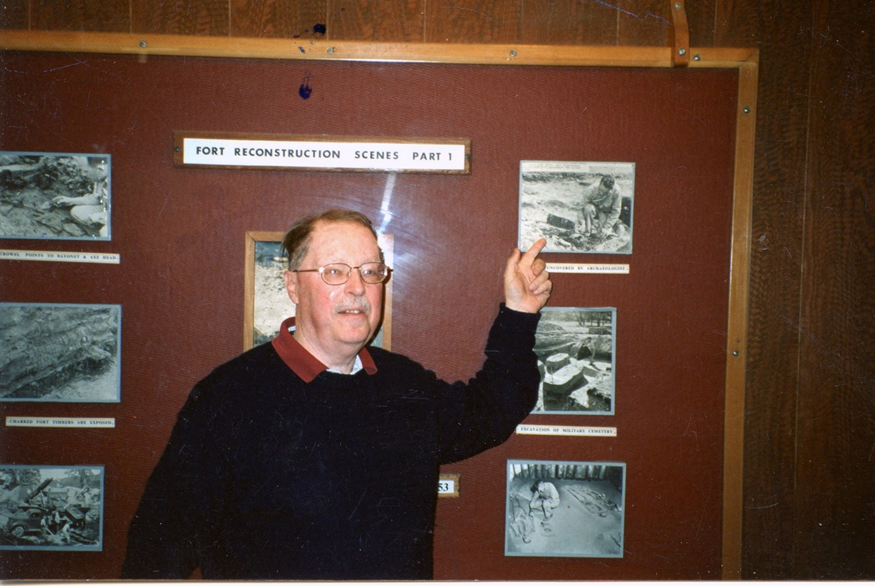
Excavation of Fort William Henry at the Head of Lake George, New York 1952. (Photo Credit Dr. Richardson)

black and white photo of an archaeologist at work in a red frame

Fort William Henry was destroyed by French and Indian forces in 1757. In 1952, excavations and reconstruction of the fort began on what became a major tourist attraction. Photos show Dr. Richardson pointing to a photo of his 16-year-old self-excavating the site. (Photo Credit: Dr. David Watters)

I also summered on Martha’s Vineyard where in 1954 I dug at a coastal site with an associate of the Martha’s Vineyard Museum which stimulated my desire to become a maritime archaeologist. At St. Lawrence University I majored in Sociology and Anthropology and in 1957 I wrote a letter to the Smithsonian Institution asking to go on one of their expeditions and was accepted on a crew that set up a tent camp on the Big Bend of the Missouri River in South Dakota excavating at the Black Partisan village site. While at SLU I also was a crew member in 1959 at the excavations of Johnson Hall in Johnstown, NY, the home of Sir William Johnson, the British Superintendent of Indian Affairs during the French and Indian War.
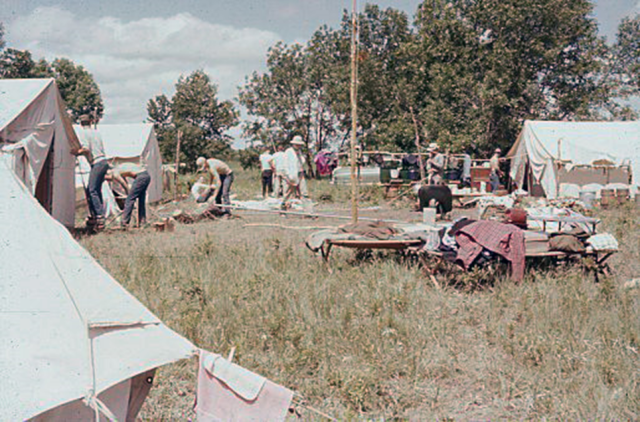
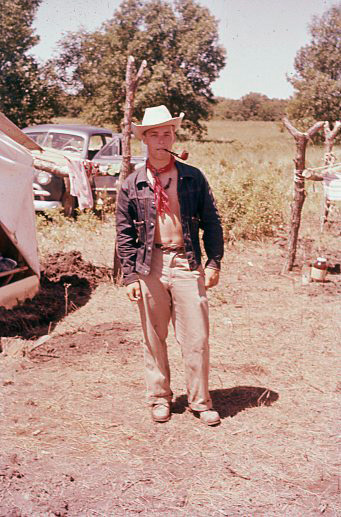
Smithsonian Institution camp on the Lower Brule Sioux (Lakota) Indian Reservation in South Dakota, 1957. (Photo Credit: Dr. Richardson)
Dr. Richardson in the Smithsonian Camp 1957. (Photo Credit: Warren Caldwell)
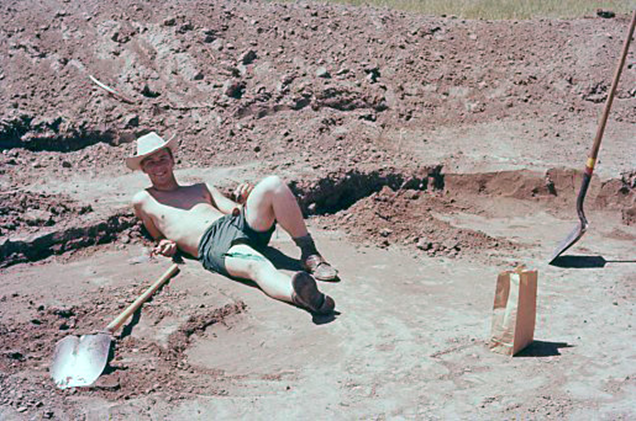
Dr. Richardson lounging at the Black Partisan Site, an excavation of an earth lodge at Lower Brule Reservation. (Photo Credit: Warren Caldwell)
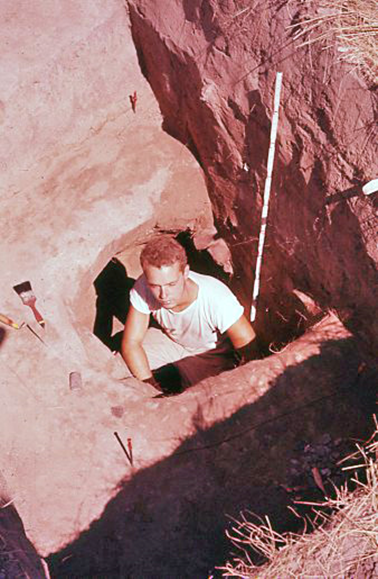
Dr. Richardson excavating a food storage pit at the Black Partisan Site. (Photo Credit: Warren Caldwell)

At Syracuse University for my master’s, I crewed in 1962-63 on 3 sites in up-state New York directed by William A. Ritchie, the State Archaeologist from the New York State Museum. I mentioned to him my interest in maritime archaeology and urged him to develop a research project on Martha’s Vineyard, which he did, excavating 6 sites from 1962-1966 on which I of course I participated. After Syracuse in 1963, I with my wife Judy went to the University of Illinois for my Ph.D. in northeastern U.S. archaeology, focusing on the maritime Vineyard. Here one of my advisors came out of his office and shouted down the hall to me “Jim, do you want to go to Peru?” To which I replied, “of course if you’re paying.” An excellent case of seizing the moment that fit well with my career goal of becoming a maritime specialist. In 1965 my wife Judy and I went to Talara, the second oldest operating oil field in the world after Drake well in western PA. Talara is 100 miles south of the Ecuadorian border and here I located an 8,000-year-old shell midden called Siches, which held evidence from warm and cold ocean fish and shellfish species. Based on the evidence at this coastal fishing and shellfish gathering society and other sites on the coast of Peru I and my colleague Dan Sandweiss, a Research Associate of the Section, developed the theory that this was evidence of a major shift in the change from a warm water to a cold water current washing the Peruvian north coast and the origins of El Niño around 5,800 years ago, the worldwide drought and flood disasters. My doctorate in 1969 was on the changing climate and coastal sites in the Talara region. I also dug in southern Peru at the Ring Site, an 10,500-year-old massive shell midden with cold water fish and shellfish. In addition, my students and I surveyed pyramid centers in the Talara area as well.
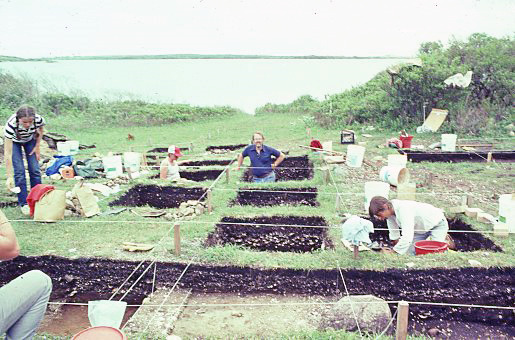
Dr. Richardson excavating Jackie Onassis’s property on Martha’s Vineyard in 1982. This site is called the Hornblower II Site. (Photo Credit: Jim Peterson)
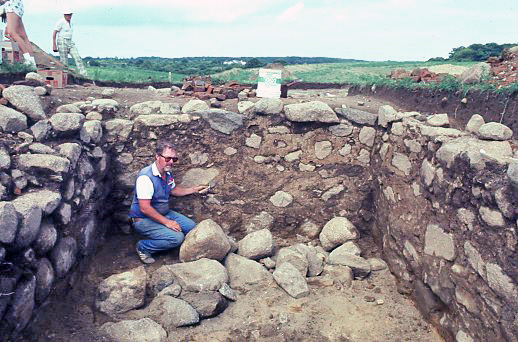
Dr. Richardson in the cellar hole of the John and Experience Mayhew House Site c.1672-1658 on Martha’s Vineyard in 1985. (Phot Credit: Jim Peterson)
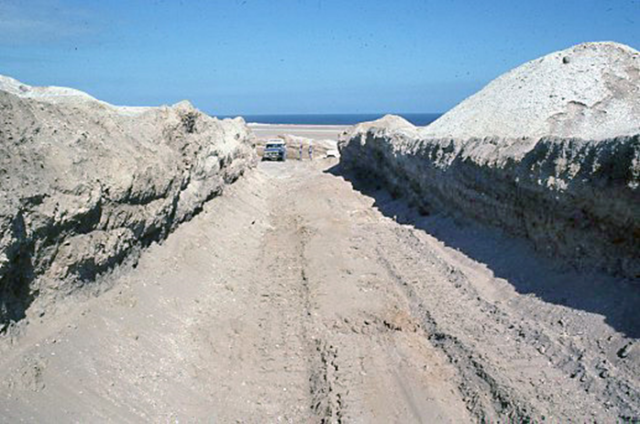
The Ring Site Ilo, Peru 1983 a 10,500-year-old Shell Midden. (Photo Credit: Dr. Richardson)
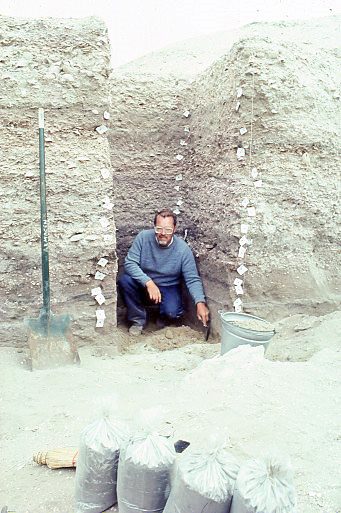
Dr. Richardson in the shell midden profile of the Ring Site, Peru. (Photo Credit: Daniel Sandweiss)
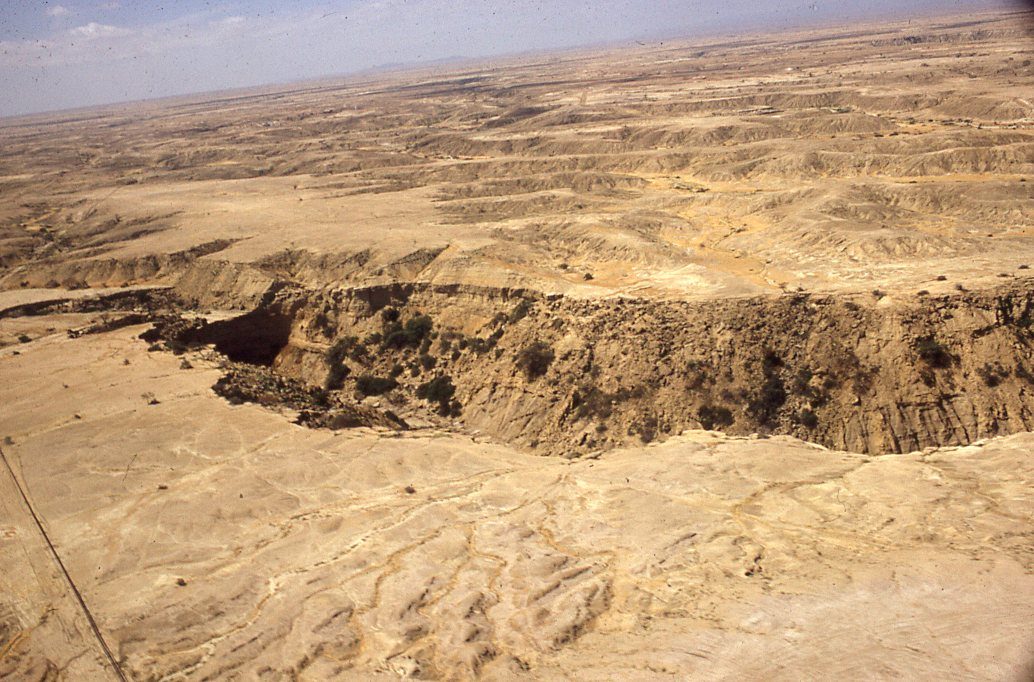
Aerial view of the Siches Site in the lower half of the photo, Talara, Peru (Photo Credit: Dr. Richardson)
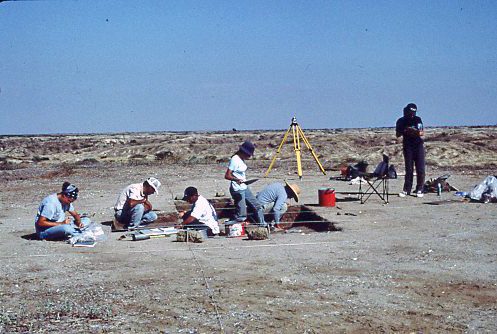
Excavation at the Siches Site, which provided evidence for the origins of the El Niño weather catastrophe in 5800bp (Photo Credit: Dr. Richardson)

I did return to Martha’s Vineyard in the early 80’s excavating 2 shell middens and a Colonial house site of missionaries to the Wampanoag. In western Pennsylvania in 1970 I directed a field school for the University of Pittsburgh at the Revolutionary War site of Hanna’s Town in Westmoreland County, the first County Seat west of the Alleghenies. This town of 30 log cabins and a fort was destroyed by an Iroquois and British attack in 1782. Here we excavated Charles Foreman’s tavern.
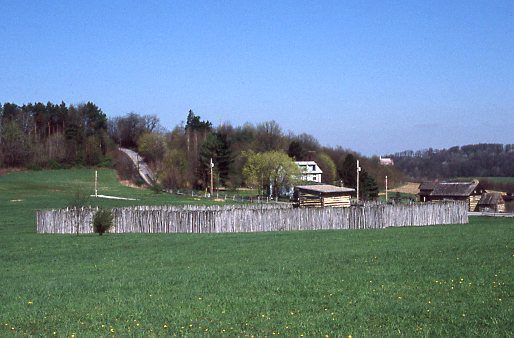
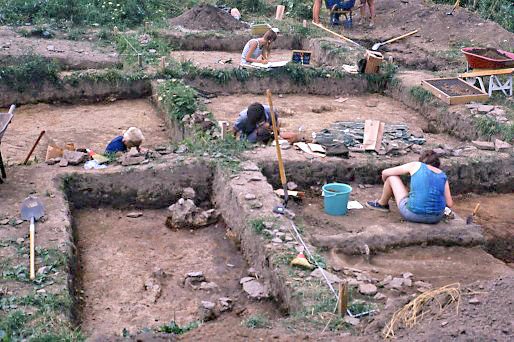
Reconstructed Fort of the Hanna’s Town Site. (Photo Credit: Dr. Richardson)
1970 university of Pittsburgh Field School Excavation of Forman’s Tavern, Hanna’s Town, PA. (Photo Credit: Dr. Richardson)

I came to the University of Pittsburgh in 1967, retiring in 2009. While at Pitt serving as chairman, I was approached by then director Dr. Craig Black to take over the chair of the Section of Anthropology in 1978 and accepted a half-time position as chief curator until my retirement in 2006. The only thing that has changed in my retirements was receiving a salary! I am currently writing up some sites from my Peruvian and Martha’s Vineyard research and have a book in press on a colonial site on Martha’s Vineyard where I am a board member of the museum. I am also still involved with Pitt graduate students and in programs at the Carnegie Museum of Natural History, so little has changed in my archaeological career since I first put a shovel in the ground in 1952.
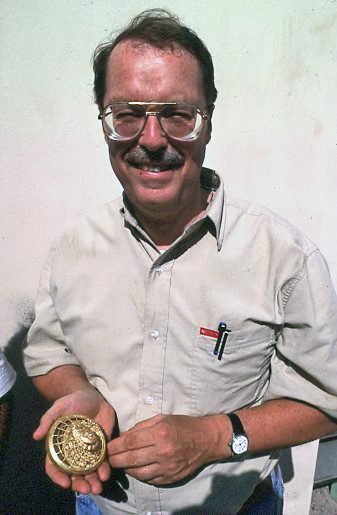
Dr. Richardson holding a gold spider from the Royal Moche Tombs of Sipan in Lambayeque, Peru 1990. (Photo Credit: Daniel Sandweiss)

Dr. James B. Richardson III is Curator Emeritus in the Section of Anthropology at Carnegie Museum of Natural History and University of Pittsburgh Anthropology Professor Emeritus. Museum employees are encouraged to blog about their unique experiences and knowledge gained from working at the museum.

Related Content

How I Became an Archaeologist

Pennsylvania Archaeology and You

Super Science Activity: Natural Paints

Carnegie Museum of Natural History Blog Citation Information

Blog author: Richardson, James
Publication date: March 5, 2021
Share this post!

  • Share on Twitter Share on Twitter
  • Share on Facebook Share on Facebook
  • Share on Pinterest Share on Pinterest
  • Share on LinkedIn Share on LinkedIn
  • Share on Reddit Share on Reddit
  • Share via Email Share via Email

Filed Under: Blog Tagged With: archaeology, Archaeology Extravaganza, James Richardson, Science News, Super Science Days

March 3, 2021 by wpengine

Pennsylvania Archaeology and You

The Pennsylvania Archaeological Council (PAC) is an organization of professional archaeologists from all over the State dedicated to education, consultation, ethics, and advocation of Pennsylvania archaeology. The PAC works to advise policy and legislative interests in the commonwealth as well as provide consultation with the Pennsylvania Department of Transportation. Anyone with a graduate degree in anthropology, archaeology, or a similar subject is encouraged to apply. Recently this membership has been expanded to include those with extensive experience and PAC has taken an interest in student membership. Check out this website for more information.

outline of the state of Pennsylvania with the letters PAC on it diagonally

For anyone interested in local archaeology, the Society for Pennsylvania Archaeology (SPA) exists alongside PAC. Anyone is welcome to join this special interest group that is made up of regional chapters. Established in 1929, the goals of SPA include; promoting the study of archaeological resources in PA, discouraging irresponsible exploration, connecting avocational and professionals, and promoting the conservation of sites, artifacts, and information. To disseminate information, the SPA facilitates one of the oldest State Archaeology Journals, Pennsylvania Archaeologist. 83 years of the publication are available for purchase on the website.

The Society for Pennsylvania Archaeology, Inc., the parent archaeological society, meets annually at announced places. Membership in the SPA is highly recommended. Dues are $30 per year for individuals. Membership entitles one to receive The Pennsylvania Archaeologist twice a year. For those interested in taking an active role, the SPA is made up of many individuals from regional chapters. I’ve decided to highlight two of those chapters in this blog. To find your regional chapter visit pennsylvaniaarchaeology.com/Chapters.htm

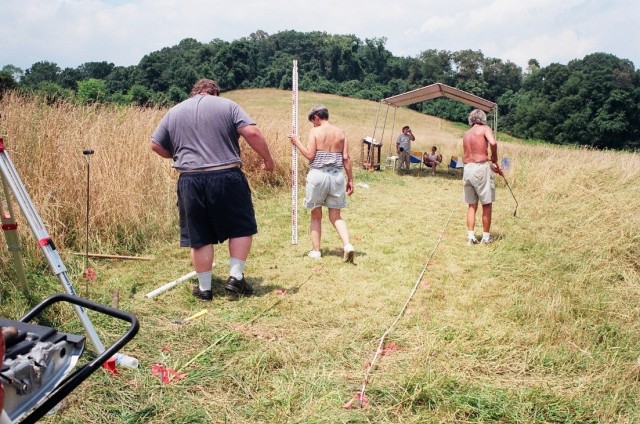
If you live in Pittsburgh, our local chapter is called Allegheny Chapter #1. We meet the first Tuesday of every month at 7:30 p.m. Due to the pandemic, this is currently done virtually. For membership information contact Amanda Valko at amanda@quemahoning.com The chapters take an active approach by conducting investigations of sites in their region. The Allegheny Chapter started working on a local site called the Hatfield site back in July of 2007. The first thing we did was set up a grid and took some geomorphology samples under the direction of Brian Fritz.

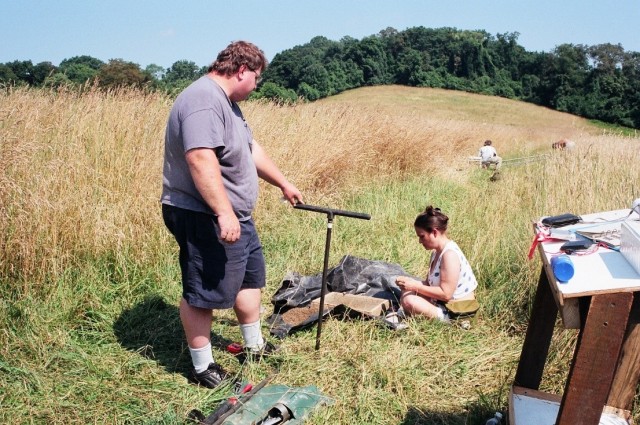
Brian Fritz and Nina Larsen examining a soil core sample at the Hatfield Site. (Photo Credit: Amanda Valko)
Setting up the grid for soil sampling. Chapter members front to back: Brian Fritz, Peggy Sinclair, Ken Fischer. Chapter members under the shade shelter: Don McGuirk, Nina Larsen. (Photo Credit: Amanda Valko)

The Allegheny Chapter is hoping to produce a report of these excavations soon. Hopefully we can get the Chapter together over the summer to work with the artifacts and start the whole report preparation process.

Southeast of Allegheny County, the Westmoreland Archaeological Society Chapter #23 used to meet on Wednesdays, but due to the pandemic are following an erratic schedule. For membership information contact Jim Barno at bar3686@calu.edu (Jim Barno is a dedicated volunteer in the section of Anthropology at CMNH.)

Chapter #23 was actively engaged in 16 years of excavation at the Console Site, which was an important Monongahela Site. They reach out to the students and faculty at the Indiana University of Pennsylvania encouraging them to become involved with the Westmoreland Archaeological Society by participating in various public events such as artifact displays and colloquiums held at the IUP campus, Fort Necessity National Battlefield, Green County Historical Society as well as local community events such the Derry Agricultural Fair.

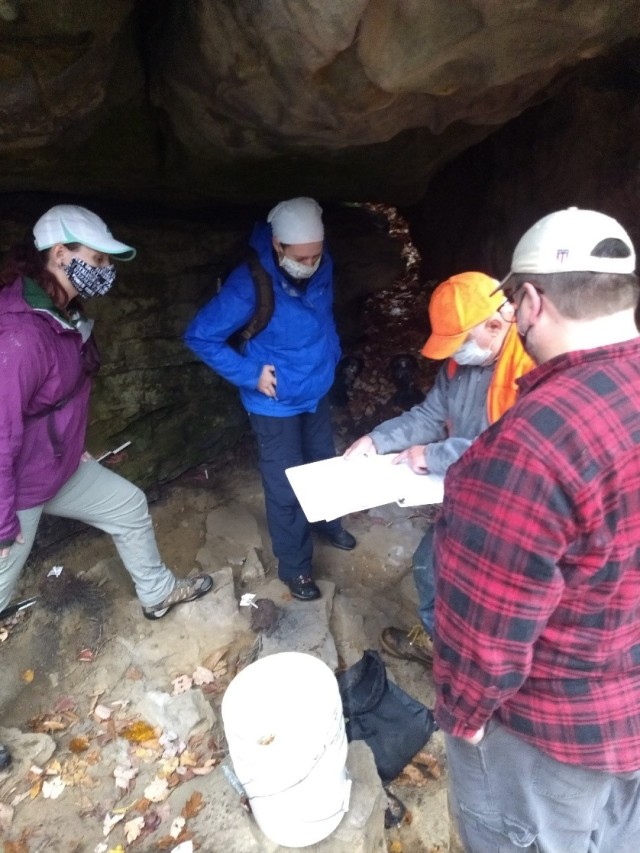
IUP students are actively involved in continuing excavations at the Bergstrom Hollow Rock Shelter Site (weather permitting). The chapter also publishes a monthly newsletter called The Trowel that has interesting archaeological subject material as well as listings of local archaeological events and now Zoom links for folks interested in these types of activities.

From the left are the following people Stephanie Zellers, Rachael Smith, Bob Oshnock, and Dr. Chadwick at the Bergstrom rock Shelter. (Photo Credit: Jim Barno)
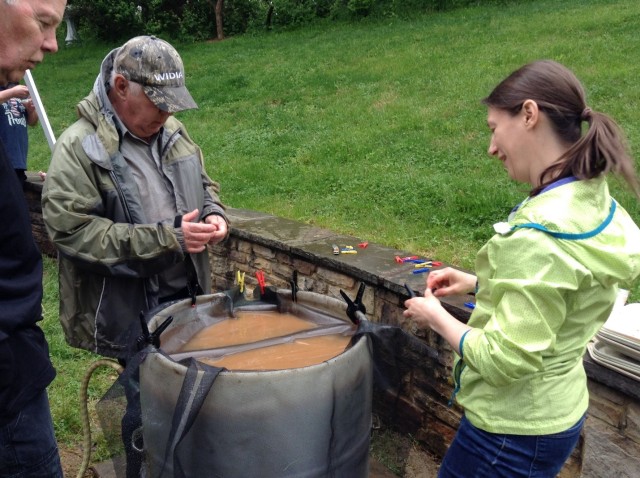
Earth Day Event at St. Vincent College. Bob Oshnock and Dr. Lara Homsey-Messer (IUP) doing flotation. (Photo Credit: Jim Barno)

Remember to always report archaeological finds to the State Historic Preservation Office! Follow the guidelines specified in the links below.

PA SHPO/State Museum of PA: Instructions for Recording Archaeological Sites in Pennsylvania

PA State Historic Preservation Office (PA SHPO): Guidelines for Archaeological Investigations in Pennsylvania

Amy L. Covell-Murthy is Archaeology Collection Manager at Carnegie Museum of Natural History as well as a member of the SPA Allegheny Chapter 1, and a recently elected executive board member of the PAC. Museum employees are encouraged to blog about their unique experiences and knowledge gained from working at the museum.

Related Content

Archaeological Adventures in Egypt

Minecraft Lied to Me?!

Super Science Activity: Hieroglyphs

Filed Under: Blog Tagged With: Amy Covell-Murthy, archaeology, Archaeology Extravaganza, Educators, Super Science

March 1, 2021 by wpengine

Archaeological Adventures in Egypt

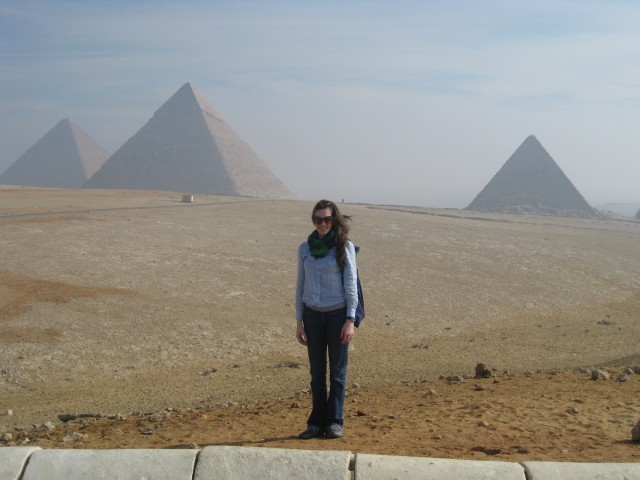
Hello! I am Dr. Lisa Saladino Haney, Assistant Curator at Carnegie Museum of Natural History and resident Egyptologist. An Egyptologist is someone who studies the history, material culture, architecture, religion, and writing of the ancient Egyptians – one of the ancient cultural groups living in Africa’s Nile Valley. Learning about ancient cultures helps us to better understand the world today and to appreciate the creativity and ingenuity of people who lived thousands of years ago. Archaeology is one technique that allows us to interact with and study the past and there are hundreds of archaeological sites and projects throughout the Nile Valley that constantly add to our understanding of what life was like.

Trying to determine some of my favorite archaeological sites from my travels in Egypt turned out to be an impossible task! Please join me on this photo exploration of a few of the many interesting archaeological sites in Egypt and learn where you can find more information about active archaeological excavations and other projects going on in those areas.

Saqqara

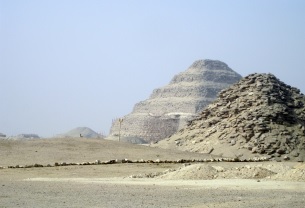
Saqqara is an important cemetery site associated with the ancient Egyptian capital city of Memphis, near modern Cairo. The cemeteries at Saqqara contain a number of tombs, both royal and private, including the famous Step Pyramid of the Third Dynasty Egyptian king, Djoser (ca. 2630-2611 BCE). The earliest burials at the site date to the creation of the ancient Egyptian state and it remained an important site through the Graeco-Roman Period.

Royal Tombs: The Step Pyramid of Djoser

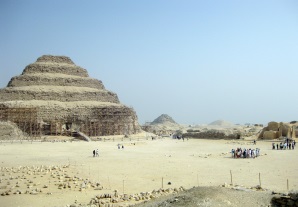
The Step Pyramid of Djoser marks an important step in the development of the pyramid-shaped royal tomb. The complex was designed by the famous royal architect Imhotep, who would later become deified in ancient Egypt. You can see a bronze statue of Imhotep in Walton Hall of Ancient Egypt. A 14-year long restoration project at the site was just completed in 2020 which included strengthening the overall integrity of the structure by filling in gaps in its six rectangular mastabas as well work on the interior burial chamber and passages of the pyramid.

Check out some pictures from my visit to the Step Pyramid in 2011, early on in the restoration process, or, for a gallery of photos and more on the newly completed restoration, click here.

step pyramid

Views of the Step Pyramid at Saqqara showing the scaffolding used for the restoration project (photos by author).

Old Kingdom Mastabas: Tombs of Kagemni and Niankhkhnum and Khnumhotep

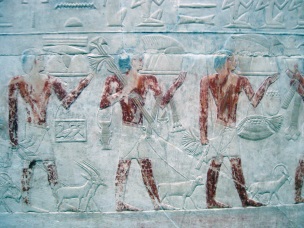
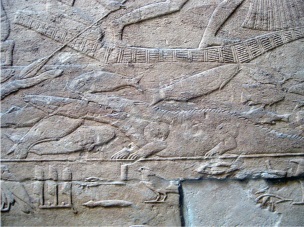
The Old Kingdom (ca. 2649-2150 BCE) mastabas at Saqqara are some of the most beautifully preserved and decorated tombs. Here are two of my favorites from my last visit. The tomb of Kagemni is the largest mastaba in the cemetery associated with the reign of the Sixth Dynasty king Teti (ca. 2323-2150 BCE). Kagemni was a Vizier, the highest position in the royal administration.

tomb decorations

tomb decorations

tomb decorations

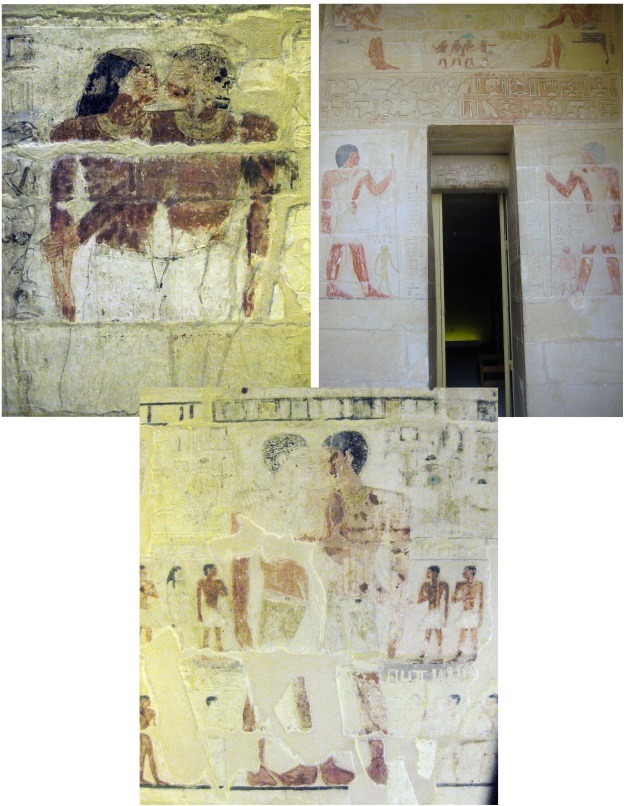
The tomb of Niankhkhnum and Khnumhoptep, also known as the tomb of the two brothers, dates to the late Fifth Dynasty and contains a number of exceptional scenes that underscore the closeness of the two men, both of whom served as overseers of the royal manicurists. Archaeologists uncovered a number of blocks from the tomb’s entrance repurposed in the nearby causeway of the pyramid complex of the late Fifth Dynasty king Unas (ca. 2353-2323 BCE). Thanks to the Egyptian Ministry of Tourism and Antiquities, you can now go on a virtual tour of the tomb!

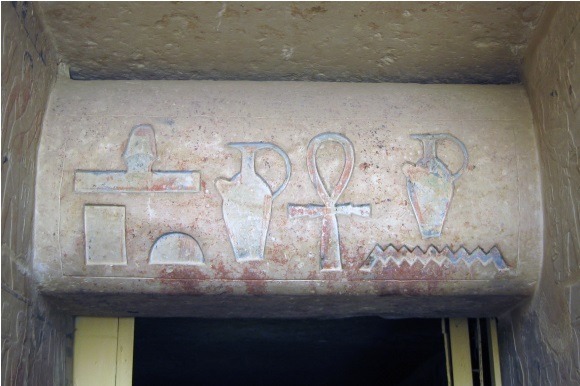
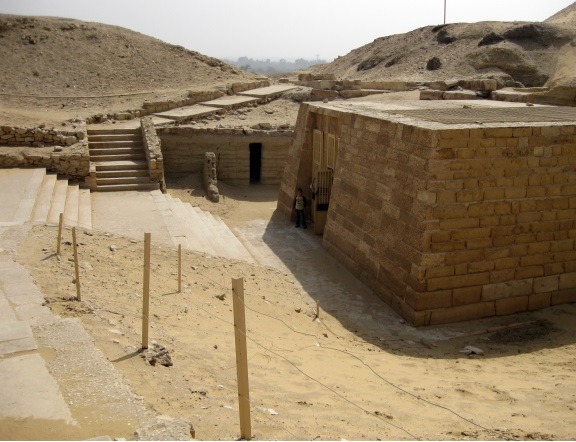
Here you see the names of the two tomb owners, Niankhkhnum and Khnumhotep on a stone doorway inside their tomb as well the exterior of the mastaba (photos by author).
Scenes depicting Niankhkhnum and Khnumhotep inside their tomb (photos by author).
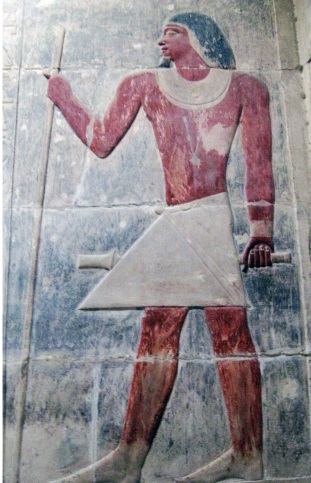
Images from the Tomb of Kagemni at Saqqara depicting the tomb owner himself, a parade of offering bearers bringing animals, plants, food, and other supplies to the deceased, and a scene taking place on the Nile where we get an underwater view of a crocodile eating a fish (photos by author).

Beni Hasan

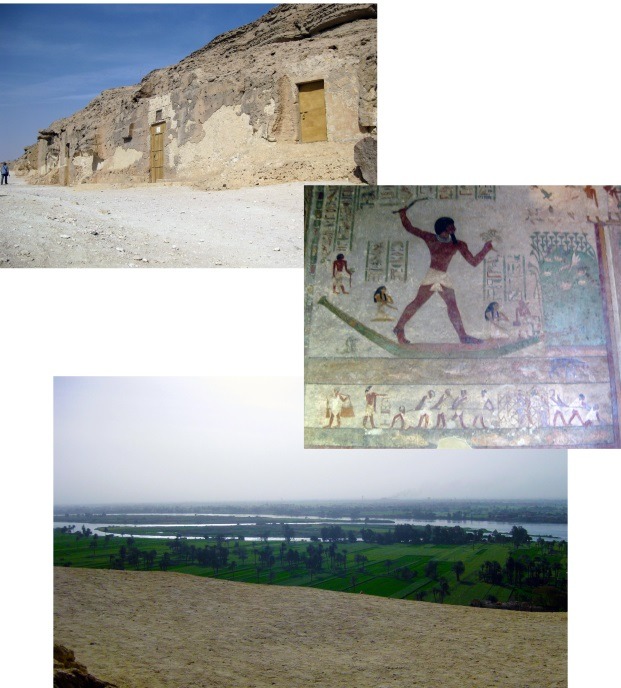
Beni Hasan is a cemetery site located in Middle Egypt, near the modern city of Minya, that was important during Egypt’s Middle Kingdom (ca. 2030-1640 BCE). During that time some of the most elite Egyptians were buried on the escarpment (desert cliff) with one of the most beautiful views of Nile Valley around! For more on excavations at Beni Hasan in the early 1900s visit the Griffith Institute and for a virtual tour of the tomb of Kheti at Beni Hasan visit the Egyptian Ministry of Tourism and Antiquities.

Top: A row of tomb entrances in the cliff face at Beni Hasan (photo by author). Middle: Image of the Nomarch Khnumhotep II fishing and fowling in his tomb (photo by author). Bottom: View of the Nile Valley from the tombs at Beni Hasan (photo by author).

Karnak

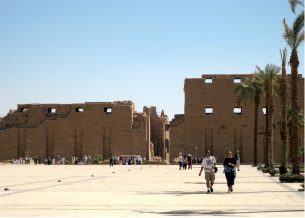
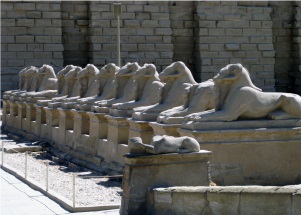
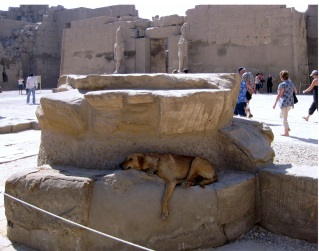
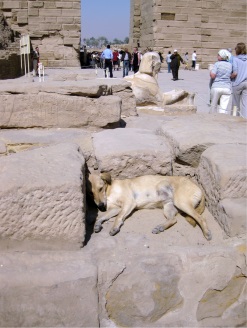
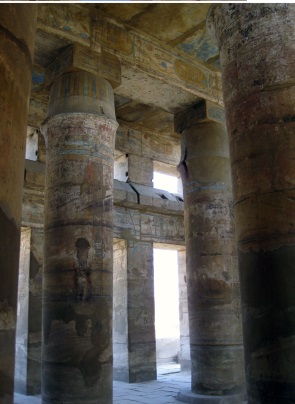
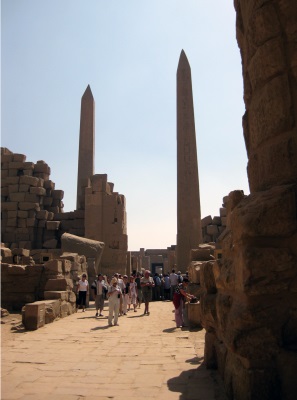
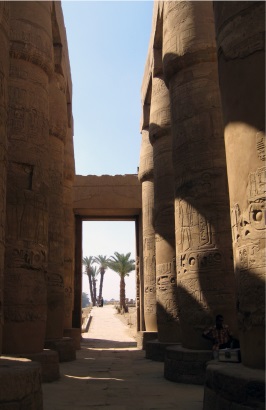
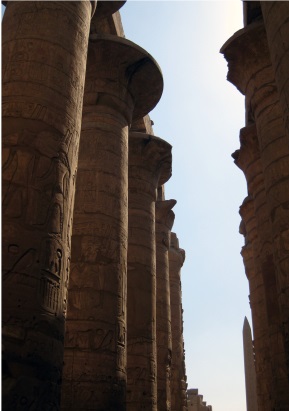
Karnak temple complex is one of the largest religious sites in the world. The first temple at the site was built during the Middle Kingdom (ca. 2030-1640 BCE) and the complex grew in size and complexity over time. The main temple at Karnak is dedicated to the Egyptian god Amun-Re, but there are smaller temples dedicated to Mut, Khonsu, and others. See if you can spot the snoozing pups in the pics below!

There are a number of ongoing excavations at Karnak that you can explore to learn more about the site. Check out this amazing minicourse on the Karnak Mut Precinct available on YouTube with Dr. Betsy Bryan, Alexander Badawy Chair of Egyptian Art and Archaeology and Director of Johns Hopkins’ excavations at the Mut Precinct.

temple ruins and palm trees in Egypt

Approach to Karnak Temple and processional way lined with Ram-headed sphinxes for the god Amun-Re (photos by author).

sleeping dogs in Egyptian ruins

Sleepy Karnak pups (photos by author).

columns, part of ancient Egyptian ruins

obelisks and other ruins in Egypt

view toward a temple exit

columns
Inside Karnak Temple: Festival Hall of Thutmose III, Obelisks, exit towards the Sacred Lake, columns in the Hypostyle Hall (photos by author).

Lisa Saladino Haney is Postdoctoral Assistant Curator of Egypt on the Nile at Carnegie Museum of Natural History. Museum employees are encouraged to blog about their unique experiences and knowledge gained from working at the museum.

Related Content

Egypt and the Nile

Tuscarora Nu Yah

Ancient Egypt Through its Pottery

Carnegie Museum of Natural History Blog Citation Information

Blog author: Haney, Lisa
Publication date: March 1, 2021

Share this post!

  • Share on Twitter Share on Twitter
  • Share on Facebook Share on Facebook
  • Share on Pinterest Share on Pinterest
  • Share on LinkedIn Share on LinkedIn
  • Share on Reddit Share on Reddit
  • Share via Email Share via Email

Filed Under: Blog Tagged With: ancient egypt, anthropology, archaeology, Archaeology Extravaganza, Lisa Haney, Science News, Super Science Days

October 30, 2019 by wpengine

“Minecraft™ Lied to Me!?”

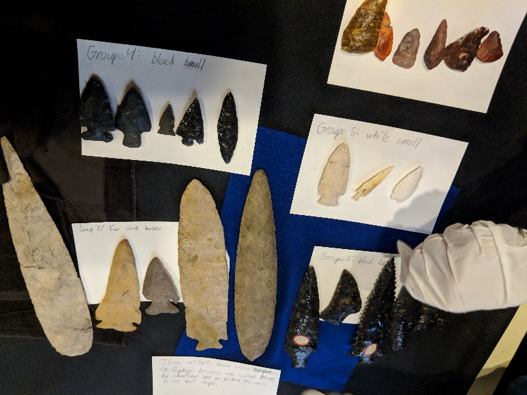
On October 19, 2019, the Section of Anthropology once again had the pleasure of assisting the Education and Interpreter staff in awarding the BSA Scouts Merit Badge for archaeology. The Scouts spent the day learning how to excavate artifacts from dig boxes and creating mini-exhibits for museum visitors to enjoy. The mini-exhibits were focused on typology. Scouts were asked to organize lithics (mostly arrow heads and spear points) by physical characteristics. Stem and shoulder shape, cross section, and flaking styles are often used by archaeologists to categorize objects. Other basic morphological typology categories can rely on color, weight, or material.

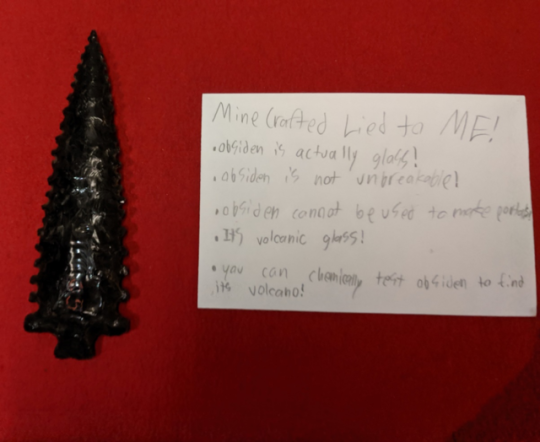
The Scouts were asked to create labels for their mini-exhibits to explain the reasoning behind their classifications. Some Scouts organized objects by size, while others chose to compare the different shapes. One Scout was organizing objects by material, specifically obsidian. He asked if it was nearly indestructible like in Minecraft™ and I had to tell him that obsidian is actually volcanic glass that breaks pretty easily resulting in a conchoidal fracture, which is why people have made so many arrow heads and spear points out of it. He replied, “well, next you’ll tell me that it doesn’t create portals into a nether dimension.” Sorry Scout, to my knowledge it does not.

black arrow head with index card that says Minecraft lied to me, obsidian is actually glass, obsidian is not unbreakable, obsidian cannot be used to make portals, it's volcanic glass, you can chemically test obsidian to find its volcano!

To investigate further into how obsidian is used in Minecraft™, I called the most knowledgeable gamer I know. My nephew, Zak, was happy to explain to me that in the game you combine lava and water to create obsidian blocks. This isn’t exactly true. Obsidian is formed when molten rock material cools so fast it cannot form a crystalline structure at an atomic level. It usually solidifies on the Earth’s surface, making it an extrusive rock. According to Zak, the obsidian in Minecraft™ can be used to create a very strong wall or to access the nether dimension that I had learned about from the Scout. Weapons are not made from it and it is very hard to break. In reality, obsidian is easily broken by human action and can also be worn down by the weather. This would make it a terrible substance from which to build a fortress. While obsidian is not used to build indestructible walls or portals, it is used to make surgical tools. It can be made sharper than steel and can be placed in scalpels for precision procedures. So, while the obsidian in Minecraft™is different than obsidian on Earth, at least it sparked a conversation.

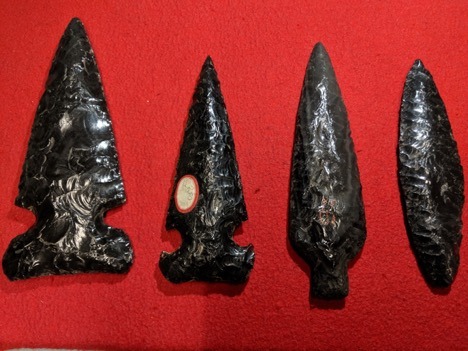
four obsidian artifacts

The obsidian artifacts in this photo are a part of the educational collection maintained by the Section of Anthropology.

To learn more about the BSA Merit Badge for archaeology visit: https://meritbadge.org/wiki/index.php/Archaeology

To read another CMNH blog about obsidian visit: https://carnegiemnh.org/tag/emerald-obsidianite/

Amy L. Covell-Murthy is the Archaeology Collection Manager at Carnegie Museum of Natural History. Museum employees are encouraged to blog about their unique experiences and knowledge gained from working at the museum.

Filed Under: Blog Tagged With: Amy Covell-Murthy, archaeology, Boy Scouts, Education, gems and minerals

July 31, 2019 by wpengine

Dressing Fleas

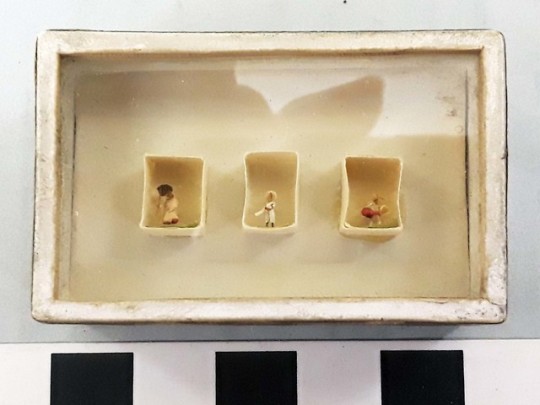
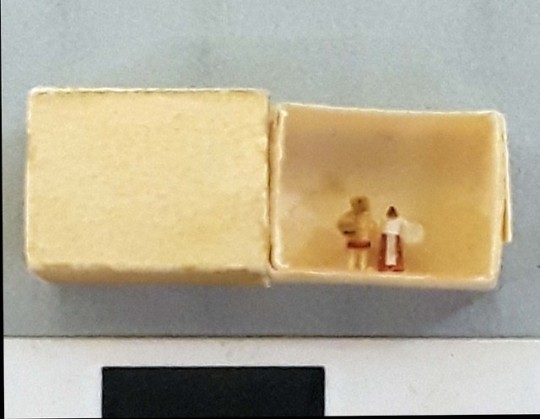
box of three dressed fleas

“If we do not mass produce products, we vie with one another
in the difficult, exquisite and useless art of dressing fleas”

Octavio Paz [diplomat, poet, writer, winner of 1990 Nobel Prize in Literature]

The art of dressing fleas in costumes and creating tiny tableaus began in Mexico in the 19th century, centered around the state of Guanjuato. Some people believe that Pulgas Vestidas (dressed fleas) began being made in convents; they went on to become a craft done by ordinary people. Eventually they became something to sell to tourists. Dressed fleas were still being created well into the 1930s, the most popular forms being bride and groom or farmer and wife sets. Some were as elaborate as an entire mariachi band, complete with instruments.

One set of dressed fleas from the Carnegie Museum of Natural History collection. Each block underneath this box represents just one centimeter! 

In the 1920s Octavio Paz called it a “difficult art, exquisite and useless,” and added, “I shall never be one to disparage this amazing skill, since where spiritual health is concerned, building a skyscraper and adorning a flea are each as monstrous as the other.” A British entomologist, Tim Cockerill, has taught himself how to make them, and includes a modern bride and groom set on his website.

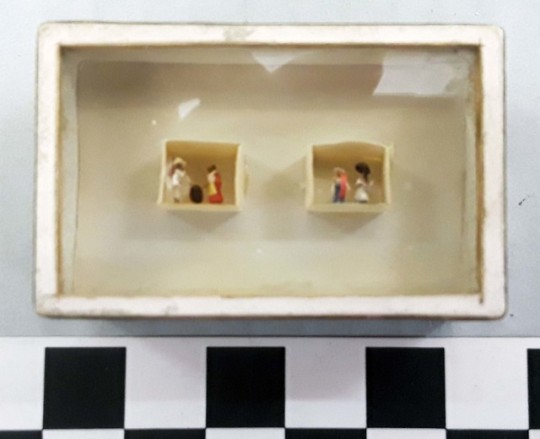
pair of dressed fleas in a box

The museum’s three sets of dressed fleas were acquired in the 1930s, and donated by different people in the late 20th century. They are part of an extensive collection of ethnographic and historic dolls. They are a must-see for anyone having a behind-the-scenes tour of the Anthropology storage areas. Dressed fleas are a prime example of human ingenuity and skill, even if a reason for being is not immediately obvious.

Deborah Harding is the collection manager of the Section of Anthropology at Carnegie Museum of Natural History. Museum employees are encouraged to blog about their unique experiences and knowledge gained from working at the museum.

Filed Under: Blog Tagged With: Anthropocene, anthropology, archaeology, art, Deborah Harding, insects

November 5, 2018 by wpengine

Archaeology Merit Badge: Who Had More Fun, Me or the Boy Scouts?

by Amy L. Covell-Murthy

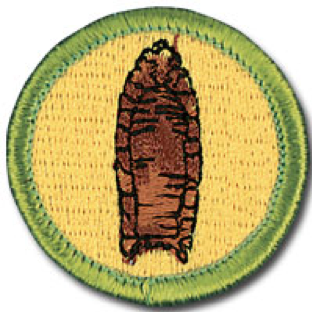
The Archaeology merit badge for the Boy Scouts of America was established in 1997. It has a list of eleven different requirements that must be fulfilled before receiving the recognition and patch. The first seven requirements ask the Scout to research archaeology and then answer a long list of questions. These questions include everything from what archaeology is to the difference between absolute and relative dating of sites. They are required to research five separate sites, learn about laws that protect archaeological sites, and make a list of household trash that could be interpreted by archaeologists in the future. Needless to say, this badge is no joke!  I have supervised nearly forty college students in my time here at the museum and I think that every one of them would be challenged by the requirements of this badge.

archaeology merit badge

Requirement numbers eight and nine are where we came in to the process:

“8. With your counselor’s approval, take part in a simulated archaeological project designed by a qualified archaeologist. The project must include the use of a simulated archaeological site including artifacts and features for the site. Using the steps of archaeological inquiry, analyze the “artifacts and features” and document the spatial relationships of the “artifacts and features” at the simulated site. Explain how the environment and time can affect the interpretation of an artifact and the overall archaeological site. Tell how you would share the results of your analysis with other researchers and the public

Note: To find out how to make a simulated archaeological site, talk with a professional archaeologist, trained avocational archaeologist, museum school instructor, junior high or high school science teacher, advisor from a local archaeology society, or other qualified instructor.

9. Help prepare an archaeological exhibit for display in a museum, visitor center, school, or other public area.”

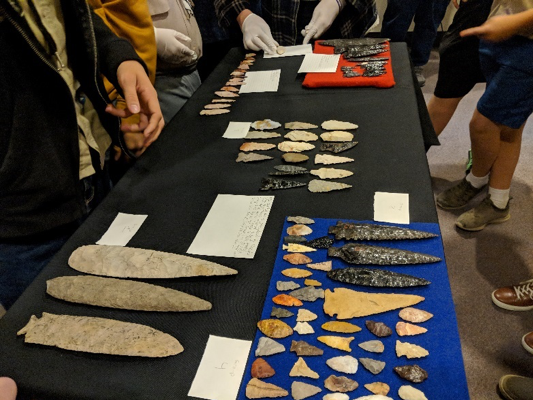
mix of artifacts laid out on a table

Phillip Mendenhall is a member of our Natural History Interpreter staff, a volunteer in the Section of Anthropology, a graduate student at the University of Pittsburgh, and a professional archaeologist who has excavated all over the world. To achieve requirement eight, he created a simulated archaeological project in one of the basement classrooms, using dig boxes and artifacts. The Scouts could dig and screen the dirt and map out the features that they discovered. He made a fun learning environment and really taught the Scouts the intricacies of the archaeological process.

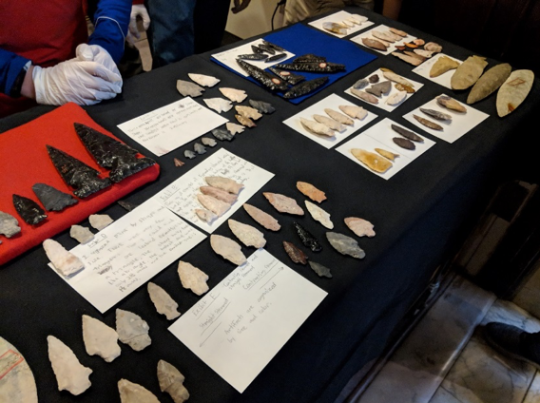
I had the pleasure of helping them achieve requirement nine. With the help of Tamara Alchoufete, my work study student from Pitt, and Shari Bechtel, a delightful CMNH Interpreter, we made two large piles of man-made objects. The objects were donated to the museum many years ago, but lack any proper provenance. These unaccessioned teaching tools were sorted by the Scouts into mini exhibits on a large cart and wheeled from the Resource Room outside of Polar World into the public space. The Scouts were organized into four groups of ten. We repeated the same exercise twice before lunchtime and twice after. Each group was accompanied by several Scout leaders and parents. They seemed just as interested as the participants.

human made artifacts on a table

They organized the objects by typology, which in archaeology simply means they are classified by their physical characteristics. They made label copies on index cards, describing the objects and their classifications. Once the mini exhibits were wheeled into the museum’s public space, the Scouts entertained questions from patrons. They had grouped the artifacts into categories by color, size, shape, and material. Each Scout was proud of their own mini exhibit and was very excited to tell people about why they had chosen those objects. Some Scouts talked about different stem shapes, while some had discovered all the obsidian tools. Some Scouts went so far as to measure each object and work together as a four-person group to make a cohesive exhibit that flowed nicely from one Scout to the next.

human made artifacts on a table

It was a whirlwind of a day and we received excellent feedback from the participants. Seeing the transition from fun to science, as soon as I asked them to put on their rubber gloves, was incredible. Each and every Scout asked relevant questions and made calculated decisions about how to curate their exhibit. It was so fascinating to see their choices and reasoning. I appreciated every unique decision and every kid who asked additional questions about manufacturing techniques and possible cultural groups or time frame. I would like to think that they had the most fun, but I honestly can’t wait to do it again next year!

Amy L. Covell-Murthy is the Archaeology Collection Manager at Carnegie Museum of Natural History. Museum employees are encouraged to blog about their unique experiences and knowledge gained from working at the museum.

Filed Under: Blog Tagged With: Amy Covell-Murthy, archaeology, Boy Scouts

  • « Go to Previous Page
  • Page 1
  • Page 2
  • Page 3
  • Go to Next Page »

sidebar

About

  • Mission & Commitments
  • Directors Team
  • Museum History

Get Involved

  • Volunteer
  • Membership
  • Carnegie Discoverers
  • Donate
  • Employment
  • Events

Bring a Group

  • Groups of 10 or More
  • Birthday Parties at the Museum
  • Field Trips

Powdermill

  • Powdermill Nature Reserve
  • Powdermill Field Trips
  • Powdermill Staff
  • Research at Powdermill

More Information

  • Image Permission Requests
  • Science Stories
  • Accessibility
  • Shopping Cart
  • Contact
  • Visitor Policies
One of the Four Carnegie Museums | © Carnegie Institute | Privacy Policy | Terms of Use | Accessibility
Rad works here logo