• Skip to primary navigation
  • Skip to main content
  • Skip to primary sidebar

Carnegie Museum of Natural History

One of the Four Carnegie Museums of Pittsburgh

  • Visit
    • Buy Tickets
    • Visitor Information
    • Exhibitions
    • Events
    • Dining at the Museum
    • Celebrate at the Museum
    • Powdermill Nature Reserve
    • Event Venue Rental
  • Learn
    • Field Trips
    • Educator Information
    • Programs at the Museum
    • Bring the Museum to You
    • Guided Programs FAQ
    • Programs Online
    • Climate and Rural Systems Partnership
  • Research
    • Scientific Sections
    • Science Stories
    • Science Videos
    • Senior Science & Research Staff
    • Museum Library
    • Science Seminars
    • Scientific Publications
    • Specimen and Artifact Identification
  • About
    • Mission & Commitments
    • Directors Team
    • Museum History
  • Tickets
  • Give
  • Shop

archaeology

September 20, 2018 by wpengine

What Do Boyce Knob, Smithhammer, and Pies Have in Common?

by Amy L. Covell-Murthy

While they would probably make pretty decent boat or band names, Boyce Knob, Smithhammer, and Pies are all common names for archaeological sites near Pittsburgh, Pennsylvania. Currently, there are nearly 750 registered archaeological sites in Allegheny County. Besides these silly-sounding common names, all registered archaeological sites must be assigned an official site number from the Pennsylvania Historical and Museum Commission.

The system that they use is known as the Smithsonian Trinomial System. It was established in the 1930s and 40s when there were only 48 states in the union. Each state was assigned a number in alphabetical order with Alabama being 1 and Wyoming being 48. Alaska was assigned 49 when it was admitted, and Hawaii followed becoming 50. Pennsylvania is 36. This means that every archaeological site in Pennsylvania starts out with the number 36.

The second part of the trinomial system is a two-letter code to designate the county in which the site exists. The Allegheny County code is, “AL.” Therefore, every site in Allegheny County starts out with, “36AL.”

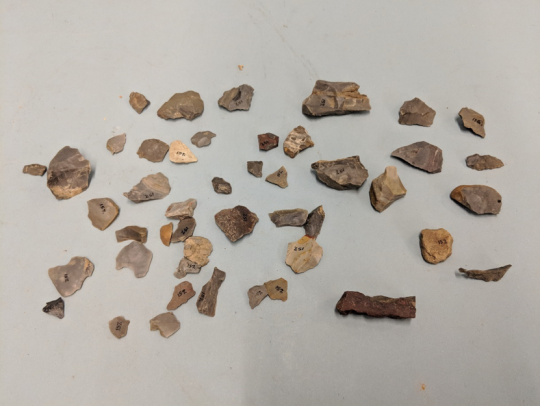
The final trinomial component is a sequential number assigned by the order in which the site is reported to the state and verified as an official site. The first official site in Allegheny County was recorded by Carnegie Museum of Natural History archaeologist William J. Mayer-Oakes, in 1951. It was assigned number 36AL1 and he simply named it, “Large.” It is located near Peter’s Creek. The site contained many ceramic sherds and stone flakes. These artifacts are safely housed in the anthropology collection here at CMNH along with the material Mayer-Oakes also recovered from sites 36AL2 and 36AL3. The photo below shows the stone flakes that Mayer-Oakes recovered.
ceramic material fragments

This photo shows the ceramic material from 36AL1 that is housed in the CMNH anthropology collection.
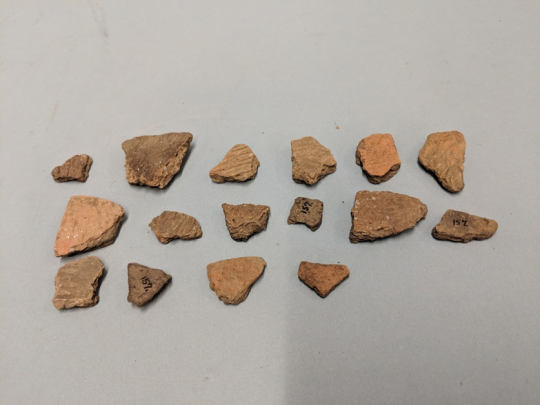
ceramic material fragments

Many of the sites in Western Pennsylvania are nicknamed for the private landowners who allowed the archaeologists to dig there. Examples include Foley Farm, Miller Farm, and McJunkin Farm. Other sites are known by specific place names such as Brunot’s Island or Penn Glenn. “Pies” is a phonetic spelling of the closest road, which was correctly spelled Pysz. If you were to discover an archaeological site in your backyard, what creative name would you come up with to distinguish your site from all the rest? Should this ever happen to you, please visit http://www.phmc.state.pa.us/portal/communities/archaeology/resources/recording-sites.html to learn the correct process for reporting new Pennsylvania archaeological sites.

Amy L. Covell-Murthy is the Archaeology Collection Manager at Carnegie Museum of Natural History. Museum employees are encouraged to blog about their unique experiences and knowledge gained from working at the museum.
Filed Under: Blog Tagged With: Amy Covell-Murthy, archaeology

August 20, 2018 by wpengine

Pennsylvania Archaeology, Fluted Points, and One Snazzy Bolo Tie

By Amy L. Covell-Murthy

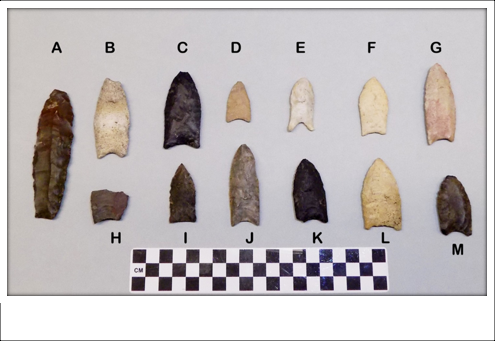
The Section of Anthropology houses a collection boasting 1.5 million artifacts. What you may not know is that most of those artifacts come from right here in Western Pennsylvania. It would be impossible to talk about Pennsylvania archaeology without mentioning Dr. Stanley W. Lantz. Dr. Lantz worked as a field and staff archaeologist at Carnegie Museum of Natural History from 1965-1990 and has continued as a research associate ever since his retirement.  Before making archaeology his life’s work, Dr. Lantz was an Army Air Force, Staff Sargent, B-17 waist-gunner and photographer, and he owned his own supermarket and building business. His 10-year archaeological survey of 23 counties of Western Pennsylvania encompassed the drainage of the Upper Ohio Valley, and allowed him to record 365 Paleo-Indian artifact finds from 210 sites. In The Pennsylvania Fluted Point Survey, Dr. Lantz and Gary Fogelman display over 1600 photographs and over 100 illustrations of fluted points of the Eastern Woodlands. Below are some of the points that Dr. Lantz donated to CMNH that he used in the book.

fluted points

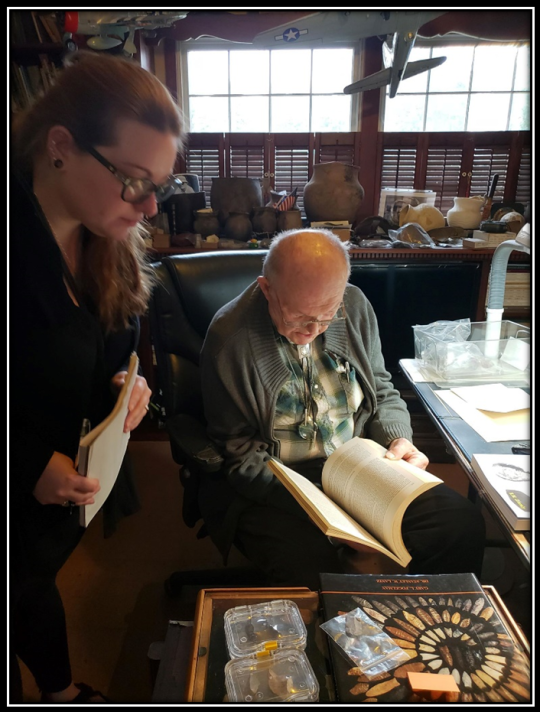
In May 2018, Dr. Lantz kindly assisted three CMNH anthropology interns with a poster that they presented at the 89thAnnual Meeting of the Society for Pennsylvania Archaeology, regarding the process of locating Clovis points in a site-specific museum collection. Clovis points, dating to the Early Paleoindian Period, 10,000-16,000 BP, are the earliest fluted styles found in North America. Rebecca Stewart, Brittany Creely, and Liana Thies were awarded second place. Liana is pictured in this photo with Dr. Lantz who is sporting his signature bolo tie.

Dr. Lantz and Liana

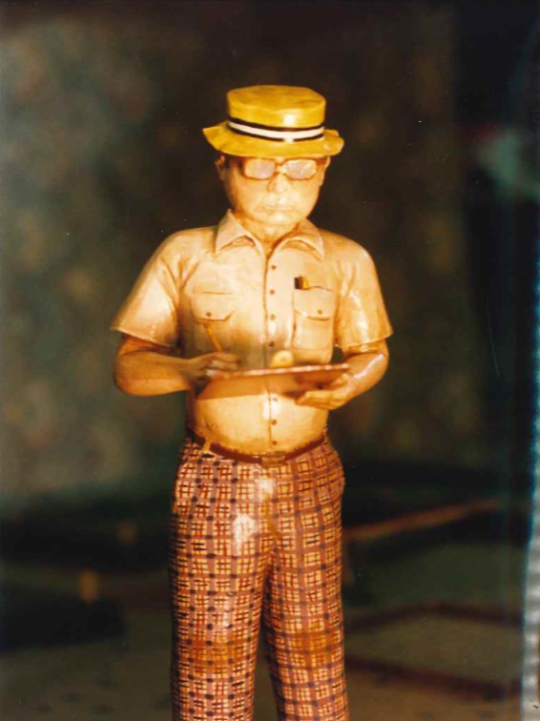
Dr. Lantz can be found on exhibit outside of the Anthropology Halls on the third floor. Look for his likeness in the Iroqouis longhouse diorama. He is missing his tie, but keep an eye out for his plaid pants! Fun Fact: Someone stole Dr. Lantz’s plaid polyester pants and buried them in a secret location so that he wouldn’t be able to wear them anymore.

Dr. Lantz likeness

Amy L. Covell-Murthy is the Archaeology Collection Manager at Carnegie Museum of Natural History. Museum employees are encouraged to blog about their unique experiences and knowledge gained from working at the museum.
Filed Under: Blog Tagged With: anthropology, archaeology, pennsylvania

February 7, 2017 by wpengine

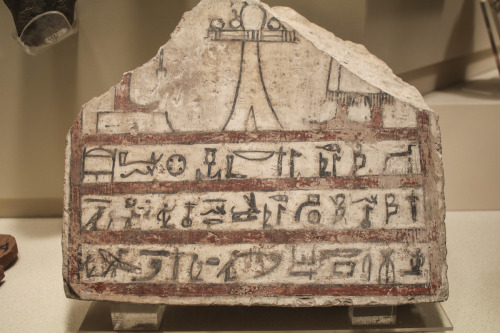
Learn all about archaeology

Egyptian hieroglyphics

Learn all about archaeology at a special Super Science Saturday on February 18!

Spend a day at Carnegie Museum of Natural History, and learn about ancient cultures with free, hands-on activities throughout the museum.

Super Science Saturdays is a free program at Carnegie Museum of Natural History that allows visitors of all ages to explore a special theme through hands-on activities, experiments, demonstrations, discussions with museum experts, and more!

(Free with museum admission)

Sponsored by PA Cyber

Filed Under: Blog Tagged With: archaeology

March 20, 2016 by wpengine

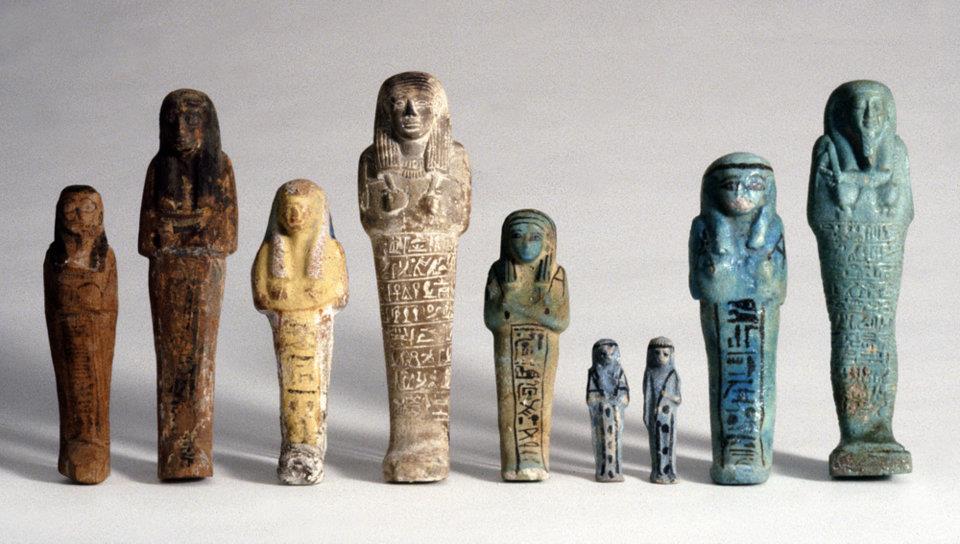
Shabtis

multi-colored shabtis in a row

Shabtis, small statues found in ancient Egyptian tombs, are on display in the Walton Hall of Ancient Egypt.

Filed Under: Blog Tagged With: archaeology, egypt, Walton Hall of Ancient Egypt

  • « Go to Previous Page
  • Page 1
  • Page 2
  • Page 3

sidebar

About

  • Mission & Commitments
  • Directors Team
  • Museum History

Get Involved

  • Volunteer
  • Membership
  • Carnegie Discoverers
  • Donate
  • Employment
  • Events

Bring a Group

  • Groups of 10 or More
  • Birthday Parties at the Museum
  • Field Trips

Powdermill

  • Powdermill Nature Reserve
  • Powdermill Field Trips
  • Powdermill Staff
  • Research at Powdermill

More Information

  • Image Permission Requests
  • Science Stories
  • Accessibility
  • Shopping Cart
  • Contact
  • Visitor Policies
One of the Four Carnegie Museums | © Carnegie Institute | Privacy Policy | Terms of Use | Accessibility
Rad works here logo