• Skip to primary navigation
  • Skip to main content
  • Skip to primary sidebar

Carnegie Museum of Natural History

One of the Four Carnegie Museums of Pittsburgh

  • Visit
    • Buy Tickets
    • Visitor Information
    • Exhibitions
    • Events
    • Dining at the Museum
    • Celebrate at the Museum
    • Powdermill Nature Reserve
    • Event Venue Rental
  • Learn
    • Field Trips
    • Educator Information
    • Programs at the Museum
    • Bring the Museum to You
    • Guided Programs FAQ
    • Programs Online
    • Climate and Rural Systems Partnership
  • Research
    • Scientific Sections
    • Science Stories
    • Science Videos
    • Senior Science & Research Staff
    • Museum Library
    • Science Seminars
    • Scientific Publications
    • Specimen and Artifact Identification
  • About
    • Mission & Commitments
    • Directors Team
    • Museum History
  • Tickets
  • Give
  • Shop

bird banding

April 14, 2018 by wpengine

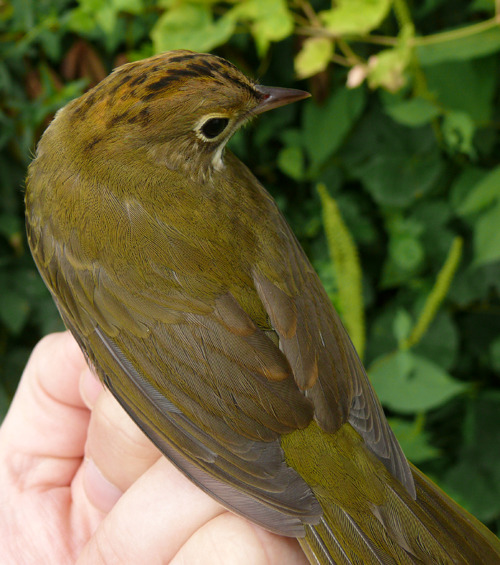
Ovenbird

ovenbird shown from the back

Although the young and adult birds have essentially the same general plumage, there are some slight differences. The rusty tipping on this bird’s tertials identify it as a hatching-year bird (adults lack the rusty tipping). By spring this tipping frequently is worn off, and age is best determined by using the presence or absence of a molt limit.  As in many birds, the shape of the tail also can be useful in ageing warblers.


Powdermill Nature Reserve’s avian research center is part of Carnegie Museum of Natural History’s biological research station in Rector, Pennsylvania.  The research center operates a bird banding station, conducts bioacoustical research, and performs flight tunnel analysis with the goal of reducing window collisions.
 

Filed Under: Blog Tagged With: bird, bird banding, parc

April 6, 2018 by wpengine

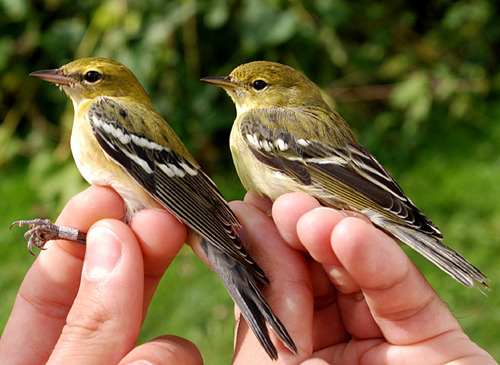
Bay-breasted and Blackpoll Warblers

Bay-breasted and Blackpoll Warblers

The first warbler benefits from spruce budworm outbreaks when the caterpillars provide abundant food. The second type of warbler has a high-pitched, almost inaudible song that drifts through boreal forests of Canada.


Powdermill Nature Reserve’s avian research center is part of Carnegie Museum of Natural History’s biological research station in Rector, Pennsylvania.  The research center operates a bird banding station, conducts bioacoustical research, and performs flight tunnel analysis with the goal of reducing window collisions.
 

Filed Under: Blog Tagged With: bird banding, Birds, parc

April 4, 2018 by wpengine

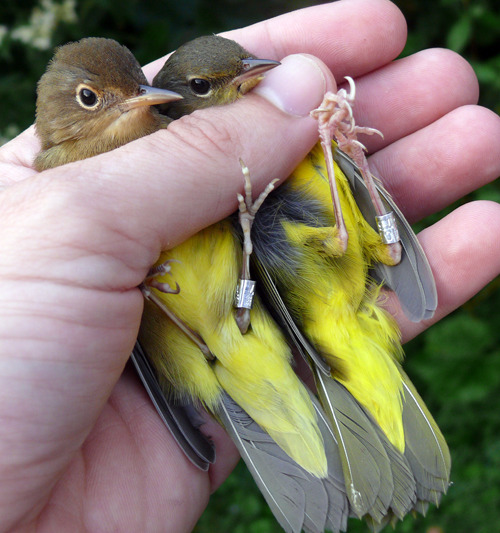
Connecticut and Mourning Warblers

Connecticut and Mourning Warblers

The Warbler on the left is uncommon and breeds in the boreal forest during winters in northern South America. The Warbler on the right is a small songbird of eastern and central North America.


Powdermill Nature Reserve’s avian research center is part of Carnegie Museum of Natural History’s biological research station in Rector, Pennsylvania.  The research center operates a bird banding station, conducts bioacoustical research, and performs flight tunnel analysis with the goal of reducing window collisions.
 

Filed Under: Blog Tagged With: bird banding

March 28, 2018 by wpengine

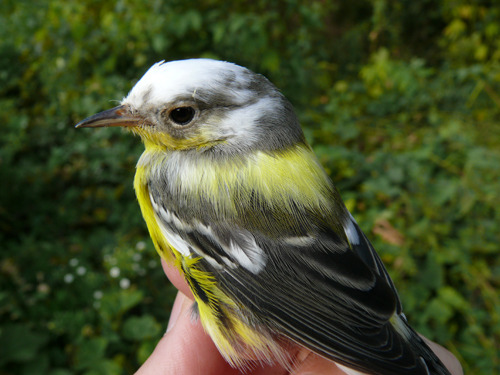
Magnolia Warbler

magnolia warbler, a grey and yellow bird with a white head

The name of the species was established by Alexander Wilson in 1810, who collected a specimen from a magnolia tree in Mississippi.


Powdermill Nature Reserve’s avian research center is part of Carnegie Museum of Natural History’s biological research station in Rector, Pennsylvania.  The research center operates a bird banding station, conducts bioacoustical research, and performs flight tunnel analysis with the goal of reducing window collisions.
 

Filed Under: Blog Tagged With: bird banding, Birds

March 26, 2018 by wpengine

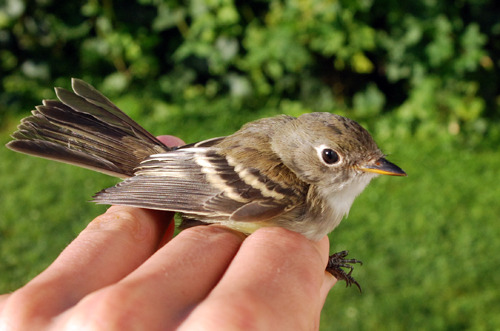
Least Flycatcher

Least Flycatcher bird

This bird is the smallest of the empids and can be identified by its relatively distinct (and oval) eyering, small bill, white throat, dark gray/black legs, and emargination of primary 6.


Powdermill Nature Reserve’s avian research center is part of Carnegie Museum of Natural History’s biological research station in Rector, Pennsylvania.  The research center operates a bird banding station, conducts bioacoustical research, and performs flight tunnel analysis with the goal of reducing window collisions.

 

Filed Under: Blog Tagged With: bird banding, Birds

March 21, 2018 by wpengine

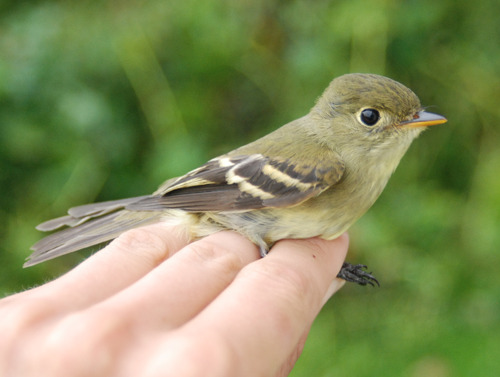
Yellow-bellied Flycatcher

Yellow-bellied Flycatcher

This hatching-year bird can be identified by it overall yellow appearance (through the throat), small bill, steeply sloped forehead, and slight emargination on primary 6 (usually).


Powdermill Nature Reserve’s avian research center is part of Carnegie Museum of Natural History’s biological research station in Rector, Pennsylvania.  The research center operates a bird banding station, conducts bioacoustical research, and performs flight tunnel analysis with the goal of reducing window collisions.


Filed Under: Blog Tagged With: bird, bird banding, Powdermill Nature Reserve

  • « Go to Previous Page
  • Page 1
  • Page 2
  • Page 3
  • Page 4
  • Page 5
  • Go to Next Page »

sidebar

About

  • Mission & Commitments
  • Directors Team
  • Museum History

Get Involved

  • Volunteer
  • Membership
  • Carnegie Discoverers
  • Donate
  • Employment
  • Events

Bring a Group

  • Groups of 10 or More
  • Birthday Parties at the Museum
  • Field Trips

Powdermill

  • Powdermill Nature Reserve
  • Powdermill Field Trips
  • Powdermill Staff
  • Research at Powdermill

More Information

  • Image Permission Requests
  • Science Stories
  • Accessibility
  • Shopping Cart
  • Contact
  • Visitor Policies
One of the Four Carnegie Museums | © Carnegie Institute | Privacy Policy | Terms of Use | Accessibility
Rad works here logo