• Skip to primary navigation
  • Skip to main content
  • Skip to primary sidebar

Carnegie Museum of Natural History

One of the Four Carnegie Museums of Pittsburgh

  • Visit
    • Buy Tickets
    • Visitor Information
    • Exhibitions
    • Events
    • Dining at the Museum
    • Celebrate at the Museum
    • Powdermill Nature Reserve
    • Event Venue Rental
  • Learn
    • Field Trips
    • Educator Information
    • Programs at the Museum
    • Bring the Museum to You
    • Guided Programs FAQ
    • Programs Online
    • Climate and Rural Systems Partnership
  • Research
    • Scientific Sections
    • Science Stories
    • Science Videos
    • Senior Science & Research Staff
    • Museum Library
    • Science Seminars
    • Scientific Publications
    • Specimen and Artifact Identification
  • About
    • Mission & Commitments
    • Directors Team
    • Museum History
  • Tickets
  • Give
  • Shop

birdsafe pittsburgh

March 9, 2022 by Erin Southerland

Pittsburgh Launches Spring 2022 Lights Out Program to Protect Migratory Birds

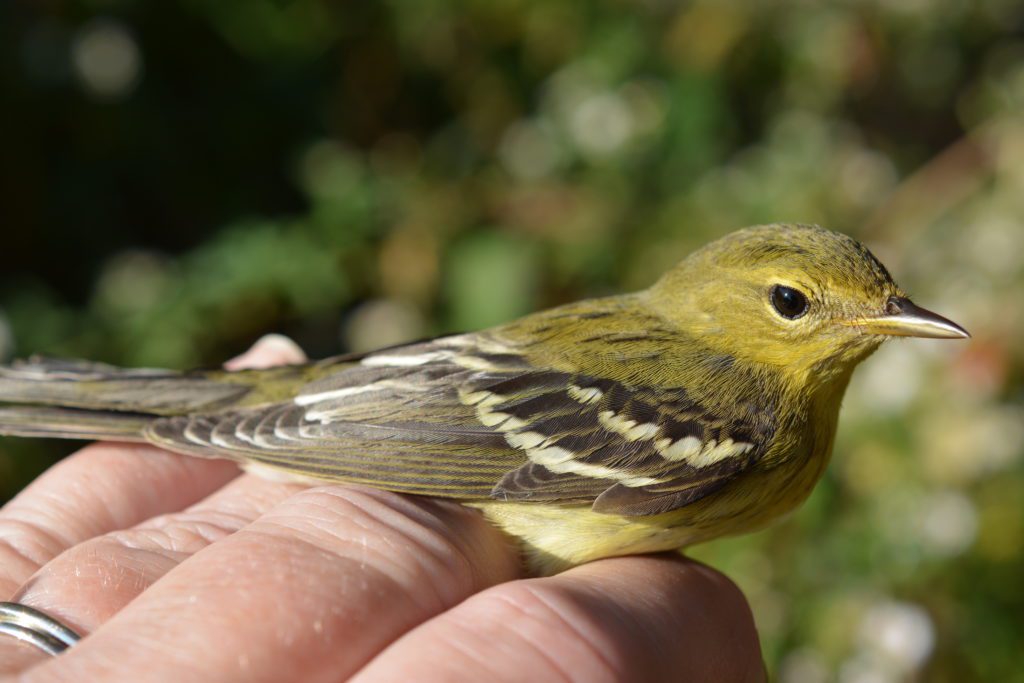
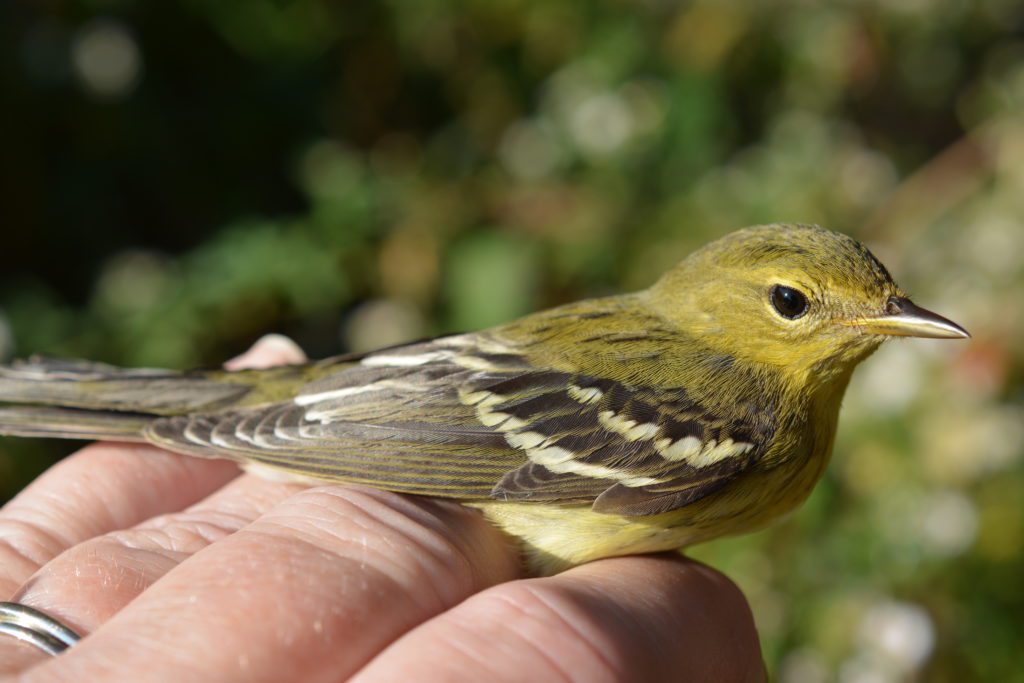
Yellow, gray, and white bird on a hand outdoors.
Blackpoll Warbler

Carnegie Museum of Natural History’s BirdSafe Pittsburgh program announces the Spring 2022 Lights Out Pittsburgh campaign. Lights Out Pittsburgh, an endeavor launched in September 2021 by BNY Mellon, the Building Owners and Managers Association of Pittsburgh, Carnegie Museum of Natural History, the National Aviary, and Pittsburgh Downtown Partnership, encourages owners of businesses and homes to turn off lights during peak migration hours, reducing bird window collisions and disorientation caused by artificial light in the night sky. Lights Out Pittsburgh seeks to build on the momentum of its successful fall campaign that recruited 75 buildings to join the movement. 
 
More than 100,000 birds pass over the Pittsburgh region each year during fall and spring migrations, and research indicates that window collisions and disorientation brought about by bright lights are leading causes of bird fatalities. Lights Out Pittsburgh invites partners to join a growing national community of businesses and residences by turning off as much internal and external building light as possible—particularly in upper floors and lobbies—during the hours between midnight and 6 a.m. from March 15 to May 31. 
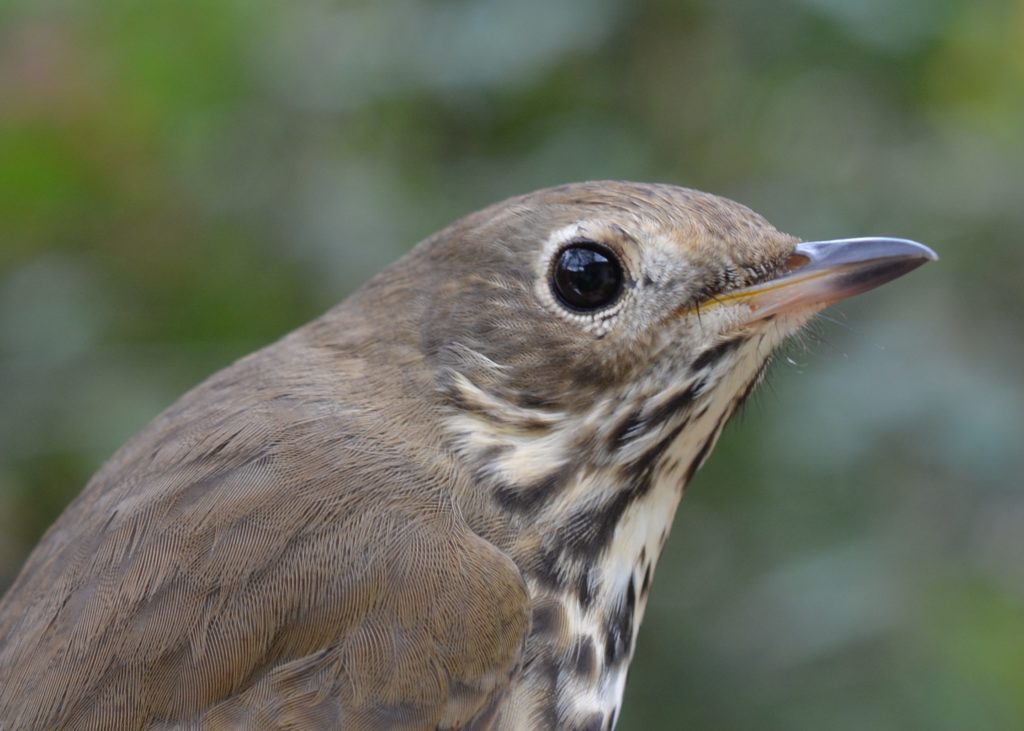
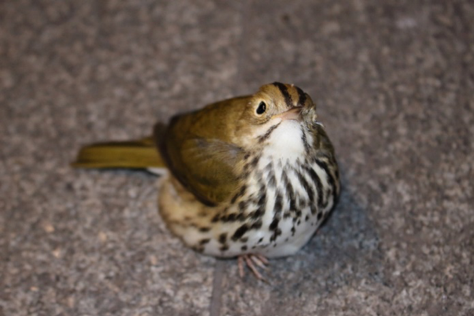
Close up of a pale brown bird with a black and white striped throat.
Hermit Thrush

“Bringing a Lights Out program to Pittsburgh last fall culminated a long-time professional goal,” said Jonathan Rice, Urban Bird Conservation Coordinator at Carnegie Museum of Natural History and manager of BirdSafe Pittsburgh. “Now it’s time to build on that. Eight years of research has shown us where birds collide in our city. This Lights Out program is the first step in making Pittsburgh a safer place for birds stopping over during migration, or who live here year-round.”
 
Lights Out Pittsburgh‘s Spring 2022 campaign will mitigate avian fatalities as migratory birds head to their summer destinations. BNY Mellon, Carnegie Mellon University, Carnegie Science Center, Eleven Stanwix, House Building, Law & Finance Building, Point Park University, Union Trust Building, United Steelworkers’ Building, 100 Ross, 20 Stanwix, 600 Waterfront, and other buildings have pledged to turn off unnecessary lighting from midnight to 6 a.m. Others can join by visiting birdsafepgh.org. 
 
“I am proud that BNY Mellon initiated this movement in the city of Pittsburgh,” said Christina Bencho of BNY Mellon. “Each year it becomes increasingly important that we use our reach, market influence, and resources to support environmental, social, and governance (ESG) issues. As one of the largest building owners in the city, this is a topic we felt passionate about moving forward.”
 
Since 2014, BirdSafe Pittsburgh has coordinated volunteers to monitor key neighborhoods during migration periods, collecting data documenting bird fatalities and providing care to birds with injuries caused by window collisions. BirdSafe Pittsburgh will document the Lights Out initiative’s progress on reducing bird mortalities.
 
The collaborative effort to save birds on their migratory journeys continues to grow as businesses and residents join the pledge to turn off unnecessary lights from midnight to 6 a.m. during peak seasonal migration periods. All are welcome and encouraged to participate. For more information about the Pittsburgh area Lights Out initiative or volunteering for BirdSafe Pittsburgh, visit birdsafepgh.org.

###

BNY Mellon is a global investments company dedicated to helping its clients manage and service their financial assets throughout the investment lifecycle. Whether providing financial services for institutions, corporations or individual investors, BNY Mellon delivers informed investment and wealth management and investment services in 35 countries. As of June 30, 2021, BNY Mellon had $45.0 trillion in assets under custody and/or administration, and $2.3 trillion in assets under management. BNY Mellon can act as a single point of contact for clients looking to create, trade, hold, manage, service, distribute or restructure investments. BNY Mellon is the corporate brand of The Bank of New York Mellon Corporation (NYSE: BK). Additional information is available on www.bnymellon.com. Follow us on Twitter @BNYMellon or visit our newsroom at www.bnymellon.com/newsroom for the latest company news.

About BOMA Pittsburgh – Since 1919, the Building Owners & Managers Association of Pittsburgh has been helping owners and managers of commercial real estate maintain safe, efficient properties in Western PA. We do this through state and local advocacy, fostering professional connections through networking events, organizing members to serve in the local community, and training the next generation of commercial real estate leaders. BOMA Pittsburgh is proudly Federated with BOMA International, and our members operate over 31 million square feet of commercial real estate. 

Carnegie Museum of Natural History, one of the four Carnegie Museums of Pittsburgh, is among the top natural history museums in the country. It maintains, preserves, and interprets an extraordinary collection of millions of objects and scientific specimens used to broaden understanding of evolution, conservation, and biodiversity. Carnegie Museum of Natural History generates new scientific knowledge, advances science literacy, and inspires visitors of all ages to become passionate about science, nature, and world cultures. More information is available by calling 412.622.3131 or by visiting the website, https://carnegiemnh.org.

About the National Aviary – The one and only National Aviary celebrates 70 years of saving birds and protecting habitats in 2022. Located on Pittsburgh’s historic Northside since its founding in 1952, the National Aviary is home to 500 birds representing more than 150 diverse species from around the world, many of them threatened or endangered in the wild. The National Aviary’s large walk-through habitats create an intimate, up-close interaction between visitors and free-flying birds, including opportunities to hand-feed and to meet many species rarely found in zoos. Hours of operation are 10:00 a.m. – 5:00 p.m. daily except for Tuesdays. For tickets and more information visit aviary.org.

About the Pittsburgh Downtown Partnership The Pittsburgh Downtown Partnership (PDP) is a dynamic, nonprofit organization comprised of business and community leaders, property owners, civic organizations, foundations, and residents who provide energy, vision, and advocacy for Downtown Pittsburgh. Working collaboratively with its partners, the PDP strives to create a positive Downtown experience for residents, workers and visitors alike. The PDP’s strategic initiatives include clean and safe services, transportation, and economic development and advocacy. For more information, visit www.DowntownPittsburgh.com, follow us on Twitter at http://twitter.com/downtownpitt and “like” us on Facebook. 
Filed Under: Press Release Tagged With: Birds, birdsafe pittsburgh, Luke DeGroote, Science News

February 22, 2022 by Erin Southerland

Fall 2021 Lights Out Pittsburgh Overview

by Jon Rice
Yellow bird held in a hand outdoors.

Why Lights Out Pittsburgh?

Over the past eight years, scientists from Powdermill Nature Reserve have conducted research in Downtown Pittsburgh, working with the generous help of the public to determine where and when birds collide with windows and other building surfaces. During this time, we have determined what building parameters make the structures deadlier to birds. Meanwhile, at Powdermill Nature Reserve, research on avian perception of glass has identified and tested products that can deter birds from colliding with windows. Outside of these research efforts, one major factor related to window collisions demands more attention – light pollution.

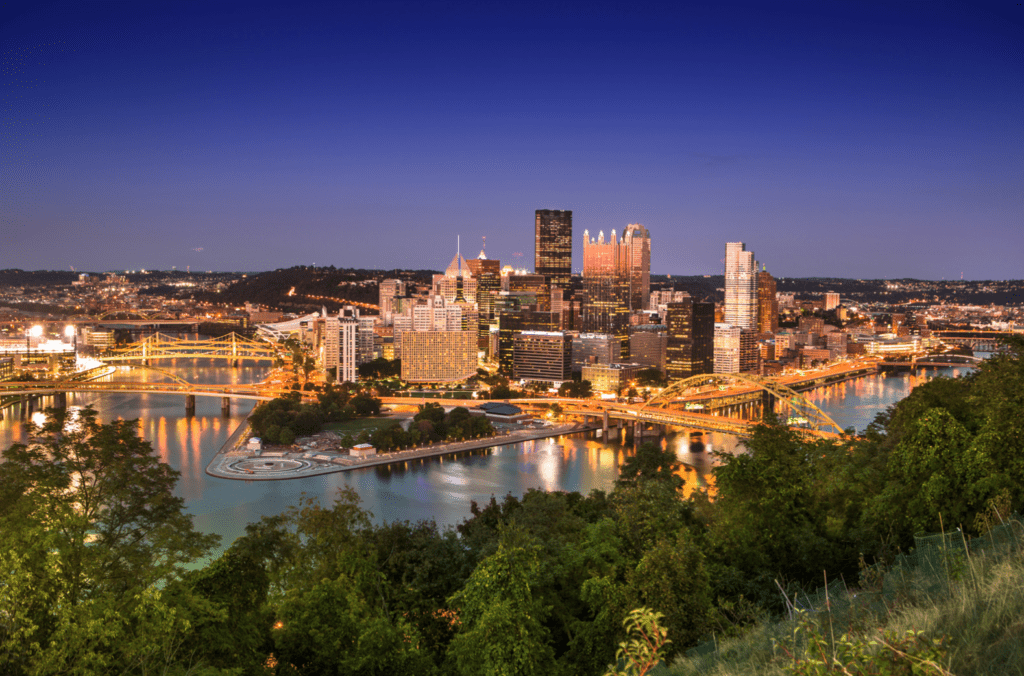
Pittsburgh skyline at night with lights on.

As birds migrate at night, using the moon and stars to navigate, they can become disoriented by light pollution coming from the ground surface below them. The source is often large cities, but urban sprawl and suburban areas can be just as detrimental. Disoriented birds are drawn out of the sky into these areas, often ending their migratory flight for the night, when otherwise they would continue flying. It’s at this stage, when migrating birds are close to the ground and moving among buildings, that a large percentage of window collisions occur.

Dark Sky Ordinances and Lights Out Pittsburgh

Many cities around the world have begun developing dark sky ordinances to reduce light pollution for multiple reasons, including public health, improved potential for astronomical observations, and wildlife conservation. The City of Pittsburgh created such an ordinance in August of 2021. At the same time, Carnegie Museum of Natural History was approached by the National Aviary at Pittsburgh and the Building Owners and Managers Association (BOMA) with a proposal to start a local Lights Out initiative.  A program modeled after existing ones in Philadelphia and several Ohio cities was developed with the input and aid of BOMA, whose participation ensured representation for the owners and managers of some of the city’s largest buildings.

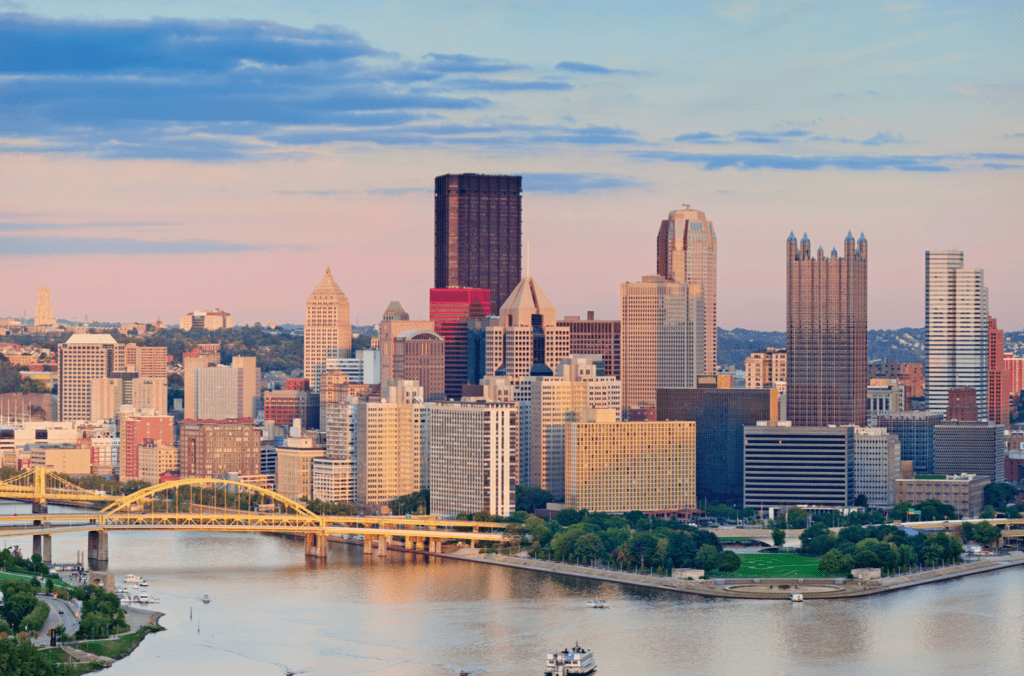
Pittsburgh skyline with lights off during Lights Out Pittsburgh.

Skyscrapers aren’t the only buildings participating in the program. Residential homes, apartment buildings, and other low-rise buildings are also encouraged to participate in the Lights Out initiative. To participate, all one must do is turn out unnecessary external lights from midnight to 6:00 a.m. between March 15 and May 31, then again between September 1 and November 15. These weeks-long intervals are the peak spring and fall avian migration periods.

Fall 2021 Lights Out Results

In the first week of our Fall 2021 Lights Out campaign, 18 buildings signed up. Five were residential homes in the area, and 13 were large commercial buildings in Downtown Pittsburgh, including Point Park University, BNY Mellon Center and Client Service Center, and several PNC Downtown properties. Over the next month an additional 35 participants joined. In total, 73 buildings began participating in the fall migration period, and we are hopeful participation will grow in the upcoming spring season from March 15 to May 31.

To learn more about how you can get involved or participate in Lights Out Pittsburgh visit our website birdsafepgh.org or email us at birdsafepgh@gmail.com.

Jon Rice is the Urban Bird Conservation Coordinator at Carnegie Museum of Natural History’s Powdermill Nature Reserve. Museum employees are encouraged to blog about their unique experiences and knowledge gained from working at the museum.

Related Content

Bird Safe Glass Installed at Carnegie Museums

60 Years, One Bird at a Time

World Pangolin Day: February 19, 2022

Carnegie Museum of Natural History Blog Citation Information

Blog author: Rice, Jon
Publication date: February 22, 2022

Share this post!

  • Share on Twitter Share on Twitter
  • Share on Facebook Share on Facebook
  • Share on Pinterest Share on Pinterest
  • Share on LinkedIn Share on LinkedIn
  • Share on Reddit Share on Reddit
  • Share via Email Share via Email

Filed Under: Blog Tagged With: Birds, birdsafe pittsburgh, Carnegie Museum of Natural History, Jon Rice, Powdermill Nature Reserve, Science News, We Are Nature 2

September 21, 2021 by wpengine

Lights Out for Birds

by Patrick McShea

As innately land-bound creatures, our comprehension of what goes on in the sky above us is limited. These short-comings are compounded when the sky grows dark. Our disconnection with what amounts to be an adjacent, but largely inaccessible ecosystem, presents a challenge to the organizers of a seasonal project to protect migrating songbirds.

Enormous numbers of birds pass over the Pittsburgh region each year during migration, northbound in the spring, and southbound in the fall. These passages occur during the night, and bright lighting can disorient the migrants’ finely-tuned sense of navigation, sometimes resulting in disabling or fatal window collisions. Lights Out Pittsburgh, is a voluntary program that encourages building owners and tenants to minimize this problem by turning off as much internal and external lighting as possible, nightly from midnight to 6:00 a.m. between September 1 and November 15.

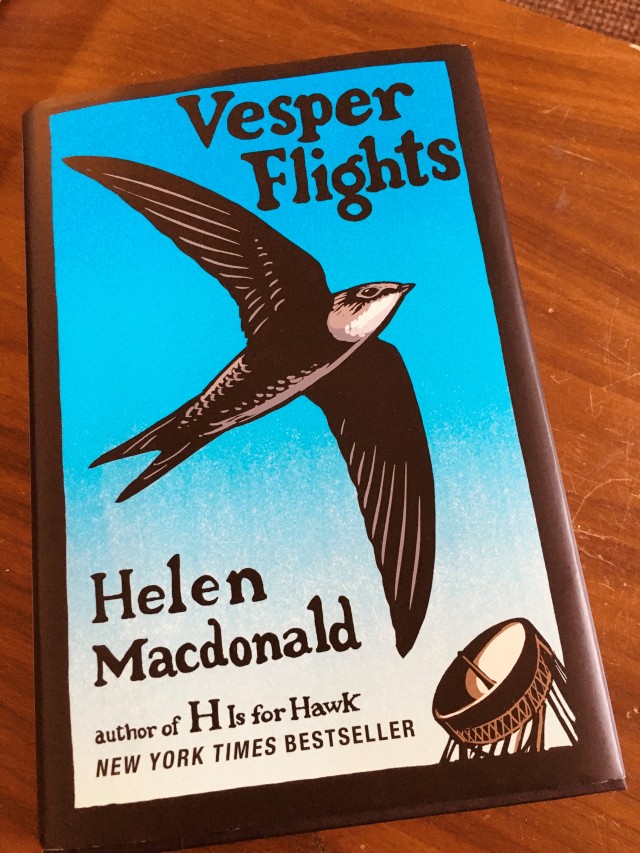
This fall, a group of organizations that includes the Building Owners and Managers Association of Pittsburgh, BNY Mellon, BirdSafe Pittsburgh, Carnegie Museum of Natural History, Pittsburgh Downtown Partnership, and the National Aviary announced their participation in the project. Long term, the sustainability of light reduction efforts will require greater appreciation of sky as ecosystem. To that end an essay in Vesper Flights, Helen Macdonald’s 2020 collection of nature writing and personal memoir, provides essential background information.

Cover of the book Vesper Flights by Helen Macdonald

In “High-Rise” the English naturalist, with Cornell Lab of Ornithology researcher Andrew Farnsworth as her guide, presents the 86th floor observation deck of Empire State Building as a portal for viewing a tiny slice of the northbound spring bird migration high above Manhattan. As Macdonald explains, by referencing the work of another researcher, the lofty vantage point is “a realm where the distinction between city and countryside has little or no meaning at all.”

From Vesper Flights by Helen Macdonald, Grove Press, 2020:

For every larger bird I see, thirty or more songbirds pass over. They are very small. Watching their passage is almost too moving to bear. They resemble stars, embers, slow tracer fire. Even through binoculars those at higher altitudes are tiny, ghostly points of light. I know that they have loose-clenched toes tucked to their chests, bright eyes, thin bones and a will to fly north that pulls them onward night after night. Most of them spent yesterday in central or southern New Jersey before ascending into darkness.

There are, of course, opportunities to make firsthand observations of the passage of migrating songbirds without a skyscraper as viewing platform. As night-flying migrants descend to lower altitudes just before dawn, their presence, numbers, and rough directional movement can be detected from quiet ground-level positions by listening for an irregular cadence of one and two syllable tweets and chips.

In a mid-Twentieth Century essay designed to guide parents in presenting the wonder of nature to their children, the renowned environmentalist Rachel Carson reflected upon this audio evidence of bird migration.

From The Sense of Wonder by Rachel Carson, Harper & Row, 1984 (a renewed copyright from 1956):

I never hear these calls without a wave of feeling that is compounded of many emotions – a sense of lonely distances, a compassionate awareness of small lives controlled and directed by forces beyond volition or denial, a surging wonder at the sure instinct for route and direction that so far has baffled human efforts to explain it.

Some dark early morning this fall, if you’re able to listen to the calls of descending migrants over the background buzz of crickets and the hum of traffic, you’re likely to become a stronger supporter of Lights Out Pittsburgh.

Patrick McShea works in the Education and Visitor Experience department of Carnegie Museum of Natural History. Museum employees are encouraged to blog about their unique experiences and knowledge gained from working at the museum.

Related Content

Bird Architecture on Human Infrastructure

Milestones at Powdermill’s Banding Lab

Teaching About Trees

Carnegie Museum of Natural History Blog Citation Information

Blog author: McShea, Patrick
Publication date: September 21, 2021

Share this post!

  • Share on Twitter Share on Twitter
  • Share on Facebook Share on Facebook
  • Share on Pinterest Share on Pinterest
  • Share on LinkedIn Share on LinkedIn
  • Share on Reddit Share on Reddit
  • Share via Email Share via Email

Share this post!

  • Share on Twitter Share on Twitter
  • Share on Facebook Share on Facebook
  • Share on Pinterest Share on Pinterest
  • Share on LinkedIn Share on LinkedIn
  • Share on Reddit Share on Reddit
  • Share via Email Share via Email

Filed Under: Blog Tagged With: Birds, birdsafe pittsburgh, Pat McShea, Science News, We Are Nature 2

March 13, 2020 by wpengine

An Introduction to BirdSafe Pittsburgh

It is estimated that 599 million birds die every year in North America after colliding with buildings. BirdSafe Pittsburgh was created in 2014 to research why birds collide with windows and how best to resolve this immense problem. Since then, every Spring and Fall the Downtown area of Pittsburgh, and some surrounding areas, have been monitored for migrating birds that have collided with windows.

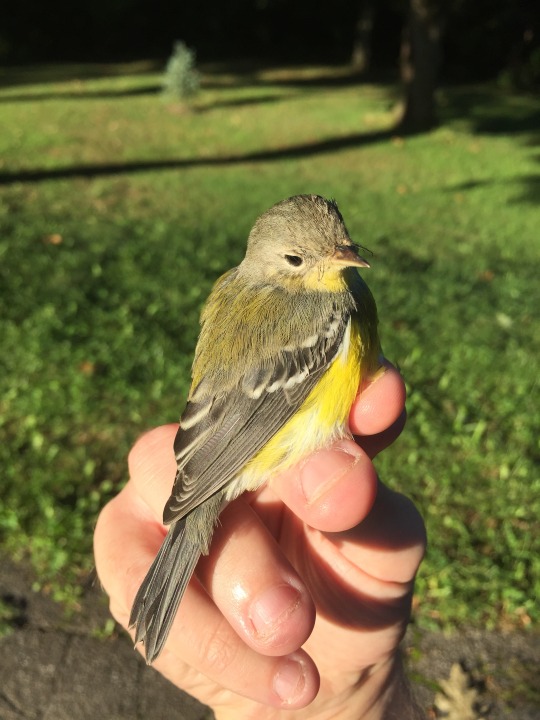
Fall first year female magnolia warbler. It was caught after colliding with a window downtown and later released in Schenley Park.

The unfortunate birds found dead are brought back to the museum where they become part of our collection. The birds found alive after a collision are taken to a local rehabilitation center and are eventually released if they survive their injuries. These efforts help us understand what about a building makes it dangerous to a bird and using this information we can mitigate deadly areas with the help of building owners and managers.

Every person’s effort makes a difference, volunteering to walk a predetermined route downtown or monitoring your own home helps us continue to learn and spread the word of this problem. For more information about the project and how you can get involved visit our website: birdsafepgh.org, our facebook page: facebook.com/birdsafepgh/, or contact Jonathan Rice at ricej@carnegiemnh.org.

Jon Rice Urban Bird Conservation Coordinator is at Carnegie Museum of Natural History’s Powdermill Nature Reserve. Museum employees are encouraged to blog about their unique experiences and knowledge gained from working at the museum.

Filed Under: Blog Tagged With: Birds, birdsafe pittsburgh, Science News

July 18, 2019 by wpengine

BirdSafe Pittsburgh Makes Museum Windows Visible

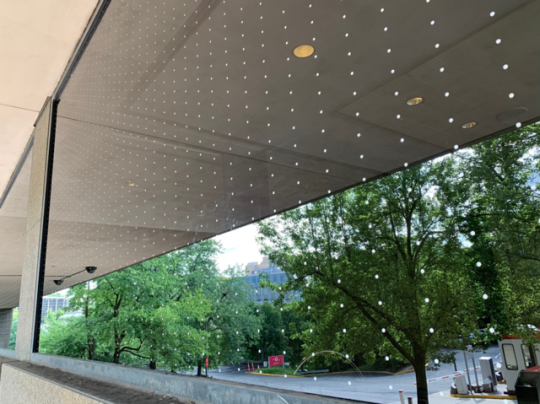
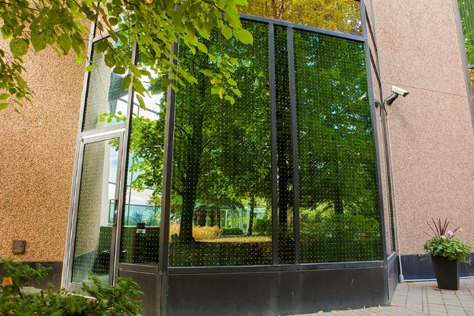
The birds flying around the Carnegie Museums of Art and Natural History are a lot safer now, thanks to Jon Rice, the Urban Bird Conservation Coordinator and leader of BirdSafe Pittsburgh. Over the summer, Jon and his colleagues were able make a deadly wall of windows visible to birds by installing thousands of stylish reflective dots. By breaking up the reflection of the surrounding trees on the East side of the museum, birds are more likely to see the window and avoid impact.

BirdSafe Pittsburgh is a partnership between 8 local conservation organizations working to reduce bird mortality in Pittsburgh. Learn more about how you can become involved at https://birdsafepgh.org/volunteer/.

museum windows with bird proof glass

Windows on the East side of the building have been outfitted with stylish, reflective patterns to make windows visible to birds and reduce collisions.

Chase Mendenhall is Assistant Curator of Birds, Ecology, and Conservation at Carnegie Museum of Natural History. Museum employees are encouraged to blog about their unique experiences and knowledge gained from working at the museum.

Filed Under: Blog Tagged With: Anthropocene, Birds, birdsafe pittsburgh

November 9, 2018 by wpengine

Keeping Birds Safe with GIS and Citizen Science

By Jon Rice and James Whitacre

Almost 600 million birds die every year in North America after colliding with buildings. BirdSafe Pittsburgh, which has been a museum program for over four years, has collected over 1,500 birds that collided with windows. These birds have been collected in Downtown and surrounding areas, and through our efforts, we have learned what increases the likelihood of birds colliding with windows.

windows modified with a pattern birds can see

Locating and Researching Bird Strikes

Using the power of Geographic Information Systems (GIS), we have been tracking and collecting where birds have collided with windows. This will help us to find collision hotspots and assess the types of buildings that cause the most problems for birds. Our efforts so far have concentrated on downtown Pittsburgh with a crew of dedicated volunteers.

However, we are now inviting you – the public – to help us find bird strikes in your neighborhood. We have developed a form on our website for you to add bird strikes to our database. If you find a bird dead or stunned, you can help us add to our database of bird strikes using the form. It will guide you through how to add pictures of the bird, add the location to the map, and fill out the required data. Any bird added will help us expand our research.

We already know that skyscrapers, low-rise buildings, and residential houses alike threaten birds, albeit unequally. According to a study published in 2014, low-rises account for the majority of building related mortalities at 56%, with residential houses accounting for nearly all the rest at 44%, and high-rises only accounting for less than 1%. But, how do the buildings in downtown Pittsburgh and the surrounding neighborhoods fit into this picture?

By analyzing the precise locations of bird strikes in Pittsburgh using GIS, we hope to assess the types of buildings impacting bird deaths. By collecting fine scale data where birds strike windows, we could identify specific problem windows that birds strike more often than others. This would allow us to focus mitigation efforts to specific areas of concern rather than along an entire building façade. For instance, treating 10 windows on a building side instead of all 100 windows would result in considerable cost-savings while maintaining the same effect on decreasing bird strikes.

How You Can Help Save Birds

bird sitting on the sidewalk

Birds hit windows because of the reflections caused by sunlight hitting the glass and looking like open sky, trees or habitat. By breaking up the reflections with anything following a “2-inch-by-4-inch rule,” birds are less likely to strike the window. The 2-by-4 rule refers to the space between horizontal elements at no more than 2 inches apart, and the space between vertical elements at no more than 4 inches apart. These simple and cost-effective measures will reduce window collisions while maintaining the aesthetic qualities.

By helping us collect bird strike data and modifying the windows of your home or business, we can decrease the number of bird-window collisions and maintain stronger bird populations.

More information about BirdSafe Pittsburgh can be found at birdsafepgh.org.

Jon Rice is Citizen Science Assistant and James Whitacre is a GIS Research Scientist at Carnegie Museum of Natural History’s Powdermill Nature Reserve. Museum employees are encouraged to blog about their unique experiences and knowledge gained from working at the museum.

Filed Under: Blog Tagged With: Birds, birdsafe pittsburgh, James Whitacre, Jon Rice, Pittsburgh, Powdermill Nature Reserve

  • Page 1
  • Page 2
  • Go to Next Page »

sidebar

About

  • Mission & Commitments
  • Directors Team
  • Museum History

Get Involved

  • Volunteer
  • Membership
  • Carnegie Discoverers
  • Donate
  • Employment
  • Events

Bring a Group

  • Groups of 10 or More
  • Birthday Parties at the Museum
  • Field Trips

Powdermill

  • Powdermill Nature Reserve
  • Powdermill Field Trips
  • Powdermill Staff
  • Research at Powdermill

More Information

  • Image Permission Requests
  • Science Stories
  • Accessibility
  • Shopping Cart
  • Contact
  • Visitor Policies
One of the Four Carnegie Museums | © Carnegie Institute | Privacy Policy | Terms of Use | Accessibility
Rad works here logo