• Skip to primary navigation
  • Skip to main content
  • Skip to primary sidebar

Carnegie Museum of Natural History

One of the Four Carnegie Museums of Pittsburgh

  • Visit
    • Buy Tickets
    • Visitor Information
    • Exhibitions
    • Events
    • Dining at the Museum
    • Celebrate at the Museum
    • Powdermill Nature Reserve
    • Event Venue Rental
  • Learn
    • Field Trips
    • Educator Information
    • Programs at the Museum
    • Bring the Museum to You
    • Guided Programs FAQ
    • Programs Online
    • Climate and Rural Systems Partnership
  • Research
    • Scientific Sections
    • Science Stories
    • Science Videos
    • Senior Science & Research Staff
    • Museum Library
    • Science Seminars
    • Scientific Publications
    • Specimen and Artifact Identification
  • About
    • Mission & Commitments
    • Directors Team
    • Museum History
  • Tickets
  • Give
  • Shop

Bonnie Isaac

August 7, 2019 by wpengine

30 years ago today: A milestone for Botany at the Carnegie Museum of Natural History

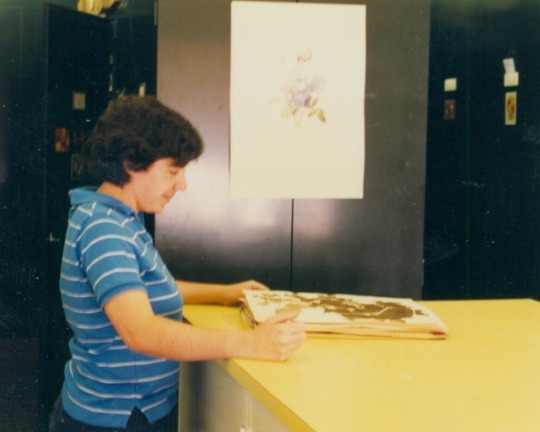
Bonnie Isaac in the museum herbarium
Bonnie in the lower herbarium at the Carnegie Museum in the early 1990s.

On August 7, 1989, Bonnie Isaac started at the Carnegie Museum. She was initially hired at the museum to work on a project to database the plant collection, making it searchable and therefore more useable to understand the occurrence and distribution of plants across Pennsylvania (and beyond). Since then, a lot has happened. Thirty years later, Bonnie is now Collection Manager in the Section of Botany and Co-chair of Collections.

It is no exaggeration to say Bonnie’s influence on the Section of Botany has been monumental. And continues to be.

As one of the top plant collectors over the Carnegie Museum’s 120+ year history, she has actively contributed to the growth of the herbarium, collecting several tens of thousands of specimens from across Pennsylvania and North America. These specimens now reside in herbaria across the world and are actively used by researchers around the world to make exciting discoveries.
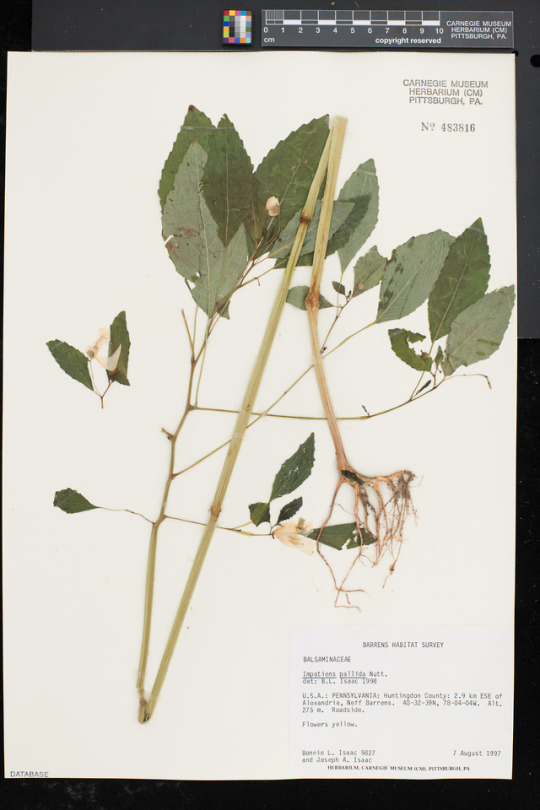
yellow jewelweed specimen collected by Bonnie Isaac and Joe Isaac
Collected on this day, eight years after she started working at the Carnegie Museum, this specimen of pale touch-me-not (aka yellow jewelweed; Impatiens pallida) was collected by Bonnie Isaac (and her spouse, Joe Isaac) on August 7, 1997 along the roadside at Neff Barrens, Huntington County, PA. Largely thanks to Bonnie, this specimen (and many more!) can be found online.

Bonnie played a pivotal role in the digitization of the Carnegie Museum herbarium, one of the first of its size to have all specimens in the entire collection with label data entered into a database and publicly available online. A huge accomplishment that took over a decade of her career to complete, the collection database has increased the research value and led to a massive increase in specimen use. The digitization of the herbarium continues today through a project facilitated by Bonnie and funded by the National Science Foundation to make high resolution digital images and georeferences (assign latitude/longitude to plot on a map) to all specimens collected in the region.
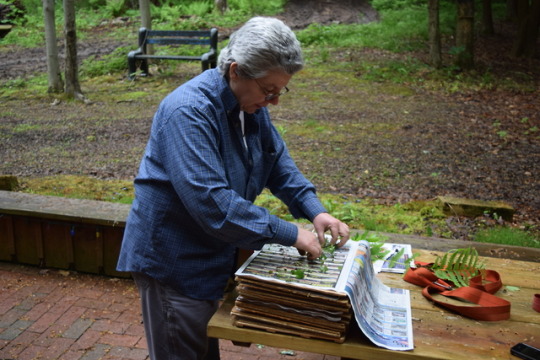
Bonnie Isaac collecting plants
Bonnie pressing plants in the field in 2017.

Although she’s humble about it, Bonnie is an incredible field botanist and leading expert on the plants of Pennsylvania, especially those rare and threatened species of conservation concern. An expert in natural history collections management and methods, Bonnie has a specialized diploma on herbarium techniques from Royal Botanic Garden, Kew, England. She has a master’s degree from Youngstown State University, where she studied the ecology and distribution of a rare species.

Bonnie’s science and botanical knowledge impacts conservation decisions. Since 2001, she has served as a member of the Vascular Plant Technical Committee of the Pennsylvania Biological Survey, serving at various times over the past decades as president and recording secretary, which advised the state in determining the status of endangered and threatened plant species. She is currently working on a project funded by the Pennsylvania Department of Conservation and Natural Resources through the Wild Resources Conservation Program, revisiting many historic sites of 10 threatened species across the state to assess their current rarity status.

Beyond the walls of the museum, Bonnie has a huge impact on botanical research in Pennsylvania and fosters a public appreciation for the role of plants in our lives and ecosystem health. She is a founding member of the “Pennsylvania Botany Symposium,” a group of committed volunteers who provide education and networking opportunities for professionals, amateurs, and students of botany, including a biennial symposium that gathers Pennsylvania botanists of all levels. Bonnie is also very active in the Botanical Society of Western Pennsylvania, one of the oldest botanical organizations in the country.  She has served as President of the organization since 2005.

And if that is not enough – she is friendly, too!

Happy work-iversary, Bonnie!

Check back for more! Botanists at the Carnegie Museum of Natural History share digital specimens from the herbarium on dates they were collected. 

Mason Heberling is Assistant Curator of Botany at the Carnegie Museum of Natural History. Museum employees are encouraged to blog about their unique experiences and knowledge gained from working at the museum.
Filed Under: Blog Tagged With: Bonnie Isaac, Botany, herbarium, plants, Section of Botany

August 1, 2019 by wpengine

Western Pennsylvania Mushroom Club (WPMC) and Carnegie Museum Team Up for New Fungarium

WPMC is pleased to announce that Pittsburgh’s Carnegie Museum of Natural History has been added to the list of Partner Fungaria for the North American Mycoflora Project (NAMP).

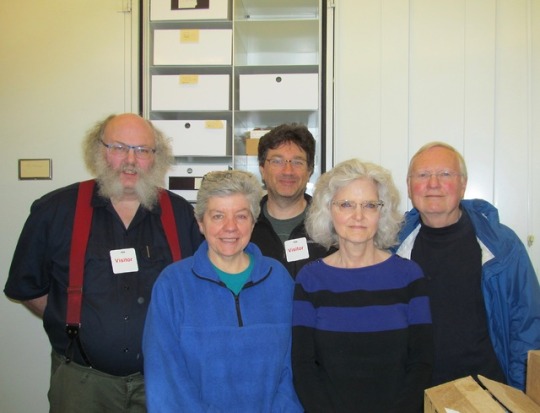
From left to right: La Monte Yarroll, Bonnie Isaac, Richard Jacob, Cecily Franklin, John Stuart.

NAMP is a collaboration between professional mycologists and citizen scientists to identify and map the distribution of macro-fungi throughout North America. Key components of the project include careful documentation and preparation of specimens (vouchering), depositing these specimens in herbaria where they can be accessed for later examination by anyone researching the organism, and DNA sequencing to complement the morphological observations that amateur mycologists already use. NAMP provides a framework and tools to allow independent projects, organized and administered by local mushroom clubs and other groups, to contribute data to a unified framework for documenting and understanding fungal biodiversity in North America.

During May, WPMC representatives met with Bonnie Isaac, Co-Chair of Collections for Carnegie Museum, to discuss and formalize our agreement to provide the new fungarium with high-quality collections, appropriately preserved and with all of the necessary meta-data. Carnegie Museum would then accession the specimens and upload storage information to the MyCoPortal collections index. On behalf of WPMC’s Scholarship Committee, we presented Bonnie with a check in support of our new partnership.

Blog post courtesy of the Western Pennsylvania Mushroom Club Newsletter, July/August 2019.

Bonnie Isaac is the Collection Manager in the Section of Botany. Museum employees are encouraged to blog about their unique experiences and knowledge gained from working at the museum.
Filed Under: Blog Tagged With: Bonnie Isaac, Botany

July 3, 2019 by wpengine

What does Pittsburgh have to do with the Wimbledon tennis tournament?

Recently Penny See came to visit me here at the museum to show me her mother’s seed collection.  My interest was piqued when she told me about her mother, Janet Emma Gregory. This is one of those situations where all my favorite things collided.  Anything having to do with botanical history, women in science or Pennsylvania will catch my attention. The story I was told captures all of those and more. I asked Penny to tell me about her mother in her own words. Here is what Penny wrote for me.

Penny See with her mother’s seed collection.

My mother, Janet Emma Gregory, always had a special place in her heart for plants. She used to say, “My hands are always dirty, but my heart is always happy.” She was born in Surrey, England on April 21st, 1943. Her Father, Thomas Gregory, was awarded by the British Royal Horticulture Society for his accomplishments in Floral Landscape Design.

I recall all sorts of stories that she shared about her life and growing up in England with all the lush gardens. One of my favorites was about a Laburnum or Golden Chain Tree. An elderly man that lived two doors down from them had a large one growing in his garden. One day, he had decided to cut it down, but my Mother walked over and begged him to spare it. He obliged and allowed her to come and spend time with the tree whenever she liked, she took him up on the invitation often. When they moved to the United States in 1972 she planted one of her own and I too, have one growing in my yard now.

As a young teen, she attended Nonsuch County School for Girls, a selective specialist science school in the London borough of Sutton. In those days, boys and girls were schooled separately and each school had focused studies for the students, collegiately training them for careers beginning at a young age. Following in her father’s footsteps, Janet chose to focus her time at Nonsuch studying Botany and Latin.

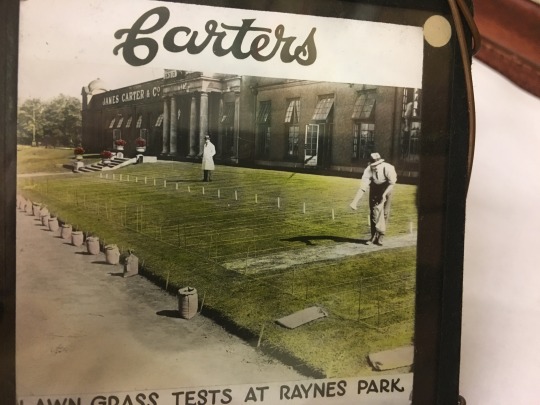
Upon leaving school, she was employed at Carter’s Tested Seeds of Raynes Park in Southwest London. Carter’s was a premier seed supply company renowned for their quality standards with a goal of providing unadulterated seeds to large companies, farmers, and the everyday gardener. Rising to fame with the hybridization of the Sweet Pea, Carter’s quickly gained national respect.

Photo of lantern slide showing the grass plots at Carters Tested Seeds.

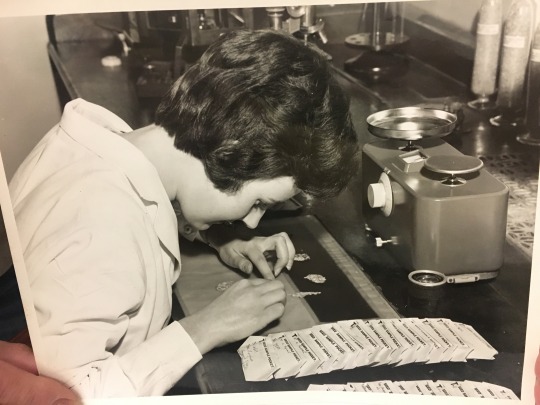
Janet’s focus at Carter’s was creating new grasses, from ornamental and specialty to everyday grasses like you’d find in your yard. As the hybrids were created, they would plant samples in long strips in the gardens outside of Raynes Park. Interested customers could come and choose the variety that suited their purposes best. To her delight, one of the grasses she created was chosen to be used on the courts at Wimbledon and they showed their appreciation by offering her a lifelong invitation to attend the Wimbledon matches.

Janet Gregory working with seeds at Carters Tested Seeds.

During her employment at Carter’s she created a very impressive collection of seeds. Everything from English flowers and weeds, to vegetables and trees, she meticulously gathered, packaged, labelled, and organized them alphabetically and by genus. I have fond memories of browsing through them as a kid and when she passed, she left them to me. It’s this seed collection that brought me to The Carnegie Museum of Natural History to meet with Bonnie Isaac.

So back to the original question. What does Pittsburgh have to do with the Wimbledon tennis tournament?

It turns out, that the woman who created the grass mix used on the courts has family right here in Pittsburgh!

Seed collection video by Sarah C. Williams.

Bonnie Isaac is the Collection Manager in the Section of Botany. Museum employees are encouraged to blog about their unique experiences and knowledge gained from working at the museum.
Filed Under: Blog Tagged With: Bonnie Isaac, Botany

April 12, 2019 by wpengine

Otto Emery Jennings Honored in New Exhibit at Jennings Environmental Education Center

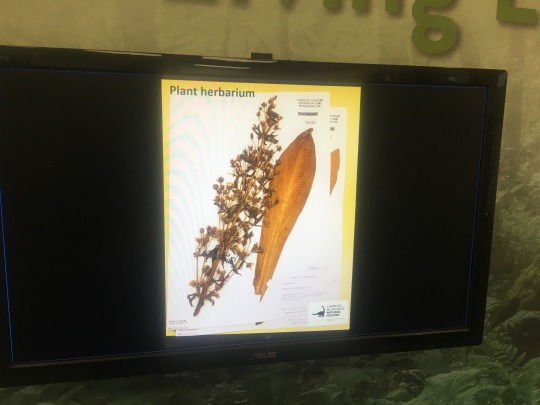
Carnegie Museum of Natural History herbarium specimen from Jennings EEC. (Photo credit: Bonnie Isaac)

I had the privilege of attending the opening of the new exhibit at Jennings Environmental Education Center on Saturday April 6th.  The new exhibit is in honor of our very own Otto Emery Jennings. The exhibit highlights Jennings and the research he did while employed by The Carnegie Museum.

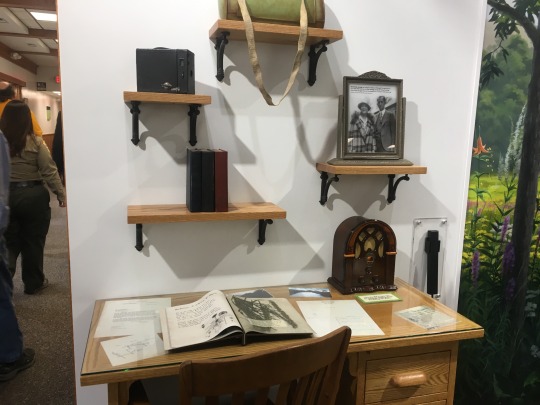
Reproduction of Jennings’ desk. (Photo credit: Bonnie Isaac)

There is a desk with reproductions of items from Jennings’ career on it and a small speaker that plays an actual voice recording.  This was the first time I got to hear the voice of Otto.

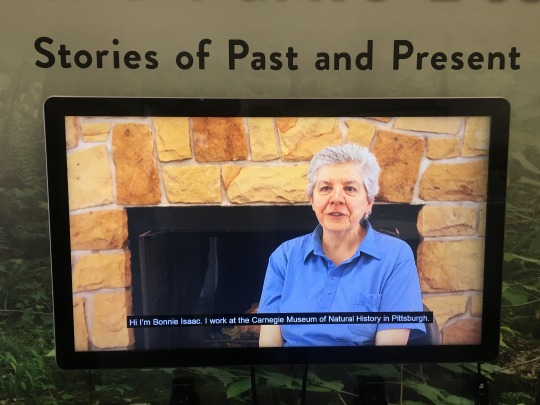
Video of Bonnie Isaac talking about Otto Jennings. (Photo Credit: Bonnie Isaac)

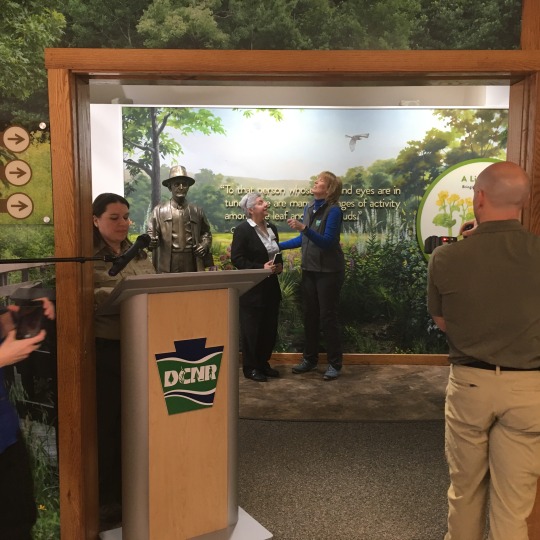
There is also an interactive video with folks talking about why Jennings EEC is an important place. I am one of those talking heads, which is why I was invited to the opening. Secretary Cindy Adams Dunn of the Department of Conservation & Natural Resources attended to thank the people who helped with the exhibit, which took about 3 years to create.

Bonnie Isaac talking to DCNR Secretary Dunn. (Photo Credit: Joe Isaac)

It was an honor and a privilege for me to help these great folks.  Carnegie Museum of Natural History is given credit throughout the exhibit for helping with content.  If you get a chance to get out to Jennings EEC you should check out the exhibits about Otto and the prairie that is named after him. They did a great job!

Bonnie Isaac is the Collection Manager in the Section of Botany. Museum employees are encouraged to blog about their unique experiences and knowledge gained from working at the museum.
Filed Under: Blog Tagged With: Bonnie Isaac, Botany

February 19, 2019 by Kathleen

Changing Roles of Herbaria in the Anthropocene

Speaker: Bonnie Isaac, Collection Manager of Botany, Carnegie Museum of Natural History

Many things have changed due to the effects of humans on the natural history world. Learn what a herbarium is, how the roles of herbaria are changing and what Anthropocene related projects are presently underway in our Museum’s herbarium.

This is a Carnegie Discoverers meeting.

Tagged With: Bonnie Isaac

January 22, 2019 by wpengine

Fruit and Nut Trees Need Chill Time in the Winter

By Bonnie Isaac

It’s cold outside! There is snow on the ground. How could this possibly be good for plants?

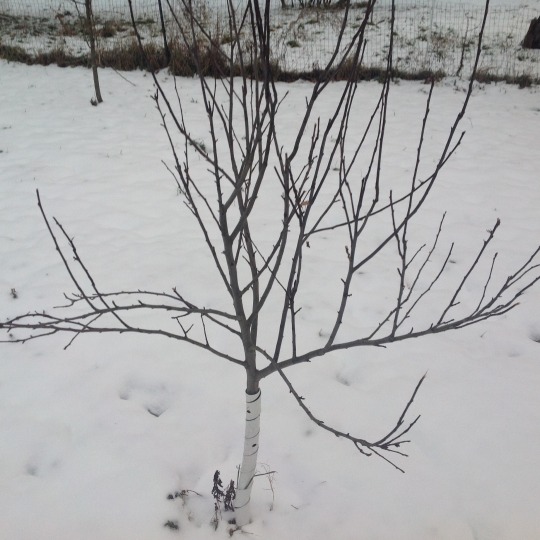
dwarf apple tree in the snow
A dwarf apple tree gettin’ its chill on! Photo credit: Joe Isaac

Many of our fruit and nut trees require a cold period to produce fruit. Without cold this winter, we won’t have fruit this fall.  If our fruit trees don’t get enough cold, then the flower buds may not open in the spring.  If the flower buds don’t open, they can’t get pollinated. If pollination doesn’t occur, then fruit doesn’t set. It’s an important cycle that is necessary for our food supply, especially if you like fruits and nuts. Apples, pears, plums, peaches, cherries, almonds, and walnuts all require varying amounts of chill time to set fruit.

Chill hours are the minimum amount of cold a tree needs before it will break dormancy. These trees then need a warm period to follow the chill. If it gets warm too soon or the chill requirement is met early, plants may break dormancy too soon, adding risk of a freeze or frost damage. The amount of fruit a tree sets will be affected if there is a late frost or an early warm spell. There is a delicate balance in nature which determines whether we get fruit or not. So, let’s not grumble about the cold outside. Enjoy it! I, for one, really like fruits and nuts.  I’ll be nestling all snug in my bed with visions of plums dancing in my head because I know the cold is necessary if I want to enjoy fruit this summer and fall.

Bonnie Isaac is the Collection Manager in the Section of Botany. Museum employees are encouraged to blog about their unique experiences and knowledge gained from working at the museum.
Filed Under: Blog Tagged With: Bonnie Isaac, Botany, botany hall, plants, Winter, wintertide

  • « Go to Previous Page
  • Page 1
  • Page 2
  • Page 3
  • Page 4
  • Page 5
  • Go to Next Page »

sidebar

About

  • Mission & Commitments
  • Directors Team
  • Museum History

Get Involved

  • Volunteer
  • Membership
  • Carnegie Discoverers
  • Donate
  • Employment
  • Events

Bring a Group

  • Groups of 10 or More
  • Birthday Parties at the Museum
  • Field Trips

Powdermill

  • Powdermill Nature Reserve
  • Powdermill Field Trips
  • Powdermill Staff
  • Research at Powdermill

More Information

  • Image Permission Requests
  • Science Stories
  • Accessibility
  • Shopping Cart
  • Contact
  • Visitor Policies
One of the Four Carnegie Museums | © Carnegie Institute | Privacy Policy | Terms of Use | Accessibility
Rad works here logo