• Skip to primary navigation
  • Skip to main content
  • Skip to primary sidebar

Carnegie Museum of Natural History

One of the Four Carnegie Museums of Pittsburgh

  • Visit
    • Buy Tickets
    • Visitor Information
    • Exhibitions
    • Events
    • Dining at the Museum
    • Celebrate at the Museum
    • Powdermill Nature Reserve
    • Event Venue Rental
  • Learn
    • Field Trips
    • Educator Information
    • Programs at the Museum
    • Bring the Museum to You
    • Guided Programs FAQ
    • Programs Online
    • Climate and Rural Systems Partnership
  • Research
    • Scientific Sections
    • Science Stories
    • Science Videos
    • Senior Science & Research Staff
    • Museum Library
    • Science Seminars
    • Scientific Publications
    • Specimen and Artifact Identification
  • About
    • Mission & Commitments
    • Directors Team
    • Museum History
  • Tickets
  • Give
  • Shop

booseum

October 13, 2020 by wpengine

Booseum: Vampires!

Vampires, creatures of folklore that feed on the lifeforce of the living, have long fascinated us. Many cultures have their own version of how vampires behave and are repelled by many different things. Modern vampires in movies, TV shows, and books have some similar main characteristics—let’s explore some interesting or common beliefs about vampires and where they may have come from.

Garlic

It’s a common belief that garlic repels vampires, but did you know that some of that belief is grounded in fact? Garlic, specifically the chemical compound allicin inside garlic, is a powerful antibiotic. Some European beliefs around vampires stated they were created by a disease of the blood, so a powerful antibiotic would “kill” a vampire.

An actual disorder of the blood, porphyria, may also be an origin for this belief: porphyria can cause those who suffer from it to look pale and even make their teeth look bigger because their gums shrink. Garlic makes these symptoms worse, so people with porphyria would often avoid it—making others around them believe they were vampires.

Mirrors

Vampires avoiding mirrors is a more recent belief— the first known reference to this is from Bram Stoker’s Dracula, which was published in 1897. But why wouldn’t a vampire show a reflection?

There are a few reasons that this belief may exist. Mirrors were traditionally backed with silver (and some still are today). Silver was commonly believed to repel evil spirits, possibly because it has antimicrobial properties; so, much like garlic, the healing properties may be what was supposed to scare off a vampire.

Another reason that suspected vampires may have avoided mirrors is because of the changes to their appearance from diseases commonly confused with vampirism, porphyria and rabies. People afflicted with these diseases may have avoided looking in a mirror for that reason, causing others to assume that “vampires” avoid mirrors.

Counting

Why does Count von Count, a vampire, teach us how to count on Sesame Street? It comes from a European belief that vampires are compelled to count spilled seeds or grains. Some Slavic coastal towns also believed that vampires would count the holes in a fishing net. It was common practice to scatter seeds outside the entrances to a home (or drape fishing nets over them). Some Chinese myths say that a vampire must count every grain if they come across a bag of rice. A vampire would stop to count, delaying them until sun-up, and we all know that vampires don’t do well in sunlight.

A common seed used was mustard seed, which was also known as eye of newt!
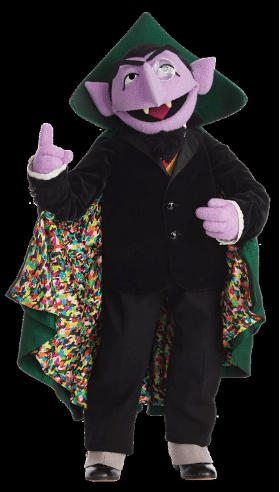
Count von Count from Sesame Street

Now that we’ve learned a little about fictional vampires, let’s explore some real-world vampires!

Vampire Ground Finch

The Galapagos Islands are home to many unique and unusual species, so the vampire ground finch fits in well. This species of sharp-beaked finch lives on Darwin and Wolf Islands, and like most other finches it feeds primarily on seeds. However, seeds can sometimes be a limited resource, so vampire ground finches supplement their diet by eating small amounts of nutrient-rich blood from Nazca or blue-footed boobies.

It is believed that this behavior developed because the finches were first eating ticks from the bodies of other birds, which steadily transitioned into them eating small amounts of blood. Believe it or not, the other birds don’t seem to mind the vampire ground finches doing this, and don’t try to stop them!
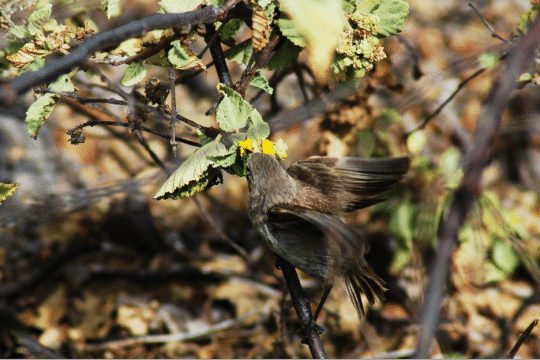
vampire ground finch on a branch

Vampire Bats

There are three species of bats that survive by exclusively feeding on the blood of other animals- the common vampire bat, the hairy-legged vampire bat, and the white-winged vampire bat. All three species are found in Central and South America.

Like other bats, they hunt at night and rely on echolocation to find their prey, which is typically sleeping livestock, like cows. Vampire bats use their sharp teeth to make a little cut and then lap up the blood. It doesn’t hurt the animal they’re feeding from, in fact most animals don’t even notice it happening and stay asleep! These bats occasionally try to feed off humans, but it is very rare.
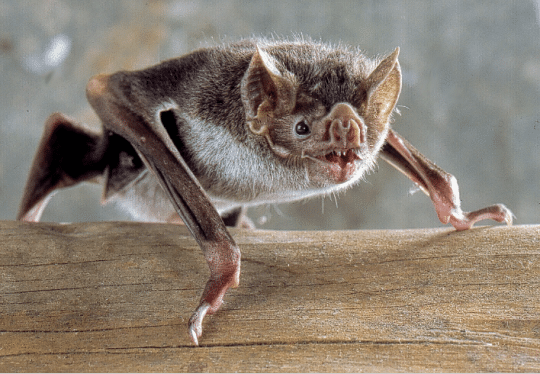
vampire bat

Mosquitos & Ticks

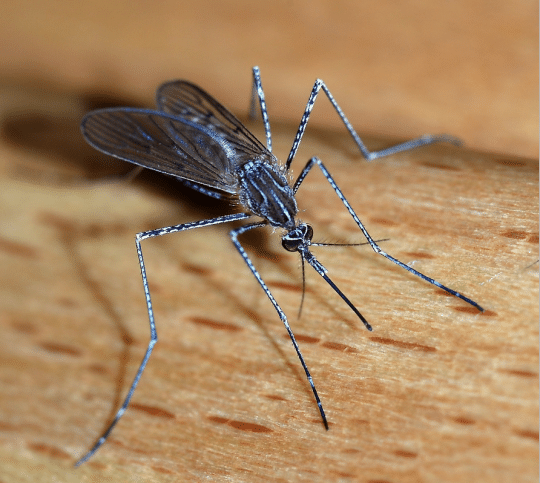
We’ve all felt the aftermath of an itchy mosquito bite! Mosquitos feed on blood from humans and other animals, but it’s only female mosquitos that eat blood. Female mosquitos need the protein from blood to produce eggs, and male mosquitos don’t so they feed on plant nectar.

Ticks drink the blood of both warm and cold-blooded animals, latching on and feeding slowly over several days. They can fast for a long time between meals, but do need to feed on blood as they progress through the stages of their life cycle.

Neither mosquitos nor ticks (or any other blood eating insects) eat enough blood to be dangerous to humans. The biggest danger is that these insects can carry diseases, so make sure to properly care for and clean any insect bites, and see a doctor if necessary!
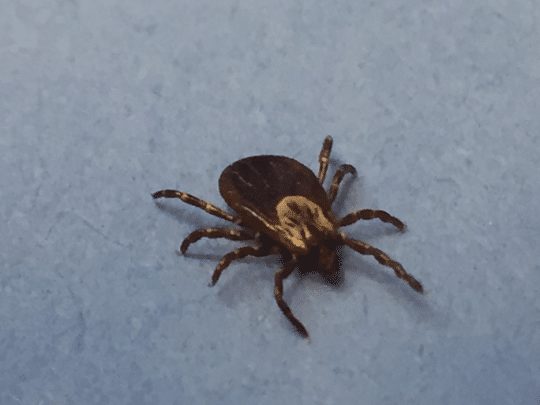
close up of a tick
close up of a mosquito

Jo Tauber is the Gallery Experience Coordinator for CMNH’s Life Long Learning Department, as well as the official Registrar for the Living Collection. Museum staff, volunteers, and interns are encouraged to blog about their unique experiences and knowledge gained from working at the museum.

Related Content

Booseum: Spooky Coloring Pages
Jurassic Days: Cookie Excavation

Scientist Takeover Activity: DIY Field Kit

Filed Under: Blog Tagged With: booseum, Educator Resources, Educators, halloween, Jo Tauber, Super Science Days

October 13, 2020 by wpengine

Is this what they call overkill? Toxin and venom in the herp world

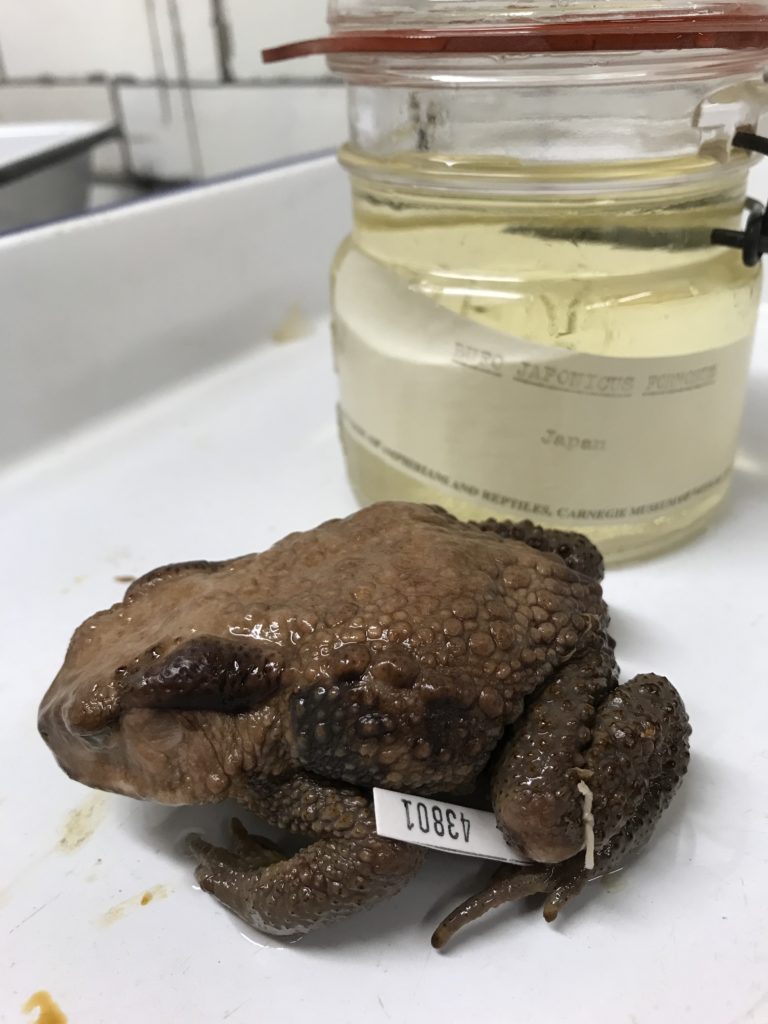
preserved frog specimen
Figure 1. Bufo japonicus. The large glands behind the eyes are called parotid glands, and are a source of toxins in toads. Additionally, all of the bumps you see all over the body are glands that produce skin toxins. Image credit: Stevie Kennedy-Gold.

I recently participated in a Zoom event for Museum members focused on toxins and venom in the natural world. Mason Heberling, Assistant Curator of Botany, and Ainsley Seago, Associate Curator of Invertebrate Zoology, spoke about how the organisms they study produce toxins, and how these chemicals impact their environments and other organisms around them. As an ecologist focused on impacts of climate and land use change, I don’t consider myself an expert on toxins and venoms in amphibians and reptiles, but researching my portion of the joint presentation reminded me once again why herps are the best.

First, a refresher: toxins are poisons, and they have to be consumed or encountered (touched) by an organism to do harm. For example, many frogs produce toxins in their skin, but you would have to either consume that frog or touch its skin for the toxin to do you any harm. Most frogs don’t produce toxins strong enough to hurt humans, though a few notable exceptions exist. Some species of poison dart frogs have skin toxins strong enough that if you touched them and then touched your eyes, nose, or mouth, or if you had a cut on your hand, you could indeed become very ill and perhaps die. Venom, on the other hand, is a toxin that one organism can inject into another. Typically, we think of snakes when we think of injectable toxins. Many snake species have venom glands that produce toxins, and they can forcibly inject that toxin into their prey. The action, which can occur in a flash, involves the use of fangs to puncture the skin, and muscles surrounding the venom gland to force the toxin out along the fang and into the other organism.

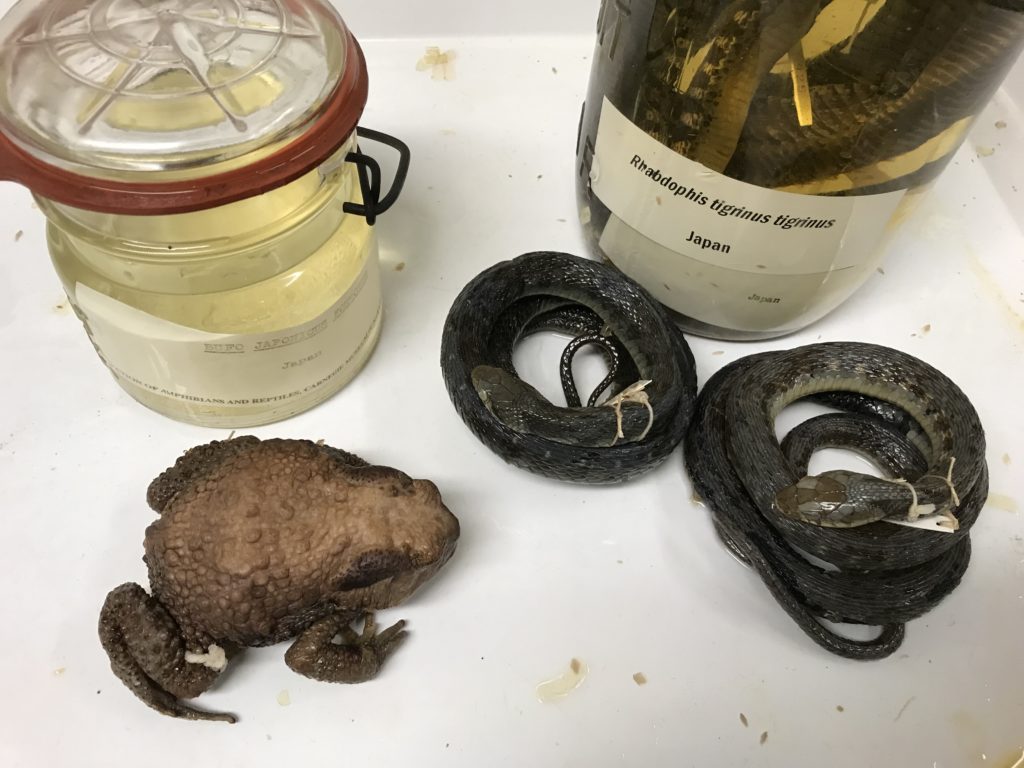
preserved frog specimen, two preserved snake specimens, and two specimen jars
Figure 2. Bufo japonicus and Rhabdophis tigrinus. Rhabdophis are one of the only snakes that are both venomous and toxic. They sequester toxins from the toads they eat into a gland called the nuchal crest. Image credit: Stevie Kennedy-Gold.

Most people tend to think of amphibians as toxic and snakes as venomous. This is true, but it turns out that snakes aren’t the only venomous reptiles, and amazingly two frogs are known to be venomous. Gila monsters (Helodermatidae) and water monitors (Varanidae) produce venom, but their venom glands are in their lower jaws (unlike snakes whose venom glands are in their upper jaws), and they lack the muscles to forcibly inject that toxin the way snakes do. Instead, the act of chewing on their prey causes their jaw motion to work the venom toward their grooved teeth, which then enables the venom to be injected through the bite wound. Using a very different delivery system, two frogs in the family Hylidae (tree frogs from the Americas) have very spiny skulls. Their skin produces toxins, and by “head-butting” another organism, they can effectively inject that toxin into another organism. This unusual delivery system technically makes them both toxic (the toxin can be transferred to you if you touch their skin) and venomous (they can inject that toxin into you).

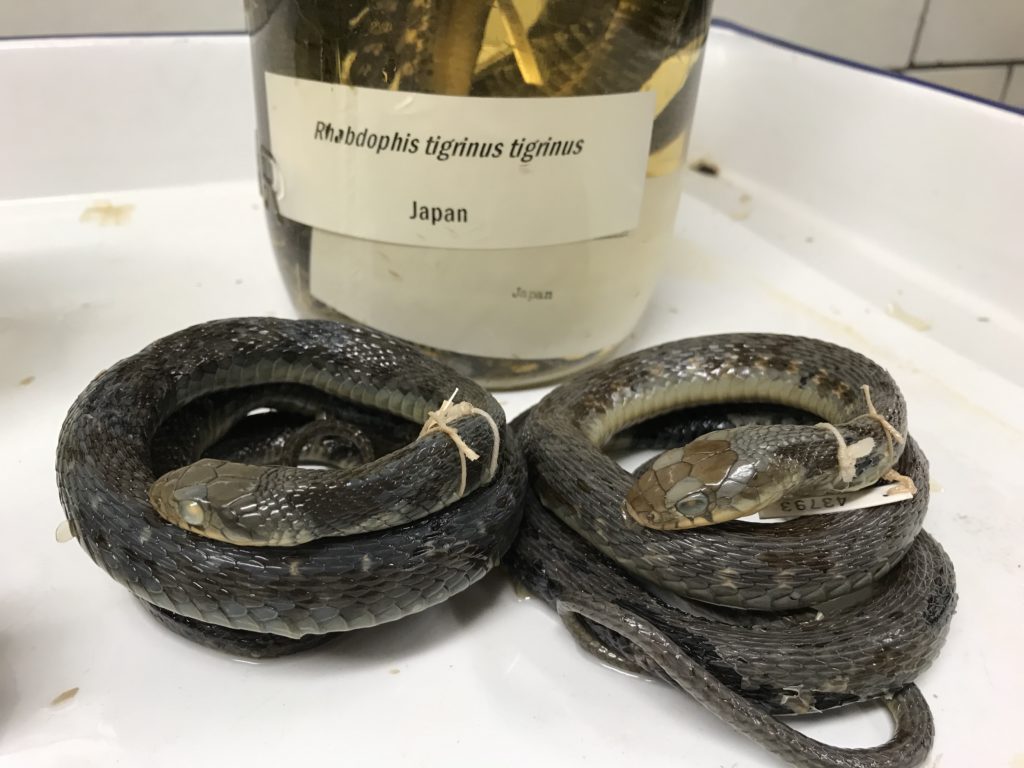
two preserved snake specimens and one specimen jar
Figure 3. Rhabdophis tigrinus. If you look closely at the back of the neck just behind the head on the snake on the left, you can see a slightly raised bit of skin, which is the nuchal crest used to store toxins sequestered from toads. Image credit: Stevie Kennedy-Gold.

One of the most surprising things I learned is that there are snakes that are both toxic and venomous, and these are snakes I see frequently in the field. The genus Rhabdophis is common across South and Southeast Asia, and have long been known to be venomous. What I didn’t know is that in addition to making their own venom, they sequester toxins from their prey, and store it in a gland on the back of their neck called a nuchal crest. Rhabdophis feed on toads, which are toxic, and the snakes are able to sequester that toxin, rather than being adversely affected by it. Interestingly, scientists have shown that Rhabdophis tigrinus are toxic only where their range overlaps with Bufo japonicus, a highly toxic toad—so on some islands of Japan the snakes are toxic, while on other islands they are not.

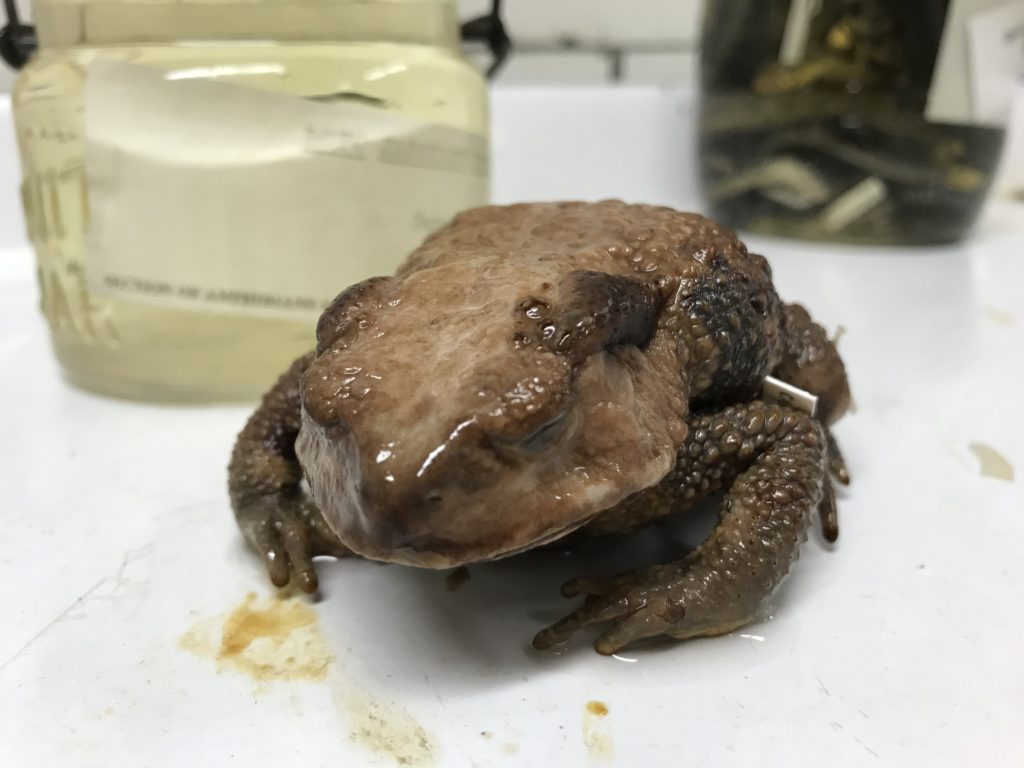
preserved toad specimen
Figure 4. Bufo japonicus with its many toxin glands! Image credit: Stevie Kennedy-Gold.

There are numerous other interesting adaptations involving toxin and venom in the herp world—tweet me (@JenASheridan) if you want to learn more!

Jennifer Sheridan is Assistant Curator in the Section of Amphibians and Reptiles at Carnegie Museum of Natural History. Museum employees are encouraged to blog about their unique experiences and knowledge gained from working at the museum.

Related Content

Early Bats: Ancient Origins of a Halloween Icon

Invasion of the Leaf Galls! 

Jumping Spiders with Sebastian 

Filed Under: Blog Tagged With: booseum, halloween, Jennifer Sheridan, Science News, Super Science Days

October 13, 2020 by wpengine

Invasion of the Leaf Galls!

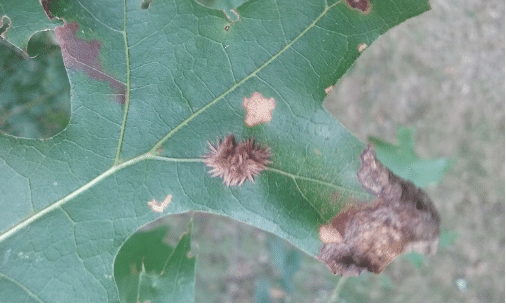
Happy Gall-oween! Mwah-hahaha! Prepare yourselves for the silent invasion of the leaf galls! Over the summer and into the early fall, you may have seen something very strange happening to the oak trees of Southwestern Pennsylvania. Small, furry growths, brown or orange in color, have been appearing on oak leaves. If you haven’t seen them, imagine a Tribble from Star Trek, but in miniature size growing directly on the leaves of a shady oak.

These are leaf galls—but they aren’t an alien lifeform nor a devastating tree blight. They are the product of a fascinating chemical reaction.

Early in the spring, just as the oak trees are beginning to bud, gall wasps (from the family Cynipidae) lay their eggs on the brand-new leaves. These creatures—smaller than a fruit fly and lacking the ability to sting—might also lay their eggs on the twigs of the trees or on the stems of goldenrod. Once the wasp eggs hatch, the larvae begin to eat the leaf on which they were deposited. This is when things get interesting: when the chemicals in the larvae’s saliva mingle with the plant hormones in the leaf, the gall begins to form. Depending on the drop site and the species of gall wasp (there are over 700 species in the United States alone that target oaks), the appearance of the gall will be different. For instance, when the eggs hatch on a branch or twig and begin their feast, the gall will have a dense, spherical appearance. This is the specific kind of gall that gives the phenomenon its name: “galla” means “oak-apple” in Latin.  Some leaf galls might take on the shape of tiny brown flying saucers as they did in Jefferson and Forest Counties in recent years. Some other galls have the appearance of spindly red fingers or peppers protruding from the leaf. The variety of tree and leaf galls are, in a word, kaleidoscopic.

While there is great variation in the physical appearance and structure of leaf galls, they each serve a shared purpose. The chemicals that the larvae secrete as they “chew” stimulate the leaf into creating a gall for shelter and sustenance. The gall is a protective, nutrient-providing dome over the developing larvae. While the galls sometimes interrupt the process of photosynthesis and cause some leaf browning and curling, they won’t kill the tree itself. The gall wasp is a mostly benign parasite. By mid-October, the wasp-bearing galls will fall from, or with, their leaves. The next spring, the surviving wasps will emerge from the soil.

leaf galls on green leaf

Some years, this new generation will breed sexually. Other years, it will be entirely female and reproduce asexually. That is, through parthenogenesis, the same process that the dinosaurs in the original Jurassic Park reproduce. Remember Dr. Malcolm’s famous “life finds a way” monologue? Galls are misunderstood by the general public because they perceive the phenomenon as a nuisance and eyesore. Scientists warn against treating infested trees with pesticide or scraping off the galls. Such actions would do more harm than good to the trees. Instead of being an unnerving menace, the gall wasp is an awe-inspiring example of how one animal uses its surrounding ecosystem—without excessive harm—to ensure that its kind will perpetuate itself safely and successfully.  Furthermore, the weirdly wonderful shapes and designs of the leaf gall demonstrate that nature isn’t just useful but also beautiful.  It’s that beauty that makes this seemingly bizarre invader more than a seasonal annoyance.

Nicholas Sauer is a Natural History Interpreter and Gallery Experiences Presenter at the Carnegie Museum of Natural History. Museum employees are encouraged to blog about their unique experiences and knowledge gained from working at the museum.

Related Content

Booseum: Spooky Coloring Pages
Booseum: Make Snail Slime

Scientist Takeover: Invertebrate Zoology Specimens

Filed Under: Blog Tagged With: booseum, Educator Resources, Educators, Nicholas Sauer, Super Science Days

October 12, 2020 by Kathleen

Booseum: Spooky Coloring Pages!

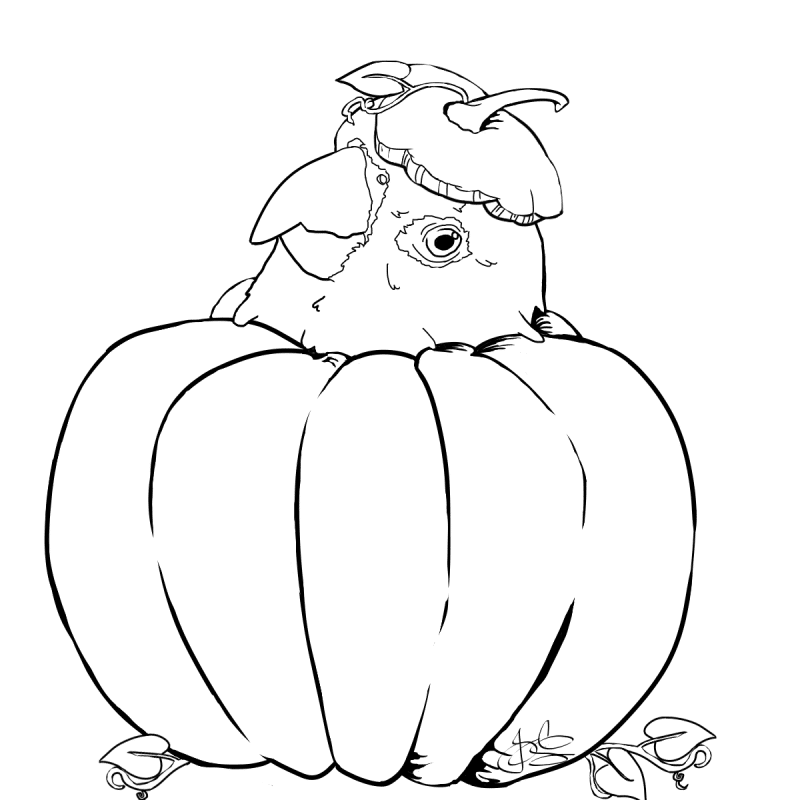
Have fun coloring images featuring animals from our living collection this week drawn by Gallery Presenter and Floor Captain, Jess Sperdute. You can meet some of the animals in the living collection during our Virtual Live Animal Encounters!

Mango in a pumpkin
Download Mango the Sun Conure Coloring Image
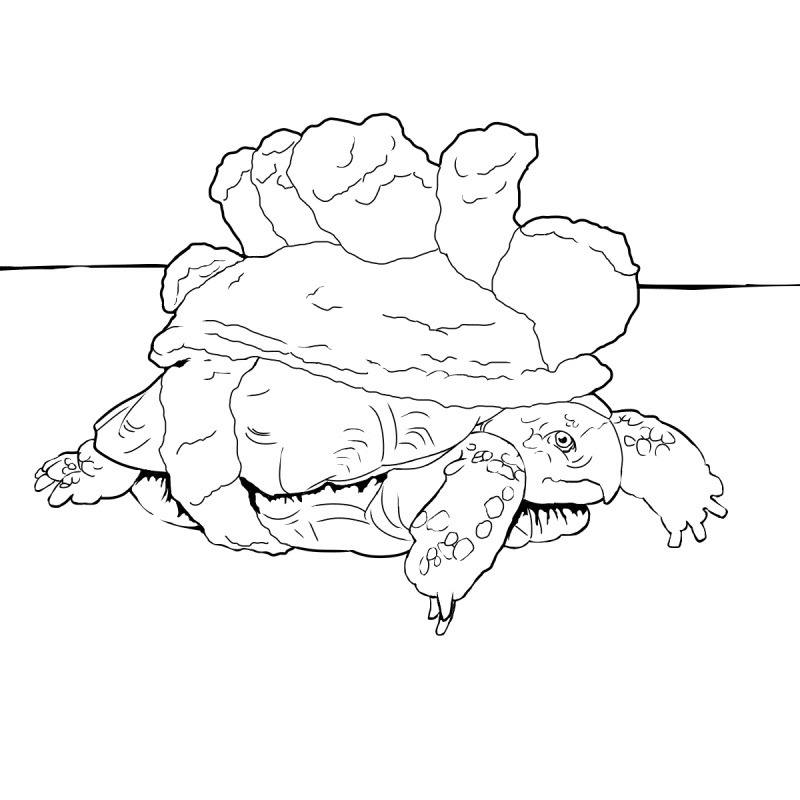
Natasha the Russian Tortoise in Costume
Download Natasha the Tortoise Coloring Image
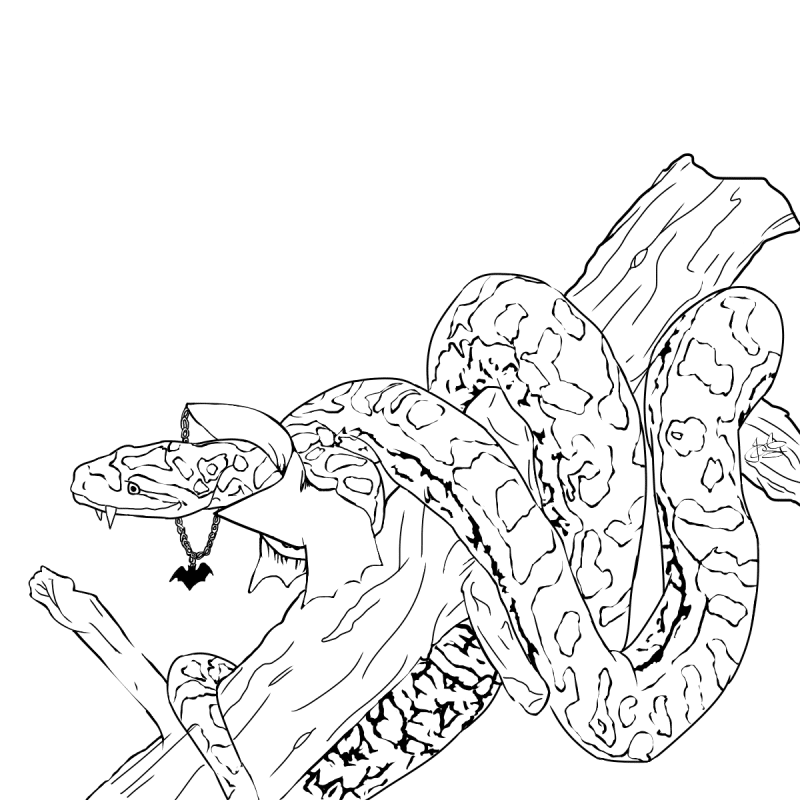
Boomer the Python as a Vampire
Download Boomer the Python Coloring Image
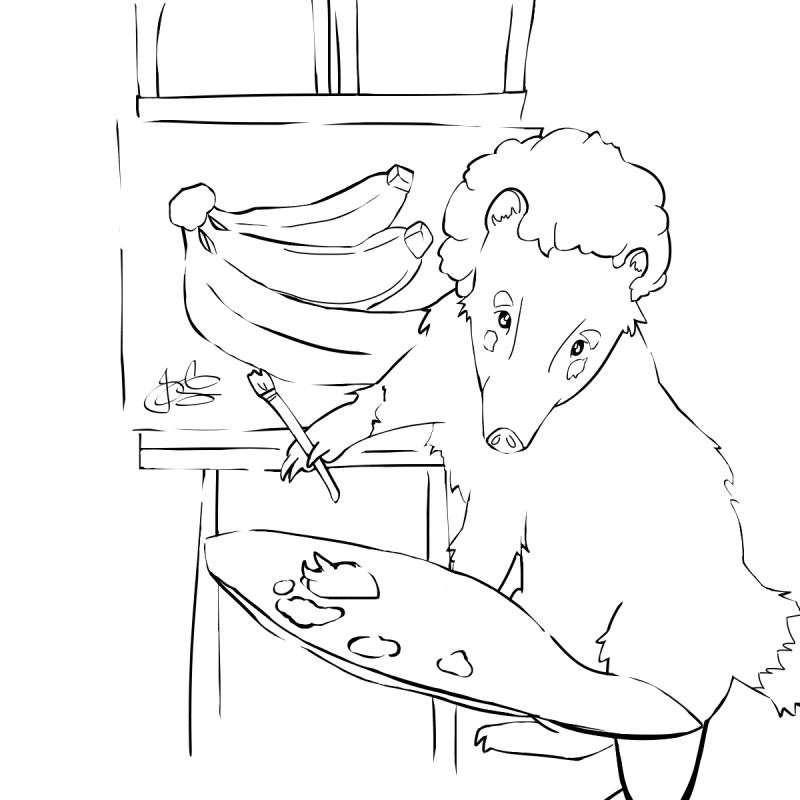
Lupe the coati in halloween costume
Download Lupe the Coati Coloring Image

Filed Under: Blog Tagged With: booseum

October 12, 2020 by Kathleen

Booseum: Make Snail Slime!

Everyone knows snails and slugs are a little slimy, but did you ever wonder why? Gastropods—snails and slugs—generate a type of mucus (or mucopolysaccharide) just like some plants, animals, and humans do. While we can’t make mucopolysaccharide with ease, we can make something similar by combining cornstarch and water to make a polysaccharide that is very similar.

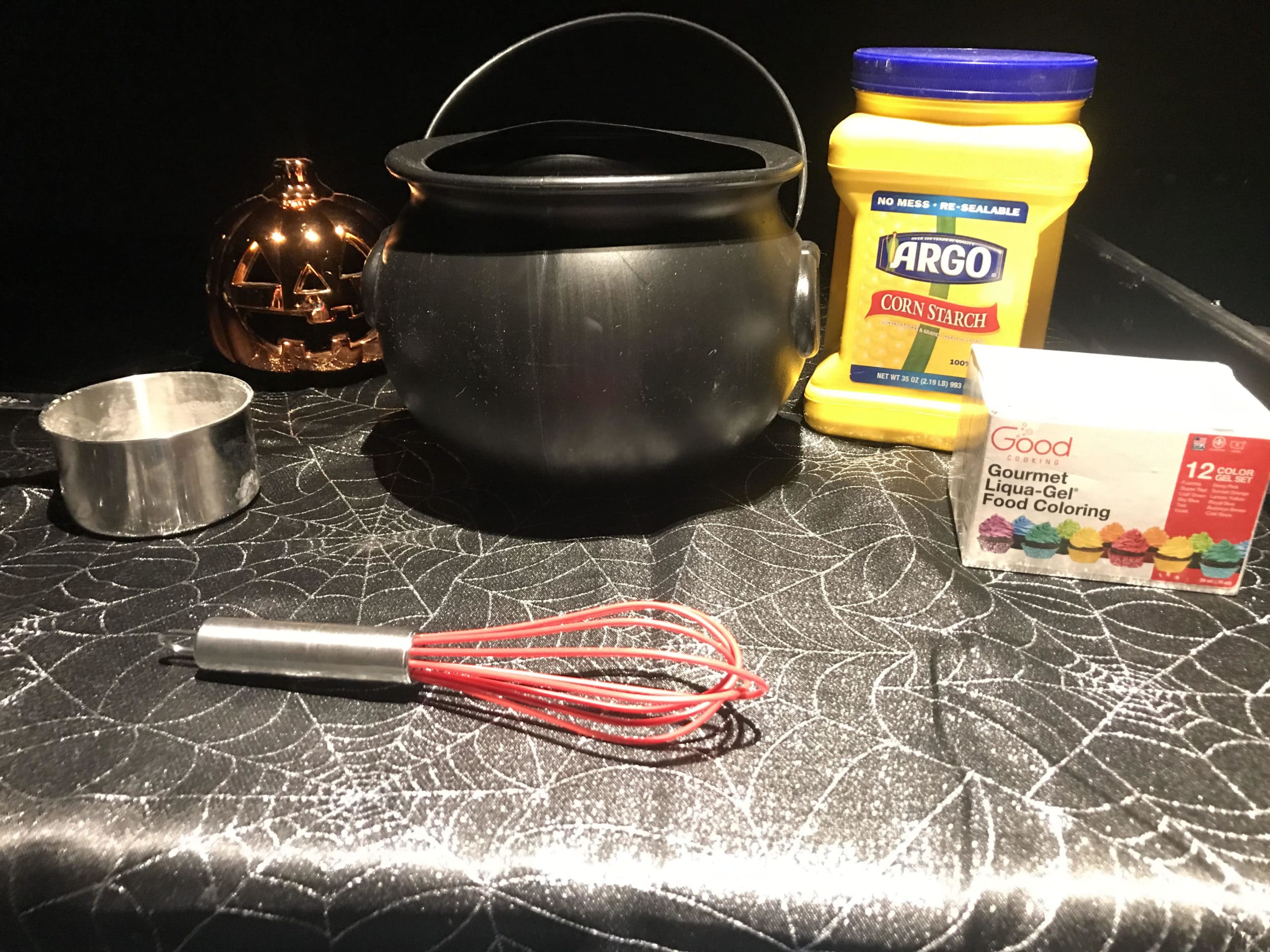
What You’ll Need

  • Cornstarch
  • Water
  • Measuring Cup (1 cup)
  • Food coloring (optional)
  • Mixing bowl
  • Spoon or whisk
snail slime activity ingredients

Directions

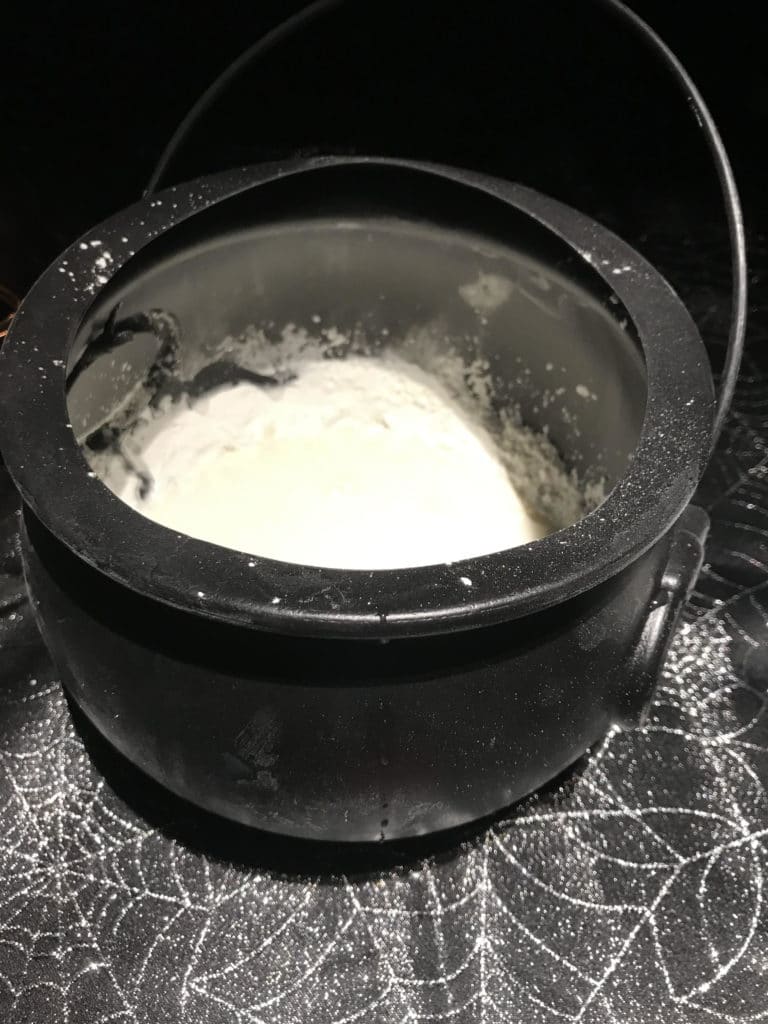
  1. Pour 2 cups of cornstarch into your mixing bowl.
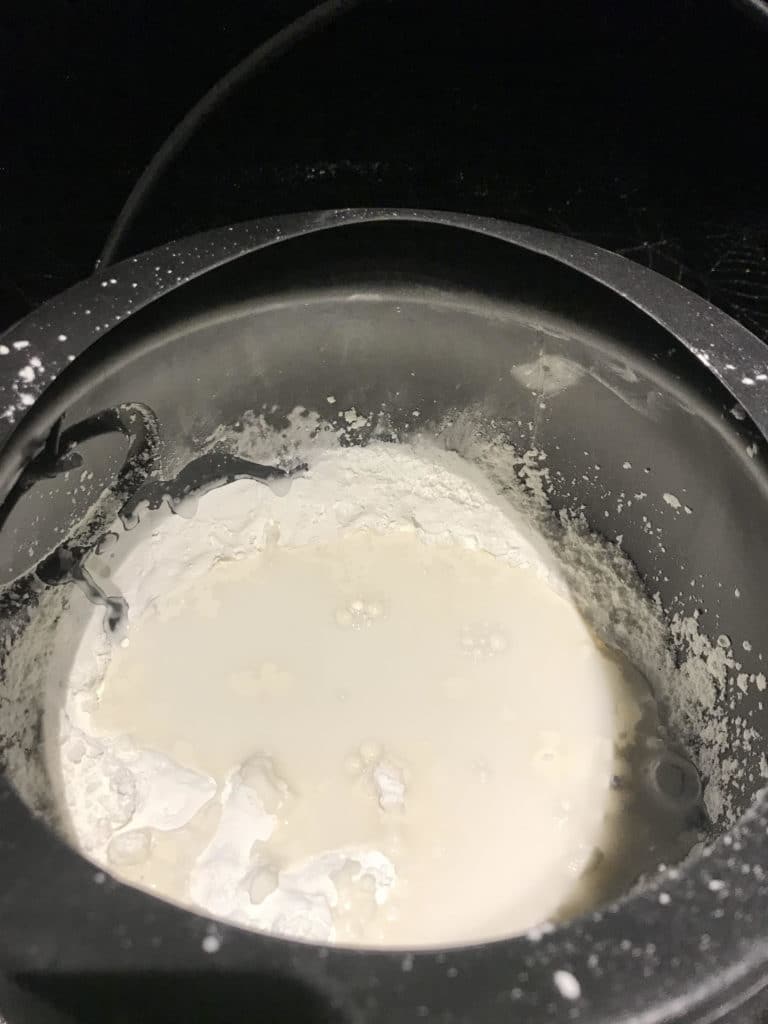
  2. Add 1 cup of water. (If you want more or less slime than 2 cups worth, just mix the cornstarch and water to a 2:1 ratio.)
  3. Mix until combined.
  4. Add food coloring if desired.

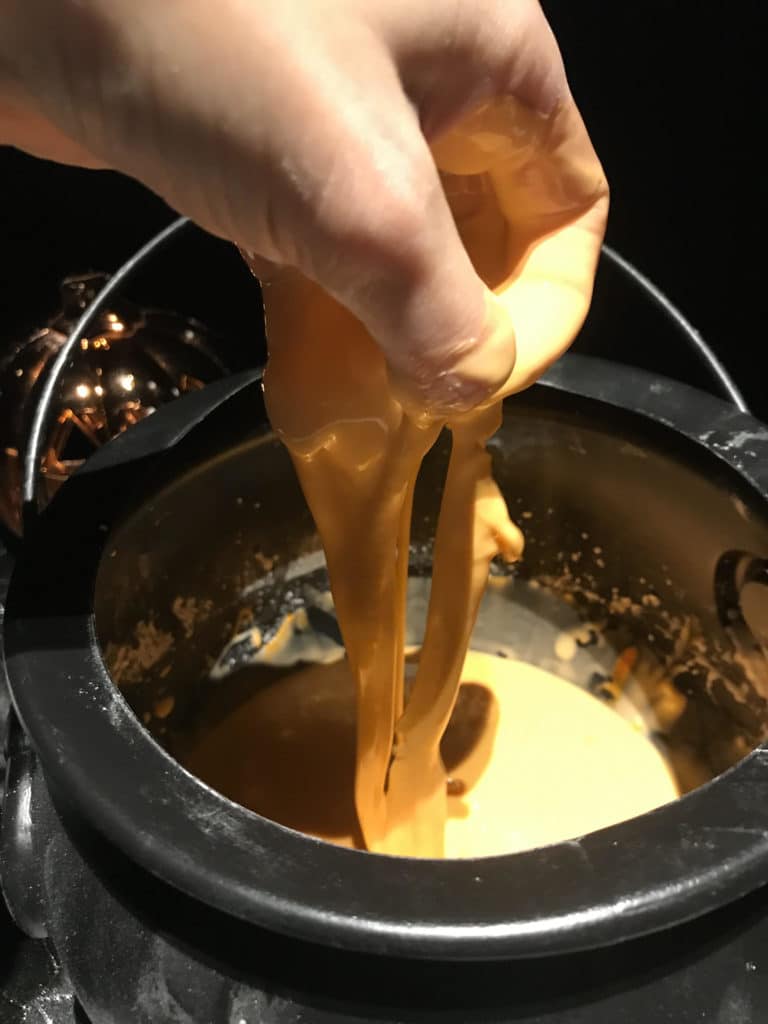
The trick to creating true snail slime is the consistency, or the way in which a liquid holds itself together. While it’s not actual snail mucus, our snail slime has similar properties and can help us understand more how snails and slugs move—by sliding along their mucus, they press down on it gently. What happens when you press down on your snail slime?

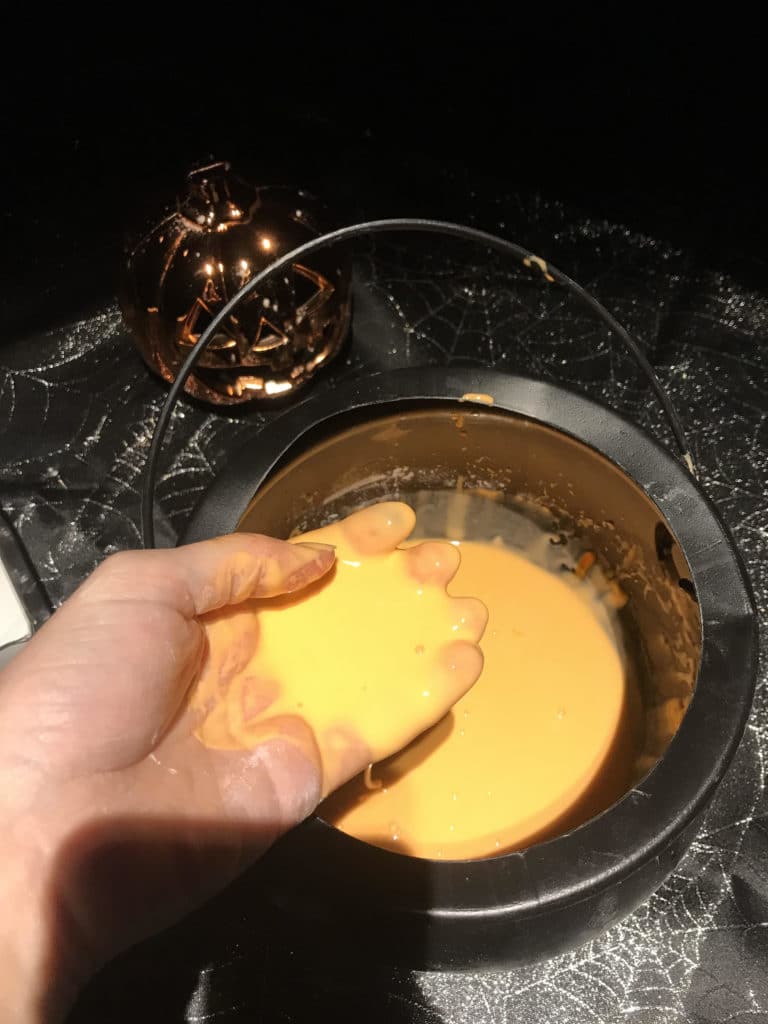
This type of polysaccharide acts like both a liquid and a solid—you can pour it like water or let it ooze out of your hands, but pushing it creates a solid reaction instead. This consistency of a liquid can be measured. In science, this is called viscosity; the state of being thick, sticky, or semifluid due to internal friction. This is why snails and slugs can climb virtually anywhere on their mucus—even upside-down!  

If your snail slime is too runny, try adding more cornstarch. If you grab it and it stays in a ball without oozing out of your hands, add more water.

cornstarch in a bowl
mix cornstarch with water
pulling slime out of the bowl
snail slime in the bowl

Filed Under: Blog Tagged With: booseum

  • « Go to Previous Page
  • Page 1
  • Page 2

sidebar

About

  • Mission & Commitments
  • Directors Team
  • Museum History

Get Involved

  • Volunteer
  • Membership
  • Carnegie Discoverers
  • Donate
  • Employment
  • Events

Bring a Group

  • Groups of 10 or More
  • Birthday Parties at the Museum
  • Field Trips

Powdermill

  • Powdermill Nature Reserve
  • Powdermill Field Trips
  • Powdermill Staff
  • Research at Powdermill

More Information

  • Image Permission Requests
  • Science Stories
  • Accessibility
  • Shopping Cart
  • Contact
  • Visitor Policies
One of the Four Carnegie Museums | © Carnegie Institute | Privacy Policy | Terms of Use | Accessibility
Rad works here logo