• Skip to primary navigation
  • Skip to main content
  • Skip to primary sidebar

Carnegie Museum of Natural History

One of the Four Carnegie Museums of Pittsburgh

  • Visit
    • Buy Tickets
    • Visitor Information
    • Exhibitions
    • Events
    • Dining at the Museum
    • Celebrate at the Museum
    • Powdermill Nature Reserve
    • Event Venue Rental
  • Learn
    • Field Trips
    • Educator Information
    • Programs at the Museum
    • Bring the Museum to You
    • Guided Programs FAQ
    • Programs Online
    • Climate and Rural Systems Partnership
  • Research
    • Scientific Sections
    • Science Stories
    • Science Videos
    • Senior Science & Research Staff
    • Museum Library
    • Science Seminars
    • Scientific Publications
    • Specimen and Artifact Identification
  • About
    • Mission & Commitments
    • Directors Team
    • Museum History
  • Tickets
  • Give
  • Shop

Botany Blogs

These blogs are written about and by our Section of Botany researchers. The herbarium at the museum which contains approximately 3,000 type specimens--specimens that define an entire plants' species. These type specimens only represent about 0.6 % of the collection.

Mason Heberling, head of the section, regularly shares herbarium specimens that have been "Collected on this day" in history.

June 4, 2021 by wpengine

Collected on this Day in 1982: One specimen isn’t always enough!

Archiving biological variation.

by Mason Heberling
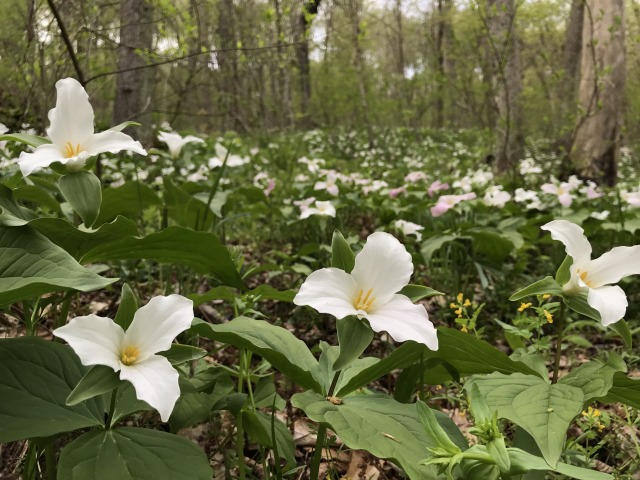
Flowering trillium in the woods

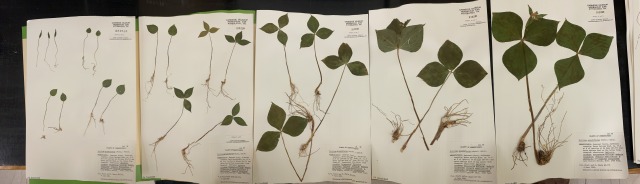
Five herbarium sheets with specimens of trillium on them arranged with the smallest leaves on the left and largest on the right.

This specimen is not a specimen but a set of five specimens! Same species (large flowered trillium, Trillium grandiflorum). Same site (in Somerset county, PA). All collected on same date (June 4, 1982) by Frederick H. Utech and Masashi Ohara.

We know that one specimen of every species is not enough. Having many specimens of many species, across many sites, and through time are necessary to document what organisms lived where, when, how far species ranges extend, and how these change through time. We study these specimens to understand biodiversity and biodiversity change across many scales.

But why collect that many vouchers of the same species, from the same site, on same date? One reason might be to send “duplicate” vouchers to other herbaria, both to help other collections expand their holdings, to get expert opinions on identification, and/or to protect against (unlikely but very possible) damage that may happen in one herbarium (like fire, flood, insect damage – oh my!).

But that isn’t what happened here. All specimens are stored together at Carnegie Museum of Natural History.
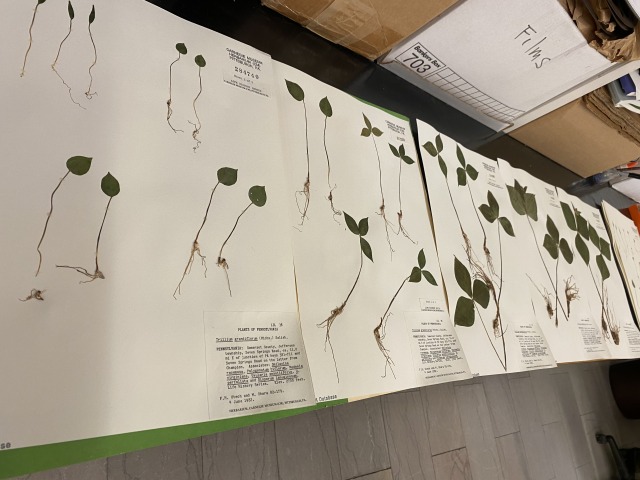
Voucher series of trillium herbarium specimen sheets.

So why? Well, it is simple, but quite genius, really. Utech and Ohara collected a “life history” voucher series. That is, these specimens each show different stages of the species’ development from small cotyledon-bearing seedlings just germinating above ground, to one leaved plants, to small to large three leaved juvenile trilliums that have not yet flowered, to large adult plants with flowers.

Utech and Ohara, along with Shoichi Kawano, pioneered this method of collecting and advocated for its importance in a 1984 essay in the Journal of Phytogeography and Taxonomy. Historically, plant specimens are collected with a major specific purpose in mind – to document the plant was there at a given time. To do that, botanists of course collect specimens that are best for identification, such that others can verify the species. For most species, that means plants tend to be collected when they are adults and reproductive (with flowers and/or fruits). Specimens without reproductive organs (called “vegetative” specimens) are generally viewed as less useful for this purpose and often avoided.

But Utech and others found that this standard approach, though useful for some research, did not cut it for their work. As organismal biologists studying the life history, ecology, and life cycle of species, they found many species were not well represented in herbarium collections.

Many species, like trillium, have distinct life stages from seedling to juvenile to adult. Many species form overwintering leaves or juvenile leaves that differ dramatically, even unrecognizably, from “typical” adult specimens.

So there’s good reasons to collect across life history and across individuals within a population. Biological collections are all about archiving biodiversity in its many forms, whether across deep time with fossils, across species, within species, or even within populations at a specific site.
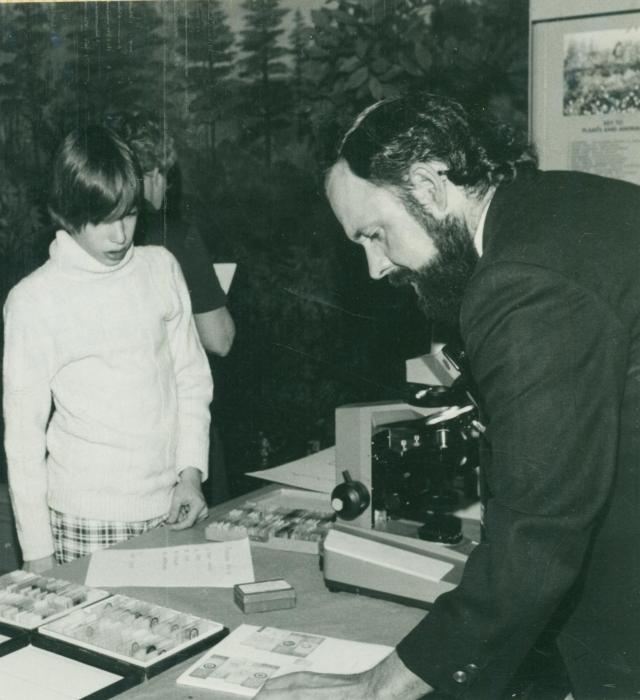
Man at a table of plant specimens talking to a child about them.
Dr. Frederick H. Utech, past curator at Carnegie Museum, at a member’s night in 1979.

Dr. Utech (1943-2021) was a curator at the museum from 1976 until 1999. He was then a research botanist at the nearby Hunt Institute for Botanical Documentation until his retirement in 2011, notably contributing to three volumes of the Flora of North America project. More than 23 thousand specimens in the Carnegie Museum herbarium were collected by him. Dr. Utech passed away earlier this year but his legacy lives on. You can find his obituary here.

Inspired by the method of life history series and the need for new perspectives in the way we collect, CMNH Botany staff are working to promote and expand these ideas. We are presenting some of these ideas at the Society of Herbarium Curators annual meeting later this summer.

Find many more specimens (24,662 to be exact!) collected by Dr. Utech (including other life history series vouchers) here.

Check back for more! Botanists at the Carnegie Museum of Natural History share digital specimens from the herbarium on dates they were collected. They are in the midst of a three-year project to digitize nearly 190,000 plant specimens collected in the region, making images and other data publicly available online. This effort is part of the Mid-Atlantic Megalopolis Project (mamdigitization.org), a network of thirteen herbaria spanning the densely populated urban corridor from Washington, D.C. to New York City to achieve a greater understanding of our urban areas, including the unique industrial and environmental history of the greater Pittsburgh region. This project is made possible by the National Science Foundation under grant no. 1801022.

Mason Heberling is Assistant Curator of Botany at Carnegie Museum of Natural History. Museum employees are encouraged to blog about their unique experiences and knowledge gained from working at the museum.

Related Content

Collected On This Day: September 6

Ask a Scientist: How do you find rare plants?

Do Plants Have Lips? No, But One Genus Sure Looks Like it Does!

Carnegie Museum of Natural History Blog Citation Information

Blog author: Heberling, Mason
Publication date: June 4, 2021
Share this post!

  • Share on Twitter Share on Twitter
  • Share on Facebook Share on Facebook
  • Share on Pinterest Share on Pinterest
  • Share on LinkedIn Share on LinkedIn
  • Share on Reddit Share on Reddit
  • Share via Email Share via Email

Share this post!

  • Share on Twitter Share on Twitter
  • Share on Facebook Share on Facebook
  • Share on Pinterest Share on Pinterest
  • Share on LinkedIn Share on LinkedIn
  • Share on Reddit Share on Reddit
  • Share via Email Share via Email

Filed Under: Blog Tagged With: Botany, collected on this day, Mason Heberling, plants, Science News, We Are Nature 2

March 15, 2021 by wpengine

Collected on this Day in 1957

Spring at Powdermill.

An early bloomer.

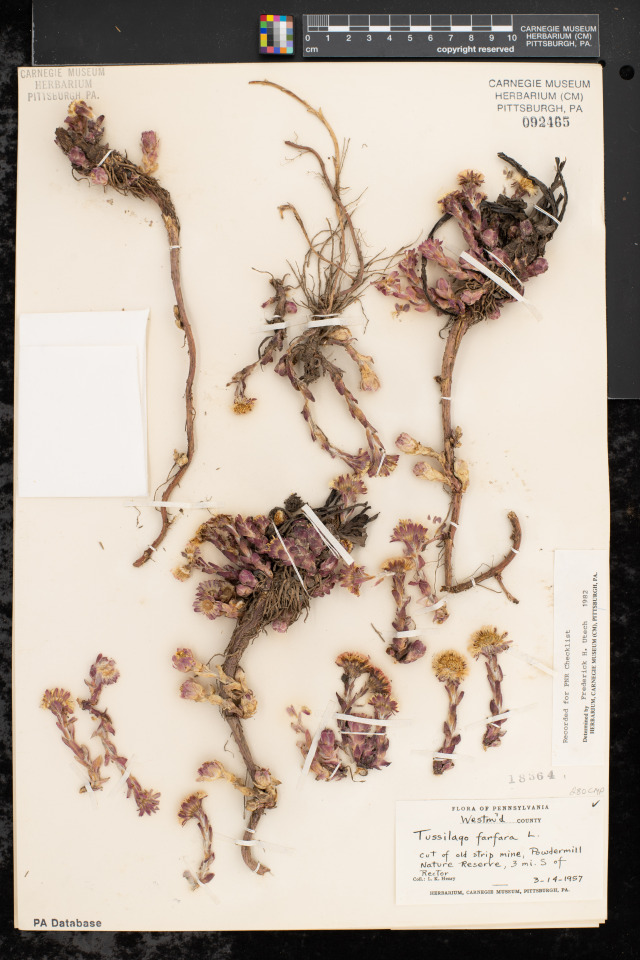
dried specimen of coltsfoot on an herbarium sheet

This specimen of coltsfoot (Tussilago farfara) was collected at Powdermill Nature Reserve, the field station of Carnegie Museum of Natural History in 1957, just one year after the facility was established. It was collected by Leroy Henry, a Curator of Botany at the museum from 1937 until 1972 (though he was also affiliated with the museum before and after this period). Henry is an important collector for our region, with >36,000 specimens in the Carnegie Museum herbarium.

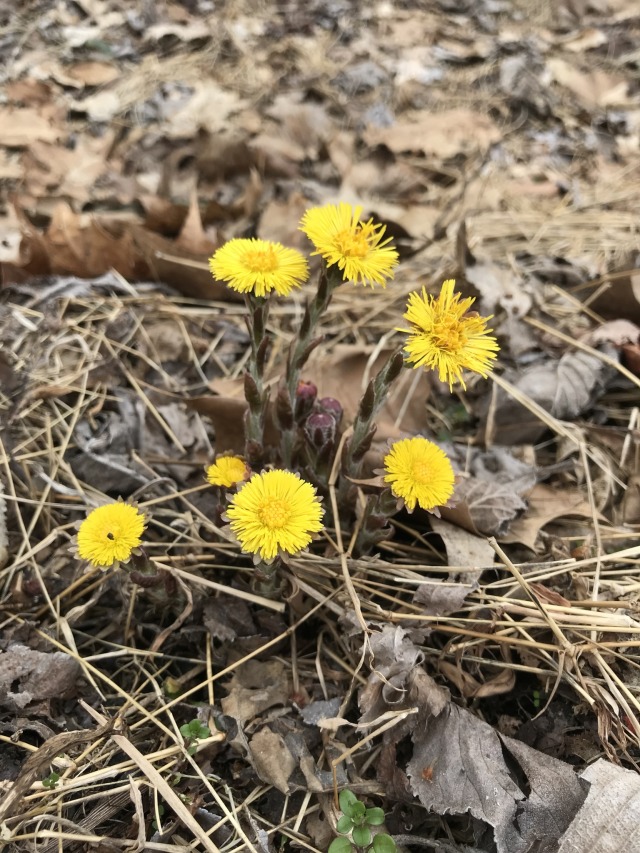
coltsfoot flowering in spring

At first look, the plant may be confused with your common dandelion. It has definite similarities, as it is in the same plant family, Asteraceae, and bears yellow flowers. But, as you’ll notice from the specimen – flowering coltsfoot doesn’t have leaves!

Coltsfoot, which is native to Europe, was introduced to Pennsylvania, and is quite unique in our state’s flora. The plant blooms very early in the spring, with dandelion-like flowers frequently poking through the soil of otherwise barren slopes. The leaves soon follow, and they are shaped like – well – a colt’s foot! Quite different than the familiar serrated edge shape of dandelion leaves.

Coltsfoot’s early appearance also makes it a great species to track changes in bloom time using herbarium specimens. The species was among the first to be used in a pioneering study published in 2006 using herbarium specimens by Claud Lavoie and Daniel Lachance. In Southern Quebec, they found coltsfoot bloomed 15-31 days earlier in recent decades, compared to pre-1950. Earlier blooming was strongly linked to climate change in the region. The plants also showed a clear signal of flowering earlier in the city (due to a phenomenon known as urban heat island effect).

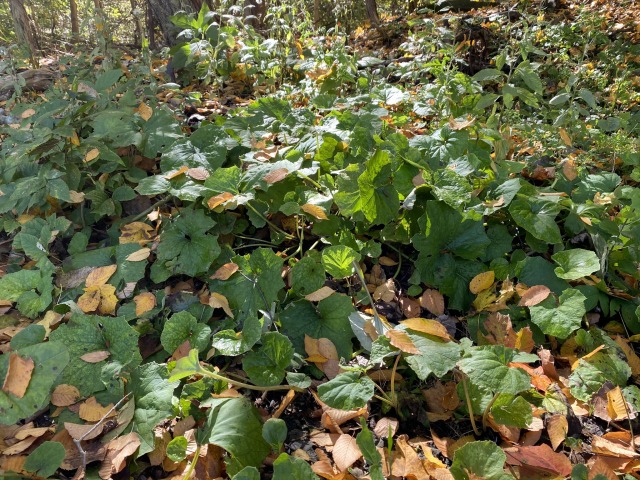
coltsfoot leaves in the fall

We have plenty of spring ephemerals that bloom early, but unlike these plants, coltsfoot doesn’t die off by summer. The plant keeps its leaves well after it blooms, into late fall.

This strategy is interesting, and I can’t think of many plants in our flora with similar growth patterns. Is the plant on to something?

Keep an eye out for coltsfoot, especially along wooded roadsides. Once you see a big bloom, check the same site later in the year. The leaves can grow to a surprisingly large size.

Find this specimen and more here.

Check back for more! Botanists at the Carnegie Museum of Natural History share digital specimens from the herbarium on dates they were collected. They are in the midst of a three-year project to digitize nearly 190,000 plant specimens collected in the region, making images and other data publicly available online. This effort is part of the Mid-Atlantic Megalopolis Project (mamdigitization.org), a network of thirteen herbaria spanning the densely populated urban corridor from Washington, D.C. to New York City to achieve a greater understanding of our urban areas, including the unique industrial and environmental history of the greater Pittsburgh region. This project is made possible by the National Science Foundation under grant no. 1801022.

Mason Heberling is Assistant Curator of Botany at Carnegie Museum of Natural History. Museum employees are encouraged to blog about their unique experiences and knowledge gained from working at the museum.

Related Content

Collected on this Day in 1998: Common chickweed

Spring is in the Air, Botanists are in the Field

Ask a Scientist: What is biogeochemistry? 

Carnegie Museum of Natural History Blog Citation Information

Blog author: Heberling, Mason
Publication date: March 14, 2021

Share this post!

  • Share on Twitter Share on Twitter
  • Share on Facebook Share on Facebook
  • Share on Pinterest Share on Pinterest
  • Share on LinkedIn Share on LinkedIn
  • Share on Reddit Share on Reddit
  • Share via Email Share via Email

Share this post!

  • Share on Twitter Share on Twitter
  • Share on Facebook Share on Facebook
  • Share on Pinterest Share on Pinterest
  • Share on LinkedIn Share on LinkedIn
  • Share on Reddit Share on Reddit
  • Share via Email Share via Email

Filed Under: Blog Tagged With: Botany, collected on this day, Mason Heberling, Science News

March 8, 2021 by wpengine

Collected on this Day in 1998

Spring is springing as we speak.

In the city and beyond.

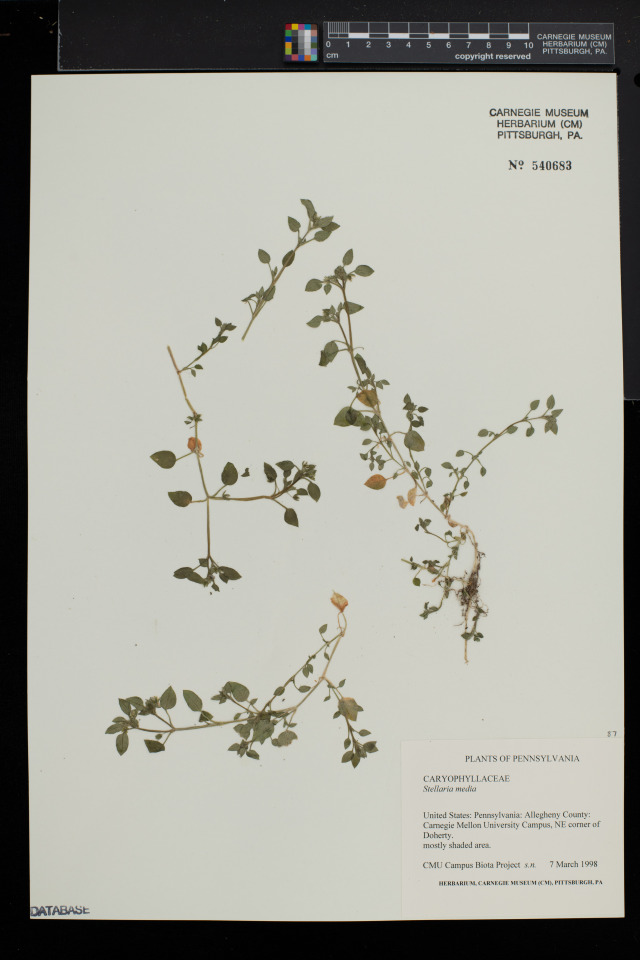
dried common chickweed specimen on herbarium sheet

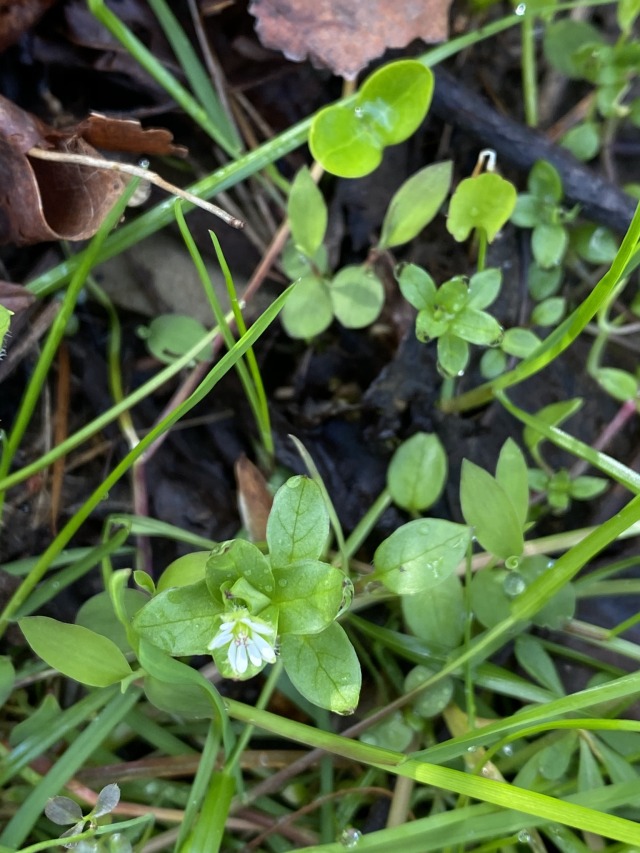
This specimen of common chickweed (Stellaria media) was collected on the campus of Carnegie Mellon University, in Pittsburgh, in a “mostly shady area.” Though small, if you look closely you’ll encounter a charismatic tiny flower. Common chickweed is a familiar plant across the world, found in every continent (except perhaps Antarctica?). Like many cosmopolitan lawn weeds, it is native to “Eurasia.” The plant’s exact native range is unclear, but it is considered not native to North America.

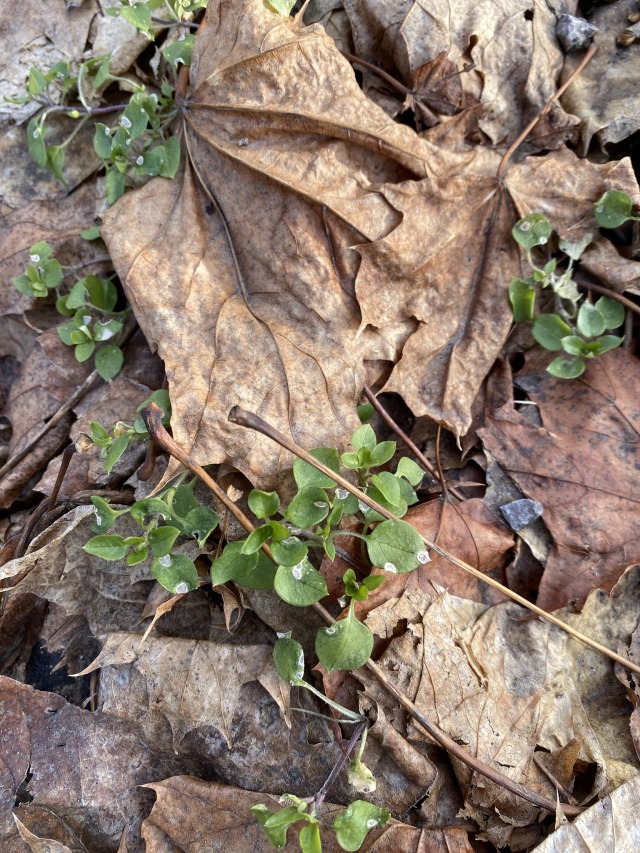
In Pennsylvania, common chickweed can be found in habitat ranging from urban lawns to forests. In some locations dense growth of the plant can form a mat along the ground. Common chickweed can be found just about year-round when snow isn’t on the ground, and like dandelion, the plant flowers throughout the year.

Stellaria media on January 30 in southwest Pennsylvania.

The tiny flowers now are also sending a signal – spring is on the way. For some plants, such as skunk cabbage and red maple, spring has already sprung.

Stellaria media on April 24 in southwest Pennsylvania.

This species is a good one to look out for during the upcoming City Nature Challenge!

Find this specimen and more here.

Check back for more! Botanists at the Carnegie Museum of Natural History share digital specimens from the herbarium on dates they were collected. They are in the midst of a three-year project to digitize nearly 190,000 plant specimens collected in the region, making images and other data publicly available online. This effort is part of the Mid-Atlantic Megalopolis Project (mamdigitization.org), a network of thirteen herbaria spanning the densely populated urban corridor from Washington, D.C. to New York City to achieve a greater understanding of our urban areas, including the unique industrial and environmental history of the greater Pittsburgh region. This project is made possible by the National Science Foundation under grant no. 1801022.

Mason Heberling is Assistant Curator of Botany at Carnegie Museum of Natural History. Museum employees are encouraged to blog about their unique experiences and knowledge gained from working at the museum.

Related Content

Collected On This Day in 1949: Honeysuckle

Collected On This Day in 1940: Plants with bladders?

Looking for Bugs in Your Yard! 

Share this post! 

  • Share on Twitter Share on Twitter
  • Share on Facebook Share on Facebook
  • Share on Pinterest Share on Pinterest
  • Share on LinkedIn Share on LinkedIn
  • Share on Reddit Share on Reddit
  • Share via Email Share via Email

Carnegie Museum of Natural History Blog Citation Information

Blog author: Heberling, Mason
Publication date: March 8, 2021

Share this post!

  • Share on Twitter Share on Twitter
  • Share on Facebook Share on Facebook
  • Share on Pinterest Share on Pinterest
  • Share on LinkedIn Share on LinkedIn
  • Share on Reddit Share on Reddit
  • Share via Email Share via Email

Filed Under: Blog Tagged With: Botany, City Nature Challenge, collected on this day, Mason Heberling, Science News

March 2, 2021 by wpengine

Collected on this Day in 1949

Honeysuckles will be back soon.

But this one never really left for the winter.

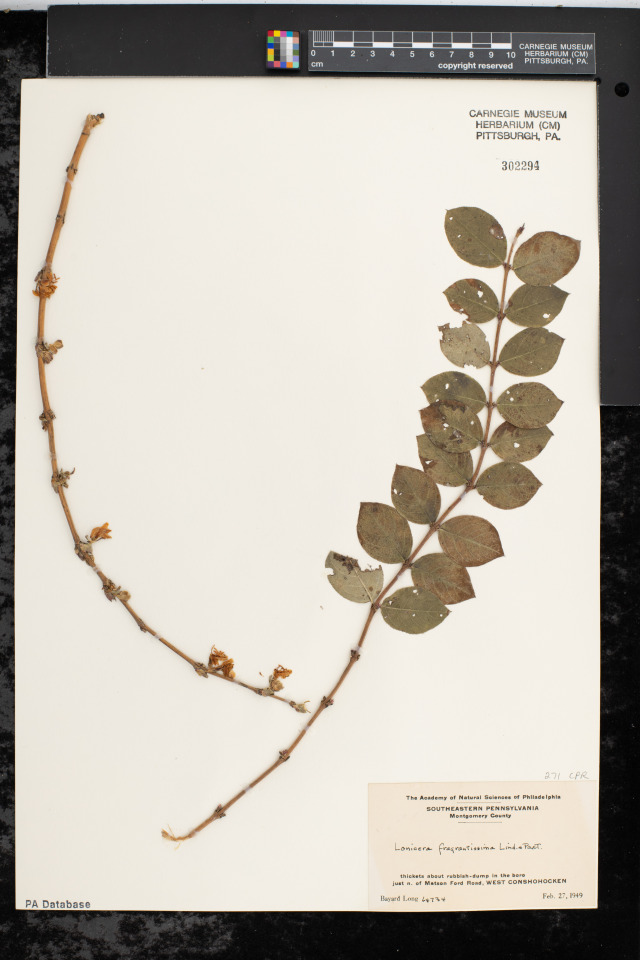
This specimen of winter honeysuckle (Lonicera fragrantissima) was collected in West Conshohocken, PA near the Schuylkill River outside of Philadelphia by Bayard Long. Collected flowering in a “rubbish-dump,” no less! Bayard Long (1885-1969) was a Philadelphia-area botanist and an active member of the Philadelphia Botanical Club (founded in 1891 and still exists today). He was a prolific collector and served as Curator of the Club’s Local Herbarium for 56 years (housed at the Academy of Natural Sciences). About 982 specimens collected by Long are preserved for the long haul in the Carnegie Museum herbarium.

Winter honeysuckle not only has a fun scientific name to say (“fragrantissima” rolls off the tongue) but is easy to identify among the many species in the honeysuckle genus (Lonicera in plant family Caprifoliaceae). That is, it has almost evergreen, thick leaves that partly persist into the winter, unlike any of the other shrub honeysuckles in Pennsylvania. (Emphasis on shrub, because the invasive vine Japanese honeysuckle – Lonicera japonica– also has persistent leaves through much or all of winter).

It is also known as “sweet breath of spring” for its aromatic flowers (hence its specific epithet, fragrantissima – think Bath and Body Works scent), which appear in late winter (and in this specimen!).

Introduced from China as an ornamental and often planted for its foliage, this species is now invasive in many states in the US. I must admit I don’t see it very often “escaped” outside of plantings in Western PA, but that doesn’t mean it doesn’t exist, or won’t escape in time, especially given it is problematic in other areas of the US.

So, you really shouldn’t plant it. Though Pennsylvania has native honeysuckles, the most abundant and common ones are introduced, affecting native vegetation and wildlife.

Find this specimen (and search for more) here.

Check back for more! Botanists at the Carnegie Museum of Natural History share digital specimens from the herbarium on dates they were collected. They are in the midst of a project to digitize nearly 190,000 plant specimens collected in the region, making images and other data publicly available online. This effort is part of the Mid-Atlantic Megalopolis Project (mamdigitization.org), a network of thirteen herbaria spanning the densely populated urban corridor from Washington, D.C. to New York City to achieve a greater understanding of our urban areas, including the unique industrial and environmental history of the greater Pittsburgh region. This project is made possible by the National Science Foundation under grant no. 1801022.

Mason Heberling is Assistant Curator of Botany at Carnegie Museum of Natural History. Museum employees are encouraged to blog about their unique experiences and knowledge gained from working at the museum.

Related Content

Ask a Scientist: How do you find rare plants?

Do Plants Have Lips? No, But One Genus Sure Looks Like it Does! 

How Do Trees Survive the Winter?

Filed Under: Blog Tagged With: Botany, collected on this day, Mason Heberling, Science News

February 25, 2021 by wpengine

How Do Trees Survive the Winter?

Winter brings cold winds, icy precipitation, long periods of below freezing temperatures – winter in the temperate zones takes a toll on all living things. Humans seek shelter, many animals hibernate, some insects may overwinter as eggs or life stages that are dormant. A walk in the forest in February clearly indicates that most plants become dormant and nearly inconspicuous during this time. For many plants, above ground portions die back so that the living parts, the root system, protected buds, and seeds persist below ground.

Slowing down physiologically offers a way to protect against the harshness of winter. But how do trees survive and persist in the often-harsh conditions? Trees can’t go below ground, as some smaller plants may; rather, trees encounter the winter, directly. Some trees can live hundreds (even thousands) of years making it difficult to imagine the extreme winter conditions that affect the tree over its lifetime. Trees persist, however, through the bitterness of deep winter. Most trees do ‘slow down’ during winter, and deciduous trees that lose their leaves shut down photosynthesis entirely. Trees with needles (evergreen trees) that are retained over winter can actually photosynthesize during the winter. Such productivity is not without risk: In addition to exposure to cold temperatures, trees can also experience water deficits because of frozen ground. Conifer needles might actually dry out, and turn brown during the winter if the trees are photosynthesizing and water is not available.

Ice and heavy snow certainly can damage trees, especially deciduous trees. Severe ice storms can cause branch breakage and may ultimately stress the tree sufficiently to cause death. A winter with heavy snow, ice and wind may mean that spring produces fewer leaves than expected. Conifers tend to have flexibility of sorts and pines, spruces, firs, and hemlock can tolerate heavy snow load and ice damage.

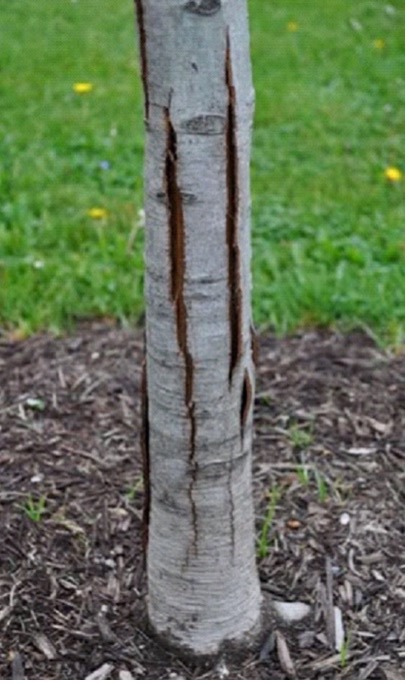
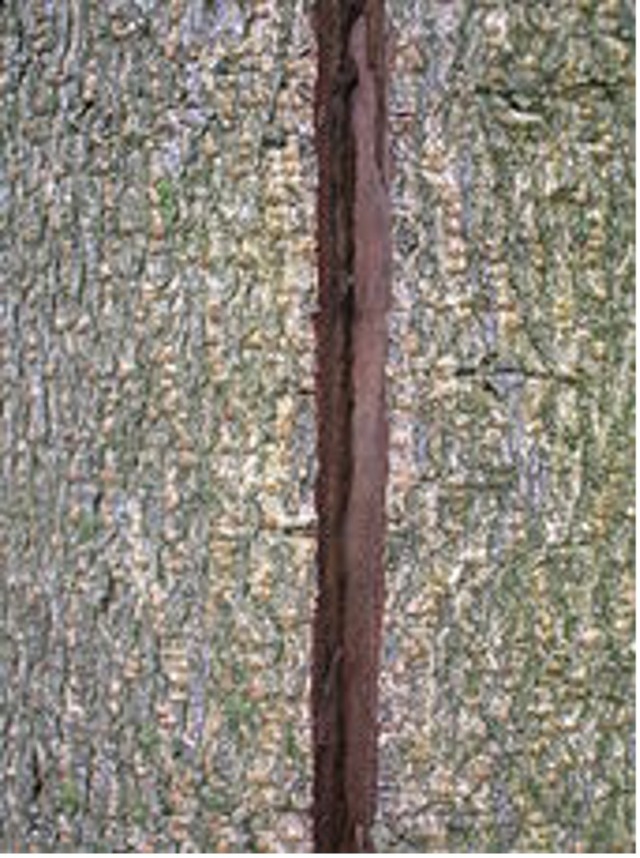
All trees have bark, and this protective covering serves as an insulator, protecting the vulnerable, living tissue just beneath the bark from cold and freezing. Bark also protects the tree from damage such as antler-rubbing, insects, or other physical and biological damage. However, bark can be vulnerable, too. Water (sap) inside the tree may freeze just beneath the bark, then rapidly thaw in bright winter sunshine. When repeated freezing, thawing, and re-freezing occurs, tissues beneath the bark will be damaged, dry out and crack. This process results in a very common looking tree damage known as frost cracking. The damage frequently occurs with thin barked trees, such as young maple, birch, beech, or many ornamental trees or fruit trees.

Frost cracks.
detail of a frost crack in a tree with rough bark

While the freezing-thawing cycle may cause problems for many trees, the same cycle in mid- to late-winter results in benefits for pancake lovers. At this time of year sap movement and production greatly increase in maples trees – and other trees that produce sap. Once temperatures start rising above freezing during the day, but remain frozen during the night, the sap may start to run and tapping the maple trees may begin.

Rose-Marie Muzika is the Director of Science and Research at Carnegie Museum of Natural History. Museum staff, volunteers, and interns are encouraged to blog about their unique experiences and knowledge gained from working at the museum.

Related Content

Ask a Scientist: What does a museum Science Director do?

Insect Metamorphosis: The Key To a Fresh New Start

A Taste for Metal

Filed Under: Blog Tagged With: Botany, Rose-Marie Muzika, Science News

February 10, 2021 by wpengine

Do plants have lips? No, but one genus sure looks like it does!

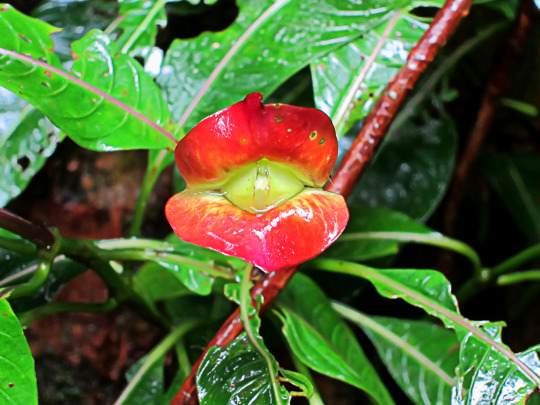
close up of bright red bracts of Palicourea elata, a plant nicknamed hot lips

Pucker up! Hot lips, Palicourea elata, is a tropical tree found in the rain forests of Central and South America with bright red lips, I mean bright red bracts – modified or specialized leaves at the base of the flower. The bright red bracts evolved to attract pollinators, including hummingbirds and butterflies, and they will eventually spread open to reveal the plant’s flowers. Interestingly, this plant’s flower does not give off a scent, and relies on visual cues to attract its pollinators.

Palicourea elata is part of an important group of plants in the coffee family (Rubiaceae), and it has more to offer than what the eye can see. Species in the Palicourea and the related Psychotria genus have also been shown to have antimicrobial, anti-inflammatory, and psychedelic properties. It is also used as traditional medicine among the Amazon peoples to treat aches, arthritis, infertility, and impotency.

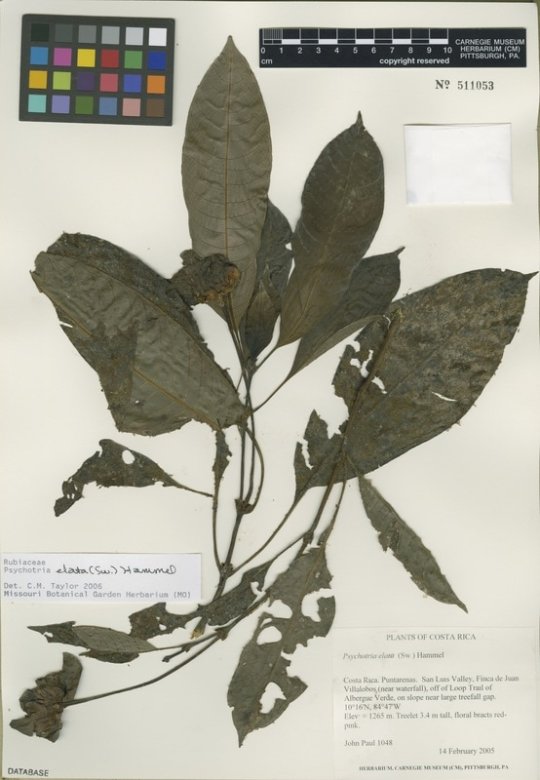
Let’s revisit a “Collected on this Day” specimen from February 14, 2005.

herbarium specimen of Palicourea elata

Though this mounted specimen doesn’t show off its striking flower, it was collected on Valentine’s Day, so that’s pretty romantic! As one of more than half a million specimens in the Carnegie Museum herbarium, this preserved plant is notable for being collected as part of the PhD research at the nearby University of Pittsburgh by John Paul, now a professor at the University of California, San Francisco.

P. elata has become endangered due to deforestation in its native range, and the International Union for Conservation of Nature, or IUCN, has reported that one-tenth of all the Psychotria species are considered threatened.

How can you help species of concern? Log your plant and animal observations into a community-based science platform, such as iNaturalist (like Hot Lips’ page). While you might not have Hot Lips in your backyard, iNaturalist can help you monitor plant and wildlife species, common or endangered. Your observations inform conservation practitioners on changes to a species range, population, behavior, phenology, etc.

Log your observations on iNaturalist the next time you’re in nature!

Heather Hulton VanTassel is Assistant Director of Science and Research at Carnegie Museum of Natural History. Mason Heberling is Assistant Curator of Botany at Carnegie Museum of Natural History. Museum employees are encouraged to blog about their unique experiences and knowledge gained from working at the museum.

Related Content

Ask a Scientist: How do you find rare plants?

Collected in June 1830: Strawberry Bush

Finding Resilience Through Plant Love

Filed Under: Blog Tagged With: Botany, Heather Hulton VanTassel, Mason Heberling, Science News

  • « Go to Previous Page
  • Page 1
  • Page 2
  • Page 3
  • Page 4
  • Page 5
  • Page 6
  • Interim pages omitted …
  • Page 28
  • Go to Next Page »

sidebar

About

  • Mission & Commitments
  • Directors Team
  • Museum History

Get Involved

  • Volunteer
  • Membership
  • Carnegie Discoverers
  • Donate
  • Employment
  • Events

Bring a Group

  • Groups of 10 or More
  • Birthday Parties at the Museum
  • Field Trips

Powdermill

  • Powdermill Nature Reserve
  • Powdermill Field Trips
  • Powdermill Staff
  • Research at Powdermill

More Information

  • Image Permission Requests
  • Science Stories
  • Accessibility
  • Shopping Cart
  • Contact
  • Visitor Policies
One of the Four Carnegie Museums | © Carnegie Institute | Privacy Policy | Terms of Use | Accessibility
Rad works here logo