• Skip to primary navigation
  • Skip to main content
  • Skip to primary sidebar

Carnegie Museum of Natural History

One of the Four Carnegie Museums of Pittsburgh

  • Visit
    • Buy Tickets
    • Visitor Information
    • Exhibitions
    • Events
    • Dining at the Museum
    • Celebrate at the Museum
    • Powdermill Nature Reserve
    • Event Venue Rental
  • Learn
    • Field Trips
    • Educator Information
    • Programs at the Museum
    • Bring the Museum to You
    • Guided Programs FAQ
    • Programs Online
    • Climate and Rural Systems Partnership
  • Research
    • Scientific Sections
    • Science Stories
    • Science Videos
    • Senior Science & Research Staff
    • Museum Library
    • Science Seminars
    • Scientific Publications
    • Specimen and Artifact Identification
  • About
    • Mission & Commitments
    • Directors Team
    • Museum History
  • Tickets
  • Give
  • Shop

brazil

February 22, 2017 by wpengine

The Unseen Museum

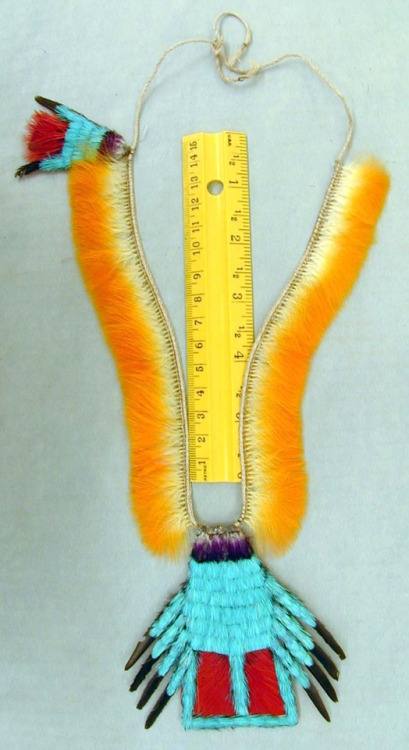
vibrant blue and orange tukaniwar necklace

The Unseen Museum: Ka’apor Necklace

This necklace (tukaniwar) was worn by women of the Ka’apor tribe of eastern Brazil for the Ta’i Rupi Taha
name-giving ceremony. The museum’s collections include beautiful feather work from the Amazon Basin of South America. The Ka’apor are particularly adept at working with small feathers.

The yellow feathers on the cord are from the breast of the channel-billed toucan (Ramphastos vitellinus ariel); they are twined to a tiny thread, which is lashed to the larger cord. The pendants are made of turquoise blue breast feathers and purple throat feathers from the spangled cotinga (Cotinga cayana) and black feathers from the white-tailed cotinga (Xipholena lamellipennis). The cotinga feathers are stuck to cut scarlet macaw (Ara macao) tail feathers with sap from the macarandua tree (Manilkara huberi).


Deb Harding is a collection manager in Carnegie Museum of Natural History’s Section of Anthropology. She frequently blogs and shares pieces of the museum’s hidden anthropology collection, which is home to over 100,000 ethnological and historical specimens and 1.5 million archaeological artifacts.
Filed Under: Blog Tagged With: anthropology, brazil, Deborah Harding

August 14, 2016 by wpengine

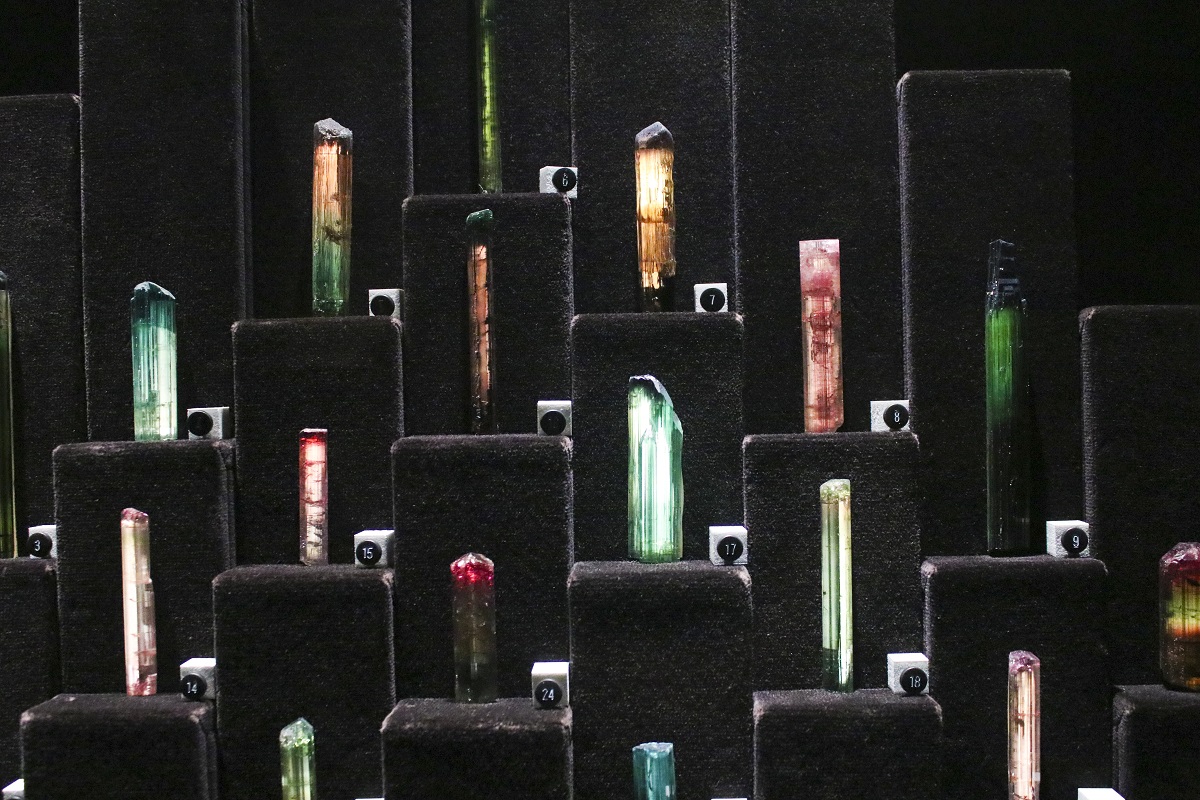
The great pegmatites of Minas Gerais in Brazil

tourmaline gemstones

The great pegmatites of Minas Gerais in Brazil are famous for producing the widest variety of colors in tourmaline gemstones. Carnegie Museum of Natural History has a wide variety of them on display in Hillman Hall of Minerals and Gems.

(photo by Hayley Pontia) 

Filed Under: Blog Tagged With: brazil, gems, Hillman Hall, Pittsburgh

August 9, 2016 by wpengine

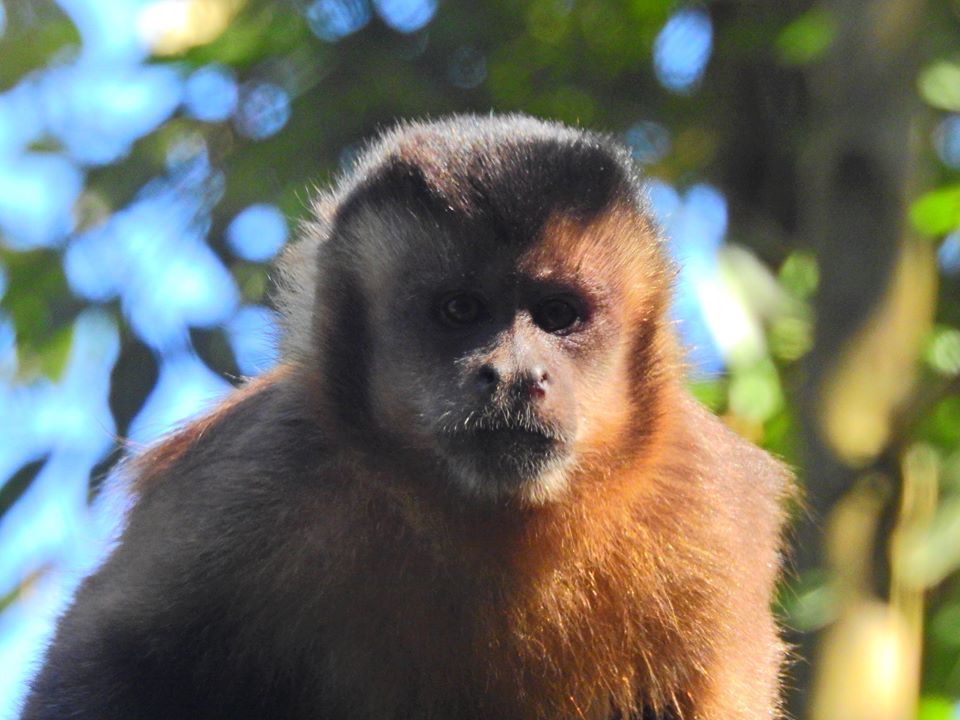
Snapshot from Brazil: black capuchin (Sapajus nigritus)

A Black capuchin
A Black capuchin photographed at Brazil’s first national park – Parque Nacional do Itatiaia with Observatório de Aves – Instituto Butantan.

by Luke DeGroote

Photographed at Brazil’s first national park – Parque Nacional do Itatiaia with Observatório de Aves – Instituto Butantan

Black capuchins are near threatened and declining due to habitat loss, hunting, and pet trade.

Luke DeGroote is an Avian Ecologist and the Bird Banding Program Manager at Powdermill Nature Reserve, the environmental research center of Carnegie Museum of Natural History. Luke is traveling in Brazil this summer to train Brazilian avian researchers band birds and explore new collaborations for the museum.

Filed Under: Blog Tagged With: brazil, Pittsburgh

sidebar

About

  • Mission & Commitments
  • Directors Team
  • Museum History

Get Involved

  • Volunteer
  • Membership
  • Carnegie Discoverers
  • Donate
  • Employment
  • Events

Bring a Group

  • Groups of 10 or More
  • Birthday Parties at the Museum
  • Field Trips

Powdermill

  • Powdermill Nature Reserve
  • Powdermill Field Trips
  • Powdermill Staff
  • Research at Powdermill

More Information

  • Image Permission Requests
  • Science Stories
  • Accessibility
  • Shopping Cart
  • Contact
  • Visitor Policies
One of the Four Carnegie Museums | © Carnegie Institute | Privacy Policy | Terms of Use | Accessibility
Rad works here logo