• Skip to primary navigation
  • Skip to main content
  • Skip to primary sidebar

Carnegie Museum of Natural History

One of the Four Carnegie Museums of Pittsburgh

  • Visit
    • Buy Tickets
    • Visitor Information
    • Exhibitions
    • Events
    • Dining at the Museum
    • Celebrate at the Museum
    • Powdermill Nature Reserve
    • Event Venue Rental
    • Gift Cards
  • Learn
    • Field Trips
    • Educator Information
    • Programs at the Museum
    • Bring the Museum to You
    • Guided Programs FAQ
    • Programs Online
    • Climate and Rural Systems Partnership
  • Research
    • Scientific Sections
    • Science Stories
    • Science Videos
    • Senior Science & Research Staff
    • Museum Library
    • Science Seminars
    • Scientific Publications
    • Specimen and Artifact Identification
  • About
    • Mission & Commitments
    • Directors Team
    • Museum History
  • Tickets
  • Give
  • Shop

City Nature Challenge ID

April 29, 2020 by wpengine

The Great Roly-Poly

April showers may bring May flowers, but they also create the perfect moist conditions for one of my favorite garden residents—the humble woodlouse.  These are cute little terrestrial isopods known by many, many regional names.  They have too many legs to be an insect or arachnid, but they’re also not leggy enough to be millipedes or centipedes.  Instead, woodlice are crustaceans, sharing family gatherings with lobsters and crabs, and although they are mostly land lubbers, they do prefer damp soil and wetter environments—like cool, humid basements.
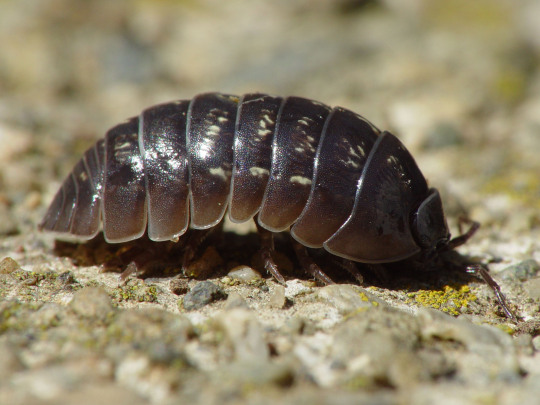
The name is often the most confusing bit.  I called them pill bugs as a kid, but others called them potato bugs.  In the United States and Canada, you might also call them tomato bugs, sow bugs, wood bugs, armadillo bugs, doodle bugs, roly-polies, carpenters, or boat-builders.  In Australia they’re a butchy boy, and in New Zealand they’re a slater.  But in the playfully creative UK they are cheesy bugs, cheesy bobs, or cheeselogs; chiggy pig, chucky pig, or chuggy peg; and daddy grampher, crawley baker, or granny grey.  In science they’re a terrestrial isopod in the suborder Oniscidea, but for now I’ll call them woodlice.

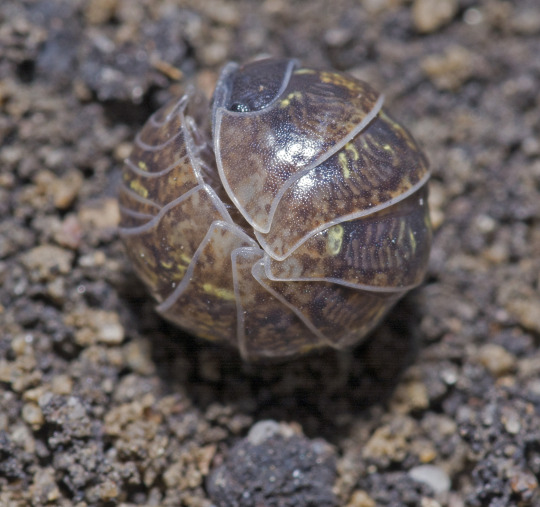
Perhaps they’re most endearing characteristic is their ability to roll up into a ball, or conglobate, to evade predators—of which they have many, including the specialist woodlouse spider. The woodlouse’s ball form is an impressive feat, reminiscent of hedgehogs and armadillos, and to miniature predators the rolled-up roly-poly is a fortress—though the mouse may see a convenient bite to eat.
The purpose of a woodlouse might seem unclear.  What is this crustacean doing in a garden or a forest?  And the truth is that the woodlouse is a member of a unique class of organisms that perform an incredibly important function—decomposing.  Woodlice munch on dead plant matter, such as wood, leaves, and fruits.  In return, woodlice add organic matter to soil which helps plants and animals up the food chain—also think fresh, free fertilizer for your garden.

So, here’s to the unsung hero of the understory! Here’s to the great roly-poly!

Aaron Young is a museum educator on Carnegie Museum of Natural History’s Outreach team. Museum staff, volunteers, and interns are encouraged to blog about their unique experiences and knowledge gained from working at the museum.

Related Content

Do No Harm: Dealing with Spotted Lanternflies

So, Just What is a Wheel Bug?

Can’t Choose Just One: Asking an Entomologist to Name Their Favorite Native Species

Carnegie Museum of Natural History Blog Citation Information

Blog author: Young, Aaron
Publication date: April 29, 2020

Share this post!

  • Share on Twitter Share on Twitter
  • Share on Facebook Share on Facebook
  • Share on Pinterest Share on Pinterest
  • Share on LinkedIn Share on LinkedIn
  • Share on Reddit Share on Reddit
  • Share via Email Share via Email

Filed Under: Blog Tagged With: City Nature Challenge ID, Museum from Home

April 29, 2020 by wpengine

Field Guides: An Introduction

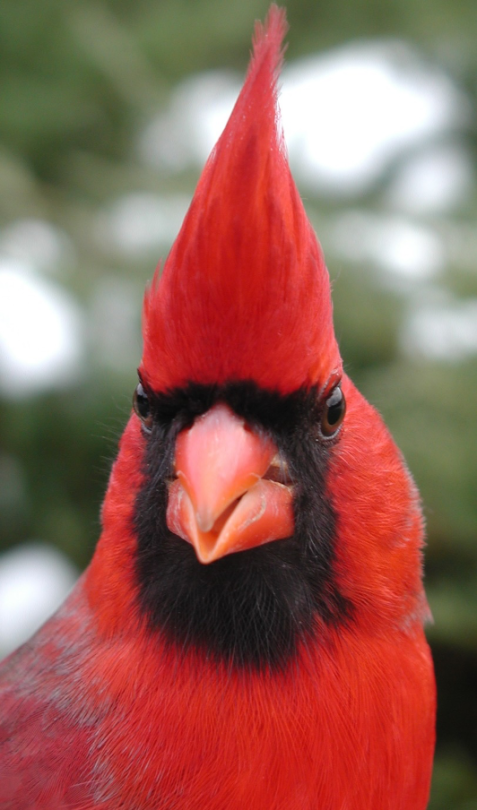
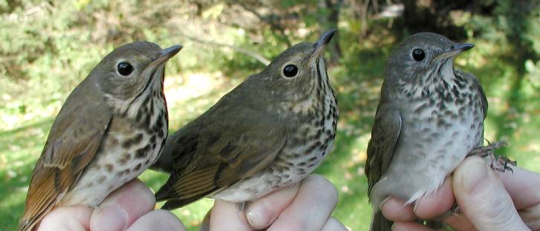
How do we identify birds? Some, like this Northern Cardinal, are easy because they are very distinctive. Others, like this lineup of thrushes, are more subtle and require a bit more sleuthing.

A male Northern Cardinal’s distinctive red plumage, crest, and heavy, seed-cracking beak make him an easy bird to identify.

At first glance, these thrushes look very similar and could be confused as the same species (left to right: Hermit Thrush, Swainson’s Thrush, Gray-cheeked Thrush).

What identification steps do we take when we encounter a bird that looks similar to other birds? The first step is to try to narrow down which taxonomic group the bird belongs to. This might sound daunting, but it’s often pretty easy. Is it a duck? Is it a hawk? Is it a woodpecker? Is it a sparrow? Often things like the bird’s beak size and shape, body size and shape, posture, and plumage can help you figure out what family the bird belongs to. Now start to notice field marks: what plumage colors and markings does the bird have; is it streaked or spotted or barred, or does it have other obvious patches of color or pattern; what color are the eyes and legs; does the bird have ornamentation like a crest? Watch the bird for a little longer and estimate its size as compared to familiar objects, watch its behavior, notice what habitat it’s using. Birders often find it useful to carry a field notebook to jot down descriptions of what they see and even draw birds with the field marks they’ve noted. Writing down what you’ve seen makes it easier to remember as you work on identifying the species.

Now it’s time to look in a field guide (there are many to choose from and we’ve listed our favorites below). Some field guides cover birds found across a large geographic range and some are more regional or local. Most good field guides will include a range map, a written description including field marks, and multiple illustrations of photographs of each species. The best field guides taxonomically, that is with closely related species grouped together and the overall order of these groups representing taxonomic relationships. Note that taxonomy changes as scientists study the relatedness of species, and some field guides might not reflect recent updates. Beware of field guides that organize birds by color as many species are sexually dimorphic (males and females have different plumage coloration!).

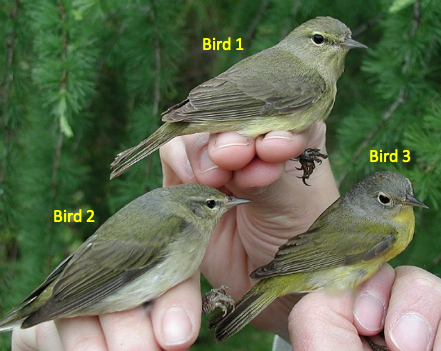
To illustrate how to use a field guide, let’s practice identifying a group of three birds that look very similar. This photograph was taken during fall migration, so we know that these birds are in non-breeding plumage. The first thing we notice is their size relative to adult hands. These birds are small and slender with beaks that are pointed and perfect for picking insects off of vegetation. So, what family are they members of? Yep, they’re warblers! In fact, some field guides have a section devoted to “confusing fall warblers” because many of them are more cryptic and look very much alike in the fall. Now, let’s note some field marks on each bird.

Birds 1 and 2 both have a faint eyeline whereas bird 3 has an eyering. We’ll focus first on bird 3. It’s quite yellow underneath on the breast and in the undertail coverts area, but whitish in the vent area. The head is gray and there looks like there might be some brown feathers in the crown. Now let’s take a closer look at birds 1 and 2. They look like they could be the same species, but let’s investigate more and note some key differences. Bird 1 is a more uniform olivey-green above and a creamy color underneath and the supercilium (stripe above the eye) is yellowish. There seems to be a hint of orange in the crown. Bird 2 is white underneath, has a greenish back that contrasts with a blue-gray head, and the supercilium is whitish.

Now that we have our notes with field marks, let’s open the field guide and turn to the warbler section. We know that these birds were encountered in southwestern Pennsylvania during fall migration, so range maps can help eliminate a few species right away. Using the field marks we discussed, can you identify these three species? (answers below!)

Favorite field guides to birds of North America

The Sibley Guide to Birds by David Allen Sibley (recommend the second edition, second printing) – this field guide has paintings of birds in all plumages and in similar poses to help with identification. Sibley has a series of guides to North American birds and to other taxa.

https://www.sibleyguides.com/

https://www.facebook.com/DavidAllenSibley

National Geographic Field Guide to the Birds of North America – this guide is frequently updated and reprinted so taxonomy and range maps are up to date.

https://www.amazon.com/National-Geographic-Field-Guide-America/dp/1426218354

Kaufman Field Guide to the Birds of North America – this is a photographic guide to North American birds, and the guide was the first of its kind to be published in Spanish. Kaufman has a series of field guides to other taxa in North America.

http://www.kaufmanfieldguides.com/

https://www.facebook.com/KaufmanFieldGuides

Peterson Field Guide to Birds by Roger Tory Peterson – this guide points out noticeable field marks that help an observer more easily identify species. Peterson has a series of field guides to other taxa in North America.

https://www.hmhbooks.com/series/peterson-field-guides

There are other excellent field guides that are for specific taxa (e.g., warblers, sparrows, gulls, waterfowl, etc.), for narrower geographic areas, or that highlight behavior or bird life history. There are many books to help explore and identify wildlife!

Answers to the warbler quiz:

Bird 1 – Orange-crowned Warbler, Bird 2 – Tennessee Warbler, Bird 3 – Nashville Warbler

Annie Lindsay is the Banding Program Manager at Carnegie Museum of Natural History’s Powdermill Nature Reserve. Museum staff, volunteers, and interns are encouraged to blog about their unique experiences and knowledge gained from working at the museum.

Filed Under: Blog Tagged With: City Nature Challenge ID, Museum from Home

April 29, 2020 by wpengine

Collected on this Day in 1998: Spontaneous mints in your backyard

by Mason Heberling

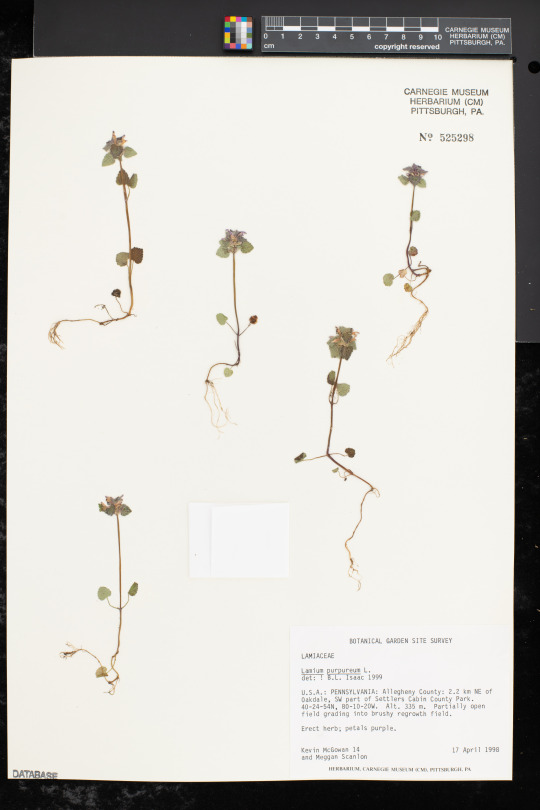
mint specimens on herbarium sheet

This specimen of purple dead-nettle  (Lamium purpureum) was collected on April 17, 1998 by Kevin McGowan and Meggan Scanlon near Settler’s Cabin County Park in Oakdale, PA on property that is now the Pittsburgh Botanic Garden.  As seen in the title of the specimen label, it was collected as part of a biological survey for the planning of the site, a large ongoing restoration of the formerly mined property.

Purple dead-nettle is probably in your backyard. Or if not, you likely don’t have to go far to find it in a lawn or sidewalk crack.   Some call it a “weed.” Or, in the case of in your lawn, “spontaneous vegetation” is a lighter hearted term. It is native to Europe and Asia but now widespread across the world, including North America.

Purple dead-nettle is not related to stinging nettle, despite the name.   It was named “dead-nettle” because is reminiscent to nettles (well, at least to whoever came up with the common name) but does not have stinging hairs.

Purple dead-nettle is in the mint family (Lamiaceae) with square stems often characteristic of mints.  Try rolling the stem between your fingers and you’ll notice the square stems.

The City Nature Challenge is just around the corner (April 30 – May 3, 2021)!

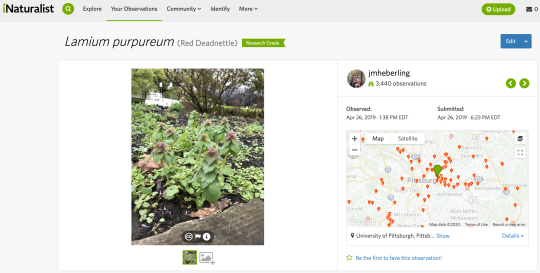
Lamium purpureum was the 9th most observed species in the Pittsburgh region for City Nature Challenge 2019.  Here’s an observation of purple dead-nettle from the 2019 challenge from the flower bed near the Dippy statue at the Carnegie Museum of Natural History.

The City Nature Challenge is a global event where cities come together to share the biodiversity seen in their urban areas. Your nature sightings are shared through the free community science platform, iNaturalist. If you have never used iNaturalist, the City Nature Challenge is a great way to introduce yourself to iNaturalist.  You’ll be hooked.

Past years have been (friendly) competitions among cities, competing for the most observations or species. But given the current pandemic, this year is different.  It is not about the number of observations you make. It is a celebration of nature, wherever you can safely be this year…which for most, is your backyard!  Or the sidewalk near your house. Or the parking lot. Or a local park. Or maybe even inside your house.

Keep a look out for purple dead-nettle.  You won’t have to go far! In City Nature Challenge Pittsburgh 2019, this species was the 9th most observed species!

Or if you can’t safely be outside, you can view other observations on iNaturalist.org at any time!  You can help identify photos or just click around and go for a virtual botanical hike around Pittsburgh!

Or look online at Carnegie Museum’s 185 herbarium specimens of purple dead nettle, going back to 1826 in England! Or this one growing 138 years ago collected in Beaver county.

However you can, there are plenty of ways to participate and connect with nature while staying safe!

Find this specimen of purple dead-nettle here.

Check back for more! Botanists at the Carnegie Museum of Natural History share digital specimens from the herbarium on dates they were collected. They are in the midst of a three-year project to digitize nearly 190,000 plant specimens collected in the region, making images and other data publicly available online. This effort is part of the Mid-Atlantic Megalopolis Project (mamdigitization.org), a network of thirteen herbaria spanning the densely populated urban corridor from Washington, D.C. to New York City to achieve a greater understanding of our urban areas, including the unique industrial and environmental history of the greater Pittsburgh region. This project is made possible by the National Science Foundation under grant no. 1801022.

Mason Heberling is Assistant Curator of Botany at the Carnegie Museum of Natural History. Museum employees are encouraged to blog about their unique experiences and knowledge gained from working at the museum.

Related Content

Collected on This Day in 1998: Common Chickweed

Spring Birds in Your Backyard

Botany Near Home

Carnegie Museum of Natural History Blog Citation Information

Blog author: Heberling, Mason
Publication date: April 17, 2020

Share this post!

  • Share on Twitter Share on Twitter
  • Share on Facebook Share on Facebook
  • Share on Pinterest Share on Pinterest
  • Share on LinkedIn Share on LinkedIn
  • Share on Reddit Share on Reddit
  • Share via Email Share via Email

Share this post!

  • Share on Twitter Share on Twitter
  • Share on Facebook Share on Facebook
  • Share on Pinterest Share on Pinterest
  • Share on LinkedIn Share on LinkedIn
  • Share on Reddit Share on Reddit
  • Share via Email Share via Email

Filed Under: Blog Tagged With: City Nature Challenge ID, collected on this day, Mason Heberling, Museum from Home

sidebar

About

  • Mission & Commitments
  • Directors Team
  • Museum History

Get Involved

  • Volunteer
  • Membership
  • Carnegie Discoverers
  • Donate
  • Employment
  • Events

Bring a Group

  • Groups of 10 or More
  • Birthday Parties at the Museum
  • Field Trips

Powdermill

  • Powdermill Nature Reserve
  • Powdermill Field Trips
  • Powdermill Staff
  • Research at Powdermill

More Information

  • Image Permission Requests
  • Science Stories
  • Accessibility
  • Shopping Cart
  • Contact
  • Visitor Policies
Stay in the loop! Sign up for our newsletter(s).
One of the Four Carnegie Museums | © Carnegie Institute | Privacy Policy | Terms of Use | Accessibility
Rad works here logo