• Skip to primary navigation
  • Skip to main content
  • Skip to primary sidebar

Carnegie Museum of Natural History

One of the Four Carnegie Museums of Pittsburgh

  • Visit
    • Buy Tickets
    • Visitor Information
    • Exhibitions
    • Events
    • Dining at the Museum
    • Celebrate at the Museum
    • Powdermill Nature Reserve
    • Event Venue Rental
  • Learn
    • Field Trips
    • Educator Information
    • Programs at the Museum
    • Bring the Museum to You
    • Guided Programs FAQ
    • Programs Online
    • Climate and Rural Systems Partnership
  • Research
    • Scientific Sections
    • Science Stories
    • Science Videos
    • Senior Science & Research Staff
    • Museum Library
    • Science Seminars
    • Scientific Publications
    • Specimen and Artifact Identification
  • About
    • Mission & Commitments
    • Directors Team
    • Museum History
  • Tickets
  • Give
  • Shop

coal

May 7, 2019 by wpengine

Everything Pennsylvania

On May 10th a new temporary exhibit is scheduled to be installed in Wertz Gallery: Gems and Jewelry that will feature gemstones, cabochons, polished spheres and carvings made from minerals unearthed in our own state of Pennsylvania. While we may be known as a coal producing state, there are lapidary and faceting grade minerals that are found in Pennsylvania as well. And, believe it or not, one of the polished pieces in the exhibit is a type of coal known as JET.
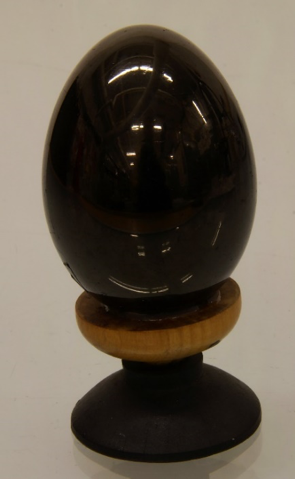
A carved egg made from JET, a type of LIGNITE which is a precursor to COAL.

The English noun “Jet” derives from the French word for the same material: jaiet (modern French “jais”). The adjective “jet-black,” meaning as dark a black as possible, derives from this material.

Another unusual piece in the exhibit is a carving of an elephant made from a translucent variety of ANTIGORITE known as WILLIAMSITE which is found in the State Line Chromite District in Lancaster County.
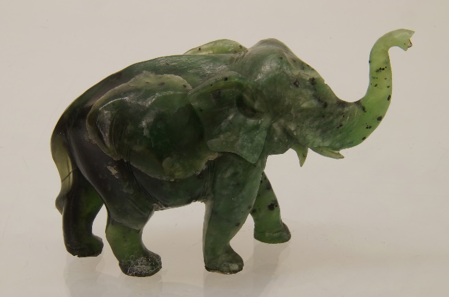
Elephant carved from WILLIAMSITE found at Lowe’s Chromite Mine in Fulton Township.

WILLIAMSITE was named in 1848 in honor of its discoverer, Lewis White Williams, a mineralogist and geologist of West Chester, Pennsylvania.

I don’t want to give away too much because I want you to come the museum to see the exhibit in person, but I will reveal two other pieces. They were personally collected at the Bingham Mine in Hamiltonban Township, Adams County, by the 1988 Carnegie Mineralogical Award winner, John Sinkankas, who also cut and polished them. The colors in these cabochons are due to the epidote and cuprite in the META-RHYOLITE, which is a silicified, or metamorphosed, RHYOLITE (an extrusive igneous rock).
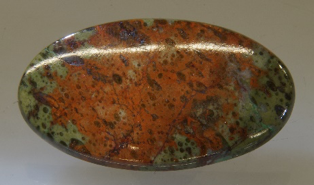
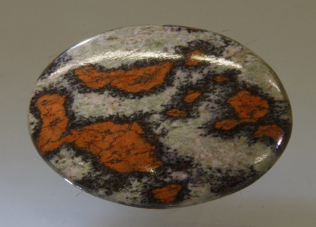
META-RHYOLITE cabochons purchased from John Sinkankas in 1990.

META-RHYOLITE cabochons purchased from John Sinkankas in 1990.

Besides those pieces mentioned here, you will also see faceted gemstones of QUARTZ, AMETHYST, SMOKY QUARTZ, AQUAMARINE, and TITANITE; cabochons of MALACHITE, BLUE QUARTZ, SUNSTONE, and AMAZONITE; and polished spheres of COPPER & QUARTZ, and BLUE QUARTZ. The Cut and Polished Pennsylvania Gems and Minerals will be on exhibit in Wertz Gallery at least through the end of summer. Don’t miss it!

Debra Wilson is the Collection Manager for the Section of Minerals at Carnegie Museum of Natural History. Museum employees are encouraged to blog about their unique experiences and knowledge gained from working at the museum.

Filed Under: Blog Tagged With: coal, Deb Wilson, Debra Wilson, gems, gems and minerals, Hillman Hall, Hillman Hall of Minerals and Gems, minerals, pennsylvania, Wertz Gallery

September 10, 2018 by wpengine

This Land is Your Land, This Land is Mine Land

by Max Winn and Andrea Kautz

Since the passing of Act 54 in 1994, Pennsylvania requires a review of all subsidence impacts related to underground coal mining every five years. Subsidence occurs when land at the surface collapses down into a cavity created by removing a layer of coal. This can affect structures, roads, water wells/springs, streams, ponds, and wetlands. It can also induce landslides.

Powdermill scientists are currently part of the oversight team for the 2013-2018 review, and are using GIS technology to calculate and assess the impacts that mines have specifically on streams and wetlands.  Most subsidence impacts occur over “long wall” mines, where enormous panels of coal are removed. “Room and pillar” mines leave pillars of coal to support the roof of the mine, which generally prevents subsidence, but impacts may still occur.

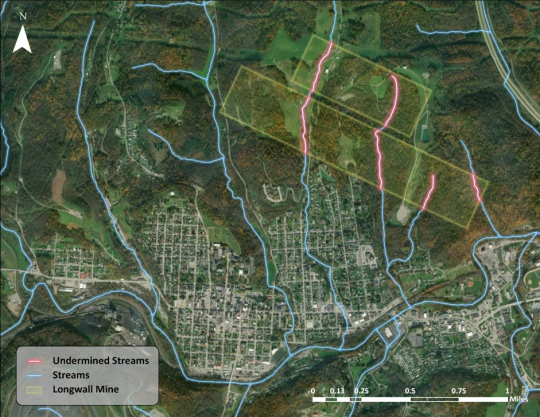
Take a look at this aerial imagery of a portion of a longwall mine, that shows just how much area the panels cover and the streams that are undermined. The larger panel is over a mile long! Using GIS, we can calculate how much of the undermined streams are impacted by either flow loss or pooling. Flow loss is experienced when the earth fractures and the water is lost below the surface.  Pooling occurs when water collects in a depression caused by subsidence and can no longer flow downstream.

map of streams and mines

When stream impacts occur in Pennsylvania, the coal companies are required to mitigate the damage to return the stream to its previous state. Because you can generally predict where subsidence impacts are going to occur before mining, pre-mining surveys are done to determine the health of the streams initially. The survey determines normal flow rates throughout the year, and also describes the community of aquatic macroinvertebrates that live in the stream. Based on what types of insects and other invertebrates are found during the survey, the stream is given a score based on how healthy it is. These data are used to compare to post-mining surveys that occur after attempts to mitigate have been completed. If the scores are comparable, the stream is considered repaired, but if not, the company is required to take further mitigative action.

Experts from the Carnegie Museum of Natural History and Powdermill Nature Reserve are working with regulatory agencies and mining companies to ensure that our natural environment is passed on to the next generation in a healthy condition.

Max Winn is a GIS Technician and Andrea Kautz is a Research Entomologist at Carnegie Museum of Natural History’s Powdermill Nature Reserve. Museum employees are encouraged to blog about their unique experiences and knowledge gained from working at the museum.

Filed Under: Blog Tagged With: coal, pennsylvania, Powdermill Nature Reserve, We Are Nature 2

sidebar

About

  • Mission & Commitments
  • Directors Team
  • Museum History

Get Involved

  • Volunteer
  • Membership
  • Carnegie Discoverers
  • Donate
  • Employment
  • Events

Bring a Group

  • Groups of 10 or More
  • Birthday Parties at the Museum
  • Field Trips

Powdermill

  • Powdermill Nature Reserve
  • Powdermill Field Trips
  • Powdermill Staff
  • Research at Powdermill

More Information

  • Image Permission Requests
  • Science Stories
  • Accessibility
  • Shopping Cart
  • Contact
  • Visitor Policies
One of the Four Carnegie Museums | © Carnegie Institute | Privacy Policy | Terms of Use | Accessibility
Rad works here logo