• Skip to primary navigation
  • Skip to main content
  • Skip to primary sidebar

Carnegie Museum of Natural History

One of the Four Carnegie Museums of Pittsburgh

  • Visit
    • Buy Tickets
    • Visitor Information
    • Exhibitions
    • Events
    • Dining at the Museum
    • Celebrate at the Museum
    • Powdermill Nature Reserve
    • Event Venue Rental
    • Gift Cards
  • Learn
    • Field Trips
    • Educator Information
    • Programs at the Museum
    • Bring the Museum to You
    • Guided Programs FAQ
    • Programs Online
    • Climate and Rural Systems Partnership
  • Research
    • Scientific Sections
    • Science Stories
    • Science Videos
    • Senior Science & Research Staff
    • Museum Library
    • Science Seminars
    • Scientific Publications
    • Specimen and Artifact Identification
  • About
    • Mission & Commitments
    • Directors Team
    • Museum History
  • Tickets
  • Give
  • Shop

collected on this day

June 19, 2018 by wpengine

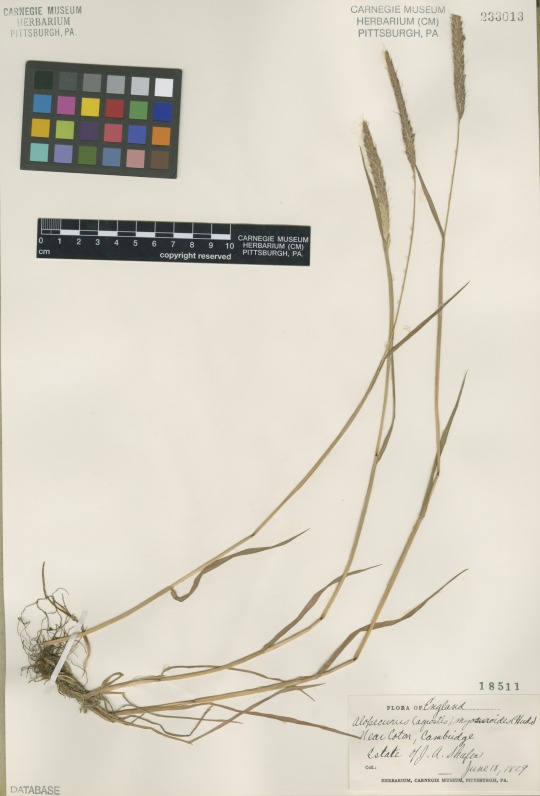
Collected on this Day: Alopecurus  myosuroides

By Mason Heberling

Alopecurus  myosuroides specimen

Herbarium specimens provide key insights into the Anthropocene.  In many cases, natural history collections are the only baseline we have to understand the widespread, complex effects of human activities on the earth systems over the past century.

This grass species shown here is of particular interest. This specimen was collected in Cambridge, England on June 18, 1829.  This grass species (Alopecurus myosuroides), commonly known as “slender meadow foxtail” or “black-grass,” is a major weed in farm fields (especially wheat and barley), and can significantly reduce crop yields.

Unwanted plants (“weeds”) have been an ongoing fight for humans since the dawn of agriculture.  The  “Green Revolution” (1930s-1960s) was a point in human history when agricultural production increased at an enormous rate and at unprecedented scales, aided  by technological developments in crop breeding, pesticides, herbicides, and fertilizers.  It has been one time point suggested to mark the “official” start of the Anthropocene, a proposed geological era defined by human activities.

Herbicides are commonly used to control weeds to increase crop yields.  With the increase of herbicides, some plant species have evolved resistance to these herbicides. In a cool study in PLoS ONE in 2013, Délye et al. did a DNA analysis of herbarium specimens collected from 1788 to 1975 to show that some individuals of this grass species already possessed the gene mutations associated with herbicide resistance well before herbicides were widely used!  They show that the use of herbicides selected for these individuals, such that those individuals with herbicide resistance are now more abundant.

Who would have thought these specimens would be used this way. There are so many known and yet to be known uses of herbaria.

The collector of this specimen back in 1829 certainly didn’t think it could be used to understand the evolution and effects of herbicide use over 175 years later!

Botanists at Carnegie Museum of Natural History share pieces of the herbarium’s historical hidden collection on the dates they were discovered or collected. Check back for more!
Filed Under: Blog Tagged With: Anthropocene, Botany, collected on this day, Mason Heberling

November 6, 2017 by wpengine

Collected on this Day in 1933

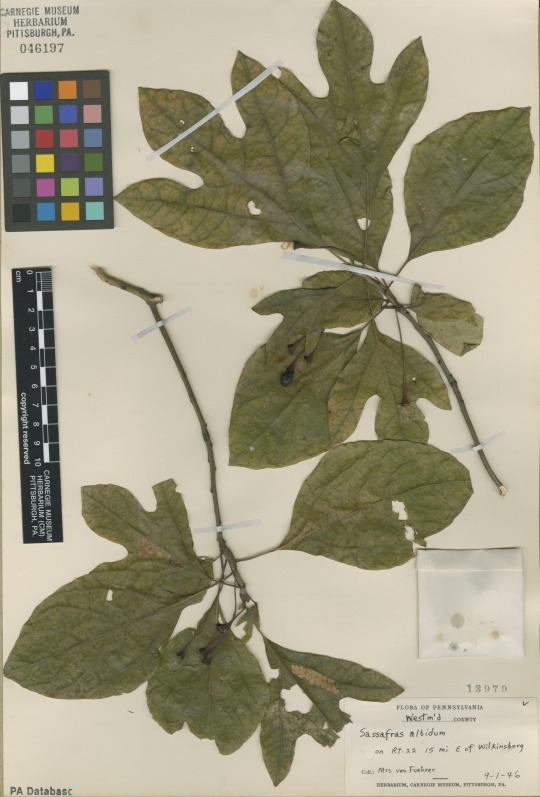
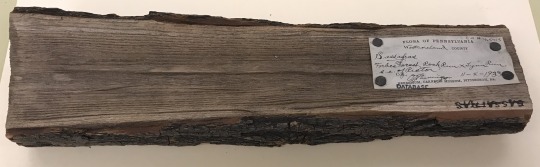
This specimen isn’t your typical herbarium specimen of Sassafras (Sassafras albidum). On November 4, 1933, this piece of sassafras wood was collected by Otto Jennings at Linn Run/Rock Run, about five miles south of Ligonier, Pennsylvania.  
It is unclear what motivated this collection, since Jennings did not normally collect wood like this. Given its bulky size, it is stored separately with the fruit collection in the herbarium.  

This specimen isn’t your typical herbarium specimen of Sassafras (Sassafras albidum). On November 4, 1933, this piece of sassafras wood was collected by Otto Jennings at Linn Run/Rock Run, about five miles south of Ligonier, Pennsylvania.

It is unclear what motivated this collection, since Jennings did not normally collect wood like this. Given its bulky size, it is stored separately with the fruit collection in the herbarium.

Sassafras is a medium-sized deciduous tree, native across eastern North America. It is easily recognized by its uniquely mitten-shaped leaves. The leaves are very aromatic when crushed in your hand, like many other species in the Laurel family (Lauraceae). They also turn a beautiful red in fall. Sassafras has long been used by humans for medicine and food, both by Native Americans and later Europeans.

Ever wonder where the root in root beer comes from?  Root beer was traditionally made from sassafras roots or bark. But, since 1960, sassafras is no longer used in commercially made root beers. The FDA has shown safrole (the aromatic oil in sassafras roots and bark) to cause liver damage and/or cancer in high doses to laboratory animals. Many commercial root beers nowadays use artificial flavors.


Ever wonder where the root in root beer comes from?  Root beer was traditionally made from sassafras roots or bark. But, since 1960, sassafras is no longer used in commercially made root beers. The FDA has shown safrole (the aromatic oil in sassafras roots and bark) to cause liver damage and/or cancer in high doses to laboratory animals. Many commercial root beers nowadays use artificial flavors.

Botanists at Carnegie Museum of Natural History share pieces of the herbarium’s historical hidden collection on the dates they were discovered or collected. Check back for more!
Filed Under: Blog Tagged With: Botany, collected on this day, Mason Heberling

October 23, 2017 by wpengine

Collected on this Day in 1926

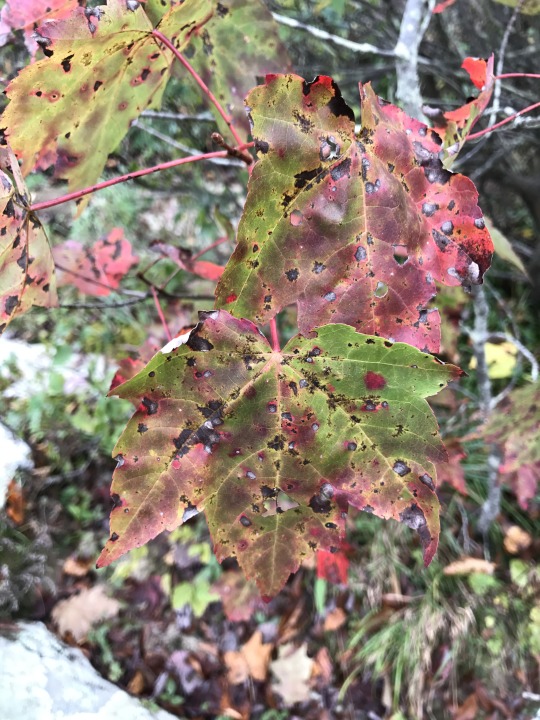
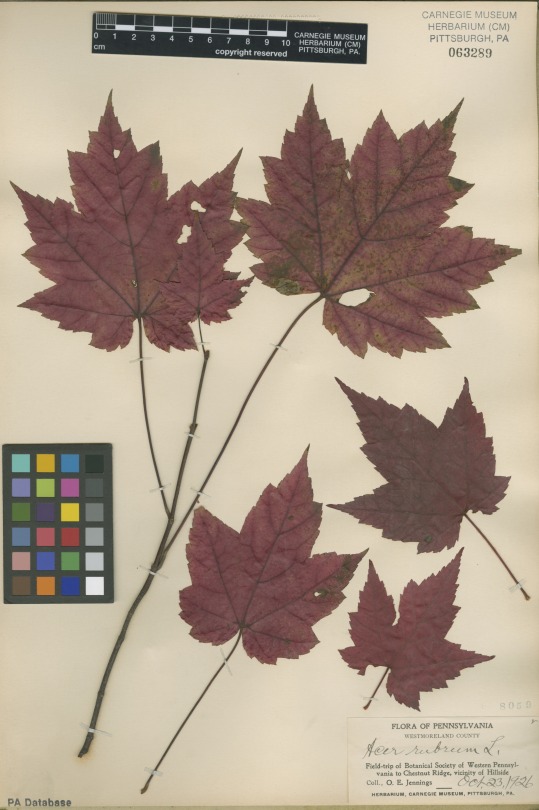
This red maple specimen was collected on October 23, 1926 by Otto Jennings during a field trip of the Botanical Society of Western PA to Chestnut Ridge.

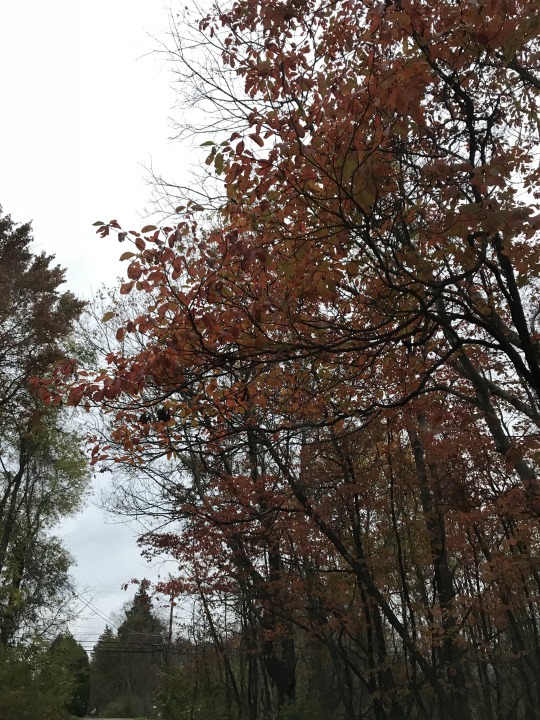
Despite being over 90 years old, this specimen still has beautiful color! This red maple specimen was collected on October 23, 1926 by Otto Jennings during a field trip of the Botanical Society of Western PA to Chestnut Ridge in the beautiful Laurel Highlands of Pennsylvania. Red maple (Acer rubrum) is one of the most common trees in eastern North America. You can find it from southern Canada down to Florida and Minnesota down to eastern Texas. It is renowned for its beautiful scarlet red foliage in autumn. Happy fall!

Red maple is renowned for its bright red foliage in the autumn.

Botanists at Carnegie Museum of Natural History share pieces of the herbarium’s historical hidden collection on the dates they were discovered or collected. Check back for more!
Carnegie Museum of Natural History Blog Citation Information

Blog author: Heberling, Mason
Publication date: October 23, 2017

Share this post!

  • Share on Twitter Share on Twitter
  • Share on Facebook Share on Facebook
  • Share on Pinterest Share on Pinterest
  • Share on LinkedIn Share on LinkedIn
  • Share on Reddit Share on Reddit
  • Share via Email Share via Email

Filed Under: Blog Tagged With: Botany, collected on this day, Mason Heberling

March 17, 2017 by wpengine

What is a Shamrock?

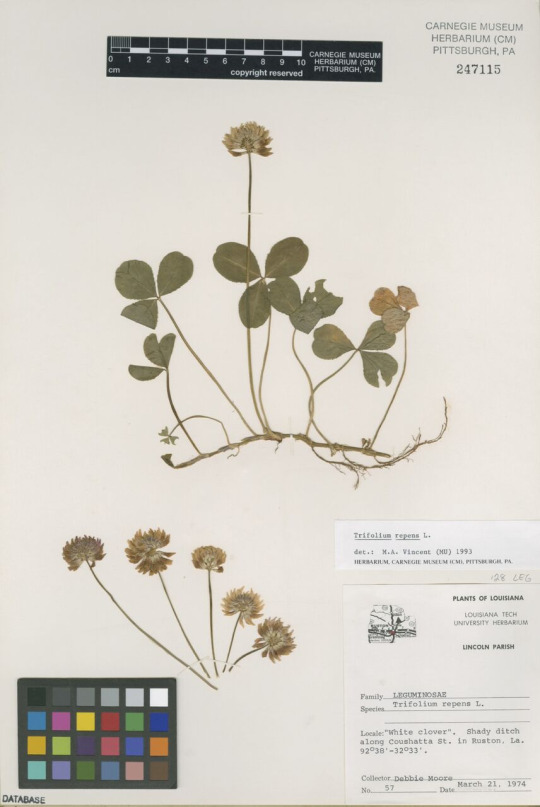
white clover
Trifolium repens (collected 1974 in Louisiana), aka white clover.

by Mason Heberling

What is a shamrock? There is no overwhelming scientific consensus on which species is the well-known Irish national emblem. There was survey of Irish botanists in the early 1890s asking which species was the true shamrock. A similar survey was repeated in 1988. The results suggest the shamrock is either Trifolium dubium (aka lesser trefoil) or Trifolium repens (aka white clover).

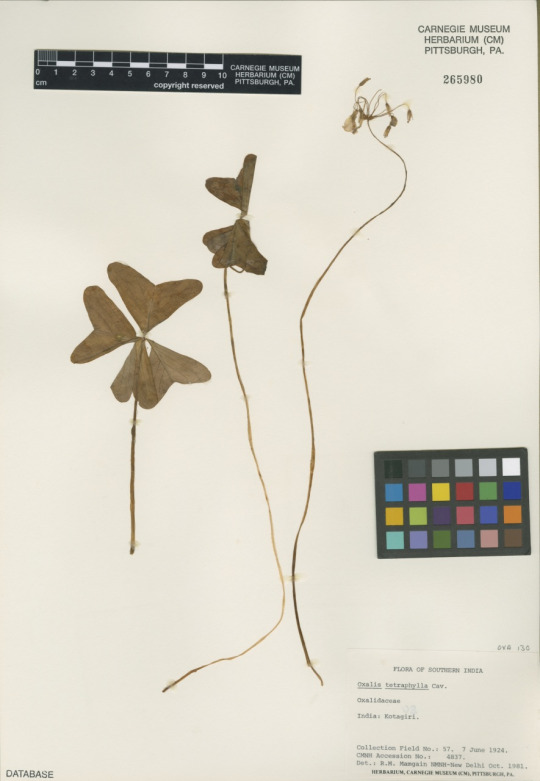
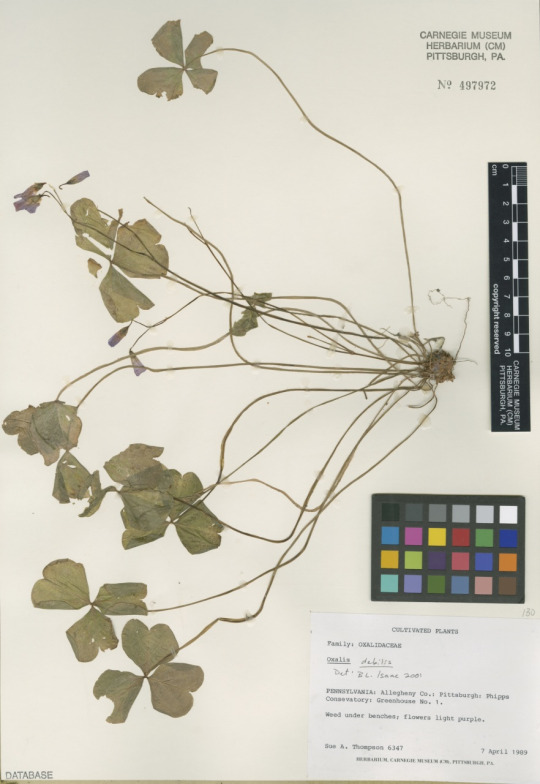
The plants commonly sold around St. Patrick’s Day as shamrocks or four-leaf clovers are in the plant genus Oxalis (wood sorrel), which belong to a different plant family than true clovers.

Trifolium dubium (collected 1961 in Pennsylvania), aka lesser trefoil.


Oxalis tetraphylla (collected 1981 in India), aka lucky clover, although not a true clover.


Oxalis debilis (collected 1989 in cultivation), aka pink woodsorrel.


Mason Heberling is a postdoctoral research associate at Carnegie Museum of Natural History. Museum employees are encouraged to blog about their unique experiences working with museum collections.

Related Content

Section of Minerals and Earth Sciences Celebrates Being Lucky!

Collected on This Day in 1957: Coltsfoot

Ask a Scientist: How do you find rare plants?

Share this post!

  • Share on Twitter Share on Twitter
  • Share on Facebook Share on Facebook
  • Share on Pinterest Share on Pinterest
  • Share on LinkedIn Share on LinkedIn
  • Share on Reddit Share on Reddit
  • Share via Email Share via Email

Filed Under: Blog Tagged With: Botany, collected on this day, Mason Heberling

  • « Go to Previous Page
  • Page 1
  • Interim pages omitted …
  • Page 6
  • Page 7
  • Page 8

sidebar

About

  • Mission & Commitments
  • Directors Team
  • Museum History

Get Involved

  • Volunteer
  • Membership
  • Carnegie Discoverers
  • Donate
  • Employment
  • Events

Bring a Group

  • Groups of 10 or More
  • Birthday Parties at the Museum
  • Field Trips

Powdermill

  • Powdermill Nature Reserve
  • Powdermill Field Trips
  • Powdermill Staff
  • Research at Powdermill

More Information

  • Image Permission Requests
  • Science Stories
  • Accessibility
  • Shopping Cart
  • Contact
  • Visitor Policies
Stay in the loop! Sign up for our newsletter(s).
One of the Four Carnegie Museums | © Carnegie Institute | Privacy Policy | Terms of Use | Accessibility
Rad works here logo