• Skip to primary navigation
  • Skip to main content
  • Skip to primary sidebar

Carnegie Museum of Natural History

One of the Four Carnegie Museums of Pittsburgh

  • Visit
    • Buy Tickets
    • Visitor Information
    • Exhibitions
    • Events
    • Dining at the Museum
    • Celebrate at the Museum
    • Powdermill Nature Reserve
    • Event Venue Rental
  • Learn
    • Field Trips
    • Educator Information
    • Programs at the Museum
    • Bring the Museum to You
    • Guided Programs FAQ
    • Programs Online
    • Climate and Rural Systems Partnership
  • Research
    • Scientific Sections
    • Science Stories
    • Science Videos
    • Senior Science & Research Staff
    • Museum Library
    • Science Seminars
    • Scientific Publications
    • Specimen and Artifact Identification
  • About
    • Mission & Commitments
    • Directors Team
    • Museum History
  • Tickets
  • Give
  • Shop

Education

May 8, 2020 by wpengine

City Nature Challenge Recap

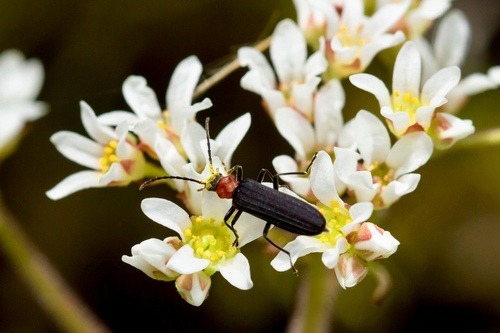
photo of black and red bug on white flowers

With the COVID-19 pandemic hitting, the entire world had to adapt how we participated in this year’s City Nature Challenge. This year we focused on a global collaboration instead of a competition, and physical distancing over public events. We are amazed at the creativity and resilience that we saw – and 2020’s City Nature Challenge results show just how important it was both globally and in the Pittsburgh region.

City Nature Challenge Results
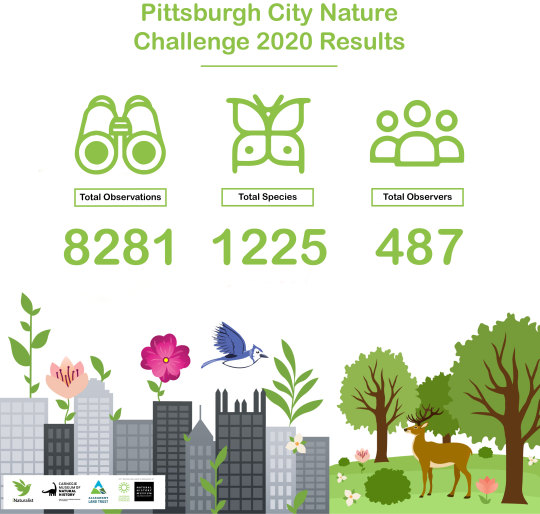
graphic of Pittsburgh City Nature Challenge 2020 Results: 8281 total observation, 1225 total species, and 487 total observers

This year, over 40,000 people around the world came together virtually to participate in the City Nature Challenge.  Collectively we shared over 800,000 observations of nature near our homes, and documented 135,435 different species of fungi, plants, and animals. Want to see what was found in any of the more than 200 cities that participated? You can explore at this link.

Pittsburgh’s numbers are incredible too. At the end of the challenge, the Pittsburgh region ended up having 487 observers, 8,281 observations, and 1,225 different species. We almost doubled the number of observers from last year!

The identification phase was a success as well with 419 users helping identify 13,446 different observations. You can explore all the Pittsburgh Region’s observations from this year at this link.
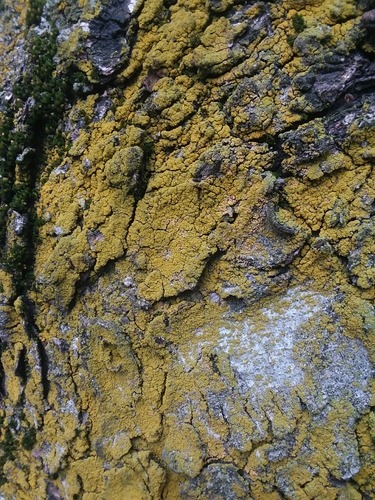
photo of candle flame lichen
Pete Peng has 1,310 observations and these Candleflame Lichens are beautiful.

Don’t Stop Observing!

We can’t put into words how thankful we are for everyone’s resilience and hard work. The results from this year’s City Nature Challenge prove that even though we have to distance from each other right now, we can still come together to accomplish something awesome.
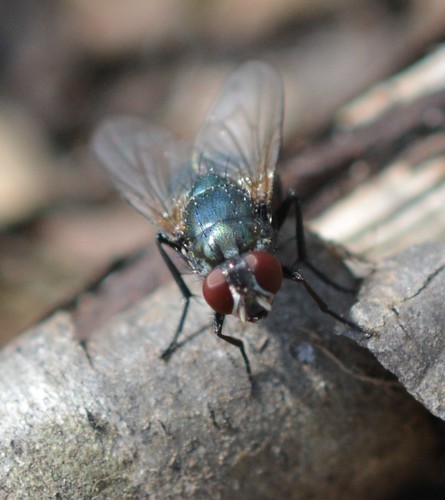
closeup photo of a fly
Check out this observation of a fly from Julia Schwierking!

The City Nature Challenge may be over, but the observations don’t have to end here. Nature is around you 24/7 and waiting to be observed. You can use the iNaturalist app anytime to share what you find!

We’d love to see your observations. Email them to nature360@carnegiemnh.org or tag us on social media @CarnegieMNH.

Get more nature activity ideas from Nature Lab!

Filed Under: Blog Tagged With: City Nature Challenge, Education, Educators, Museum from Home, Nature 360, Nature Lab

May 7, 2020 by wpengine

The City Nature Challenge Family Experience

photograph of a boy with a camera in a field

In these unprecedented times, it can be the simplest acts of normalcy that are most welcome.

It had been a while since we piled the entire family, including my wife, son, daughter, and myself, into the family minivan and headed off on an adventure.

The past six weeks consisted of self quarantine, at-home work, at-home schoolwork, neighborhood walks and riding bikes in the alley behind our house. The occasional trip to the grocery store, a most routine act any other time that I would probably have put off, had become a welcome escape.

Enter the City Nature Challenge. This worldwide event provided everything we needed: Fresh air. New experiences. Wonder. An opportunity to explore new worlds and use new technology.

Each previous year was an awesome event. This year’s felt more like a necessary one.

The drive over started off a little rough, with choruses of “I’m bored” and “My toe hurts.” As I passed the exit off Route 28 for St. Margaret’s Hospital, I made the tough decision not to pull off for the supposedly injured toe and keep the hospital bed free for another patient.

As we pulled into the parking lot of Beechwood Farms Nature Reserve in Fox Chapel, the gravel crunching beneath our tires was like a wakeup call. The kids shot up in their carseats and bobbed their heads as they desperately tried to get a view of the nature reserve. Once it was safe, they bounded through the lot and onto the trail with a relentless energy and optimism. My wife and I took a more leisurely stroll and joked how they looked like a couple of labradors let off their leashes.

The main idea of the City Nature Challenge is to collect images of plant and animal specimens and upload them through the iNaturalist app. This allows others to identify your collection and thus help researchers around the globe better understand the ecosystem of your hometown. The simplest way to do this is by taking an image on your phone and uploading it to the app. Easy. Because I am a writer and photographer by trade, I had several DSLRs on hand for the family to use. I think it is important to note that you can also use a camera of your choice. There is a huge contingency of DSLR, and now mirrorless, camera buyers who love wildlife and nature photography. In fact, the flagship models of every major camera brand, and many of their lower tier models, specifically mention wildlife photography in their product descriptions. If you are like me and prefer this method of shooting, chances are you don’t mind going back home, finding a few keepers, and uploading those images from your computer. That is what we did. I feel like it’s good to know that iNaturalist is versatile and can be more than an app on your phone if you would like it to be.

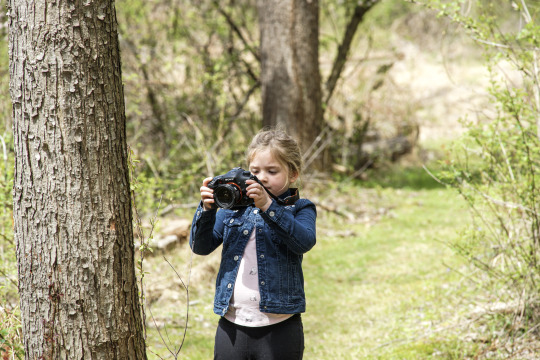
girl holding a camera in the woods

Beechwood Farms did not disappoint. Our first stop was a pond teeming with life. American Toads leaped off the trail and into the grass as we approached. The closer we got to the water, we could hear the “sploosh!” and catch a quick glimpse of hind legs as the toads jumped into the water.

The pond was filled with those toads, numerous species of fish and Canada geese. We just kept snapping away and asking each other, “Did you see that?”

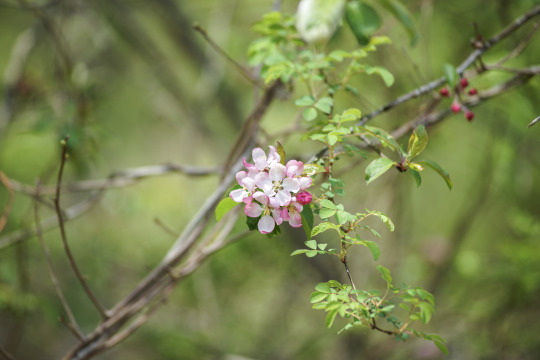
From there, we hiked a loop of trail that took us through sunny meadows and patches of forest where we spotted mayapple, violets, numerous blooming trees and more. I am always interested in what catches the kids’ attention. My son, who is 7 and already has a terrific eye and excellent ability, operates by the well-known photographer’s motto: “If you think you’re too close, take one step closer.” His shots are well framed and detailed.

photo of pink and white flowers on a tree branch

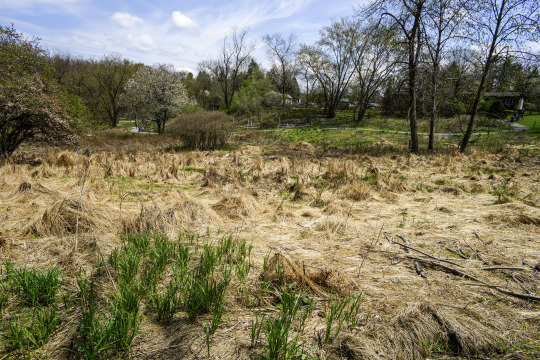
My daughter, who is 4, had the wide-angle lens and preferred sweeping images of scenery. She liked one particular field because the yellow grass looked like blonde princess hair.

photo of a field with yellow grass

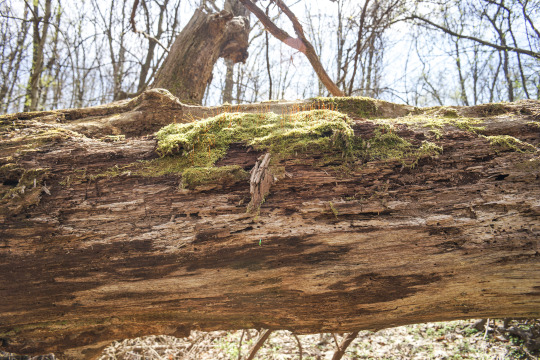
My wife is a fan of contrasting texture and color, like moss carpeting a dead tree trunk. (Insert Jill moss pic)

photo of moss growing on a dead tree trunk

I prefer wildlife and action shots.

photo of a frog on a rock

As we neared the end of the loop, we clunked along a bridge atop a stream. The kids couldn’t resist it and before we knew it, their socks and shoes were off and they were in the water. Their toes appeared to be just fine.

When we got back to our house, we couldn’t wait to look over the photos and upload them to iNaturalist. We weren’t sure what everything was – and that’s OK! Let your natural curiosity and wonder carry you through. There’s an entire support system to help classify and identify. You can even do the same for others.

We could use your help identifying our photos! Look for phillipps_family in your iNaturalist app or the website.

Eddie Phillips is an educator at Carnegie Museum of Natural History. Museum staff, volunteers, and interns are encouraged to blog about their unique experiences and knowledge gained from working at the museum.

Filed Under: Blog Tagged With: City Nature Challenge, Eddie Phillips, Education, Educators, Nature 360, Nature Lab

May 5, 2020 by wpengine

Pokémon Inspired by Animals

When Pokémon launched as a franchise in 1996, quickly becoming a worldwide multimedia phenomenon, the Pokémon creators had their work cut out for them imagining a whole new world with new creatures that we had never seen before. Or had we? Believe it or not, most Pokémon creatures have real-life animal inspirations!

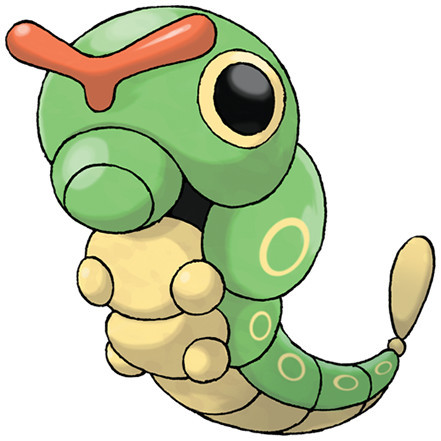
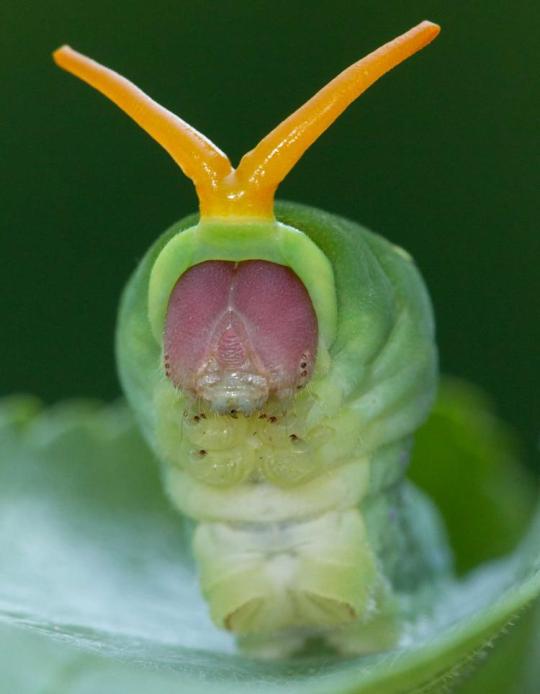
Caterpie and Eastern Tiger Swallowtail Caterpillar

illustration of Caterpie
photo of Eastern Tiger Swallowtail caterpillar

Caterpie is a bug type Pokémon. It’s known for devouring leaves bigger than its body and releasing an intense odor from its orange antennas when battling another Pokémon. You can’t miss the similarities between Caterpie and the eastern tiger swallowtail caterpillar. Both creatures have a distinct green body with bright orange antennas.

The eastern tiger swallowtail is a butterfly native to eastern North America. Similar to Caterpie, the swallowtail caterpillar possesses something called an osmeterium, an orange fleshy organ that emits a foul smell to ward off enemies when threatened.

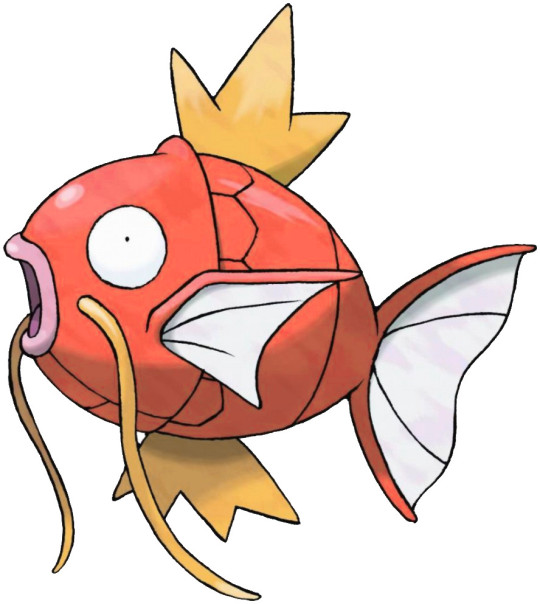
Magikarp and Yelloweye Rockfish

illustration of Magikarp
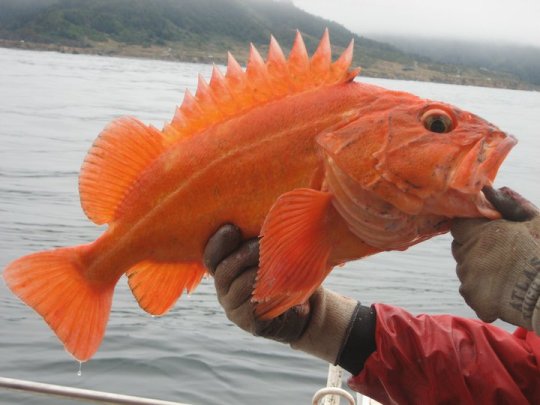
photo of Yelloweye rockfish held out of water

Magikarp is a water Pokémon and a large fish with orange scales. Magikarp flops around while blinking its large bulging eyes with its mouth open.

Yelloweye rockfish are one of the biggest members of the genus Sebastes and are prized for their meat. Both the real fish and the Pokémon are orange in color and have long rigid head spines to protect them from predators. Yelloweyes also have bulging eyes and a gaping mouth like Magikarp.

Drowzee and Malayan Tapir

illustration of Drowzee
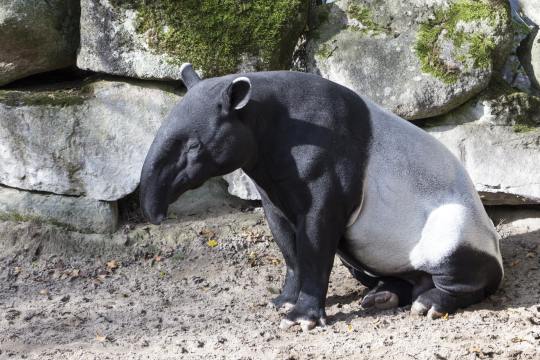
photo of Malayan Tapir

What about Drowzee, a hypnosis Pokémon with insomnia who senses dreams with its trunk-like nose? Drowzee has beady eyes and triangular brown ears.

It can’t sense your dreams like Drowzee, but the Malayan tapir has many resemblances to the Pokémon. The tapir is a large mammal with a short trunk. It uses its snout to pick up things or as a snorkel when in water. Aside from both having a short snout, Drowzee seems to have been inspired by the tapir’s two-toned coloring.

What other Pokémon/real-life animal resemblances have you noticed?

Fun Fact

Poliwag, Poliwhirl, and Poliwrath are all based on tadpoles. They each have a spiral on their stomach that resembles the intestines which are visible through a tadpole’s translucent stomach.

Filed Under: Blog Tagged With: Education, Educators, Museum from Home, Nature 360, Nature Lab, Pokemon

May 4, 2020 by wpengine

Math In Nature? It All Adds Up!

For all of its breathtaking beauty and seemingly spontaneous happenings, there are also some surprisingly consistent patterns in nature that math can help us understand. These patterns literally shape nature and the world around us. Let’s a take a closer look at some of these phenomena and how they work.

The Fibonacci Sequence

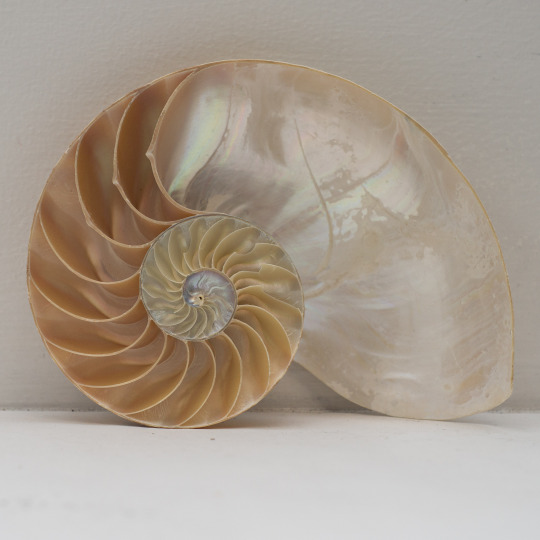
photo of spiral shell

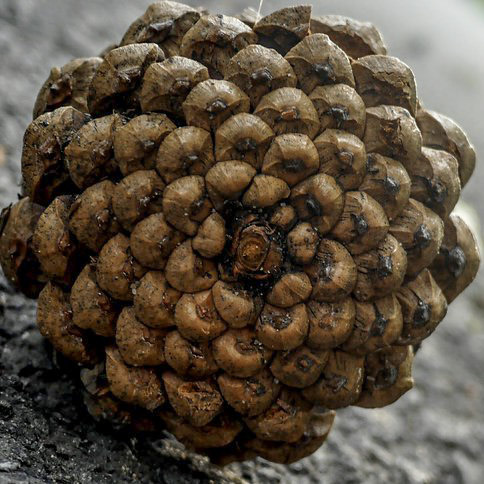
What do the numbers 0, 1, 1, 2, 3, 5, 8, 13, 21, 34, 55, 89, 144, 233 have in common? At first glance, it’s just a jumble of numbers, right? But there’s a distinct pattern within. Starting with 0 and 1, you add those numbers together. What does it equal? 1! Then add 1 and 1 to get 2, then 2 and 3 to get 5 and so on. This sequence can be found in the spirals of shells, the shape of a pine cone and even in the family trees of certain animals. Can you add to the sequence mentioned in the first line of this paragraph? What comes after 233? See how far you can go!

photo of bottom of pine cone

Don’t Be Stumped By That Tree

You can tell how old a tree is by counting the rings. Each one changes in shade from light to dark and is separated by a distinct dark circle. The lighter area is wood that grew faster in the spring in summer. The dark parts represent the slowed growth in the winter and fall. Knowing how old the tree is benefits scientists in numerous ways, including the study of climate change. Those rings hold secrets to the weather patterns of each year and by studying each ring, scientists can get a detailed look at how climate changed during the tree’s lifetime.

Math Is Out Of This World

That’s right, math’s reach goes way beyond earth. Our solar system is actually a Fibonacci spiral. One of the coolest events in the galaxy, a solar eclipse, can be explained by math. The eclipse happens when the moon blocks the view of the sun from earth. But how can this happen when the sun is 400 times larger than the moon? The moon is about 400 times closer to the sun, creating the perfect angle for an incredible occurrence.

Fun Fact

While rounded shapes are common in nature, so are shapes with angles. One of the most common is the hexagon. Honeycombs, snowflakes, and the eyes of some insects are just a few examples of the hexagon appearing in nature.

image of Dippy logo without a tail

Help Create Dippy’s Fabulous Fibonacci Tail!

You have probably noticed that Dippy has a sense for fashion. In addition to that iconic scarf collection, not to mention all of those trendy hats, Dippy is looking to expand his fashion sense. Dippy is pretty tired of that whip-like tail and wants to try on something new. Since we just learned about the Fibonacci sequence, we’ll need you to create a stylish new tail. Use the template below to draw a Fibonacci spiral tail and then decorate any way you like. With a parent’s permission, tag Dippy on social media (@Dippy_the_Dino) to show them the awesomeness you created!

Filed Under: Blog Tagged With: Education, Museum from Home, Nature 360, Nature Lab

April 29, 2020 by wpengine

Lost and Found

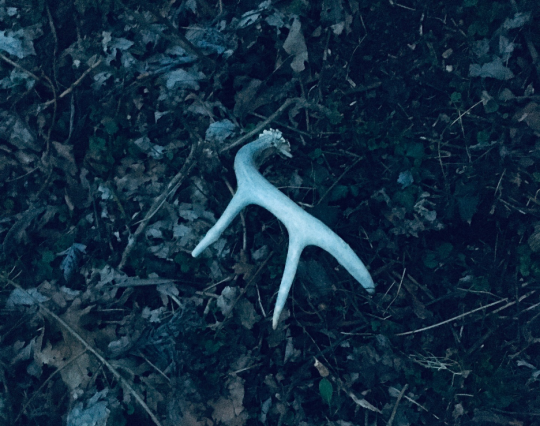
In the darkening woods of an early spring evening, the deer antler practically glowed. After retrieving and examining the bone-like left-side appendage, I walked a wide circle within my neighbor’s wooded property hoping to spot a matching right-side antler.

Male deer grow and shed antlers annually, a process driven by changes in daylight, and controlled, like so many biological operations, by the chemical signals of hormones. Antler to skull connections are solid during the breeding season but dropping testosterone levels eventually weaken the link. Because white-tailed deer bucks in our region frequently shed antlers by mid-January, my multi-point find might well have spent ten weeks on the ground.

As a museum educator I appreciate the potential of antlers as teaching tools. Science teachers often borrow sets of them to illustrate lessons about sexual selection in evolution, and in Discovery Basecamp, the museum’s object-centered learning center, visitors frequently pose for pictures holding white-tailed deer antlers just above their own ears.

The specimen pictured above has been put to a different use. It currently rests on the ground amidst a tangle of wild grapevine near where I originally found it. The location is a place where I can occasionally check the rate at which various rodents gnaw on the antler, and thereby recycle much of its calcium into the same system it was briefly pulled from.

Patrick McShea works in the Education and Visitor Experience department of Carnegie Museum of Natural History. Museum employees are encouraged to blog about their unique experiences and knowledge gained from working at the museum.

Filed Under: Blog Tagged With: Education, Museum from Home, Patrick McShea

April 29, 2020 by wpengine

Observing Nature at Night

When the sun goes down, you may think nature observations are over for the day, but darkness brings out a whole new group of creatures to look for. With the City Nature Challenge on iNaturalist coming up April 24th-27th, we wanted to give you some tips for observing nature at night.

Using Your Senses

It’s harder to see at night, so you should try using some other senses to explore.  What can you find if you listen very carefully, or use your nose as a guide? You can even record sound files and share them on iNaturalist – they count for the City Nature Challenge!

Safety comes first, though, especially in the dark.  Try not to startle or disturb animals, and keep them (and you!) safe by avoiding any physical contact.

Nighttime Observations

• Earthworms, snails, and other creatures with damp body surfaces tend to take cover during the day to protect themselves from drying out in the sun. At night, try spotting their slimy trails across pavement or grass with a flashlight. You may not find the animals, but their trails will let you know they’re nearby.

• If you have a porch light, you may be able to watch creatures from the comfort of your home. The light will draw in insects like moths, in turn attracting hungry creatures like spiders. Can you find a web-spinning arachnid hunting for its next meal?

• Try exploring with a red light! Use a headlamp with a red light setting, or tape a piece of red paper to the front of your flashlight and explore your backyard. Red light is easier on your eyes and causes less disruptions of animal behaviors than a white light.

•Be sure to check any flowers in your yard. Pollinators visit them both day and night!

•Attract bugs with a white sheet. Hang or lay a sheet in your back yard and shine a light on it. Insects will fly around then settle on your sheet so you can observe and photograph them.

We want to see your nighttime discoveries! Share your photos and sounds on iNaturalist between April 24-27, or use the hashtag #CityNatureChallenge and tag @CarnegieMNH on Facebook, Instagram, or Twitter.

Fun Fact

If you’re having trouble observing nature around you, visit the Explore tab of the iNaturalist App. This will let you see what iNaturalist users are observing all over the world!

Filed Under: Blog Tagged With: City Nature Challenge, Education, Museum from Home, Nature Lab

  • « Go to Previous Page
  • Page 1
  • Interim pages omitted …
  • Page 8
  • Page 9
  • Page 10
  • Page 11
  • Page 12
  • Interim pages omitted …
  • Page 15
  • Go to Next Page »

sidebar

About

  • Mission & Commitments
  • Directors Team
  • Museum History

Get Involved

  • Volunteer
  • Membership
  • Carnegie Discoverers
  • Donate
  • Employment
  • Events

Bring a Group

  • Groups of 10 or More
  • Birthday Parties at the Museum
  • Field Trips

Powdermill

  • Powdermill Nature Reserve
  • Powdermill Field Trips
  • Powdermill Staff
  • Research at Powdermill

More Information

  • Image Permission Requests
  • Science Stories
  • Accessibility
  • Shopping Cart
  • Contact
  • Visitor Policies
One of the Four Carnegie Museums | © Carnegie Institute | Privacy Policy | Terms of Use | Accessibility
Rad works here logo