• Skip to primary navigation
  • Skip to main content
  • Skip to primary sidebar

Carnegie Museum of Natural History

One of the Four Carnegie Museums of Pittsburgh

  • Visit
    • Buy Tickets
    • Visitor Information
    • Exhibitions
    • Events
    • Dining at the Museum
    • Celebrate at the Museum
    • Powdermill Nature Reserve
    • Event Venue Rental
  • Learn
    • Field Trips
    • Educator Information
    • Programs at the Museum
    • Bring the Museum to You
    • Guided Programs FAQ
    • Programs Online
    • Climate and Rural Systems Partnership
  • Research
    • Scientific Sections
    • Science Stories
    • Science Videos
    • Senior Science & Research Staff
    • Museum Library
    • Science Seminars
    • Scientific Publications
    • Specimen and Artifact Identification
  • About
    • Mission & Commitments
    • Directors Team
    • Museum History
  • Tickets
  • Give
  • Shop

Education

August 4, 2021 by wpengine

Rising through the Educator Ranks

by Patrick McShea

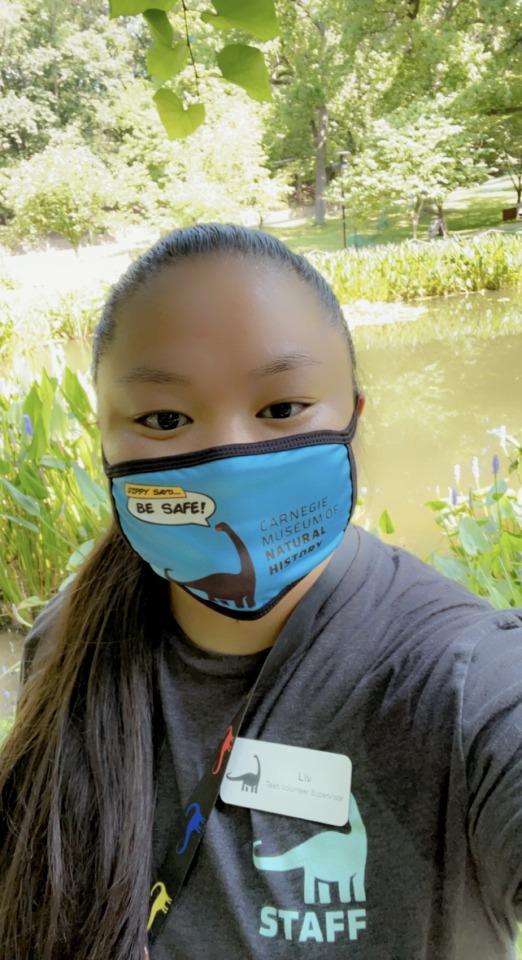
Woman wearing a mask and t-shirt with dinosaurs on them.
Olivia McNulty (Liv)

Every morning, as young participants in the museum’s summer camp and the adults accompanying them approach an outdoor sign-in table, Olivia McNulty is prepared to explain all that the coming day might hold. “I’m the first face they see, and I try to radiate positivity,” explains the recent Seton Hill University graduate, who goes by her first name’s second syllable, Liv. “I’m wearing a facemask, and checking temperatures with a handheld scanner, but I’ve also got some idea of the day’s schedule in every camp session, and I welcome questions.”

As tempting as it is to describe Liv’s comprehensive knowledge of camp operations as “second nature,” the term short-changes the unusually deep experience she brings to her current position of Senior Camp Educator. To use a baseball analogy, she is major league talent nurtured through years of development in a professional team’s multi-tiered farm system.

During the nine summers between age 5 and 13, Liv experienced camp as a camper. Due to her parents’ work schedules, an hour or two of pre-camp and post-camp care at the museum was also always part of her daily schedule. She remembers regularly experiencing “pure excitement and joy” at the museum during those long days, explaining further how she now reflects back upon her summer camp experience as an early, prolonged, and wholly positive learning intervention. “I struggled at school with a learning disability. I’m dyslexic, and at camp that was never a barrier to learning.”
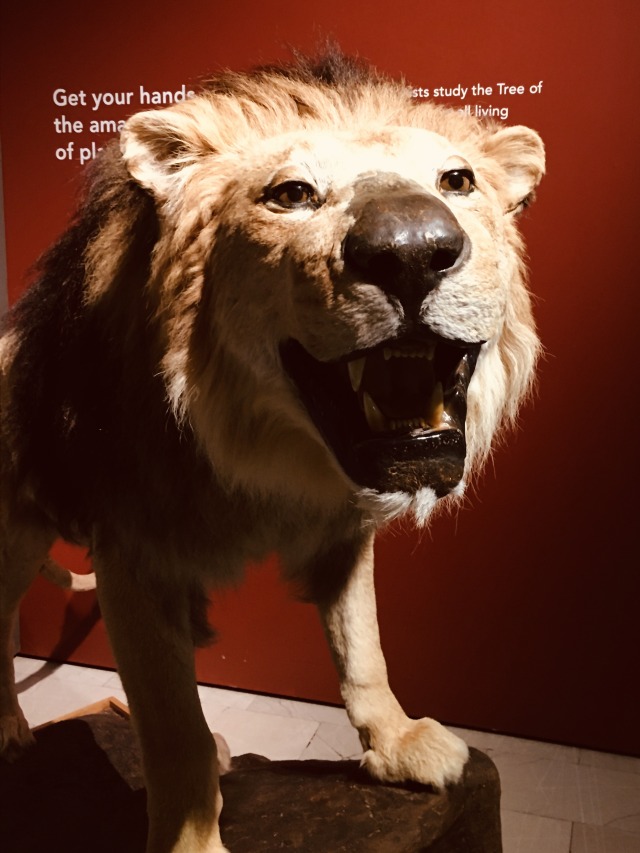
African Lion taxidermy mount
Liv cites the lion currently displayed in Discovery Basecamp as her constant visual anchor for 16 summers of camp experience.

When Liv aged-out of the camp participant demographic at age 14, she spent the next four summers as a teen volunteer with the program. “I knew how camp ran,” she explains, “and I wanted to emulate the camp counselors who had welcomed me for so many years. As a volunteer I started gravitating towards those children who had learning difficulties. I saw myself in some of their challenges and worked to support them.”

During the summer of 2018, Liv assumed broader camp responsibilities as a Museum Educator Assistant, a paid position that included some oversight of not just campers, but also teen volunteers. She summarizes the focus of each position as being complimentary, but drastically different. “For the teen volunteers the focus is fun – playing games, engaging the campers in those games. As an assistant educator your concerns involve safety and learning.”

This summer, Liv also holds the title of Teen Volunteer Supervisor. Her acknowledgement of greater responsibility is occasionally expressed in a motto, a saying now familiar to all the staff, volunteers, and campers she works with: “If we cannot be safe, we cannot have fun.” The statement of both warning and motivation seems particularly apt for these COVID times. It also contains evidence of all Liv learned as a psychology major at Seton Hill, and within an informal but highly effective summer training program at Carnegie Museum of Natural History.

Patrick McShea works in the Education and Visitor Experience department of Carnegie Museum of Natural History. Museum employees are encouraged to blog about their unique experiences and knowledge gained from working at the museum.

Related Content

Stage and Screen Sharing

Teacher Profile: Emmanuelle Wambach

Expanding the Scope of Environmental Education

Carnegie Museum of Natural History Blog Citation Information

Blog author: McShea, Patrick
Publication date: August 4, 2021
Share this post!

  • Share on Twitter Share on Twitter
  • Share on Facebook Share on Facebook
  • Share on Pinterest Share on Pinterest
  • Share on LinkedIn Share on LinkedIn
  • Share on Reddit Share on Reddit
  • Share via Email Share via Email

Share this post!

  • Share on Twitter Share on Twitter
  • Share on Facebook Share on Facebook
  • Share on Pinterest Share on Pinterest
  • Share on LinkedIn Share on LinkedIn
  • Share on Reddit Share on Reddit
  • Share via Email Share via Email

Filed Under: Blog Tagged With: Education, Educator Resources, Educators, Pat McShea

July 12, 2021 by wpengine

Interpreting Museum Exhibits Virtually

by Patrick McShea

Natural History Interpreters are a corps of educators charged with presenting the museum’s exhibits to audiences in a way that encourages the collective development of emotional and intellectual connections to the topics being discussed. During the past eight months, a small, but growing number of Interpreters have pursued this mission by guiding school groups on virtual tours of Dinosaur Armor.

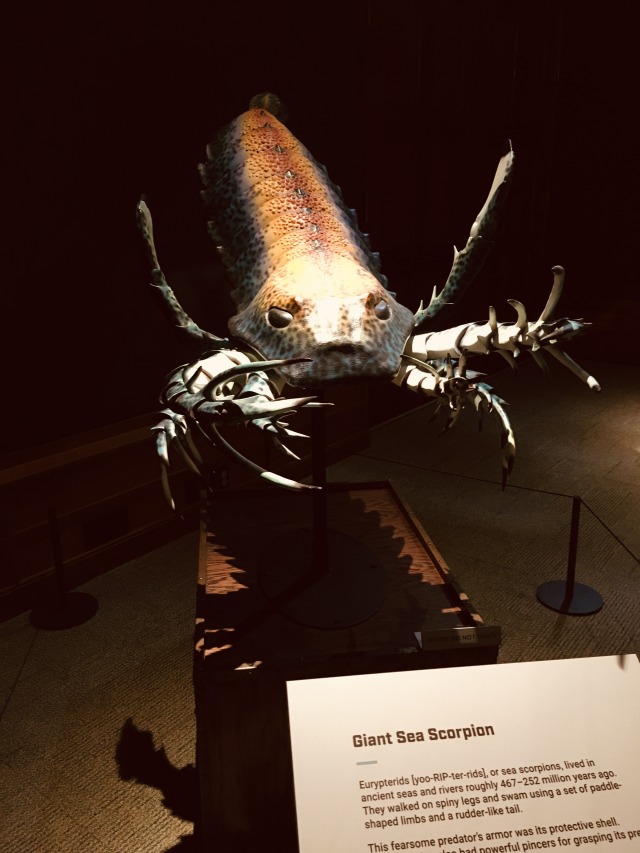
Replica giant sea scorpion museum display
Details such as the sharp claws of this sea scorpion were clearly visible to students who participated in virtual tours of Dinosaur Armor.

The visually striking objects in the world premiere exhibition retain much of their captivating power when presented over electronic screens, and cell phone cameras, when paired with hand-held stabilizer units, have proven to be fully capable of live streaming all the required video.

During the recently completed school year 54 virtual tours of Dinosaur Armor reached an estimated student audience of 3,450, with classes in first to fourth grades accounting for the greatest number of those individuals. The geographical reach of the program has been particularly impressive, with schools in 13 states participating.

The Interpreters developed a team-based strategy for delivering their presentations as cohesive interactive lessons. Standard team positions, which rotate as necessary, include a camera operator in the exhibit, an accompanying narrator who occasionally appears on camera, and a director who participates via a computer link to both provide occasional commentary and facilitate communication between the audience, camera operator, and narrator.

According to Interpreter Joann Wilson the development was an easier-said-than-done proposition. “When I started virtual tours, I thought that it would be like my old in-person tour role with a few minor adjustments.  How wrong I was!   What I have discovered after over 8 months is that although the goal is the same, how we get there is very different.”

On June 8, I had the opportunity to observe a virtual Dinosaur Armor tour for a combined pre-school and kindergarten class. My computer screen displayed the same images the children watched on a large monitor at the front of their classroom. When the colorful image of a frightening looking Eurypterid, or sea scorpion filled the screen, audience excitement was transmitted back to the Interpreter team via the “oohs” and “ahhs” of young voices. Just as the Interpreters would do for any in-person audience, they quickly transformed student curiosity into a learning experience through the careful use of questions.

Students were initially asked to describe what they observed, and their responses (“The claws are sharp.” “The eyes are big ovals.”) provided immediate feedback about the clarity of the transmission. In this case the routine compilation of student observations was remarkable because of the distance involved. The pre-school and kindergarten class was in Bali, Indonesia.

As Program Manager Mandi Lyon explains, “It was 9:30 a.m. for us in Pittsburgh, and 9:30 p.m. for them in Bali. They came back to their school in their pjs for a pajama party so they could participate in the tour together.”

In most cases, however, the same COVID-19 restrictions that led to the development of Virtual Tours also placed many students in viewing conditions far less comfortable than the classroom in Bali. Whenever a Virtual Tour served a class in a school operating under a remote learning mandate, the Interpreter team faced the challenge of engaging dozens of students watching separately from their homes.

By supplying teachers with relevant digital resources, including video clips, blog posts, and work sheets, weeks before their students participated in a Virtual Tour, the Interpreters hoped to initiate teaching partnerships that made each live 60-minute program both instructive and enjoyable. The success of such efforts is currently being accessed through the review of post-Virtual Tour evaluations, several of which included heartening testimony. One teacher noted how the virtual tour had expanded the range of possible teaching resources: “I am so excited we had the opportunity to visit through Zoom. After doing this, it seems we could reach so many places and let the students have such a varied experience in the classroom.” Another teacher was particularly pleased with a potential career thread woven into the tour: “The idea of anyone becoming a scientist was evident in your presentation.”

Outside of the formal evaluations, one wholly positive real-time measurement stands out. Several times teachers remarked that students who kept their cameras off though weeks of regular remote classes turned their cameras on to watch and participate in the Virtual Tour.

CMNH Interpreters have also provide Virtual Tours exploring Ecosystems, Ancient Egypt, and Gems and Minerals. Besides Indonesia, other particularly distant schools served by the program were in Qatar, and the U.S. Virgin Islands. Training is currently underway to expand the number of Interpreters who are able to participate on Virtual Tour teams.

The development and implementation of Virtual Tour Program was generously supported with funding from the Buncher Foundation and the Scaife Family Foundation.

Patrick McShea works in the Education and Visitor Experience department of Carnegie Museum of Natural History. Museum employees are encouraged to blog about their unique experiences and knowledge gained from working at the museum.

Related Content

Virtual Field Trips & Activities

Teacher Profile: Emmanuelle Wambach

Alaskan Brown Bears Spotlight (Video)

Carnegie Museum of Natural History Blog Citation Information

Blog author: McShea, Patrick
Publication date: July 12, 2021

Share this post!

  • Share on Twitter Share on Twitter
  • Share on Facebook Share on Facebook
  • Share on Pinterest Share on Pinterest
  • Share on LinkedIn Share on LinkedIn
  • Share on Reddit Share on Reddit
  • Share via Email Share via Email

Share this post!

  • Share on Twitter Share on Twitter
  • Share on Facebook Share on Facebook
  • Share on Pinterest Share on Pinterest
  • Share on LinkedIn Share on LinkedIn
  • Share on Reddit Share on Reddit
  • Share via Email Share via Email

Filed Under: Blog Tagged With: Education, Educator Resources, Educators, Pat McShea

June 25, 2021 by wpengine

Fish and the Fourth of July?

by Patrick McShea

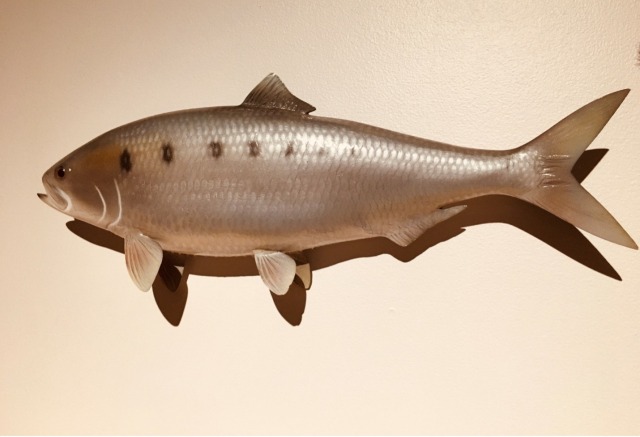
model of a shad

During the cold early months of 1778, did the outcome of the American colonies’ armed struggle for independence hinge upon a spawning run of fish up a Pennsylvania river? A 22-inch-long American shad displayed on a wall in Discovery Basecamp can serve as a focal point for consideration of this question, but many viewers will be aided by some framing background information.

In the chronology of the American Revolution, the harsh winter of 1777-1778 was notable for the British Army’s control of Philadelphia, and the encampment, some 23 miles northwest, of the opposing Continental Army, led by George Washington, at a site along the Schuylkill River known as Valley Forge.

In the more than two centuries since the United States achieved independence from Great Britain, an often repeated anecdote about the desperate conditions endured by the poorly clothed, poorly fed, and poorly sheltered soldiers at Valley Forge contends that starvation conditions were ended late in the winter by an unusually early spawning run of thousands of American shad up the Schuylkill.

American shad are an anadromous species, a term for fish that hatch in freshwater, migrate to the ocean where they spend most of their lives, and then migrate back to their natal waters to reproduce. The historic range for the species, whose Latin name, Alosa sapidissima, references its delectable flavor, encompasses western Atlantic Ocean waters bordering the east coast of Canada and the United States.

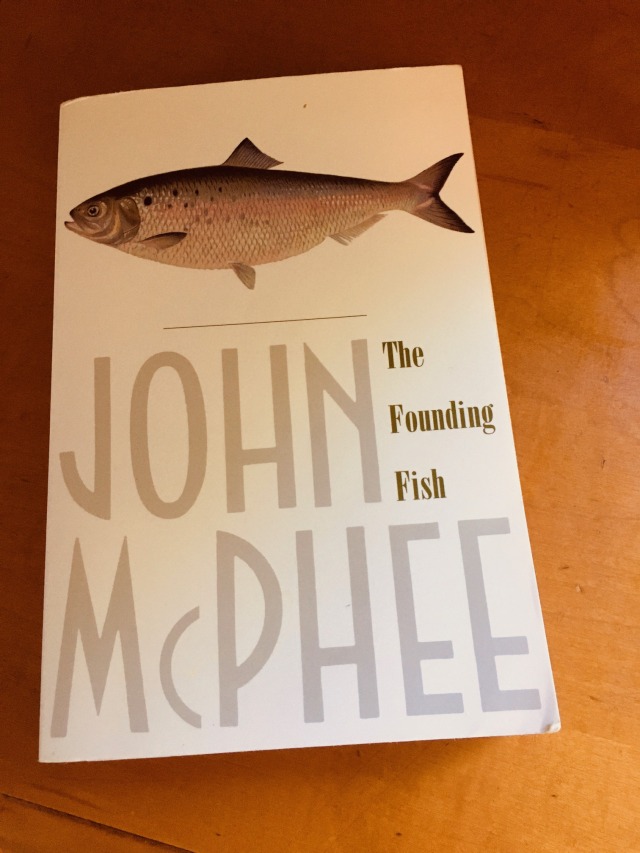
In 2002, renowned author and Princeton University professor John McPhee brought American shad to the attention of the book-reading public with the publication of The Founding Fish, a 358-page encyclopedic compilation of personal experience, firsthand reporting, historical accounts, and scientific research. (Farrar, Straus, and Giroux) The book’s title is a nod to the Valley Forge account, and in a central chapter of the same name McPhee addresses the story’s veracity by citing the research of a now retired professor of American History from Indiana University of Pennsylvania, Wayne Bodle. “When I first got in touch with Bodle, in 1998, he said that fresh shad in all likelihood were consumed by soldiers at Valley Forge in the weeks before they broke camp in June, but that the large and providently early run is a legend not supported by a single document.”

Bodle’s analysis of his research into all aspects of the Continental Army’s storied winter encampment in eastern Pennsylvania is presented in his book, The Valley Forge Winter: Civilians and Soldiers in War (The Pennsylvania University Press, 2002). Like The Founding Fish, it’s available for borrowing from Carnegie Library of Pittsburgh. If your summer reading schedule isn’t yet set, you might consider checking out either book.

Patrick McShea works in the Education and Visitor Experience department of Carnegie Museum of Natural History. Museum employees are encouraged to blog about their unique experiences and knowledge gained from working at the museum.

Related Content

Alaskan Brown Bear Spotlight

Educator Spotlight: Christian Shane

Expanding the Scope of Environmental Education

Carnegie Museum of Natural History Blog Citation Information

Blog author: McShea, Patrick
Publication date: June 25, 2021

Share this post!

  • Share on Twitter Share on Twitter
  • Share on Facebook Share on Facebook
  • Share on Pinterest Share on Pinterest
  • Share on LinkedIn Share on LinkedIn
  • Share on Reddit Share on Reddit
  • Share via Email Share via Email

Filed Under: Blog Tagged With: Education, Educators, fish, Pat McShea, Science News

June 7, 2021 by wpengine

Expanding the Scope of Environmental Education

by Patrick McShea

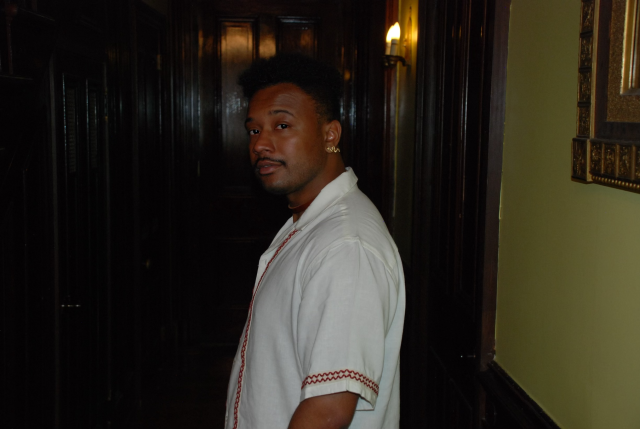
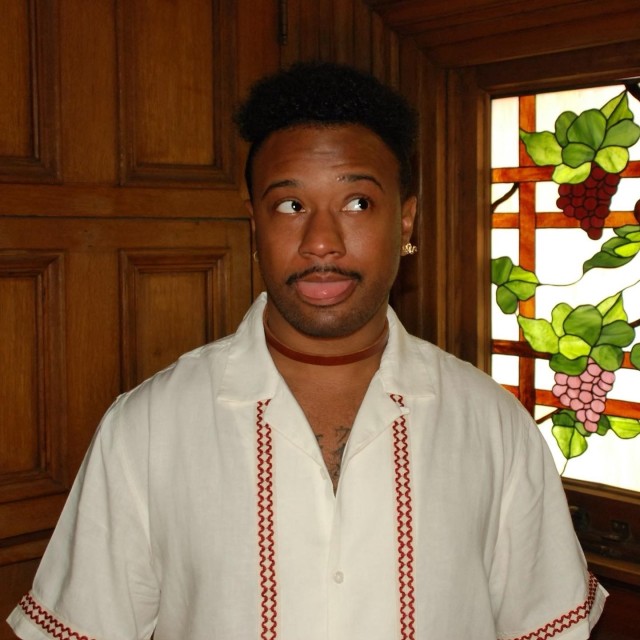
Black man in a white collared shirt standing in front of a wooden door indoors.

Seven years after he graduated from Allegheny College with a degree in Environmental Studies, Will Tolliver Jr. accepted responsibility for teaching some aspects of that discipline at the 206-year-old liberal arts institution. As an adjunct professor, he presented an overview of environmental education’s foundations and its intersection with anti-bias and anti-racist education for 22 juniors and seniors during a recent semester-long course. As a Pittsburgh native, Will brought a hometown focus to some course work at the Meadville college by leading his students in developing lesson plans for Hilltop Urban Farm, an eight-year-old initiative that is transforming 108 acres of the former St. Clair Village housing complex into a national model of community food production.

“I think the relatively short interval between being a student and being a teacher worked to my advantage.” Will explains. “The course was taught remotely because of the pandemic, and during this time of continued civic and social unrest. l was mindful of the students’ situations, concerned about elements effecting their mental health and well-being that were beyond the bounds of the course.”

Will’s out-of-school experience prepared him well for the challenge. His resume includes current work as a consultant to the Public Broadcasting Service, and various teaching, training, grant-writing, and administrative roles for the Pittsburgh Parks Conservancy, Pennsylvania Association for the Education of the Young Child, Grow Pittsburgh, and the Children’s Museum of Pittsburgh. During each phase of his career CMNH helped Will to use authentic objects in his public presentations by providing him with a toolbox of touchable objects including feathers, mammal skulls, preserved plants, and fossils.

If there’s a theme to date in Will’s career, it might be expanding the vocabulary of the people he engages. He explains his first professional challenge, as a Pittsburgh Parks Conservancy naturalist, as “closing the word gap” for three- to five-year-old children in the city’s Homewood neighborhood. In a grant-supported program called “Buzzword Pittsburgh,” he used storytelling, play, guided hikes, songs, and museum objects to explore the meanings of individual words and build vocabulary related to science, math, art, and even local plants and wildlife.

Expanding the working environmental education vocabulary of college students in 2021 involved a greater level of sharing. As Will summarizes, “I wanted to be that better teacher, who covered the core principles and ideas, but also honestly shared what it has been like for me as a Black man working in this field.” His students explored the undeniable connections between environmental health and social justice. Their understanding of the history and importance of such collaborative community initiatives as Hilltop Urban Farm, for example was tied to understanding potentially new terms like urban food deserts, and red-lined neighborhoods.

Patrick McShea works in the Education and Visitor Experience department of Carnegie Museum of Natural History. Museum employees are encouraged to blog about their unique experiences and knowledge gained from working at the museum.

Related Content

Stage and Screen Sharing

Pittsburgh’s Moths Reflect Environmental Impacts of Industry

Teaching About Local Wildlife with the City Nature Challenge

Carnegie Museum of Natural History Blog Citation Information

Blog author: McShea, Patrick
Publication date: June 7, 2021

Share this post!

  • Share on Twitter Share on Twitter
  • Share on Facebook Share on Facebook
  • Share on Pinterest Share on Pinterest
  • Share on LinkedIn Share on LinkedIn
  • Share on Reddit Share on Reddit
  • Share via Email Share via Email

Share this post!

  • Share on Twitter Share on Twitter
  • Share on Facebook Share on Facebook
  • Share on Pinterest Share on Pinterest
  • Share on LinkedIn Share on LinkedIn
  • Share on Reddit Share on Reddit
  • Share via Email Share via Email

Filed Under: Blog Tagged With: Education, Educator Loan Program, Educator Resources, Pat McShea, We Are Nature 2

May 19, 2021 by wpengine

Reading Results: CNC Final Phase

by Patrick McShea

Whether you participated in the recent City Nature Challenge (CNC) or not, the results of the Pittsburgh Region’s broadest annual citizen science biological survey might be of interest.

The visually rich and geographically referenced compilation is a record of 1,219 different species of free-living plants, animals, and fungi documented, via the iNaturalist phone app, by 446 observers within six southwestern Pennsylvania counties during four mid-spring days. It’s a site where anyone with an interest in local natural history can spend a lot of time exploring.

Participation in Pittsburgh’s 2021 CNC was 16% lower than during the 2020 event, a reduction resulting in a similar-sized decline in total observations, yet only a 10% drop in the total number of different organisms documented. This year’s event was held April 30 – May 3, nearly a full week later in the spring than the 2020 CNC, a modification that might have increased the likelihood for some organisms to be observed.

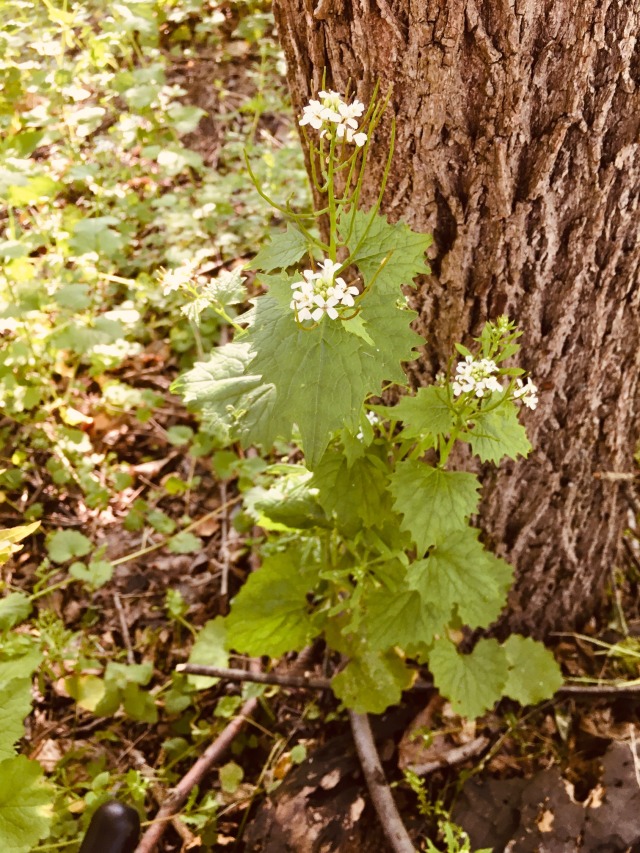
A flowering garlic mustard plant growing at the base of a black walnut tree.

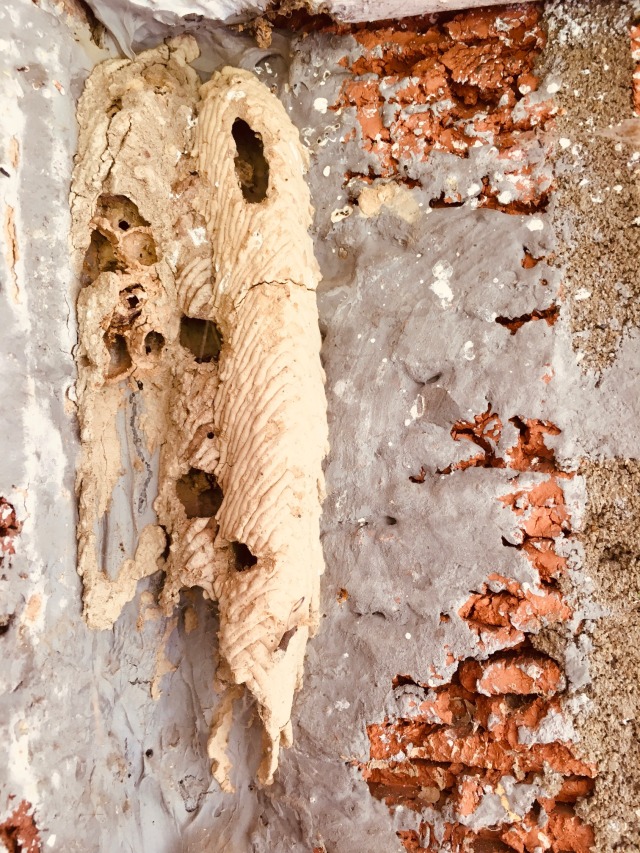
Garlic mustard (Alliaria petiolata), a highly invasive plant introduced to North America in the mid-1800s for its herbal value and erosion control properties, was the most commonly documented organism, accounting for 98 of the Pittsburgh Region’s 7,045 total observations. On the results page, where visitors can further explore every documented species, there’s information to be gleaned beyond the common and scientific names of each entry. Far down the rankings, for example, all four images of organ-pipe mud-dauber nest chambers show the wasp-build tubes attached to human-built walls, and both seal salamander images appear to be illuminated by flashlight or headlamp.

Tubular nests built by the organ pipe mud dauber, a wasp species that preys upon spiders.

As a category, plants, and frequently their blossoms, account for over half the total species documented. Birds, which included some migrants passing through the Pittsburgh region, led the vertebrate class with 111 species documented. Mammals followed with 21 documented species, and documented species for amphibians and reptiles numbered 16 and 13, respectively. 197 species of insects were documented, as were 137 species of fungi.

Participation levels are also carefully recorded in the results, with CMNH’s own Mason Heberling, Assistant Curator of Botany, leading the pack with 403 recorded observations of 208 different species. He explains his level of activity as a response to the scientifically sound parameters established by the CNC organizers. “Because it is roughly the same time each year, I have made a habit of going back to the same several sites each year, mostly ones that are convenient and nearby to me, and ironically, ones I don’t often get to as much as I wish I could.  I do that with hopes of after going back to the same handful of sites around the same time, year after year, we can look at year-to-year and longer-term differences.”

And CMNH’s own Bonnie Isaac, Collection Manager in Botany, was among 397 identifiers who contributed time and background knowledge during a critical six-day second phase of the CNC to review and identify the observations of other participants. In fact, Bonnie identified 872 observations during the challenge. Within the operations of the iNaturalist app, observations with GPS coordinates that are identified by two separate reviewers are termed “Research Grade,” meaning they can contribute to the data sets of future studies. Nearly 54% of the Pittsburgh Region’s CNC observations earned the research grade mark this year, a very slight increase over last year’s mark.

Through the CNC and other citizen science survey projects, the contributions of observers and identifiers enables the powerful image recognition software of the iNaturalist platform to increasingly transform our phones into broad spectrum field guides. As you scroll and click through this year’s CNC results it’s also worth reflecting upon what is both gained and lost through a digital interface.

In a 2015 New York Times essay titled Identification Please, naturalist Helen Macdonald pays homage to the low-tech field guide by first calling out their flaws:

Out in the field, birds and insects are often seen briefly, at a distance, in low light or half-obscured by foliage; they do not resemble the tabular arrangements of paintings in guides, where similar species are brought together on a plain background on the same page, all facing one way and bathed in bright, shadowless light so they may be easily compared.

She later explains the great value of field guides in preparing our eyes and minds for what we hope to observe:

Field guides made possible the joy of encountering a thing I already knew but had never seen before.

Patrick McShea works in the Education and Visitor Experience department of Carnegie Museum of Natural History. Museum employees are encouraged to blog about their unique experiences and knowledge gained from working at the museum.

Related Content

Cities are Not Biological Deserts

Naturally Pittsburgh: Big Rivers and Steep Wooded Slopes

Water Bears: Why My Yard is Like the Moon

Carnegie Museum of Natural History Blog Citation Information

Blog author: McShea, Patrick
Publication date: May 19, 2021

Share this post!

  • Share on Twitter Share on Twitter
  • Share on Facebook Share on Facebook
  • Share on Pinterest Share on Pinterest
  • Share on LinkedIn Share on LinkedIn
  • Share on Reddit Share on Reddit
  • Share via Email Share via Email

Share this post!

  • Share on Twitter Share on Twitter
  • Share on Facebook Share on Facebook
  • Share on Pinterest Share on Pinterest
  • Share on LinkedIn Share on LinkedIn
  • Share on Reddit Share on Reddit
  • Share via Email Share via Email

Filed Under: Blog Tagged With: City Nature Challenge, Education, Educator Resources, Pat McShea, Science News

May 10, 2021 by wpengine

Stage and Screen Sharing

by Patrick McShea

Social Skills Instructor Stacy Smith wanted to convey just how challenging last year’s abrupt shift to remote instruction during the COVID-19 pandemic was for The Children’s Institute of Pittsburgh. An initial challenge she had to solve was how to keep virtual learning engaging.

“Some of our students don’t even like watching TV,” Stacy said.

Not only did in-person collaborations with programs like Museum on the Move at CMNH have to be transformed into a remote experience, but the school day also had to function differently for students with unique needs. The 119-year-old organization serves more than 6,000 children each year at seven campuses across western Pennsylvania, helping to heal, teach, and empower individuals with special physical, social, and emotional needs.

Individualized instruction is the hallmark of Educational Services at The Children’s Institute, a characteristic readily apparent when Stacy recites a typical schedule for a student at the campus in Squirrel Hill.

“Morning groups of around six students last 15 to 30 minutes, and after that they would each have individual teaching sessions. They’d have individual speech, occupational therapy, physical therapy, and social skills or other ancillary classes. We work with some students to master abilities that aren’t even considered in other schools, like the balance required to simply walk in a hallway,” Stacy explained.

Museum on the Move programs provide a field trip-like role amidst such regular instruction, with museum educators using authentic materials to enrich presentations about dinosaurs, fossils, rocks and minerals, insects, and animal adaptations. Stacy cited Quintin Peacock, an educator who recently left the museum to pursue a master’s degree in education, as a particularly skilled in-person presenter in 2019 and early 2020, before the COVID pandemic forced the program into a remote, but still interactive delivery system.

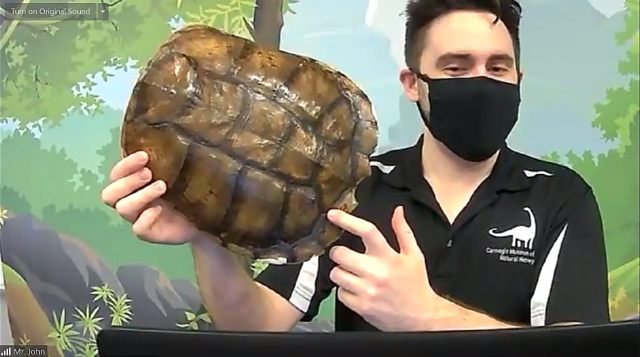
John Bitsura holds up a turtle shell during a virtual presentation.

Museum educators John Bitsura and Aaron Young received Stacy’s praise as remote delivery heroes for their dedication to The Children’s Institute’s students and willingness to innovate.

“These guys were the only outside group we had this year and we were very fortunate to have them,” she said.

While some students returned in-person this school year, for the Museum on the Move “field trips” to maintain their effectiveness in a remote format, a familiar teacher needed to be an active visual and vocal participant. Technology and screen-sharing enabled both Stacy and the CMNH team to easily participate in presenting to the students together.

“I’ve always been on with them, and it’s been really nice that they’ve been so welcoming with me being a part of their presentation,” she said.

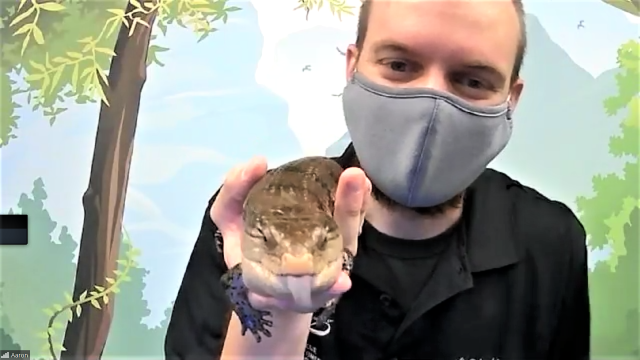
Aaron Young and Miley, a blue-tongued skink.

For the museum, the feeling is mutual. Aaron praises the radiant energy Stacy brings to the virtual programs and credits her constructive feedback with their continual improvement. John points to the solving of Zoom problems and a joint performance of a rap song about geology as key pieces of the collaboration. He also summarized this year’s efforts as creating the foundation for a wonderful partnership.

Patrick McShea works in the Education and Visitor Experience department of Carnegie Museum of Natural History. Museum employees are encouraged to blog about their unique experiences and knowledge gained from working at the museum.

Related Content

Teaching About Trees

Bring the Museum to You

Water Bears: why my yard is like the moon

Carnegie Museum of Natural History Blog Citation Information

Blog author: McShea, Patrick
Publication date: May 10, 2021

Share this post!

  • Share on Twitter Share on Twitter
  • Share on Facebook Share on Facebook
  • Share on Pinterest Share on Pinterest
  • Share on LinkedIn Share on LinkedIn
  • Share on Reddit Share on Reddit
  • Share via Email Share via Email

Share this post!

  • Share on Twitter Share on Twitter
  • Share on Facebook Share on Facebook
  • Share on Pinterest Share on Pinterest
  • Share on LinkedIn Share on LinkedIn
  • Share on Reddit Share on Reddit
  • Share via Email Share via Email

Filed Under: Blog Tagged With: Education, Educator Resources, Educators, Pat McShea

  • « Go to Previous Page
  • Page 1
  • Interim pages omitted …
  • Page 3
  • Page 4
  • Page 5
  • Page 6
  • Page 7
  • Interim pages omitted …
  • Page 15
  • Go to Next Page »

sidebar

About

  • Mission & Commitments
  • Directors Team
  • Museum History

Get Involved

  • Volunteer
  • Membership
  • Carnegie Discoverers
  • Donate
  • Employment
  • Events

Bring a Group

  • Groups of 10 or More
  • Birthday Parties at the Museum
  • Field Trips

Powdermill

  • Powdermill Nature Reserve
  • Powdermill Field Trips
  • Powdermill Staff
  • Research at Powdermill

More Information

  • Image Permission Requests
  • Science Stories
  • Accessibility
  • Shopping Cart
  • Contact
  • Visitor Policies
One of the Four Carnegie Museums | © Carnegie Institute | Privacy Policy | Terms of Use | Accessibility
Rad works here logo